

Mitsubishi Outlander vs Toyota RAV4: Which SUV Is the Better Buy?

Choosing between the Mitsubishi Outlander vs Toyota RAV4 sounds straightforward until we actually start comparing them. Both are compact-to-midsize family SUVs, both can be equipped with electrified powertrains, both offer all-wheel-drive capability, and both have reputations for being sensible everyday vehicles.
Yet they approach the SUV formula from noticeably different angles.
The Toyota RAV4 is the familiar all-rounder. It has become one of the benchmarks of the crossover world because it mixes practicality, fuel economy, resale strength, reliability, and a broad range of configurations without making life complicated.
The Mitsubishi Outlander takes a different route. It offers a more substantial cabin, distinctive styling, available seven-passenger seating in many markets, and one of the more established plug-in hybrid systems in its class.
So which one deserves our money?
For many buyers, the RAV4 remains the safer conventional choice. But families wanting occasional third-row seating, a more upscale-feeling interior, or serious plug-in hybrid capability may find the Outlander surprisingly difficult to beat.
Let's break the comparison down properly.
Content in this publication
- Mitsubishi Outlander vs Toyota RAV4 at a Glance
- Exterior Design: Conservative Toyota or Bold Mitsubishi?
- Interior Quality: The Outlander Has a Surprise Waiting
- Mitsubishi Outlander vs Toyota RAV4 Interior Winner
- Passenger Space and Seating Capacity
- Which SUV Is Better for Families?
- Cargo Space and Everyday Practicality
- Engines and Powertrains
- Mitsubishi Outlander PHEV vs Toyota RAV4 Plug-In Hybrid
- Fuel Economy: Toyota Strikes Back
- Performance and Driving Experience
- All-Wheel Drive and Poor-Weather Capability
- Off-Road Capability
- Technology and Infotainment
- Safety Features
- Reliability: Toyota RAV4 vs Mitsubishi Outlander
- Warranty: Mitsubishi Can Be Very Attractive
- Maintenance Costs
- Resale Value: RAV4 Takes the Advantage
- Price and Value for Money
- Which Is Better for City Driving?
- Which Is Better for Long Road Trips?
- Which Is Better for Used-Car Buyers?
- Mitsubishi Outlander vs Toyota RAV4: Major Pros and Cons
- Mitsubishi Outlander vs Toyota RAV4: Which Should You Buy?
- Final Verdict: Outlander or RAV4?
- Frequently Asked Questions
Mitsubishi Outlander vs Toyota RAV4 at a Glance
Before diving into the details, here's the simplest way to view these two SUVs.
| Category | Mitsubishi Outlander | Toyota RAV4 |
|---|---|---|
| General character | Spacious, comfort-focused family SUV | Efficient, practical all-rounder |
| Seating | Up to 7 in many versions | Typically 5 |
| Petrol availability | Yes, market dependent | Increasingly market dependent |
| Hybrid | Market dependent | Major strength |
| Plug-in hybrid | Available | Available in selected markets |
| AWD | Available | Available |
| Interior feel | More premium in upper trims | Functional and durable |
| Cargo practicality | Good, compromised by third row when raised | Excellent for a 5-seat SUV |
| Fuel efficiency | Competitive, especially PHEV | Generally excellent |
| Resale reputation | Average to good | Usually very strong |
| Best suited to | Families wanting space and versatility | Buyers wanting efficiency and ownership simplicity |
Toyota's strategy has also shifted significantly with the latest RAV4 generation. In the United States, for example, the 2026 RAV4 uses electrified powertrains rather than the previous conventional gasoline-only formula, with hybrid configurations offering 226 or 236 combined horsepower depending on drivetrain.
Mitsubishi, meanwhile, continues to offer both the regular Outlander and Outlander PHEV in the U.S. market.
That difference already tells us something: Toyota is pushing the RAV4 deeper into hybrid territory, while Mitsubishi gives buyers a broader distinction between a traditional Outlander and the more sophisticated PHEV.
Exterior Design: Conservative Toyota or Bold Mitsubishi?
Styling is subjective, but nobody will confuse these two SUVs in a parking lot.
Mitsubishi Outlander Design
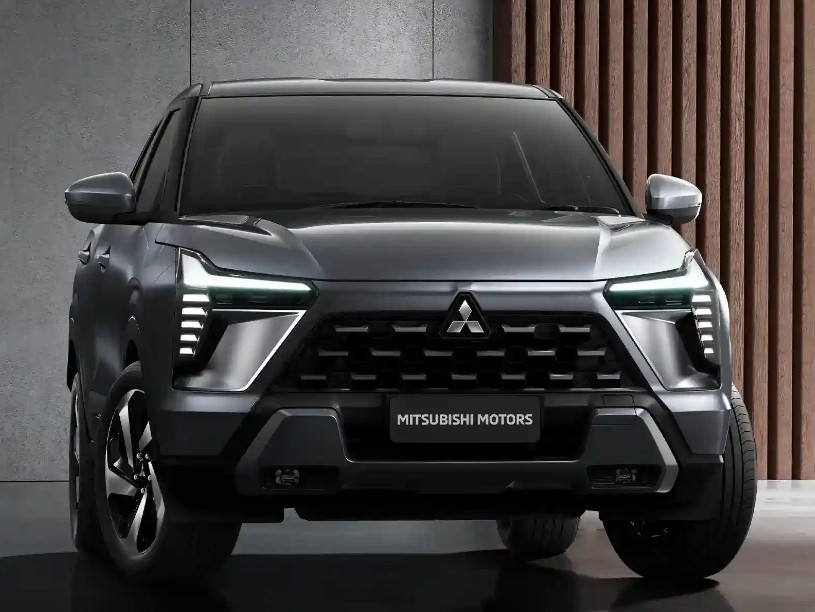
The Outlander wears Mitsubishi's bold "Dynamic Shield" design language. The front end is upright, wide, and heavily detailed. Chrome elements, narrow upper lighting units, and prominent lower lamps give it considerably more visual drama than older Outlanders.
From some angles, it almost looks like it wants to move one class upward.
That is part of the Outlander's appeal. It doesn't merely try to be anonymous transportation. Higher trims with large wheels, contrasting details, panoramic roofs, and premium finishes can look surprisingly expensive.
The downside?
Some buyers may find the front-end styling busy. The Outlander isn't shy.
Toyota RAV4 Design
The RAV4 typically takes a more rugged approach. Recent generations have leaned heavily into squared-off wheel arches, substantial body cladding, strong shoulders, and adventure-inspired styling.
Toyota knows its audience. It wants the RAV4 to look capable without turning it into a genuine off-roader.
The result tends to age well.
If the Outlander arrives at the party wearing a tailored jacket, the RAV4 turns up in hiking boots.
Which One Looks Better?
We would call this one personal preference.
Choose the Outlander if you want:
- A more sophisticated appearance
- A visually larger SUV
- More chrome and premium detailing
- Something less common on the road
Choose the RAV4 if you prefer:
- Rugged styling
- Cleaner long-term resale appeal
- An outdoors-oriented appearance
- A more familiar SUV design
Interior Quality: The Outlander Has a Surprise Waiting
This is one area where anyone remembering older Mitsubishi interiors may need to reset expectations.
Modern Outlanders can feel significantly more upscale than the brand's price positioning suggests.
Outlander Cabin
The dashboard has a broad horizontal design, and upper trim levels can include leather upholstery, digital instruments, large infotainment displays, premium audio, panoramic glass, heated seats, head-up displays, and even features such as front-seat massage depending on trim and country.
The U.S.-spec 2026 Outlander PHEV illustrates how far Mitsubishi is willing to push the model. Available equipment includes semi-aniline leather, massage functionality, a digital rear-view mirror, head-up display, panoramic roof, and a 12-speaker Yamaha audio system.
That is not equipment we traditionally associate with an ordinary family crossover.
RAV4 Cabin
Toyota generally prioritizes ergonomics, usability, storage, and durability.
Its interiors may not always make the same first impression as a loaded Outlander, but controls tend to be logically placed and the cabin is designed around real everyday use.
That's important.
Fancy piano-black trim looks beautiful in a showroom. A large storage tray that swallows sunglasses, keys, receipts, and a charging cable might actually improve our lives every day.
Toyota understands that distinction exceptionally well.
Mitsubishi Outlander vs Toyota RAV4 Interior Winner
If we're judging perceived luxury alone, the Outlander can have the edge, particularly in high specifications.
If we're judging straightforward usability and long-term familiarity, the RAV4 remains excellent.
Neither approach is wrong.
Passenger Space and Seating Capacity
Here's where the comparison gets especially interesting.
The Outlander's Secret Weapon: Seven Seats
Many versions of the Mitsubishi Outlander offer three-row seating and room for seven occupants.
Mitsubishi continues to advertise seven-passenger seating on the 2026 Outlander PHEV in the United States.
That's a major differentiator because the RAV4 is fundamentally a five-seat SUV.
However, we need to keep expectations realistic.
The Outlander's third row is not comparable to the back row of a Toyota Highlander, Kia Telluride, Hyundai Palisade, or full-size family SUV.
Think of those rear seats as emergency chairs rather than executive lounges.
They work best for:
- Children
- Short journeys
- Occasional passengers
- School runs
- Situations where having seven seats matters more than having seven spacious seats
Adults will generally prefer the first two rows.
RAV4 Seating
The RAV4 concentrates its interior volume around five occupants.
That's arguably a better solution if we never need more than five seats.
Because Toyota doesn't have to squeeze a third row behind the rear axle, the cargo area remains straightforward and useful.
Which SUV Is Better for Families?
It depends on the family's definition of "better."
A family of four that travels with luggage may prefer the RAV4.
A family with three children who occasionally needs to carry grandparents or friends could find the Outlander's third row invaluable.
Sometimes a tiny pair of seats is more useful than a giant specification number.
Cargo Space and Everyday Practicality
The RAV4 is traditionally one of the stronger compact SUVs when it comes to usable cargo space.
Its five-seat layout gives it an immediate advantage.
Raise the Outlander's third-row seats and luggage space becomes much tighter. Fold them away, however, and the Mitsubishi becomes a much more useful load carrier.
RAV4 Cargo Advantages
The Toyota makes sense if we regularly carry:
- Large suitcases
- Baby equipment
- Shopping
- Camping equipment
- Sports gear
- A dog crate
The cargo area is easier to use because there isn't a third-row seating system competing for space.
Outlander Cargo Advantages
The Mitsubishi counters with flexibility.
One day it can carry five passengers and plenty of luggage. The next day we can unfold the rear seats and squeeze in additional occupants.
It's the automotive equivalent of having a spare bedroom: maybe we don't use it every night, but we're delighted to have it when relatives appear.
Engines and Powertrains
This category becomes complicated because Outlander and RAV4 powertrain availability changes substantially across countries.
That's why buyers should always check local specifications rather than assuming a U.S., Australian, European, Canadian, or New Zealand model is identical.
Outlander Petrol Models
Conventional Outlanders in various markets have commonly used four-cylinder gasoline engines paired with continuously variable transmissions.
They emphasize smoothness rather than outright speed.
The experience is adequate for commuting, highway driving, and family duties, but anyone expecting sports-SUV acceleration may leave disappointed.
The Outlander works best when driven calmly.
You may be interested in reading Mitsubishi Outlander vs Hyundai Tucson: Which SUV Should You Buy?
Toyota RAV4 Hybrid
Hybrid technology is one of Toyota's strongest cards.
Toyota has spent decades developing and mass-producing hybrid systems, and that experience shows in the seamless way many RAV4 Hybrids operate.
The 2026 U.S. RAV4 illustrates Toyota's electrification strategy particularly clearly. Depending on drivetrain configuration, its hybrid system produces up to 236 combined horsepower.
Hybrid availability and output vary internationally, but the broader principle remains the same: the RAV4 is especially compelling for buyers who want better efficiency without plugging the vehicle into a charger.
Mitsubishi Outlander PHEV vs Toyota RAV4 Plug-In Hybrid
Now things get much closer.
Mitsubishi deserves considerable credit here.
The Outlander PHEV wasn't an afterthought designed merely to satisfy emissions regulations. Plug-in hybrid technology has been central to the Outlander identity for years.
How the Outlander PHEV Works
The latest U.S. model combines:
- A 2.4-liter four-cylinder engine
- A lithium-ion battery
- Front and rear electric motors
- Twin-motor Super All-Wheel Control
The 2026 U.S. model uses a 22.7-kWh battery.
Mitsubishi quotes up to 45 miles of electric range for the 2026 U.S.-spec Outlander PHEV, along with a combined gasoline-and-electric range of approximately 420 miles.
Numbers differ elsewhere, but the concept is what matters.
If our daily commute fits inside the vehicle's electric range and we charge regularly, many routine journeys can happen with little or no gasoline use.
Then the engine remains available for long trips.
That's the beauty of a good PHEV.
What About the RAV4 Plug-In Hybrid?
Toyota's plug-in RAV4 variants have traditionally emphasized strong performance as well as efficiency.
Depending on generation and market, Toyota may market the plug-in version under names such as RAV4 Plug-in Hybrid rather than the RAV4 Prime branding familiar to North American buyers of previous years.
The key distinction between the two philosophies is subtle.
Toyota tends to make its plug-in RAV4 feel like a powerful RAV4 that happens to be extremely efficient.
Mitsubishi makes the PHEV system feel like part of the Outlander's identity.
Fuel Economy: Toyota Strikes Back
For non-plug-in ownership, Toyota generally has the stronger argument.
A RAV4 Hybrid is especially attractive because we don't need to install a charger, remember to plug it in, or structure our driving habits around electricity.
We simply fill the tank and drive.
The hybrid system quietly does the rest.
That makes it brilliant for:
- Apartment residents
- Drivers without home charging
- High-mileage commuters
- Owners who frequently make medium-to-long journeys
- Buyers who simply don't want to think about charging
The Outlander PHEV can potentially consume far less gasoline during short daily journeys, but only if we actually charge it.
And that's the golden rule of plug-in hybrids:
A PHEV without regular charging can lose much of its advantage.
Performance and Driving Experience
Neither model is primarily designed for enthusiasts, but they don't feel identical.
Outlander on the Road
The Outlander tends to prioritize comfort.
Steering is light, suspension tuning is family friendly, and the overall driving experience feels relaxed.
The extra size and weight of PHEV versions can sometimes be noticeable, but electric motors provide useful immediate torque around town.
The Outlander's personality says, "Why rush?"
RAV4 on the Road
The RAV4 often feels slightly lighter on its feet.
Hybrid versions respond quickly from low speeds because the electric system helps fill the gaps in engine response.
Some versions are tuned more firmly than others, particularly adventure-themed or sportier configurations.
Neither is a Mazda CX-5 trying to entertain us on every corner.
That's fine.
These are SUVs designed for Monday morning traffic, school bags, groceries, weekend trips, and motorway miles.
All-Wheel Drive and Poor-Weather Capability
Both models can be strong choices for wet, snowy, gravel, or loose conditions when properly equipped.
Mitsubishi S-AWC
Mitsubishi calls its advanced system Super All-Wheel Control, or S-AWC.
The branding may sound theatrical, but Mitsubishi has genuine heritage in traction systems.
The 2026 Outlander PHEV, for example, combines front and rear electric motors with S-AWC and selectable modes including Normal, Power, Eco, Tarmac, Gravel, Snow, and Mud on U.S. versions.
That makes it especially interesting for buyers in regions with snow or poor road conditions.
Toyota AWD
Toyota also offers sophisticated AWD strategies depending on RAV4 configuration.
Electrified versions can manage traction differently from conventional mechanical systems, distributing power without necessarily using a traditional driveshaft arrangement in every configuration.
For most owners, either vehicle provides more than enough all-weather capability.
Just remember: AWD helps us accelerate.
Good tires help us accelerate, turn and stop.
Off-Road Capability
Neither SUV should be mistaken for a Toyota Land Cruiser, Mitsubishi Pajero/Montero, or Jeep Wrangler.
That said, both can comfortably handle:
- Gravel roads
- Snow
- Muddy parking areas
- Forest access roads
- Campsites
- Uneven rural roads
The RAV4 often leans harder into the visual adventure theme.
The Outlander PHEV's sophisticated traction management can be surprisingly capable on slippery surfaces.
For genuine technical off-roading, though, we'd choose something designed around that job from the beginning.
Technology and Infotainment
Modern versions of both SUVs have moved well beyond the era of tiny screens and endless physical buttons.
The Outlander can offer large digital displays, smartphone integration, wireless charging, navigation, premium Yamaha audio, head-up display, surround-view cameras, and digital rear-view mirror technology depending on trim.
Toyota counters with increasingly sophisticated infotainment, digital instrument displays, smartphone integration, connected services, camera systems, and driver-assistance technology.
The deciding factor may not be screen size.
It's how often we curse at the system.
A slightly smaller interface that works every time beats a dazzling tablet that requires three taps just to change something basic.
Safety Features
Both manufacturers equip modern versions with extensive active-safety technology.
Depending on trim and country, we may find features such as:
- Autonomous emergency braking
- Pedestrian detection
- Adaptive cruise control
- Lane-departure warning
- Lane-keeping assistance
- Blind-spot monitoring
- Rear cross-traffic alert
- Traffic-sign recognition
- Parking cameras
Mitsubishi's current U.S. Outlander PHEV offers systems including Forward Collision Mitigation and, on selected trims, MI-PILOT Assist incorporating adaptive cruise control and lane-support functions.
Toyota similarly makes advanced driver-assistance systems a major component of the RAV4 package.
Exact equipment varies heavily by market, so the trim-specific specification sheet matters more than the badge on the tailgate.
Reliability: Toyota RAV4 vs Mitsubishi Outlander
This is one of Toyota's strongest categories.
Toyota RAV4 Reliability
The RAV4 benefits from Toyota's long reputation for building durable mainstream vehicles.
That does not mean every RAV4 is flawless. No modern vehicle is.
You may be interested in readingMitsubishi Outlander vs Hyundai Tucson: Which SUV Should You Buy?You may be interested in reading
Mitsubishi Outlander vs Nissan Pathfinder: Which SUV Is the Better Choice?However, its widespread use, proven hybrid technology, large dealer ecosystem, and strong owner confidence make it a reassuring long-term proposition.
For buyers planning to keep their SUV for ten years, that reputation matters.
Mitsubishi Outlander Reliability
The Outlander can also be dependable, but its long-term reputation isn't quite as universally strong.
Its PHEV system introduces additional complexity: combustion engine, battery, electric motors, charging hardware, cooling systems, and electronic controls must all work together.
That doesn't automatically make it unreliable.
It simply means service history becomes particularly important when buying used.
Warranty: Mitsubishi Can Be Very Attractive
Warranty coverage depends on country, but Mitsubishi frequently uses generous warranties as a major selling point.
That's strategically smart.
If Toyota sells reassurance through reputation, Mitsubishi often sells reassurance through warranty coverage.
For new-car shoppers who expect to keep the vehicle several years, that warranty can materially change the ownership calculation.
Always compare local terms carefully because coverage, transferability, scheduled servicing requirements, and powertrain conditions vary.
Maintenance Costs
Routine servicing costs depend on local labor rates, parts availability, drivetrain, warranty terms, and dealer policies.
Generally speaking, the conventional RAV4 and Outlander should both be manageable mainstream SUVs.
Hybrid vehicles may reduce some mechanical wear because regenerative braking can reduce reliance on friction brakes.
PHEVs introduce additional electrical hardware but also allow the combustion engine to operate less frequently when charged consistently.
For used buyers, maintenance history matters more than stereotypes.
A perfectly maintained Outlander is usually a better bet than a neglected RAV4 wearing a Toyota badge like a magic shield.
Resale Value: RAV4 Takes the Advantage
This is another category where Toyota tends to shine.
RAV4 demand is consistently strong across many used-car markets.
That matters because depreciation is often one of the largest costs of vehicle ownership—even though we don't receive a monthly bill labeled "depreciation."
A RAV4 may cost more to buy initially yet recover some of that difference when we sell it.
The Outlander may depreciate faster in certain markets, but that creates an interesting second-hand opportunity.
Used buyers can sometimes obtain a significantly newer or better-equipped Outlander for the same money as an older RAV4.
So depreciation is bad for the first owner but potentially excellent for the second.
Price and Value for Money
Exact pricing varies too much internationally for a single number to be meaningful.
Still, the positioning is clear.
Mitsubishi often competes aggressively on equipment.
Toyota competes on the entire ownership proposition.
For context, Mitsubishi lists the 2026 conventional Outlander from $29,995 and the 2026 Outlander PHEV from $43,245 in the United States before destination and other charges.
Those numbers shouldn't be exported to another market, but they illustrate Mitsubishi's strategy of giving the two powertrains distinct price positions.
Outlander Value Strengths
We often get:
- More seating flexibility
- Plenty of equipment
- Attractive warranty coverage
- Premium-looking interior materials
- Strong PHEV capability
RAV4 Value Strengths
Toyota counters with:
- Strong fuel economy
- Proven hybrid systems
- Broad market recognition
- Strong resale values
- Good long-term ownership confidence
Which Is Better for City Driving?
For dense urban driving, we'd lean toward an electrified version of either SUV.
A RAV4 Hybrid requires almost no change in lifestyle.
Get in, drive, refuel occasionally.
That's wonderfully simple.
The Outlander PHEV becomes more compelling if we have home or workplace charging. Imagine commuting 20 or 30 miles, plugging the SUV in overnight, and completing most weekdays primarily on electricity.
That's when the Mitsubishi makes sense.
Without charging access, the Toyota Hybrid is usually the simpler answer.
Which Is Better for Long Road Trips?
The RAV4's efficient hybrid system, five-seat cargo layout, widespread servicing support, and straightforward operation make it an excellent road-trip SUV.
The Outlander fights back with:
- A potentially more comfortable cabin
- Optional seven-passenger flexibility
- Premium amenities
- Electric driving at the destination
- Long combined range in PHEV form
For four adults plus luggage, we'd probably lean toward the RAV4.
For a family that occasionally needs six or seven seats, the Outlander suddenly becomes much more persuasive.
Which Is Better for Used-Car Buyers?
Here's where the answer flips depending on priorities.
Buy a Used RAV4 If You Want
- Strong resale history
- Easier future resale
- Proven hybrid technology
- Straightforward ownership
- Broad mechanic familiarity
Buy a Used Outlander If You Want
- More vehicle for the money
- Newer model years within the same budget
- More luxury equipment
- Optional third-row seating
- PHEV capability at an attractive used price
For a used Outlander PHEV, we'd pay particular attention to battery condition, charging functionality, service history, warning lights, software updates, and evidence of proper maintenance.
Mitsubishi Outlander vs Toyota RAV4: Major Pros and Cons
Mitsubishi Outlander Pros
- Available seven-seat layout
- Upscale-looking cabin
- Strong PHEV concept
- Advanced AWD capability
- Competitive equipment levels
- Often generous warranty coverage
- More distinctive design
Mitsubishi Outlander Cons
- Third row is tight
- Regular petrol performance can feel modest
- Resale may trail Toyota
- PHEV value depends on charging regularly
- Dealer coverage can vary by country
Toyota RAV4 Pros
- Excellent hybrid efficiency
- Strong reliability reputation
- High resale value
- Practical five-seat interior
- Large global owner base
- Easy everyday operation
- Broad model recognition
Toyota RAV4 Cons
- No third row
- Popular versions can be expensive
- Cabin may feel less premium than a high-spec Outlander
- High used-car demand can keep prices elevated
- Some buyers may find it too familiar
Mitsubishi Outlander vs Toyota RAV4: Which Should You Buy?
After comparing the two, our recommendation depends less on which SUV is objectively "better" and more on what problem we're asking it to solve.
Choose the Mitsubishi Outlander If…
The Mitsubishi Outlander makes more sense if we need occasional seven-passenger seating, want a more premium-feeling interior for the money, value generous equipment, or have the ability to charge an Outlander PHEV regularly.
It can be a particularly clever family choice.
Its third row may be small, but a small third row is infinitely more useful than a nonexistent third row when six people suddenly need a ride.
Choose the Toyota RAV4 If…
The Toyota RAV4 is our choice if efficiency, resale value, long-term reputation, straightforward ownership, and five-seat practicality matter most.
A RAV4 Hybrid is particularly hard to argue against.
There's no charging routine to learn. No major lifestyle adjustment. The vehicle simply uses less fuel while behaving much like a normal SUV.
That's why the RAV4 is such a formidable competitor.
It isn't always exciting.
It's simply very good at being useful.
Final Verdict: Outlander or RAV4?
So, Mitsubishi Outlander vs Toyota RAV4—which one wins?
For the broadest range of buyers, we'd give the Toyota RAV4 the overall advantage. Its combination of efficient hybrid technology, practicality, resale value, proven reputation, and simple ownership makes it an exceptionally sensible family crossover.
But the Mitsubishi Outlander deserves far more than a consolation prize.
In fact, for buyers who need seven seats or genuinely plan to exploit plug-in charging, we might choose the Outlander PHEV instead.
That's what makes this comparison interesting.
The Toyota is arguably the safer recommendation.
The Mitsubishi may be the smarter recommendation for the right person.
Sometimes choosing a car isn't about finding the winner of a specification contest. It's about finding the SUV whose compromises line up with our own life.
And between these two, those compromises are refreshingly different.
Frequently Asked Questions
1. Is a Mitsubishi Outlander better than a Toyota RAV4?
The Outlander can be better for families needing occasional seven-seat capacity, buyers wanting a more upscale cabin, and drivers who can take advantage of the Outlander PHEV. The RAV4 is generally better for buyers prioritizing fuel efficiency, resale value, reliability reputation, and simple five-seat practicality.
2. Which is more reliable, Toyota RAV4 or Mitsubishi Outlander?
The Toyota RAV4 generally has the stronger long-term reliability reputation, supported by Toyota's extensive history with conventional and hybrid drivetrains. A properly maintained Outlander can still provide dependable service, but used PHEV buyers should carefully inspect service and battery history.
3. Which is bigger, Mitsubishi Outlander or Toyota RAV4?
The Outlander generally feels more like a larger family SUV and offers up to seven seats in many markets, while the RAV4 is primarily designed around five passengers. Actual exterior dimensions vary by generation and specification, so buyers comparing particular years should check local measurements.
You may be interested in readingMitsubishi Outlander vs Hyundai Tucson: Which SUV Should You Buy?You may be interested in reading
Mitsubishi Outlander vs Nissan Pathfinder: Which SUV Is the Better Choice?You may be interested in reading
Mitsubishi Outlander vs Hyundai Santa Fe: Which SUV Should You Buy?4. Is the Outlander PHEV better than the RAV4 Hybrid?
They solve different problems. The Outlander PHEV can complete many short journeys on electricity if charged regularly, potentially reducing gasoline consumption dramatically. A RAV4 Hybrid doesn't require plugging in and is therefore easier for drivers without reliable charging access.
5. Which SUV holds its value better, RAV4 or Outlander?
The Toyota RAV4 generally enjoys stronger resale values in many markets because used demand and Toyota's reliability reputation remain high. The Outlander's heavier depreciation can, however, make a used example excellent value for second-hand buyers.
If you want to know other articles similar to Mitsubishi Outlander vs Toyota RAV4: Which SUV Is the Better Buy? you can visit the category Models.
Honda Passport vs Toyota 4Runner: Which SUV Is Better?
Honda Passport vs Ford Bronco: Which SUV Is Better?
Honda Passport vs Ford Explorer: Which SUV Is Better?
Honda Passport or Pilot: Which SUV Is Better?
Honda Passport vs Jeep Grand Cherokee: Which SUV Is Better?
Honda Passport vs Nissan Pathfinder: Which SUV Is Better?
Leave a Reply
More content of your interest