
Mitsubishi Outlander vs Nissan Pathfinder: Which SUV Is the Better Choice?

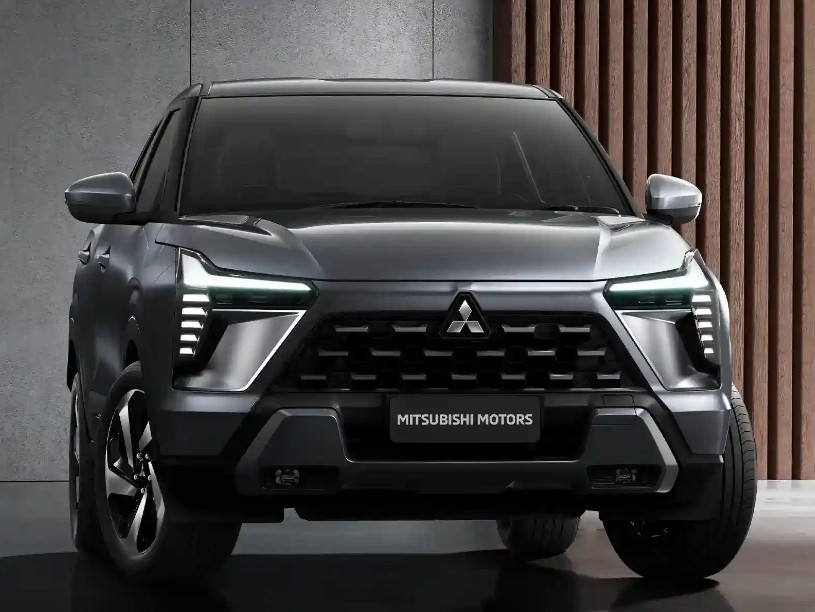
Choosing between the Mitsubishi Outlander vs Nissan Pathfinder can feel a little like deciding between a well-equipped family crossover and a larger SUV that has been hitting the gym. Both offer three rows in many markets, both can handle family duties, and both are available with all-wheel-drive technology. Yet once we dig beneath the surface, these vehicles serve noticeably different buyers.
The Mitsubishi Outlander leans toward efficiency, urban usability, technology, and value. It is relatively compact for a three-row SUV and, depending on the market, can also be purchased as an exceptionally interesting plug-in hybrid.
The Nissan Pathfinder takes the opposite approach. It is larger, more powerful, roomier, and substantially stronger when towing. Where the Outlander behaves like a crossover that happens to offer extra seats, the Pathfinder feels much more like a traditional family adventure SUV.
So, which one deserves a place in our driveway?
Let's compare them properly.
Content in this publication
- Mitsubishi Outlander vs Nissan Pathfinder at a Glance
- Size: How Much Bigger Is the Nissan Pathfinder?
- Interior Space and Passenger Comfort
- Cargo Space: Which Can Carry More?
- Engine Performance: Pathfinder Brings More Muscle
- Transmission Differences
- Fuel Economy: Outlander Strikes Back
- Towing Capacity: This One Isn't Close
- All-Wheel Drive and Bad-Weather Capability
- Ride Comfort
- Handling: Smaller Can Be Sweeter
- Technology and Infotainment
- Safety Technology
- Reliability: Outlander vs Pathfinder
- Maintenance and Running Costs
- Outlander PHEV Maintenance Considerations
- Price and Value
- Which Has the Better Third Row?
- Which Is Better for a Family of Four?
- Which Is Better for a Family of Six or More?
- Which Is Better for Road Trips?
- Which Is Better for Commuting?
- Which Is Better for Towing a Caravan or Boat?
- Mitsubishi Outlander Advantages
- Nissan Pathfinder Advantages
- Mitsubishi Outlander vs Nissan Pathfinder: Which Should We Buy?
- Outlander vs Pathfinder: Our Final Verdict
- Frequently Asked Questions
- 1. Is the Nissan Pathfinder Bigger Than the Mitsubishi Outlander?
- 2. Does the Mitsubishi Outlander or Nissan Pathfinder Have More Seats?
- 3. Which Can Tow More, Outlander or Pathfinder?
- 4. Is the Outlander More Fuel Efficient Than the Pathfinder?
- 5. Is a Mitsubishi Outlander Better Than a Nissan Pathfinder?
Mitsubishi Outlander vs Nissan Pathfinder at a Glance
Before dissecting every detail, here's the basic difference.
| Category | Mitsubishi Outlander | Nissan Pathfinder |
|---|---|---|
| Vehicle type | Compact/midsize crossover | Larger midsize SUV |
| Typical seating | Up to 7 | Up to 8 |
| Third-row suitability | Occasional use | More family-friendly |
| Fuel economy | Generally better | Generally higher consumption |
| PHEV availability | Yes, in many markets | Generally no |
| Towing strength | Moderate | Much stronger |
| City driving | Easier | More cumbersome |
| Cargo capacity | Good for its size | Significantly larger |
| AWD capability | Available S-AWC | Available Intelligent 4WD/AWD |
| Best suited to | Everyday family use | Larger families and towing |
The important thing here is that these SUVs aren't really direct twins.
The Pathfinder sits a class above the Outlander in overall size and capability. That doesn't automatically make it better. Bigger vehicles bring bigger appetites, bigger parking footprints, and generally bigger running costs.
Think of the Pathfinder as the family expedition vehicle and the Outlander as the family multitool.
Size: How Much Bigger Is the Nissan Pathfinder?
Size is one of the biggest differences in this comparison.
The current Pathfinder sold in markets such as North America is roughly 5 metres long, whereas the Outlander is closer to 4.7 metres. Exact dimensions vary slightly by model year and region, but the relationship stays the same: the Nissan is the noticeably larger SUV.
That extra body length affects virtually everything.
The Pathfinder provides:
- More passenger space
- A larger third row
- Greater cargo flexibility
- A wider-feeling cabin
- Better suitability for bigger families
The Outlander counters with easier manoeuvrability, simpler parking, and a less intimidating footprint.
For somebody driving through narrow European streets, busy Asian cities, or crowded shopping-centre car parks, those differences matter.
Which SUV Is Easier to Drive in the City?
The Mitsubishi Outlander wins.
It feels more crossover-like and occupies less road space. Parking is easier, U-turns require less planning, and squeezing through narrow streets doesn't feel like steering a boat through a canal.
The Pathfinder isn't absurdly large, but you'll always know you're driving more vehicle.
That can be comforting on a motorway and annoying in an underground car park.
Interior Space and Passenger Comfort
Here's where the Pathfinder starts stretching its legs.
Current versions can accommodate up to eight occupants, depending on seating configuration. Nissan also offers second-row captain's chairs on some versions, reducing capacity to seven while making the cabin more luxurious and improving access to the third row.
The current Outlander typically offers seven-passenger seating in many markets. Mitsubishi confirms seven-passenger capacity on current U.S.-market versions.
But counting seatbelts doesn't tell the whole story.
Outlander Third Row: Useful but Compact
We should think of the Outlander's third row as bonus seating.
It's excellent when:
- Children need occasional transportation
- Grandparents join a short journey
- We unexpectedly need two additional seats
- The second vehicle isn't available
It isn't where most adults will volunteer to spend a five-hour road trip.
Legroom and overall space are constrained because Mitsubishi has squeezed three rows into a relatively compact exterior footprint.
That's impressive engineering, but physics eventually sends us the bill.
Pathfinder Third Row: The Better Family Option
The Pathfinder is much more convincing as a genuinely three-row vehicle.
Current U.S. specifications list up to eight seats and approximately 28 inches of third-row legroom, illustrating how Nissan has prioritized usable passenger accommodation.
Adults still won't mistake the third row for business class, but it is considerably more useful.
If we're regularly carrying six, seven, or eight people, this comparison starts tilting heavily toward Nissan.
Winner for Passenger Space: Nissan Pathfinder
No surprise here.
The physically larger SUV offers the more spacious cabin.
Cargo Space: Which Can Carry More?
Families accumulate luggage like magnets collect metal.
Pushchairs. Grocery bags. Football equipment. Backpacks. Suitcases. Camping gear. Dog accessories. That mysterious bag we've been carrying around for three months without opening.
Cargo capacity therefore matters enormously.
The Pathfinder's longer body gives it a natural advantage, especially when all three seating rows are being used.
Current U.S. Pathfinder specifications quote around 16.6 cubic feet of cargo volume in one relevant configuration with the rear seats in use, while additional space becomes available as the rear rows fold.
The Outlander offers respectable cargo flexibility but becomes significantly tighter when its third-row seats are raised.
For Families Carrying Luggage
Choose the Pathfinder if you're frequently combining:
seven passengers + luggage.
That's one of the toughest packaging tests any SUV can face.
With the Outlander, the third row and luggage area compete for the same precious real estate.
With the Pathfinder, there's simply more vehicle to work with.
Engine Performance: Pathfinder Brings More Muscle
This is another fundamental difference.
Pathfinder powertrains vary internationally and by generation, but modern versions in major markets have traditionally focused on larger-displacement petrol engines and substantial naturally aspirated power.
That gives the Pathfinder stronger acceleration under load and greater towing ability.
The Outlander generally uses smaller, more economy-focused engines. Depending on region and model year, buyers may encounter conventional petrol, hybrid, or plug-in hybrid configurations.
The driving personalities are therefore very different.
How the Outlander Feels
The Outlander prioritizes smooth everyday driving rather than brute-force acceleration.
Around town, that's perfectly acceptable.
The vehicle isn't trying to impersonate a sports SUV. Throttle response is generally calibrated for comfort and efficiency, while available all-wheel-drive systems add confidence.
Load it with passengers, luggage, and a trailer, however, and the relatively modest performance becomes more obvious.
How the Pathfinder Feels
The Pathfinder feels stronger.
That extra engine output becomes particularly noticeable during:
- Highway overtaking
- Steep climbs
- Heavy passenger loads
- Trailer towing
- Long-distance motorway driving
It's the difference between asking an engine to perform a task and having the engine shrug and say, "Sure."
Winner for Raw Performance: Nissan Pathfinder
For power, the Nissan wins comfortably.
Transmission Differences
Modern Pathfinder generations moved away from the continuously variable transmission found in some earlier versions and use a conventional 9-speed automatic transmission in the current U.S. model. Nissan's 2026 documentation confirms the nine-speed automatic.
The Outlander's transmission arrangement depends heavily on powertrain.
Conventional petrol models can use CVT-type transmissions in certain markets, whereas the Outlander PHEV operates very differently because electric motors play a major role in propulsion.
From a driver's perspective, the Pathfinder usually delivers a more traditional automatic-transmission sensation.
The Outlander favors smoothness.
Fuel Economy: Outlander Strikes Back
The Nissan's muscle comes with a predictable consequence.
It generally burns more fuel.
The lighter, smaller Outlander is built around efficiency and becomes especially compelling when we introduce the plug-in hybrid.
Current U.S. figures for the 2026 petrol Outlander reach an EPA-estimated 28 mpg combined for some front-wheel-drive versions.
Regional testing systems differ, so we shouldn't compare U.S. EPA figures directly with WLTP, ADR, or Japanese JC08/WLTC figures. Still, the broader conclusion remains solid:
the Outlander is normally the cheaper SUV to fuel.
Outlander PHEV Changes the Comparison Completely
Now things get interesting.
The Outlander PHEV is one of Mitsubishi's strongest arguments.
Current versions combine a petrol engine, a substantial lithium-ion battery, and electric motors. Mitsubishi's latest U.S. Outlander PHEV, for example, uses a 2.4-litre engine, 22.7-kWh battery, twin-motor S-AWC and seven-passenger seating.
For buyers who can charge at home, daily fuel usage can fall dramatically.
Imagine a commute of 25 kilometres each way and regular overnight charging. Many daily journeys may involve substantial electric driving rather than continuously operating the petrol engine.
You may be interested in reading Mitsubishi Outlander vs Hyundai Santa Fe: Which SUV Should You Buy?
The Pathfinder can't really answer that challenge.
Which SUV Costs Less to Fuel?
Usually:
Outlander petrol > Pathfinder
And potentially:
Outlander PHEV >>> Pathfinder
The exact savings depend on electricity prices, fuel costs, charging behaviour, climate, and driving patterns.
Towing Capacity: This One Isn't Close
Need to tow?
The Pathfinder is the clear winner.
In the United States, properly equipped 2026 Pathfinder versions can tow up to 6,000 lb (approximately 2,722 kg). Lower-spec configurations may carry lower ratings.
Current U.S.-spec Outlander petrol models are rated for up to 2,000 lb (about 907 kg) when properly equipped.
Again, regional towing homologation varies, so always check the exact legal rating for your country, engine, transmission, and trim.
But the larger point isn't going to change.
Choose the Pathfinder for Serious Towing
The Nissan makes far more sense for:
- Larger caravans
- Boats
- Horse trailers where legally suitable
- Utility trailers
- Recreational equipment
- Heavier towing duties
The Mitsubishi remains perfectly useful for lighter trailers and recreational loads within its approved limit.
Think bicycle versus pickup truck.
Both can carry things.
Only one was built with heavy hauling near the top of its résumé.
All-Wheel Drive and Bad-Weather Capability
Both manufacturers have credible systems.
Mitsubishi has spent decades developing its S-AWC — Super All-Wheel Control philosophy. On applicable Outlander models, the system integrates drivetrain and chassis control to improve traction and stability.
The Outlander PHEV is particularly interesting because its twin-motor system can deliver electrically controlled propulsion across the axles. Mitsubishi's current PHEV specification confirms Twin Motor S-AWC and multiple modes including Normal, Power, Eco, Tarmac, Gravel, Snow, and Mud.
Pathfinder models equipped with Nissan's Intelligent 4x4 system similarly provide selectable terrain and driving modes. Current 4WD versions can offer seven modes depending on configuration.
Which Is Better Off Road?
Neither should be mistaken for a hardcore body-on-frame off-roader.
We're not comparing a Land Cruiser with a Wrangler here.
For:
- Snow
- Gravel
- Muddy campsites
- Wet grass
- Rough access roads
- Light trails
both can be capable.
The Pathfinder's stronger engine and larger physical package help on adventure trips, while the Outlander's S-AWC system can feel impressively sophisticated on slippery roads.
Winner: Roughly Even for Normal AWD Use
The Pathfinder has more muscle.
The Outlander has a particularly sophisticated drivetrain story, especially in PHEV form.
Ride Comfort
The Outlander tends to feel lighter and more car-like.
That's excellent during everyday commuting, although large alloy wheels on higher specifications can transmit sharper road imperfections.
The Pathfinder's longer wheelbase and greater mass can make it feel more substantial on highways. Bigger vehicles often absorb long road undulations with greater composure.
Loaded with passengers, the Pathfinder also feels like it's operating within its intended mission.
For Long-Distance Family Trips
We'd give the Pathfinder the advantage.
More room plus a relaxed powertrain is a good recipe for crossing entire states, provinces, or countries.
For Everyday Urban Driving
Outlander.
No contest.
Handling: Smaller Can Be Sweeter
Neither SUV exists to hunt Porsche 911s through mountain passes.
Still, vehicle size affects driving enjoyment.
The Outlander feels easier to place on the road and generally changes direction with less mass announcing itself.
The Pathfinder feels heavier.
Some drivers enjoy that solidity. Others will consider it unnecessarily cumbersome.
If most of our kilometres happen alone or with one passenger, driving a huge SUV everywhere can feel like bringing a suitcase to carry a toothbrush.
The Outlander's dimensions simply make more sense for many daily routines.
Technology and Infotainment
Both SUVs offer the features buyers now expect, depending on trim and market:
- Large infotainment screens
- Apple CarPlay
- Android Auto
- Digital instrumentation
- Wireless charging
- Multiple USB ports
- Surround-view cameras
- Premium audio
- Connected vehicle services
- Navigation
Mitsubishi has been pushing the Outlander surprisingly far upmarket.
Current U.S. versions offer features including a 12.3-inch infotainment display, Yamaha-branded premium audio systems, digital rear-view mirror technology, heated and ventilated seating, and available premium upholstery.
The Pathfinder similarly offers increasingly luxurious equipment as we climb the trim ladder.
Which Interior Feels More Modern?
The Outlander can surprise buyers here.
Its cabin often looks sharper and more upscale than people expect from the Mitsubishi badge.
The Pathfinder wins on spaciousness.
The Outlander can win on visual sophistication.
Safety Technology
Both vehicles offer extensive driver-assistance systems, although standard and optional equipment varies significantly by market.
Typical available technologies include:
- Automatic emergency braking
- Blind-spot monitoring
- Rear cross-traffic alert
- Lane-departure warning
- Lane-keeping assistance
- Adaptive cruise control
- Parking sensors
- Multi-view cameras
- Traffic-sign recognition
Mitsubishi's latest vehicles can offer MI-PILOT Assist, which combines several assistance functions. Current Outlander equipment also includes available active blind-spot assistance, lane-keeping features, forward collision mitigation, rear automatic braking, and other systems.
For safety-conscious families, we'd compare the exact trims available locally instead of assuming that every version includes the same package.
Reliability: Outlander vs Pathfinder
Reliability isn't determined by a badge alone.
Model year, engine, transmission, maintenance history, climate, driving conditions, and previous ownership all matter enormously.
Still, both models have been around long enough that buyers should research the specific generation they're considering.
Earlier Pathfinder generations using CVTs developed a very different reputation from newer generations using conventional automatic transmissions. That distinction matters tremendously when shopping used.
The Outlander also changes substantially by generation and powertrain.
Buying Used? Prioritize History Over Logo
When comparing two five-year-old examples, we'd rather buy:
a meticulously maintained Pathfinder or Outlander with full records
than:
a supposedly "more reliable" model with questionable service history.
Paperwork often predicts ownership happiness better than internet tribalism.
Maintenance and Running Costs
The Outlander should generally be less expensive to run.
Why?
It's:
- Smaller
- Lighter
- Usually more fuel efficient
- Typically equipped with less powerful engines
- Likely to use somewhat less expensive consumables
Tyres deserve attention, though.
Large-diameter wheels on upscale Outlander versions can still be expensive.
The Pathfinder's greater weight and output mean tyres, brakes, and fuel can cost more over time.
And if we regularly tow, those components work even harder.
Outlander PHEV Maintenance Considerations
Plug-in hybrids add complexity.
There are:
You may be interested in readingMitsubishi Outlander vs Hyundai Santa Fe: Which SUV Should You Buy?You may be interested in reading
Mitsubishi Outlander vs Honda Pilot: Which SUV Should You Buy?- Battery systems
- Electric motors
- Power electronics
- Charging hardware
- A combustion engine
That sounds frightening until we remember that electric motors themselves contain relatively few wear components.
Battery health becomes more important when buying an older PHEV, though.
We'd want diagnostic information before purchasing a high-mileage used example.
Price and Value
This category varies so much internationally that quoting a single price would be misleading.
Taxes, exchange rates, import duties, equipment packages, government incentives, and local distributor strategies can completely reshuffle the picture.
But structurally, the Outlander normally occupies the more affordable part of the market.
The Pathfinder is larger and typically costs more.
What Do We Get for the Pathfinder's Extra Money?
Mostly physical capability:
- More cabin space
- More seats in some configurations
- Greater towing capacity
- Stronger performance
- Better third-row usability
- More luggage capacity
The Outlander's value comes from squeezing a remarkable amount of versatility into a smaller footprint.
Which Has the Better Third Row?
Pathfinder. Easily.
This is worth repeating because seven-seat advertising can create misleading expectations.
The Outlander technically provides a third row.
The Pathfinder more convincingly functions as a three-row family SUV.
If we use the rear seats only several times a year, Mitsubishi's solution may be perfect.
If they're occupied every morning during the school run, Nissan is the smarter choice.
Which Is Better for a Family of Four?
This changes everything.
With only four regular occupants, we don't necessarily need the Pathfinder's size.
Suddenly, the Outlander becomes extremely attractive.
We gain:
- Easier parking
- Lower fuel use
- Optional PHEV efficiency
- Plenty of cabin room
- Occasional third-row flexibility
- Potentially lower purchase cost
Why haul an empty ballroom behind us every day?
For a family of four, we'd generally favor the Outlander unless towing or huge cargo capacity is important.
Which Is Better for a Family of Six or More?
Pathfinder.
A household regularly carrying six to eight people needs real passenger volume.
The Nissan's larger body stops feeling excessive and starts feeling necessary.
Which Is Better for Road Trips?
If fuel economy dominates:
Outlander.
If comfort, luggage space, and passenger room dominate:
Pathfinder.
With five people and light baggage, both work.
With seven people plus suitcases, we'd want the Nissan keys.
Which Is Better for Commuting?
The Mitsubishi Outlander wins overwhelmingly.
Commuting rarely requires 6,000-lb-class towing potential or eight seats.
What matters more?
Parking.
Fuel economy.
Visibility.
Comfort.
Easy manoeuvrability.
Running costs.
The Outlander fits that mission beautifully.
And if our daily commute works within the electric-driving capability of an Outlander PHEV, the argument becomes even stronger.
Which Is Better for Towing a Caravan or Boat?
Pathfinder.
This is one of the clearest decisions in the entire comparison.
In markets where equivalent tow ratings are approved, the Nissan's substantially greater capacity leaves far more breathing room.
Never tow based purely on a headline number, though.
Always consider:
- Vehicle-specific tow rating
- Trailer brakes
- Tow-ball weight
- Payload
- Combined mass limits
- Number of passengers
- Luggage
- Local regulations
Payload disappears quickly once a large family climbs aboard.
Mitsubishi Outlander Advantages
The Outlander makes the strongest case when we prioritize everyday practicality.
Its key advantages include:
- Smaller exterior dimensions
- Easier city driving
- Better fuel economy
- Available plug-in hybrid drivetrain
- Sophisticated S-AWC technology
- Seven-seat flexibility
- Modern interior design
- Potentially lower purchase price
- Lower everyday running costs
- Easier parking
It's the more rational choice for many households.
Nissan Pathfinder Advantages
The Pathfinder fights back with sheer capability.
Its strongest qualities include:
- More passenger space
- Up to eight seats in applicable configurations
- More usable third row
- Greater cargo capacity
- Stronger engine performance
- Significantly better towing capability
- Better suitability for large families
- More relaxed performance under heavy loads
- Strong long-distance credentials
If we actually need a big SUV, the Pathfinder behaves like one.
Mitsubishi Outlander vs Nissan Pathfinder: Which Should We Buy?
Here's the simplest way to make the decision.
Buy the Mitsubishi Outlander If…
Choose Mitsubishi when we:
- Usually carry four or five people
- Occasionally need seven seats
- Drive primarily in cities
- Care about fuel economy
- Want plug-in hybrid technology
- Don't tow heavy trailers
- Prefer a smaller SUV
- Want strong equipment for the money
Buy the Nissan Pathfinder If…
Choose Nissan when we:
- Regularly carry six or more passengers
- Need a proper third row
- Take long family road trips
- Tow caravans, boats, or trailers
- Need substantial cargo capacity
- Prefer stronger acceleration
- Don't mind higher fuel consumption
- Have enough parking space
Outlander vs Pathfinder: Our Final Verdict
The Mitsubishi Outlander vs Nissan Pathfinder battle doesn't produce one universal winner because the two SUVs solve different problems.
The Mitsubishi Outlander is the better all-round everyday choice.
It is easier to live with, generally more fuel efficient, easier to park, and surprisingly versatile. Throw the Outlander PHEV into the equation and Mitsubishi gains an advantage that Nissan simply can't replicate: the ability to handle many everyday journeys using significant electric propulsion while preserving long-distance petrol flexibility.
For smaller families, commuters, urban drivers, and buyers who occasionally need seven seats, we'd lean toward the Outlander.
The Nissan Pathfinder is the better heavy-duty family SUV.
Its larger cabin, genuinely more useful third row, stronger performance, and dramatically superior towing potential justify its extra size when those capabilities are actually needed.
That's the key phrase: when they're actually needed.
Buying the Pathfinder simply because it's bigger is like buying an eight-person dining table for a studio apartment. Impressive? Sure. Practical? Maybe not.
But put six children around that table every evening and suddenly nothing smaller makes sense.
So our verdict is straightforward:
Outlander for everyday efficiency and versatility. Pathfinder for space, passengers, and towing.
Neither wins every category.
The best SUV is the one whose compromises match our life.
Frequently Asked Questions
1. Is the Nissan Pathfinder Bigger Than the Mitsubishi Outlander?
Yes. The Pathfinder is noticeably longer and generally wider than the Outlander. That extra size translates into greater passenger volume, more useful third-row seating, and additional cargo capacity. The Outlander's smaller body makes it easier to drive and park in congested urban environments.
2. Does the Mitsubishi Outlander or Nissan Pathfinder Have More Seats?
The Mitsubishi Outlander commonly offers seating for up to seven passengers, while current Pathfinder configurations can accommodate up to eight. Some Pathfinder versions use second-row captain's chairs and therefore seat seven instead. Equipment varies by country and model year.
3. Which Can Tow More, Outlander or Pathfinder?
The Nissan Pathfinder can tow substantially more when properly equipped. Current U.S.-market Pathfinder versions can reach a maximum rating of 6,000 lb, while the current petrol Outlander is rated up to 2,000 lb in the U.S. Exact towing limits vary internationally, so always consult the specification for the particular vehicle and market.
4. Is the Outlander More Fuel Efficient Than the Pathfinder?
Generally, yes. The Outlander is smaller and lighter and typically uses more economy-focused powertrains. The difference can become much larger with the Outlander PHEV when owners regularly recharge the battery and complete substantial portions of their daily driving electrically.
5. Is a Mitsubishi Outlander Better Than a Nissan Pathfinder?
It depends on what we need. The Outlander is better suited to everyday commuting, city driving, fuel-conscious ownership, and families that only occasionally use a third row. The Pathfinder is better for large families, regular third-row passengers, heavy towing, and carrying substantial amounts of luggage. Neither is universally better; they simply prioritize different jobs.
You may be interested in readingMitsubishi Outlander vs Hyundai Santa Fe: Which SUV Should You Buy?You may be interested in reading
Mitsubishi Outlander vs Honda Pilot: Which SUV Should You Buy?You may be interested in reading
Mitsubishi Outlander vs Mazda CX-5: Which SUV Is Better?If you want to know other articles similar to Mitsubishi Outlander vs Nissan Pathfinder: Which SUV Is the Better Choice? you can visit the category Models.
Mazda CX-9 vs RAV4: Which SUV Is the Better Choice?
Mazda CX-9 vs CX-8: Which Three-Row Mazda SUV Is Better?
Mazda CX-9 vs Honda Pilot: Which Three-Row SUV Is Better?
Mazda CX-9 vs CX-5: Which Mazda SUV Is Better?
Leapmotor C10 vs BYD Sealion 7: Which Electric SUV Makes More Sense?
Leapmotor C10 vs Geely EX5: Which Electric SUV Is Better?
Leave a Reply
More content of your interest