

Mitsubishi Outlander vs Hyundai Santa Fe: Which SUV Should You Buy?

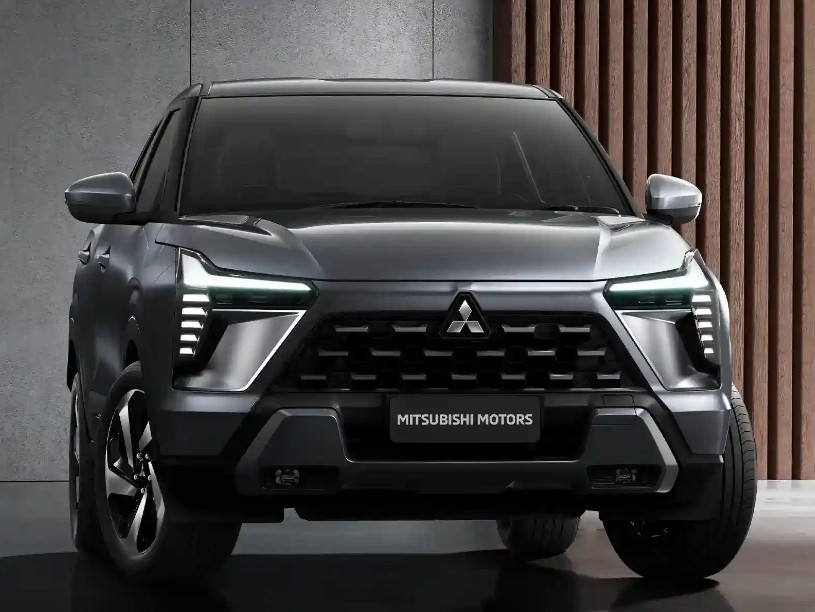
Choosing between the Mitsubishi Outlander vs Hyundai Santa Fe is a little more complicated than comparing horsepower figures and ticking boxes on a specification sheet. Both are family-oriented SUVs with available electrification, practical cabins, modern technology, and enough versatility to handle school runs, road trips, shopping missions, and the occasional muddy weekend escape.
Yet they approach the job differently.
The Mitsubishi Outlander feels like the more compact, efficiency-conscious adventurer. Its biggest calling card is the Outlander PHEV, which combines meaningful electric driving capability with Mitsubishi's established all-wheel-drive expertise. The Hyundai Santa Fe, meanwhile, leans harder into space, comfort, bold styling, and family practicality. Its latest generation looks almost like someone shrank a rugged expedition vehicle into a manageable family SUV.
So which one belongs in your driveway?
For many buyers, the decision comes down to a surprisingly simple question: Do we value electrified versatility and manageable dimensions more, or do we need maximum interior usefulness and family space?
Let's find out.
Content in this publication
- Mitsubishi Outlander vs Hyundai Santa Fe at a Glance
- The Biggest Difference Between the Outlander and Santa Fe
- Exterior Design: Two Completely Different Personalities
- Size and Maneuverability
- Interior Space: Santa Fe Takes the Lead
- Third-Row Seating: Outlander vs Santa Fe
- Cargo Space and Luggage Capacity
- Engines and Powertrains
- Hybrid Comparison
- Outlander PHEV vs Santa Fe Hybrid
- What About the Santa Fe PHEV?
- Fuel Economy and Running Costs
- Driving Experience
- AWD and Bad-Weather Driving
- Towing: Which One Is Better?
- Technology and Infotainment
- Safety and Driver Assistance
- Reliability: Outlander vs Santa Fe
- Ownership Costs
- Which Is Better for City Driving?
- Which Is Better for Families?
- Which Is Better for Long Road Trips?
- Which Is Better for Small Families?
- Which Is Better for Large Families?
- Mitsubishi Outlander Pros and Cons
- Hyundai Santa Fe Pros and Cons
- Mitsubishi Outlander vs Hyundai Santa Fe: Who Should Buy Which?
- Outlander vs Santa Fe: Our Buying Verdict
- Conclusion: Mitsubishi Outlander or Hyundai Santa Fe?
- Frequently Asked Questions
- 1. Is the Mitsubishi Outlander bigger than the Hyundai Santa Fe?
- 2. Which has more space, the Outlander or Santa Fe?
- 3. Is the Outlander PHEV better than the Santa Fe Hybrid?
- 4. Which is better for a family, Mitsubishi Outlander or Hyundai Santa Fe?
- 5. Which should I buy, Hyundai Santa Fe or Mitsubishi Outlander?
Mitsubishi Outlander vs Hyundai Santa Fe at a Glance
Before digging into the details, here's the broad picture.
| Category | Mitsubishi Outlander | Hyundai Santa Fe |
|---|---|---|
| Overall character | Compact, refined, electrification-focused | Spacious, family-focused, boxy and practical |
| Seating | Up to 7 in many markets | Typically 5, 6, or 7 depending on market |
| Gasoline availability | Yes, market dependent | Yes, market dependent |
| Hybrid | Availability varies | Widely available in several markets |
| Plug-in hybrid | Major strength | Available in selected markets |
| AWD | Available; S-AWC is a key feature | Available on many versions |
| Interior space | Good | Generally more generous |
| Third-row usefulness | Best for occasional use | Generally better suited to family use |
| City maneuverability | Advantage | Larger footprint |
| Best for | PHEV buyers and smaller families | Families prioritizing space |
One warning is important: this is a global comparison. Mitsubishi and Hyundai offer different engines, trim levels, seating layouts, drivetrains, and equipment depending on the country.
That means a Santa Fe sold in Australia may not match one sold in Europe or North America. The same applies to the Outlander.
Rather than pretending one specification sheet represents the entire world, we'll concentrate on the characteristics that actually influence the buying decision.
The Biggest Difference Between the Outlander and Santa Fe
At first glance, both vehicles occupy similar territory. They're SUVs with family-friendly interiors and available electrification.
In reality, the Santa Fe generally feels like the larger and more spacious vehicle, while the Outlander occupies a slightly more manageable footprint.
That distinction affects almost everything else.
A Santa Fe makes sense when we're thinking about:
- Regular family travel
- Larger children or teenagers
- Carrying substantial luggage
- Frequent third-row use
- Maximizing cabin space
The Outlander becomes attractive when we're thinking about:
- City driving
- Easier parking
- Plug-in hybrid driving
- AWD capability
- Occasional seven-seat requirements
- Lower day-to-day energy consumption when regularly charging the PHEV
Think of the Santa Fe as a family room on wheels and the Outlander as a versatile backpack. Both carry plenty, but they prioritize space differently.
Exterior Design: Two Completely Different Personalities
Mitsubishi Outlander Design
The Outlander follows Mitsubishi's familiar muscular SUV recipe.
Its styling combines a large front grille, distinctive lighting elements, pronounced body lines, and relatively conventional crossover proportions.
There's enough chrome and visual theater to make it look more expensive than older Outlanders, particularly in higher trims.
The result is an SUV that looks substantial without appearing enormous.
That's valuable in dense cities where gigantic SUVs can become irritating surprisingly quickly.
Hyundai Santa Fe Design
The latest Santa Fe takes a much bolder direction.
Hyundai abandoned the flowing crossover silhouette traditionally associated with the model and moved toward a squared-off, upright design.
It's almost architectural.
The vertical tailgate, long roofline, chunky proportions, and distinctive lighting create something much closer visually to a traditional adventure SUV.
Some buyers will love it.
Others might stare at the rear for five minutes wondering what just happened.
Either way, nobody can accuse the Santa Fe of being anonymous.
Which SUV Looks Better?
Styling remains subjective, but the distinction is easy.
Choose the Outlander if you prefer a polished contemporary crossover.
Choose the Santa Fe if you want something boxier, bolder, and more distinctive.
Size and Maneuverability
Here's where the comparison begins shifting toward practicality.
The Santa Fe's current generation is roughly 4.8 meters long in many markets, while the Outlander generally sits closer to the mid-4.7-meter range, depending on specification.
For example, a current European-market Santa Fe Hybrid specification lists a length of 4,830 mm and a 2,815-mm wheelbase.
The difference isn't enormous on paper.
In everyday driving, however, several centimeters can matter.
Why the Outlander's Smaller Footprint Helps
A slightly smaller SUV can make:
- Parallel parking easier
- Narrow streets less stressful
- Underground garages friendlier
- Urban maneuvering simpler
- Tight parking spaces easier to navigate
If most of our driving happens inside crowded cities, that matters more than an extra few liters of cargo space.
Why the Santa Fe's Extra Size Helps
That additional exterior size isn't wasted.
Hyundai translates much of it into cabin and cargo room.
And that's exactly where the Santa Fe begins fighting back.
Interior Space: Santa Fe Takes the Lead
Open the doors and the difference becomes clearer.
The Outlander has a pleasantly designed cabin with a relatively upscale feel, particularly in well-equipped versions.
But the Santa Fe is simply designed around a stronger space-first philosophy.
The squarer body helps.
Instead of allowing styling to eat into interior volume, Hyundai has essentially built a big rectangular container and then filled it with seats, screens, storage spaces, and family-friendly features.
Front-Seat Comfort
Both SUVs can provide comfortable front seating with features such as:
- Heated seats
- Ventilated seats on selected trims
- Power adjustment
- Premium upholstery
- Digital instrumentation
- Large infotainment displays
Exact equipment varies enormously between markets.
Nevertheless, neither feels like a bargain-basement family SUV anymore.
The Outlander especially deserves credit here. Mitsubishi has moved the cabin considerably upmarket compared with previous generations.
The updated Outlander PHEV has also received improvements to interior quality, infotainment, and equipment in various markets. Mitsubishi's European update introduced a larger 12.3-inch display and additional comfort features, while later updates continued rolling into other regions.
Second-Row Space
The Santa Fe generally wins.
Its longer wheelbase and larger body provide more generous accommodation for passengers.
Adults sitting behind adults should have fewer complaints.
Parents also benefit because installing bulky child seats while maintaining comfortable front-seat positions becomes easier.
That's an underrated advantage.
Anyone who has attempted to install a rear-facing child seat in a cramped crossover knows how quickly a seemingly spacious SUV can turn into a game of human Tetris.
Third-Row Seating: Outlander vs Santa Fe
Both names are associated with seven-seat configurations, although availability varies by region.
The difference is how seriously we should treat those extra seats.
Outlander Third Row
The Outlander's third row is useful primarily as occasional seating.
That's not necessarily criticism.
For families who normally travel with four or five people but occasionally need to transport an extra child or two, it can be extremely useful.
Fold those seats away and the Outlander behaves like a conventional two-row SUV.
Raise them when needed and suddenly we have additional passenger capacity.
But calling it a true seven-person road-trip machine would be optimistic.
Santa Fe Third Row
The Santa Fe's larger proportions generally make the third row more usable.
It's still not a minivan, and taller adults may not volunteer to spend an entire cross-country journey back there.
But families intending to use the third row frequently should start their shopping with the Santa Fe rather than the Outlander.
Third-Row Winner: Hyundai Santa Fe
This one isn't particularly close.
The Outlander offers flexibility.
The Santa Fe offers more legitimate family usability.
Cargo Space and Luggage Capacity
Cargo space is another area where the Santa Fe's square body pays dividends.
A boxy SUV might not slice through the air like a sports car, but suitcases don't care about aerodynamics.
Straight walls and a tall roof make loading easier.
One current five-seat Santa Fe Hybrid specification lists 711 liters of luggage capacity, expanding to 2,032 liters with seats folded, although capacities vary by configuration and measurement method.
The Outlander still offers useful cargo capacity, especially with its third-row seats folded.
But if we're routinely transporting:
- Large suitcases
- Camping gear
- Sports equipment
- Strollers
- Dog crates
- Home-improvement supplies
the Santa Fe's larger cargo area is hard to ignore.
Engines and Powertrains
This is where a global comparison becomes complicated.
Both manufacturers offer different combinations of gasoline, hybrid, plug-in hybrid, front-wheel drive, and all-wheel drive depending on market.
Therefore, shoppers should always confirm local specifications before purchasing.
Still, the underlying strategies are revealing.
Mitsubishi Outlander Gasoline Models
Conventional gasoline Outlanders remain available in several markets.
They are generally aimed at buyers who want straightforward SUV ownership without charging or hybrid complexity.
Performance tends to prioritize smooth everyday usability rather than excitement.
Nobody buys an Outlander because they want to challenge sports cars away from traffic lights.
And that's perfectly fine.
Its job is to transport people comfortably and efficiently.
You may be interested in reading Mitsubishi Outlander vs Honda Pilot: Which SUV Should You Buy?
Hyundai Santa Fe Gasoline Models
Hyundai also markets conventional gasoline powertrains in numerous regions, including turbocharged engines in some markets.
Depending on specification, these can give the Santa Fe stronger acceleration than some Outlander versions.
That can matter when carrying seven passengers, towing, climbing steep roads, or merging onto highways.
Hybrid Comparison
Santa Fe Hybrid
The Santa Fe Hybrid may be the sweet spot for many buyers.
It combines a turbocharged gasoline engine with electric assistance while requiring no regular plugging in.
Hyundai's global Santa Fe materials currently highlight a 1.6-liter turbo hybrid system, although outputs and specifications vary by market.
The appeal is simplicity.
Fill it with fuel and drive.
Regenerative braking and the hybrid system handle the electrical side automatically.
For buyers who cannot reliably charge at home, that's extremely convenient.
Outlander Electrification Strategy
Mitsubishi's strongest hand isn't a conventional hybrid.
It's the PHEV.
And that changes the entire comparison.
Outlander PHEV vs Santa Fe Hybrid
This may be the single most important section for buyers deciding between these SUVs.
The Outlander PHEV is designed to operate much more like an electric vehicle during shorter journeys than a traditional hybrid does.
Mitsubishi describes its philosophy as essentially using the vehicle as an EV for normal daily driving and a hybrid for longer trips.
That's a clever combination.
Charge overnight, commute electrically, and avoid the range anxiety associated with a full EV when taking a long trip.
Outlander PHEV Electric Range
Electric range varies by testing cycle and market.
Recent updates have substantially increased battery capacity and EV capability. The updated Canadian model, for example, uses a 22.7-kWh battery and is officially rated at 72 km of electric range under Canada's testing method. Mitsubishi's European update cites more than 80 km under the WLTP test cycle.
Those numbers shouldn't be directly compared because the testing procedures differ.
But the message is clear:
The Outlander PHEV can cover a meaningful portion of normal daily driving without relying heavily on gasoline.
When the Outlander PHEV Makes Sense
It becomes especially attractive when:
- We can charge at home.
- Our normal commute falls within its practical EV range.
- We still make occasional long-distance trips.
- A full battery-electric vehicle isn't convenient for us.
- We want AWD capability.
Under those circumstances, the Outlander PHEV is difficult to dismiss.
What About the Santa Fe PHEV?
Hyundai also offers the Santa Fe as a plug-in hybrid in selected markets.
Hyundai's worldwide materials currently present both hybrid and plug-in-hybrid versions based around a 1.6-liter turbocharged gasoline engine.
Availability, however, varies.
That's why global shoppers should avoid assuming the PHEV shown on an international Hyundai website will necessarily be sold by their local distributor.
Where both PHEVs are available, the comparison becomes significantly closer.
Still, Mitsubishi has built much of the Outlander's identity around plug-in hybrid technology. The Outlander PHEV launched back in 2013, and Mitsubishi says cumulative global sales have reached roughly 430,000 units across more than 60 countries.
That experience matters.
Fuel Economy and Running Costs
There's no universal winner because the answer depends heavily on how we drive.
If We Rarely Charge
A plug-in hybrid becomes less compelling when we never plug it in.
Dragging around a large battery without regularly using its stored energy defeats much of the purpose.
A conventional Santa Fe Hybrid may make more sense for drivers who:
- Park on the street
- Live in apartments without chargers
- Travel long distances every day
- Cannot charge reliably
- Want hybrid efficiency without changing their routine
If We Charge Every Night
The Outlander PHEV equation changes dramatically.
Imagine a normal weekday involving 30 or 40 km of driving.
If most of that can be completed electrically, fuel-station visits may become considerably less frequent.
That's where PHEVs shine.
The electric motor handles the boring daily stuff.
The gasoline engine waits in reserve for the weekend road trip.
It's like carrying an umbrella that also happens to be a tent.
Driving Experience
Neither SUV is designed to attack mountain roads like a sports sedan.
Their priorities are comfort, stability, refinement, and predictable handling.
Still, they feel different.
How the Outlander Drives
The Outlander feels relatively manageable for a multi-seat SUV.
PHEV versions add another layer of refinement because electric motors can provide immediate torque and smooth low-speed acceleration.
The sensation around town is calm and effortless.
There is no dramatic transmission hunting or engine flare every time traffic moves.
Press the accelerator and the electric motors simply get on with it.
How the Santa Fe Drives
The Santa Fe feels larger.
That's not necessarily negative.
Its substantial dimensions contribute to the impression of driving a mature family SUV rather than a compact crossover.
Hybrid models can deliver smooth urban performance, while Hyundai says its electrified system incorporates technologies designed to improve ride comfort and cornering behavior.
If highway cruising is our priority, the Santa Fe makes a compelling case.
AWD and Bad-Weather Driving
Mitsubishi S-AWC
This is one of the Outlander's strongest arguments.
Mitsubishi has decades of experience with four-wheel-drive systems, and the modern Outlander continues that tradition through its Super-All Wheel Control (S-AWC) technology.
On the PHEV, Mitsubishi combines electrification with twin-motor four-wheel drive in relevant specifications.
The updated model continues to emphasize improved stability and traction through S-AWC optimization.
For drivers facing:
- Snow
- Heavy rain
- Gravel roads
- Slippery hills
- Variable road surfaces
the system adds genuine appeal.
Santa Fe AWD
The Santa Fe also offers AWD in many markets and configurations.
It is perfectly capable of dealing with bad weather and light off-pavement travel.
But Mitsubishi's drivetrain engineering gives the Outlander a slightly stronger identity in this area.
AWD Winner: Mitsubishi Outlander
Especially if we're discussing the PHEV.
Towing: Which One Is Better?
Towing ratings vary substantially by engine, drivetrain, model year, and country.
For that reason, buyers should never rely on a generic internet comparison before connecting a trailer.
Check the exact braked and unbraked towing ratings for the specific model being purchased.
Broadly speaking, though, the Santa Fe's larger body and available stronger powertrains may make it the more natural towing choice in certain markets.
But don't assume.
An Outlander specification approved for one towing limit in Australia may carry a different homologated figure in Europe or North America.
The trailer doesn't care what a comparison article says.
The legal rating on your vehicle does.
Technology and Infotainment
Modern versions of both SUVs provide the equipment most buyers expect.
Depending on trim, we may find:
- Apple CarPlay
- Android Auto
- Digital instrument clusters
- Large touchscreens
- Wireless charging
- Multiple USB ports
- Surround-view cameras
- Premium audio systems
- Smartphone-connected services
The difference is presentation.
Outlander Technology
The Mitsubishi interior follows a relatively straightforward philosophy.
Menus are generally conventional, controls are easy to understand, and important functions aren't buried beneath endless layers of visual theater.
Recent Outlander PHEV updates have also added improved connectivity and larger infotainment systems in selected markets.
Some updated models additionally feature Yamaha-developed premium audio equipment.
Santa Fe Technology
The Hyundai tends to feel more futuristic.
Large displays, distinctive interior architecture, clever storage areas, and tech-heavy higher trims create a more dramatic first impression.
If showroom wow factor matters, the Santa Fe probably lands the stronger punch.
Safety and Driver Assistance
Both manufacturers offer extensive active-safety systems, although exact packages depend on trim and country.
Commonly available features may include:
- Autonomous emergency braking
- Lane-keeping assistance
- Blind-spot monitoring
- Rear cross-traffic alerts
- Adaptive cruise control
- Parking sensors
- Surround-view cameras
- Driver-attention monitoring
Don't compare vehicles purely by the number of safety-system acronyms printed in the brochure.
Instead, verify which systems are standard on the actual trim you're buying.
You may be interested in readingMitsubishi Outlander vs Honda Pilot: Which SUV Should You Buy?You may be interested in reading
Mitsubishi Outlander vs Mazda CX-5: Which SUV Is Better?That's important because a feature included on a North American model may be optional or unavailable elsewhere.
Reliability: Outlander vs Santa Fe
Reliability comparisons are tricky when we're discussing current-generation vehicles.
Long-term reliability requires something modern cars don't yet possess: time.
Still, we can consider complexity, warranty coverage, drivetrain history, and owner expectations.
Outlander Reliability Considerations
The Outlander PHEV's system is technically complex, but Mitsubishi isn't new to PHEVs.
The model has existed since 2013, and Mitsubishi's cumulative production experience provides useful reassurance.
Battery condition becomes particularly important when shopping used.
Potential buyers should inspect:
- Battery health
- Charging operation
- Service history
- Warning lights
- Software updates
- AWD operation
Santa Fe Reliability Considerations
The Santa Fe nameplate has existed for decades, but the latest generation introduces a substantially redesigned vehicle.
Hyundai's warranty coverage can be particularly attractive in some countries, though terms vary widely around the world.
Used buyers should investigate the exact engine and transmission combination rather than judging every Santa Fe as if it were mechanically identical.
That's true of both SUVs.
Ownership Costs
Purchase price gets attention.
Ownership cost quietly empties the bank account afterward.
Consider:
Fuel or Electricity
The Outlander PHEV can potentially save considerable fuel if charged frequently.
The Santa Fe Hybrid offers efficiency without requiring charging infrastructure.
Insurance
Neither is automatically cheaper.
Insurance depends on location, trim, repair costs, driver history, and vehicle value.
Servicing
Hybrid and PHEV systems don't eliminate routine maintenance completely.
There are still:
- Tires
- Brakes
- Suspension components
- Filters
- Fluids
- Air-conditioning systems
- Conventional engine maintenance
However, regenerative braking can reduce conventional brake wear under some driving conditions.
Depreciation
Resale values vary dramatically between markets.
Hyundai has strengthened its market position considerably over the past decade, while Mitsubishi's Outlander remains one of the brand's most important global products.
The PHEV's resale appeal may also depend increasingly on battery condition and local demand for electrified vehicles.
Which Is Better for City Driving?
The Mitsubishi Outlander gets our vote.
Why?
Its slightly more manageable proportions help with parking and narrow roads.
Choose the PHEV and the argument becomes even stronger.
Short urban journeys are exactly where electric driving works beautifully.
Quiet acceleration, regenerative braking, and the ability to commute without regularly firing up the gasoline engine suit city life remarkably well.
Which Is Better for Families?
The Hyundai Santa Fe.
Its larger cabin, more useful third row, and stronger cargo practicality make it particularly attractive for families who genuinely use all available seating.
If we have three children, regularly carry grandparents, or frequently fill the cargo area, those extra centimeters stop looking trivial.
They become the difference between comfortable and cramped.
Which Is Better for Long Road Trips?
This one is close.
The Santa Fe offers superior space.
Passengers can stretch out, luggage fits more easily, and the larger cabin feels suited to serious distance.
But the Outlander PHEV has another trick.
Unlike a full EV, it doesn't require us to plan every long journey around charging stations. Once the battery's useful electric charge is depleted, the hybrid system continues using the combustion engine and electrical system.
So the winner depends on what we value.
For maximum passenger comfort, Santa Fe.
For electric commuting plus stress-free long-distance flexibility, Outlander PHEV.
Which Is Better for Small Families?
Probably the Outlander.
A family of three or four may simply not need the Santa Fe's additional size.
Buying extra SUV because we might transport seven people twice a year can be like buying a commercial refrigerator because we occasionally host Christmas dinner.
The Outlander provides plenty of day-to-day practicality while being easier to live with in crowded environments.
Which Is Better for Large Families?
Santa Fe.
This is its territory.
If seats six and seven will genuinely see regular use, the Hyundai's larger packaging makes a stronger argument.
Families should still physically test the third row before purchasing.
Bring the children.
Bring the child seats.
Bring whatever ridiculous collection of backpacks accompanies them.
A ten-minute real-world test can tell us more than twenty specification tables.
Mitsubishi Outlander Pros and Cons
Reasons to Buy the Outlander
- Excellent PHEV concept
- Useful EV-only driving capability
- Strong S-AWC reputation
- Easier to maneuver than the Santa Fe
- Attractive interior
- Up to seven seats in relevant markets
- Good fit for small and medium-size families
- Long-standing plug-in-hybrid experience
Reasons to Think Twice
- Third row is relatively cramped
- Less cargo room than Santa Fe
- Conventional powertrain performance may feel modest
- PHEV makes less sense without regular charging
- Dealer network strength varies by country
Hyundai Santa Fe Pros and Cons
Reasons to Buy the Santa Fe
- Spacious cabin
- More useful third-row seating
- Excellent family practicality
- Large cargo area
- Bold styling
- Strong technology offering
- Hybrid availability
- Comfortable long-distance character
Reasons to Think Twice
- Larger exterior dimensions
- Less convenient in tight cities
- Styling may divide opinion
- Some powertrains aren't offered globally
- PHEV availability is more market dependent
Mitsubishi Outlander vs Hyundai Santa Fe: Who Should Buy Which?
Let's simplify the entire comparison.
Buy the Mitsubishi Outlander If...
You want an SUV that's practical without feeling unnecessarily huge.
It's particularly compelling if you:
- Can charge at home
- Want a PHEV
- Mostly carry four or five passengers
- Occasionally need seven seats
- Drive in snow or difficult weather
- Spend plenty of time in cities
- Value AWD technology
The Outlander PHEV is the star of the range.
Recent updates also demonstrate Mitsubishi's continued investment in the model. The company has increased battery capacity and EV range in newer versions and is progressively introducing updated specifications across global markets.
Buy the Hyundai Santa Fe If...
Space appears near the top of your shopping list.
It's especially attractive if you:
- Regularly carry five or more passengers
- Need a genuinely useful third row
- Travel with plenty of luggage
- Want a conventional hybrid
- Prefer a large family-oriented cabin
- Take frequent road trips
- Like bold SUV styling
For families, the Santa Fe's packaging is difficult to beat.
Outlander vs Santa Fe: Our Buying Verdict
There isn't one universally superior SUV.
There's a better SUV for a particular buyer.
The Hyundai Santa Fe wins the straightforward family-practicality contest.
It's larger, roomier, and better prepared for regular passenger-hauling duties. If our buying checklist begins with "space, space, and more space," Hyundai has built the stronger answer.
But the Mitsubishi Outlander has an ace hidden beneath the table.
The Outlander PHEV.
Mitsubishi has spent more than a decade refining the concept, and its latest evolution provides increasingly useful electric driving capability while retaining the convenience of a gasoline engine for long journeys. Mitsubishi says the Outlander PHEV has now reached roughly 430,000 cumulative global sales, demonstrating just how central the technology has become to the model.
That makes our verdict surprisingly straightforward.
Choose the Hyundai Santa Fe if space and family practicality matter most.
Choose the Mitsubishi Outlander—particularly the PHEV—if you want a more manageable SUV with strong AWD credentials and the ability to complete much of your everyday driving electrically.
Neither choice is wrong.
They're simply answering different questions.
Conclusion: Mitsubishi Outlander or Hyundai Santa Fe?
The Mitsubishi Outlander vs Hyundai Santa Fe comparison isn't really about identifying one champion and one loser.
It's about priorities.
The Santa Fe behaves like the bigger family tool. Its roomy cabin, boxy proportions, useful cargo space, and more accommodating third row make everyday family logistics easier.
The Outlander plays a smarter, slightly different game. It's compact enough to remain comfortable in urban environments while still providing family flexibility. Add Mitsubishi's PHEV technology and S-AWC system, and it becomes particularly interesting for drivers who want to electrify their commute without committing fully to a battery-electric vehicle.
If we had a large family and regularly used all three rows, we'd lean toward the Santa Fe.
If our household normally carried four or five people, we had home charging, and we wanted to minimize gasoline use without worrying about long-distance charging infrastructure, we'd lean toward the Outlander PHEV.
That's the real decision.
Not which SUV wins on paper.
Which one fits the way we actually live.
Frequently Asked Questions
1. Is the Mitsubishi Outlander bigger than the Hyundai Santa Fe?
Generally, no. The current Hyundai Santa Fe is the larger vehicle in most comparable markets, with a longer body and more generous interior packaging. The Outlander remains a midsize crossover but has a more compact footprint, which can make it easier to park and maneuver.
2. Which has more space, the Outlander or Santa Fe?
The Hyundai Santa Fe generally offers more passenger and cargo space. Its boxier body and larger dimensions particularly benefit second- and third-row passengers. The Outlander remains practical, but its third row is better viewed as occasional seating.
3. Is the Outlander PHEV better than the Santa Fe Hybrid?
It depends on charging access. The Outlander PHEV can complete meaningful distances using electricity alone when regularly charged, making it attractive for commuters with home charging. The Santa Fe Hybrid requires no plugging in and may therefore suit drivers who want improved fuel efficiency without altering their refueling habits.
4. Which is better for a family, Mitsubishi Outlander or Hyundai Santa Fe?
For larger families, the Hyundai Santa Fe is generally the better choice because of its larger cabin and more practical third row. Smaller families may prefer the Outlander because it still provides plenty of versatility while being easier to maneuver.
You may be interested in readingMitsubishi Outlander vs Honda Pilot: Which SUV Should You Buy?You may be interested in reading
Mitsubishi Outlander vs Mazda CX-5: Which SUV Is Better?You may be interested in reading
Mitsubishi Outlander vs Subaru Outback: Which One Should You Buy?5. Which should I buy, Hyundai Santa Fe or Mitsubishi Outlander?
Buy the Santa Fe if passenger space, cargo capacity, and frequent third-row use are priorities. Buy the Outlander, especially the PHEV, if you value smaller exterior dimensions, capable AWD technology, and the ability to use electricity for a substantial portion of everyday driving.
If you want to know other articles similar to Mitsubishi Outlander vs Hyundai Santa Fe: Which SUV Should You Buy? you can visit the category Models.
Nissan Rogue Dark Armor vs Platinum: Which Trim Is Better?

Kia Sorento Models: Complete Guide to Trims, Engines and Versions
BYD Shark 6 vs Ranger vs HiLux: Which Ute Makes the Most Sense in 2026?
BYD Shark 6 vs MG U9: Which Ute Makes More Sense in 2026?
BYD Shark 6 vs Ford Ranger Raptor: Which Performance Ute Is Better in 2026?
BYD Shark 6 vs Kia Tasman: Which Ute Is Better?
Leave a Reply
More content of your interest