

Mitsubishi Outlander vs Mazda CX-5: Which SUV Is Better?

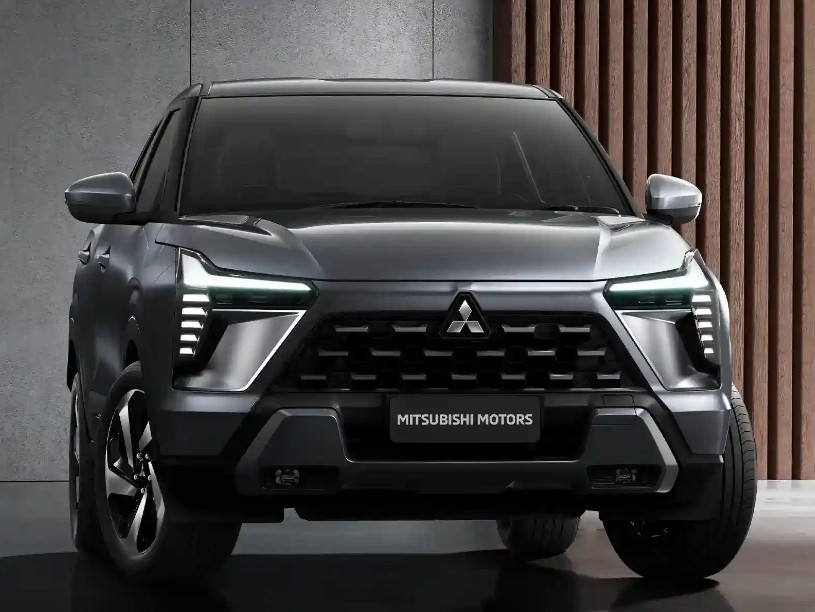
Choosing between the Mitsubishi Outlander vs Mazda CX-5 sounds straightforward until we actually start comparing them. Both occupy the broad family-SUV space, both come from respected Japanese manufacturers, and both promise comfort, technology, safety, and everyday practicality. Yet once we get behind the marketing language, these two SUVs have surprisingly different personalities.
The Mazda CX-5 is the sharper instrument. It has traditionally prioritized driving enjoyment, interior quality, tidy dimensions, and a more car-like experience. The Mitsubishi Outlander takes another road. It places greater emphasis on family flexibility, available seven-seat accommodation, electrification through its PHEV versions, and all-weather capability.
Think of the Mazda as a well-tailored sports jacket and the Mitsubishi as a high-quality backpack. One feels polished and engaging; the other is prepared to carry considerably more of family life.
So, which deserves a place in our driveway?
For buyers who regularly use five seats and care about steering feel, road manners, and cabin design, the Mazda CX-5 can be the more satisfying choice. Families that need additional seating, greater configuration flexibility, or plug-in-hybrid technology will probably find the Mitsubishi Outlander more compelling.
There is much more to the story, though.
Content in this publication
- Mitsubishi Outlander vs Mazda CX-5 at a Glance
- Exterior Design: Two Very Different Personalities
- Size and Dimensions
- Interior Quality: Mazda Strikes Back
- Seating Capacity: Outlander Wins Easily
- Cargo Space and Everyday Practicality
- Mitsubishi Outlander Engine and Performance
- Mazda CX-5 Engine and Performance
- Driving Experience: Mazda Takes the Lead
- Ride Comfort and Highway Driving
- Outlander PHEV: Mitsubishi's Secret Weapon
- Fuel Economy: Which Uses Less Fuel?
- AWD and Poor-Weather Capability
- Towing Capacity
- Technology and Infotainment
- Safety Features
- Reliability and Long-Term Ownership
- Warranty: Check Your Country Carefully
- Price and Value for Money
- Mitsubishi Outlander vs Mazda CX-5 for Families
- Mitsubishi Outlander vs Mazda CX-5 for City Driving
- Mitsubishi Outlander vs Mazda CX-5 for Highway Driving
- Which SUV Has the Better Driving Position?
- Key Advantages of the Mitsubishi Outlander
- Key Advantages of the Mazda CX-5
- Mitsubishi Outlander vs Mazda CX-5: Which Should You Buy?
- Mitsubishi Outlander vs Mazda CX-5: Our Final Verdict
- Frequently Asked Questions
- 1. Is the Mitsubishi Outlander better than the Mazda CX-5?
- 2. Is the Mazda CX-5 bigger than the Mitsubishi Outlander?
- 3. Which is more fuel-efficient, Mazda CX-5 or Mitsubishi Outlander?
- 4. Does the Mazda CX-5 have seven seats like the Mitsubishi Outlander?
- 5. Which is better for a family, Mitsubishi Outlander or Mazda CX-5?
Mitsubishi Outlander vs Mazda CX-5 at a Glance
Before digging into the details, here is the fundamental difference between these SUVs.
| Category | Mitsubishi Outlander | Mazda CX-5 |
|---|---|---|
| Vehicle type | Midsize/compact family SUV | Compact/midsize SUV |
| Seating | Up to 7 depending on market/version | 5 |
| Petrol engine | Available | Available |
| Plug-in hybrid | Yes, depending on market | Not currently the main global offering |
| AWD | Available or standard depending on version | Available/standard depending on market |
| Driving character | Comfort-oriented | More driver-focused |
| Third row | Available | No |
| Best suited to | Families and versatility | Five-seat buyers and keen drivers |
| Transmission | CVT on many petrol versions | Conventional 6-speed automatic on current models |
| Main advantage | Space and versatility | Handling and refinement |
One important warning: this is a global overview. Powertrains, towing limits, trim names, pricing, fuel-economy ratings, warranty terms, and whether AWD is standard differ substantially between North America, Australia, Europe, New Zealand, and other regions.
The current situation is particularly interesting because Mazda has introduced a new-generation CX-5 for the 2026 era in several markets. For example, the new Australian-market model measures 4,690 mm long and uses a 2.5-liter petrol engine paired with a six-speed automatic and AWD.
Exterior Design: Two Very Different Personalities
Neither SUV disappears into traffic, but their design philosophies couldn't be more different.
The Mitsubishi Outlander Looks Bigger and Bolder
The Outlander makes no attempt to hide its family-SUV dimensions. Its upright front end, broad grille treatment, elevated stance, sculpted sides, and substantial body give it a strong presence.
Some buyers will love that.
The Mitsubishi looks like something capable of swallowing luggage, children, shopping bags, bicycles, and half the contents of a garage without complaining.
Recent versions have also become considerably more sophisticated than older Outlanders. Mitsubishi's 2025 refresh, for example, introduced revised front and rear styling, new wheel designs, updated taillights, and extensive interior changes.
The Mazda CX-5 Is Cleaner and Sportier
Mazda goes for elegance rather than visual muscle.
The CX-5 has long used the company's Kodo design philosophy, combining flowing bodywork with relatively restrained detailing. The latest generation develops that formula rather than throwing it away.
The result?
It still looks unmistakably like a Mazda CX-5, but fresher, wider, and more contemporary.
Where the Outlander says, "We're ready for the family road trip," the Mazda whispers, "Can we take the twisty road instead?"
Which SUV Looks Better?
Design is subjective, but our split is simple:
Choose the Outlander if you prefer a substantial, rugged-looking family SUV.
Choose the CX-5 if you favor clean lines and a sportier, more premium appearance.
Size and Dimensions
Size matters here because it influences passenger space, cargo practicality, maneuverability, and parking.
The Mitsubishi Outlander has generally been the larger and more family-oriented vehicle. A 2025 North American Outlander, for example, measures approximately 185.8 inches (4.72 meters) long with a 106.5-inch wheelbase.
The latest CX-5 has grown. Mazda Australia lists the new-generation model at 4,690 mm long, 1,860 mm wide, and 1,695 mm high.
That means the physical gap between these SUVs is smaller than it once was.
Still, their packaging differs considerably because Mazda uses its space for five occupants while Mitsubishi can accommodate a third seating row on numerous Outlander versions.
Interior Quality: Mazda Strikes Back
Open the doors and the comparison becomes more interesting.
Mazda CX-5 Interior
Mazda has built much of its modern reputation around making mainstream vehicles feel slightly more expensive than their badges suggest.
The CX-5 demonstrates that philosophy well.
Depending on trim and country, buyers can find features such as:
- Large central infotainment displays
- Digital instrument displays
- Leather or leather-like upholstery
- Heated seating
- Wireless smartphone integration
- Wireless phone charging
- Premium audio
- Dual-zone climate control
- Head-up displays
- Surround-view cameras
The latest-generation CX-5 has also pushed harder toward digital technology. Mazda has announced a central display as large as 15.6 inches on certain configurations.
Yet the bigger achievement isn't simply screen size. Mazda tends to make its cabins feel cohesive. Buttons, surfaces, dashboard architecture, steering controls, and seating position work together instead of resembling components selected independently from a catalog.
Mitsubishi Outlander Interior
The Outlander's cabin has improved dramatically compared with previous generations.
Current models can offer substantial screens, quilted leather, heated and ventilated seating, panoramic roofs, premium audio systems, digital instrumentation, multi-zone climate control, wireless smartphone connectivity, and other comfort features.
For the 2025 U.S. model, Mitsubishi made a 12.3-inch navigation screen, Yamaha audio, wireless Apple CarPlay and Android Auto, USB-C ports, and multi-zone automatic climate control standard. Higher trims add more luxurious materials and equipment.
Which Has the Better Interior?
For sheer design elegance and driver-oriented ergonomics, we give Mazda the advantage.
For family functionality and available equipment, the Outlander fights back strongly.
It's closer than the badges might suggest.
Seating Capacity: Outlander Wins Easily
This might settle the entire comparison for some families.
The Mazda CX-5 has five seats.
The Mitsubishi Outlander can offer up to seven.
That's not a small difference.
In the U.S., the regular 2025 Outlander comes standard with three rows and seating for seven. Other markets and PHEV configurations vary, with Mitsubishi Australia offering versions that range from five seats to 5+2 configurations.
Is the Outlander Third Row Good for Adults?
Don't expect limousine accommodation.
The Outlander's third row is best viewed as occasional seating, particularly for children or smaller passengers. On the North American petrol version, quoted third-row legroom is only 18.7 inches.
That's the compromise.
The Outlander is not a giant three-row SUV. Instead, it gives us two bonus seats that can be extremely useful when grandparents join a trip, children bring friends home, or we unexpectedly need to transport six or seven people.
For Families, Those Two Seats Can Be Priceless
A third row we occasionally use is still infinitely more useful than a third row that doesn't exist.
That gives Mitsubishi a major practicality victory.
Cargo Space and Everyday Practicality
Comparing cargo capacity globally is tricky because manufacturers and regions use different measuring standards.
What matters more is how these SUVs behave in everyday life.
With the Outlander's third row raised, luggage space naturally shrinks. A U.S.-spec petrol model provides about 10.9 cubic feet behind its third row, 30.6 cubic feet behind the second row, and up to 64.3 cubic feet behind the front seats on versions measured with a sunroof.
Fold the rear seats and the Mitsubishi becomes significantly more useful.
The Mazda doesn't have the Outlander's third-row complication. Its cargo area is therefore simpler: five people in front of a conventional luggage compartment.
Which Is More Practical?
For couples or families with one or two children, the Mazda's five-seat arrangement may actually feel easier day to day.
For larger families, the Mitsubishi wins.
Its cabin is more like a Swiss Army knife. Perhaps we don't need every tool every day, but it's nice knowing they're there.
Mitsubishi Outlander Engine and Performance
Engine choices depend heavily on market.
A common current petrol configuration uses a 2.5-liter four-cylinder engine. In the 2025 U.S. Outlander, it produces 181 hp and 181 lb-ft of torque and works through a CVT.
Nobody will mistake that version for a sports SUV.
Acceleration is adequate rather than exciting. The Outlander's priority is smooth family transportation.
Press hard on the accelerator and the CVT can produce the sustained engine note typical of this transmission type. Some drivers won't care. Others may prefer the more natural gear changes of Mazda's conventional automatic.
Mazda CX-5 Engine and Performance
This is traditionally one of Mazda's strongest areas.
Depending on model year and country, the CX-5 has been sold with several engines, including naturally aspirated petrol, turbocharged petrol, diesel, and market-specific configurations.
The newer generation entering markets during 2026 continues with a 2.5-liter naturally aspirated petrol engine in several regions.
In Australia, it produces 132 kW and 242 Nm and is paired with a six-speed automatic and standard AWD.
The U.S. launch specification similarly uses a 2.5-liter four-cylinder producing 187 hp and 186 lb-ft, again paired with a six-speed automatic and standard i-Activ AWD.
What About the Turbo CX-5?
Previous/current-overlap second-generation CX-5 models in some markets offered a considerably stronger turbocharged 2.5-liter engine.
The 2025 U.S. CX-5 Turbo, for example, could deliver up to 256 hp and 320 lb-ft on premium fuel, or 227 hp and 310 lb-ft using regular fuel.
Those figures make it considerably faster than the regular petrol Outlander.
Availability depends on the country and model generation, however, so buyers shouldn't assume a turbo option exists locally.
You may be interested in reading Mitsubishi Outlander vs Subaru Outback: Which One Should You Buy?
Driving Experience: Mazda Takes the Lead
Here is where Mazda earns its reputation.
The CX-5 typically feels more connected to the driver. Steering responses are precise, body movements are controlled, and the conventional automatic transmission contributes to a natural driving rhythm.
It's not a sports car wearing hiking boots.
But among mainstream family SUVs, the CX-5 has consistently been one of the models that reminds us driving doesn't have to become boring when we buy something practical.
How Does the Outlander Drive?
The Outlander takes a softer approach.
Its steering, suspension, and overall calibration emphasize stability and comfort.
Mitsubishi did retune the steering and suspension for the 2025 refresh, specifically aiming to improve drivability and confidence.
Even so, the Mitsubishi's fundamental character remains more relaxed.
Winner for Driving Enthusiasts: Mazda CX-5
If the road curves like a ribbon through the mountains, we're taking the Mazda keys.
Ride Comfort and Highway Driving
The result flips closer when we're simply traveling.
The Outlander's longer, family-oriented character works nicely on highways. Its suspension generally focuses more on isolating occupants than communicating every detail of the road.
Mazda balances comfort with handling more aggressively.
The newest CX-5 has also been developed with greater refinement in mind, and Mazda describes updated suspension tuning intended to improve both responsiveness and quietness.
For long journeys, therefore, there isn't an automatic winner.
The Outlander provides more seating flexibility.
The Mazda gives us a polished five-seat environment.
Outlander PHEV: Mitsubishi's Secret Weapon
Now we reach the biggest mechanical difference in the Mazda CX-5 vs Mitsubishi Outlander battle.
Mitsubishi offers the Outlander as a plug-in hybrid in numerous markets.
And this isn't some recent attempt to jump aboard the electrification train. Mitsubishi launched the original Outlander PHEV back in 2013 and has spent years developing the concept.
Modern versions combine a petrol engine with electric motors and a sizeable traction battery.
The idea is attractive:
Drive electrically on shorter daily journeys, charge at home when possible, and retain a petrol engine for long-distance travel.
How Far Can the Outlander PHEV Drive Electrically?
Again, the answer depends on the market and testing procedure.
The latest Australian specification advertises up to 84 km of electric range under its applicable test cycle, while the updated 2026 Canadian model has a 22.7-kWh battery and an official electric range of 72 km in that market.
That distinction illustrates why global comparisons should never mix regional fuel-economy and range figures as if they were directly interchangeable.
Who Should Buy the PHEV?
The Outlander PHEV makes the most sense when we can charge regularly.
If our commute fits comfortably inside the available electric range and we plug in overnight, petrol use can fall dramatically.
Never charge it?
We lose much of the point.
A plug-in hybrid carrying a battery without regularly using external electricity is like buying running shoes and taking the bus around the block.
Fuel Economy: Which Uses Less Fuel?
There's no single global winner because drivetrain choices matter enormously.
A conventional petrol Outlander and a petrol CX-5 compete relatively closely in everyday efficiency, depending on engine, drivetrain, wheels, test standards, weather, and driving conditions.
For reference, the 2025 U.S. petrol Outlander is rated as high as 24 mpg city and 31 highway in 2WD form, with S-AWC versions rated slightly lower on the highway.
Meanwhile, Mazda Australia quotes 7.4 L/100 km combined for its 2026 2.5-liter AWD CX-5 under Australian testing.
Those ratings use different certification procedures and should not be treated as a direct mathematical comparison.
The Outlander PHEV adds another variable entirely.
Our Fuel-Economy Verdict
If we have convenient home charging, Outlander PHEV has the greatest potential to reduce petrol consumption.
Without charging, the equation becomes much less favorable.
For drivers wanting a straightforward petrol vehicle with no plugging-in routine, the CX-5 is refreshingly conventional.
AWD and Poor-Weather Capability
Both manufacturers take AWD seriously.
Mitsubishi offers its Super-All Wheel Control (S-AWC) technology on relevant Outlander versions, while Mazda uses i-Activ AWD.
These systems aren't designed to transform either SUV into a hardcore off-roader.
Instead, they help improve traction and vehicle control on wet pavement, gravel, snow, loose surfaces, and changing road conditions.
Current CX-5 configurations in countries such as the U.S. and Australia come with AWD as standard.
The Outlander's drivetrain availability is more market- and trim-dependent.
Can We Take Them Off-Road?
Light trails? Yes.
Deep mud, giant rocks, or serious expedition terrain?
We would choose something more specialized.
The Outlander offers useful ground clearance—8.4 inches on the cited U.S. petrol specification—and Mitsubishi's configurable drive modes can improve its versatility on slippery surfaces.
The Mazda remains more road-focused despite having AWD and an Off-Road drive mode on relevant versions.
Towing Capacity
Towing figures vary substantially by market and drivetrain, so always check the plate, handbook, and official local specifications for the exact vehicle.
As examples of how different regional configurations can be, the 2025 U.S. petrol Outlander is rated to tow 2,000 lb.
The 2026 Australian CX-5, meanwhile, is advertised with up to 1,800 kg braked towing capacity.
These figures aren't universal.
Trailer brakes, tow-bar specifications, passenger load, accessories, tongue weight, road regulations, and exact vehicle variant can all affect what we're legally and safely allowed to tow.
Technology and Infotainment
Both SUVs now offer enough technology to satisfy most buyers.
The Outlander has moved aggressively toward larger displays and generous standard equipment. Mitsubishi's refreshed 2025 U.S. model includes a 12.3-inch navigation display and Yamaha audio as standard, while upper trims can add premium audio and more luxurious equipment.
The new CX-5 moves Mazda further into the large-screen era, with screens up to 15.6 inches announced on certain configurations.
Which Technology System Is Better?
We wouldn't select either SUV purely because one screen is two inches larger.
Good infotainment is about response time, menu structure, smartphone integration, physical controls, and how little attention it steals from driving.
Mazda has historically taken a more restrained approach.
Mitsubishi increasingly emphasizes feature density.
The better philosophy depends on what we value.
Safety Features
Both vehicles compete in a segment where active safety technology has become essential.
Depending on country and trim, expect equipment such as:
- Autonomous emergency braking
- Adaptive cruise control
- Lane-departure warning
- Lane-keeping assistance
- Blind-spot monitoring
- Rear cross-traffic alert
- Driver-attention monitoring
- Parking sensors
- Surround-view cameras
- Automatic high beams
Current Mitsubishi PHEV specifications in Australia, for instance, list Forward Collision Mitigation, Predictive Forward Collision Warning, blind-spot warning, rear cross-traffic alert, driver monitoring, emergency lane assist, and rear automatic emergency braking among available or standard equipment depending on specification.
The new CX-5 likewise introduces an expanded suite of driver-assistance technologies.
Safety equipment differs by country, though, so compare the specific trim you're buying, not just the model name.
Reliability and Long-Term Ownership
Both Mitsubishi and Mazda have experience building relatively straightforward mass-market vehicles, but reliability can't be reduced to a badge.
Engine choice matters.
Transmission matters.
Maintenance history matters.
You may be interested in readingMitsubishi Outlander vs Subaru Outback: Which One Should You Buy?You may be interested in reading
Mitsubishi Outlander vs Subaru Forester: Which SUV Is Better?Climate matters.
And with used vehicles, the previous owner's behavior often matters more than the logo on the steering wheel.
Mazda CX-5 Ownership
The naturally aspirated Skyactiv petrol engine and conventional automatic transmission used in many CX-5 versions are appealing to buyers who prefer mechanically familiar technology.
That doesn't mean zero maintenance or zero failures.
It means the drivetrain formula is relatively conventional.
Mitsubishi Outlander Ownership
A petrol Outlander is also fairly straightforward, although many variants use a CVT rather than Mazda's conventional automatic.
The PHEV is more complex because it adds high-voltage batteries, electric motors, charging electronics, regenerative braking, and hybrid-control systems.
But complexity isn't automatically unreliability.
The bigger issue for used-PHEV shoppers is battery condition, charging history, warranty coverage, and whether technicians familiar with the system are readily available in their market.
Warranty: Check Your Country Carefully
Mitsubishi often competes aggressively on warranty coverage.
For example, the 2025 U.S. Outlander carries a 10-year/100,000-mile limited powertrain warranty for qualifying ownership circumstances alongside other warranty coverage.
But global warranty comparisons are dangerous.
Terms differ considerably between countries, and some warranties impose servicing conditions, ownership restrictions, mileage limits, or different coverage periods for hybrid batteries.
Rather than assuming Mitsubishi automatically wins everywhere, compare the official warranty documents where the vehicle will actually be registered.
Price and Value for Money
We're deliberately avoiding a single global price comparison because it would be misleading.
Taxes, exchange rates, import duties, trim structures, dealer policies, incentives, and local manufacturing arrangements can create enormous differences.
Even within the same country, comparing the cheapest CX-5 with a heavily equipped Outlander PHEV tells us almost nothing.
A better approach is to compare equivalent vehicles.
Compare Like With Like
When shopping, match:
- Similar equipment levels.
- AWD against AWD.
- Petrol against petrol where possible.
- Five-seat requirements against seven-seat requirements.
- Finance rates and incentives.
- Warranty and servicing costs.
- Insurance quotations.
- Expected resale value.
- Fuel or electricity costs over several years.
That's the number that matters.
Not the sticker alone.
Mitsubishi Outlander vs Mazda CX-5 for Families
If our household has three children or regularly carries extra passengers, the Mitsubishi has an obvious advantage.
Seven-seat availability changes everything.
Yes, the third row is tight.
But transporting seven people occasionally beats transporting five people permanently.
The Outlander also makes sense for families attracted to the PHEV concept because short school runs, shopping trips, and daily commutes are precisely the journeys where regular home charging can be most useful.
For Smaller Families?
Now the Mazda becomes harder to beat.
If we know we only need five seats, we can enjoy the CX-5's simpler layout, engaging driving character, premium-feeling cabin, and more intimate dimensions without carrying around a third row we never use.
Mitsubishi Outlander vs Mazda CX-5 for City Driving
In urban driving, our priorities change.
Parking dimensions matter.
Visibility matters.
Low-speed smoothness matters.
Fuel economy matters.
The Mazda traditionally feels nimble and easy to place on the road, although the newest generation is physically larger than its predecessor.
The petrol Outlander feels more substantial.
The PHEV, however, has a particularly attractive urban advantage: electric driving.
If we can charge at home, silently leaving the driveway in the morning and completing much of our routine without firing up the petrol engine can completely change the ownership experience.
Mitsubishi Outlander vs Mazda CX-5 for Highway Driving
For five passengers, we'd lean toward the Mazda if driving engagement matters.
Its steering, transmission behavior, and chassis balance make long-distance driving feel less detached.
For larger families, the Mitsubishi's additional seating and flexible interior give it the practical edge.
The Outlander PHEV also removes one of the traditional weaknesses of pure EVs on long journeys: when the usable battery charge falls, the petrol-hybrid system allows the trip to continue without depending solely on charging infrastructure.
Which SUV Has the Better Driving Position?
This deserves more attention than specifications usually receive.
A vehicle can have 20 cameras and a giant touchscreen, but if our hips, knees, shoulders, and steering wheel never feel correctly aligned, we'll dislike it after 30 minutes.
The Mazda's driving position tends to feel more cockpit-like and deliberately centered around the driver.
The Mitsubishi feels airier and more SUV-like.
Neither approach is inherently superior.
Test both for at least 30 minutes if possible. Adjust the wheel fully, move the seat through its complete range, check visibility at junctions, and sit in the second row immediately afterward.
Our body will answer a question the brochure cannot.
Key Advantages of the Mitsubishi Outlander
The Outlander makes the strongest case when we prioritize versatility.
Its biggest advantages include:
- Available seven-seat configuration
- Outlander PHEV availability
- Strong family practicality
- Available S-AWC
- Generous equipment on many trims
- Useful drive modes
- Substantial SUV styling
- Competitive warranty coverage in certain markets
- Flexible rear-seat configurations
- Strong appeal for buyers who can charge a PHEV at home
It's the vehicle we'd choose when life refuses to fit neatly into five seats.
Key Advantages of the Mazda CX-5
The Mazda's strengths are different.
It appeals through:
- More engaging road manners
- Five-seat simplicity
- Attractive interior presentation
- Conventional automatic transmission
- Strong naturally aspirated petrol-engine options
- Precise steering
- Modern styling
- Standard AWD in several current markets
- Improved space in the new generation
- Up to 1,800 kg braked towing capability in the current Australian specification
- Large modern infotainment displays on newer versions
The CX-5 doesn't attempt to solve every possible family problem.
It focuses on doing the five-seat SUV job exceptionally well.
Mitsubishi Outlander vs Mazda CX-5: Which Should You Buy?
Here's where we land.
Buy the Mitsubishi Outlander If…
Choose the Outlander if you:
- Occasionally need seven seats.
- Want plug-in-hybrid capability.
- Can regularly charge at home.
- Prefer a spacious, family-focused cabin.
- Value versatility over sporty handling.
- Like Mitsubishi's S-AWC system.
- Want a vehicle that can adapt as family requirements change.
Buy the Mazda CX-5 If…
Choose the CX-5 if you:
- Only need five seats.
- Care about steering and handling.
- Prefer a conventional automatic transmission.
- Appreciate sophisticated interior design.
- Want an SUV that feels relatively car-like.
- Don't need plug-in charging capability.
- Prefer simplicity over maximum seating flexibility.
Mitsubishi Outlander vs Mazda CX-5: Our Final Verdict
The Mitsubishi Outlander vs Mazda CX-5 comparison doesn't produce one universal champion because these vehicles solve different versions of the same problem.
The Mazda CX-5 is our pick for drivers who need a five-seat SUV.
It's engaging, comfortable, refined, and thoughtfully designed. Mazda manages to make an everyday crossover feel like something we might actually choose to drive for pleasure rather than merely tolerate because adulthood demanded a practical vehicle.
The Mitsubishi Outlander is our pick for versatility.
That available third row is a genuine advantage. Add the Outlander PHEV to the equation and Mitsubishi offers something Mazda currently doesn't directly match in many markets: a flexible family SUV capable of completing substantial portions of everyday driving on electricity while keeping a petrol engine available for longer journeys.
So here's the easiest way to decide.
If we're asking, "Which one would I rather drive?", the answer is probably the Mazda CX-5.
If we're asking, "Which one can handle more of what my family might throw at it?", the answer is probably the Mitsubishi Outlander.
Sometimes the best SUV isn't the one that wins the most categories.
It's the one whose strengths overlap with our life.
Frequently Asked Questions
1. Is the Mitsubishi Outlander better than the Mazda CX-5?
The Mitsubishi Outlander is better for buyers who need up to seven seats, greater passenger flexibility, or an available plug-in-hybrid drivetrain. The Mazda CX-5 is generally the better choice for buyers who need only five seats and prioritize handling, driving feel, cabin presentation, and a conventional automatic transmission. Neither is universally better; they target somewhat different priorities.
2. Is the Mazda CX-5 bigger than the Mitsubishi Outlander?
The current vehicles are relatively close in external length in some markets, especially now that the newest CX-5 has grown. The new-generation Australian CX-5 measures approximately 4,690 mm long, while the cited current Outlander specification is roughly 4,720 mm. More importantly, the Outlander can provide a third seating row, whereas the CX-5 remains a five-seater.
3. Which is more fuel-efficient, Mazda CX-5 or Mitsubishi Outlander?
For petrol models, the answer varies by engine, drivetrain, country, and official testing standard. The Outlander PHEV can use dramatically less petrol on shorter journeys if it is charged regularly because much of the driving can be completed electrically. Buyers who cannot routinely charge should compare real-world petrol consumption for the exact local variants instead.
4. Does the Mazda CX-5 have seven seats like the Mitsubishi Outlander?
No. The Mazda CX-5 is a five-seat SUV. The Mitsubishi Outlander is available with up to seven seats in many markets and configurations. Its small third row is better suited to occasional use than carrying adults over long distances, but it gives families considerably more passenger flexibility.
You may be interested in readingMitsubishi Outlander vs Subaru Outback: Which One Should You Buy?You may be interested in reading
Mitsubishi Outlander vs Subaru Forester: Which SUV Is Better?You may be interested in reading
Mitsubishi Outlander vs Kia Telluride: Which SUV Should You Buy?5. Which is better for a family, Mitsubishi Outlander or Mazda CX-5?
For a family of four or five, the Mazda CX-5 can be an excellent choice because it combines practicality with a refined interior and enjoyable driving characteristics. Families that need six or seven seats, frequently carry children's friends, or want plug-in-hybrid capability should seriously consider the Mitsubishi Outlander instead.
If you want to know other articles similar to Mitsubishi Outlander vs Mazda CX-5: Which SUV Is Better? you can visit the category Models.
Honda Passport vs Toyota 4Runner: Which SUV Is Better?
Honda Passport vs Ford Bronco: Which SUV Is Better?
Honda Passport vs Ford Explorer: Which SUV Is Better?
Honda Passport or Pilot: Which SUV Is Better?
Honda Passport vs Jeep Grand Cherokee: Which SUV Is Better?
Honda Passport vs Nissan Pathfinder: Which SUV Is Better?
Leave a Reply
More content of your interest