

Mitsubishi Outlander vs Subaru Forester: Which SUV Is Better?

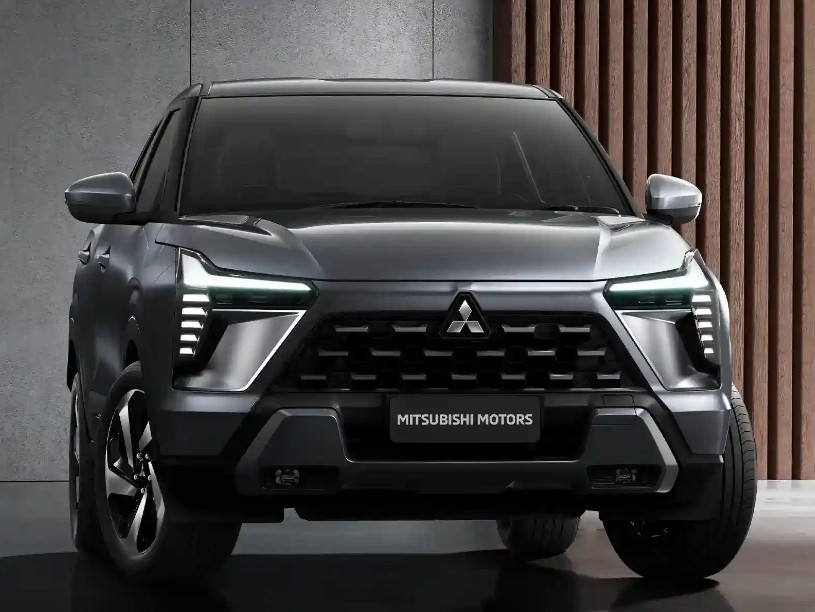
The Mitsubishi Outlander vs Subaru Forester comparison gets interesting the moment we look beyond the usual compact-SUV checklist. Both vehicles promise practicality, all-weather confidence, comfortable cabins, and enough versatility to handle everything from Monday traffic to a muddy weekend escape. Yet they approach those jobs from surprisingly different directions.
The Mitsubishi Outlander feels like the more family-oriented choice. It is slightly larger, offers three rows and seating for up to seven in many markets, and can be purchased with Mitsubishi's sophisticated plug-in-hybrid powertrain. The Subaru Forester sticks with two rows and five seats, but counters with excellent visibility, generous passenger space, standard all-wheel drive in major markets, and an outdoorsy personality that feels authentic rather than decorative.
So which should we put in our driveway?
That depends on whether we need maximum seating versatility or maximum everyday simplicity.
In this detailed Outlander vs Forester comparison, we'll examine dimensions, engines, fuel economy, AWD performance, interiors, cargo space, reliability considerations, technology, comfort, safety, value, and more.
Content in this publication
- Mitsubishi Outlander vs Subaru Forester at a Glance
- Which Is Bigger: Mitsubishi Outlander or Subaru Forester?
- Mitsubishi Outlander vs Subaru Forester Interior
- Outlander vs Forester Cargo Space
- Mitsubishi Outlander vs Subaru Forester Engine Performance
- The Outlander PHEV Changes the Comparison
- Mitsubishi Outlander vs Subaru Forester Fuel Economy
- Forester AWD vs Outlander S-AWC
- Outlander vs Forester Ride Comfort
- Mitsubishi Outlander vs Subaru Forester Handling
- Forester vs Outlander Technology
- Safety: Mitsubishi Outlander vs Subaru Forester
- Mitsubishi Outlander vs Subaru Forester Reliability
- Warranty Comparison
- Outlander vs Forester Towing Capacity
- Which SUV Is Better for Families?
- Which Is Better for City Driving?
- Which Is Better for Road Trips?
- Mitsubishi Outlander vs Subaru Forester Price and Value
- Mitsubishi Outlander Pros and Cons
- Subaru Forester Pros and Cons
- Mitsubishi Outlander vs Subaru Forester: Who Should Buy Each?
- Mitsubishi Outlander vs Forester: Our Verdict
- Frequently Asked Questions
- 1. Is the Mitsubishi Outlander bigger than the Subaru Forester?
- 2. Is the Subaru Forester better than the Mitsubishi Outlander in snow?
- 3. Which is more fuel-efficient, the Outlander or Forester?
- 4. Which has more cargo space, the Subaru Forester or Mitsubishi Outlander?
- 5. Should I buy a Mitsubishi Outlander or Subaru Forester?
Mitsubishi Outlander vs Subaru Forester at a Glance
Before digging into the details, here's the basic personality difference.
| Category | Mitsubishi Outlander | Subaru Forester |
|---|---|---|
| Seating | Up to 7 | 5 |
| Layout | 3 rows | 2 rows |
| AWD | Available/standard depending on version and market | Standard in major markets |
| Gas engine | Typically 2.5L four-cylinder | 2.5L flat-four |
| Hybrid option | Plug-in hybrid available | Hybrid available in selected markets |
| Best strength | Family versatility | Practicality and AWD confidence |
| Cargo usability | Good with third row folded | Excellent two-row layout |
| Road personality | Comfortable and refined | Comfortable and predictable |
| Adventure focus | Moderate | Strong |
| Best suited to | Families needing flexibility | Buyers wanting space and AWD |
Exact engines, trims, equipment, towing ratings, and fuel-economy figures differ by country and model year, so local specifications should always be checked before purchasing.
Which Is Bigger: Mitsubishi Outlander or Subaru Forester?
The Mitsubishi Outlander is generally the larger vehicle externally.
A current-generation U.S.-spec Outlander measures approximately 185.8 inches long, while the sixth-generation Forester measures around 183.3 inches. The Outlander is also wider, at approximately 74.7 inches versus 72.0 inches for the Forester in comparable U.S. specifications.
Those numbers don't sound enormous on paper.
Behind the wheel, however, the difference helps explain the personalities of these SUVs.
The Outlander feels more like a compact SUV stretching toward the midsize category, whereas the Forester remains unapologetically focused on being a roomy but manageable five-seat crossover.
Outlander Size Advantages
The additional size gives the Mitsubishi room for its biggest party trick: a third seating row.
That can make a massive difference to families.
Maybe we normally travel with four people but occasionally need to collect two children from football practice. Perhaps grandparents visit a few times each year. Instead of owning a physically larger midsize SUV every single day, the Outlander's folding third row provides emergency flexibility.
Don't mistake it for minivan accommodation, though.
The Outlander's third row is compact. Independent testing has consistently characterized it as better suited to children than adults.
Forester Size Advantages
The Forester skips the third row entirely.
That sounds like a disadvantage until we consider what Subaru does with the space.
Instead of squeezing another pair of seats behind the second row, Subaru gives five occupants a tall, airy passenger compartment and a straightforward cargo area.
The Forester's boxier proportions also help it feel larger inside than its exterior dimensions suggest.
Which Body Style Works Better?
We'd put it this way:
Outlander: more versatility.
Forester: more simplicity.
If seven-seat capability matters even occasionally, Mitsubishi holds an obvious advantage. If we know we'll never transport more than five people, the Forester's layout may actually prove more useful every day.
Mitsubishi Outlander vs Subaru Forester Interior
Cabin design is another area where these vehicles move apart.
The latest Outlander has developed a surprisingly premium personality. Its dashboard looks broad and contemporary, upper trim levels bring more upscale materials, and the overall environment can feel closer to a near-premium crossover than Mitsubishi's value-oriented reputation might suggest.
Updates to the 2025 Outlander included additional sound insulation, revised interior materials, a redesigned center console, and a Yamaha audio system.
The Forester takes a more functional approach.
Its upright dashboard, tall windows, relatively slim pillars, and generous glass area prioritize visibility and usability.
Which Has the Better Interior Quality?
For pure visual richness, we'd lean toward the Mitsubishi Outlander.
Higher Outlander trims can look legitimately expensive, particularly with upgraded upholstery, digital instrumentation, and contrasting interior details.
The Forester doesn't feel cheap. Quite the opposite.
It simply wears hiking boots instead of dress shoes.
Its interior philosophy is about durability, accessibility, and making every square inch easy to use.
Which SUV Has More Passenger Space?
For five-person use, the Forester makes a compelling argument.
Its upright roof creates excellent headroom, while the second row provides generous room for adults.
Current U.S. specifications list roughly 39.4 inches of rear legroom in the Forester.
The Outlander's second row is also spacious, but part of the vehicle's overall packaging must accommodate that folding third row.
If we regularly carry four or five adults, the Forester's dedicated two-row configuration is wonderfully straightforward.
If we regularly carry five people and occasionally need six or seven seats, the Mitsubishi wins.
Outlander vs Forester Cargo Space
Here's where numbers can become misleading.
Because the Outlander has three rows and the Forester has two, comparing cargo capacity requires deciding which seats we're actually using.
With all Outlander seats upright, space behind the tiny third row is limited. In one U.S.-spec configuration, approximately 11 cubic feet is available behind row three.
Fold that third row and capacity expands dramatically.
The Forester, meanwhile, has roughly 28–30 cubic feet behind its second row depending on trim and measurement methodology, with close to 75 cubic feet available in some versions once the rear seats are folded.
Which Is Better for Luggage?
For five people plus luggage, the Forester is extremely convenient.
Open the hatch, throw the bags inside, and we're done.
With the Outlander, owners who rarely use the third row will probably leave it folded most of the time. Once we do that, the Mitsubishi also becomes an impressively useful cargo hauler.
There's no dramatic loser here.
The choice comes down to whether those extra seats are worth sacrificing some permanent luggage space.
Mitsubishi Outlander vs Subaru Forester Engine Performance
Neither standard gasoline SUV exists to terrorize sports cars at traffic lights.
That's perfectly fine.
These are family crossovers.
In recent U.S. versions, both use naturally aspirated 2.5-liter four-cylinder engines paired with continuously variable automatic transmissions.
The 2025 gasoline Outlander produced approximately 181 horsepower and 181 lb-ft of torque, while the Forester generated around 180 horsepower and 178 lb-ft.
They're almost twins on paper.
Which Is Faster?
Neither could reasonably be described as quick.
In independent testing, a 2025 Forester Sport reached 60 mph in approximately 8.3 seconds, while an AWD Outlander SEL required around 8.5 seconds.
In everyday driving, the difference is virtually irrelevant.
Both provide enough acceleration for commuting, city driving, and normal highway merging.
Ask for a dramatic overtaking maneuver with five passengers and luggage, though, and we'll quickly discover that neither gasoline engine has a huge reserve of muscle.
Forester Engine Character
Subaru's signature flat-four engine gives the Forester a distinctive mechanical personality.
Its low-mounted boxer layout has long been part of Subaru's identity.
The downside?
Push the accelerator hard and the CVT can hold the engine at elevated revs, producing more noise than excitement.
Outlander Engine Character
The standard Outlander suffers from much the same problem.
Its 2.5-liter engine is adequate but hardly energetic.
The Mitsubishi feels happiest when driven smoothly rather than aggressively.
You may be interested in reading Mitsubishi Outlander vs Kia Telluride: Which SUV Should You Buy?
And that makes its alternative powertrain especially important.
The Outlander PHEV Changes the Comparison
This is Mitsubishi's secret weapon.
The Outlander Plug-in Hybrid Electric Vehicle is much more than a fuel-saving version of the ordinary Outlander.
It fundamentally changes how the vehicle drives.
A larger battery and electric motors allow short everyday journeys to be completed primarily or entirely using electricity when the battery is charged.
More importantly, electric motors provide stronger immediate response than the standard gasoline model.
For 2026 in the U.S., the refreshed Outlander PHEV received a larger 23-kWh battery, a claimed electric range of approximately 45 miles, and significantly increased system output of around 297 horsepower.
Availability and specifications differ internationally.
Does Subaru Have a Forester Hybrid?
Yes.
Newer Forester generations have added hybrid variants in several markets, meaning Mitsubishi no longer gets the electrification conversation entirely to itself.
The Subaru system, however, operates as a conventional hybrid rather than following the Outlander's plug-in philosophy.
That distinction matters.
A regular hybrid asks virtually nothing from us. We fill the tank and drive.
A PHEV produces its greatest benefit when we charge it regularly.
Which Hybrid Approach Is Better?
If we have home charging and most daily trips are relatively short, the Outlander PHEV can be enormously appealing.
If we cannot charge at home or simply don't want to think about plugging in, the Forester Hybrid's conventional approach may be easier to live with.
Mitsubishi Outlander vs Subaru Forester Fuel Economy
Comparing gasoline versions, the Forester generally has an efficiency advantage when both SUVs are equipped with AWD.
For example, EPA estimates for a 2025 Forester reached approximately 26 mpg city and 33 mpg highway on some trims, while an AWD 2025 Outlander was rated around 24 mpg city and 30 mpg highway.
Real-world figures depend heavily on weather, traffic, tires, driving style, altitude, and speed.
Fuel Economy Winner: Forester Gas vs Outlander Gas
Forester.
Not by a spectacular margin, but enough that drivers covering high annual mileage should notice.
What About the PHEV?
Then the equation flips upside down.
Charge an Outlander PHEV nightly and drive mostly within its electric range, and fuel-station visits can become surprisingly infrequent.
Drive it hundreds of highway miles without charging, and some of that advantage disappears because we're carrying the extra weight of batteries and electric hardware.
PHEVs reward the right lifestyle.
They're not magic.
Forester AWD vs Outlander S-AWC
This may be the most interesting part of the battle.
Subaru built much of its reputation around standard symmetrical all-wheel drive, and the Forester remains one of the most convincing compact SUVs for buyers dealing with snow, gravel, steep roads, forestry tracks, or unpredictable weather.
Mitsubishi is no beginner here either.
Its available Super All-Wheel Control (S-AWC) system manages multiple vehicle dynamics systems to help distribute traction and improve stability.
Which Is Better in Snow?
Both can be excellent winter vehicles when fitted with appropriate tires.
We'd give the Forester an advantage for buyers who prioritize snow, rough-road driving, and light off-road adventures because AWD is central to the Forester's entire identity rather than merely one configuration choice.
Its useful ground clearance strengthens that case.
Which Is Better Off-Road?
For ordinary gravel roads, camping trails, snow, mud, and poorly maintained rural routes, either SUV can work well.
For more ambitious terrain, the Forester—especially its Wilderness version—pulls ahead.
The 2026 Forester Wilderness increases ground clearance to approximately 9.3 inches in U.S. specification, combines that with all-terrain tires and revised drivetrain programming, and raises towing capacity in that particular specification.
We still wouldn't confuse it with a Jeep Wrangler.
But among mainstream compact crossovers, the Wilderness genuinely walks the walk.
Outlander vs Forester Ride Comfort
Comfort matters more than skidpad numbers when we're commuting every morning.
Thankfully, both manufacturers understand that.
The Outlander is tuned as a relaxed family cruiser. Recent suspension revisions have focused further on refinement, and the cabin does a good job isolating occupants from everyday road imperfections.
The Forester is similarly comfort-focused.
Its suspension absorbs broken pavement nicely, and its upright driving position makes long journeys easy.
Which Is Quieter?
Recent Outlander updates emphasizing additional sound insulation have strengthened Mitsubishi's position here.
The Forester has also become quieter with its newest generation, although its engine can still make itself heard during hard acceleration.
For relaxed highway cruising, we'd slightly favor the Outlander.
For visibility and effortless placement on narrow roads, we'd favor the Forester.
Mitsubishi Outlander vs Subaru Forester Handling
Let's keep expectations sensible.
Neither vehicle is trying to be a Mazda MX-5 wearing hiking clothes.
The Outlander handles predictably but prioritizes comfort. Steering is light, making parking and low-speed maneuvering easy.
The Forester also leans toward comfort rather than excitement.
Independent testing of the latest generation noted noticeable body movement when driven aggressively, reinforcing that Subaru has prioritized everyday composure over sporty behavior.
Which Is More Fun to Drive?
Probably neither.
And that's not an insult.
SUV buyers in this category usually care more about visibility, comfort, fuel economy, child seats, cargo, and weather confidence.
Between the two, we'd make the decision elsewhere.
Forester vs Outlander Technology
Technology changes substantially by trim and market, but both models now offer the equipment modern buyers expect.
Depending on version, features may include:
- Apple CarPlay and Android Auto
- Wireless smartphone connectivity
- Digital instrument displays
- Wireless phone charging
- Premium audio systems
- Surround-view cameras
- Navigation
- Heated seats
- Power tailgates
- Head-up displays
- Multiple USB ports
The latest Outlander's available digital cockpit and updated infotainment presentation give it an upscale feel.
The Forester counters with straightforward controls and Subaru's vertically oriented touchscreen on many versions.
Which Has the Better Infotainment System?
This one is subjective.
The Mitsubishi's newer presentation feels more contemporary to us.
Subaru's large portrait-style interface looks impressive but has occasionally attracted criticism for responsiveness and placing multiple functions inside the display.
Anyone deciding between them should spend ten minutes using each system before signing a contract. Tiny annoyances become enormous after three years.
Safety: Mitsubishi Outlander vs Subaru Forester
Both manufacturers offer extensive driver-assistance technology.
The precise equipment changes by trim and market, but available or standard systems can include:
- Automatic emergency braking
- Forward-collision warning
- Adaptive cruise control
- Blind-spot monitoring
- Rear cross-traffic alert
- Lane-departure warning
- Lane-keeping assistance
- Parking sensors
- Driver-monitoring systems
- Surround-view cameras
Subaru's EyeSight driver-assistance technology remains one of the defining elements of the Forester, with adaptive cruise control, automated emergency braking, and lane-related assistance widely available or standard depending on market.
Which SUV Is Safer?
We wouldn't declare a universal winner without specifying the exact model year, country, and trim.
Crash-test protocols vary globally, and equipment differences can substantially alter results.
You may be interested in readingMitsubishi Outlander vs Kia Telluride: Which SUV Should You Buy?You may be interested in reading
Mitsubishi Outlander vs Eclipse Cross: Which SUV Makes More Sense?Both vehicles should be shortlisted by safety-conscious families, but buyers should compare the exact local specification rather than assuming every Outlander or Forester has identical equipment.
Mitsubishi Outlander vs Subaru Forester Reliability
Reliability discussions need more nuance than internet folklore usually allows.
The Forester benefits from Subaru's long experience refining its boxer-engine and AWD combination. However, no vehicle is immune from problems, and older Subaru models shouldn't automatically be used to judge a newly redesigned generation.
The Outlander benefits from a relatively straightforward naturally aspirated gasoline powertrain in standard form, although PHEV versions naturally add electrical and battery complexity.
Which One Should Last Longer?
With correct maintenance, either can provide many years of service.
The bigger variables are often:
- Maintenance history.
- Driving environment.
- Local dealer expertise.
- Parts pricing.
- Previous accident history.
- Whether scheduled fluids and inspections were performed correctly.
When buying used, we'd take a beautifully maintained example of either model over a neglected example of the supposedly "more reliable" brand every time.
Warranty Comparison
This category can heavily favor Mitsubishi in some markets.
For instance, Mitsubishi's U.S. warranty coverage has traditionally been considerably longer than Subaru's, including extended powertrain protection for qualifying original owners. Recent Outlander coverage has included a five-year/60,000-mile basic warranty and 10-year/100,000-mile powertrain coverage under applicable conditions.
The comparable U.S. Forester coverage is typically three years/36,000 miles basic and five years/60,000 miles on the powertrain.
Warranty programs differ substantially by country, however.
Warranty Winner
Where Mitsubishi offers its extended coverage, Outlander.
That peace of mind can be worth real money to owners planning to keep a vehicle for many years.
Outlander vs Forester Towing Capacity
Neither standard SUV should be our first choice for pulling a massive trailer.
Current gasoline Outlander configurations have commonly been rated around 2,000 pounds in the U.S.
Forester capacity depends heavily on trim.
The normal Forester is intended primarily for relatively light towing, whereas newer Wilderness variants can offer substantially more capability; the 2026 U.S. Wilderness, for example, is rated up to approximately 3,500 pounds.
Always check local towing specifications because allowable trailer weight can vary significantly between countries even for mechanically similar vehicles.
Which SUV Is Better for Families?
Here's where Mitsubishi lands its strongest punch.
Seven seats.
We may only use seats six and seven a few times each month, but when they're needed, they're priceless.
That makes the Outlander exceptionally clever for families who need more capacity than a conventional compact SUV but don't want the bulk or expense of moving into a large three-row vehicle.
When the Forester Makes More Sense for Families
A family of four may actually prefer the Subaru.
Why?
Because we aren't paying—in space or complexity—for seats we'll never use.
The kids get an airy second row, parents get excellent outward visibility, and there's a broad cargo hold waiting behind them.
Best for Families
Outlander: larger or growing families.
Forester: families of four or five prioritizing daily practicality.
Which Is Better for City Driving?
The Forester's slightly smaller exterior footprint and excellent visibility make city driving remarkably easy.
Parallel parking?
Busy supermarket garage?
Narrow neighborhood street?
The Subaru behaves like a large box with windows everywhere—which is exactly what we want.
The Outlander isn't difficult to maneuver, but it feels marginally more substantial.
City Winner: Forester
Unless those extra Outlander seats matter.
Then the Mitsubishi's packaging advantage can easily outweigh its modest size penalty.
Which Is Better for Road Trips?
This one is close.
The Outlander offers a comfortable cabin, optional third-row flexibility, an upscale atmosphere, and—if we choose the PHEV—an interesting combination of electric commuting and gasoline-supported long-distance travel.
The Forester offers great visibility, comfortable seating, plenty of luggage space, and typically strong gasoline fuel economy.
If our road trips involve remote campsites, snowy mountain passes, or rough access roads, we'd choose the Forester.
If they involve family holidays with six passengers, we'd choose the Outlander without hesitation.
Mitsubishi Outlander vs Subaru Forester Price and Value
Prices vary too much internationally to quote one meaningful global figure.
Even within one country, comparing base prices alone can mislead us.
The real question is what equipment comes with the price.
The Outlander can become relatively luxurious in upper trims and provides something unusual for this class: three-row seating.
The Forester builds value around standard AWD, practical interior packaging, safety equipment, and strong everyday usability.
Which Offers Better Value?
It depends on what we'd otherwise need to buy.
If the Outlander's third row prevents us from stepping up to a more expensive midsize SUV, Mitsubishi represents excellent value.
If we only need five seats and would otherwise pay extra to add AWD to a competitor, the Forester becomes extremely compelling.
Mitsubishi Outlander Pros and Cons
Outlander Pros
- Available seven-seat configuration
- More premium-feeling interior
- Comfortable road manners
- Strong warranty in certain markets
- Excellent PHEV option
- Distinctive exterior styling
- Flexible second- and third-row seating
- Available S-AWC system
Outlander Cons
- Third row is cramped
- Standard gasoline engine feels underpowered
- Limited cargo room with all seats occupied
- Larger exterior dimensions than the Forester
- PHEV costs considerably more than the basic gasoline model
Subaru Forester Pros and Cons
Forester Pros
- Excellent outward visibility
- Spacious two-row cabin
- Standard AWD in major markets
- Strong rough-road ability
- Comfortable ride
- Practical cargo space
- Good gasoline fuel economy
- Excellent Wilderness option for adventurous drivers
Forester Cons
- Only five seats
- Ordinary gasoline performance
- Engine becomes noisy under hard acceleration
- Cabin is more functional than luxurious
- Warranty can be shorter than Mitsubishi's
- Infotainment isn't everyone's favorite
Mitsubishi Outlander vs Subaru Forester: Who Should Buy Each?
After comparing dozens of specifications, this decision becomes surprisingly simple.
Buy the Mitsubishi Outlander If You:
- Need occasional seven-seat capacity.
- Want an available plug-in hybrid.
- Prefer a more upscale cabin.
- Value long warranty coverage where offered.
- Mostly drive on paved roads.
- Want maximum family flexibility from a compact SUV.
Buy the Subaru Forester If You:
- Need only five seats.
- Frequently drive in snow.
- Travel on gravel or rough roads.
- Prioritize visibility.
- Want standard AWD.
- Prefer a large, uncomplicated cargo area.
- Enjoy camping, hiking, skiing, or outdoor activities.
Mitsubishi Outlander vs Forester: Our Verdict
So, is the Mitsubishi Outlander better than the Subaru Forester?
For some buyers, absolutely.
For everyone? No.
The Outlander is the more versatile family machine. Its third row gives it a trick the Forester simply cannot reproduce, its interior can feel surprisingly upscale, and the Outlander PHEV transforms it into one of the more interesting electrified family crossovers available.
The Forester fights back by mastering the fundamentals.
Visibility is excellent. Passenger space is generous. Cargo capacity is straightforward. AWD capability is deeply integrated into the vehicle's identity, and the Forester feels comfortable heading down a snowy road or gravel trail where many urban-focused crossovers begin looking nervous.
Think of them as two backpacks.
The Outlander is the clever travel bag with hidden compartments—slightly more complicated, but capable of swallowing an extra passenger or adapting to an electric commute.
The Forester is the rugged hiking pack—simple, roomy, comfortable, and ready to get dirty.
For five-person households, we'd generally choose the Subaru Forester because its two-row packaging, visibility, economy, and standard AWD make everyday ownership remarkably easy.
For buyers who genuinely need a third row—or who can take advantage of regular home charging—the Mitsubishi Outlander becomes the more compelling vehicle.
And that's the key.
Don't ask which SUV wins on paper.
Ask which compromise we'd rather live with every morning.
Frequently Asked Questions
1. Is the Mitsubishi Outlander bigger than the Subaru Forester?
Yes. The current Outlander is generally slightly longer and wider than the Forester. More importantly, the Mitsubishi uses its additional space to accommodate an available third seating row, allowing up to seven occupants, while the Forester remains a five-seat SUV.
2. Is the Subaru Forester better than the Mitsubishi Outlander in snow?
The Forester is arguably the stronger choice for drivers who encounter snow frequently because Subaru's AWD system is standard in major markets and the vehicle offers generous ground clearance. Wilderness variants increase its rough-terrain capability further. The Outlander's S-AWC system is also highly capable, however, and proper winter tires remain crucial on either SUV.
3. Which is more fuel-efficient, the Outlander or Forester?
When comparing conventional gasoline AWD models, the Forester generally provides better EPA fuel-economy figures. The calculation changes dramatically with the Outlander PHEV, which can complete many shorter journeys primarily on electricity when regularly charged.
4. Which has more cargo space, the Subaru Forester or Mitsubishi Outlander?
The Forester provides an exceptionally practical cargo area behind its second row because it doesn't need to accommodate third-row seats. The Outlander offers strong cargo flexibility when its third row is folded, but luggage room becomes much smaller when all seven seats are in use.
5. Should I buy a Mitsubishi Outlander or Subaru Forester?
Choose the Mitsubishi Outlander if you need occasional seven-seat capacity, prefer a more upscale interior, or want a plug-in hybrid. Choose the Subaru Forester if you only need five seats and prioritize AWD capability, visibility, cargo practicality, fuel efficiency, and rough-road performance.
You may be interested in readingMitsubishi Outlander vs Kia Telluride: Which SUV Should You Buy?You may be interested in reading
Mitsubishi Outlander vs Eclipse Cross: Which SUV Makes More Sense?You may be interested in reading
Mitsubishi Outlander vs Chevy Equinox: Which SUV Should You Buy?If you want to know other articles similar to Mitsubishi Outlander vs Subaru Forester: Which SUV Is Better? you can visit the category Models.
Honda Passport vs Toyota 4Runner: Which SUV Is Better?
Honda Passport vs Ford Bronco: Which SUV Is Better?
Honda Passport vs Ford Explorer: Which SUV Is Better?
Honda Passport or Pilot: Which SUV Is Better?
Honda Passport vs Jeep Grand Cherokee: Which SUV Is Better?
Honda Passport vs Nissan Pathfinder: Which SUV Is Better?
Leave a Reply
More content of your interest