

Mitsubishi Outlander vs Kia Telluride: Which SUV Should You Buy?

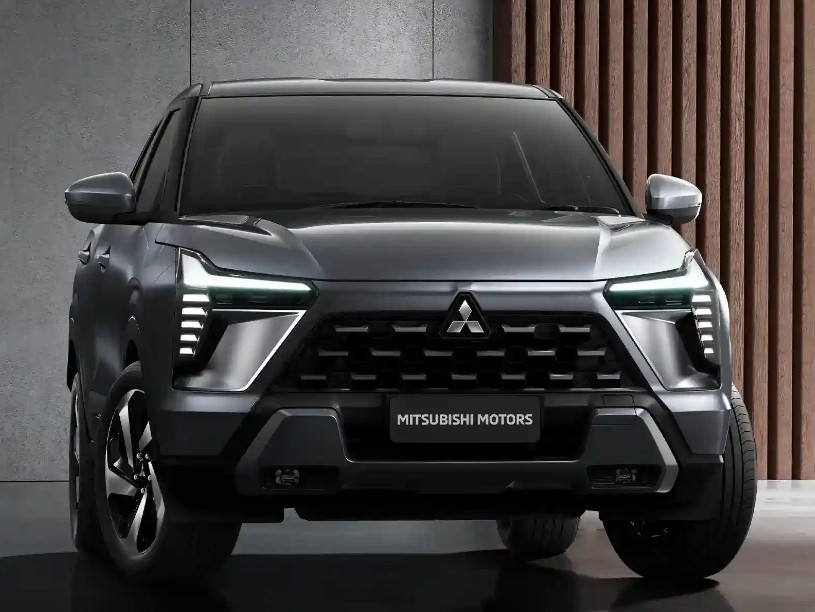
Put the Mitsubishi Outlander vs Kia Telluride side by side and something becomes obvious almost immediately: these SUVs may both offer three rows of seats, but they approach family transportation from two very different directions.
The Outlander is the leaner, more efficient option. It gives us seven-seat versatility without demanding the parking space, fuel consumption, or purchase budget normally associated with a large three-row SUV. Depending on the market, buyers can also choose the Outlander PHEV, adding plug-in hybrid capability that the Mitsubishi has made a central part of its identity.
The Kia Telluride plays a different game. It is bigger, roomier, stronger, and more naturally suited to carrying adults across all three rows. Think of the Outlander as a cleverly packed suitcase and the Telluride as a full-size wardrobe: both hold plenty, but one clearly has more room to spread out.
So which approach makes more sense?
That depends on whether we really need a large three-row SUV—or simply like the idea of having seven seats available when necessary.
Content in this publication
- Mitsubishi Outlander vs Kia Telluride at a Glance
- Size Difference: Telluride Is the Bigger SUV
- Interior Space: Kia Takes the Lead
- Cargo Space: More Room Behind the Kia's Seats
- Performance: Telluride Packs More Muscle
- Fuel Economy: Outlander Has the Natural Advantage
- Towing Capacity: Telluride Wins Easily
- AWD and Bad-Weather Capability
- Ride Comfort and Highway Refinement
- Interior Quality: Closer Than You Might Expect
- Technology and Infotainment
- Safety and Driver-Assistance Technology
- Reliability and Ownership Considerations
- Maintenance and Running Costs
- Price and Value
- Mitsubishi Outlander vs Kia Telluride for Families
- Which Is Better for City Driving?
- Which Is Better for Road Trips?
- Which Is Better for Commuting?
- Who Should Buy the Mitsubishi Outlander?
- Who Should Buy the Kia Telluride?
- Mitsubishi Outlander vs Kia Telluride: Pros and Cons
- Final Verdict: Outlander or Telluride?
- Frequently Asked Questions
Mitsubishi Outlander vs Kia Telluride at a Glance
Before diving into the details, here is where these SUVs generally stand.
| Category | Mitsubishi Outlander | Kia Telluride |
|---|---|---|
| SUV type | Compact/midsize crossover | Larger midsize three-row SUV |
| Seating | Up to 7 | Usually 7 or 8 |
| Third row | Best for occasional use | Much more adult-friendly |
| Power | Moderate | Strong |
| Fuel economy | Better overall | Higher consumption |
| PHEV available | Yes | Availability depends on generation/market |
| AWD | Available | Available |
| Cargo capability | Good | Excellent |
| Towing | Light-duty | Much stronger |
| City driving | Easier | More cumbersome |
| Family road trips | Good | Excellent |
| Purchase price | Generally lower | Generally higher |
| Best suited for | Smaller families, commuters | Larger families, frequent travelers |
The important point is that the Telluride is not merely an alternative version of the Outlander. It belongs to a larger class.
That difference influences virtually everything else.
Size Difference: Telluride Is the Bigger SUV
Size could settle the debate before engines, equipment, or pricing even enter the conversation.
The Kia Telluride occupies considerably more road than the Mitsubishi Outlander. Its longer body and larger footprint translate into a more spacious passenger compartment, a more useful third row, and considerably more flexibility when passengers and luggage need to travel together.
The Outlander is intentionally more compact.
And that is not necessarily a disadvantage.
Why the Outlander's Smaller Footprint Matters
A smaller SUV tends to be easier to live with.
Anyone squeezing through underground parking garages, narrow urban streets, crowded shopping centers, or older residential areas may appreciate the Mitsubishi's dimensions every single day.
The Outlander feels much closer to a conventional two-row crossover from behind the wheel. Its additional third row is almost a bonus feature rather than something that transforms it into a massive family hauler.
The Telluride feels like a proper three-row SUV because that is exactly what it is.
Why the Telluride's Extra Size Matters
Space becomes priceless when five, six, seven, or eight people regularly travel together.
The Telluride gives passengers more breathing room and generally makes the second and third rows easier to access. There is simply more vehicle available for engineers to work with.
That means adults are less likely to feel as though they have been folded into the back like camping chairs.
For families using every seat regularly, the Kia has a major advantage.
Interior Space: Kia Takes the Lead
Walk from an Outlander into a Telluride and the difference feels bigger than numbers on a specification sheet might suggest.
The Mitsubishi's cabin is pleasantly designed and surprisingly versatile considering its exterior dimensions. Front-seat passengers should have little reason to complain, while second-row accommodation works well for children and adults.
The compromise appears farther back.
The Outlander's Third Row Is an Emergency Reserve
Seven seats sound fantastic in an advertisement.
Seven genuinely comfortable seats are another matter.
The Outlander's third row is better viewed as additional flexibility. Children can use it, and adults can survive shorter journeys back there, but it is not where most of us would voluntarily put two six-foot passengers for a four-hour highway drive.
Fold those rear seats down, however, and the Outlander returns to being a useful family crossover with practical cargo space.
That ability to switch roles is part of its appeal.
Who Benefits From the Outlander Layout?
Imagine a family of four.
Most days, everyone gets plenty of room while the third row stays folded. Then grandparents visit, another child needs a ride home from school, or friends join a short trip. Suddenly those extra seats become extremely useful.
In that scenario, buying a considerably larger SUV might feel unnecessary.
The Mitsubishi makes sense.
Telluride Offers a Real Third-Row Experience
The Telluride treats the third row much more seriously.
It remains dependent on configuration and passenger size, of course, but it is much more suitable for repeated use. Larger families can occupy all three rows without immediately wishing they had brought a second vehicle.
That difference changes the entire ownership experience.
If we regularly carry six or more passengers, Telluride wins the Mitsubishi Outlander vs Kia Telluride interior comparison comfortably.
Cargo Space: More Room Behind the Kia's Seats
Three-row SUVs often expose their biggest weakness when every passenger seat is occupied.
Where does the luggage go?
With the Outlander, loading seven passengers reduces the room available for cargo considerably. That is perfectly normal for an SUV of its dimensions, but it becomes important when planning airport journeys, vacations, or long weekends.
The Telluride's larger body provides a more generous cargo area and greater overall carrying flexibility.
Fold its rear seats and the Kia becomes something of a moving storage locker.
The Mitsubishi can still handle groceries, suitcases, sports equipment, and everyday family jobs, but the Telluride is the stronger option for households routinely transporting both people and possessions.
Performance: Telluride Packs More Muscle
Performance is another area where these SUVs reveal their different missions.
The conventional Outlander prioritizes manageable running costs, smooth everyday driving, and respectable efficiency rather than explosive acceleration.
The Telluride has historically relied on substantially stronger engines because it has considerably more SUV to move.
And we can feel the difference.
How the Mitsubishi Outlander Drives
Around town, the Outlander's moderate output is rarely a serious problem.
Throttle response is suitable for commuting, school runs, suburban roads, and highway cruising. The driving experience generally encourages us to relax rather than chase a redline.
Push harder, especially with passengers aboard, and the powertrain can feel busier.
Overtaking may require more planning, and steep roads reveal that the Outlander is not pretending to be a performance SUV.
For most owners, that is fine.
Outlander PHEV Changes the Equation
The Outlander PHEV deserves separate attention because it brings electrification into the conversation.
Mitsubishi combines a gasoline engine, a traction battery, electric motors, and all-wheel-drive capability to create a vehicle that can complete many shorter journeys using electricity while retaining a gasoline engine for longer travel.
That can be extremely attractive to owners able to charge regularly.
We can commute electrically during the week without planning a charging stop every time we want to drive several hundred kilometers at the weekend.
It is one of the Outlander's strongest weapons.
How the Kia Telluride Drives
The Telluride feels more muscular.
That matters not because family-SUV owners spend their weekends drag racing, but because power makes a large vehicle easier to operate when fully loaded.
Acceleration into fast traffic requires less patience. Passing feels more relaxed. Highway gradients cause less drama.
The Kia simply has more effortless performance in conventional configurations.
The downside?
More power and more mass normally mean more fuel.
Fuel Economy: Outlander Has the Natural Advantage
If fuel consumption ranks near the top of our shopping list, the Mitsubishi becomes difficult to ignore.
It is smaller, lighter, and designed around efficiency to a greater extent than the Telluride.
Current conventional Outlander versions in the U.S., for example, are rated at up to roughly 28 mpg combined depending on drivetrain and specification. Results differ internationally because engines, testing standards, fuel, and available trims vary.
Still, the pattern remains the same: the Outlander will generally cost less to fuel than a comparable Telluride.
You may be interested in reading Mitsubishi Outlander vs Eclipse Cross: Which SUV Makes More Sense?
The PHEV Can Widen the Gap
Now imagine living 15 kilometers from work and charging at home every night.
Instead of firing a gasoline engine every morning, the Outlander PHEV may allow a substantial amount of regular driving to take place using stored electricity.
How economical that becomes depends enormously on charging habits.
A plug-in hybrid that never gets plugged in misses much of the point.
Charge consistently, however, and the Mitsubishi can provide an ownership experience the conventional Telluride cannot easily replicate.
Towing Capacity: Telluride Wins Easily
Anyone buying an SUV specifically to tow should pay close attention here.
The Outlander is primarily a crossover rather than a heavy towing machine. Mitsubishi's current U.S. gasoline model, for example, is rated to tow up to 2,000 pounds when correctly equipped.
That can cover relatively light trailers and recreational equipment.
The Telluride operates in another league.
Depending on model, configuration, generation, and market, Telluride variants have historically offered towing capacities around the 5,000-pound region or higher in certain specialized configurations.
For boats, campers, and heavier trailers, the Kia is the clear choice.
The difference is not subtle.
AWD and Bad-Weather Capability
Both SUVs can be attractive choices when rain, gravel, snow, or poorly maintained roads are part of everyday life.
Mitsubishi has invested heavily in its Super All-Wheel Control, or S-AWC, branding. Rather than thinking purely about sending power to four wheels, the system works alongside vehicle dynamics technology to manage traction and stability.
The Outlander PHEV's electrified all-wheel-drive setup is particularly interesting because its electric-motor architecture can deliver controlled power to both axles.
Kia also offers all-wheel-drive Telluride configurations, often alongside selectable terrain or drive modes depending on trim.
Which Is Better Off Road?
Neither should automatically be treated as a serious rock-crawling 4x4.
They are road-oriented family SUVs first.
Telluride X-Line and X-Pro-style versions may deliver additional rugged-road credibility, while the Outlander's S-AWC system can make slippery surfaces remarkably manageable.
For snow-covered roads, campsites, gravel tracks, wet grass, and mild trails, either may work well when properly equipped.
For hard-core off-roading, we would shop in a different category.
Ride Comfort and Highway Refinement
Long-distance comfort matters tremendously in an SUV designed for families.
The Telluride's size works in its favor here.
Its substantial wheelbase, roomy cabin, stronger performance, and highway-oriented character can create a relaxed road-trip experience. Passengers have room to move, and the vehicle feels purpose-built for eating kilometers or miles like snacks from the center console.
The Outlander can also be comfortable, particularly in recent versions featuring increasingly upscale interior materials and improved refinement.
But there is less physical room.
When five people and their bags are onboard, that difference may barely matter.
When seven people and their bags are coming too, it matters a lot.
Interior Quality: Closer Than You Might Expect
Kia transformed expectations for mainstream family SUVs with the Telluride.
Its interior presentation can feel remarkably upscale in higher trims, with large displays, attractive materials, sophisticated detailing, available luxury equipment, and a dashboard that would not look wildly out of place in something carrying a more prestigious badge.
Mitsubishi has responded strongly with recent Outlander generations.
Higher-spec Outlanders can look impressively premium, featuring attractive upholstery, large screens, digital instrumentation, panoramic roofs, sophisticated audio systems, and plenty of visual detail.
Telluride Feels More Luxurious Overall
If we compare similarly high trim levels, the Kia still has an advantage created by scale.
A wider cabin simply creates more opportunities for large consoles, generous armrests, broad seats, and an airy sense of space.
But calling the Mitsubishi cheap would miss how far the Outlander has evolved.
It can feel far more expensive than many buyers expect.
Technology and Infotainment
Modern SUVs are becoming computers with cupholders, and neither company has ignored that reality.
Depending on trim and region, features can include large infotainment touchscreens, smartphone integration, wireless charging, digital gauge clusters, navigation, surround-view cameras, premium audio, head-up displays, multiple USB connections, and connected-car functionality.
Mitsubishi's current U.S. Outlander lineup features a 12.3-inch infotainment display from the entry ES upward and emphasizes its Yamaha-developed audio systems in recent versions.
Kia's latest Telluride strategy similarly places large digital displays and connected features at the center of the cabin experience.
Technology, however, should not be judged solely by screen dimensions.
What matters is whether we can change the temperature, find a destination, answer a call, and switch audio sources without staring at menus like we are filing taxes.
Both can perform well, although exact interfaces depend heavily on model year.
Safety and Driver-Assistance Technology
Family SUV buyers understandably care about safety.
Both manufacturers offer extensive driver-assistance equipment, although availability changes by trim and market.
Potential features include forward-collision warning or mitigation, automatic emergency braking, blind-spot monitoring, rear cross-traffic alert, lane assistance, adaptive cruise control, parking sensors, surround-view cameras, and semi-automated highway assistance.
The important thing is not merely whether a feature exists somewhere in the brochure.
Check whether it is standard on the exact trim we intend to buy.
That one detail can turn an apparently cheaper vehicle into the more expensive choice once the equipment we actually want is added.
Reliability and Ownership Considerations
Predicting the reliability of an individual vehicle is impossible.
Maintenance history, climate, manufacturing changes, engine choice, driving conditions, and simple mechanical luck all play roles.
What we can do is consider complexity.
A conventional gasoline Outlander is mechanically simpler than its plug-in-hybrid sibling. The PHEV adds a high-voltage battery, electric motors, charging equipment, and additional electronic systems, though Mitsubishi also has substantial experience building this type of drivetrain.
Telluride models offer their own advantage: their traditional large-SUV powertrains have historically been relatively straightforward compared with some heavily electrified rivals.
Warranty Can Favor Mitsubishi
Warranty coverage is one of Mitsubishi's traditional selling points in some markets.
In the United States, for example, Mitsubishi currently promotes long-term powertrain coverage for qualifying original owners.
But warranties vary dramatically around the world.
Never assume the coverage described in one country's review applies to a vehicle purchased somewhere else.
Check the official warranty terms where the vehicle will actually be registered.
Maintenance and Running Costs
The Outlander should normally be cheaper to operate.
Smaller tires, potentially lower fuel consumption, lighter components, and a lower initial purchase price can all help keep costs under control.
The Telluride's additional size comes with consequences.
Large wheels cost more to replace. A powerful engine consumes more fuel. Insurance may be higher. Larger brakes and suspension components can also influence service expenses over a long ownership period.
None of this makes the Kia excessively expensive by large-SUV standards.
It simply reflects physics.
More vehicle normally means more money somewhere.
You may be interested in readingMitsubishi Outlander vs Eclipse Cross: Which SUV Makes More Sense?You may be interested in reading
Mitsubishi Outlander vs Chevy Equinox: Which SUV Should You Buy?Price and Value
Perhaps the most important thing to understand about Mitsubishi Outlander vs Kia Telluride pricing is that this is not a perfectly level contest.
The Mitsubishi generally starts considerably lower.
That is logical because we are comparing vehicles from different size classes.
The Outlander therefore appeals strongly to buyers who want three-row flexibility without paying full three-row-SUV money.
The Telluride asks for more but gives us more physical vehicle in return.
Outlander Offers More Value for Occasional Seven-Seat Use
Ask yourself one question:
How often will somebody actually sit in the third row?
If the answer is "twice a month," spending thousands more on a significantly larger vehicle may make little sense.
Buy the Outlander, fold the rear seats most of the time, enjoy lower running costs, and use the extra chairs when needed.
Telluride Offers More Value for Full-Time Family Duty
Now change the answer to "almost every day."
Suddenly the equation flips.
A cheaper SUV becomes poor value if passengers constantly complain, cargo does not fit, and every vacation begins with luggage Tetris.
Families genuinely needing three usable rows should consider paying more for the Telluride's extra room.
Value is not about buying the cheapest vehicle.
It is about buying the least expensive vehicle that properly does the job.
Mitsubishi Outlander vs Kia Telluride for Families
For a family with one or two children, the Outlander may be all the SUV we need.
There is enough passenger room for everyday driving, a useful cargo area with the third row down, and emergency seating when friends or relatives come along.
With three or more children, especially older kids, the Telluride begins looking much more convincing.
Those extra centimeters and inches become the difference between "we fit" and "we fit comfortably."
That distinction becomes increasingly important as children grow.
A seven-year-old who fits anywhere may become a six-foot teenager surprisingly quickly.
Which Is Better for City Driving?
Outlander.
This is perhaps its easiest victory.
Its smaller footprint makes parking easier, narrow streets less intimidating, and dense traffic more manageable.
Fuel efficiency also matters more when we spend hours crawling through urban congestion.
The Telluride can certainly function as a city car, especially with cameras, sensors, and modern driver aids.
But there is no escaping its dimensions.
Taking a giant SUV into a tiny parking structure can feel like steering a refrigerator through a hallway.
Which Is Better for Road Trips?
Telluride.
If our definition of a road trip involves four people, the result is much closer.
Add six or seven passengers, however, and the Kia pulls ahead.
Its combination of passenger space, cargo capacity, stronger performance, and true three-row layout suits long-distance family travel exceptionally well.
The Outlander counters with better efficiency and, in PHEV form, the possibility of completing portions of everyday driving electrically.
But pure cross-country comfort?
The Kia takes it.
Which Is Better for Commuting?
Outlander again.
Most commuters drive alone.
Dragging around a large third-row SUV five days per week because we might use all eight seats on Saturday is not always logical.
The Mitsubishi delivers much of the versatility while carrying less weight and occupying less space.
The PHEV strengthens the argument significantly for owners who can charge at home or work.
For short daily journeys, it may be the most interesting powertrain of the entire comparison.
Who Should Buy the Mitsubishi Outlander?
The Mitsubishi makes the strongest case when efficiency, flexibility, and sensible dimensions matter more than maximum space.
We would lean toward the Outlander when:
- Seven seats are useful but rarely all occupied.
- Most driving happens in cities or suburbs.
- Fuel economy matters.
- A plug-in hybrid is appealing.
- Parking space is limited.
- We want AWD without a huge SUV.
- Purchase budget matters.
- Most third-row passengers will be children.
- Heavy towing is not required.
It is the smarter minimalist.
The Outlander gives us enough SUV for many lifestyles without automatically forcing us into something enormous.
Who Should Buy the Kia Telluride?
The Kia is the better match when space and capability take priority.
Choose the Telluride if adults regularly use the third row, road trips are frequent, cargo needs are substantial, or towing is part of the plan.
It also makes sense for shoppers who simply enjoy the commanding feel and relaxed performance of a larger SUV.
The Kia does not apologize for its size.
It uses it.
Mitsubishi Outlander vs Kia Telluride: Pros and Cons
The Outlander's biggest strengths are efficiency, maneuverability, value, available electrification, and the clever ability to provide three rows within relatively compact dimensions.
Its main weakness is precisely the compromise that makes that packaging possible: the third row is limited.
The Telluride delivers genuine family-hauler space, stronger performance, better towing capability, more cargo flexibility, and a more comfortable environment for larger groups.
Its disadvantages are the mirror image of its strengths.
It costs more, consumes more fuel, needs more parking space, and may simply be more SUV than many families actually need.
Final Verdict: Outlander or Telluride?
The Mitsubishi Outlander vs Kia Telluride battle does not produce one universal winner because these vehicles solve different versions of the same problem.
The Mitsubishi Outlander is our choice for buyers who need a practical crossover first and a seven-seater second. It is easier to drive in crowded environments, generally more economical, cheaper to enter, and available with one of the more compelling plug-in-hybrid approaches in the segment.
The Kia Telluride is the better true three-row family SUV.
If six, seven, or eight people regularly climb aboard, the extra space stops being a luxury and becomes the entire reason for buying the vehicle. Add stronger performance, better towing credentials, plentiful cargo room, and an upscale cabin, and the Telluride becomes an excellent long-distance family machine.
So forget the badge for a moment and count passengers.
If the third row is an occasional convenience, buy the Outlander.
If the third row is part of everyday life, buy the Telluride.
Sometimes the best SUV comparison really is that simple.
Frequently Asked Questions
Is the Kia Telluride bigger than the Mitsubishi Outlander?
Yes. The Kia Telluride is a substantially larger three-row SUV. That additional exterior size translates into greater passenger room, a more useful third row, and more cargo flexibility. The Outlander's smaller footprint makes it easier to maneuver and park.
Which has more seats, Mitsubishi Outlander or Kia Telluride?
The Mitsubishi Outlander typically offers seating for up to seven occupants. Telluride configurations can accommodate seven or eight depending on the seating arrangement and market. More importantly, the Kia's third row is generally better suited to frequent use.
Which is more fuel-efficient, Outlander or Telluride?
The Outlander generally wins on fuel economy because it is smaller and lighter. Its available PHEV powertrain can make it particularly economical for drivers who regularly recharge and complete many short trips using electric power.
You may be interested in readingMitsubishi Outlander vs Eclipse Cross: Which SUV Makes More Sense?You may be interested in reading
Mitsubishi Outlander vs Chevy Equinox: Which SUV Should You Buy?You may be interested in reading
Mitsubishi Outlander vs Hyundai Palisade: Which SUV Performs Better?Which is better for towing, Kia Telluride or Mitsubishi Outlander?
The Kia Telluride is the much stronger towing choice. The Outlander is suitable for relatively light towing, while properly equipped Telluride models provide substantially greater towing capability. Always verify limits for the exact model, engine, trim, and country.
Is the Mitsubishi Outlander better than the Kia Telluride?
It can be. The Outlander is better for buyers prioritizing efficiency, lower costs, easier parking, and occasional third-row use. The Telluride is better for shoppers needing genuine three-row space, stronger performance, substantial cargo capacity, and greater towing capability. Neither is universally superior; the right choice depends on how much SUV we actually need.
If you want to know other articles similar to Mitsubishi Outlander vs Kia Telluride: Which SUV Should You Buy? you can visit the category Models.
Honda Passport vs Toyota 4Runner: Which SUV Is Better?
Honda Passport vs Ford Bronco: Which SUV Is Better?
Honda Passport vs Ford Explorer: Which SUV Is Better?
Honda Passport or Pilot: Which SUV Is Better?
Honda Passport vs Jeep Grand Cherokee: Which SUV Is Better?
Honda Passport vs Nissan Pathfinder: Which SUV Is Better?
Leave a Reply
More content of your interest