
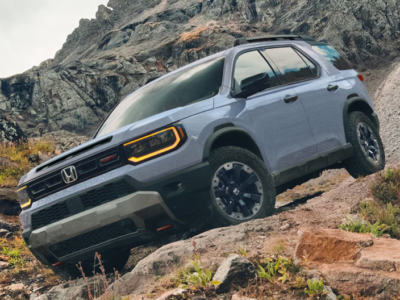
Mitsubishi Outlander vs Honda Pilot: Which SUV Should You Buy?

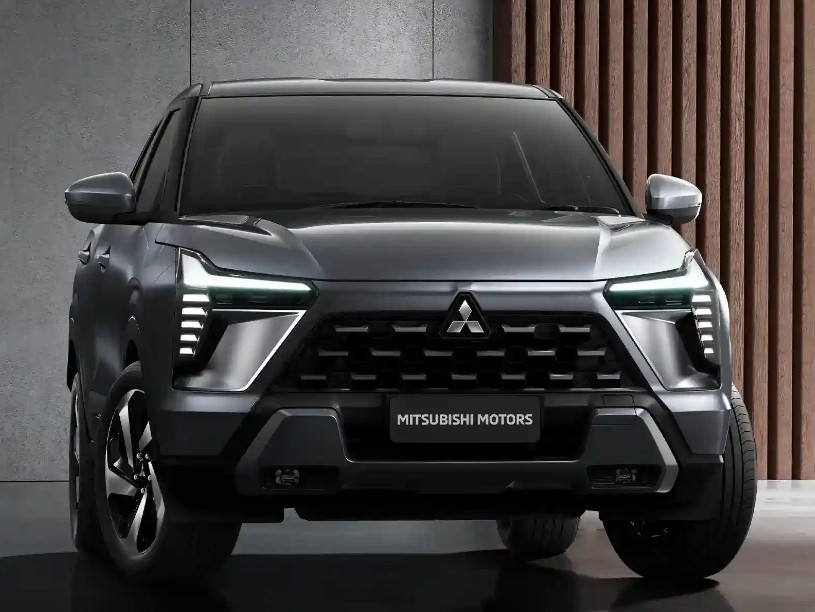
The Mitsubishi Outlander vs Honda Pilot comparison looks straightforward at first. Both are family-oriented SUVs. Both can provide three rows of seats. Both are available with all-wheel-drive technology. And both promise enough practicality to handle school runs, holidays, grocery trips, and the occasional escape from civilization.
Yet park them next to each other and we quickly discover that they approach the family-SUV formula from very different directions.
The Mitsubishi Outlander is the smaller, more urban-friendly choice. It gives us three-row flexibility without demanding the parking space of a genuinely large SUV, while the available Outlander PHEV adds one of Mitsubishi's strongest arguments: meaningful electric driving combined with long-distance gasoline flexibility.
The Honda Pilot plays in a larger class. It provides substantially more passenger room, stronger towing capability, a powerful V6 engine in markets such as North America, and a third row that makes far more sense for families carrying passengers regularly.
So which SUV wins?
That depends less on which vehicle is objectively "better" and more on what we actually expect our SUV to do.
Content in this publication
- Mitsubishi Outlander vs Honda Pilot at a Glance
- Are the Mitsubishi Outlander and Honda Pilot the Same Size?
- Interior Space: Honda Pilot Takes the Lead
- Which SUV Has the Better Third Row?
- Cargo Space: Honda Pilot Wins Again
- Performance: Honda Pilot Brings the Muscle
- Mitsubishi Outlander PHEV Changes the Equation
- Fuel Economy: Mitsubishi Has the Advantage
- Towing Capacity: Honda Pilot Dominates
- AWD Systems: S-AWC vs i-VTM4
- Ride Comfort: Two Different Personalities
- Technology and Infotainment
- Safety: Both Take Family Protection Seriously
- Honda Pilot vs Mitsubishi Outlander for Families
- Mitsubishi Outlander vs Honda Pilot Reliability
- Maintenance and Running Costs
- Honda Pilot Advantages
- Mitsubishi Outlander Advantages
- Mitsubishi Outlander vs Honda Pilot: Which Is Better for Road Trips?
- Which Is Better for City Driving?
- Which Is Better for Outdoor Adventures?
- Price and Value: Don't Compare Trims Blindly
- Should You Buy the Mitsubishi Outlander?
- Should You Buy the Honda Pilot?
- Mitsubishi Outlander vs Honda Pilot: Our Verdict
- Frequently Asked Questions
- 1. Is the Honda Pilot bigger than the Mitsubishi Outlander?
- 2. Which has more seats, Mitsubishi Outlander or Honda Pilot?
- 3. Which is more fuel-efficient, Honda Pilot or Mitsubishi Outlander?
- 4. Can the Mitsubishi Outlander tow as much as the Honda Pilot?
- 5. Is the Mitsubishi Outlander or Honda Pilot better for a family?
- Conclusion
Mitsubishi Outlander vs Honda Pilot at a Glance
Before getting buried beneath specifications, let's look at the personalities of these two SUVs.
| Category | Mitsubishi Outlander | Honda Pilot |
|---|---|---|
| Vehicle type | Compact/midsize crossover, depending on market classification | Midsize three-row SUV |
| Typical seating | Up to 7 | Up to 8 |
| Gasoline engine | Market-dependent | 3.5L V6 in current U.S. model |
| Electrified option | Available PHEV in many markets | No current Pilot PHEV |
| AWD | Available S-AWC | Available i-VTM4 AWD |
| Maximum towing* | Around 2,000 lb in current U.S. gasoline model | Up to 5,000 lb with AWD in current U.S. model |
| Best attribute | Efficiency and manageable size | Passenger space and capability |
| Better urban SUV | Outlander | — |
| Better large-family SUV | — | Pilot |
*Specifications differ by market, model year, trim, drivetrain, and equipment.
The current U.S.-market 2026 Outlander is rated to tow up to 2,000 pounds when properly equipped. Honda lists up to 5,000 pounds for AWD versions of the 2026 Pilot and 3,500 pounds for its front-wheel-drive variants.
That difference alone tells us something important: these SUVs overlap, but they are not direct twins.
Are the Mitsubishi Outlander and Honda Pilot the Same Size?
No, and size may be the biggest factor in this entire comparison.
The Honda Pilot is the larger SUV. It has been developed as a genuine three-row family vehicle, whereas the Outlander's compact third row adds versatility to a considerably smaller footprint.
Think of the Outlander as an SUV that says, "We might need seven seats."
The Pilot says, "We probably will."
That distinction matters.
If we're hauling two adults and two children most of the time, the Mitsubishi's smaller body can actually become an advantage. It is easier to thread through traffic, easier to place in tight parking spaces, and less cumbersome when we're simply running errands.
If we're transporting six or seven people regularly, the Pilot's extra dimensions start earning their keep.
The Outlander Is Easier to Live With in Crowded Cities
Bigger is not automatically better.
A giant SUV feels wonderful while rolling down a wide motorway with seven passengers aboard. Try squeezing it into an old underground car park and that spaciousness suddenly sends us an invoice.
The Outlander occupies a useful middle ground.
It provides the visual presence and flexible cabin configuration buyers expect from an SUV without feeling like we're piloting a small bus.
Drivers living in dense cities or neighborhoods with tight garages may therefore prefer the Mitsubishi even before discussing fuel consumption.
The Pilot Uses Its Extra Size Effectively
Honda doesn't make the Pilot large just for appearance.
Its current U.S. model offers seating for as many as eight occupants, depending on configuration, and Honda quotes up to 113.7 cubic feet of maximum cargo space on certain trims when the rear seats are folded.
That's serious family-hauling territory.
Interior Space: Honda Pilot Takes the Lead
If interior room is our priority, this contest tilts heavily toward Honda.
The Pilot's second row offers excellent passenger accommodation, but the major difference appears farther back.
Honda's third row can realistically accommodate passengers much more often.
The Mitsubishi's third row is best viewed as an occasional-use feature. Children will usually cope with it better than adults, and we wouldn't choose the Outlander specifically because we expect six-foot passengers to sit there for three-hour road trips.
The Pilot's third row is considerably more useful.
Current U.S. specifications list 32.5 inches of third-row legroom, while the Pilot can carry seven or eight occupants depending on trim and seating configuration.
Which SUV Has the Better Third Row?
Honda Pilot, comfortably.
This might be the easiest category to judge.
The Outlander's third row is clever because Mitsubishi squeezes it into a relatively compact vehicle.
The Pilot's third row is good because the entire vehicle was built with three-row family duties in mind.
Those are different achievements.
Who Should Use the Outlander's Third Row?
We'd consider it ideal for:
- Children
- Short journeys
- Occasional extra passengers
- Emergency seating
- Families that normally keep the third row folded
If we normally drive with four or five people but occasionally need seats six and seven, the Outlander's layout makes plenty of sense.
Who Should Choose the Pilot Instead?
Choose the Pilot if the third row will carry:
- Teenagers regularly
- Adults
- Children on long journeys
- Passengers several times each week
For that use case, buying the smaller Mitsubishi just because it technically has seven seats could become one of those decisions that looks smart on the spreadsheet and frustrating in real life.
Cargo Space: Honda Pilot Wins Again
The same logic applies behind the seats.
Honda's larger footprint creates substantially greater luggage capacity.
Current 2026 Pilot figures in the United States show at least 18.6 cubic feet of conventional cargo volume behind the third row, with substantially more room once rows are folded. Depending on configuration and measuring method, maximum available volume can exceed 110 cubic feet.
The Outlander remains perfectly practical for a smaller family, especially with its third row folded.
But load everyone aboard and luggage space becomes tighter.
A family taking five people to the airport? No major problem.
Seven people plus seven large suitcases?
Now we're playing luggage Tetris.
Performance: Honda Pilot Brings the Muscle
The Pilot's performance philosophy is refreshingly old-school.
In its current U.S. specification, Honda gives the Pilot a naturally aspirated 3.5-liter V6 producing 285 horsepower.
That engine suits a large family SUV exceptionally well.
Acceleration feels appropriately strong, motorway merging comes easily, and carrying passengers doesn't make the Pilot feel as though it suddenly remembered it has an appointment elsewhere.
The gasoline Outlander is less powerful and more efficiency-focused.
For normal commuting, suburban roads, and ordinary motorway travel, it does the job. But drivers expecting effortless acceleration from a fully loaded three-row SUV will find the Pilot considerably more satisfying.
Mitsubishi Outlander PHEV Changes the Equation
Now the Mitsubishi punches back.
The Outlander PHEV is arguably the most interesting powertrain in this comparison.
Instead of simply giving us a conventional hybrid, Mitsubishi uses a plug-in hybrid system designed to make electric propulsion central to the driving experience.
That means owners who charge regularly can complete a large proportion of everyday journeys without relying heavily on gasoline.
The latest updated Outlander PHEV introduced internationally received a larger battery and greater electric range. Mitsubishi says the European version was engineered for more than 80 km of WLTP electric driving, while the updated Canadian model introduced for 2026 uses a 22.7-kWh battery and is rated for 72 km of electric range under the applicable Canadian testing cycle.
Specifications naturally differ by market, but the concept remains the same.
Why the PHEV Matters So Much
Suppose our weekday commute is 20 or 30 miles.
We charge overnight.
Most daily driving can happen electrically.
Then Friday arrives, we pack the SUV, point the nose toward somewhere hundreds of miles away, and the gasoline engine eliminates the charging anxiety associated with a pure EV.
It's like owning an electric commuter Monday through Friday and a conventional road-trip vehicle on Saturday.
The Pilot can't currently duplicate that formula.
Fuel Economy: Mitsubishi Has the Advantage
When comparing gasoline-only versions, the smaller and lighter Outlander naturally has an advantage.
The current 2026 U.S. Outlander is rated at up to 28 mpg combined in 2WD form, while S-AWC models are rated at 27 mpg combined.
The bigger, V6-powered Pilot uses more fuel.
And that's hardly surprising.
You may be interested in reading Mitsubishi Outlander vs Mazda CX-5: Which SUV Is Better?
We don't buy a larger eight-seat SUV with considerably greater towing capacity and then expect it to sip fuel like a compact crossover.
Outlander PHEV Can Be Much Cheaper for Short Trips
For households capable of charging at home, the gap can become much wider.
The PHEV's actual fuel consumption depends enormously on usage.
Someone driving 25 miles each day and charging nightly could burn relatively little gasoline.
Someone rarely charging it will lose much of the benefit.
That's the key point with almost every PHEV: the owner is part of the powertrain equation.
If we plug it in, the technology works brilliantly.
If we never plug it in, we've paid for a battery we're barely using.
Towing Capacity: Honda Pilot Dominates
Need to tow?
Buy the Pilot.
The current U.S.-market Outlander tops out at around 2,000 pounds, properly equipped. Honda's 2026 Pilot reaches 5,000 pounds with AWD, while applicable 2WD versions are rated at 3,500 pounds.
That's not a minor difference.
It's the difference between light recreational towing and genuinely useful family-SUV capability.
The Pilot is better suited to owners pulling larger trailers, boats, or substantial recreational equipment.
The Outlander works best when towing isn't a central part of the buying decision.
AWD Systems: S-AWC vs i-VTM4
Both manufacturers take all-wheel-drive performance seriously.
Mitsubishi offers Super All-Wheel Control (S-AWC) on relevant Outlander variants. Rather than simply marketing AWD as a mechanism that sends power to another axle when things get slippery, Mitsubishi integrates multiple vehicle-control systems to improve traction, stability, and handling.
Honda's available i-VTM4 AWD system is similarly sophisticated.
It can vary torque distribution and is particularly well suited to the Pilot's larger, more powerful character.
Which Is Better in Bad Weather?
There's no easy universal winner.
Both are strong choices for rain, snow, and loose surfaces when equipped with appropriate tires.
Mitsubishi has built a substantial part of the Outlander's identity around S-AWC, while Honda pairs the Pilot's AWD system with multiple selectable drive modes.
Current Pilot AWD versions can offer Normal, Econ, Sport, Snow, Tow, Trail, and Sand modes, depending on configuration.
For deeper off-road ambitions, trim matters enormously.
A Pilot TrailSport and an ordinary road-focused Outlander aren't really equivalent configurations.
Ride Comfort: Two Different Personalities
The Pilot feels like the larger, more substantial vehicle.
Its longer dimensions, broader cabin, and family-SUV mission make it particularly pleasant when cruising.
The Outlander feels more manageable.
Around town, that can make Mitsubishi's SUV feel less intimidating.
Recent updates have also targeted Outlander refinement. Mitsubishi specifically highlighted suspension, tire, steering stability, and ride-quality improvements when introducing its updated PHEV.
Neither is trying to behave like a sports car.
And frankly, that's fine.
Nobody has ever arrived at school pickup thinking, "What this three-row crossover really needs is a Nürburgring suspension setup."
Technology and Infotainment
Technology has become a major battleground in both vehicles.
The updated Outlander has received a 12.3-inch smartphone-link display audio system in relevant markets, alongside updated connectivity and premium features.
The 2026 U.S. Outlander also emphasizes its Yamaha-developed audio system, smartphone connectivity, wireless charging, and connected-car technology.
Honda counters with a 12.3-inch touchscreen on the current 2026 Pilot lineup alongside available Google built-in and a 12-speaker Bose premium audio system on relevant versions.
Both cabins can therefore feel thoroughly modern.
The difference is less about whether technology exists and more about which trim level includes it in your country.
Safety: Both Take Family Protection Seriously
Modern Outlanders and Pilots offer extensive active safety technology.
Honda groups many driver-assistance features under Honda Sensing, including systems such as adaptive cruise control, lane-keeping assistance, collision-mitigation braking, road-departure mitigation, and traffic-sign recognition on current U.S. versions.
Mitsubishi likewise equips modern Outlanders with a broad selection of driver-assistance systems, though exact packages vary significantly by trim and region.
For shoppers, there's a practical lesson here.
Don't simply ask, "Does the Outlander have adaptive cruise control?"
Ask, "Does this exact Outlander trim in my country have adaptive cruise control?"
Equipment packaging is where online comparisons often become dangerously vague.
Honda Pilot vs Mitsubishi Outlander for Families
For a family of four, we'd lean toward the Outlander more often than many buyers expect.
Why?
Because four people don't necessarily need an enormous SUV.
The Mitsubishi gives us plenty of everyday practicality, occasional extra seating, lower fuel consumption, easier maneuverability, and potentially a PHEV powertrain.
For families of six?
The answer flips.
Honda's interior volume suddenly matters every single day.
Best for a Family of Four: Outlander
Especially appealing if:
- Fuel consumption matters.
- Parking space is limited.
- The third row is rarely required.
- A plug-in hybrid suits our routine.
- We prefer a smaller vehicle.
Best for a Family of Six or More: Pilot
Especially appealing if:
- All rows will be occupied often.
- Teenagers need third-row space.
- We carry lots of luggage.
- Road trips are frequent.
- Towing matters.
Mitsubishi Outlander vs Honda Pilot Reliability
Both brands have built reputations around durable Japanese vehicles, but reliability cannot be condensed into a logo.
Model year, engine, transmission, maintenance, manufacturing changes, and even previous-owner behavior matter tremendously.
Honda's Pilot has been around for decades, creating a huge pool of ownership experience and a broad service ecosystem in markets where Honda has a strong presence.
The Outlander also has a long history, although the PHEV introduces additional components compared with a conventional gasoline SUV.
That doesn't automatically make it unreliable.
It simply changes what we should inspect when shopping used.
Buying Used? Service History Beats Reputation
A beautifully maintained Outlander with documented servicing is usually a safer bet than a neglected Pilot whose previous owner treated oil changes like optional suggestions.
The badge matters.
The paperwork matters more.
Maintenance and Running Costs
The Outlander should generally be cheaper to feed.
Its smaller dimensions typically mean smaller consumables than a larger SUV, although large wheels and premium trims can erase some savings.
The Pilot's bigger tires, V6 engine, greater curb weight, and higher fuel consumption naturally create greater running costs in many situations.
But ownership economics depend heavily on location.
Labor rates, warranties, parts availability, insurance, tax rules, and dealer coverage vary dramatically between the United States, Canada, Australia, New Zealand, Europe, and other markets.
The PHEV Question
The Outlander PHEV could significantly reduce energy costs for the right driver.
You may be interested in readingMitsubishi Outlander vs Mazda CX-5: Which SUV Is Better?You may be interested in reading
Mitsubishi Outlander vs Subaru Outback: Which One Should You Buy?But calculate rather than assume.
Compare:
Electricity price × charging needs
against
Fuel price × expected gasoline consumption.
Cheap overnight electricity can make the PHEV extremely attractive.
Expensive public charging and infrequent plugging-in can dramatically reduce the financial advantage.
Honda Pilot Advantages
Honda's strengths become obvious once we stop pretending these SUVs occupy exactly the same niche.
The Pilot gives us:
- More passenger space.
- A genuinely useful third row.
- Seating for up to eight.
- Much stronger towing capacity.
- Powerful V6 performance in the North American model.
- Greater maximum cargo capacity.
- Strong long-distance family credentials.
It's the SUV we'd rather have when the entire extended family announces, with suspiciously little notice, that they're coming along.
Mitsubishi Outlander Advantages
The Mitsubishi fights back with a different set of strengths:
- Smaller exterior dimensions.
- Better urban maneuverability.
- Lower gasoline consumption in comparable everyday driving.
- Available plug-in hybrid technology.
- S-AWC availability.
- Seven-seat flexibility without Pilot-sized dimensions.
- Potentially lower purchase and running costs, depending on market.
- Excellent suitability for smaller families.
The Outlander isn't a failed attempt to build a Pilot.
It's solving a different problem.
Mitsubishi Outlander vs Honda Pilot: Which Is Better for Road Trips?
For long journeys with four passengers, this gets interesting.
The Outlander can absolutely make an excellent road-trip companion.
The PHEV is particularly clever because once its usable battery charge has been depleted, the gasoline side of the powertrain allows us to continue without planning our holiday around charging stations.
But add six or seven passengers plus luggage and the Pilot takes over.
Its larger cabin, greater cargo capability, stronger performance, and more accommodating rear seats make the difference increasingly obvious as occupancy rises.
Which Is Better for City Driving?
Outlander.
We don't need a tape measure to understand why.
Smaller SUVs are simply easier to maneuver in dense urban environments.
The Outlander's footprint feels more appropriate for buyers who spend Monday through Friday navigating shopping centers, offices, schools, narrow streets, and compact garages.
The Pilot can handle cities perfectly well.
It just asks us to bring more vehicle everywhere we go.
Which Is Better for Outdoor Adventures?
This depends on what "adventure" means.
If adventure means carrying mountain bikes, driving snowy roads, camping with four people, and occasionally tackling gravel tracks, an S-AWC Outlander can make a convincing companion.
If it means towing a substantial trailer, loading five passengers plus camping equipment, and repeatedly driving rougher terrain, the Pilot's size and capability become more appealing.
Honda's TrailSport variant pushes the Pilot even farther in that direction.
Price and Value: Don't Compare Trims Blindly
Prices differ dramatically between countries, so quoting a single figure in a global comparison creates more confusion than clarity.
Instead, compare equivalent equipment.
An inexpensive base Pilot and a fully equipped Outlander PHEV are answering very different questions despite sitting relatively close on a dealer's price sheet in some markets.
Look at:
- Purchase price
- Financing cost
- Fuel or electricity
- Insurance
- Registration and taxes
- Warranty
- Servicing
- Resale value
- Equipment included
A cheaper sticker price doesn't necessarily mean lower ownership cost.
Should You Buy the Mitsubishi Outlander?
Buy the Outlander if you want a family SUV that remains easy to use every day.
It's especially compelling for buyers who occasionally need seven seats rather than permanently needing them.
The PHEV makes the argument stronger still.
If we can charge at home and most of our journeys are relatively short, it gives us a degree of electrification the Pilot currently cannot match.
The Outlander makes the most sense when efficiency, technology, manageable dimensions, and versatility matter more than maximum passenger room.
Should You Buy the Honda Pilot?
Buy the Pilot when space isn't negotiable.
This is the better choice for large families, frequent third-row users, owners towing meaningful loads, and anyone who wants their family SUV to have plenty of power in reserve.
Its current U.S. 285-horsepower V6, available AWD, seating for up to eight, and 5,000-pound maximum AWD towing rating demonstrate how differently Honda positions the vehicle.
The price for that capability is obvious.
The Pilot is bigger.
It consumes more fuel.
It occupies more parking space.
But if we actually use what we're paying for, those aren't flaws. They're consequences of buying the more capable machine.
Mitsubishi Outlander vs Honda Pilot: Our Verdict
So, Mitsubishi Outlander or Honda Pilot?
For most smaller families, we'd choose the Mitsubishi Outlander.
It's easier to maneuver, more efficient, still offers occasional three-row versatility, and gives us access to an excellent PHEV concept in markets where that model is sold. Mitsubishi has continued developing that system, including a larger battery and improved electric range in its latest international update.
For genuinely large families, we'd take the Honda Pilot.
The moment we regularly carry six, seven, or eight people, Honda's larger dimensions stop looking excessive and start looking necessary. Its superior third-row space, greater cargo room, stronger V6 performance, and much higher towing capability transform it into the better family workhorse.
Choose the Mitsubishi Outlander If...
We recommend it when you:
- Usually carry five or fewer people.
- Only occasionally need a third row.
- Prefer better fuel efficiency.
- Want an available PHEV.
- Drive mostly in cities or suburbs.
- Don't need heavy towing capability.
- Value a smaller footprint.
Choose the Honda Pilot If...
We recommend it when you:
- Regularly carry six to eight passengers.
- Need a genuinely useful third row.
- Take frequent family road trips.
- Need considerable cargo capacity.
- Tow boats or trailers.
- Prefer stronger conventional-engine performance.
- Have space to accommodate a larger SUV.
There is no universal winner because these vehicles solve different versions of the same family problem.
The Mitsubishi Outlander is like a Swiss Army knife: compact enough to carry every day, yet surprisingly versatile when we need something extra.
The Honda Pilot is more like a full toolbox.
It's bigger and heavier, but when the job becomes demanding, we're glad we brought it.
Frequently Asked Questions
1. Is the Honda Pilot bigger than the Mitsubishi Outlander?
Yes. The Honda Pilot is significantly larger and provides more passenger and cargo space. This is particularly noticeable in the third row, where the Pilot is much better suited to regular passenger use. The Outlander is easier to maneuver and park because of its smaller exterior dimensions.
2. Which has more seats, Mitsubishi Outlander or Honda Pilot?
The Mitsubishi Outlander commonly offers seating for up to seven, depending on the market and version. The current U.S. Honda Pilot can seat as many as eight, although some configurations use second-row captain's chairs and seat seven.
3. Which is more fuel-efficient, Honda Pilot or Mitsubishi Outlander?
The Mitsubishi Outlander generally has the advantage. The current U.S. gasoline Outlander can achieve an EPA-estimated 28 mpg combined in 2WD form, and the available PHEV can substantially reduce gasoline use for owners who charge regularly. The larger V6-powered Pilot prioritizes space, power, and towing capacity rather than maximum fuel economy.
4. Can the Mitsubishi Outlander tow as much as the Honda Pilot?
No. In current U.S. specifications, the Outlander is rated for up to 2,000 pounds when properly equipped, whereas an AWD Honda Pilot can tow up to 5,000 pounds. Buyers planning to tow substantial trailers should therefore strongly favor the Pilot.
5. Is the Mitsubishi Outlander or Honda Pilot better for a family?
For a family of four or five that occasionally needs extra seats, the Outlander may be the smarter choice because it combines practicality with easier maneuverability and better efficiency. For families regularly transporting six or more people, the Honda Pilot is the better option thanks to its larger cabin, more usable third row, greater cargo capacity, and stronger towing performance.
Conclusion
The Mitsubishi Outlander vs Honda Pilot debate ultimately isn't about finding one SUV that destroys the other on every metric.
It's about buying the right amount of SUV.
Choose too much vehicle and we'll spend years paying for space, fuel, and capability we rarely use.
Choose too little and every family holiday becomes an elaborate puzzle involving knees, backpacks, suitcases, and arguments about who has to sit in the third row.
The Mitsubishi Outlander is our pick for smaller families, urban drivers, efficiency-conscious buyers, and anyone interested in plug-in hybrid ownership without moving to a fully electric vehicle.
The Honda Pilot is the stronger choice for large families, regular third-row passengers, towing, long-distance travel, and buyers who simply need considerably more interior space.
For five people or fewer, the Outlander is probably all the SUV most households need.
For six, seven, or eight?
You may be interested in readingMitsubishi Outlander vs Mazda CX-5: Which SUV Is Better?You may be interested in reading
Mitsubishi Outlander vs Subaru Outback: Which One Should You Buy?You may be interested in reading
Mitsubishi Outlander vs Subaru Forester: Which SUV Is Better?That's where the Pilot starts earning its name.
If you want to know other articles similar to Mitsubishi Outlander vs Honda Pilot: Which SUV Should You Buy? you can visit the category Models.
Honda Passport vs Toyota 4Runner: Which SUV Is Better?
Honda Passport vs Ford Bronco: Which SUV Is Better?
Honda Passport vs Ford Explorer: Which SUV Is Better?
Honda Passport or Pilot: Which SUV Is Better?
Honda Passport vs Jeep Grand Cherokee: Which SUV Is Better?
Honda Passport vs Nissan Pathfinder: Which SUV Is Better?
Leave a Reply
More content of your interest