

Mitsubishi Outlander vs Hyundai Tucson: Which SUV Should You Buy?

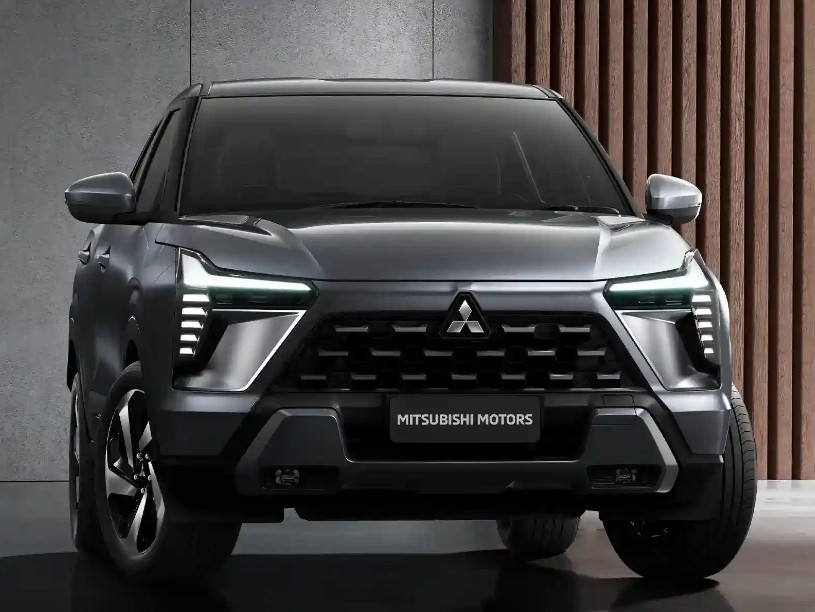
The Mitsubishi Outlander vs Hyundai Tucson comparison is more interesting than it first appears. Park these two SUVs beside each other and they seem to be chasing the same buyer: someone who wants a practical, comfortable, modern crossover without stepping into the price or bulk of a large SUV.
Look closer, though, and their personalities separate.
The Hyundai Tucson behaves like the polished all-rounder of the pair. It puts technology, cabin space, efficiency, and everyday comfort near the top of its priority list. Depending on where we live, we may also find gasoline, diesel, hybrid, and plug-in hybrid versions.
The Mitsubishi Outlander takes a slightly different road. It feels more substantial, offers available seven-seat configurations in many markets, and places greater emphasis on all-wheel-drive capability. Its Outlander PHEV is particularly significant: Mitsubishi launched the original Outlander PHEV in 2013 and has continued developing the concept as one of the brand's flagship technologies.
So which SUV deserves our money?
There isn't one universal winner. The Outlander is generally the stronger choice for buyers who value occasional seven-seat practicality, plug-in capability, and confident AWD performance, while the Tucson makes a compelling case for buyers prioritizing five-seat space, efficiency, technology, and everyday refinement.
Let's break down where each one shines.
Content in this publication
- Mitsubishi Outlander vs Hyundai Tucson at a Glance
- Exterior Design: Rugged Outlander or Futuristic Tucson?
- Size and Dimensions
- Interior Quality and Cabin Design
- Infotainment and Technology
- Passenger Space
- Cargo Space and Practicality
- Mitsubishi Outlander vs Hyundai Tucson Engines
- Outlander PHEV vs Tucson Plug-in Hybrid
- Fuel Economy
- Driving Experience
- AWD and Bad-Weather Performance
- Safety and Driver Assistance
- Reliability: Outlander or Tucson?
- Maintenance Costs
- Warranty Comparison
- Outlander vs Tucson for Families
- Which Is Better for Long Trips?
- Which Is Better for City Driving?
- Which Is Better for Snow and Rough Weather?
- Which Offers Better Value?
- Mitsubishi Outlander Pros and Cons
- Hyundai Tucson Pros and Cons
- Mitsubishi Outlander vs Hyundai Tucson: Who Should Buy Each?
- Mitsubishi Outlander vs Hyundai Tucson: Our Verdict
- Frequently Asked Questions
- 1. Is the Mitsubishi Outlander bigger than the Hyundai Tucson?
- 2. Is the Hyundai Tucson more reliable than the Mitsubishi Outlander?
- 3. Which is better, Outlander PHEV or Tucson Hybrid?
- 4. Does the Hyundai Tucson have seven seats?
- 5. Is the Mitsubishi Outlander or Hyundai Tucson better for families?
- Closing Thoughts
Mitsubishi Outlander vs Hyundai Tucson at a Glance
Before digging into individual details, here's the basic personality of each SUV.
| Category | Mitsubishi Outlander | Hyundai Tucson |
|---|---|---|
| Typical seating | 5 or 7, depending on version/market | 5 |
| Main strength | Versatility and AWD/PHEV capability | Comfort, efficiency, technology |
| Gasoline versions | Available in various markets | Available in various markets |
| Hybrid | Market-dependent | Widely available in several markets |
| Plug-in hybrid | Major part of Outlander lineup | Available in selected markets |
| AWD | Available; S-AWC emphasized on PHEV | HTRAC AWD available in many markets |
| Third row | Available on many Outlanders | No |
| Best suited to | Families needing flexibility | Everyday five-seat SUV buyers |
Because this is a global comparison, exact equipment varies significantly. A Tucson sold in Europe can have a different powertrain and dimensions from one sold in North America, while Outlander seating and PHEV specifications also depend on the market.
That variation matters, so we should compare the SUVs by character rather than pretending one specification sheet applies everywhere.
Exterior Design: Rugged Outlander or Futuristic Tucson?
Design is subjective, but these SUVs take clearly different approaches.
Mitsubishi Outlander Styling
The Outlander looks upright and relatively imposing. Mitsubishi's front-end design gives it a wide visual stance, while the body has the squared-off proportions many buyers associate with a traditional SUV.
It doesn't try to disappear into traffic.
For some buyers, that's exactly the appeal. The Outlander has a heavier visual presence than we'd expect from a mainstream crossover. Higher trims can look surprisingly premium, particularly with large wheels and contrasting exterior detailing.
It's almost like Mitsubishi dressed a family crossover in hiking boots.
Hyundai Tucson Styling
The Tucson is the more adventurous design exercise.
Hyundai integrated its daytime running lights into the grille on the current generation, giving the front end a distinctive geometric appearance. Sharp creases continue along the doors and rear quarters.
Where the Outlander says rugged, the Tucson says modern.
Neither approach is objectively better. If we want a conventional SUV silhouette with a slightly tougher appearance, the Mitsubishi probably wins. If we prefer contemporary styling that looks different from neighboring crossovers, the Hyundai has more visual drama.
Size and Dimensions
Both vehicles occupy the broad compact-to-midsize crossover space, although their exact dimensions vary by market.
One current Hyundai specification lists the Tucson at 4,640 mm long, 1,865 mm wide, and 2,755 mm between the axles, illustrating how substantial today's Tucson has become. Other regional variants have somewhat different dimensions; Hyundai Spain, for example, lists its Tucson Hybrid at roughly 4.51 meters long and a 2.68-meter wheelbase.
That discrepancy is a useful reminder: "global Tucson" isn't a single specification.
The Outlander generally feels like the larger vehicle from behind the wheel, particularly because of its upright proportions and available third-row seating.
Which Feels Easier in the City?
The Tucson usually has the edge.
Its five-seat layout and car-like driving position make it relatively easy to navigate through busy urban streets. Visibility is good, and available surround-view cameras and parking aids can make tight parking spaces less intimidating.
The Outlander isn't cumbersome, but it feels more substantial.
If our daily routine involves underground parking garages, narrow European streets, or crowded city centers, the Tucson may feel more natural.
Interior Quality and Cabin Design
Step inside and the rivalry becomes much closer.
Both manufacturers have made serious efforts to push their cabins beyond the cheap-plastic stereotype once associated with mainstream SUVs.
Inside the Mitsubishi Outlander
The Outlander's interior is one of its strongest arguments.
The dashboard is horizontally arranged, controls are generally easy to understand, and higher trim levels can offer upscale upholstery, digital instruments, large infotainment displays, heated seats, premium audio systems, and other luxury-adjacent features.
The latest updated Outlander PHEV introduced further cabin refinements, while Mitsubishi has also partnered with Yamaha on premium audio in certain versions.
There's a mature feeling to the layout.
It isn't trying to turn every function into a science experiment.
A More Traditional SUV Atmosphere
That conventional approach may actually be a benefit.
Some buyers don't want their climate controls buried three menus deep in a touchscreen. The Outlander generally balances digital features with familiar controls reasonably well.
Inside the Hyundai Tucson
The Tucson looks more futuristic.
Large displays, touch-sensitive interfaces on certain versions, ambient lighting, clean horizontal surfaces, and Hyundai's modern infotainment graphics create a noticeably high-tech atmosphere.
Earlier iterations of the current Tucson introduced dual 10.25-inch display layouts in certain markets, alongside digital instrumentation and a broad range of driver-assistance systems.
Hyundai arguably wins on visual wow factor.
Mitsubishi counters with an interior that may feel more conventional and intuitive.
Infotainment and Technology
Here's where Hyundai traditionally plays aggressively.
Depending on trim and country, the Tucson can offer features such as:
- Digital instrument displays
- Large touchscreen infotainment
- Apple CarPlay and Android Auto
- Surround-view cameras
- Blind-spot camera displays
- Wireless charging
- Remote parking features
- Premium audio
- Smartphone-connected services
- Adaptive cruise control
- Highway-driving assistance
The Outlander isn't short on technology either. Higher trims can provide similarly large displays, smartphone integration, navigation, head-up displays, digital gauges, multi-camera parking systems, and premium audio.
However, the Tucson often makes technology feel like a central part of its identity.
The Outlander uses technology more quietly.
Technology Winner: Hyundai Tucson
If we're buying primarily because we love gadgets, screens, and clever driver-assistance features, we'd lean toward the Tucson.
That doesn't mean every Tucson automatically has more equipment. Trim level matters enormously.
Passenger Space
Now we reach one of the biggest differences.
Hyundai Tucson: Excellent Five-Seat Layout
The Tucson is designed around five occupants.
That sounds less exciting than seven seats, but there's an advantage: Hyundai doesn't have to carve cabin space into three rows.
Rear-seat passengers generally get generous knee room, good headroom, and a comfortable seating position. For four adults, the Tucson can be remarkably accommodating.
This is a classic example of doing fewer things but doing them well.
Mitsubishi Outlander: The Seven-Seat Advantage
The Outlander can be configured with seven seats in numerous markets and trims.
Mitsubishi's Japanese-market Outlander PHEV, for example, currently lists both five- and seven-seat configurations, depending on grade.
That gives Mitsubishi an immediate advantage for some families.
But there's a catch.
Don't Expect Large-SUV Third-Row Space
The third row is best treated as an occasional-use feature.
Children? Fine.
Short journeys with adults? Possible.
Six adults on a cross-country vacation? We'd rather not.
The Outlander isn't a full-size three-row SUV, and buyers expecting minivan-like rear accommodations could be disappointed.
Still, seats that are occasionally useful beat seats that don't exist.
Passenger-Space Winner
Five-seat comfort: Tucson
Maximum seating flexibility: Outlander
Cargo Space and Practicality
The Tucson performs extremely well as a cargo carrier because there is no third row consuming luggage space.
Cargo capacity differs between powertrains and markets, but Hyundai Spain, for example, currently quotes 616 liters for its Tucson Hybrid.
Fold the second row and the Tucson becomes an excellent furniture-hauling, bicycle-swallowing, vacation-ready crossover.
The Outlander provides plenty of usefulness too, particularly when its third-row seats are folded.
You may be interested in reading Mitsubishi Outlander vs Nissan Pathfinder: Which SUV Is the Better Choice?
However, if all seats are raised in a seven-seat version, rear luggage room becomes considerably tighter.
Think of it this way:
The Tucson is a five-person SUV with a big backpack.
The seven-seat Outlander is a more flexible SUV that sometimes has to share its backpack with two additional passengers.
Mitsubishi Outlander vs Hyundai Tucson Engines
This category gets complicated because both manufacturers sell different powertrains around the world.
Hyundai Tucson Powertrain Choices
Depending on the market, Tucson buyers may encounter:
- Naturally aspirated gasoline engines
- Turbocharged gasoline engines
- Diesel engines
- Mild-hybrid systems
- Full hybrids
- Plug-in hybrids
Current documentation shows Tucson engine families including 1.6-liter turbo, 2.0-liter gasoline, 2.5-liter gasoline, and 2.0-liter diesel units, though availability is regional.
For example, Hyundai's North American 2025 Tucson specification uses a 2.5-liter four-cylinder producing 187 hp, while its hybrid combines a 1.6-liter turbo engine with electric assistance for approximately 231 system horsepower.
That variety is one of Hyundai's biggest advantages.
Mitsubishi Outlander Powertrains
The Outlander lineup differs considerably between countries, too.
Conventional gasoline versions remain important in several markets, but the vehicle that best represents Mitsubishi's engineering philosophy is unquestionably the Outlander PHEV.
Mitsubishi has been developing this concept for more than a decade, and the latest iteration continues to emphasize electric-motor driving combined with gasoline-engine flexibility.
Outlander PHEV vs Tucson Plug-in Hybrid
This could almost be a separate comparison.
Both allow us to charge at home, drive shorter trips using electricity, and continue traveling after the battery's usable charge has been depleted.
Yet their philosophies differ.
How the Outlander PHEV Stands Out
Mitsubishi places electric propulsion at the heart of the Outlander PHEV experience.
The latest Canadian update increased battery capacity to 22.7 kWh and achieved a rated electric driving range of 72 km under Canada's testing standard, while Japanese specifications quote more than 100 km under the country's WLTC methodology. Those figures shouldn't be directly compared because test procedures differ.
That last point is important.
A vehicle can have seemingly different "ranges" in different countries without the hardware necessarily being dramatically different. Test cycles change the numbers.
Hyundai Tucson Plug-in Hybrid
Hyundai's current global Tucson PHEV uses a 1.6-liter turbocharged gasoline engine combined with electric assistance, with Hyundai quoting up to 272 PS for the version shown on its global site.
Like the Outlander, it can operate electrically for shorter journeys before continuing as a gasoline-electric hybrid.
Which PHEV Is Better?
The Tucson PHEV feels like an electrified version of an excellent conventional crossover.
The Outlander PHEV feels more like a vehicle whose identity was developed around plug-in hybrid technology.
For buyers specifically shopping for a PHEV, we'd give Mitsubishi the conceptual edge, especially where the latest larger-battery Outlander is available.
Fuel Economy
There is no single meaningful global fuel-economy number for either SUV.
Engines differ. Test cycles differ. Climate differs. Wheels differ. AWD changes consumption.
Still, the general pattern is straightforward.
A conventional gasoline Outlander or Tucson will usually use more fuel than an equivalent full hybrid.
The Tucson Hybrid is especially attractive for buyers who want improved economy without plugging in.
Hyundai Spain currently advertises approximately 5.6 L/100 km WLTP for a front-wheel-drive Tucson Hybrid configuration.
Hybrid Convenience vs PHEV Potential
This is where buyers need to think about their lifestyles rather than chasing the lowest brochure number.
If we cannot charge at home, a conventional Tucson Hybrid may make more sense than paying extra for a PHEV.
If we can charge every night and most daily trips are relatively short, an Outlander PHEV or Tucson PHEV could dramatically reduce gasoline use.
A plug-in hybrid without regular charging is like buying a rechargeable flashlight and never plugging it into the wall. It still works, but we're missing much of the point.
Driving Experience
Neither SUV is trying to impersonate a sports car.
That's fine.
Family crossovers should prioritize comfort, predictability, visibility, and confidence.
How the Tucson Drives
The Tucson generally feels lighter and more car-like.
Steering is easy around town, ride comfort is well judged, and the chassis feels composed at normal speeds.
Hybrid models can feel particularly responsive because electric assistance delivers torque quickly.
The result isn't thrilling, but it is pleasingly effortless.
How the Outlander Drives
The Outlander has a slightly more substantial feel.
Gasoline versions provide perfectly acceptable everyday performance, while PHEV versions bring the smooth initial response associated with electric motors.
The Outlander PHEV becomes especially interesting on slippery or challenging roads.
AWD and Bad-Weather Performance
Mitsubishi has a strong card here: Super All-Wheel Control, or S-AWC.
The Outlander PHEV's system uses Mitsubishi's twin-motor four-wheel-drive expertise to coordinate traction and vehicle behavior. The company specifically highlights its confident performance in difficult weather and road conditions.
Hyundai isn't standing still.
Tucson models equipped with HTRAC AWD can also provide additional traction, while various markets offer selectable driving or terrain modes such as Snow, Mud, and Sand.
Which Is Better Off Pavement?
Neither is a hardcore 4x4.
We're not comparing a Land Cruiser with a Wrangler.
For snow, gravel roads, wet grass, muddy parking areas, and moderate unsealed-road travel, both AWD systems can be useful.
But if poor-weather confidence and AWD engineering are major purchasing priorities, the Outlander gets our vote.
Safety and Driver Assistance
Modern versions of both SUVs can be packed with safety technology.
Typical available systems include automatic emergency braking, blind-spot monitoring, lane assistance, rear cross-traffic alerts, adaptive cruise control, parking sensors, and multi-camera systems.
Hyundai's SmartSense suite can additionally include features such as Highway Driving Assist, Lane Following Assist, Blind-Spot View Monitor, Safe Exit Warning, and Remote Smart Parking Assist depending on model and market.
Mitsubishi offers a competitive collection of active safety systems as well.
Neither SUV should be selected solely from a generic feature list, though.
Check the Exact Trim
A base Tucson in one country might lack equipment standard on a similarly named trim elsewhere.
The same applies to the Outlander.
When comparing dealership offers, ask for the VIN-specific or trim-specific equipment list, not merely the model brochure.
Reliability: Outlander or Tucson?
This is one category where sweeping statements should make us suspicious.
Reliability can change between engines, transmissions, model years, manufacturing plants, and markets.
Both Mitsubishi and Hyundai have produced vehicles capable of high mileage when properly maintained. Both have also had particular models and powertrains with known issues over the years.
For a new vehicle, we'd pay more attention to:
- Local warranty terms
- Dealer network
- Service availability
- Parts prices
- Powertrain complexity
- Required maintenance
- Local owner experiences
For a used vehicle, service history matters more than the badge on the grille.
A meticulously maintained Tucson is a better buy than a neglected Outlander, and vice versa.
Maintenance Costs
Conventional gasoline versions will generally be the simplest to understand.
Hybrid and plug-in hybrid vehicles introduce batteries, electric motors, high-voltage electronics, and additional cooling systems, but they also reduce certain types of mechanical wear and can use regenerative braking to reduce reliance on conventional brakes.
The question isn't simply, "Which has more technology?"
You may be interested in readingMitsubishi Outlander vs Nissan Pathfinder: Which SUV Is the Better Choice?You may be interested in reading
Mitsubishi Outlander vs Hyundai Santa Fe: Which SUV Should You Buy?It's, "Which one is properly supported where we live?"
Hyundai has a broad international footprint, which can make parts and dealer access particularly convenient in some countries.
Mitsubishi can be equally easy to own in markets where the brand has a strong presence, particularly Australia, New Zealand, Japan, Canada, and parts of Asia.
Local conditions can reverse the conclusion completely.
Warranty Comparison
Warranty terms vary dramatically by country, so we shouldn't quote a single global warranty and pretend everyone receives it.
Hyundai has built a strong reputation for generous warranty coverage in several major markets.
Mitsubishi also offers notably long coverage in certain countries.
But read the small print.
A headline warranty might have mileage limits, mandatory servicing requirements, separate battery coverage, or different terms for commercial use.
The best warranty is the one we can actually use.
Outlander vs Tucson for Families
If we have one or two children, we'd probably lean toward the Tucson.
Its spacious second row, large cargo area, comfortable ride, and easy maneuverability make everyday family duty remarkably straightforward.
Three children?
Still competitive.
But if our life occasionally requires moving six or seven people, the Mitsubishi changes the equation.
That tiny third row may sit folded for 95% of its life.
Then one afternoon our children's friends need a ride home.
Suddenly, those two seats become incredibly useful.
That's the Outlander's advantage. We aren't necessarily buying a seven-seat SUV because we always need seven seats.
We're buying flexibility.
Which Is Better for Long Trips?
For five occupants, we'd narrowly favor the Tucson because its dedicated five-seat layout makes luggage management easy and the second row is comfortable.
For a family needing extra seating flexibility, choose the Outlander.
The PHEV versions of both vehicles also eliminate the range anxiety associated with pure EVs because gasoline power remains available once the battery charge has been depleted.
That makes them appealing for households wanting electric commuting without changing how they approach road trips.
Which Is Better for City Driving?
Hyundai Tucson.
Its car-like behavior, straightforward dimensions, economical hybrid option, and excellent five-seat packaging suit dense urban environments particularly well.
A Tucson Hybrid is especially appealing for stop-and-go driving because regenerative braking can recover energy during deceleration.
The Outlander is perfectly usable in cities, but its strengths become more relevant when we need additional seating, AWD confidence, or PHEV capability.
Which Is Better for Snow and Rough Weather?
Mitsubishi Outlander, particularly the PHEV with S-AWC.
Mitsubishi's development philosophy places considerable emphasis on controlled AWD performance, and the twin-motor Outlander PHEV is particularly well suited to delivering precise electric-motor torque distribution.
Put proper winter tires on either SUV, however, and the gap narrows considerably.
Remember: good winter tires often matter more than a fancy AWD badge.
Which Offers Better Value?
This depends heavily on pricing where we live.
The Tucson often offers an impressive amount of technology for the money. Hyundai is extremely aggressive with feature packaging, particularly in mid- and high-level trims.
The Outlander can make greater sense when its additional capabilities actually matter.
Paying a premium for seven seats we never use? Questionable.
Buying an Outlander because we frequently carry extra passengers? Much easier to justify.
Paying more for a PHEV but never charging it? Again, questionable.
Charging every evening and completing most weekday travel electrically? Suddenly, the equation changes.
Value isn't the lowest purchase price.
Value is how much of the vehicle we actually use.
Mitsubishi Outlander Pros and Cons
Advantages
- Available seven-seat configuration in many markets
- Strong PHEV pedigree
- Confident AWD capability
- Comfortable, substantial driving feel
- Attractive higher-grade interiors
- Useful family flexibility
- Latest PHEV improvements increase electric-driving capability in some markets
- Distinctive SUV-like appearance
Disadvantages
- Third row is relatively small
- Fuel economy of conventional versions may not match strong hybrids
- Technology interface can feel less futuristic than Tucson
- Dealer coverage varies considerably by country
- PHEV value depends heavily on regular charging
- Seven-seat arrangement compromises cargo space when fully occupied
Hyundai Tucson Pros and Cons
Advantages
- Excellent five-passenger packaging
- Large cargo area
- Modern interior technology
- Comfortable ride
- Broad powertrain selection globally
- Strong full-hybrid option
- Plug-in hybrid available in several markets
- Good urban maneuverability
- Extensive safety technology available
Disadvantages
- No third-row seating
- Some touch-heavy interfaces won't suit everyone
- Engine availability differs dramatically between countries
- High-end trims can become expensive
- AWD system is competent but Outlander PHEV has a stronger AWD-focused identity
Mitsubishi Outlander vs Hyundai Tucson: Who Should Buy Each?
The simplest way to choose is to ignore marketing slogans and examine our daily routine.
Buy the Mitsubishi Outlander If…
Choose the Outlander if we:
- Occasionally need seven seats
- Want an SUV with a more substantial feel
- Frequently drive in snow or poor weather
- Value Mitsubishi's S-AWC system
- Want a plug-in hybrid and can regularly charge it
- Prefer conventional interior ergonomics
- Need maximum family flexibility
Buy the Hyundai Tucson If…
Choose the Tucson if we:
- Only need five seats
- Want generous rear passenger room
- Prioritize cargo capacity
- Prefer modern technology
- Drive primarily in cities or suburbs
- Want a conventional full hybrid
- Prefer a more car-like driving experience
- Have stronger Hyundai dealer support locally
Mitsubishi Outlander vs Hyundai Tucson: Our Verdict
So, Mitsubishi Outlander vs Hyundai Tucson—which is better?
For the average five-person household, we'd choose the Hyundai Tucson.
It is spacious without being unnecessarily large, comfortable around town, technologically sophisticated, and available with an unusually broad selection of powertrains across world markets. The Tucson Hybrid in particular hits a sweet spot: better fuel economy without requiring us to plug in every night.
But averages don't buy cars. People do.
And individual needs can flip our verdict.
If we need occasional seven-seat capability, the Mitsubishi Outlander immediately becomes more useful. If we want a plug-in hybrid with a long history of development behind it, the Outlander PHEV deserves serious consideration. And if all-weather AWD capability matters heavily, Mitsubishi's S-AWC gives the Outlander another meaningful advantage.
Think of the Tucson as the better all-round five-seat crossover.
Think of the Outlander as the more versatile adventure-ready family tool.
The best choice isn't whichever SUV wins the most categories. It's whichever SUV solves more of our actual problems.
Frequently Asked Questions
1. Is the Mitsubishi Outlander bigger than the Hyundai Tucson?
Generally, the Outlander feels like the larger vehicle and offers available third-row seating in many markets, while the Tucson is designed strictly as a five-seater. Exact exterior dimensions differ by country and model specification, however, so buyers should compare regional specifications rather than relying on one global number.
2. Is the Hyundai Tucson more reliable than the Mitsubishi Outlander?
There isn't a universal winner. Reliability depends on model year, engine, transmission, maintenance, and regional specifications. For used examples, a complete service history is often more important than choosing one brand over the other.
3. Which is better, Outlander PHEV or Tucson Hybrid?
They solve different problems. The Tucson Hybrid is ideal for drivers wanting lower fuel consumption without needing external charging. The Outlander PHEV makes more sense when we can charge regularly and want to complete many shorter journeys largely on electricity while retaining gasoline capability for longer trips.
4. Does the Hyundai Tucson have seven seats?
No. The Tucson is fundamentally a five-seat crossover. The Mitsubishi Outlander, by contrast, is available with seven-seat configurations in numerous markets, giving it an advantage for families needing occasional extra passenger capacity.
5. Is the Mitsubishi Outlander or Hyundai Tucson better for families?
For families needing only five seats, the Tucson's roomy second row, cargo capacity, comfortable ride, and technology make it an excellent choice. Families needing six or seven seats occasionally should strongly consider the Outlander. Ultimately, the Tucson is the stronger dedicated five-seater, while the Outlander provides greater seating flexibility.
Closing Thoughts
The Mitsubishi Outlander vs Hyundai Tucson debate doesn't produce the dramatic knockout some comparisons promise.
And that's actually useful.
These SUVs are good at different things.
The Tucson excels because Hyundai has refined the basic family-crossover formula: five comfortable seats, lots of cargo room, modern technology, multiple powertrain choices, and easy everyday manners.
The Outlander takes that formula and adds another layer of versatility. Available third-row seating makes family logistics easier, while S-AWC and Mitsubishi's well-established PHEV technology give it a distinctive engineering identity.
If we want the safest recommendation for a typical five-seat household, the Hyundai Tucson wins narrowly.
If we need seven-seat flexibility, stronger PHEV credentials, or AWD capability that sits near the center of the vehicle's character, we'd take the Mitsubishi Outlander.
Neither decision is wrong.
The smart move is to test-drive both, bring the people who regularly travel with us, load the stroller or luggage we actually use, and compare equivalent trims.
Because SUVs aren't lived with on specification sheets.
They're lived with in school parking lots, grocery-store garages, snowy mountain roads, endless commutes, airport runs, and family road trips.
You may be interested in readingMitsubishi Outlander vs Nissan Pathfinder: Which SUV Is the Better Choice?You may be interested in reading
Mitsubishi Outlander vs Hyundai Santa Fe: Which SUV Should You Buy?You may be interested in reading
Mitsubishi Outlander vs Honda Pilot: Which SUV Should You Buy?That's where the real winner reveals itself.
If you want to know other articles similar to Mitsubishi Outlander vs Hyundai Tucson: Which SUV Should You Buy? you can visit the category Models.
Nissan Rogue Dark Armor vs Platinum: Which Trim Is Better?

Kia Sorento Models: Complete Guide to Trims, Engines and Versions
BYD Shark 6 vs Ranger vs HiLux: Which Ute Makes the Most Sense in 2026?
BYD Shark 6 vs MG U9: Which Ute Makes More Sense in 2026?
BYD Shark 6 vs Ford Ranger Raptor: Which Performance Ute Is Better in 2026?
BYD Shark 6 vs Kia Tasman: Which Ute Is Better?
Leave a Reply
More content of your interest