

Mitsubishi Outlander vs Toyota Highlander: Which SUV Should You Buy?

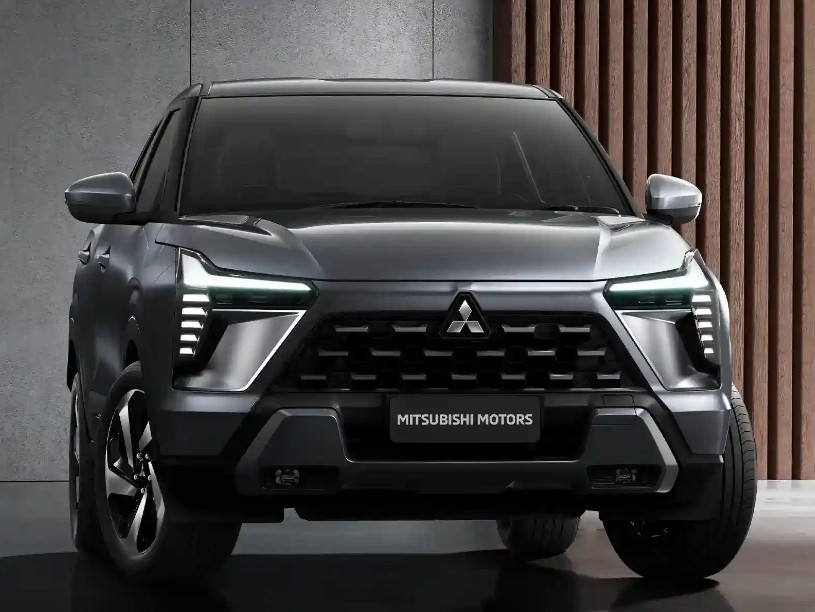
Choosing between the Mitsubishi Outlander vs Toyota Highlander looks straightforward until we dig beneath the surface. Both are family-friendly SUVs. Both can provide three rows of seating. Both offer all-wheel-drive capability in many markets. And both can be bought with electrified powertrains.
Yet they are not truly twins.
The Outlander is the smaller, usually less expensive choice, designed to squeeze a surprising amount of practicality into a manageable footprint. The Highlander sits a class above it in terms of overall size, passenger room, power, and long-distance family usability.
Think of the Outlander as a clever apartment where every square meter has been put to work. The Highlander is more like a suburban house: larger, roomier, and easier to live with when the whole family comes along.
So which one deserves your money?
For buyers trying to choose between them, we’ll compare size, engines, hybrid systems, fuel economy, interior space, third-row usability, technology, reliability, running costs, towing, comfort, value, and ownership priorities.
Because specifications vary substantially between countries, this comparison takes a global perspective. Exact trims, engines, prices, equipment, and towing limits should always be confirmed with the manufacturer in your market.
Content in this publication
- Mitsubishi Outlander vs Toyota Highlander: Quick Comparison
- Are the Mitsubishi Outlander and Toyota Highlander Direct Competitors?
- Mitsubishi Outlander vs Toyota Highlander Size
- Interior Space: Highlander Takes the Lead
- Third-Row Seating: A Crucial Difference
- Cargo Space and Everyday Practicality
- Mitsubishi Outlander Engine Options
- Toyota Highlander Engine Options
- Outlander PHEV vs Highlander Hybrid
- A New Highlander Era Is Coming
- Fuel Economy: Which SUV Costs Less to Run?
- Driving Performance
- Mitsubishi S-AWC vs Toyota AWD
- Ride Comfort and Refinement
- Interior Quality and Design
- Infotainment and Technology
- Safety Features
- Towing: Highlander Has the Advantage for Serious Loads
- Reliability: Mitsubishi Outlander vs Toyota Highlander
- Maintenance and Ownership Costs
- Resale Value: Toyota Usually Has the Edge
- Mitsubishi Outlander vs Toyota Highlander Price
- Which SUV Is Better for City Driving?
- Which SUV Is Better for Large Families?
- Which One Is Better for Road Trips?
- Which Is Better for Buyers Who Want an EV-Like Experience?
- Which SUV Should You Buy Used?
- Mitsubishi Outlander vs Toyota Highlander: Pros and Cons
- Mitsubishi Outlander vs Toyota Highlander: Who Should Choose What?
- Final Verdict: Mitsubishi Outlander or Toyota Highlander?
- Frequently Asked Questions
- 1. Is a Mitsubishi Outlander bigger than a Toyota Highlander?
- 2. Is the Mitsubishi Outlander cheaper than the Toyota Highlander?
- 3. Which is more reliable, Mitsubishi Outlander or Toyota Highlander?
- 4. Which is better, Outlander PHEV or Highlander Hybrid?
- 5. Which is better for a family, Mitsubishi Outlander or Toyota Highlander?
Mitsubishi Outlander vs Toyota Highlander: Quick Comparison
Before we dive deeper, here is the broad picture.
| Category | Mitsubishi Outlander | Toyota Highlander |
|---|---|---|
| SUV class | Compact-to-midsize three-row SUV | Midsize three-row SUV |
| Seating | Up to 7 | Usually 7 or 8 |
| Best strength | Value and PHEV capability | Space and family practicality |
| Gasoline engines | Market dependent | Market dependent |
| Hybrid option | Plug-in hybrid available | Conventional hybrid widely known |
| AWD | Available/widely offered | Available or standard depending on market |
| Third row | Best for occasional use | More practical |
| Urban driving | Easier | Larger footprint |
| Cargo space | Moderate | Generally greater |
| Towing | Moderate | Generally stronger |
| Purchase price | Usually lower | Usually higher |
| Ideal buyer | Smaller family/value buyer | Larger family/road-trip buyer |
The most important takeaway is simple: the Highlander is fundamentally the bigger vehicle.
That difference shapes almost every category we are about to discuss.
Are the Mitsubishi Outlander and Toyota Highlander Direct Competitors?
Not perfectly.
The Mitsubishi Outlander often competes more directly against SUVs such as the Nissan X-Trail/Rogue, Honda CR-V, Kia Sportage, Hyundai Tucson, and similar crossovers, although its available third row gives it an unusual position.
The Highlander traditionally sits among larger three-row SUVs such as the Kia Sorento, Hyundai Santa Fe, Mazda CX-80/CX-90 depending on region, Honda Pilot, Nissan Pathfinder, and related family SUVs.
Still, buyers frequently compare the Outlander and Highlander because both answer the same question:
How do we carry a family without buying an enormous SUV?
That makes the comparison perfectly reasonable, provided we understand their size difference from the beginning.
Mitsubishi Outlander vs Toyota Highlander Size
This is arguably the biggest distinction.
The Outlander is noticeably easier to maneuver through narrow streets, shopping centers, underground garages, and crowded urban neighborhoods.
The Highlander stretches farther in virtually every direction.
That extra metal has consequences.
You get more passenger space and generally more cargo flexibility, but parking becomes more demanding.
Why the Outlander's Smaller Size Can Be an Advantage
For city drivers, smaller is not automatically worse.
A vehicle that fits comfortably into your parking space can be more useful than a giant SUV whose extra capacity you rarely need.
The Outlander feels particularly logical for households that:
- Carry four or five people most of the time.
- Need seven seats only occasionally.
- Regularly drive in cities.
- Have limited garage space.
- Want SUV versatility without a bulky vehicle.
Why the Highlander's Extra Size Matters
Load several adults, luggage, backpacks, sports equipment, and children's gear into both vehicles and the Highlander's advantage becomes obvious.
It has simply been designed around a larger passenger envelope.
That makes it more suitable when all three rows are regularly occupied.
Interior Space: Highlander Takes the Lead
Step inside the two vehicles and their personalities continue to diverge.
The Outlander can feel impressively upscale in higher trims. Mitsubishi has invested heavily in presentation, with available quilted leather surfaces, digital instrumentation, large infotainment screens, and premium-looking trim.
The Highlander's strength is less about creating a dramatic first impression and more about making family life easy.
Storage spaces tend to be sensibly placed. Passenger room is generous. The cabin feels designed for long journeys.
Second-Row Comfort
Second-row passengers should be reasonably comfortable in either SUV.
However, the Highlander's greater exterior dimensions generally translate into a more relaxed experience, particularly when larger adults are sitting behind larger adults.
Families using child seats will also appreciate having more breathing room around them.
In the Outlander, the second row remains practical, but the cabin begins feeling considerably tighter once we start asking it to accommodate seven people rather than five.
Third-Row Seating: A Crucial Difference
Here is where marketing language can become dangerous.
A vehicle having seven seats does not automatically mean seven adults will enjoy sitting inside it.
Mitsubishi Outlander Third Row
The Outlander's third row is best considered an occasional-use solution.
Children? Absolutely.
Short journeys with smaller passengers? Fine.
Two tall adults on a six-hour motorway trip? That is a different story.
Its third row is valuable precisely because many similarly sized SUVs do not provide one at all.
For a family that normally needs five seats but occasionally carries two additional children, the arrangement can be brilliant.
Toyota Highlander Third Row
The Highlander gives those rear passengers more room to work with.
It still isn't a limousine back there, and tall adults may prefer the second row, but it is better suited to genuine three-row family use.
For 2026 in the United States, for example, Toyota lists Highlander configurations for seven or eight passengers depending on trim and seating arrangement.
Third-Row Winner: Toyota Highlander
If seven-person capacity is central to your purchasing decision rather than something you might use twice a year, we would lean strongly toward the Highlander.
Cargo Space and Everyday Practicality
Three-row SUVs always involve a game of automotive Tetris.
Raise the third row and luggage space shrinks.
Fold it and suddenly the SUV becomes dramatically more useful.
The Highlander's larger body gives it the natural advantage.
That matters when traveling with seven passengers because luggage doesn't disappear merely because we've filled every seat.
The Outlander is far more convincing as a five-seat SUV with two emergency seats.
Fold its third row and it becomes a practical family crossover.
Raise those seats and packing for a major vacation becomes considerably more challenging.
Mitsubishi Outlander Engine Options
Outlander powertrains vary dramatically by region.
Some markets receive conventional gasoline versions, while others place far greater emphasis on the Outlander PHEV.
That plug-in hybrid is arguably the vehicle's biggest strategic advantage.
It combines a gasoline engine with electric motors and a rechargeable battery, allowing many daily journeys to be completed using electric power while retaining the flexibility of gasoline for longer trips.
In the 2026 U.S.-market Outlander PHEV, Mitsubishi lists a 22.7-kWh battery, twin-motor Super All-Wheel Control, and seven-passenger seating.
Mitsubishi also quotes up to 45 miles of electric driving range for the 2026 U.S. PHEV under its applicable test methodology, although real-world range varies with climate, driving style, speed, terrain, and other conditions.
That gives the Outlander a personality the traditional Highlander Hybrid cannot quite copy.
Toyota Highlander Engine Options
Highlander powertrains also depend on region, but gasoline and self-charging hybrid variants have been central to the lineup.
For the 2026 U.S. model, the gasoline Highlander uses a 2.4-liter turbocharged four-cylinder producing 265 horsepower and 310 lb-ft of torque. Toyota lists a manufacturer-estimated combined 24 mpg for these gas models.
Hybrid versions emphasize efficiency rather than plug-in electric driving.
Toyota quotes a manufacturer-estimated 35 mpg combined for 2026 U.S. Highlander Hybrid models.
The important difference isn't merely the numbers.
It is how the two electrified systems are meant to be used.
Outlander PHEV vs Highlander Hybrid
This might be the most interesting battle in the entire comparison.
A conventional hybrid and plug-in hybrid solve fuel consumption differently.
How the Highlander Hybrid Works for Buyers
The Highlander Hybrid is essentially effortless.
We fill it with fuel.
We drive.
The vehicle handles the electric motor, battery charging, regenerative braking, and engine operation automatically.
There is no need to plug it into the wall.
That makes it ideal for:
You may be interested in reading Mitsubishi Outlander vs Kia Sorento: Which SUV Is Better?
- Apartment residents.
- Drivers without home charging.
- Long-distance commuters.
- Families taking frequent road trips.
- Buyers who want better fuel economy without changing their habits.
How the Outlander PHEV Changes the Equation
The Outlander PHEV works best when regularly charged.
If your daily routine is shorter than its usable electric range, you may complete a large percentage of normal commuting without running the gasoline engine very much.
Imagine charging overnight, driving children to school, commuting to work, running errands, then plugging in again.
That is where a PHEV makes sense.
But neglect charging and some of its economic advantage disappears.
Which Hybrid System Is Better?
Choose the Outlander PHEV if you have convenient charging and want significant electric-only driving without committing to a pure EV.
Choose the Highlander Hybrid if you want excellent efficiency with absolutely no charging routine.
A New Highlander Era Is Coming
There is an important timing issue for buyers reading this comparison in 2026.
Toyota has announced an all-new 2027 Highlander for the U.S. market, and it represents a major change: the next-generation model is battery electric there.
Toyota says the 2027 U.S. Highlander will offer seating for up to seven, battery capacities of 77.0 or 95.8 kWh depending on configuration, and manufacturer-estimated ranges reaching as high as 320 miles for certain versions.
That does not mean every global market instantly receives the same Highlander or that existing gasoline/hybrid models vanish everywhere.
Global Toyota lineups differ.
But anyone shopping for a new Highlander should check what generation and powertrain strategy applies locally before signing a contract.
Fuel Economy: Which SUV Costs Less to Run?
There is no universal winner because the answer depends on how we drive.
For frequent city trips with home charging, the Outlander PHEV can be remarkably economical.
For mixed driving without charging, the Highlander Hybrid makes more sense.
For long motorway journeys, the PHEV's electric advantage becomes less dramatic once its battery's usable electric energy has been consumed and the gasoline engine becomes more involved.
This is why headline efficiency numbers don't tell the whole story.
Think About Your Real Driving Pattern
Before choosing, ask:
Do we travel 30 km every weekday and charge at home?
Or do we drive 500 km every weekend?
The first lifestyle favors a PHEV.
The second can favor a conventional hybrid.
The smartest drivetrain is the one matching your routine rather than the one producing the most impressive brochure number.
Driving Performance
Neither SUV is primarily a sports car in hiking boots.
Family comfort matters more.
Still, the Highlander generally has the stronger performance character, particularly in gasoline configurations with substantial turbocharged torque.
The Outlander is perfectly adequate for everyday traffic, while the electric motors in PHEV versions can provide the instant response we associate with electrified vehicles.
Where the Mitsubishi becomes particularly interesting is traction management.
Its Super All-Wheel Control, especially in the PHEV, is central to the vehicle's identity rather than a small footnote on the specification sheet.
Mitsubishi S-AWC vs Toyota AWD
Mitsubishi has spent years promoting Super All-Wheel Control as an integrated approach to managing traction and vehicle dynamics.
The 2026 Outlander PHEV in the U.S. uses a twin-motor S-AWC system and provides multiple selectable drive modes, including settings for conditions such as gravel, snow, mud, and tarmac.
Toyota AWD systems vary depending on gasoline versus hybrid configuration and market.
For example, Toyota's 2026 U.S. Highlander Hybrid uses Electronic On-Demand AWD.
For ordinary rain, snow, gravel roads, and family driving, both can provide useful extra traction.
Neither should be confused with a hardcore body-on-frame 4x4 designed for extreme rock crawling.
Ride Comfort and Refinement
Here the Highlander's larger dimensions work in its favor again.
Longer family SUVs often settle into highway cruising with an easy rhythm.
The Highlander has traditionally been designed around that mission.
Load everyone aboard, join the motorway, engage adaptive cruise control, and start eating kilometers.
The Outlander has improved greatly in sophistication compared with older generations.
Modern versions can feel polished, quiet, and surprisingly premium.
Yet it still retains the tighter dimensions of a smaller crossover.
For city driving, that is an advantage.
For a cross-country family holiday, the Highlander's extra breathing room becomes difficult to ignore.
Interior Quality and Design
This category is more competitive than some Toyota loyalists might expect.
Mitsubishi has given recent Outlanders an interior presentation capable of punching above the vehicle's price point.
High-end versions can look genuinely luxurious.
Soft-touch surfaces, stitched trim, digital displays, premium audio systems, panoramic roofs, and sophisticated seat upholstery can transform the cabin.
Toyota's interior styling can feel more conservative.
But conservative is not necessarily bad.
Controls tend to prioritize usability over theatrics.
For someone keeping the vehicle for ten years, logical ergonomics may matter more than whether the dashboard looks spectacular under showroom lighting.
Infotainment and Technology
Both vehicles can deliver the equipment modern buyers expect, depending on trim and market:
- Smartphone integration.
- Touchscreen infotainment.
- Digital driver displays.
- Navigation.
- Wireless charging.
- Multiple USB ports.
- Premium audio.
- Surround-view cameras.
- Adaptive cruise control.
- Lane-support systems.
The specific screen sizes and packages vary heavily from country to country.
For example, Toyota's 2026 U.S. Highlander offers either an 8-inch or available 12.3-inch Toyota Audio Multimedia touchscreen depending on configuration.
The 2026 U.S. Outlander PHEV lineup lists a 12.3-inch smartphone-link display with navigation from the ES trim.
Safety Features
Both brands provide extensive modern driver-assistance technology.
Depending on specification, buyers may encounter systems including:
- Autonomous emergency braking.
- Pedestrian detection.
- Adaptive cruise control.
- Lane departure warning.
- Lane keeping assistance.
- Blind-spot monitoring.
- Rear cross-traffic alert.
- Automatic high beams.
- Parking sensors.
- Surround-view monitoring.
Toyota's 2026 U.S. Highlander includes Toyota Safety Sense 2.5+ as standard.
Mitsubishi's 2026 U.S. Outlander PHEV similarly lists an extensive collection of active-safety functions, including Forward Collision Mitigation, blind-spot warning, rear cross-traffic alert, rear automatic emergency braking, and available MI-PILOT assistance.
Exact safety specifications should be checked locally because a feature that comes standard in one market can be optional or unavailable elsewhere.
Towing: Highlander Has the Advantage for Serious Loads
People sometimes buy an SUV assuming all SUVs are naturally great tow vehicles.
That is not true.
Towing capability depends on engine, drivetrain, cooling systems, transmission, local certification, and vehicle configuration.
Broadly speaking, the Highlander's larger chassis and stronger available powertrains make it the more suitable option when towing becomes an important part of ownership.
The Outlander can handle lighter recreational towing in properly rated configurations, but it is usually not the first vehicle we would choose for someone regularly pulling a substantial caravan or large trailer.
Always follow the exact braked/unbraked towing rating listed for your country's model.
Reliability: Mitsubishi Outlander vs Toyota Highlander
Toyota's reputation becomes one of the Highlander's strongest arguments.
The company has spent decades building a global image around durability, long ownership cycles, and proven hybrid engineering.
That reputation tends to help both buyer confidence and used-car demand.
Mitsubishi also has a long history of producing durable vehicles, and the Outlander has become one of the brand's most important global models.
But if we're comparing brand perception alone, Toyota generally carries the stronger reliability halo.
Does That Automatically Make the Highlander More Reliable?
No.
Reliability depends heavily on:
- Model year.
- Engine.
- Hybrid system.
- Maintenance history.
- Climate.
- Driving conditions.
- Previous ownership.
- Manufacturing changes.
A meticulously maintained Outlander can be a better used purchase than a neglected Highlander.
You may be interested in readingMitsubishi Outlander vs Kia Sorento: Which SUV Is Better?You may be interested in reading
Mitsubishi Outlander vs Toyota RAV4: Which SUV Is the Better Buy?Never buy the badge while ignoring the individual vehicle.
Maintenance and Ownership Costs
The Outlander has an important financial weapon:
It usually costs less to purchase.
That lower entry point can outweigh differences elsewhere, especially when buyers don't actually need the Highlander's additional size.
Insurance, tire prices, servicing, registration fees, taxes, electricity prices, and fuel prices vary too much globally for a universal calculation.
Nevertheless, the larger Highlander may cost more in areas such as tires and consumables simply because it is a larger, heavier vehicle.
Toyota's strong resale reputation can compensate by preserving more value when it is time to sell.
Resale Value: Toyota Usually Has the Edge
Used-car buyers tend to trust Toyota.
Trust creates demand.
Demand supports resale value.
The Highlander therefore has a compelling long-term ownership story, especially in markets where Toyota SUVs command strong second-hand prices.
The Outlander may depreciate faster in some regions, but that can actually benefit used-car shoppers.
A three- or four-year-old Outlander may provide an enormous amount of equipment and capability for considerably less than an equivalent Highlander.
New buyer? Toyota's resale advantage matters.
Used buyer? Mitsubishi's depreciation may become your opportunity.
Mitsubishi Outlander vs Toyota Highlander Price
Exact pricing is impossible to generalize globally because taxes, import duties, dealer structures, trims, and powertrains vary dramatically.
The hierarchy, however, is relatively consistent:
Outlander = lower-cost entry point.
Highlander = larger, more expensive family SUV.
For context rather than a global price rule, Mitsubishi lists the 2026 Outlander in the United States from $29,995, while the 2026 Outlander PHEV starts from $43,245 before applicable fees and options.
Toyota lists the U.S. 2026 Highlander from roughly the mid-$40,000 range depending on grade, with the Hybrid starting higher.
Those figures should not be converted directly into purchasing expectations for Europe, Australia, New Zealand, Asia, Latin America, or other regions.
Which SUV Is Better for City Driving?
Outlander.
This is one of its clearest victories.
It provides SUV seating, good visibility, optional three-row flexibility, available AWD, and an electrified PHEV drivetrain without forcing us to maneuver a large vehicle through tight spaces.
The PHEV is particularly attractive for urban households with home charging.
Daily school runs and commutes can become predominantly electric while the gasoline engine remains available for weekend travel.
Which SUV Is Better for Large Families?
Highlander.
Its extra dimensions are not decorative.
They provide exactly what larger households need: more passenger room and greater practicality when the third row is occupied.
If our children are small today but growing rapidly, that extra cabin space also becomes a long-term investment.
The Outlander can transport seven.
The Highlander is more comfortable living as a three-row vehicle.
There is a meaningful difference.
Which One Is Better for Road Trips?
Again, Highlander.
Imagine six passengers.
Now add six bags.
Then snacks.
Then jackets.
Then chargers.
Then someone's enormous pillow that apparently cannot be left at home.
Suddenly cubic centimeters of cargo space matter more than horsepower figures.
The Highlander's larger cabin makes long-distance family travel easier.
For a couple or family of four, however, the Outlander can be excellent—especially with its third row folded.
Which Is Better for Buyers Who Want an EV-Like Experience?
The Outlander PHEV.
Toyota's conventional Highlander Hybrid is efficient, but it does not provide the same plug-in ownership experience.
The Mitsubishi allows owners to actively charge a substantial traction battery and complete meaningful journeys without relying heavily on gasoline.
It bridges two worlds.
We get electric commuting without having to plan every long journey around charging infrastructure.
For buyers nervous about switching completely to an EV, that flexibility can be extremely appealing.
Which SUV Should You Buy Used?
Used buying changes the equation.
A late-model Outlander may represent excellent value because depreciation can make higher trims surprisingly affordable.
Look particularly carefully at:
- Complete service records.
- Accident history.
- Hybrid/PHEV system condition.
- Charging behavior and battery health where relevant.
- Warning lights.
- Suspension noises.
- Tire wear.
- AWD system operation.
- Recalls and service campaigns.
A used Highlander will often cost more, but strong resale is partially a reflection of market confidence.
If your goal is keeping the vehicle another decade, paying more upfront for the Toyota may feel justified.
If your goal is maximizing equipment per dollar, the Mitsubishi can be very tempting.
Mitsubishi Outlander vs Toyota Highlander: Pros and Cons
Mitsubishi Outlander Pros
- Usually more affordable.
- Easier to park and maneuver.
- Seven-seat flexibility in a relatively compact package.
- Excellent PHEV concept.
- Attractive modern interior.
- Strong AWD technology.
- Good equipment for the money.
Mitsubishi Outlander Cons
- Small third row.
- Limited luggage room with all seats occupied.
- Less powerful than some larger rivals.
- Potentially weaker resale value.
- Not as suitable for large families.
Toyota Highlander Pros
- More passenger room.
- More usable three-row layout.
- Strong Toyota reliability reputation.
- Excellent conventional hybrid option.
- Better suited to road trips.
- Generally stronger towing credentials.
- Strong resale potential.
Toyota Highlander Cons
- More expensive.
- Larger and harder to park.
- Can be more vehicle than smaller families need.
- No traditional plug-in hybrid equivalent in many markets.
- Higher trims can become expensive.
Mitsubishi Outlander vs Toyota Highlander: Who Should Choose What?
This is where the decision becomes simple.
Buy the Mitsubishi Outlander If…
You want a flexible family SUV without moving into a truly large vehicle.
It makes particular sense if you live in a city, normally carry four or five passengers, occasionally need seven seats, want to control your purchase price, or can make good use of the Outlander PHEV's charging capability.
Buy the Toyota Highlander If…
You routinely transport a larger family, take long road trips, need more usable third-row space, prioritize resale value, or simply want a roomier SUV that is less compromised when every seat is occupied.
Final Verdict: Mitsubishi Outlander or Toyota Highlander?
There is no universal winner because these SUVs are solving slightly different problems.
If we judged purely on space, family practicality, third-row usability, road-trip comfort, towing potential, and resale confidence, the Toyota Highlander wins.
It is the more complete choice for households genuinely needing a midsize three-row SUV.
But bigger does not automatically mean better.
The Mitsubishi Outlander may be the smarter purchase for buyers who don't need all that space.
It is easier to maneuver, typically cheaper, surprisingly well equipped, and available with one of the most appealing plug-in hybrid arrangements in its segment.
So here is our simplest recommendation:
Choose the Outlander for value, urban usability, occasional seven-seat flexibility, and PHEV driving.
Choose the Highlander for larger-family practicality, long journeys, stronger third-row usefulness, and long-term resale confidence.
Buying the Highlander when you never use its extra room is like carrying a giant suitcase for an overnight trip.
Buying the Outlander when you regularly transport seven people is the opposite problem: eventually, everyone will wish you brought the bigger suitcase.
Match the SUV to your real life, and the decision becomes much easier.
Frequently Asked Questions
1. Is a Mitsubishi Outlander bigger than a Toyota Highlander?
No. The Toyota Highlander is generally the larger vehicle and belongs to a larger segment. The Outlander offers three-row seating within a more compact footprint, while the Highlander provides greater passenger and cargo space.
2. Is the Mitsubishi Outlander cheaper than the Toyota Highlander?
Usually, yes. In many markets, the Outlander sits below the Highlander in purchase price because it is a smaller vehicle. Prices vary significantly by country, powertrain, trim, taxes, and equipment.
3. Which is more reliable, Mitsubishi Outlander or Toyota Highlander?
Toyota has the stronger overall reputation for long-term reliability and resale value. However, individual reliability depends on model year, drivetrain, maintenance history, and usage. A properly maintained Outlander can still provide many years of dependable service.
4. Which is better, Outlander PHEV or Highlander Hybrid?
The Outlander PHEV is better suited to drivers who can charge regularly and want to complete shorter journeys using electricity. The Highlander Hybrid is better for drivers who want improved fuel economy without plugging in.
You may be interested in readingMitsubishi Outlander vs Kia Sorento: Which SUV Is Better?You may be interested in reading
Mitsubishi Outlander vs Toyota RAV4: Which SUV Is the Better Buy?You may be interested in reading
Mitsubishi Outlander vs Hyundai Tucson: Which SUV Should You Buy?5. Which is better for a family, Mitsubishi Outlander or Toyota Highlander?
For a family of four or five that occasionally needs extra seats, the Outlander is an excellent value-oriented choice. For larger families regularly using six, seven, or eight seats, the Highlander is generally the better option because of its larger cabin and more practical three-row layout.
If you want to know other articles similar to Mitsubishi Outlander vs Toyota Highlander: Which SUV Should You Buy? you can visit the category Models.
Nissan Rogue Dark Armor vs Platinum: Which Trim Is Better?

Kia Sorento Models: Complete Guide to Trims, Engines and Versions
BYD Shark 6 vs Ranger vs HiLux: Which Ute Makes the Most Sense in 2026?
BYD Shark 6 vs MG U9: Which Ute Makes More Sense in 2026?
BYD Shark 6 vs Ford Ranger Raptor: Which Performance Ute Is Better in 2026?
BYD Shark 6 vs Kia Tasman: Which Ute Is Better?
Leave a Reply
More content of your interest