

Mitsubishi Outlander vs Eclipse Cross: Which SUV Makes More Sense?

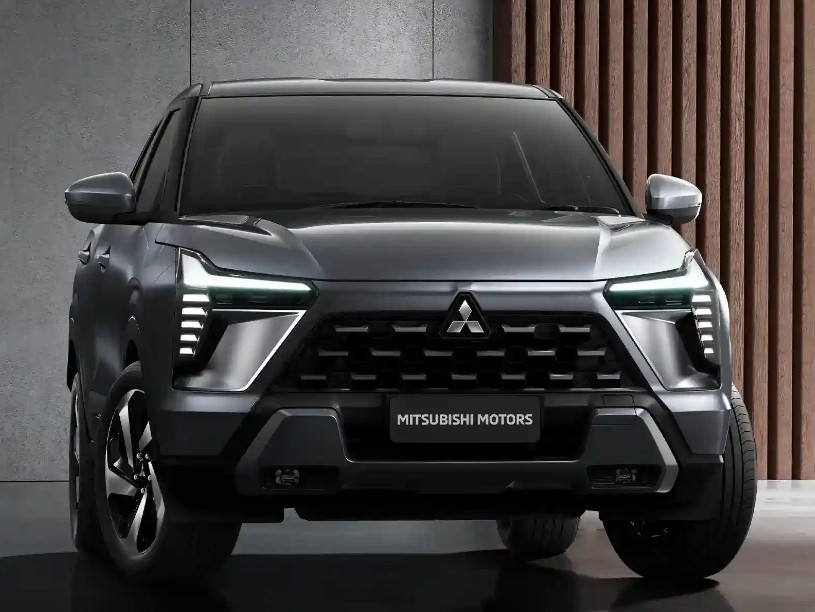
Choosing between the Mitsubishi Outlander vs Eclipse Cross can feel strangely difficult. They wear the same badge, share Mitsubishi’s SUV philosophy, and even overlap in areas such as all-wheel-drive technology, turbocharged powertrains in some markets, and generous standard equipment. Yet once we spend some time with their specifications and think about how they fit into everyday life, they start looking like two very different tools.
The Eclipse Cross is the smaller, sportier option. It is easier to place in traffic, simpler to park, and generally costs less. The Outlander is the grown-up sibling: longer, roomier, more practical, available with seven seats in several markets, and offered with electrified powertrains that dramatically widen its appeal.
For the 2026 U.S. lineup, Mitsubishi lists the Eclipse Cross from $27,695 and the Outlander from $29,995 before destination charges and options. That relatively small starting-price gap immediately makes this comparison interesting.
So, should we save some money and choose the compact Eclipse Cross, or stretch to the larger Outlander? Let's break the decision down properly.
Content in this publication
- Mitsubishi Outlander vs Eclipse Cross at a Glance
- What Is the Main Difference Between the Outlander and Eclipse Cross?
- Exterior Size and Road Presence
- Interior Space: Where the Outlander Pulls Ahead
- Cargo Space and Everyday Practicality
- Engine and Performance Comparison
- Outlander PHEV: The Wild Card
- Fuel Economy: Which Mitsubishi Uses Less Fuel?
- Driving Experience
- S-AWC: A Major Strength for Both SUVs
- Technology and Infotainment
- Safety and Driver Assistance
- Towing Capacity
- City Driving and Parking
- Price and Value for Money
- Reliability and Ownership
- Mitsubishi Outlander vs Eclipse Cross for Different Buyers
- Outlander vs Eclipse Cross: Which Is Better for Long Trips?
- Which Is Better for a Couple?
- Which Is Easier to Drive?
- Design: Sporty or Sophisticated?
- The Hidden Question: How Much SUV Do We Actually Need?
- Mitsubishi Outlander vs Eclipse Cross: Pros and Cons
- Final Verdict: Mitsubishi Outlander or Eclipse Cross?
- Frequently Asked Questions
Mitsubishi Outlander vs Eclipse Cross at a Glance
Before diving into the details, here is the basic difference between these Mitsubishi SUVs.
| Category | Mitsubishi Outlander | Mitsubishi Eclipse Cross |
|---|---|---|
| Vehicle type | Midsize/compact three-row SUV, market dependent | Compact crossover |
| Seating | Up to 7 | 5 |
| Best suited to | Families, road trips, cargo, versatility | Urban driving, couples, smaller families |
| Powertrain choices | Petrol/mild hybrid and PHEV depending on market | Petrol turbo and PHEV in selected markets |
| AWD availability | Yes, including S-AWC | Yes, including S-AWC |
| Cargo flexibility | Greater | Smaller but practical |
| Maneuverability | Good for its size | Better |
| Purchase price | Usually higher | Usually lower |
| Overall character | Comfortable, family-oriented | Compact, sporty, straightforward |
This difference in personality matters more than comparing a few horsepower figures. The Outlander is designed around flexibility. The Eclipse Cross is designed around compactness.
What Is the Main Difference Between the Outlander and Eclipse Cross?
Think of the Eclipse Cross as a city apartment and the Outlander as a suburban house.
The apartment is easier to maintain, easier to live with in a crowded environment, and often less expensive. The house gives us more rooms, more storage, and more flexibility when life becomes complicated.
That is essentially the Mitsubishi Eclipse Cross vs Outlander argument.
The Eclipse Cross seats five people and occupies less road space. The Outlander can accommodate up to seven passengers in markets such as the United States, although its third row is much better thought of as occasional seating than limousine-class accommodation.
Mitsubishi currently promotes seven-passenger seating as standard equipment on several 2026 Outlander trims in the U.S.
For households with children, frequent passengers, pets, luggage, sports equipment, or regular road trips, that extra flexibility can quickly justify the Outlander's larger footprint.
Exterior Size and Road Presence
Park them next to each other and there is little chance of confusing their proportions.
The Eclipse Cross has a relatively sleek roofline and compact body. Mitsubishi originally conceived the model as a crossover combining coupe-inspired styling with SUV practicality, and that design philosophy remains noticeable today.
The Outlander looks broader, taller, and more substantial.
That extra visual muscle is not just decorative. The larger body translates into considerably more usable interior volume.
Is the Mitsubishi Outlander Bigger Than the Eclipse Cross?
Yes.
The Outlander occupies the class above the Eclipse Cross in Mitsubishi's SUV hierarchy. For perspective, the 2025 U.S.-spec Outlander measured about 185.8 inches long, 74.7 inches wide, and 68.8 inches tall, with a 106.5-inch wheelbase.
The Eclipse Cross is noticeably more compact.
And that can actually be an advantage.
If we spend most of our time squeezing through narrow streets, navigating parking structures, or hunting for spaces downtown, the Eclipse Cross feels more natural. There is simply less vehicle surrounding us.
The Outlander asks for a little more space but gives that space back to us inside.
Interior Space: Where the Outlander Pulls Ahead
This is arguably the most decisive part of the comparison.
Open the Outlander's doors and its family-oriented mission becomes obvious. The cabin feels wider, the second row offers useful passenger room, and the additional rear seating creates flexibility that the Eclipse Cross simply cannot duplicate.
The Eclipse Cross is comfortable enough for four adults and capable of carrying five, but it is fundamentally a five-seat crossover.
Second-Row Comfort
For routine trips involving two adults in the rear, either SUV can work.
However, families tend to appreciate the Outlander's additional cabin space, particularly when child seats enter the equation. Installing bulky rear-facing seats while preserving reasonable front-seat room becomes easier in a larger vehicle.
On long journeys, that difference feels even more important.
Ten extra minutes of parking inconvenience is forgettable. Three hours with someone's knees pressed against the seatback is not.
Third-Row Seating
Here the Outlander wins automatically because the conventional Eclipse Cross does not offer a third row.
We should keep expectations sensible, though. The Outlander's third row is best suited to children, shorter journeys, or occasional passengers. Older specifications for the current-generation U.S. Outlander list only 18.7 inches of third-row legroom, illustrating how compact those rear seats really are.
Still, occasional seats are infinitely more useful than no seats when six or seven people suddenly need transportation.
Who Actually Needs Seven Seats?
Not everyone.
If we almost always drive alone or with one passenger, carrying an unused third row around may feel like buying an eight-person dining table for a studio apartment.
But families often grow into vehicles.
Children bring friends. Relatives visit. Carpools happen. Holidays produce mountains of luggage.
That is why the Outlander's extra flexibility has real value even when all seven seats are not occupied every day.
Cargo Space and Everyday Practicality
Once again, size works in the Outlander's favor.
With the rear seats folded, it can swallow bicycles, suitcases, furniture boxes, camping gear, and large grocery runs more easily.
Previous current-generation U.S. Outlander specifications listed approximately 64.3 cubic feet of maximum cargo volume behind the first row with a sunroof-equipped configuration, 30.6 cubic feet behind the second row, and 10.9 cubic feet behind the third.
The Eclipse Cross has respectable cargo capacity for a compact crossover, but physics eventually wins. Its shorter body gives us less room to work with.
Which Is Better for Families?
For most families, the Outlander is the better choice.
We get more passenger capacity, more luggage flexibility, more second-row breathing room, and greater versatility when carrying awkward objects.
The Eclipse Cross works better for:
- Couples who rarely use the rear seats
- Small families who do not need seven-passenger capability
- Buyers living in congested cities
- Drivers prioritizing a smaller footprint
- Buyers looking to minimize purchase cost
For everyone else, the Outlander deserves serious consideration.
Engine and Performance Comparison
This category is more complicated because Mitsubishi powertrains vary significantly by country and model year.
In the United States, the 2026 Eclipse Cross continues with a 1.5-liter direct-injection turbocharged engine and CVT. Mitsubishi describes the combination as focused on responsive acceleration while balancing efficiency.
The previous 2025 U.S. Eclipse Cross specification produced 152 horsepower and 184 lb-ft of torque, giving us a useful reference point for the familiar turbo configuration.
The 2026 U.S. Outlander brings a major change. Mitsubishi announced that it replaces the previous 2.5-liter naturally aspirated engine with a new 1.5-liter turbocharged engine combined with the company's first mild-hybrid system. Interestingly, Mitsubishi says the engine's basic architecture is shared with the Eclipse Cross.
That makes the family resemblance deeper than appearances suggest.
Which Feels Faster?
Neither conventional model should be approached as a performance SUV.
The Eclipse Cross can feel energetic at ordinary urban speeds because its turbocharged engine provides useful low-to-midrange torque.
The Outlander's larger body gives it more mass to move, but the newest mild-hybrid arrangement is specifically designed to provide electrified torque assistance during initial acceleration. Mitsubishi says the system is intended to improve drivability and confidence when pulling away.
Then there is the Outlander PHEV.
That model changes the conversation completely.
Outlander PHEV: The Wild Card
One of the Outlander's strongest advantages is the availability of a sophisticated plug-in hybrid version in multiple markets.
For 2026 in the United States, the Outlander PHEV produces a combined 297 horsepower and uses front and rear electric motors with Mitsubishi's twin-motor S-AWC system. Its 22.7-kWh lithium-ion battery provides an EPA-estimated electric driving range of up to 45 miles, with approximately 420 miles of total gasoline-and-electric range.
That means many drivers could complete everyday commuting almost entirely on electricity while still having a gasoline engine available for long trips.
That versatility is difficult for the conventional Eclipse Cross to match.
But Doesn't the Eclipse Cross Have a PHEV?
Depending on the country, yes.
The Eclipse Cross PHEV has been sold in markets including Australia, New Zealand, Japan, and parts of Europe. Mitsubishi specifications vary considerably between regions, however, and the plug-in version is not part of the current 2026 U.S. Eclipse Cross lineup.
You may be interested in reading Mitsubishi Outlander vs Chevy Equinox: Which SUV Should You Buy?
This is one reason a global Mitsubishi Outlander vs Eclipse Cross comparison needs a small asterisk beside almost every powertrain discussion: Mitsubishi does not sell identical configurations everywhere.
If electrification is central to our buying decision, we should compare the exact local models rather than assume specifications from another country apply.
Fuel Economy: Which Mitsubishi Uses Less Fuel?
On paper, the smaller Eclipse Cross might appear to be the automatic winner.
Reality is less straightforward.
The U.S.-market 2026 Eclipse Cross is advertised at up to approximately 25 mpg city and 28 mpg highway, depending on configuration.
The 2026 Outlander, despite being larger, benefits from its newer mild-hybrid system. Mitsubishi advertises EPA estimates as high as 26 mpg city, 31 mpg highway, and 28 mpg combined for certain two-wheel-drive versions, while S-AWC versions are rated slightly lower.
That is impressive for the bigger vehicle.
The PHEV turns the equation upside down again. If we charge regularly and have a commute comfortably inside its electric range, gasoline consumption can become dramatically lower than either conventional SUV.
Real-World Efficiency Depends on How We Drive
A PHEV without regular charging is like carrying an umbrella but refusing to open it in the rain.
To extract its biggest advantage, we need somewhere to plug it in.
Highway-heavy drivers may find that a conventional or mild-hybrid vehicle makes more financial sense. Urban commuters with home charging can benefit far more from the Outlander PHEV.
Driving Experience
This is where the Eclipse Cross earns some points back.
Because it is smaller, it generally feels more manageable.
The steering, dimensions, and seating position make it easy to thread through urban traffic. It does not suddenly become a rally car because it carries the word "Eclipse," but there is a slightly more compact, driver-focused flavor to it.
The Outlander feels calmer and more mature.
Its larger footprint encourages smoother inputs. It is better suited to settling into a long journey with passengers and luggage aboard.
Ride Comfort
For highway travel, we would generally favor the Outlander.
The current generation was designed around comfort and refinement, and newer versions have received further suspension and sound-insulation improvements.
Mitsubishi's updates to the Outlander family have included revised dampers, springs, stabilizer bars, bushings, and additional attention to cabin sound isolation.
The Eclipse Cross still rides comfortably for a compact crossover, but its shorter proportions mean it cannot quite reproduce the larger SUV's relaxed cruising personality.
S-AWC: A Major Strength for Both SUVs
One common thread connects the Mitsubishi Outlander and Eclipse Cross: Super All-Wheel Control, better known as S-AWC.
This technology is one of Mitsubishi's most recognizable engineering features.
In the 2026 Eclipse Cross, S-AWC is standard in the U.S., including on the entry-level ES. Mitsubishi states that the system integrates four-wheel drive, Active Stability Control, anti-lock braking, and Active Yaw Control while offering Auto, Snow, and Gravel drive modes.
The Outlander also offers S-AWC, with implementation varying according to powertrain.
Which Is Better in Snow?
Both can be compelling choices when properly equipped with suitable tires.
We would give the Eclipse Cross an advantage in situations where smaller dimensions and lighter-feeling responses matter, while the Outlander brings more passenger and cargo practicality.
But tires remain crucial.
Even the cleverest AWD software cannot transform worn all-season tires into winter tires. S-AWC helps distribute and manage available traction; it cannot create grip where none exists.
Technology and Infotainment
The newest Outlander has the stronger technology proposition.
For example, current U.S. 2026 Outlander trims include a 12.3-inch smartphone-link display with navigation, and Mitsubishi has expanded its Yamaha audio partnership across the vehicle. Entry trims currently include an eight-speaker Dynamic Sound Yamaha Premium system.
Available equipment can also include features such as a head-up display, multi-view camera, digital rear-view mirror, wireless smartphone connectivity, heated and ventilated seats, and upgraded driver-assistance functions.
The Eclipse Cross's technology package is simpler.
Current U.S. trim information lists an 8-inch Smartphone-Link Display Audio system beginning on LE versions, with additional convenience equipment appearing as we move upward through the range.
Which Cabin Feels More Modern?
The Outlander.
There is little contest here, especially in upper trims.
Its dashboard architecture, larger display options, audio system, seat materials, and available comfort equipment create a more premium atmosphere.
The Eclipse Cross feels more traditional.
Some drivers may actually appreciate that simplicity. Not everyone wants every function buried inside a giant touchscreen.
Still, judged purely by modernity, the Outlander wins.
Safety and Driver Assistance
Both vehicles offer modern active-safety equipment, although trim availability depends on market.
The entry U.S. 2026 Eclipse Cross ES already includes Forward Collision Mitigation with Pedestrian Detection and Lane Departure Warning.
The 2026 Outlander can add a wider suite of systems, including Blind Spot Warning, Rear Cross Traffic Alert, Rear Automatic Emergency Braking, lane-support technologies, parking assistance, and the available MI-PILOT Assist system.
For safety-conscious family buyers, the Outlander's broader available technology package gives it an advantage.
Towing Capacity
If towing matters, the Outlander is the more obvious place to start.
Mitsubishi rates the current U.S. Outlander for up to 2,000 pounds when properly equipped with the factory-installed towing hitch.
That is not truck territory, but it can handle smaller recreational trailers.
The Eclipse Cross is less universally positioned as a towing vehicle, and ratings differ substantially between markets. Anyone intending to tow should check the vehicle's local certification and owner's manual rather than relying on specifications from another country.
City Driving and Parking
Here comes the Eclipse Cross's strongest counterattack.
Driving a smaller SUV every day has advantages that spec sheets struggle to express.
We notice them when:
- Sliding into a narrow supermarket parking spot
- Making a U-turn on a tight street
- Navigating underground garages
- Passing parked vehicles on narrow roads
- Trying to judge the corners of the vehicle in heavy traffic
The Eclipse Cross simply asks less of its driver.
If 90% of our driving happens inside a crowded city and we rarely carry more than four people, buying the Outlander primarily because it is bigger may actually make life less convenient.
Price and Value for Money
This is where the Mitsubishi Outlander vs Eclipse Cross battle becomes surprisingly close.
In the current U.S. lineup, Mitsubishi lists the 2026 Eclipse Cross from $27,695 and the Outlander from $29,995 before destination and other charges.
A difference of roughly $2,300 at base MSRP is relatively modest considering how much additional practicality the Outlander provides.
That makes the Outlander look like excellent value on paper.
But purchase price is only the beginning.
Insurance, financing, fuel use, tires, registration fees, depreciation, maintenance, and trim choice all affect actual ownership cost.
A heavily optioned Outlander can quickly climb far beyond a basic Eclipse Cross.
Which Gives Us More Car for the Money?
The Outlander.
Which Lets Us Spend Less Overall?
Potentially the Eclipse Cross.
You may be interested in readingMitsubishi Outlander vs Chevy Equinox: Which SUV Should You Buy?You may be interested in reading
Mitsubishi Outlander vs Hyundai Palisade: Which SUV Performs Better?Those answers sound contradictory, but they are not.
The Outlander gives us more capability for each dollar. The Eclipse Cross lets us avoid paying for capability we may never use.
That distinction is crucial.
Reliability and Ownership
Both vehicles come from the same manufacturer and share some underlying technologies, but they are not mechanically identical.
The Eclipse Cross has the advantage of a relatively established 1.5-liter turbo/CVT combination in markets such as the United States.
The 2026 U.S. Outlander introduces a new mild-hybrid powertrain, meaning long-term reliability data for that specific configuration naturally cannot be as extensive yet.
That does not mean it should be unreliable. It simply means buyers who place maximum value on years of real-world powertrain history may prefer a proven configuration.
The Outlander PHEV is also more mechanically complex than a conventional Eclipse Cross because it combines an internal-combustion engine, high-voltage battery, charging hardware, power electronics, and multiple electric drive components.
Complexity can deliver tremendous benefits, but simplicity has its own charm.
Mitsubishi Outlander vs Eclipse Cross for Different Buyers
So which vehicle fits whom?
Choose the Mitsubishi Outlander if we regularly carry family members, need occasional seven-seat capability, want greater cargo room, prefer a more modern interior, take frequent road trips, need modest towing capacity, or want access to the Outlander PHEV.
Choose the Mitsubishi Eclipse Cross if we want a smaller footprint, usually carry no more than four or five occupants, spend most of our time driving around town, value easier parking, prefer a lower starting cost, or simply do not need the Outlander's extra space.
Neither answer is universally correct.
The best SUV is the one whose unused capability is smallest.
Outlander vs Eclipse Cross: Which Is Better for Long Trips?
The Outlander.
Its roomier interior, larger cargo capacity, available third row, and more refined highway character make it easier to recommend for extended journeys.
Imagine four adults traveling hundreds of miles with luggage.
In the Eclipse Cross, everyone fits.
In the Outlander, everyone fits and their luggage has somewhere better to live.
That difference grows more noticeable with every hour on the road.
Which Is Better for a Couple?
This is much closer.
A couple without children may find the Eclipse Cross almost ideal.
There is enough rear-seat space when friends come along, sufficient cargo capacity for normal trips, and a compact body for daily use.
Why drag around extra seats we almost never unfold?
However, couples planning children, carrying outdoor equipment, traveling with large dogs, or frequently taking long vacations may appreciate growing into the Outlander instead of growing out of the Eclipse Cross.
Which Is Easier to Drive?
For most people, the Eclipse Cross.
Its smaller footprint reduces mental workload in tight spaces.
The Outlander is hardly cumbersome, but more vehicle inevitably means more dimensions to judge.
Newer driver-assistance systems and available camera technology make the Outlander easier to manage than its size might suggest, though.
Once we become accustomed to it, the difference becomes much smaller.
Design: Sporty or Sophisticated?
Styling comes down to taste.
The Eclipse Cross has always leaned into its coupe-crossover identity. Its sloping silhouette and sharp body lines make it more expressive than a traditional boxy SUV.
The Outlander looks more mature.
Its upright proportions, wider stance, and distinctive Mitsubishi front-end treatment give it a stronger premium-family-SUV presence.
The Eclipse Cross wants to look energetic.
The Outlander wants to look expensive.
Neither approach is objectively better.
This may be the most useful question in the entire comparison.
Buyers naturally gravitate toward bigger vehicles because larger models often seem like better value. More seats. More cargo space. More equipment. More road presence.
But bigger is not automatically better.
If we drive alone every weekday, live in a dense city, never tow, rarely carry cargo, and use the back seat twice a month, the Eclipse Cross covers our needs elegantly.
Conversely, squeezing a growing family into a smaller SUV just to save a modest amount at purchase can become frustrating surprisingly quickly.
The answer lies in our routine, not the brochure.
Mitsubishi Outlander vs Eclipse Cross: Pros and Cons
Mitsubishi Outlander Advantages
The Outlander's strongest qualities are versatility, passenger capacity, cargo room, available electrification, modern technology, and family-friendly comfort.
Its biggest disadvantage is simply that we are buying more vehicle. It costs more, requires more parking space, and higher-spec versions can become substantially more expensive.
Mitsubishi Eclipse Cross Advantages
The Eclipse Cross is easier to maneuver, generally cheaper to buy, compact enough for city life, and still offers the confident traction benefits of Mitsubishi's S-AWC system on current U.S. models.
Its limitations are equally straightforward: less cargo room, only five seats, an older-feeling infotainment environment, and fewer powertrain possibilities depending on the market.
Final Verdict: Mitsubishi Outlander or Eclipse Cross?
For most buyers comparing the two directly, we would choose the Mitsubishi Outlander.
It is simply the more complete vehicle.
The additional passenger room, more flexible cargo area, available seven-seat configuration, broader technology package, and availability of the sophisticated Outlander PHEV give it considerably more range as a family vehicle.
The current pricing structure makes that recommendation stronger. In the U.S., the base 2026 Outlander starts only modestly above the base Eclipse Cross, despite providing substantially more space and standard equipment.
But that does not make the Eclipse Cross a poor choice.
For urban drivers and buyers who genuinely do not need seven seats or maximum cargo capacity, the Eclipse Cross can be the smarter purchase. It is easier to live with in confined spaces and avoids turning everyday transportation into a case of buying more SUV than necessary.
Our verdict therefore comes down to one simple rule:
Choose the Eclipse Cross because you want something compact. Choose the Outlander because you want maximum versatility.
The Outlander wins the overall comparison.
The Eclipse Cross wins when smaller genuinely means better.
Frequently Asked Questions
1. Is the Mitsubishi Outlander bigger than the Eclipse Cross?
Yes. The Mitsubishi Outlander is the larger SUV, offering more passenger room, greater cargo flexibility, and up to seven seats in several markets. The Eclipse Cross is a five-seat compact crossover and is easier to maneuver in tight urban environments.
2. Which is better, the Mitsubishi Outlander or Eclipse Cross?
For families and buyers wanting maximum versatility, the Outlander is generally better because it offers more interior space, more technology, greater cargo capacity, and additional powertrain options. The Eclipse Cross makes more sense for drivers who prioritize compact dimensions and lower purchase costs.
3. Does the Mitsubishi Eclipse Cross have seven seats?
No. The conventional Mitsubishi Eclipse Cross is a five-passenger crossover. Buyers who need seven seats should consider the Outlander, although availability and exact seating configurations can vary by country.
4. Which is more fuel efficient, the Outlander or Eclipse Cross?
It depends on the model and market. The newest mild-hybrid Outlander can rival or even exceed the fuel-economy figures of the conventional Eclipse Cross in some configurations. The Outlander PHEV can be substantially more efficient for drivers who charge regularly and complete much of their daily driving on electricity.
You may be interested in readingMitsubishi Outlander vs Chevy Equinox: Which SUV Should You Buy?You may be interested in reading
Mitsubishi Outlander vs Hyundai Palisade: Which SUV Performs Better?You may be interested in reading
 BMW 8 Series vs Porsche Panamera: Which Luxury GT Wins?
5. Is the Eclipse Cross cheaper than the Outlander?
Generally, yes. For example, Mitsubishi currently lists the 2026 U.S. Eclipse Cross from $27,695 and the 2026 Outlander from $29,995 before destination charges, taxes, options, and dealer fees. Prices differ by trim and country.
If you want to know other articles similar to Mitsubishi Outlander vs Eclipse Cross: Which SUV Makes More Sense? you can visit the category Models.
Nissan Rogue Dark Armor vs Platinum: Which Trim Is Better?

Kia Sorento Models: Complete Guide to Trims, Engines and Versions
BYD Shark 6 vs Ranger vs HiLux: Which Ute Makes the Most Sense in 2026?
BYD Shark 6 vs MG U9: Which Ute Makes More Sense in 2026?
BYD Shark 6 vs Ford Ranger Raptor: Which Performance Ute Is Better in 2026?
BYD Shark 6 vs Kia Tasman: Which Ute Is Better?
Leave a Reply
More content of your interest