

BMW 8 Series vs Porsche Panamera: Which Luxury GT Wins?

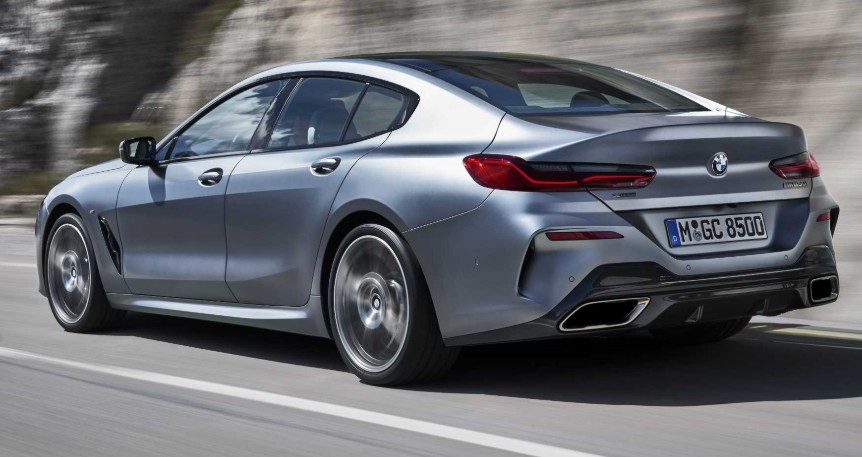
Choosing between the BMW 8 Series vs Porsche Panamera is a little like choosing between a tailored Italian suit and a racing jacket made from the finest leather. Both look expensive. Both feel special. Both can cover huge distances without breaking a sweat. Yet once we spend time behind the wheel, their personalities drift surprisingly far apart.
The BMW 8 Series—particularly the four-door Gran Coupe—is a grand tourer first. It wants to make speed feel effortless. Its cabin wraps around us, its engines deliver muscular performance, and its styling seems designed for the moment when we glance back at the car after parking it.
The Porsche Panamera attacks the same problem from another direction. Porsche describes its current Panamera as a genuine four-seat sports car combining performance and comfort, and that positioning tells us almost everything we need to know. It wants to make a luxury sedan behave more like one of Porsche's sports cars.
So which one deserves our money?
If we simply want acceleration figures, we could finish this comparison quickly. But buyers spending this much rarely choose with a spreadsheet alone. We need to consider comfort, character, passenger space, styling, road manners, engines, practicality, ownership expectations and, perhaps most importantly, how each car makes us feel.
Let's dig in.
Content in this publication
- BMW 8 Series vs Porsche Panamera at a Glance
- Exterior Design: Elegant BMW or Dramatic Porsche?
- Interior Quality and Cabin Atmosphere
- Front-Seat Comfort
- Rear-Seat Space
- Cargo Space and Everyday Practicality
- BMW 8 Series vs Porsche Panamera Performance
- Handling and Steering Feel
- Transmission Behavior
- Ride Comfort
- BMW 8 Series vs Porsche Panamera Driving Experience
- Luxury and Refinement
- Which Has the Better Engine Character?
- Fuel Economy and Efficiency
- Running Costs and Ownership
- Reliability: Which One Should We Trust More?
- BMW 8 Series vs Panamera: Key Strengths
- Which Is Better for Daily Driving?
- Which Is More Fun to Drive?
- Which Feels More Special?
- BMW 8 Series vs Porsche Panamera Price and Value
- BMW 8 Series Gran Coupe vs Panamera for Long-Term Ownership
- What About the BMW M8 Gran Coupe?
- What About Panamera E-Hybrid Models?
- BMW 8 Series vs Porsche Panamera for Different Buyers
- Which One Would We Buy?
- Final Verdict: BMW 8 Series or Porsche Panamera?
- Frequently Asked Questions
BMW 8 Series vs Porsche Panamera at a Glance
The fundamental difference is surprisingly simple.
The BMW 8 Series Gran Coupe feels like a luxury grand tourer that happens to be extremely fast. The Porsche Panamera feels like a sports car stretched into a luxurious four-door shape.
That distinction affects almost everything else.
BMW gives us relaxed cruising, strong engines, handsome proportions and a cabin that feels immediately luxurious. Porsche adds a sharper edge. Its controls, seating position, transmission behavior and chassis tend to encourage us to drive rather than merely travel.
Neither philosophy is objectively better.
Someone commuting through city traffic Monday through Friday and escaping on long interstate trips Saturday morning might prefer the BMW. Someone who takes the scenic mountain road even when Google Maps says it adds 40 minutes could easily fall for the Porsche.
The BMW's Personality
Think of the 8 Series as the friend who arrives at dinner wearing a perfectly fitted jacket but never needs to announce how much it cost.
It has presence without becoming theatrical.
The long hood, low roofline and wide stance give the Gran Coupe a muscular silhouette, while the interior emphasizes comfort and technology. Even the performance-focused M850i retains the core personality of a fast GT.
The 2026 M850i Edition M Heritage, for example, uses BMW's 4.4-liter twin-turbo V8 producing 523 horsepower, illustrating just how serious the performance potential of the 8 Series can become without turning the car into a stripped-out track toy.
The Porsche's Personality
The Panamera feels more intense.
Even sitting still, there is something unmistakably Porsche about it. The dashboard spreads horizontally, the seating position feels purposeful and the controls suggest that driving matters here.
Porsche itself positions the Panamera around the unusual combination of sports-car dynamics and four-seat comfort.
And unlike the BMW, the current Panamera family extends deeply into electrified performance territory, giving buyers access to powerful E-Hybrid derivatives alongside conventional gasoline models.
Who Are These Cars Really For?
That is where things get interesting.
Neither is a traditional executive sedan in the old-fashioned sense.
If maximum rear-seat room were our only requirement, we would probably look elsewhere. These cars sacrifice some limousine-like packaging because their designers care about low rooflines, sporting proportions and driver engagement.
They are luxury cars for people who still enjoy driving.
The question is simply how much driving excitement we want.
Exterior Design: Elegant BMW or Dramatic Porsche?
Design is subjective, but the two cars communicate very different messages.
The BMW 8 Series Gran Coupe has classic grand-tourer proportions. Its nose is long, the cabin appears pushed backward and the roofline descends smoothly toward the rear.
It looks expensive without screaming for attention.
That makes the BMW surprisingly versatile. Pull into a high-end hotel and it fits naturally. Arrive at an office meeting and it looks professional. Park outside a restaurant at night and it still carries enough drama to feel special.
The Panamera is harder to mistake for anything else.
Porsche has refined the formula over multiple generations, and the modern car carries a cleaner, more cohesive interpretation of the company's four-door fastback idea. The third-generation Panamera also brought updated styling and a broader digital focus while retaining its performance-oriented identity.
Which Car Has More Road Presence?
For sheer visual aggression, we would lean toward the Panamera.
For understated elegance, the BMW has the advantage.
The M850i changes the equation slightly because larger wheels, sportier trim and its more muscular detailing give the 8 Series considerable attitude.
Still, the BMW whispers where the Porsche tends to speak a little louder.
Interior Quality and Cabin Atmosphere
Open the doors and both cars remind us why they occupy such expensive territory.
Materials feel substantial. Seats provide extensive adjustment. Displays are crisp. Leather appears in abundance.
Yet their interiors have very different moods.
BMW 8 Series Interior
BMW builds a cockpit that feels familiar almost immediately.
The driver sits low, the center console angles subtly toward us, and essential controls remain accessible without demanding a degree in software engineering.
The cabin also has a cozy quality.
At night, ambient lighting transforms the environment. Add premium upholstery and upscale trim, and the 8 Series can feel closer to a private lounge than a conventional sedan.
The design isn't necessarily futuristic, but that might actually be an advantage for buyers who value usability.
Porsche Panamera Interior
Porsche takes a cleaner and more technological approach.
The Panamera's latest generation emphasizes digital displays and integrated technology while maintaining the driver-centric character expected from the brand.
There is a slightly more clinical feeling to the layout, but not in a bad way.
Imagine the difference between a luxury hotel suite and the cockpit of a private jet. BMW gives us more of the former. Porsche pushes closer to the latter.
Technology and Infotainment
Both cars offer the equipment luxury buyers expect, although exact features depend heavily on model year, trim, market and options.
The bigger difference involves philosophy rather than screen size.
BMW generally emphasizes intuitive everyday functionality. Porsche gives its technology a sportier presentation, integrating the digital interface into an environment where vehicle functions and performance settings play a prominent role.
We would call the BMW easier to settle into.
The Porsche takes slightly longer to explore but ultimately feels more specialized.
Front-Seat Comfort
Drive either car for two hours and we probably won't complain.
Drive for eight hours and their differences become more noticeable.
BMW excels at traditional grand-touring comfort. Seats can be supportive without constantly reminding us that we're sitting in a performance car.
Noise isolation is impressive, the cabin feels cocooned and the overall experience encourages long-distance travel.
The Panamera remains comfortable, but there is usually more communication between the road and our body.
Some drivers will love that.
Others will prefer BMW's calmer personality.
Which Is Better for Long Road Trips?
For effortless highway journeys, the BMW 8 Series Gran Coupe gets our vote.
It feels designed to shrink enormous distances.
The Panamera can absolutely do the same job, but it rarely lets us forget that something serious is happening underneath us.
That's exciting on a winding road.
After six hours on a straight highway? The BMW's more relaxed demeanor can become surprisingly persuasive.
Rear-Seat Space
Here we find one of the BMW's compromises.
The 8 Series Gran Coupe has four doors, but we shouldn't mistake it for a conventional full-size luxury sedan. Independent testing and reviews have frequently identified rear-seat space as one of the Gran Coupe's weaker areas relative to its exterior size.
Adults can travel in the back, but tall passengers may notice the coupe-like roof and packaging.
The Porsche isn't a limousine either, yet the Panamera takes its four-seat mission seriously. Porsche explicitly markets the current model as a four-seat sports car rather than pretending the rear compartment is an afterthought.
BMW 8 Series vs Panamera for Families
Neither vehicle would be our first suggestion for a family with three young children.
That's simply not their mission.
But for a couple with one or two children—or adults who occasionally carry friends—the equation changes.
The rear doors make both dramatically more usable than conventional two-door GTs, while their luggage compartments add enough flexibility for weekend trips.
The Porsche generally feels more consciously designed around accommodating four people.
The BMW feels like a grand coupe that happens to have rear doors.
That subtle distinction matters.
Cargo Space and Everyday Practicality
Luxury performance cars become far easier to justify when they can handle ordinary life.
Groceries don't care how fast our car reaches 60 mph.
Suitcases don't care about adaptive suspension.
Fortunately, both vehicles offer useful luggage capacity, and their four-door configurations make them considerably more practical than traditional luxury coupes.
The Panamera's fastback-style rear is especially appealing because the large opening makes bulky luggage easier to load.
The BMW's trunk is conventional but generous enough for the grand-touring role.
We would give Porsche a slight usability advantage here.
BMW 8 Series vs Porsche Panamera Performance
Now we reach the reason many people start searching for these cars in the first place.
Performance.
Both can be ridiculously quick.
But speed itself doesn't tell the whole story.
BMW 840i: Smooth Rather Than Savage
The 840i demonstrates how good a well-developed turbocharged six-cylinder luxury car can feel.
Instead of chasing drama at every opportunity, it delivers power smoothly and progressively.
That's exactly what many GT buyers need.
We press the throttle, the transmission responds, and the BMW gathers speed with startling ease.
There's little fuss.
Independent testing has shown that the 840i can be considerably quicker than its relaxed character initially suggests.
BMW M850i: The V8 Changes Everything
Move into the M850i and the personality becomes darker.
A twin-turbocharged 4.4-liter V8 brings 523 horsepower in the current special-edition M850i configuration, and BMW quotes a 0–60 mph time of 3.7 seconds for the M850i Edition M Heritage.
Those numbers are serious.
But the remarkable part isn't merely acceleration.
It's how casually the M850i delivers it.
The car can glide through traffic almost anonymously, then launch forward with the violence of a sports car when we bury the accelerator.
That's classic grand-touring behavior.
Panamera Engines and Performance
Porsche offers a wider performance spectrum within the current Panamera family.
The standard Panamera uses a 348-horsepower powertrain in the U.S. market, while more powerful variants dramatically expand the range.
You may be interested in reading BMW 8 Series vs Audi A7: Which Luxury Car Is Better?
Hybridization also plays a significant role in the Panamera lineup.
That matters because it allows Porsche to combine extremely strong performance with electric assistance rather than relying exclusively on increasingly powerful conventional engines.
Raw Speed Isn't the Real Difference
Put comparable performance versions next to each other and both can generate speeds that would have embarrassed supercars not so long ago.
The difference appears when the road bends.
The Porsche generally feels more interested.
The BMW feels more effortless.
One attacks corners.
The other consumes them.
Handling and Steering Feel
Here the Panamera establishes its strongest argument.
Porsche has spent decades building its identity around steering precision, chassis balance and driver involvement.
The Panamera translates much of that thinking into a larger four-door platform.
Officially, Porsche emphasizes the coordinated interaction between its drivetrain, PDK transmission and chassis as central to the Panamera's driving character.
The result is a car that can feel smaller from behind the wheel than its exterior dimensions suggest.
Turn-in is sharp.
Body movements feel controlled.
The driver remains involved.
Does the BMW Handle Well?
Absolutely.
Calling the 8 Series soft would be inaccurate.
It has a properly sorted chassis, impressive grip and enormous cross-country pace. Reviews of the Gran Coupe have also praised its chassis balance while noting comparatively light steering feedback.
And that observation captures the difference nicely.
The BMW is extremely capable.
The Porsche communicates more.
If we want to know what the front tires are doing while carving through a mountain road, we'd choose the Panamera.
If we simply want to cover that same road shockingly quickly without working as hard, the BMW makes a convincing case.
Transmission Behavior
Porsche's PDK dual-clutch transmission plays an important role in the Panamera experience.
Changes feel immediate and deliberate. Paddle shifts produce the sort of response we expect from a company obsessed with performance.
BMW's automatic feels different.
It prioritizes smoothness during ordinary driving while becoming dramatically more responsive when we select sportier settings.
Which approach works better?
For pure driver involvement, Porsche.
For seamless everyday operation, BMW.
Ride Comfort
Performance sedans often force us to make a deal with the devil.
Great handling usually arrives with stiff suspension.
These two cars prove the compromise doesn't need to be miserable.
BMW Ride Quality
The BMW's GT instincts shine again.
It can remain remarkably composed over imperfect pavement, particularly when configured with sensible wheel sizes.
That last point matters.
Huge wheels look fantastic in showroom photographs but can make potholes feel like personal insults.
Choose carefully.
Panamera Ride Quality
The current Panamera places considerable emphasis on combining dynamic ability with comfort, and Porsche has continued developing sophisticated chassis technology to expand that range.
It can therefore behave with impressive civility despite its athletic instincts.
Still, we would characterize the BMW as the more natural cruiser.
The Porsche is the car we'd want when the highway exit leads toward a mountain pass.
BMW 8 Series vs Porsche Panamera Driving Experience
Let's remove the numbers for a moment.
Imagine it's Sunday morning.
The road is empty.
Coffee is sitting in the cupholder.
We have nowhere we absolutely need to be.
Which key do we grab?
Probably the Porsche.
Now imagine it's Thursday evening.
We've just finished a brutal day at work. Traffic is heavy. Rain is falling. We have 50 miles before reaching home.
Which car sounds more appealing?
Probably the BMW.
That's the comparison in miniature.
The Panamera rewards enthusiasm.
The 8 Series reduces effort.
Neither philosophy wins every situation.
Luxury and Refinement
BMW takes a narrow victory here.
The 8 Series feels luxurious even when we aren't driving quickly.
That's important.
Some performance cars only reveal their magic when the road becomes interesting. At 25 mph, they can feel ordinary or even slightly frustrating.
The BMW rarely has that problem.
Its cabin isolation, seating, materials and overall demeanor create an expensive atmosphere whether we're crossing a continent or moving three blocks through downtown traffic.
Porsche's quality is exceptional too, but its luxury feels more technical.
The Panamera reminds us that we're sitting inside a Porsche.
The 8 Series reminds us that we've purchased a very expensive BMW.
Those sound similar.
They aren't.
Which Has the Better Engine Character?
If we're discussing emotional appeal, the M850i's V8 deserves attention.
There's something wonderfully old-school about placing a powerful twin-turbo V8 inside a long, low luxury GT.
The Panamera's performance options can reach extraordinary levels, particularly when electrification enters the picture, but complexity rises along with the numbers.
Some buyers will find that fascinating.
Others may prefer the simple emotional appeal of a large V8-powered BMW.
Our choice?
M850i for sound and effortless muscle.
High-performance Panamera for the deeper engineering experience.
Fuel Economy and Efficiency
Neither model should be confused with an economy car.
Still, the type of powertrain we select changes the equation significantly.
Six-cylinder versions naturally make more sense for drivers covering high annual mileage than the most powerful variants.
The Panamera's available electrified powertrains create another angle, particularly for owners who can make meaningful use of electric operation and regular charging.
But buying an expensive plug-in hybrid solely to save fuel rarely tells the whole financial story.
Purchase price, local energy costs, charging access and driving patterns all matter.
Efficiency should therefore be evaluated as part of the ownership equation rather than treated as one isolated specification.
Running Costs and Ownership
This is the section our hearts would happily skip.
Our wallets won't.
High-performance German luxury cars contain sophisticated engines, suspension systems, electronics, braking components and enormous wheels.
None of those things become inexpensive simply because the vehicle depreciates.
Buying a used example for a fraction of its original price does not magically transform it into a cheap car to maintain.
That rule applies to both.
The BMW may prove easier to service in some locations because of BMW's larger dealer and specialist network, while Porsche ownership comes with its own specialized maintenance expectations.
Actual costs vary enormously by country, model, engine, age and service history.
The Used-Car Question
This is where depreciation can become our friend.
Cars occupying this segment can lose substantial value compared with their original purchase prices, creating tempting opportunities on the used market.
But cheap entry prices can be deceptive.
A bargain Panamera with deferred maintenance isn't necessarily a bargain.
Neither is an M850i wearing cheap tires and incomplete service records.
When buying used, condition matters more than specification bragging rights.
A well-maintained lower-performance version is often smarter than a neglected flagship.
Reliability: Which One Should We Trust More?
We wouldn't declare a universal winner.
Reliability depends heavily on generation, powertrain, options, mileage and maintenance.
You may be interested in readingBMW 8 Series vs Audi A7: Which Luxury Car Is Better?You may be interested in reading
BMW 8 Series vs Mercedes S-Class: Which Luxury Car Is Better?More complexity generally means more potential expense when vehicles age.
Adaptive suspension?
Fantastic when functioning.
Advanced active chassis systems?
Brilliant when functioning.
High-performance hybrid hardware?
Extraordinary when functioning.
You see the pattern.
For a used BMW 8 Series or Porsche Panamera, we would prioritize a comprehensive pre-purchase inspection and complete service history over internet arguments about which badge is theoretically more reliable.
BMW 8 Series vs Panamera: Key Strengths
If we're narrowing down the decision, these are the differences we would keep in mind:
- Choose the BMW 8 Series for relaxed grand touring, a luxurious cabin, handsome styling, effortless motorway performance and the character of the available V8.
- Choose the Porsche Panamera for sharper handling, stronger steering involvement, sports-car character and a broader performance philosophy.
- Choose the BMW 840i if we want the balance between luxury, performance and relative restraint.
- Choose the M850i if a powerful V8 is central to the experience we want.
- Choose the Panamera if handling matters more than isolation.
- Choose a Panamera E-Hybrid derivative if electrified high performance genuinely fits our driving and charging habits.
- Buy either used only after inspecting its service history carefully, because depreciation doesn't reduce the price of complicated replacement parts.
Which Is Better for Daily Driving?
We would lean toward the BMW.
The controls feel approachable, power delivery is smooth and the entire personality of the car works brilliantly when we're driving at seven-tenths—or three-tenths.
That's important because most owners spend dramatically more time commuting than attacking mountain roads.
The Panamera is perfectly usable every day.
We simply feel that some of its greatest talents remain asleep during ordinary driving.
The BMW doesn't need an excuse to make sense.
Which Is More Fun to Drive?
Panamera.
This might be the clearest victory in the comparison.
The Porsche's reason for existing revolves around making a large luxury car behave in ways large luxury cars normally shouldn't.
That heritage shows.
Its steering, transmission and chassis create stronger communication between car and driver.
Does that mean the BMW is boring?
Not remotely.
An M850i accelerating onto an empty highway can rearrange our understanding of the word "boring."
But excitement and involvement aren't quite the same thing.
The BMW produces excitement through power.
The Porsche adds involvement through feedback.
Which Feels More Special?
Now things become difficult again.
The Porsche badge carries tremendous sports-car heritage.
Pulling into the garage and seeing "Porsche" on the steering wheel creates a certain emotional hit.
The 8 Series counters with rarity.
We don't see one on every corner. Its dramatic proportions and GT character make it feel significantly more exotic than many conventional BMW sedans.
And with BMW's U.S. site now indicating that some 8 Series configurations have reached the end of production, the model increasingly carries a last-of-an-era quality in certain markets and body styles.
That could make the 8 Series particularly appealing to buyers who prefer something distinctive.
BMW 8 Series vs Porsche Panamera Price and Value
Purchase price is only part of value.
We need to ask what we're actually paying for.
Porsche options can quickly transform the Panamera from expensive to spectacularly expensive.
But Porsche also lets buyers configure cars in extremely specific ways.
BMW often packages luxury and performance features more conventionally.
Consequently, an 8 Series can feel like the stronger value proposition when our priority is simply receiving a lot of luxury and performance for the money.
The Panamera's argument isn't necessarily value.
It's specialization.
We're paying for Porsche engineering and the unusual experience of driving something that attempts to combine sports-car reflexes with executive-car usability.
BMW 8 Series Gran Coupe vs Panamera for Long-Term Ownership
If we're keeping the car beyond the warranty period, simplicity becomes increasingly attractive.
That doesn't automatically make either vehicle simple.
Far from it.
But choosing a less complicated drivetrain and avoiding unnecessary equipment can potentially reduce exposure to expensive repairs later.
This is especially relevant when shopping used.
We would rather own a clean, documented, carefully maintained example with the "wrong" options than chase the perfect specification and inherit years of neglect.
Service history beats carbon-fiber trim.
Every time.
What About the BMW M8 Gran Coupe?
The M8 pushes the BMW formula into another realm.
Instead of merely being a very fast grand tourer, it becomes a genuine high-performance machine.
That makes comparisons with faster Panamera variants considerably more interesting.
Yet the philosophical difference remains.
The M8 feels like BMW M engineers took an elegant GT and injected adrenaline into every system.
The Panamera feels like Porsche engineers started with performance ambitions and then carved out enough space for executive comfort.
The destination looks similar.
The journey getting there is completely different.
What About Panamera E-Hybrid Models?
The electrified Panameras make the Porsche lineup particularly interesting.
Rather than treating hybrid technology only as a fuel-saving device, Porsche has used electrification within the Panamera range as part of its performance strategy.
That can create tremendous acceleration alongside the ability to operate using electric assistance.
But we shouldn't choose one simply because the headline output looks spectacular.
A hybrid makes the most sense when our lifestyle complements it.
Have home charging?
Drive shorter daily journeys?
Want brutal performance without relying exclusively on a large combustion engine?
Then it becomes compelling.
Never plug it in?
The equation becomes less convincing.
BMW 8 Series vs Porsche Panamera for Different Buyers
The easiest way to make the final decision is to stop asking which car is "better."
Ask which one resembles us.
If we enjoy quiet speed, nighttime highway drives, elegant styling and effortless acceleration, the BMW makes sense.
If we wake up early simply to drive before traffic appears, the Porsche probably speaks our language.
BMW is the continent-crossing GT.
Porsche is the sports sedan that refuses to admit how large it has become.
Which One Would We Buy?
If our money were on the table, we'd choose differently depending on how the car would be used.
For everyday luxury and long-distance travel, an 8 Series Gran Coupe would be extremely difficult to resist.
There's something deeply satisfying about its ability to be comfortable, quiet and civilized one minute and outrageously fast the next.
The M850i is particularly seductive because its V8 gives the car an emotional quality that becomes increasingly unusual.
But if this were our one opportunity to buy a four-door performance car purely because we love driving?
We'd take the Panamera.
Its sharper chassis changes the experience.
It asks more from us, but it gives more back.
And isn't that ultimately why enthusiasts spend so much money on cars in the first place?
Final Verdict: BMW 8 Series or Porsche Panamera?
The BMW 8 Series vs Porsche Panamera comparison has no embarrassing loser.
We're dealing with two sophisticated interpretations of the same basic fantasy: combine serious performance, dramatic design, luxury and enough practicality to use the car every day.
BMW approaches that fantasy as a grand-tourer manufacturer.
The 8 Series feels smooth, muscular and relaxed. It excels at turning huge journeys into easy ones. Its best trick isn't necessarily how fast it can travel, but how little effort that speed seems to require.
Porsche approaches the problem as a sports-car company.
The Panamera gives us more steering involvement, a sharper chassis and the sensation that driving remains the central event rather than merely the method of getting somewhere.
So our verdict is straightforward.
Buy the BMW 8 Series if comfort, GT character, effortless speed and luxury matter most.
Buy the Porsche Panamera if handling, driver involvement and sports-car DNA sit at the top of the list.
The BMW is the car we might prefer after driving 500 miles.
The Porsche is the one that might convince us to drive another 50 for absolutely no reason.
Sometimes that difference tells us everything.
Frequently Asked Questions
Is the Porsche Panamera better than the BMW 8 Series?
The Panamera is generally the stronger choice for buyers prioritizing handling and driver involvement, while the BMW 8 Series Gran Coupe makes a particularly strong case as a comfortable, powerful grand tourer. Neither is universally better; the ideal choice depends on whether we prioritize sports-car character or effortless luxury.
Is the BMW 8 Series faster than the Porsche Panamera?
It depends entirely on which versions we compare. The ranges include dramatically different power outputs and performance levels. BMW's M850i, for example, combines a 523-horsepower twin-turbo V8 with serious acceleration, while higher-performance Panamera derivatives occupy an entirely different level from the standard model.
Which is more comfortable, the BMW 8 Series or Panamera?
We would generally give the BMW 8 Series Gran Coupe the advantage for relaxed long-distance cruising. The Panamera is also exceptionally comfortable but retains a more communicative, performance-focused feel.
Which is more practical, the Panamera or BMW 8 Series Gran Coupe?
Both work surprisingly well as everyday cars, but the Panamera's four-seat concept and fastback-style design make it particularly versatile. The BMW remains practical for a GT, although its rear-seat accommodations can feel tighter than its substantial exterior dimensions suggest.
You may be interested in readingBMW 8 Series vs Audi A7: Which Luxury Car Is Better?You may be interested in reading
BMW 8 Series vs Mercedes S-Class: Which Luxury Car Is Better?You may be interested in reading
BMW 8 Series vs Mercedes S Class: Which Luxury Flagship Wins?Should I buy a used BMW 8 Series or Porsche Panamera?
Buy whichever example has the strongest condition and service history rather than focusing solely on badge, horsepower or trim. Both are sophisticated luxury performance cars, so neglected maintenance can quickly erase the savings created by depreciation.
If you want to know other articles similar to BMW 8 Series vs Porsche Panamera: Which Luxury GT Wins? you can visit the category Models.
Nissan Rogue Dark Armor vs Platinum: Which Trim Is Better?

Kia Sorento Models: Complete Guide to Trims, Engines and Versions
BYD Shark 6 vs Ranger vs HiLux: Which Ute Makes the Most Sense in 2026?
BYD Shark 6 vs MG U9: Which Ute Makes More Sense in 2026?
BYD Shark 6 vs Ford Ranger Raptor: Which Performance Ute Is Better in 2026?
BYD Shark 6 vs Kia Tasman: Which Ute Is Better?
Leave a Reply
More content of your interest