

Hyundai Santa Fe Generations: Complete History and Evolution

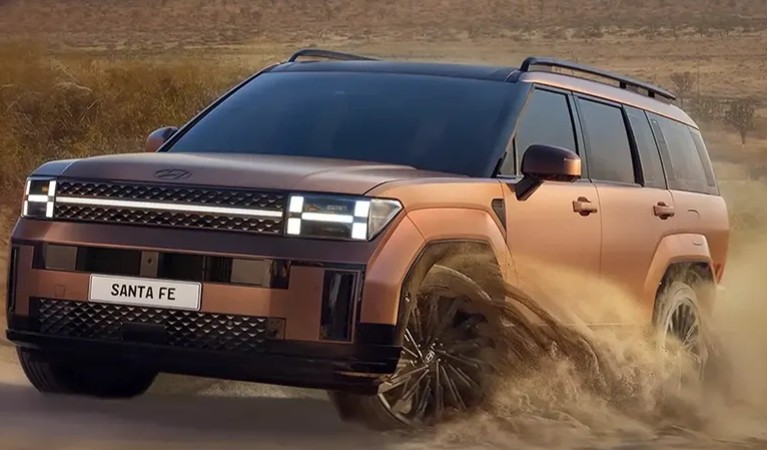
The Hyundai Santa Fe generations tell one of the more interesting stories in the modern SUV world. What started as a practical, slightly unconventional family SUV around the turn of the millennium has gradually transformed into a roomy, technology-packed vehicle that looks considerably more expensive and adventurous than its early ancestors.
And the transformation hasn't been subtle.
Put a first-generation Santa Fe next to today's fifth-generation model and you might wonder whether they even belong to the same family. The original had rounded bodywork, relatively simple technology, and the charmingly practical attitude of early crossovers. The latest version looks almost architectural, with a boxy body, H-shaped lighting and an interior designed around passengers, luggage and outdoor activities.
Hyundai introduced the original Santa Fe in 2000, and the SUV has since progressed through five distinct generations. Hyundai officially identifies the first four generations as 2000-2006, 2006-2012, 2012-2018 and 2018 onward, before revealing the fifth generation in 2023 as its first complete redesign since 2018.
So, which generation changed the Santa Fe the most? Which one makes sense as a used SUV? And how exactly did we get from the curvy original to today's almost Land Rover-like shape?
Let's travel through the entire Santa Fe family tree.
Content in this publication
- Hyundai Santa Fe Generations at a Glance
- First-Generation Hyundai Santa Fe: 2000-2006
- Second-Generation Hyundai Santa Fe: 2006-2012
- Third-Generation Hyundai Santa Fe: 2012-2018
- Fourth-Generation Hyundai Santa Fe: 2018-2023
- Fifth-Generation Hyundai Santa Fe: 2024-Present
- How Hyundai Santa Fe Design Changed Across Generations
- How Santa Fe Interiors Evolved
- How Seating Changed Through the Santa Fe Generations
- Which Hyundai Santa Fe Generation Is Best?
- What to Check When Buying Any Used Santa Fe Generation
- Hyundai Santa Fe Generations: Which One Changed the Most?
- The Evolution of the Santa Fe in One Sentence
- Final Thoughts on Hyundai Santa Fe Generations
- Frequently Asked Questions About Hyundai Santa Fe Generations
Hyundai Santa Fe Generations at a Glance
Before we dive into the details, here's the basic chronology.
- First generation: 2000-2006
- Second generation: 2006-2012
- Third generation: 2012-2018
- Fourth generation: 2018-2023/2024, depending on market and model-year convention
- Fifth generation: introduced in 2023 and sold as the new-generation model from 2024 in major export markets
Hyundai itself dates the first four generations as 2000-2006, 2006-2012, 2012-2018 and beginning in 2018. The fifth-generation Santa Fe was globally revealed in 2023 and scheduled to reach North America and Europe during the first half of 2024.
Remember that exact model years can differ from country to country. A generation may launch in South Korea several months before arriving in the United States, Europe, Australia or other regions.
That's why you'll occasionally see apparently conflicting generation dates online. Usually, both sources are describing the same vehicle but using different market launch dates.
First-Generation Hyundai Santa Fe: 2000-2006
The first Santa Fe was Hyundai stepping into unfamiliar territory.
Hyundai unveiled the original Santa Fe in 2000, and the company describes it as its first SUV. It arrived at a time when buyers around the world were rapidly warming to vehicles that blended passenger-car comfort with SUV versatility.
The Santa Fe Story Begins
The first-generation model had an appearance that immediately dates it to the early 2000s—and we don't necessarily mean that negatively.
Its rounded headlights, curving body panels, thick bumpers and high roof created a friendly rather than aggressive personality. Instead of looking like a military vehicle dressed for suburban duty, it looked approachable.
That personality helped the Santa Fe stand apart.
Hyundai says demand became strong enough in the United States shortly after production began that it needed to increase production. The model offered seating for five and emphasized interior room and practicality.
What Made the First Santa Fe Important?
Today, inexpensive compact and midsize crossovers are everywhere. Back then, the landscape looked different.
The first Santa Fe helped demonstrate that Hyundai could compete outside traditional passenger cars. It offered SUV styling and useful interior space without necessarily carrying the intimidating size or premium pricing associated with larger sport utility vehicles.
Hyundai's own retrospective describes the original as substantially longer and wider than many contemporary rivals while highlighting its practical interior and available convenience equipment.
First-Generation Character
Think of this Santa Fe as the foundation of a house.
It wasn't polished like today's version, but the important ingredients were already there:
practicality, family usability, generous space and a slightly adventurous personality.
Hyundai later added additional performance and four-wheel-drive capability during the generation's production run.
Who Should Consider a First-Generation Santa Fe Today?
Primarily enthusiasts, budget buyers and people looking for extremely inexpensive transportation.
Age is now the largest concern. Even a beautifully maintained first-generation example is an old vehicle, which means rubber seals, hoses, suspension components, electronics and interior materials may require attention.
At this age, we wouldn't shop primarily by model year. We'd shop by maintenance history, condition and evidence of careful ownership.
A clean older Santa Fe with comprehensive records can be much more appealing than a younger example that spent years being neglected.
Second-Generation Hyundai Santa Fe: 2006-2012
If generation one proved Hyundai could build an SUV, generation two showed the company wanted to make it genuinely competitive.
The second-generation Santa Fe debuted at the North American International Auto Show in January 2006. Hyundai substantially redesigned the exterior and interior while expanding space, equipment and safety technology.
A More Mature Design
The styling became less quirky and considerably more conventional.
Curves remained, but the proportions looked more substantial. The headlights were cleaner, the body appeared wider and the entire SUV suddenly felt more grown-up.
It was a little like watching someone trade sneakers and a hoodie for a well-tailored jacket.
Nothing fundamental had changed about the person's personality—but the presentation certainly had.
The Arrival of Seven-Seat Flexibility
One of the biggest evolutionary steps was the availability of a third seating row.
Hyundai says the second generation offered the option of expanding the five-seat layout to accommodate seven occupants. That pushed the Santa Fe further into family-SUV territory and broadened its appeal beyond buyers simply wanting a roomy two-row crossover.
The interior also gained better materials and more premium touches.
That's important because Hyundai was slowly changing the Santa Fe's mission. Price and practicality still mattered, but the brand increasingly wanted buyers to notice comfort and quality too.
Safety Took a Large Step Forward
Safety equipment also became a major part of the second-generation story.
Hyundai highlighted features including Electronic Stability Control, ABS, side-curtain airbags covering the seating rows, tire-pressure monitoring and active front head restraints.
For a family vehicle, this evolution mattered enormously.
Why the Second Generation Still Matters
This was arguably the generation where the Santa Fe stopped feeling like Hyundai's experiment with SUVs and started feeling like a permanent member of its lineup.
The formula was becoming clearer:
more space + better equipment + family-friendly pricing + improving refinement.
That formula would shape practically every Santa Fe that followed.
Third-Generation Hyundai Santa Fe: 2012-2018
Now things get interesting.
The third generation was where Hyundai began pushing the Santa Fe away from straightforward utility and toward a more sophisticated lifestyle-oriented SUV.
Hyundai introduced its third-generation design in 2012. The company called its styling direction "Storm Edge," combining more sculpted surfaces with a noticeably sharper and more muscular appearance.
The Santa Fe Becomes Stylish
Compared with generation two, this model looked dramatically sleeker.
The nose became more aggressive, the roofline looked sportier and the body gained stronger character lines. Instead of simply being practical, the Santa Fe was trying to make you turn around and look at it after parking.
And that reflected Hyundai's broader evolution.
SUV buyers were no longer satisfied with a big cabin and decent equipment. They wanted something that looked desirable in the driveway.
The third-generation Santa Fe answered that call.
Santa Fe Sport and Long-Wheelbase Santa Fe
Certain markets—especially the United States—made the third generation slightly confusing.
Hyundai offered a shorter five-passenger Santa Fe Sport alongside a longer-wheelbase Santa Fe capable of carrying six or seven people. Hyundai described the third generation as having both a sporty five-seat configuration and a longer three-row version.
That means someone shopping used may encounter Santa Fe models that look related but aren't identical in dimensions or passenger capacity.
It's worth checking the exact version rather than relying on the badge alone.
Technology Moves Into the Spotlight
Remember when an eight-inch touchscreen seemed huge?
That was the world in which the third-generation Santa Fe lived.
Available technology included an eight-inch multifunction display with navigation, improved voice recognition and better phone connectivity.
Today, screens dominate dashboards like giant digital billboards. Back then, technology of this type could make a vehicle feel genuinely upscale.
A Sweet Spot for Used Buyers?
Potentially.
The third generation is modern enough to deliver the kind of comfort and equipment many buyers expect while remaining old enough for substantial depreciation to have already occurred.
But we wouldn't choose one simply because the purchase price looks tempting.
Service history matters enormously, and specifications vary significantly between countries, engines and production years. Any used example deserves a proper pre-purchase inspection.
Fourth-Generation Hyundai Santa Fe: 2018-2023
The fourth-generation Santa Fe represented another major jump.
You may be interested in reading Nissan Frontier SV vs PRO-4X: Which Truck Is Better?
Hyundai introduced it in 2018 with a wider, more athletic appearance and a stronger emphasis on advanced driver-assistance technology.
Gone was much of the soft family-crossover character.
The Santa Fe now looked serious.
The fourth-generation exterior adopted Hyundai's large cascading grille and slim upper lighting elements, giving the front a distinctive split-light appearance.
Inside, the evolution was equally obvious.
Materials, screens, controls and cabin presentation moved closer to premium territory. Rather than constantly asking, "Is this good for a Hyundai?" buyers increasingly compared the Santa Fe directly with established mainstream rivals.
That's an important distinction.
A successful car shouldn't need an asterisk.
SmartSense Changes the Safety Conversation
Hyundai packed the fourth generation with its expanding SmartSense suite of driver-assistance technologies.
One particularly interesting development was Rear Occupant Alert. Hyundai described its ultrasonic-based system as being able to detect movement from children or pets in the rear seating area and alert the driver when leaving the vehicle.
The generation also introduced technologies such as Rear Cross-Traffic Collision-Avoidance Assist and, for the first time in a Hyundai according to the company's historical account, a full head-up display.
Electrification Arrives
Another big chapter in Santa Fe history emerged during the fourth generation: electrification.
Hybrid and plug-in-hybrid powertrains became part of the Santa Fe story in several markets, reflecting the industry's accelerating movement away from relying solely on conventional gasoline and diesel engines.
By this stage, the Santa Fe was no longer merely evolving stylistically.
Its mechanical identity was changing too.
Why Generation Four Is Especially Interesting Used
For many shoppers, this could be one of the most compelling points in the Santa Fe timeline.
You get a vehicle that still looks modern, offers substantial driver-assistance technology and, depending on location and trim, may provide hybrid power.
Meanwhile, depreciation can make it significantly cheaper than a new fifth-generation model.
Hyundai itself noted in 2025 that the previous-generation Santa Fe sold from 2018 to 2024 in the referenced market included hybrid and plug-in-hybrid options.
That's a strong combination for anyone seeking a contemporary family SUV without paying brand-new-car money.
Fifth-Generation Hyundai Santa Fe: 2024-Present
And then Hyundai apparently decided subtle evolution wasn't enough.
The fifth-generation Santa Fe is visually so different that seeing it for the first time can be startling.
Hyundai revealed the redesign in July 2023, calling it the fifth-generation midsize SUV and its first complete Santa Fe model change since 2018. It subsequently announced sales beginning in Korea in 2023 and launches in North America and Europe during the first half of 2024.
The Box Is Back
Previous Santa Fe generations gradually became sleeker.
Generation five goes in the opposite direction.
The body is deliberately squared off, with a tall hood, upright surfaces, pronounced wheel arches and an enormous rear opening.
It's less running shoe and more hiking boot.
And that's intentional.
Hyundai says designers began with the enlarged tailgate area and effectively worked outward, creating a vehicle focused heavily on cargo use, outdoor activities and the ability to connect interior and exterior spaces.
H-Shaped Lighting Creates a New Identity
One of the fifth generation's defining styling elements is its H motif.
You'll see H-shaped elements in the headlights, front fascia, taillights and even interior details. Hyundai says the motif references its own "H" emblem.
Love the styling or hate it, anonymity isn't really an option.
That's probably a victory by itself in an SUV market where many vehicles can disappear into a supermarket parking lot like identical gray pebbles.
Designed From the Tailgate Forward
Here's perhaps the most fascinating part.
Most of us imagine designers beginning with a vehicle's nose or overall silhouette.
Hyundai approached the new Santa Fe differently.
The company says it began with the enlarged tailgate area, aiming to make outdoor activities easier before developing the rest of the exterior design around that idea.
Open the tailgate and fold the rear seats, and the rear becomes something approaching a sheltered terrace.
No, we aren't suggesting you replace your patio furniture with a Santa Fe.
But for camping, picnics, sporting events, beach trips or simply sitting somewhere with a good view, you can understand the logic.
A Longer Wheelbase and Better Third Row
A longer wheelbase also allowed Hyundai to improve passenger space.
The company specifically highlighted enhanced third-row accommodation along with a wider tailgate and increased interior versatility. Foldable second- and third-row seats help transform the rear into a broad cargo and lifestyle space.
This represents a significant change in philosophy.
Earlier Santa Fe models were primarily road-going family SUVs that could handle the occasional adventure.
The fifth generation almost flips that sentence:
it's designed to make the adventure part of everyday family life.
How Hyundai Santa Fe Design Changed Across Generations
If we reduce more than two decades of styling evolution into a few words, it looks something like this:
Rounded → mature → sporty → premium → boxy.
Each stage mirrors broader automotive fashion.
Generations One and Two: Practicality First
The first two generations prioritized recognizable SUV proportions, space and function.
Generation one looked experimental and soft.
Generation two looked more mature and polished.
Neither depended heavily on dramatic styling to make its case.
Generations Three and Four: Style Becomes Essential
Generation three introduced more expressive bodywork.
Generation four doubled down on sophistication and technology.
These Santa Fe generations reflected an industry in which crossovers were quickly becoming buyers' default family vehicles rather than merely alternatives to sedans or minivans.
Generation Five: Personality Returns
Ironically, after years of becoming increasingly sleek, the Santa Fe returned to something the original had in abundance:
personality.
Not the same personality, obviously.
The new model's geometric body and H-shaped lighting couldn't be more different from generation one's curves.
But both are instantly recognizable.
How Santa Fe Interiors Evolved
The cabin transformation may be even more dramatic than the exterior evolution.
Early Santa Fe interiors were straightforward. Buttons did one job. Screens weren't the centerpiece. Practical storage and basic comfort mattered most.
Generation two improved material quality.
Generation three added increasingly sophisticated infotainment.
You may be interested in readingNissan Frontier SV vs PRO-4X: Which Truck Is Better?You may be interested in reading
Nissan Frontier King Cab vs Crew Cab: Which One Should You Buy?Generation four brought more driver-assistance technology and digital features.
Generation five essentially treats the interior as a mobile living space.
Its cabin uses horizontal and vertical design elements, a panoramic curved display incorporating digital instrumentation and infotainment, dual wireless charging and other available convenience technologies.
It's fascinating to compare that with the CD player Hyundai proudly mentioned when describing the original Santa Fe.
Twenty-plus years can make technology feel like time travel.
How Seating Changed Through the Santa Fe Generations
The Santa Fe didn't begin as the three-row family SUV many people recognize today.
The first generation primarily focused on five-passenger accommodation.
Generation two introduced available seven-seat flexibility.
Generation three expanded the strategy further with short- and long-wheelbase configurations in certain markets.
Later versions increasingly developed the Santa Fe as a spacious family vehicle, culminating in the fifth generation's greater focus on third-row space and cargo versatility.
That progression shows how Hyundai continually repositioned the vehicle to follow changing family expectations.
Which Hyundai Santa Fe Generation Is Best?
There's no universal winner.
The best generation depends on what you value.
If we're looking primarily at purchase affordability, older second- and third-generation examples can appear attractive.
If we want a stronger mix of modern technology, used pricing and contemporary styling, the fourth generation deserves serious attention.
If we're prioritizing space, current technology, distinctive design and maximum versatility, the fifth generation is the obvious place to start.
Best Generation for Value
We'd look closely at late third-generation and fourth-generation models.
Why?
Because they've already absorbed significant depreciation while still feeling relatively modern compared with early Santa Fe generations.
Condition is more important than the badge on the trunk, though.
A neglected newer SUV isn't automatically a better purchase than a meticulously maintained older one.
Best Generation for Families
Generations four and five stand out.
The fifth generation takes family practicality especially seriously through its longer wheelbase, foldable second and third rows and unusually large tailgate opening.
Best Generation for Technology
Generation five wins without much debate.
Technology tends to age faster than nearly anything else in a vehicle, and the latest Santa Fe benefits from decades of development in infotainment, connectivity, comfort and driver assistance.
Best Generation for Character
This one's subjective.
We'd give honorable mentions to generation one and generation five.
The original Santa Fe looked unlike many competitors because Hyundai was still discovering what its SUV identity should be.
The newest Santa Fe looks distinctive because Hyundai now seems confident enough to deliberately break from the crowd.
Funny how history circles back.
What to Check When Buying Any Used Santa Fe Generation
A generation guide can narrow your search, but it shouldn't replace vehicle-specific research.
Before buying a used Santa Fe, check:
- Maintenance and service records
- Accident history
- Outstanding recalls or service campaigns
- Engine and transmission behavior
- Suspension noises
- Warning lights
- Tire condition and uneven wear
- Fluid leaks
- Air-conditioning performance
- Infotainment and electrical equipment
- Condition of AWD components where fitted
- Battery condition on hybrid or plug-in-hybrid models
- Availability of spare keys
- Local parts and servicing costs
Most importantly, investigate the specific engine, transmission, drivetrain and model year you're considering.
The Santa Fe has been sold globally with many different powertrains, and reliability concerns associated with one configuration shouldn't automatically be applied to every Santa Fe ever built.
Hyundai Santa Fe Generations: Which One Changed the Most?
We'd argue for generation five.
Generation two improved the original formula.
Generation three made it stylish.
Generation four pushed it upscale.
But generation five rewrote the visual rulebook.
Hyundai's decision to start the design process around the large tailgate rather than simply creating another aerodynamic crossover resulted in dramatically different proportions and a stronger emphasis on lifestyle versatility.
Still, generation three deserves credit for another important transformation.
That's when the Santa Fe became much more than practical transportation. Hyundai itself describes that generation as moving away from the idea of a purely functional SUV toward a more sophisticated lifestyle vehicle.
In other words, generation three changed what the Santa Fe wanted to be.
Generation five changed what it looked like it could be.
The Evolution of the Santa Fe in One Sentence
If we had to describe the entire Hyundai Santa Fe history in a single thought, it would be this:
The Santa Fe evolved from an affordable practical SUV into a sophisticated family lifestyle vehicle without abandoning the usefulness that made the original successful.
Hyundai launched the model in 2000 as its first SUV and has repeatedly expanded its technology, seating flexibility, design ambition and overall sophistication since then.
That's why looking through the Santa Fe generations feels almost like looking through Hyundai's own evolution.
The vehicle and the company grew up together.
Final Thoughts on Hyundai Santa Fe Generations
Few vehicles demonstrate a manufacturer's progress as clearly as the Hyundai Santa Fe.
The first-generation Santa Fe established the formula: useful space, approachable pricing and SUV versatility.
The second generation matured it with better refinement, safety and available seven-seat flexibility.
The third generation injected style and technology.
The fourth generation moved deeper into premium territory while embracing advanced safety technology and electrification.
Then came the fifth-generation Santa Fe, throwing away much of the visual playbook and emerging as a large, square-shouldered family SUV designed around cargo space, flexible seating and outdoor lifestyles. Hyundai officially describes it as the model's first complete redesign since the fourth generation arrived in 2018.
So, which Hyundai Santa Fe generation should we buy?
For used shoppers seeking a balance between age, technology and value, we'd start with generation four and then compare well-maintained late generation-three examples.
For buyers wanting the newest technology and maximum versatility, generation five makes the strongest case.
And for anyone fascinated by automotive history?
Find a clean first-generation Santa Fe.
Park it next to the newest one.
You'll understand the entire story without anyone saying a word.
Frequently Asked Questions About Hyundai Santa Fe Generations
1. How many generations of the Hyundai Santa Fe are there?
There have been five Hyundai Santa Fe generations. Hyundai introduced the original in 2000, followed by second-, third- and fourth-generation models beginning in 2006, 2012 and 2018 respectively. The company revealed the fifth generation in 2023, with its rollout extending into 2024 in markets including North America and Europe.
2. When did the first Hyundai Santa Fe come out?
The first-generation Hyundai Santa Fe debuted in 2000. Hyundai presented it to European audiences at the 2000 Geneva Motor Show, while market availability varied geographically. Hyundai describes the Santa Fe as its first SUV.
3. What years are the third-generation Hyundai Santa Fe?
Hyundai identifies the third-generation Santa Fe as spanning 2012 to 2018 globally. Depending on the market, you'll often see individual vehicles described using slightly different model-year boundaries. This generation introduced Hyundai's "Storm Edge" styling and was offered in both five-seat and longer three-row forms in certain markets.
You may be interested in readingNissan Frontier SV vs PRO-4X: Which Truck Is Better?You may be interested in reading
Nissan Frontier King Cab vs Crew Cab: Which One Should You Buy?You may be interested in reading
Nissan Frontier S vs SV: Which Trim Should You Buy?4. What generation is the 2024 Hyundai Santa Fe?
The redesigned 2024 Santa Fe belongs to the fifth generation in markets where the new model launched for the 2024 model year. Hyundai revealed the fifth-generation vehicle during 2023 and planned its North American and European rollout for the first half of 2024.
5. Which Hyundai Santa Fe generation is best to buy used?
For many buyers, the fourth generation offers an appealing middle ground because it combines modern styling, advanced safety technology and relatively recent features with used-vehicle depreciation. However, there's no universally best generation. Service history, engine choice, drivetrain, local specifications, mileage and overall condition should carry more weight than generation alone.
If you want to know other articles similar to Hyundai Santa Fe Generations: Complete History and Evolution you can visit the category Models.
Kia Sorento Models: Complete Guide to Trims, Engines and Versions
BYD Shark 6 vs Ranger vs HiLux: Which Ute Makes the Most Sense in 2026?
BYD Shark 6 vs MG U9: Which Ute Makes More Sense in 2026?
BYD Shark 6 vs Ford Ranger Raptor: Which Performance Ute Is Better in 2026?
BYD Shark 6 vs Kia Tasman: Which Ute Is Better?
BYD Shark 6 vs 7: What We Know So Far
Leave a Reply
More content of your interest