

Can Nissan Frontier Be Flat Towed? What Owners Need to Know

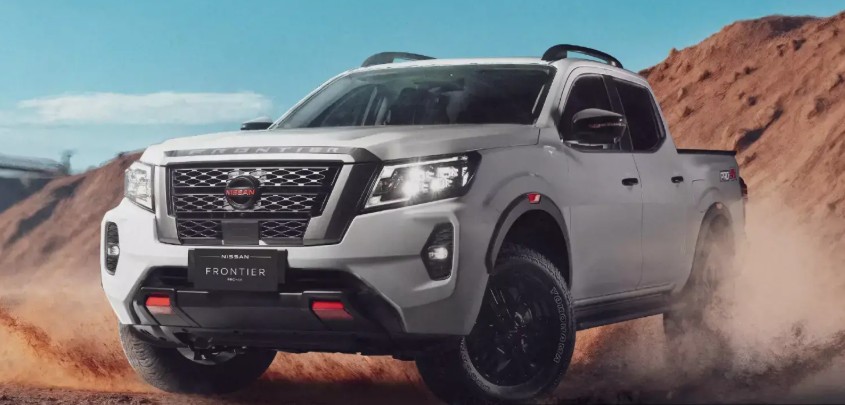
If we own a Nissan Frontier and travel with a motorhome, one question quickly rises to the top of the planning list: can Nissan Frontier be flat towed? At first glance, it seems simple. Put the transmission in Neutral, connect a tow bar, and roll down the highway, right?
Unfortunately, it is not that easy.
The answer depends heavily on the Frontier's model year, transmission, and drivetrain. More importantly, newer Frontier models equipped with automatic transmissions generally should not be flat towed with all four wheels on the ground. Nissan specifically warns that doing so can damage internal transmission components because they may not receive adequate lubrication while the truck is being pulled.
Older Frontiers complicate the story because some were offered with manual transmissions, and Nissan provided different towing instructions for those configurations. For example, the 2016 Frontier owner's manual includes procedures for certain manual-transmission models, while explicitly warning against flat towing automatic-transmission versions.
So, before hooking our Frontier behind an RV, we need to know exactly which truck we have.
In this guide, we'll break down how flat towing affects the Nissan Frontier, which configurations may work, which ones definitely should not be towed four-down, and what safer alternatives we have.
Content in this publication
- Can You Flat Tow a Nissan Frontier? The Short Answer
- What Does Flat Towing Actually Mean?
- Why Automatic Nissan Frontiers Shouldn't Be Flat Towed
- Can a 4WD Nissan Frontier Be Flat Towed?
- Can a 2WD Nissan Frontier Be Flat Towed?
- What About Older Manual-Transmission Nissan Frontiers?
- Which Nissan Frontier Years Can Be Flat Towed?
- How Do We Know Whether Our Frontier Is Automatic or Manual?
- Can Disconnecting the Driveshaft Make a Frontier Flat Towable?
- What Is the Safest Way to Tow a Nissan Frontier?
- Can You Flat Tow a Nissan Frontier Behind a Motorhome?
- Does the Frontier's Normal Towing Capacity Matter?
- Why Owner's Manual Instructions Beat Internet Advice
- What Happens If We Flat Tow an Automatic Frontier Anyway?
- Do We Need a Supplemental Braking System?
- Flat Towing vs Trailer Towing a Frontier
- What About Emergency Towing?
- Common Nissan Frontier Flat-Towing Mistakes
- Is the Nissan Frontier a Good RV Toad?
- How to Prepare a Frontier for Trailer Transport
- Can Nissan Frontier Be Flat Towed? Our Final Verdict
- Frequently Asked Questions
Can You Flat Tow a Nissan Frontier? The Short Answer
For most modern Nissan Frontier models, the practical answer is no.
The current Frontier uses an automatic transmission, and Nissan's 2025 owner's manual states that automatic-transmission Frontiers should not be towed with all four wheels touching the ground. Nissan warns that doing so can damage internal transmission components because of insufficient lubrication.
The restriction applies differently depending on drivetrain:
- 4WD automatic Frontier: Do not flat tow it.
- 2WD automatic Frontier: Do not tow it four-down; Nissan specifies using a dolly beneath the driven wheels when appropriate.
- Older manual-transmission Frontier: Some configurations have manufacturer-approved procedures, but we must follow the exact owner's manual for that model year.
That distinction is everything.
Flat towing a vehicle that was never designed for it can turn a convenient RV trip into a very expensive transmission repair.
What Does Flat Towing Actually Mean?
Flat towing means pulling a vehicle behind another vehicle while all four tires remain on the road.
We may also hear it called:
- Dinghy towing
- Four-down towing
- Recreational towing
- RV towing
Nissan itself uses these terms when describing the practice in newer Frontier owner's manuals.
Imagine our motorhome as the locomotive and the Frontier as the last train car. The truck isn't producing power, but its wheels, axles, driveshafts, and certain transmission components may still rotate.
And that is where trouble can begin.
Why RV Owners Love Four-Down Towing
Flat towing is incredibly convenient when the vehicle supports it.
We don't need to load a pickup onto a large trailer every morning. Once we arrive at the campground, disconnecting the vehicle can be relatively quick, and there is no giant trailer to store.
For RV travelers, that convenience is gold.
But mechanical compatibility matters more than convenience.
A vehicle that rolls freely is not automatically a vehicle that can safely be flat towed.
Why Automatic Nissan Frontiers Shouldn't Be Flat Towed
The biggest problem is transmission lubrication.
An automatic transmission normally relies on internal fluid circulation while the engine is running. When the engine is off but drivetrain components continue rotating, the lubrication conditions can be very different.
Nissan's 2025 Frontier manual is unusually clear about this issue.
For the 4WD Frontier with automatic transmission, Nissan says not to flat tow the truck and warns that doing so can damage internal transmission parts because of inadequate lubrication.
For 2WD automatic models, Nissan likewise warns against towing with all four wheels on the ground.
Neutral Does Not Automatically Make Flat Towing Safe
This is one of the most common misconceptions.
We put the gear selector in Neutral and think:
"The transmission isn't in gear, so nothing can be damaged."
Unfortunately, Neutral only disconnects certain parts of the transmission from engine power. It does not necessarily prevent internal shafts or drivetrain components from rotating when the wheels turn.
Without proper lubrication, those components can heat up and wear.
It's like spinning a bearing without enough oil. Everything may appear fine for a while—until it suddenly isn't.
Why Damage May Not Appear Immediately
Transmission damage from improper towing isn't always dramatic.
We might tow the truck 50 miles and notice nothing.
Then 500 miles later we experience:
- Strange shifting
- Transmission noise
- Excess heat
- Delayed engagement
- Slipping
- Premature internal wear
That delayed effect is why following the manufacturer's instructions matters more than relying on anecdotal reports.
Someone saying, "I've done it three times and nothing happened," doesn't change the mechanical design of the transmission.
Can a 4WD Nissan Frontier Be Flat Towed?
With a modern automatic transmission, no.
The 2025 Nissan Frontier owner's manual specifically says not to flat tow a 4WD automatic Frontier. Nissan goes even further, warning against using a vehicle dolly in that particular 4WD flat-towing context because drivetrain damage can result.
That may surprise owners who assume putting the transfer case into a different setting solves the problem.
It doesn't.
Modern Frontier drivetrains were not designed around recreational four-down towing.
What About Putting the Transfer Case in Neutral?
This is another area where assumptions can get expensive.
Some 4x4 vehicles have a transfer-case Neutral position specifically designed to disconnect the drivetrain for recreational towing.
That does not mean every 4WD pickup works the same way.
We should never assume a Frontier can be flat towed simply because another pickup can.
The correct procedure is determined by the Frontier owner's manual for the exact year and configuration—not by generic 4x4 advice.
Can a 2WD Nissan Frontier Be Flat Towed?
Modern 2WD automatic Frontiers should not be flat towed with all four wheels on the road.
Nissan's 2025 manual instructs owners not to tow an automatic-transmission Frontier four-down and specifies that an appropriate dolly should be positioned beneath the driven wheels when using that towing method.
Because a 2WD Frontier drives the rear wheels, we need to be particularly careful about how those wheels interact with the transmission during towing.
Can We Tow a 2WD Frontier on a Dolly?
Depending on the model-year instructions and towing configuration, a dolly may be an option, but it must be arranged correctly.
The 2025 manual specifically says an appropriate dolly must be under the drive wheels when towing an automatic-transmission vehicle in this manner.
That detail matters enormously.
Most people picture a conventional tow dolly carrying the front wheels. But on a rear-wheel-drive pickup, simply lifting the front axle while leaving the rear drive wheels rolling may not solve the transmission-lubrication issue.
Always follow the towing diagram and procedure in the owner's manual.
What About Older Manual-Transmission Nissan Frontiers?
Now things get more interesting.
Older Frontier generations were available with manual transmissions, and certain manuals contain procedures that allow recreational towing under specific conditions.
For example, Nissan's 2016 Frontier owner's manual instructs owners of applicable manual-transmission models to tow with the transmission in Neutral. For 4WD manual models, it also states that the transfer case should be placed in 2H.
Nissan additionally instructed owners to start and idle the engine in Neutral for two minutes after every 500 miles of towing.
That is very different from the instructions Nissan gives automatic Frontier owners.
Manual Frontier vs Automatic Frontier
The distinction can be summarized simply:
| Frontier configuration | Flat towing outlook |
|---|---|
| Modern automatic 4WD | Not recommended/allowed by Nissan |
| Modern automatic 2WD | Do not tow four-down |
| Older automatic Frontier | Generally restricted; check exact manual |
| Certain older manual 2WD | May be permitted with specific procedure |
| Certain older manual 4WD | Model-specific instructions required |
The phrase model-specific deserves emphasis.
We should never take a 2016 procedure and apply it automatically to a 2006, 2019, or 2025 Frontier.
Nissan maintains model-year owner's manuals so owners can verify the correct instructions for their exact truck.
Which Nissan Frontier Years Can Be Flat Towed?
There isn't one neat year range where every Frontier suddenly changes from towable to non-towable.
Transmission choice matters more.
Older generations offered manual transmissions that created possibilities modern Frontier buyers no longer have. By contrast, current Frontiers use an automatic transmission, eliminating the factory-supported manual-transmission flat-towing scenario found in some older models.
The 2022 Frontier owner's manual, for example, warns against flat towing both 4WD and 2WD automatic-transmission versions with all four wheels on the ground.
The same fundamental restriction appears in the 2025 manual.
Why Year Alone Isn't Enough
Suppose two people own 2016 Frontiers.
One may have:
- Rear-wheel drive
- Manual transmission
The other might have:
- Four-wheel drive
- Automatic transmission
Their towing rules are not necessarily the same.
This is why a search like "Can I flat tow a 2016 Frontier?" is only half the question.
We really need to ask:
Can I flat tow my exact 2016 Frontier drivetrain and transmission combination?
That's the question that protects our wallet.
How Do We Know Whether Our Frontier Is Automatic or Manual?
Most owners know immediately, but used trucks sometimes come with incomplete documentation.
The easiest clue is the shifter.
A manual Frontier has a traditional clutch pedal and manual gear selector. An automatic truck has PRND-style transmission positions and no clutch pedal.
We can also check:
- The owner's manual
- Vehicle specification documents
- VIN-linked vehicle information
- Dealer records
If there's any doubt, verify the configuration before towing.
Never make a four-down towing decision based only on an online discussion describing "a Frontier."
Can Disconnecting the Driveshaft Make a Frontier Flat Towable?
This question appears frequently in RV circles.
Mechanically, some owners use aftermarket drivetrain modifications—such as driveshaft disconnect systems—to prevent parts of the transmission from rotating while towing.
But that changes the conversation entirely.
We are no longer talking about the factory-approved flat-towing procedure.
Aftermarket Modifications Come With Trade-Offs
A custom solution may involve:
- Driveshaft disconnect hardware
- Lubrication pumps
- Custom tow brackets
- Electrical modifications
- Supplemental braking equipment
These systems may work in certain applications, but installation quality becomes critical.
A poorly designed modification can introduce vibration, drivetrain imbalance, leaks, electrical issues, or new failure points.
Before considering this route, we'd want advice from a specialist familiar with the exact Frontier drivetrain.
And even then, we should understand that aftermarket modifications do not rewrite Nissan's factory towing instructions.
What Is the Safest Way to Tow a Nissan Frontier?
For most automatic Frontier owners who want maximum peace of mind, the safest answer is straightforward:
Use a trailer that carries the entire truck.
A full vehicle trailer keeps all four Frontier wheels off the road.
That eliminates the drivetrain-lubrication issue associated with four-down towing.
Option 1: Full Flatbed Vehicle Trailer
This is usually the most mechanically conservative approach.
Advantages include:
- All Frontier wheels are off the ground
- Minimal drivetrain rotation
- Works with 2WD and 4WD configurations when properly rated
- No need to modify the Frontier drivetrain
- Easier to change vehicles later
The downside?
Weight.
A Frontier is already a substantial pickup. Add the weight of the trailer, and the motorhome needs sufficient towing capacity, hitch capacity, braking capability, and gross combination weight allowance.
Check the RV's Ratings Before Buying a Trailer
Just because our RV has a hitch doesn't mean it can safely carry the combined load.
We need to check:
- RV towing capacity
- Hitch receiver rating
- Trailer weight
- Frontier curb weight
- Gross combination weight rating
- Tongue weight
- Trailer brake requirements
Numbers matter here.
A beautiful towing setup that exceeds the motorhome's ratings is still a bad setup.
Option 2: Tow Dolly
A dolly may work for certain configurations when used exactly as Nissan directs, particularly where the driven wheels can be kept off the ground.
For the 2025 2WD automatic Frontier, Nissan states that a suitable dolly must be placed beneath the drive wheels.
However, dollies can be awkward with rear-wheel-drive pickups because conventional dolly loading normally involves the front axle.
That makes a full trailer far more attractive for many owners.
Option 3: Choose a Different Dinghy Vehicle
Sometimes the smartest answer isn't modifying the Frontier at all.
If we travel constantly in a motorhome and four-down towing is central to our lifestyle, buying a vehicle designed for recreational towing can simplify everything.
It may sound drastic, but compare that cost with:
- Custom driveline modifications
- Tow-bar equipment
- Potential transmission damage
- Complicated hookup procedures
- Future resale concerns
Convenience has value too.
Can You Flat Tow a Nissan Frontier Behind a Motorhome?
Physically? Yes, a motorhome can obviously pull a Frontier if everything is connected.
Mechanically and according to manufacturer instructions?
That depends on the truck.
For modern automatic Frontiers, four-down towing behind an RV is specifically restricted by Nissan.
Older manual-transmission Frontiers deserve separate evaluation because manufacturer procedures existed for certain versions.
So we shouldn't ask whether the motorhome is powerful enough first.
We should ask whether the Frontier drivetrain is compatible.
Does the Frontier's Normal Towing Capacity Matter?
Not in the way many people assume.
Current Frontier models are capable tow vehicles themselves; Nissan advertises substantial trailer-towing capacity for the latest Frontier lineup.
But how much the Frontier can tow tells us nothing about whether the Frontier itself can be flat towed.
They're completely different engineering questions.
A truck might tow thousands of pounds behind it while still being unsuitable for four-down towing behind another vehicle.
Think of a work boot.
It may be excellent at protecting our foot, but that doesn't mean it makes a good running shoe.
Different job, different design.
Why Owner's Manual Instructions Beat Internet Advice
Vehicle forums are fantastic resources.
We can learn about real-world repairs, accessories, campgrounds, maintenance tricks, and thousands of clever owner solutions.
But when we're making a decision that can destroy a transmission, the owner's manual should sit at the top of the hierarchy.
Nissan publishes model- and year-specific manuals through its official owners portal.
A Simple Verification Process
Before towing, we should:
- Identify the exact Frontier model year.
- Confirm whether it is 2WD or 4WD.
- Confirm whether it has a manual or automatic transmission.
- Download the correct Nissan owner's manual.
- Search the manual for "flat towing."
- Follow the procedure exactly.
- Verify that our RV, hitch, trailer, and braking equipment are properly rated.
Seven minutes of research could prevent thousands of dollars in repairs.
What Happens If We Flat Tow an Automatic Frontier Anyway?
We might get lucky.
For a while.
The problem is that Nissan explicitly warns of internal transmission damage caused by inadequate lubrication when automatic-transmission Frontiers are improperly flat towed.
Potential consequences may include excessive wear and transmission failure.
And there's another issue: manufacturer instructions matter when warranty or damage disputes arise.
If the manual clearly says not to use a towing method, intentionally using that method creates an unnecessary risk.
"But Someone Online Says They Do It"
We've all seen those comments.
"I've flat towed mine for 20,000 miles."
Perhaps they have.
But we rarely know the entire story:
- Was the driveshaft modified?
- Was it really the same transmission?
- Was the model year identical?
- Did they use additional lubrication equipment?
- Has the transmission been inspected?
- Will it fail later?
Anecdotes can be interesting.
They shouldn't replace manufacturer instructions.
Do We Need a Supplemental Braking System?
When towing any heavy vehicle behind a motorhome, braking is a major part of the setup.
Rules can vary by jurisdiction, so we need to check the applicable laws along our route as well as equipment requirements.
Even beyond legal considerations, asking one vehicle's brakes to control a second heavy vehicle is a serious engineering issue.
A complete towing setup commonly includes equipment such as safety cables, lighting connections, and appropriate braking hardware.
If we use a trailer, the trailer's braking system and weight ratings must also match the load.
Flat Towing vs Trailer Towing a Frontier
If we compare the two methods purely for convenience, four-down towing wins.
If we compare them for compatibility with an automatic Frontier, a full trailer wins comfortably.
Flat Towing
Potential advantages:
- Quick hookup
- Less equipment to store
- No trailer at the campsite
- Easy maneuvering after disconnecting
Potential disadvantages for the Frontier:
- Not approved for modern automatic configurations
- Possible drivetrain damage
- May require modifications
- Compatibility varies dramatically by year
Full Trailer
Advantages:
- Keeps the Frontier drivetrain stationary
- Works well across more configurations
- Doesn't depend on transmission flat-tow compatibility
- Can protect the truck from some additional road wear
Disadvantages:
- Heavier
- More expensive
- Requires storage space
- Adds tires, bearings, brakes, and trailer maintenance
For many automatic Frontier owners, those disadvantages are simply the price of protecting the truck.
What About Emergency Towing?
Emergency towing is different from recreational towing.
If our Frontier breaks down, we shouldn't assume the same procedures used behind a motorhome apply.
Nissan provides separate emergency towing instructions and recommends towing methods based on drivetrain configuration. The 2025 manual specifically points owners away from recreational flat-towing guidance and toward the emergency towing section when dealing with a disabled vehicle.
That distinction matters.
A short roadside recovery procedure does not automatically mean a truck can travel 1,000 miles behind an RV.
Common Nissan Frontier Flat-Towing Mistakes
Most problems begin with reasonable assumptions.
Unfortunately, drivetrain components don't care whether an assumption sounded reasonable.
We should avoid these common mistakes:
- Assuming Neutral makes every transmission safe to tow
- Assuming every 4WD transfer case has a towable Neutral mode
- Using instructions from the wrong Frontier year
- Confusing trailer towing capacity with flat-towing compatibility
- Assuming 2WD automatically means four-down towable
- Following forum advice without checking the owner's manual
- Putting the wrong wheels on a tow dolly
- Ignoring combined RV and trailer weight
- Assuming an aftermarket modification is factory approved
One incorrect assumption can become the weakest link in the entire towing setup.
Is the Nissan Frontier a Good RV Toad?
For buyers specifically shopping for a vehicle to tow four-down behind a motorhome, a modern automatic Frontier is not an ideal choice.
That's not a criticism of the truck itself.
The Frontier is designed to be a capable midsize pickup, and Nissan actively promotes its hauling and trailer-towing abilities.
But being a good pickup and being a good dinghy vehicle are two different talents.
If we already own the Frontier and love it, a suitable full trailer can make it perfectly practical to bring along.
If we're shopping specifically for something that can remain on all four wheels behind an RV, we'd want a vehicle whose manufacturer explicitly provides recreational towing procedures.
How to Prepare a Frontier for Trailer Transport
If we decide to carry the Frontier on a full trailer, preparation is straightforward but shouldn't be rushed.
We should verify tire pressure, inspect the trailer, confirm the straps or chains are rated correctly, secure the truck according to the trailer manufacturer's instructions, connect trailer brakes and lights, and perform a walk-around before leaving.
After driving a short distance, stop and inspect everything again.
Tie-down systems can settle as the load moves.
A five-minute inspection at the first fuel stop is cheap insurance.
Don't Forget the Total Weight
A common mistake is looking only at the Frontier's weight.
The RV must pull:
Frontier + trailer + equipment + anything carried in the truck or trailer.
That total can become surprisingly large.
The hitch and RV manufacturer ratings—not our confidence level—decide whether the combination is acceptable.
Can Nissan Frontier Be Flat Towed? Our Final Verdict
So, can Nissan Frontier be flat towed?
For a modern Frontier with an automatic transmission, we should not flat tow it with all four wheels on the ground. Nissan's own 2025 instructions explicitly warn against four-down towing automatic 2WD and 4WD versions because transmission damage can occur from inadequate lubrication.
Older Frontiers require more nuance.
Some manual-transmission models had manufacturer instructions that permitted towing under specific conditions. Nissan's 2016 manual, for example, instructed applicable manual models to remain in Neutral and included additional requirements for 4WD versions and extended towing distances.
That's why there is no responsible one-word answer covering every Nissan Frontier ever made.
Our safest rule is simple:
Check the owner's manual for the exact year, transmission, and drivetrain before attaching a tow bar.
If the Frontier has a modern automatic transmission, a properly rated full vehicle trailer is generally the cleanest solution.
It takes a little more equipment, sure.
But compared with rebuilding a transmission halfway through an RV vacation, that trailer suddenly looks like a very good traveling companion.
Frequently Asked Questions
1. Can a Nissan Frontier automatic be flat towed?
Modern automatic-transmission Nissan Frontiers should not be flat towed with all four wheels on the ground. Nissan warns that insufficient transmission lubrication can cause internal damage. The 2025 manual specifically prohibits this method for automatic 2WD and 4WD configurations.
2. Can a 4x4 Nissan Frontier be flat towed behind an RV?
A modern 4WD Frontier with an automatic transmission should not be flat towed. Nissan explicitly warns against flat towing the 4WD automatic model because it can damage transmission components. Older manual-transmission 4WD Frontiers may have different procedures, so the exact model-year owner's manual must be checked.
3. Can you flat tow a manual Nissan Frontier?
Certain older manual-transmission Frontiers can be recreationally towed according to model-specific Nissan procedures. For example, Nissan instructed applicable 2016 manual models to be placed in Neutral, with additional transfer-case requirements for 4WD trucks. Always verify the manual for your exact year before towing.
4. Can I put my Nissan Frontier in Neutral and tow it?
Not simply because the transmission is in Neutral. A modern automatic Frontier can still suffer internal transmission damage while its wheels rotate because adequate lubrication may not occur with the engine off. Nissan therefore tells owners not to flat tow these automatic models four-down.
5. What is the safest way to tow a Nissan Frontier behind a motorhome?
For a modern automatic Frontier, carrying the entire truck on a properly rated vehicle trailer is generally the most mechanically conservative solution because all four wheels remain off the road. The RV, hitch, trailer, brakes, and combined load still need to satisfy their respective ratings.
If you want to know other articles similar to Can Nissan Frontier Be Flat Towed? What Owners Need to Know you can visit the category Service and Parts.
Kia Sorento Service Reset: How to Reset the Service Light
Kia Sorento Fuel Tank Capacity: Gallons, Litres and Model Differences
Kia Sorento Tyre Pressure: Recommended PSI, Bar and Complete Guide
Kia Sorento Boot Space: How Much Luggage Space Does It Really Have?
Kia Sorento Towing Capacity: How Much Can a Sorento Tow?
Honda Passport Payload Capacity: How Much Weight Can It Carry?
Leave a Reply
More content of your interest