

Which Volvo XC90 to Avoid: Years, Engines, and Buyer Guide

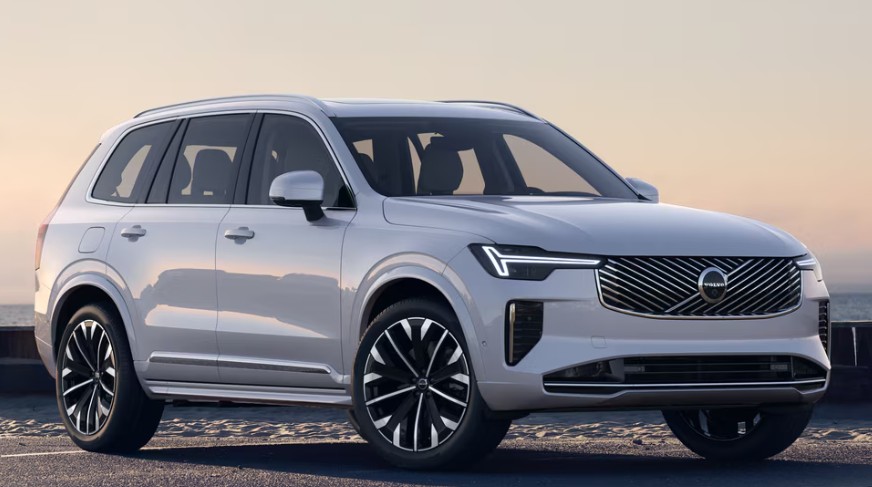
The Volvo XC90 has spent more than two decades doing something rather difficult: combining seven-seat practicality, Scandinavian luxury, strong safety credentials, and a road presence that doesn't scream for attention. For many families, it's exactly what a premium SUV should be.
But buying a used XC90 requires more homework than simply finding the cleanest one with the lowest mileage.
Some XC90 model years and powertrains have considerably more baggage than others. Early first-generation T6 models developed an especially concerning reputation for transmission trouble, while the completely redesigned 2016 XC90 introduced an enormous amount of new technology at once. Later plug-in hybrids add another layer of mechanical and electronic complexity.
So, which Volvo XC90 should we avoid?
If we're shopping used, the models we'd approach most cautiously are the 2003-2005 XC90 T6 models and the 2016 XC90, particularly examples without detailed maintenance, recall, and repair histories. The 2017 model deserves careful inspection too, although we'd generally regard it as less concerning than the launch-year 2016.
That doesn't mean every one of these XC90s is destined for disaster. A well-maintained example with documented repairs can sometimes be a smarter purchase than a neglected "good year."
Let's dig deeper.
Content in this publication
- Which Volvo XC90 Years Should We Avoid?
- 2003-2005 Volvo XC90 T6: The One We'd Be Most Nervous About
- What Transmission Symptoms Should We Watch For?
- 2016 Volvo XC90: The Second-Generation Year We'd Approach Carefully
- Should We Completely Avoid the 2016 Volvo XC90?
- What About the 2017 Volvo XC90?
- First Generation vs Second Generation: Which Is Riskier?
- Which XC90 Engine Should We Avoid?
- Should We Avoid a Volvo XC90 T8 Plug-In Hybrid?
- Is Air Suspension Worth Avoiding?
- High Mileage Isn't Automatically Bad
- The Cheapest XC90 May Be the Most Expensive
- Which Volvo XC90 Years Are Better Choices?
- What Would We Check Before Buying Any XC90?
- Why a Volvo-Specialist Inspection Matters
- Would We Buy an XC90 Without Service Records?
- What About Ex-Fleet or High-Mileage XC90s?
- Should We Avoid an XC90 With Warning Lights?
- Can an Older XC90 Still Be a Good Buy?
- Our Verdict: Which Volvo XC90 Should We Avoid?
- Closing Thoughts
- FAQs About Which Volvo XC90 to Avoid
Which Volvo XC90 Years Should We Avoid?
If we want the shortest possible answer, our XC90 caution list looks like this:
- 2003 XC90 T6: Major concern because of the early T6 automatic transmission.
- 2004 XC90 T6: Another year we'd generally skip unless transmission history is exceptionally strong.
- 2005 XC90 T6: Still part of the troublesome early T6 combination.
- 2016 XC90: First year of the second generation, with numerous new systems and several recalls.
- 2017 XC90: Not an automatic "never buy," but worth more scrutiny than later second-generation examples.
- Any XC90 with air suspension, hybrid hardware, warning lights, or incomplete service history: Condition can matter more than model year once these SUVs become older.
The distinction between model year and configuration is especially important.
A 2004 XC90 isn't automatically terrible because it says "2004" on the registration document. Much of the notoriety centers on the T6 drivetrain, so we wouldn't treat every engine from that period identically.
Likewise, a 2016 XC90 that has received every recall repair, software update, cooling-system fix, and scheduled service might be a much safer bet than a newer XC90 that has been neglected.
Think of model year as our first filter—not the final verdict.
2003-2005 Volvo XC90 T6: The One We'd Be Most Nervous About
The first XC90 arrived for the 2003 model year and was hugely important for Volvo. It proved that a large luxury SUV could feel distinctly Swedish rather than merely copying its German rivals.
Unfortunately, one particular configuration gained a reputation we'd rather not inherit as used-car buyers: the early XC90 T6.
Independent Volvo specialists and owner communities have long reported premature automatic-transmission failures on 2003-2005 T6 models. Reports have included slipping, harsh shifting, overheating, and eventual transmission failure. Contemporary discussions surrounding the issue even referenced litigation alleging premature transmission damage on these vehicles.
For us, that's more than a minor nuisance.
A window regulator or parking sensor can be irritating. A failing transmission can transform a bargain luxury SUV into a financial sinkhole.
Why the Early T6 Is Different
The problem isn't simply that the XC90 was old technology.
The early T6 paired Volvo's turbocharged six-cylinder engine with an automatic transmission that developed an unfavorable durability reputation when tasked with moving the heavy SUV.
That combination means we should resist the temptation to buy one simply because the asking price looks absurdly cheap.
Luxury vehicles depreciate like falling stones, but their repair bills don't depreciate with them.
A $3,000 or $4,000 XC90 can still possess the mechanical appetite of a vehicle that once cost many times that amount.
Would We Buy a 2003-2005 T6 With a Replacement Transmission?
Possibly—but only after substantial verification.
We'd want invoices rather than a seller casually saying, "Yeah, the transmission was changed."
We'd want to know what was installed, when it was installed, how many miles have accumulated since, who performed the repair, whether the cooling system has been maintained, and whether current shifting behavior is genuinely healthy.
Even then, we'd compare the price against alternative XC90 configurations.
Unless the vehicle were unusually clean and inexpensive, we'd normally choose a different engine instead.
What Transmission Symptoms Should We Watch For?
An XC90 transmission should not feel as if it's debating whether to obey us.
During a test drive, we'd pay attention to delayed engagement when shifting from Park into Drive or Reverse, engine revs rising without matching acceleration, noticeable slipping between gears, hard or abrupt gear changes, shuddering, transmission warnings, and inconsistent behavior after the drivetrain warms up.
Cold-only test drives can hide things.
A car may behave beautifully for five minutes and become a completely different machine after twenty.
That's why a proper inspection should include an extended drive and diagnostic scan.
Don't Assume a Fluid Change Will Cure Everything
A seller may explain rough shifts by saying the transmission "just needs fluid."
Maybe.
But we wouldn't buy an aging luxury SUV based on that assumption.
If the fix were truly trivial, we'd reasonably ask why the seller hasn't already done it.
2016 Volvo XC90: The Second-Generation Year We'd Approach Carefully
Fast-forward more than a decade and Volvo reinvented the XC90.
The 2016 model wasn't simply an updated version of the old SUV. It represented a new architecture, new engines, dramatically expanded electronics, a tablet-like infotainment system, sophisticated driver assistance, and—in T8 form—a complicated plug-in-hybrid drivetrain.
It looked futuristic because, in many ways, it was.
And first-year technology sometimes behaves like the first version of a new operating system: exciting, ambitious, and slightly more adventurous than we'd like once the warranty disappears.
Why the 2016 XC90 Raises More Questions
The 2016 XC90 was subject to several safety-related campaigns.
For example, NHTSA documentation shows a recall affecting certain 2016 XC90s because wiring associated with the Side Impact Protection System could have been incorrectly assembled.
A later recall covered 2016 XC90 vehicles because an engine coolant bleeder hose could deteriorate and crack. Volvo's recall documentation explained that a coolant leak could reach insulation around the catalytic-converter heat shield and, in a worst-case situation, contribute to an engine-compartment fire while the vehicle was stationary. More than 34,000 U.S. vehicles were listed as eligible for that campaign.
This isn't proof that every 2016 XC90 is unreliable.
Recalls exist precisely because manufacturers identify and remedy problems.
But when we're comparing similarly priced used SUVs, the sheer novelty of a first-year redesign gives us another reason to prefer a later, sorted example.
Should We Completely Avoid the 2016 Volvo XC90?
Not necessarily.
This is where simplistic "worst year" articles often become misleading.
A 2016 XC90 that's been maintained meticulously, updated correctly, inspected by a Volvo specialist, and had every applicable recall completed could make sense at the right price.
But we'd want a meaningful discount compared with a similarly equipped later model.
Why assume first-year risk for almost the same money?
If the difference between a 2016 and a newer example is modest, we'd generally move newer.
Check the VIN Before Buying
This step takes little effort and can reveal a lot.
Volvo provides VIN-based recall lookup tools, and NHTSA likewise recommends checking a vehicle's VIN for outstanding recalls because applicability can vary from one individual vehicle to another.
That's important because model-year generalizations only take us so far.
Two visually identical XC90s built months apart may not share exactly the same recall status.
What About the 2017 Volvo XC90?
We wouldn't put the 2017 XC90 in the same "walk away" category as an early T6, but we'd still treat it as an early-production second-generation model.
Certain 2016 and 2017 XC90s were included in a Volvo campaign concerning condensation water from the air-conditioning system and installation-related issues.
That doesn't automatically make the 2017 unreliable.
You may be interested in reading Which Volvo XC90 to Buy: The Complete Buyer’s Guide
In fact, when buying used, a 2017 with strong maintenance records may represent decent value.
But if we're looking for the least stressful ownership experience possible, we'd generally lean toward a later second-generation XC90 where budget allows.
First Generation vs Second Generation: Which Is Riskier?
This is an interesting comparison because each generation carries a different type of risk.
A first-generation XC90 is mechanically older. Rubber deteriorates, bushings wear, cooling systems age, seals harden, suspension parts become tired, and decades of previous-owner decisions start appearing.
Yet many of its systems are relatively conventional.
The second-generation XC90 is newer but vastly more technologically dense.
There are turbochargers, superchargers on certain earlier engines, increasingly complex emissions controls, integrated touch-screen functions, advanced driver-assistance hardware, electronically controlled suspension options, and plug-in-hybrid systems depending on specification.
So which one scares us more?
A neglected example of either generation.
Which XC90 Engine Should We Avoid?
Instead of declaring one engine universally terrible, we'd look at the total drivetrain.
The most obvious historical configuration we'd hesitate to buy remains the 2003-2005 T6 with its associated automatic transmission.
On newer XC90s, the decision becomes more nuanced.
Volvo's move toward four-cylinder engines allowed impressive performance from relatively small displacement, but achieving that output involved sophisticated forced induction and electronic management.
Complexity isn't automatically bad.
It simply raises the importance of maintenance.
T5 vs T6 vs T8: Which Is Safest Used?
A conventional principle applies: every additional system is another system that may eventually need attention.
The T5 is comparatively straightforward.
The second-generation T6 adds more performance and, on earlier versions, used both supercharging and turbocharging.
The T8 combines a combustion engine with plug-in-hybrid components and a high-voltage battery system.
If our priority is simplicity rather than maximum performance, we'd naturally find the less complex configuration attractive.
If we love the T8's performance and electric-driving capability, we'd want a professional hybrid-system health evaluation before buying an older one.
Should We Avoid a Volvo XC90 T8 Plug-In Hybrid?
We wouldn't avoid every T8.
But we'd never purchase one casually.
A plug-in hybrid can be wonderful when everything works: silent short journeys, strong acceleration, lower fuel use for the right driving pattern, and the refinement expected from a premium SUV.
When problems arise outside warranty, however, diagnosis can involve both conventional mechanical components and high-voltage electronics.
That makes service history extremely valuable.
There's also an important current recall consideration. In 2025, NHTSA issued an urgent warning covering certain Volvo plug-in-hybrid and electric vehicles after a software-related braking issue. The affected range included 2020-2026 XC90 PHEV models, and owners of affected unrepaired vehicles were advised to install the recall remedy.
This doesn't mean we should automatically avoid every 2020-2026 XC90 Recharge.
It means we should verify recall completion by VIN before purchase rather than assume a car has been updated.
That distinction matters.
Is Air Suspension Worth Avoiding?
We love air suspension when driving.
We love conventional springs when paying repair bills.
That's an exaggeration—but only slightly.
Air suspension can give the XC90 excellent ride quality and useful adjustability. Yet as the vehicle ages, compressors, lines, sensors, and air springs add possible failure points.
Volvo has issued technical guidance instructing technicians to test XC90 air-suspension systems for leaks and restricted hoses before replacing a compressor, and its documentation notes that improved compressors entered production around late 2019 and 2020 depending on factory.
That makes us especially careful with older second-generation XC90s equipped with air suspension.
Signs of Air-Suspension Trouble
If an XC90 sits noticeably lower on one corner after being parked overnight, takes too long to raise itself, repeatedly runs its compressor, displays suspension warnings, or rides unusually harshly, we'd investigate before buying.
Those aren't defects we'd ignore because the seller promises they're "probably just sensors."
Premium-SUV optimism can become expensive very quickly.
High Mileage Isn't Automatically Bad
Here's something we'd emphasize more than mileage alone: history beats odometer anxiety.
Consider two XC90s.
One has covered 70,000 miles but received irregular servicing, cheap replacement parts, and mostly short urban trips.
The second has driven 120,000 highway miles, has annual maintenance invoices, documented fluid changes, excellent tires, no warning lights, and obvious evidence of careful ownership.
Which do we prefer?
Quite possibly the higher-mileage vehicle.
Cars don't understand round numbers. They understand heat, friction, contamination, neglect, and maintenance.
The Cheapest XC90 May Be the Most Expensive
Used luxury SUVs create one of the automotive market's greatest illusions.
We see an XC90 that once cost premium money advertised for the price of a basic compact car. Suddenly, seven leather seats, a panoramic roof, premium audio, AWD, and Scandinavian styling seem almost free.
But depreciation only changes the vehicle's value.
It doesn't transform premium components into economy-car components.
A bargain XC90 needing tires, brakes, control arms, cooling-system repairs, infotainment work, air-suspension attention, and overdue servicing could quickly consume thousands.
That's why we'd rather buy a slightly boring XC90 with a thick folder of invoices than a suspiciously cheap one wearing shiny detailing spray.
Which Volvo XC90 Years Are Better Choices?
Rather than chasing a single mythical "best XC90 year," we'd focus on mature production years with strong individual histories.
Later first-generation models can be appealing because Volvo had years to refine the platform, while later second-generation XC90s benefit from production improvements and software maturity compared with the 2016 launch model.
Independent reliability analyses likewise tend to place early 2003-2005 models and the 2016 launch-year SUV among the XC90 years deserving the greatest caution.
Still, condition remains king.
A good year can produce a bad car.
A questionable year can produce a well-sorted one.
What Would We Check Before Buying Any XC90?
We'd start before even seeing the car.
You may be interested in readingWhich Volvo XC90 to Buy: The Complete Buyer’s GuideYou may be interested in reading
 Competitors to Hyundai Santa Fe: The Best Alternatives Worth Considering
Ask the seller for the VIN, servicing documentation, ownership history, major-repair invoices, and evidence that manufacturer recalls have been completed.
Then inspect the SUV when it's genuinely cold.
A conveniently pre-warmed engine can hide noises, rough starting, smoke, or other symptoms.
Once inside, we'd test everything—not just the engine.
Seats. Windows. Climate control. Cameras. Parking sensors. Tailgate. Infotainment. Driver-assistance systems. Heated equipment. Sunroof. Instrument display. Charging equipment on a T8.
Luxury SUVs contain an army of small electronic servants.
We want every soldier reporting for duty.
Why a Volvo-Specialist Inspection Matters
A generic inspection is better than no inspection.
A Volvo-focused inspection is better still.
A specialist familiar with the XC90 knows where to look, which warning codes matter, which software versions should raise questions, how suspension systems normally behave, what drivetrain noises are suspicious, and what maintenance items commonly get postponed.
We'd happily spend a few hundred dollars to avoid spending several thousand after purchase.
The pre-purchase inspection isn't wasted money if the car fails.
That's when it becomes most valuable.
Ask for a Full Diagnostic Scan
Modern XC90s are computers wearing wheels.
A dashboard with no warning lights doesn't guarantee there are no stored faults.
We'd ask the technician to perform a comprehensive diagnostic scan and investigate recurring or historical codes rather than merely deleting them.
A recently cleared fault memory can itself be interesting.
Inspect the Vehicle After the Scan
Electronic diagnostics aren't everything.
We still want someone underneath the car looking for fluid leaks, corrosion, damaged suspension components, tired bushings, poor crash repairs, uneven tire wear, coolant residue, and other physical clues.
Technology doesn't replace a flashlight.
Would We Buy an XC90 Without Service Records?
Only at a price low enough to absorb significant uncertainty—and usually we'd simply move on.
An XC90 with missing records forces us to guess.
Were oil changes performed?
Was the transmission ever serviced?
Were cooling-system problems addressed?
Was the hybrid system maintained properly?
Are those shiny new tires hiding alignment trouble?
Did previous warning lights mysteriously disappear shortly before the advertisement went live?
Buying a used luxury SUV already involves uncertainty. We don't need to voluntarily add more.
What About Ex-Fleet or High-Mileage XC90s?
They can actually be interesting.
Fleet vehicles sometimes accumulate mileage quickly but receive scheduled maintenance consistently. An executive or company XC90 cruising highways may have lived an easier mechanical life than a low-mileage family SUV that spent years making two-mile trips from cold.
But again, documentation decides the argument.
We aren't afraid of mileage.
We're afraid of unexplained mileage.
Should We Avoid an XC90 With Warning Lights?
Unless we're specifically buying a project vehicle, yes.
The familiar seller line—"It's probably a cheap sensor"—should make us smile politely and continue asking questions.
Maybe it is a sensor.
Maybe the "sensor" is warning us about the actual expensive component it's designed to monitor.
If the fault is truly inexpensive and easy, the seller can repair it before the sale.
Can an Older XC90 Still Be a Good Buy?
Absolutely.
That's why the XC90 remains interesting.
Older examples offer enormous practicality for the money, and a carefully maintained first-generation model can still be a satisfying family SUV.
What we wouldn't do is confuse cheap to buy with cheap to own.
Age brings predictable maintenance needs. We should budget for them rather than hoping Scandinavian engineering has somehow defeated time.
Our Verdict: Which Volvo XC90 Should We Avoid?
If we had to identify one XC90 configuration we'd most readily walk away from, it would be an unverified 2003-2005 T6, primarily because of the transmission reputation attached to that drivetrain.
Among newer models, 2016 deserves the greatest caution because it was the launch year for a technologically ambitious second generation and was affected by several recall campaigns, including the coolant bleeder hose recall.
We wouldn't automatically reject a 2017, but we'd inspect it carefully.
And we wouldn't automatically reject a later T8 plug-in hybrid either. We'd simply make recall verification and hybrid-system condition non-negotiable, particularly given the safety recall affecting certain 2020-2026 XC90 PHEVs.
Ultimately, the XC90 we avoid isn't merely a particular year.
It's the one with missing records, unresolved recalls, strange warning lights, questionable transmission behavior, unexplained coolant loss, suspicious suspension symptoms, or a seller who has an answer for everything except an invoice.
Closing Thoughts
The Volvo XC90 can be a fantastic used luxury SUV. It offers the kind of restrained design that ages gracefully, a genuinely practical cabin, strong family appeal, and comfort that makes long journeys feel shorter.
But we'd buy with our heads before our hearts.
For first-generation models, we'd be especially cautious around the 2003-2005 T6 drivetrain. For second-generation SUVs, we'd scrutinize the 2016 launch year and consider moving into a later model if the price difference is reasonable.
More importantly, we'd evaluate the actual vehicle.
Check the VIN. Confirm recalls. Read the service history. Start it cold. Drive it long enough to warm everything up. Scan the electronics. Inspect the suspension. And pay a Volvo specialist to tell us what the seller's polished photographs can't.
That's how we find the good XC90s hiding among the risky ones.
FAQs About Which Volvo XC90 to Avoid
1. What is the worst Volvo XC90 year to buy?
There isn't one universally disastrous model year, but the 2003-2005 XC90 T6 models deserve particular caution because of their transmission history. Among second-generation XC90s, we'd also investigate the 2016 launch-year model more carefully than later examples.
2. Should we avoid a 2016 Volvo XC90?
Not automatically. However, 2016 was the first year of the completely redesigned second-generation XC90 and was affected by multiple recall campaigns. We'd only buy one after confirming recall completion, inspecting its maintenance history, running diagnostics, and having a Volvo specialist examine it.
3. Is the Volvo XC90 T6 unreliable?
It depends on which T6 we're discussing. The 2003-2005 first-generation T6 is the version we'd be particularly wary of because of its automatic-transmission reputation. Later vehicles using the T6 badge have substantially different engines and transmissions, so they shouldn't automatically be treated the same way.
You may be interested in readingWhich Volvo XC90 to Buy: The Complete Buyer’s GuideYou may be interested in reading
Competitors to Hyundai Santa Fe: The Best Alternatives Worth ConsideringYou may be interested in reading
 Nissan Frontier vs Ford Ranger: Which Midsize Truck Is Better?
4. Should we avoid a high-mileage XC90?
Not solely because of mileage. We'd often prefer a well-maintained high-mileage XC90 with comprehensive records over a lower-mileage vehicle with little evidence of servicing. Condition, drivetrain health, ownership history, recall completion, and maintenance documentation are more revealing than mileage alone.
5. What should we check before buying a used Volvo XC90?
We'd verify the VIN for outstanding recalls, review maintenance invoices, inspect the vehicle from cold, test every electrical feature, drive it until fully warm, check transmission behavior, inspect suspension and cooling components, perform a full diagnostic scan, and arrange an independent inspection with a Volvo specialist. Volvo itself provides VIN-based recall checking, while NHTSA offers corresponding recall information for U.S.-market vehicles.
If you want to know other articles similar to Which Volvo XC90 to Avoid: Years, Engines, and Buyer Guide you can visit the category Models.
Kia Sorento Models: Complete Guide to Trims, Engines and Versions
BYD Shark 6 vs Ranger vs HiLux: Which Ute Makes the Most Sense in 2026?
BYD Shark 6 vs MG U9: Which Ute Makes More Sense in 2026?
BYD Shark 6 vs Ford Ranger Raptor: Which Performance Ute Is Better in 2026?
BYD Shark 6 vs Kia Tasman: Which Ute Is Better?
BYD Shark 6 vs 7: What We Know So Far
Leave a Reply
More content of your interest