
Holden Colorado Wheel Size: Complete Fitment and Upgrade Guide

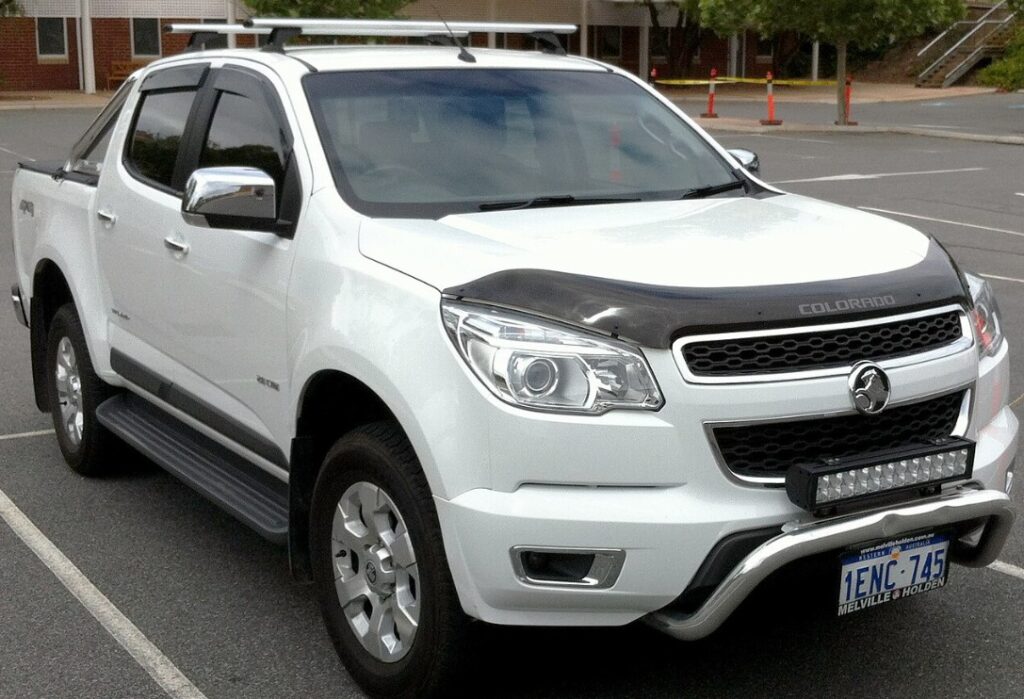
Choosing the right Holden Colorado wheel size sounds simple until we start looking at rim diameter, width, tyre profile, offset, bolt pattern, centre bore, load rating, and suspension clearance. Suddenly, buying a new set of wheels feels less like shopping for shoes and more like solving a mechanical puzzle.
Fortunately, the Colorado is one of those utes with plenty of wheel options. Factory configurations commonly span 16-inch, 17-inch, and 18-inch wheels, depending on model, trim, and year. For the MY17 RG Colorado, Holden's own owner's manual lists three factory wheel-and-tyre combinations: 16 × 6.5J with 245/70R16 tyres, 17 × 7.0J with 255/65R17 tyres, and 18 × 7.5J with 265/60R18 tyres.
But factory diameter is only one piece of the story.
If we're replacing damaged wheels, fitting tougher off-road tyres, changing the stance, or simply refreshing the look of an older Colorado, understanding the complete wheel specification is essential. A wheel that bolts onto the hub isn't necessarily a wheel that fits correctly.
So, let's break down Holden Colorado wheel sizes without drowning ourselves in technical jargon.
Content in this publication
- What Is the Standard Holden Colorado Wheel Size?
- Holden Colorado 16-Inch Wheel Size
- Holden Colorado 17-Inch Wheel Size
- Holden Colorado 18-Inch Wheel Size
- What Does Holden Colorado Wheel Size Actually Mean?
- Holden Colorado Bolt Pattern
- Holden Colorado Wheel Offset
- Holden Colorado Centre Bore
- Holden Colorado Wheel Size by Model Year
- Can We Put Bigger Wheels on a Holden Colorado?
- Can We Fit 20-Inch Wheels to a Holden Colorado?
- Best Holden Colorado Wheel Size for Off-Roading
- Best Holden Colorado Wheel Size for Highway Driving
- Best Holden Colorado Wheel Size for Towing
- Steel vs Alloy Wheels for the Holden Colorado
- Will Hilux Wheels Fit a Holden Colorado?
- Will D-Max Wheels Fit a Holden Colorado?
- How Wide Can Holden Colorado Wheels Be?
- Will Larger Wheels Affect Fuel Economy?
- Will Different Wheels Affect the Speedometer?
- Do Bigger Wheels Affect Ride Quality?
- How to Choose the Right Holden Colorado Wheel Size
- Factory Wheel Size vs Aftermarket Wheel Size
- Common Holden Colorado Wheel Fitment Mistakes
- What Wheel Size Gives the Colorado the Best Look?
- Is 17 or 18 Inches Better for a Holden Colorado?
- How Often Should Colorado Wheels Be Checked?
- Final Thoughts on Holden Colorado Wheel Size
- Frequently Asked Questions
What Is the Standard Holden Colorado Wheel Size?
There isn't one universal wheel size for every Holden Colorado.
Wheel dimensions depend on the generation, specification level, body configuration, and production year. On later RG models, particularly around the MY17 period, Holden officially documented the following combinations:
| Wheel Size | Factory Tyre Size |
|---|---|
| 16 × 6.5J | 245/70R16 |
| 17 × 7.0J | 255/65R17 |
| 18 × 7.5J | 265/60R18 |
These combinations come directly from Holden's MY17 Colorado owner's manual.
That's useful because it gives us a reliable factory baseline.
Think of those specifications as the ute's original shoe sizes. We can sometimes move up or down, but the replacement needs to remain compatible with the vehicle's geometry, brakes, tyres, suspension, and load requirements.
Independent wheel-fitment databases also show that the Colorado has appeared with different dimensions across various years and variants, so checking the exact year and model before ordering wheels remains important.
Holden Colorado 16-Inch Wheel Size
A 16-inch setup is one of the most practical configurations available for the Colorado.
The MY17 owner's manual specifies 16 × 6.5J wheels paired with 245/70R16 tyres on applicable vehicles.
Why might we deliberately choose 16s instead of bigger rims?
Because reducing rim diameter allows more tyre sidewall while keeping the overall tyre diameter reasonably close to stock. That extra sidewall can act like an additional cushion between the ute and rough surfaces.
Why 16-Inch Wheels Appeal to Off-Road Drivers
If our Colorado spends time on gravel roads, corrugated tracks, construction sites, farms, or bush trails, smaller wheels can make plenty of sense.
A taller tyre sidewall can generally provide:
- More cushioning over rough terrain
- Greater flexibility when tyre pressures are reduced appropriately
- Better protection for the rim against sharp impacts
- A broad selection of all-terrain and light-truck tyres
- A rugged appearance suited to a 4x4 ute
The disadvantage?
A 16-inch wheel usually doesn't produce the large-wheel visual impact some owners want. For off-road practicality, though, looks often become secondary.
Is 245/70R16 a Factory Colorado Tyre Size?
Yes, on the MY17 RG Colorado, 245/70R16 XL 111S appears in Holden's official technical data alongside a 16 × 6.5J wheel.
That doesn't mean every Colorado ever produced uses that combination, so we should still check the tyre placard for the individual vehicle.
Holden Colorado 17-Inch Wheel Size
For many owners, 17-inch wheels hit the sweet spot.
Holden lists a 17 × 7.0J wheel with 255/65R17 tyres for the MY17 Colorado.
Seventeen-inch rims sit comfortably between the chunky practicality of 16s and the more street-focused appearance of 18s.
We still get a decent tyre sidewall, but the wheel fills the arches more convincingly.
Why 17 Inches May Be the Best All-Round Choice
If we use the ute during the week, tow occasionally, head off-road on weekends, and still care about appearance, a well-chosen 17-inch package can offer an appealing balance.
There's another advantage: the aftermarket is full of 17-inch 4x4 wheels.
Australian wheel-fitment suppliers list numerous 17-inch aftermarket options for the Colorado, although appropriate offset, load rating, hub clearance, and tyre dimensions still have to be checked before installation.
In other words, 17s aren't magical—but they give us plenty of flexibility.
Holden Colorado 18-Inch Wheel Size
Want a sharper, more substantial road presence?
Eighteen-inch wheels are where the Colorado starts looking noticeably more dressed up.
For the MY17 model, Holden documents 18 × 7.5J wheels with 265/60R18 tyres.
Because the tyre sidewall becomes shorter relative to smaller-wheel combinations, the wheel itself becomes a stronger visual feature.
Are 18-Inch Colorado Wheels Good for Everyday Driving?
For predominantly sealed-road driving, 18-inch wheels can be an attractive choice.
They usually appeal to owners who prioritise:
- Factory premium styling
- Stronger visual wheel presence
- Responsive road feel
- Compatibility with factory-style 265/60R18 tyres
The trade-off is simple: less tyre sidewall means there's generally less rubber available to absorb sharp road impacts.
For city and highway use, that may not matter much. On broken tracks and heavily corrugated roads, we might prefer the forgiveness of a smaller rim.
What Does Holden Colorado Wheel Size Actually Mean?
Here's where many wheel guides become unnecessarily confusing.
Suppose we see:
17 × 7J
The first number—17—is the wheel diameter in inches.
The second number—7—is the approximate wheel width in inches.
The J refers to the bead-seat or rim-flange profile.
Now compare that with:
255/65R17
This is the tyre size.
It means approximately:
255 = tyre section width in millimetres
65 = sidewall height expressed as a percentage of width
R = radial tyre construction
17 = wheel diameter in inches
The final number must match the rim diameter. A 17-inch tyre goes on a 17-inch wheel.
Simple enough.
The complicated part begins when we change width, offset, or overall tyre diameter.
Holden Colorado Bolt Pattern
Wheel diameter doesn't determine whether a rim bolts onto the ute.
The bolt pattern, also called the PCD or pitch circle diameter, matters just as much.
For RG-generation Colorado applications, aftermarket fitment sources commonly list a 6 × 139.7 mm PCD.
That means:
6 = six wheel studs
139.7 = the diameter in millimetres of the imaginary circle formed by those mounting points
Can We Fit Any 6x139.7 Wheel?
No.
This is one of the biggest mistakes people make.
A wheel might have the same bolt pattern and still be unsuitable because of:
- Incorrect offset
- Wrong centre bore
- Insufficient brake clearance
- Excessive or insufficient width
- Inadequate load rating
- Tyre-to-suspension interference
- Tyre-to-body interference
Bolt pattern only tells us whether the holes are arranged correctly.
It's the front door key—not the whole house.
Holden Colorado Wheel Offset
Offset determines where the wheel sits relative to the hub.
A positive offset generally pulls the wheel further inward. A lower positive offset pushes it outward compared with a higher positive offset.
CSA's fitment guide lists an OE +33 mm offset for RG Colorado models from 2012 onward and specifically notes that the offset changed from that point.
That number shouldn't automatically be treated as correct for every wheel and every Colorado variant, but it gives us an important reference point for many RG applications.
Why Offset Matters More Than We Think
Imagine fitting a much wider wheel with a dramatically lower offset.
It may look fantastic parked outside the café.
Then we turn the steering wheel.
Now the tyre touches the guard liner.
Or the suspension.
Or it extends beyond the bodywork.
A few millimetres can make a surprising difference.
Does Lower Offset Make the Colorado Look Wider?
Usually, yes. Moving the wheel outward can create a broader, more aggressive stance.
But more isn't automatically better.
Changing wheel position also changes clearances and can alter the loads experienced by wheel bearings and suspension components. For that reason, we shouldn't choose offset purely on appearance.
Holden Colorado Centre Bore
The centre bore is the opening in the centre of the wheel that fits over the vehicle's hub.
Some aftermarket Holden Colorado fitment references list a centre bore around 100.3 mm for RG applications.
However, centre-bore compatibility deserves particular attention because wheel designs vary, and some Colorado model years have hub-related fitment quirks.
CSA notes, for example, that 2012–2015 Colorado models can have a large hub nose that creates compatibility issues with certain wheel and cap designs.
That's precisely why we shouldn't buy wheels based on diameter and PCD alone.
Holden Colorado Wheel Size by Model Year
Because the Colorado ran through multiple generations and specifications, wheel fitment needs to be treated year by year.
Later RG models commonly appear with 16-, 17-, and 18-inch factory-style packages, but dimensions can differ by specification. CarsGuide likewise reports multiple tyre and wheel combinations across Colorado variants rather than one universal setup.
Wheel-Size.com's year-specific database also shows changing specifications across different Colorado production years and variants.
Why the Tyre Placard Matters
Before buying replacement wheels, we should check the tyre and loading information label on the actual vehicle.
Holden's manual specifically states that this label shows the original equipment tyre size and correct cold inflation pressure.
The manual also warns that using different tyre or wheel sizes can affect ride, handling, speedometer accuracy, ground clearance, tyre clearance, and snow-chain clearance.
That's about as clear as the manufacturer can make it.
Can We Put Bigger Wheels on a Holden Colorado?
Yes, bigger wheels can often be fitted—but the real question isn't whether a larger rim physically bolts on.
The real question is:
Can we build a complete wheel-and-tyre package that fits safely and maintains suitable clearances and load capacity?
Suppose we move from a 17-inch wheel to an 18-inch wheel.
If we reduce tyre sidewall height appropriately, the overall rolling diameter can remain relatively close to the original.
That's called plus sizing.
What Happens If Overall Tyre Diameter Changes Too Much?
Large changes can influence several things.
Holden itself warns that different tyre and wheel sizing may affect speedometer accuracy, ride, handling, ground clearance, and tyre clearance.
A substantially taller tyre may also create physical interference during steering or suspension compression.
That's why tyre diameter matters more than wheel diameter alone.
Can We Fit 20-Inch Wheels to a Holden Colorado?
Aftermarket 20-inch packages exist for many 4x4 utes, and a Colorado can sometimes be configured to accept larger aftermarket rims depending on exact wheel width, offset, tyre selection, suspension setup, and brake clearance.
But should we?
That's a different conversation.
A 20-inch wheel often trades tyre sidewall for visual impact. Around town, that might suit some owners perfectly. Across corrugations, rocky tracks, and pothole-heavy roads, we'd usually want to think carefully about how much sidewall we're sacrificing.
For a working ute, bigger isn't automatically better.
Best Holden Colorado Wheel Size for Off-Roading
If we're building a Colorado for genuine off-road use, we'd generally prioritise tyre function over rim diameter.
That often pushes us toward 16- or 17-inch wheels where compatible.
Why?
Because off-road tyres benefit from useful sidewall depth.
More sidewall gives us more tyre between the wheel and whatever jagged piece of Australia the track throws at us.
16 vs 17-Inch Wheels Off-Road
Sixteen-inch wheels maximise sidewall for a given overall tyre diameter.
Seventeen-inch wheels provide slightly less sidewall but may give us a broader range of modern aftermarket designs and brake-clearance options.
Neither automatically wins.
The ideal setup depends on the exact Colorado, its brakes, suspension modifications, tyre size, intended terrain, and legal requirements.
Best Holden Colorado Wheel Size for Highway Driving
If the ute spends most of its life on sealed roads, 17- or 18-inch wheels make plenty of sense.
An 18-inch factory-style combination such as Holden's documented 265/60R18 setup gives the vehicle a fuller, more premium appearance without moving completely away from factory engineering.
Seventeen-inch wheels sit in the middle.
They provide enough sidewall for poor roads without looking undersized.
For many owners, that's why 17 inches feels like the Goldilocks option—not too small, not too large.
Best Holden Colorado Wheel Size for Towing
Towing isn't a fashion show.
When we're pulling substantial loads, wheel strength, tyre construction, tyre load index, inflation pressure, and vehicle axle limits matter more than whether the wheels fill the guards beautifully.
Holden instructs owners to use the specified tyre pressures and notes that when the vehicle is heavily loaded or towing, tyres should be inflated to the maximum recommended pressure indicated for the relevant configuration.
For the MY17 wheel sizes shown in the manual, the full-load pressures listed are 260 kPa/38 psi front and 300 kPa/44 psi rear, with the spare at 300 kPa/44 psi.
Always follow the information applicable to the exact vehicle, because pressures and specifications may differ by model.
Steel vs Alloy Wheels for the Holden Colorado
Once we know the correct size, we face another question.
Steel or alloy?
Steel Wheels
Steelies aren't subtle. They're the work boots of the wheel world.
They appeal to owners who value:
- Tough utilitarian styling
- Simplicity
- Off-road use
- Lower replacement cost in many cases
They're especially at home on work trucks and touring builds.
Alloy Wheels
Alloys tend to offer greater styling variety and can be lighter depending on design and construction.
For daily-driven Colorados, they're often the obvious aesthetic choice.
But quality matters.
The cheapest wheel in the right diameter isn't automatically the right wheel for a heavy ute.
Don't Forget Wheel Load Rating
A Colorado may haul equipment, carry payload, tow, or spend its life hammering corrugations.
A wheel designed only to look pretty isn't enough.
We need a suitable load rating for the vehicle and its intended use.
That's particularly important when shopping for aftermarket 4x4 wheels.
Will Hilux Wheels Fit a Holden Colorado?
This is a common question because many Australian 4x4s use six-stud patterns.
But identical PCD doesn't guarantee correct fitment.
Even where two wheels share a 6 × 139.7 pattern, their centre bore, offset, hub profile, wheel width, brake clearance, and mounting-seat design can differ.
So the safest answer is:
Never assume another ute's wheel is suitable simply because the studs line up.
Check all dimensions.
Will D-Max Wheels Fit a Holden Colorado?
Again, wheel interchange should be verified using exact specifications rather than vehicle reputation or visual similarity.
Even closely related vehicles can use wheel variations across model years.
We want confirmation of:
- PCD
- Centre bore
- Offset
- Width
- Brake clearance
- Load rating
- Wheel-nut seat design
If those specifications aren't verified, we're guessing.
How Wide Can Holden Colorado Wheels Be?
Aftermarket options extend beyond factory width.
Fitment suppliers list Colorado-compatible wheel designs with widths such as 8, 8.5, and 9 inches in some aftermarket applications.
But the existence of a wheel in a fitment catalogue doesn't mean every tyre combination will work on every suspension setup.
As wheels get wider, inner and outer clearance become increasingly important.
We need to consider the whole package.
Wheel Width and Offset Work Together
This deserves emphasis.
An 8-inch wheel with one offset can fit very differently from an 8-inch wheel with another.
Add a wider tyre and the story changes again.
Wheel fitment is three-dimensional.
Looking only at diameter is like choosing a refrigerator based only on height.
Will Larger Wheels Affect Fuel Economy?
They can.
The effect depends less on diameter alone and more on total rotating mass, tyre construction, tread pattern, tyre width, rolling resistance, and overall diameter.
A heavy set of aggressive mud tyres mounted on heavy wheels may feel very different from a lightweight factory package.
The engine has to accelerate that rotating mass every time we move away from a stop.
For owners who care about fuel use and highway performance, avoiding unnecessary wheel and tyre weight is worth considering.
Will Different Wheels Affect the Speedometer?
Changing wheel diameter alone doesn't necessarily alter speedometer accuracy if the tyre's outside diameter remains similar.
Changing overall tyre diameter does.
Holden specifically identifies speedometer accuracy as one of the characteristics that may be affected by changing tyre size or type.
If we fit significantly taller tyres, the vehicle travels farther with each revolution.
That can make the displayed speed differ from actual road speed.
Do Bigger Wheels Affect Ride Quality?
They can.
With the same overall tyre diameter, a larger rim usually requires a lower-profile tyre.
Less sidewall means less tyre available to absorb sharp impacts.
That's why a 16-inch off-road package can feel more forgiving over rough terrain than a large-diameter street setup.
Suspension condition and tyre pressure also play major roles, of course.
A good wheel choice doesn't compensate for worn shocks or badly inflated tyres.
How to Choose the Right Holden Colorado Wheel Size
Before ordering a shiny new set, we'd go through a simple checklist.
- Confirm the exact Colorado year and variant.
- Read the tyre placard on the vehicle.
- Identify the factory wheel and tyre size.
- Verify the PCD.
- Check centre bore and hub clearance.
- Confirm wheel offset.
- Choose an appropriate wheel width.
- Verify brake and suspension clearance.
- Check wheel and tyre load ratings.
- Confirm the tyre's overall diameter is appropriate.
- Ensure the package complies with local vehicle-modification rules.
- Have the wheels professionally fitted and checked if we're uncertain.
It's not glamorous.
But neither is hearing rubber scrape against the inner guard every time we enter a car park.
Factory Wheel Size vs Aftermarket Wheel Size
Factory wheels offer one major advantage: certainty.
Holden has already designed the original combinations around vehicle clearances, handling, brakes, suspension, steering, and load requirements.
Aftermarket wheels give us freedom.
We can change:
- Diameter
- Width
- Design
- Finish
- Stance
- Tyre type
- Off-road capability
That freedom is fantastic—but it also transfers more responsibility to us.
When Should We Stay With Factory Size?
Sticking close to factory dimensions makes particular sense when:
- We want uncomplicated replacement tyres
- The ute is primarily used for commuting
- We tow regularly
- We don't want clearance issues
- We value predictable handling
- We want minimal modification hassle
Factory isn't boring.
Sometimes factory is simply smart.
When Do Aftermarket Wheels Make Sense?
Aftermarket wheels become attractive when we're building the Colorado for a specific purpose.
Maybe we're preparing for remote touring.
Maybe we want tougher all-terrain rubber.
Maybe we simply hate the original wheels.
All perfectly reasonable.
The trick is modifying the package intelligently rather than chasing the most aggressive stance possible.
Common Holden Colorado Wheel Fitment Mistakes
Plenty of bad wheel choices start with good intentions.
The most common errors include buying based only on diameter, assuming every 6 × 139.7 wheel fits, ignoring offset, choosing tyres without calculating overall diameter, forgetting brake clearance, and failing to check wheel load rating.
Another common mistake is copying somebody else's setup.
Their Colorado might have a lift kit.
Or different suspension.
Or flares.
Or trimmed guards.
Or a different model year.
What fits their ute beautifully might rub on ours like a shopping trolley with a bent wheel.
What Wheel Size Gives the Colorado the Best Look?
Now we're entering subjective territory.
For a chunky touring build, 16- or 17-inch wheels with substantial all-terrain tyres can look purposeful.
For a clean road-going Colorado, 18s provide stronger visual presence while still having a genuine factory precedent on RG models.
Huge rims can attract attention, but there's a point where the tyre starts looking like a rubber band wrapped around a dinner plate.
Most Colorado owners probably don't need to go that far.
Is 17 or 18 Inches Better for a Holden Colorado?
If we prioritise comfort, rough-road ability, and tyre sidewall, 17 inches has a strong argument.
If we care more about factory-premium styling and sealed-road use, 18 inches may suit us better.
Holden itself offered both 17 × 7.0J and 18 × 7.5J configurations with corresponding tyre sizes on the MY17 Colorado, showing that both dimensions can work properly when configured as part of the intended package.
That's the key phrase:
as part of the intended package.
Wheel and tyre dimensions belong together.
How Often Should Colorado Wheels Be Checked?
Whenever tyres are serviced or rotated, it's sensible to inspect the wheels for bends, cracks, unusual corrosion, loose or damaged hardware, and abnormal tyre wear.
After hard off-road driving, a quick visual inspection is especially worthwhile.
If we hit a pothole hard enough to make us wince, checking the wheel and tyre isn't overreacting.
It's cheaper than discovering damage at highway speed.
Final Thoughts on Holden Colorado Wheel Size
The best Holden Colorado wheel size isn't simply the largest wheel we can squeeze under the guards.
It's the wheel that suits how we actually use the ute.
For later RG models such as the MY17 Colorado, Holden officially documented factory combinations ranging from 16 × 6.5J with 245/70R16 tyres, through 17 × 7.0J with 255/65R17, to 18 × 7.5J with 265/60R18.
Those sizes give us an excellent baseline.
If we're heading off-road, smaller wheels and more tyre sidewall often make practical sense. If the Colorado spends its life on the highway, 17- or 18-inch wheels may strike a better visual and driving balance.
But diameter is only the beginning.
PCD, offset, centre bore, width, tyre diameter, brake clearance, load rating, and local regulations all matter.
Choose the whole setup—not just the wheel.
Get that right, and the Colorado won't merely look better. It'll drive like the wheel package actually belongs there.
Frequently Asked Questions
1. What is the standard Holden Colorado wheel size?
The answer varies by model and year. As one factory reference, Holden's MY17 Colorado manual lists 16 × 6.5J, 17 × 7.0J, and 18 × 7.5J wheels depending on the tyre package and vehicle specification.
2. What is the Holden Colorado bolt pattern?
RG-generation Colorado fitment references commonly specify a 6 × 139.7 mm bolt pattern, although we should always confirm the exact vehicle and wheel before purchasing.
3. Can I put 18-inch wheels on a Holden Colorado?
Certain Colorado variants came with 18-inch wheels from the factory. Holden's MY17 technical data, for example, lists an 18 × 7.5J wheel with a 265/60R18 tyre. If converting another variant to 18s, verify offset, width, tyre diameter, load rating, and clearances.
4. Are 16-inch or 17-inch wheels better for off-roading?
Both can work well. Sixteen-inch wheels generally allow more tyre sidewall for a similar overall diameter, while 17-inch wheels offer a good compromise between sidewall, brake clearance, appearance, and aftermarket availability. The best choice depends on the exact vehicle and terrain.
5. Can changing Holden Colorado wheel size affect the speedometer?
Yes, particularly if the replacement tyre changes the overall rolling diameter significantly. Holden specifically warns that changing tyre size or type can affect speedometer accuracy as well as ride, handling, ground clearance, and tyre clearance.
If you want to know other articles similar to Holden Colorado Wheel Size: Complete Fitment and Upgrade Guide you can visit the category Service and Parts.
Nissan Qashqai Fuel Tank Capacity: Complete Guide

Suzuki Swift Fuel Tank Capacity: Complete Guide
Mazda CX-5 Weight (2013–2026): Complete Guide in Pounds and KG
Kia Sportage Dashboard Symbols and Warning Lights

MINI Cooper Weight (2002–2027): Complete Weight Chart & Guide
Toyota RAV4 Engine Sizes: Complete Guide (1994–2026)
Leave a Reply
More content of your interest