

Hyundai Santa Fe vs Toyota Highlander: Which Three-Row SUV Is Better?

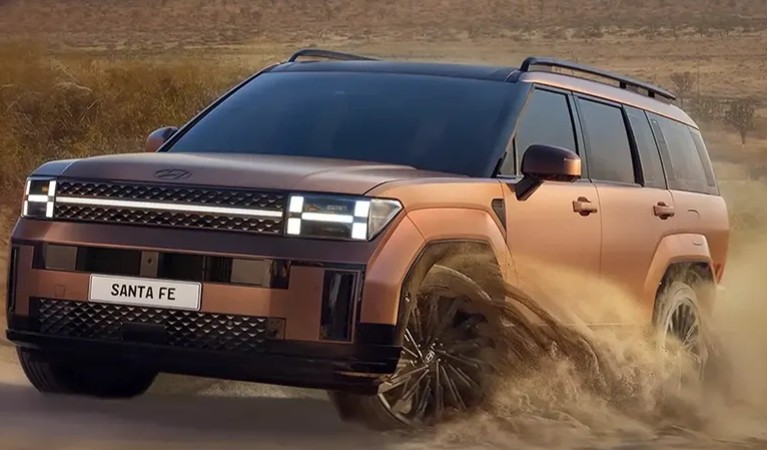
Choosing between the Hyundai Santa Fe and Toyota Highlander sounds simple until we actually start comparing them. Both are family-oriented three-row SUVs, both offer gasoline and hybrid powertrains, and both come from brands with strong reputations. Yet they approach the same mission from noticeably different directions.
The Hyundai Santa Fe feels like the adventurous newcomer that has suddenly decided it wants to challenge the established order. Its boxy styling, spacious-feeling cabin, technology-heavy interior, and competitive hybrid drivetrain give it plenty of personality.
The Toyota Highlander takes the opposite approach. It is the seasoned veteran. Rather than reinventing itself every few years, it largely sticks to a formula that has worked for generations: comfortable road manners, practical packaging, available hybrid efficiency, useful towing ability, and the reassuring Toyota badge.
So, Hyundai Santa Fe vs Toyota Highlander: which should we buy?
For many buyers, the Santa Fe offers more excitement and value. For others, the Highlander's mature personality, cargo capacity, stronger towing credentials, and long-established reputation may justify choosing Toyota.
Let's dig into the differences.
Content in this publication
- Hyundai Santa Fe vs Toyota Highlander at a Glance
- Exterior Design: Bold Santa Fe or Conservative Highlander?
- Dimensions and Everyday Maneuverability
- Interior Design: Santa Fe Takes a More Modern Approach
- Seating: Which SUV Is Better for Families?
- Cargo Space: Highlander Has an Important Advantage
- Performance: Santa Fe Has More Gasoline Horsepower
- Ride Comfort and Road Manners
- Hyundai Santa Fe Hybrid vs Toyota Highlander Hybrid
- Fuel Economy: Hybrid Buyers Are the Real Winners
- Towing Capacity: Toyota Takes the Lead
- All-Wheel Drive and Bad-Weather Driving
- Off-Road Capability: Neither Is a Land Cruiser
- Technology and Infotainment
- Safety and Driver Assistance
- Reliability: Toyota's Reputation Is Hard to Ignore
- Warranty: Hyundai Has an Important Selling Point
- Value for Money: Santa Fe Makes a Strong Case
- Hyundai Santa Fe vs Toyota Highlander for Road Trips
- Which Is Better for a Family With Three Kids?
- Which One Is Better for Couples Without Kids?
- Which SUV Is Easier to Live With Every Day?
- Hyundai Santa Fe vs Toyota Highlander: Pros and Cons
- Who Should Buy the Hyundai Santa Fe?
- Who Should Buy the Toyota Highlander?
- Santa Fe vs Highlander: Which Is Better Used?
- Hyundai Santa Fe vs Toyota Highlander: Our Verdict
- Frequently Asked Questions
- 1. Is the Hyundai Santa Fe Better Than the Toyota Highlander?
- 2. Which Is Bigger, Hyundai Santa Fe or Toyota Highlander?
- 3. Which Is More Fuel Efficient, Santa Fe Hybrid or Highlander Hybrid?
- 4. Which Can Tow More, Santa Fe or Highlander?
- 5. Is the Santa Fe or Highlander Better for Seven Passengers?
- Conclusion
Hyundai Santa Fe vs Toyota Highlander at a Glance
Looking at the current 2026 U.S.-market models, the gasoline Santa Fe uses a 2.5-liter turbocharged four-cylinder producing 277 horsepower and 311 lb-ft of torque. Hyundai also offers a Santa Fe Hybrid pairing a turbocharged 1.6-liter engine with an electric motor for 231 combined horsepower.
The 2026 Highlander counters with a 2.4-liter turbocharged four-cylinder producing 265 horsepower and 310 lb-ft of torque, while the Highlander Hybrid can achieve up to an EPA-estimated 35 mpg combined, depending on configuration. For 2026, Toyota also makes all-wheel drive standard on gasoline Highlander models in the U.S.
Our quick interpretation looks like this:
- Choose the Santa Fe if distinctive styling, modern technology, cabin design and value matter most.
- Choose the Highlander if towing capacity, maximum cargo room and Toyota's established family-SUV formula matter more.
- Choose the Santa Fe Hybrid if you want strong efficiency without making the SUV feel particularly old-fashioned or conservative.
- Choose the Highlander Hybrid if fuel economy is near the top of the shopping list and you prefer Toyota's approach.
- Test the third rows before buying either one if adults regularly need to sit there.
There is no knockout punch here. It is more like two good restaurants serving the same dish with completely different seasoning.
Exterior Design: Bold Santa Fe or Conservative Highlander?
Few differences are more obvious than styling.
The current Santa Fe abandoned the softer curves traditionally associated with family crossovers and adopted an upright, almost geometric silhouette. The squared roofline, broad tailgate and strong horizontal lines make it look more rugged than many crossovers.
It almost resembles an outdoor gear box with wheels—and we mean that positively.
The Highlander remains much more conventional. Toyota uses sculpted bodywork, sweeping character lines and a familiar crossover shape. It looks polished without trying particularly hard to shock anyone.
Why the Santa Fe Stands Out
Park the Santa Fe in a supermarket parking lot and we probably won't confuse it with five neighboring SUVs.
That visual identity is increasingly valuable in a market where three-row crossovers can look as though somebody copied and pasted the same silhouette repeatedly.
However, design is subjective. Some drivers love the Santa Fe's squared-off rear. Others may find it too unconventional.
Why the Highlander Plays It Safe
Toyota understands Highlander customers.
A Highlander doesn't need to look like an expedition vehicle or futuristic concept. It needs to age gracefully.
The Toyota's restrained styling could therefore be an advantage for buyers planning to keep their SUV for eight, ten or even fifteen years.
Which Design Will Age Better?
This is impossible to know with certainty.
We suspect the Highlander's conservative design will offend fewer people over the years, while the Santa Fe will continue attracting buyers who prefer something distinctive.
If we want personality, Hyundai wins.
If we want familiarity, Toyota does.
Dimensions and Everyday Maneuverability
These SUVs occupy similar territory, but they aren't identical.
The 2026 Santa Fe measures roughly 190.2 inches long with a 110.8-inch wheelbase.
That puts it squarely in the three-row family-SUV category without making it enormous.
The Highlander is also firmly positioned as a midsize three-row SUV. Toyota's packaging gives it plenty of family usefulness while remaining easier to live with than the even larger Toyota Grand Highlander.
This distinction matters.
Buyers sometimes assume that bigger is automatically better. Then they try parking the thing downtown.
Neither vehicle feels like a compact SUV, but neither reaches the land-yacht proportions of the largest three-row models either.
Interior Design: Santa Fe Takes a More Modern Approach
Open the Santa Fe's doors and Hyundai's strategy becomes clearer.
The cabin tries hard to feel more expensive than the badge might suggest. Broad screens, horizontal lines, clever storage spaces and a relatively minimalist dashboard give it the appearance of something from a more premium class.
The Highlander interior is more traditional.
Toyota prioritizes usability over theatrical presentation. Buttons tend to be logically located, major controls are straightforward, and the overall design feels familiar within minutes.
Santa Fe Interior Advantages
The Hyundai feels especially strong when we judge a vehicle by first impressions.
Its dashboard design looks fresh, the boxier body contributes to the impression of openness, and Hyundai has become very good at giving mainstream vehicles surprisingly upscale interiors.
Families also tend to accumulate objects at an alarming rate.
Phones. Cables. Water bottles. Toys. Sunglasses. Snacks. Receipts we swear we will throw away tomorrow.
The Santa Fe's cabin philosophy accommodates that reality well.
Highlander Interior Advantages
The Highlander answers with simplicity.
That might sound boring until we actually live with a car.
A control that can be understood instantly often becomes more valuable than something flashy after the novelty disappears. Toyota's cabin therefore suits drivers who care less about impressing passengers and more about intuitive everyday use.
Seating: Which SUV Is Better for Families?
Both SUVs can accommodate three rows, but we should treat that phrase carefully.
"Three-row SUV" does not automatically mean "comfortable seven-adult transportation machine."
The third row in midsize crossovers is usually best suited to children, teenagers or adults on shorter trips.
First-Row Comfort
Both vehicles perform well up front.
The Santa Fe's upright shape creates an airy feeling, and its dashboard architecture reinforces the impression that we have plenty of room.
The Highlander feels comfortable and natural, with the kind of seating position buyers expect from an established family crossover.
Neither vehicle gives us an obvious reason to complain.
Second-Row Comfort
This is where family buyers should spend serious time during a test drive.
Depending on trim and configuration, seating arrangements may vary, but both SUVs can provide a comfortable second row.
If we frequently transport children in car seats, we should physically install those seats before purchasing. Brochure measurements never tell the whole story.
Third-Row Reality
Toyota's own Highlander remains a midsize model rather than the larger Grand Highlander, and independent testing commonly characterizes its third row as better suited to smaller passengers.
The Santa Fe's squared body gives it an appealing sense of space, but buyers expecting minivan-level third-row accommodations should still temper expectations.
For occasional use? Fine.
For three children? Potentially very practical.
For six-foot adults every day? We would shop one size larger.
Cargo Space: Highlander Has an Important Advantage
Cargo capacity can transform an SUV from "nice" into genuinely useful.
The 2026 Highlander offers about 16 cubic feet behind all three rows and up to 84.3 cubic feet with rear seating folded, according to published specifications.
Those numbers make the Toyota impressively versatile.
The Santa Fe's boxier silhouette is also highly practical. Its broad rear opening and squared cargo area make loading bulky objects easier than the exterior footprint might suggest.
Which One Feels More Practical?
Pure maximum cargo volume favors the Highlander.
But usability isn't just about winning a cubic-foot contest.
A squared cargo opening can sometimes matter more than a few theoretical extra liters of capacity. Strollers, suitcases, camping equipment and flat-pack furniture rarely arrive shaped like neat laboratory cubes.
That gives the Santa Fe a practical character even where Toyota may hold the numerical advantage.
Performance: Santa Fe Has More Gasoline Horsepower
The gasoline Santa Fe produces 277 horsepower and 311 lb-ft, while the gasoline Highlander delivers 265 horsepower and 310 lb-ft.
Notice something interesting?
Their torque figures are essentially identical.
That means the difference in everyday driving is much smaller than simply looking at horsepower numbers might suggest.
How the Santa Fe Feels
The Santa Fe's turbocharged 2.5-liter engine supplies healthy midrange power.
With 277 horsepower available, it has enough muscle for highway merging, family road trips and ordinary overtaking without feeling dramatically underpowered.
Its character suits the styling: strong rather than sporty.
How the Highlander Feels
Toyota's 265-horsepower turbo engine provides adequate power for the Highlander's mission.
Toyota clearly isn't trying to transform this SUV into a sports car.
And perhaps that is the point.
Most Highlander buyers care considerably more about smooth family transportation than attacking mountain roads as though they accidentally entered a rally stage.
Which Is Faster?
The Santa Fe holds the paper horsepower advantage.
But we wouldn't select between these SUVs based purely on acceleration.
Both are quick enough for their intended role, and neither is designed primarily around performance.
Ride Comfort and Road Manners
This category matters more than horsepower for most families.
If we're driving 15,000 miles per year, the way an SUV handles rough pavement, highway expansion joints and city potholes will influence ownership satisfaction far more frequently than its 0–60 mph time.
The Santa Fe's suspension is tuned toward comfort, with independent testing noting that the ride generally absorbs road imperfections well.
The Highlander follows a similarly family-friendly formula.
You may be interested in reading Hyundai Santa Fe vs Toyota RAV4: Which SUV Is Better?
Santa Fe Driving Personality
Hyundai has struck a sensible balance.
The steering doesn't pretend this is a sports SUV, and the suspension emphasizes isolation rather than aggression.
We think that suits the vehicle perfectly.
Highlander Driving Personality
The Highlander feels mature.
That's perhaps the simplest way to describe it.
Responses tend to be predictable, the powertrain is designed around everyday usability, and nothing about the experience demands much adaptation from the driver.
For a family vehicle, boring can occasionally be a compliment.
Hyundai Santa Fe Hybrid vs Toyota Highlander Hybrid
Now things get particularly interesting.
Hybrid powertrains aren't side attractions anymore. For family SUVs, they can be among the most appealing versions available.
The 2026 Santa Fe Hybrid combines a turbocharged 1.6-liter four-cylinder engine with electric assistance for 231 combined horsepower and 271 lb-ft of torque. EPA figures for a front-wheel-drive version reach approximately 35 mpg city, 34 highway and 34 combined.
Toyota says the 2026 Highlander Hybrid can achieve up to 35 mpg combined.
That makes this an unusually close efficiency battle.
Santa Fe Hybrid Strengths
Hyundai's hybrid makes sense for drivers who spend plenty of time in traffic.
Electric assistance reduces fuel consumption while maintaining the Santa Fe's attractive cabin and distinctive styling.
We also like that Hyundai pairs its hybrid system with a conventional six-speed automatic rather than chasing an artificially sporty personality.
Highlander Hybrid Strengths
Toyota has been building hybrids for decades, and buyers familiar with models such as the Prius, Camry Hybrid and RAV4 Hybrid may naturally feel comfortable choosing another Toyota hybrid.
The Highlander Hybrid combines the brand's established electrification experience with the practical three-row format that made the Highlander popular in the first place.
Which Hybrid Would We Choose?
This one is incredibly close.
For cabin design and overall freshness, Santa Fe Hybrid.
For buyers drawn toward Toyota's long history with hybrid technology, Highlander Hybrid.
Efficiency alone does not separate them dramatically.
Fuel Economy: Hybrid Buyers Are the Real Winners
Gasoline models remain perfectly reasonable, but buyers covering lots of urban miles should seriously calculate the long-term fuel savings of the hybrids.
Toyota estimates the gasoline 2026 Highlander at around 24 mpg combined, while its hybrid can reach 35 mpg combined.
Hyundai's Santa Fe Hybrid reaches approximately 34 mpg combined in front-wheel-drive form.
That difference adds up.
Imagine fuel economy as a small hole in a bucket. One gallon doesn't seem important. Hundreds of gallons across years of ownership certainly do.
Drivers covering large annual mileages should therefore calculate total fuel cost instead of focusing exclusively on purchase price.
Towing Capacity: Toyota Takes the Lead
This may be one of the clearest reasons to choose the Highlander.
Properly configured versions of the 2026 Highlander can tow up to 5,000 pounds.
That gives Toyota meaningful capability for small travel trailers, boats and utility trailers.
The Santa Fe can tow, too, with capacities depending on configuration, but buyers regularly hauling heavier loads should pay particular attention to the Highlander.
Who Actually Needs 5,000 Pounds of Towing?
Probably fewer people than advertisements suggest.
If our towing consists of occasionally carrying bicycles on a hitch rack, the difference means very little.
If we own a camper, boat or loaded trailer, it could decide the comparison immediately.
Always check the specific trim, drivetrain, trailer equipment and manufacturer's towing requirements before buying.
All-Wheel Drive and Bad-Weather Driving
The 2026 gasoline Highlander makes AWD standard in the U.S., strengthening Toyota's appeal for buyers living in snowy or wet climates.
Santa Fe availability varies by configuration, with front-wheel drive and all-wheel drive offered across the broader range.
That gives Hyundai buyers more choice.
Do we actually need AWD?
If we live somewhere warm and flat, probably not.
If we regularly encounter snow, steep roads, muddy campsites or slippery conditions, it becomes considerably more valuable.
Just remember that AWD helps a vehicle accelerate on slippery surfaces. Good tires still matter enormously for stopping and turning.
Off-Road Capability: Neither Is a Land Cruiser
The Santa Fe's rugged-looking body may whisper "mountain expedition" every time we walk toward it.
Reality is more nuanced.
These are road-focused crossovers rather than serious body-on-frame off-roaders.
The Santa Fe offers around 7 inches of minimum ground clearance on standard configurations, with specifications varying by version.
The Highlander provides around 8 inches of ground clearance in published 2026 specifications.
For gravel roads, snowy driveways, campsites and mild trails, either should be useful when properly equipped.
For rock crawling?
Wrong aisle of the dealership.
Technology and Infotainment
This is one area where Hyundai's aggressive product strategy becomes obvious.
Modern Hyundai cabins often make technology a centerpiece rather than an afterthought. Large displays, smartphone integration and digital interfaces give the Santa Fe a contemporary atmosphere.
Toyota has steadily modernized the Highlander as well, and current models offer the connectivity most buyers expect.
Santa Fe Feels More Futuristic
If dashboard appearance matters to us, Hyundai probably wins.
The wide-screen presentation fits the Santa Fe's squared exterior and gives the vehicle a cohesive visual identity.
It feels like designers started with a blank sheet of paper.
Highlander Keeps Things Familiar
Toyota doesn't need to win a screen-size arms race.
The Highlander's technology works within a more conventional interior environment, which some drivers will actually prefer.
The question isn't simply "Which has more technology?"
It is "Which technology will annoy us less after three years?"
That's worth exploring during the test drive.
Safety and Driver Assistance
Both manufacturers equip their family SUVs with extensive modern driver-assistance technology.
Hyundai offers systems including forward collision avoidance and navigation-based smart cruise control on relevant Santa Fe configurations.
Toyota equips Highlander models with its Toyota Safety Sense suite, although exact features should always be verified by trim and model year.
The important point is that neither SUV belongs to an era where advanced safety features were reserved exclusively for luxury vehicles.
Don't Choose Based Only on the Longest Feature List
Driver-assistance technology should assist us, not become another distraction.
During a test drive, pay attention to how naturally adaptive cruise control behaves, whether lane assistance feels intrusive, how clear the blind-spot warnings are and how easily safety settings can be adjusted.
Two systems with similar brochures can feel surprisingly different from behind the wheel.
Reliability: Toyota's Reputation Is Hard to Ignore
This is where Highlander shoppers often become particularly confident.
Toyota has spent decades building a reputation around durable mainstream vehicles, and the Highlander name has existed long enough to establish itself as a familiar choice in the used market.
Hyundai has improved enormously over the years and backs its U.S. vehicles with competitive warranty coverage. For example, Hyundai states that the Santa Fe Hybrid's high-voltage battery carries a 10-year/100,000-mile limited warranty for eligible U.S. vehicles, subject to its warranty terms.
Still, reliability isn't determined by a logo alone.
Model year, drivetrain, maintenance history and individual vehicle condition matter tremendously.
Which One Would We Keep for 10 Years?
For buyers whose primary psychological comfort comes from long-term brand reputation, the Highlander will probably feel safer.
For those willing to trade some of that historical reassurance for Hyundai's newer design, features and warranty proposition, the Santa Fe becomes extremely compelling.
Warranty: Hyundai Has an Important Selling Point
Hyundai has long used warranty coverage as part of its value strategy.
That matters because warranties change the economics of ownership during the early years.
A buyer planning to keep the SUV for five to eight years may therefore evaluate the Santa Fe differently from someone purchasing a three-year lease.
Toyota's strongest ownership argument usually isn't an unusually long headline warranty. Instead, buyers often select Toyota because of confidence in the brand's durability, resale demand and dealer network.
In other words, Hyundai sells reassurance partly through coverage.
Toyota sells reassurance partly through reputation.
Value for Money: Santa Fe Makes a Strong Case
Value is not synonymous with cheap.
A cheap vehicle can be terrible value.
A more expensive vehicle can be excellent value if it gives us more of what we actually use.
You may be interested in readingHyundai Santa Fe vs Toyota RAV4: Which SUV Is Better?You may be interested in reading
Hyundai Santa Fe vs Nissan Rogue: Which SUV Should You Buy?The Santa Fe frequently feels as though Hyundai has squeezed features from the class above into a mainstream SUV.
Its interior presentation is particularly effective at creating that impression.
The Highlander's value proposition is less flashy.
Toyota's argument revolves around practicality, established demand, capability and the confidence many owners associate with the badge.
Which Gives Us More for the Money?
If we're comparing equipment and cabin ambience, we lean Santa Fe.
If we're considering long-term ownership confidence and potential resale strength as equally important forms of value, Highlander becomes much harder to dismiss.
Hyundai Santa Fe vs Toyota Highlander for Road Trips
Imagine the family vacation.
Four people. Seven suitcases. Snacks everywhere. Someone asks, "Are we there yet?" before we've left the neighborhood.
Which SUV would we rather have?
The answer depends on priorities.
The Santa Fe gives us a pleasant, modern place to spend hours and offers impressive hybrid economy.
The Highlander adds generous maximum cargo capacity and an easygoing driving personality that feels tailor-made for interstate travel.
For Long-Distance Families
We would prioritize three things: seat comfort, cargo configuration and fuel consumption.
On those measures, both SUVs perform well.
The Highlander might appeal more strongly if we're carrying lots of luggage.
The Santa Fe might win us over if technology and interior atmosphere make long journeys feel less tedious.
Which Is Better for a Family With Three Kids?
This is where spreadsheets stop being enough.
Three children means car seats, school bags, sports equipment and inevitable arguments about who sits where.
Both SUVs can work.
The Santa Fe's practical shape and modern interior make it particularly attractive for younger families.
The Highlander's cargo capability and established three-row layout are equally compelling.
Before choosing, bring the children.
Seriously.
A 15-minute dealership experiment can reveal more than two hours of online research.
Install the car seats. Fold the third row. Load the stroller. See whether a child can climb into the back without requiring gymnastics worthy of the Olympics.
Which One Is Better for Couples Without Kids?
Now the equation changes completely.
If we're buying a three-row SUV mostly because we appreciate space rather than because we need seven seats, the Santa Fe becomes especially interesting.
Fold the rear seats and its boxy design effectively turns it into a large lifestyle wagon.
Camping equipment, bicycles, luggage and home-improvement purchases fit naturally into its personality.
The Highlander remains excellent, but its family-first identity feels stronger.
For adventurous couples who simply want lots of usable space, we would lean Hyundai.
Which SUV Is Easier to Live With Every Day?
The winner here depends on what irritates us.
If bland design irritates us, buy the Santa Fe.
If unfamiliar controls irritate us, the Highlander may feel more natural.
If fuel stops irritate us, compare the hybrids.
If towing limitations irritate us, Highlander.
If paying extra for luxury-style presentation irritates us, Santa Fe.
That's the beauty of this comparison.
Neither vehicle dominates every category, which means our priorities actually matter.
Hyundai Santa Fe vs Toyota Highlander: Pros and Cons
The Santa Fe's biggest strengths are its distinctive design, sophisticated-looking cabin, strong gasoline output, efficient hybrid option and overall sense of value. Its weaknesses are that the styling may be polarizing, its third row still doesn't replace a genuinely large SUV, and heavier towing needs may push buyers toward Toyota.
The Highlander's strengths include excellent cargo versatility, up to 5,000 pounds of towing capacity, available hybrid efficiency, standard AWD on 2026 gasoline U.S. models and Toyota's established reputation. Its downsides are a third row better suited to occasional use, less adventurous interior and exterior design, and a driving experience that prioritizes competence over excitement.
Who Should Buy the Hyundai Santa Fe?
Buy the Santa Fe if we want our practical family SUV to have some personality.
It makes particular sense for buyers who prioritize interior design, technology, efficient hybrid driving and a distinctive exterior.
We would also recommend putting it high on the shortlist for drivers who previously thought they needed a luxury SUV.
No, a Santa Fe isn't secretly a Range Rover.
But the gap in perceived cabin quality between mainstream and premium brands has become surprisingly narrow in certain areas.
Hyundai understands that.
Who Should Buy the Toyota Highlander?
The Highlander is the stronger choice for buyers who want predictability.
That sounds unromantic.
But when we're spending tens of thousands of dollars on a vehicle expected to transport our family for years, predictability can be beautiful.
It also deserves serious consideration for buyers who need the Toyota's 5,000-pound maximum towing capacity or appreciate its generous maximum cargo volume.
The Highlander doesn't desperately try to impress us.
It simply tries to work.
There is something appealing about that.
Santa Fe vs Highlander: Which Is Better Used?
Used shoppers need to approach this comparison differently.
Instead of asking only which model is theoretically better, ask which individual vehicle has been better cared for.
A perfectly maintained Santa Fe may be a smarter purchase than an abused Highlander, and vice versa.
Maintenance documentation becomes extremely important.
Hybrid shoppers should also verify warranty status, battery coverage, accident history and whether all manufacturer recalls or service campaigns have been addressed.
Toyota may command higher used prices partly because of its reputation and market demand.
That can be both an advantage and disadvantage.
We may pay more when buying—but potentially recover more when selling.
Hyundai Santa Fe vs Toyota Highlander: Our Verdict
The Hyundai Santa Fe vs Toyota Highlander comparison doesn't produce a universal winner.
But it does produce two very different recommendations.
The Hyundai Santa Fe is our pick for buyers prioritizing design, technology and value. It feels fresher, its 277-horsepower gasoline engine is strong, and the hybrid delivers impressive efficiency while retaining the Santa Fe's modern character.
The Toyota Highlander is our pick for buyers prioritizing towing, maximum cargo capacity and a more established ownership proposition. Its available hybrid reaches up to an estimated 35 mpg combined, while properly equipped models can tow as much as 5,000 pounds.
Think of them like two houses.
The Santa Fe is the newly renovated loft with clever storage, bold architecture and the latest appliances.
The Highlander is the well-built suburban home on a street where everything simply works.
Which one sounds more like us?
For shoppers who want the SUV that feels newest, we'd start with the Santa Fe.
For those who want the SUV that feels proven, we'd start with the Highlander.
Either way, test-drive both before signing anything. These vehicles are close enough on paper that seating comfort, driving feel and everyday usability can easily matter more than a specification-sheet victory.
Frequently Asked Questions
1. Is the Hyundai Santa Fe Better Than the Toyota Highlander?
The Santa Fe can be better for buyers prioritizing modern cabin design, strong value and distinctive styling. The Highlander may be better for drivers who prioritize towing capability, maximum cargo room and Toyota's long-established family-SUV reputation. Neither is universally superior.
2. Which Is Bigger, Hyundai Santa Fe or Toyota Highlander?
Both belong to the midsize three-row SUV category, though their proportions and interior packaging differ. The Santa Fe measures about 190.2 inches long for 2026, while the Highlander's cargo packaging allows up to roughly 84.3 cubic feet of maximum cargo volume.
3. Which Is More Fuel Efficient, Santa Fe Hybrid or Highlander Hybrid?
They are very close. A 2026 front-wheel-drive Santa Fe Hybrid is rated around 34 mpg combined, while Toyota says the 2026 Highlander Hybrid can reach up to 35 mpg combined. Exact results depend on drivetrain and configuration.
4. Which Can Tow More, Santa Fe or Highlander?
The Highlander is especially attractive for towing. Properly configured 2026 Highlander models can tow up to 5,000 pounds. Buyers planning to tow frequently should compare the exact ratings and equipment of the specific Santa Fe and Highlander trims they are considering.
5. Is the Santa Fe or Highlander Better for Seven Passengers?
Both offer three-row configurations, but neither should automatically be treated like a full-size seven-passenger SUV. The third row is best evaluated in person, particularly if adults will regularly use it. If maximum third-row space is essential, larger alternatives such as the Toyota Grand Highlander, Hyundai Palisade or similar full-size three-row crossovers may be worth considering.
Conclusion
Choosing between the Hyundai Santa Fe and Toyota Highlander comes down to the kind of ownership experience we want.
The Santa Fe represents the more adventurous option. It looks unusual, feels impressively modern inside and offers competitive gasoline and hybrid powertrains.
The Highlander represents the safer traditional choice. It offers substantial cargo flexibility, meaningful towing capability and the calm, practical personality that has made the nameplate successful for years.
If our heart wins the argument, we may drive home in the Santa Fe.
If our spreadsheet wins, the Highlander may end up in the driveway.
And perhaps that's the clearest distinction of all.
You may be interested in readingHyundai Santa Fe vs Toyota RAV4: Which SUV Is Better?You may be interested in reading
Hyundai Santa Fe vs Nissan Rogue: Which SUV Should You Buy?You may be interested in reading
Hyundai Santa Fe vs Kia Sportage: Which SUV Is Better?If you want to know other articles similar to Hyundai Santa Fe vs Toyota Highlander: Which Three-Row SUV Is Better? you can visit the category Models.
Kia Sorento Models: Complete Guide to Trims, Engines and Versions
BYD Shark 6 vs Ranger vs HiLux: Which Ute Makes the Most Sense in 2026?
BYD Shark 6 vs MG U9: Which Ute Makes More Sense in 2026?
BYD Shark 6 vs Ford Ranger Raptor: Which Performance Ute Is Better in 2026?
BYD Shark 6 vs Kia Tasman: Which Ute Is Better?
BYD Shark 6 vs 7: What We Know So Far
Leave a Reply
More content of your interest