

Hyundai Santa Fe or Kia Sorento: Which SUV Should You Buy?

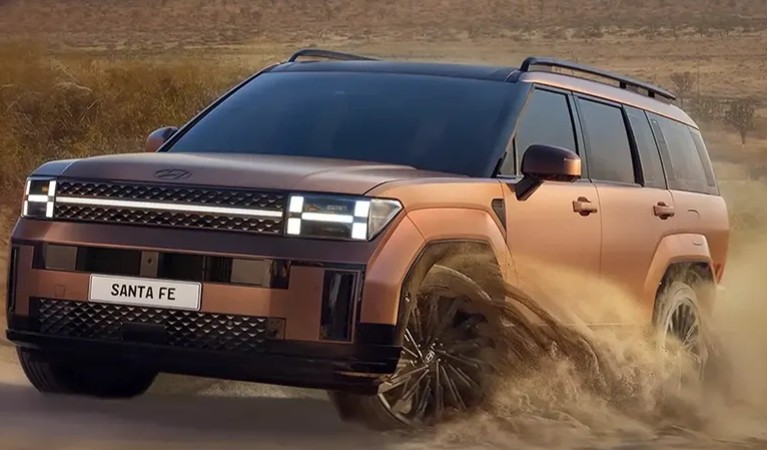
Choosing between the Hyundai Santa Fe or Kia Sorento can feel a little like choosing between two siblings who grew up in the same house but developed very different personalities. They share plenty of underlying philosophy, offer similar family-friendly features, and compete for largely the same buyers. Yet once we spend some time with what each SUV actually offers, the differences become surprisingly meaningful.
The Santa Fe tends to lean toward spaciousness, comfort, and a bold, almost adventure-ready personality. The Sorento takes a slightly different route. It feels more streamlined, versatile, and balanced between city life and family duty.
So, which one deserves our money?
There isn't a universal winner. What matters is whether we prioritize passenger space, styling, driving feel, fuel economy, third-row practicality, technology, or value.
In this Hyundai Santa Fe vs Kia Sorento comparison, we'll break the decision down piece by piece so we can determine which SUV makes the most sense for different types of drivers.
Content in this publication
- Hyundai Santa Fe vs Kia Sorento at a Glance
- Is the Hyundai Santa Fe Bigger Than the Kia Sorento?
- Hyundai Santa Fe or Kia Sorento for Seven Seats?
- Interior Quality: Santa Fe vs Sorento
- Cargo Space and Everyday Practicality
- Hyundai Santa Fe vs Kia Sorento Performance
- Santa Fe Driving Experience
- Kia Sorento Driving Experience
- Hyundai Santa Fe Hybrid or Kia Sorento Hybrid?
- Fuel Economy: Which One Uses Less Fuel?
- Technology and Infotainment
- Safety: Hyundai Santa Fe or Kia Sorento?
- Styling: Two Completely Different Personalities
- Hyundai Santa Fe vs Kia Sorento Reliability
- Warranty and Ownership Costs
- Santa Fe or Sorento for Families?
- Which Is Better for Long Road Trips?
- Which Is Better in the City?
- Which SUV Is Better for Camping and Outdoor Trips?
- Santa Fe vs Sorento for Towing
- Santa Fe or Sorento for Couples Without Children?
- Which Has Better Value for Money?
- Hyundai Santa Fe Pros and Cons
- Kia Sorento Pros and Cons
- Who Should Buy the Hyundai Santa Fe?
- Who Should Buy the Kia Sorento?
- Hyundai Santa Fe or Kia Sorento: Which One Would We Choose?
- Final Verdict: Hyundai Santa Fe vs Kia Sorento
- Frequently Asked Questions
Hyundai Santa Fe vs Kia Sorento at a Glance
Before diving into the details, let's simplify the battle.
| Category | Hyundai Santa Fe | Kia Sorento |
|---|---|---|
| Overall character | Spacious, rugged, family-focused | Sleek, versatile, balanced |
| Seating | Family-oriented three-row layout on current versions | Three-row seating |
| Interior feel | Boxy and spacious | More conventional and sporty |
| Cargo practicality | Excellent | Very good |
| City maneuverability | Good | Slightly easier |
| Hybrid availability | Available in many markets | Available in many markets |
| Technology | Excellent | Excellent |
| Best suited to | Families prioritizing space | Buyers wanting versatility |
| Styling | Bold and distinctive | Refined and modern |
The biggest distinction isn't simply equipment. It's philosophy.
The Santa Fe increasingly behaves like a larger SUV squeezed into a manageable footprint, while the Sorento feels like a midsize crossover carefully designed to provide three-row flexibility without becoming cumbersome.
Is the Hyundai Santa Fe Bigger Than the Kia Sorento?
One of the first questions we should ask when comparing the Hyundai Santa Fe or Kia Sorento is simple: which one feels bigger?
The Santa Fe's squared-off body gives it a considerable visual presence. Its upright rear end, broad cabin, and boxy proportions make it feel almost like a traditional full-size family SUV from certain angles.
The Sorento is somewhat more streamlined.
That distinction matters in real-world use.
A square SUV isn't merely a styling decision. Straighter rooflines and more vertical bodywork generally allow manufacturers to make better use of interior volume. When we're packing suitcases, strollers, shopping bags, sports equipment, or the seemingly endless collection of objects children somehow require, usable shape matters almost as much as raw capacity.
Santa Fe Feels Larger Inside
The Santa Fe's cabin emphasizes openness.
Passengers benefit from generous headroom, while its overall shape makes the interior feel airy rather than enclosed. Families regularly carrying adults in the second row will likely appreciate that feeling.
The Sorento isn't cramped. Far from it.
But it feels more like the smaller, more agile option of the two.
Sorento Is Easier to Place Around Town
There is a flip side.
More perceived size isn't always better.
If our normal driving consists of narrow streets, crowded parking garages, school runs, supermarkets, and city traffic, we may actually prefer the Sorento's less imposing character.
Think of the Santa Fe as the SUV that wants a little more elbow room. The Sorento feels happier slipping into everyday urban life.
Hyundai Santa Fe or Kia Sorento for Seven Seats?
This is where the comparison becomes particularly interesting.
Both nameplates can serve buyers looking beyond the traditional five-seat crossover, but third-row usability should never be judged purely by counting seats.
A third row that technically accommodates passengers but leaves them folded like camping chairs isn't terribly useful.
Third-Row Space
For children, either SUV can perform family duty well.
For adults, expectations need to be more realistic. These aren't gigantic SUVs, and anyone regularly carrying six or seven fully grown passengers may ultimately be happier moving into something larger.
That said, the Santa Fe's more upright architecture gives it a particularly family-oriented feel.
How Often Will We Actually Use Row Three?
This might be the more important question.
If the third row is needed every day, we should prioritize access and passenger comfort.
If we use it twice a month when grandparents visit or our kids bring friends home, the Sorento's flexible packaging may be more than sufficient.
That's why we'd avoid choosing purely from a specification sheet.
The best third-row SUV is the one whose seats match our actual routine.
Interior Quality: Santa Fe vs Sorento
Both Hyundai and Kia have moved well beyond the era when their interiors were primarily attractive because of their price.
These days, cabins from both brands can look genuinely premium.
Hyundai Santa Fe Interior
Step into a recent Santa Fe and the design immediately feels distinctive.
The cabin mirrors the exterior with strong horizontal lines, large displays, clever storage areas, and a fairly architectural appearance. There's an emphasis on practicality without making the dashboard look like the inside of a delivery van.
Storage is especially important in a family SUV.
We want somewhere for phones, cups, sunglasses, wallets, charging cables, snacks, tissues, keys, and whatever mysterious plastic toy a child insists on carrying that week.
The Santa Fe generally embraces that reality.
Kia Sorento Interior
The Sorento approaches things with a slightly more driver-oriented personality.
Its interior tends to feel polished, contemporary, and somewhat sportier.
Depending on specification, materials can also create a surprisingly upscale atmosphere.
If the Santa Fe feels like a modern family lounge, the Sorento feels more like a smart crossover that happens to accommodate a large family.
Which Cabin Would We Choose?
For maximum family functionality, we'd lean toward the Santa Fe.
For a slightly sleeker, more conventional driving environment, we'd choose the Sorento.
Neither has an obvious weakness here.
Cargo Space and Everyday Practicality
Cargo capacity is where brochures can mislead us.
A number measured under laboratory-style conditions doesn't necessarily tell us whether a suitcase actually fits.
Shape matters.
The Santa Fe's relatively upright rear design is particularly helpful here. A box is easier to fill than a wedge. It's basic geometry, but it makes an enormous difference during a family road trip.
With the Third Row Raised
As with most three-row crossovers, luggage space becomes more restricted when every seat is occupied.
We should expect grocery-bag territory rather than moving-house territory.
If seven people and seven large suitcases need to travel together regularly, neither vehicle is the ideal tool.
With the Third Row Folded
Fold those rear seats down and both SUVs become significantly more practical.
This is probably how many owners will use them most of the time.
We get a large cargo area while retaining the second row for passengers, giving these SUVs the versatility that makes the category so popular in the first place.
With Rear Seats Folded
Need to transport flat-pack furniture, camping equipment, or an absurdly large television we convinced ourselves was necessary?
Both become capable load carriers.
The Santa Fe's boxier body gives it the advantage in perceived usability.
Hyundai Santa Fe vs Kia Sorento Performance
Neither SUV exists primarily to entertain us on a winding mountain road.
That isn't an insult.
Their job is to carry people comfortably, merge confidently onto highways, handle vacations, survive school runs, and perhaps tow or explore rougher surfaces depending on configuration.
Both offer powertrain choices that vary by market, and gasoline, hybrid, and electrified options have featured prominently across the two lineups.
Santa Fe Driving Experience
The Santa Fe tends to emphasize comfort.
Its character suits long-distance travel, where relaxed suspension behavior and a stable highway feel matter more than razor-sharp cornering.
We can think of it as a pair of comfortable walking shoes.
Not thrilling, perhaps, but after several hours we're grateful we chose them.
Does the Santa Fe Feel Too Big?
Not necessarily.
Its styling makes it appear substantial, but the vehicle is still far easier to manage than genuinely large three-row SUVs.
Parking cameras, sensors, and available driver-assistance technology also reduce some of the stress that comes with maneuvering a larger family vehicle.
Kia Sorento Driving Experience
The Sorento generally feels a touch more compact and agile.
Drivers moving out of a regular crossover may find it easier to adapt to.
Steering is predictable, the vehicle feels composed around town, and its proportions make it a strong option for people who need three rows but don't want their SUV to feel like a small bus.
Which Is Better to Drive?
We'd give the Sorento a narrow advantage for drivers who value maneuverability.
For cruising comfort and a more substantial road presence, the Santa Fe is extremely appealing.
Hyundai Santa Fe Hybrid or Kia Sorento Hybrid?
Hybrid power is increasingly relevant in this class because larger family SUVs aren't naturally the most economical vehicles on the road.
Adding electrical assistance can dramatically improve everyday efficiency, particularly in stop-start driving.
Both Hyundai and Kia have significant experience with hybrid systems, and both Santa Fe and Sorento lineups have offered hybrid power in key markets.
Why a Hybrid Makes Sense
A hybrid can be especially attractive if we:
You may be interested in reading Hyundai Santa Fe vs Toyota Highlander: Which Three-Row SUV Is Better?
- Spend substantial time in urban traffic.
- Want better fuel economy without relying entirely on public charging.
- Frequently make short and medium-distance trips.
- Need family-SUV practicality without the fuel appetite of a larger conventional engine.
- Aren't ready to switch completely to an EV.
For many buyers, the hybrid version may actually be the sweet spot in either range.
Plug-In Hybrid Considerations
Where plug-in versions are offered, the calculation changes.
A plug-in hybrid makes the most sense when we're genuinely going to charge it.
Sounds obvious, right?
Yet buying a plug-in vehicle and rarely plugging it in is like buying running shoes and using them exclusively to sit on the sofa.
If home charging fits our lifestyle and most daily journeys are short, a plug-in setup can be extremely useful. Otherwise, a regular hybrid may be simpler.
Fuel Economy: Which One Uses Less Fuel?
This isn't an easy category to crown because consumption depends heavily on engine, drivetrain, wheel size, model year, market, weather, and driving conditions.
What matters more is comparing equivalent configurations.
A hybrid Sorento should not be judged against a non-hybrid Santa Fe and vice versa.
In general, choosing the hybrid version of either vehicle should be our first move if fuel consumption is a major priority.
Real-World Economy Matters More Than Brochure Figures
Official numbers are useful for comparisons, but our driving environment can completely reshape them.
Highway-heavy drivers may see smaller hybrid advantages.
Urban drivers frequently see much bigger benefits because hybrid systems can recover energy during braking and reduce reliance on the combustion engine during lower-speed driving.
Technology and Infotainment
This is another area where the family resemblance between Hyundai and Kia becomes obvious.
Both manufacturers have invested heavily in digital displays, connectivity, cameras, charging options, driver assistance, and infotainment.
Neither feels like the budget alternative anymore.
Santa Fe Technology
Recent Santa Fe cabins put digital technology front and center.
Large screens dominate the dashboard, while smartphone integration and multiple charging solutions make it easier to manage a cabin full of devices.
And anyone with teenagers knows charging ports are not a luxury.
They're conflict prevention.
Sorento Technology
The Sorento is equally competitive.
Higher trims can provide a level of equipment that once belonged almost exclusively to luxury vehicles.
Digital instrumentation, surround-view cameras, advanced parking aids, premium audio options, and comprehensive driver assistance can all transform the ownership experience.
Technology Winner
Call this category a draw.
Trim selection matters more than the badge.
Safety: Hyundai Santa Fe or Kia Sorento?
Family SUV buyers understandably place safety near the top of their priorities.
Both vehicles offer modern active-safety technology, although exact equipment depends on model year, market, and trim.
Features commonly found across modern versions can include systems designed to assist with:
- Forward collision avoidance.
- Lane keeping.
- Blind-spot monitoring.
- Rear cross-traffic awareness.
- Adaptive cruise control.
- Parking and surround-view assistance.
- Driver attention monitoring.
What we should check carefully is whether the specific trim we're considering includes the features we want as standard.
A model name alone doesn't guarantee identical equipment.
Styling: Two Completely Different Personalities
Now we enter subjective territory.
And this is where the Santa Fe and Sorento separate dramatically.
Santa Fe: Bold and Boxy
The newer Santa Fe design is difficult to confuse with anything else.
Its squared body, upright stance, geometric lighting, and adventurous styling make it look almost like Hyundai decided a conventional crossover wasn't interesting enough.
Some buyers will adore it.
Others won't.
That's the price of distinctive design.
We'd rather see manufacturers take risks than produce an endless parade of anonymous gray crossovers, though.
Sorento: Sleeker and More Conventional
The Sorento takes the safer road stylistically, but "safer" doesn't mean boring.
Its proportions are athletic, its body is more sculpted, and its overall design bridges the gap between a city crossover and a substantial family SUV.
If Santa Fe styling shouts, Sorento styling speaks clearly.
Neither approach is wrong.
Hyundai Santa Fe vs Kia Sorento Reliability
Reliability comparisons between these two are more complicated than internet debates sometimes suggest.
Both belong to closely related corporate families, share some engineering philosophies, and have used similar technologies.
Yet different engines, transmissions, hybrid systems, production years, and maintenance histories can dramatically change ownership outcomes.
For a Used SUV, Condition Beats Badge
If we're shopping used, we'd rather buy a meticulously maintained Sorento with full records than a neglected Santa Fe simply because someone told us Hyundai was "more reliable."
And we'd say exactly the same thing in reverse.
Service history matters tremendously.
Things to Check Before Buying Used
When inspecting either vehicle, pay attention to:
- Complete service records.
- Smooth transmission operation.
- Engine noise at cold start.
- Warning lights.
- Infotainment operation.
- Air-conditioning performance.
- Tire wear patterns.
- Suspension noises.
- Recall completion where applicable.
- Hybrid or plug-in system health on electrified models.
A professional pre-purchase inspection can be money very well spent.
Warranty and Ownership Costs
Hyundai and Kia have historically competed aggressively on warranty coverage in many markets, although exact terms differ by country and model year.
We should therefore compare local warranty terms rather than assuming the two are identical.
Ownership expenses also extend well beyond warranty.
Consider insurance, servicing, fuel, tires, depreciation, and eventual repairs.
Which Is Cheaper to Own?
There's no automatic winner.
A lower purchase price doesn't necessarily produce lower long-term cost.
For example, one trim could carry larger wheels with more expensive tires. Another might consume less fuel. A hybrid could save substantial money at the pump but cost more initially.
We need to evaluate the whole package.
Santa Fe or Sorento for Families?
This is perhaps the most important question in the entire comparison.
For a family SUV, practical annoyances eventually matter more than showroom excitement.
That gorgeous dashboard loses its sparkle pretty quickly if installing a child seat requires gymnastics.
Choose the Santa Fe for Family Space
The Hyundai Santa Fe makes a compelling case when our priorities are:
- Maximum usable cabin space.
- Strong cargo practicality.
- An airy interior.
- Regular family road trips.
- A more upright SUV design.
- Comfortable long-distance travel.
It feels designed around the chaos of family life.
Choose the Sorento for Everyday Flexibility
The Kia Sorento is particularly attractive when we want:
- Three-row flexibility without excessive bulk.
- Easier urban maneuverability.
- Sleek styling.
- Strong technology.
- A comfortable but slightly more agile driving experience.
- An SUV that doesn't feel unnecessarily large.
It's the Swiss Army knife approach.
Which Is Better for Long Road Trips?
For extended highway journeys, we'd lean slightly toward the Santa Fe.
Its spacious cabin and relaxed personality fit the role extremely well.
Imagine four or five hours on the highway. Suddenly, little differences matter.
An extra pocket for someone's phone matters.
Rear-seat space matters.
Cargo shape matters.
Cupholders mysteriously become critical pieces of infrastructure.
The Santa Fe's focus on family practicality begins paying dividends mile after mile.
That doesn't make the Sorento poor for road trips. It's excellent.
The Santa Fe simply seems particularly comfortable playing the role of rolling family base camp.
Which Is Better in the City?
Now the Sorento starts fighting back.
City life rewards manageable dimensions and easy maneuverability.
If we're frequently navigating tight underground parking garages or squeezing into supermarket spaces apparently designed for bicycles, the Sorento's more compact-feeling personality is welcome.
The difference isn't night and day, but it can influence daily satisfaction.
You may be interested in readingHyundai Santa Fe vs Toyota Highlander: Which Three-Row SUV Is Better?You may be interested in reading
Hyundai Santa Fe vs Toyota RAV4: Which SUV Is Better?Remember: we drive the vehicle every day.
That matters more than the once-a-year road trip.
Which SUV Is Better for Camping and Outdoor Trips?
The Santa Fe wins on image alone.
It looks ready to disappear into the wilderness with a tent strapped to the roof.
But appearance isn't capability.
The suitability of either SUV for outdoor adventures depends heavily on drivetrain, tires, ground clearance, and the kind of terrain we're tackling.
Light Off-Road Adventures
For gravel roads, campsites, muddy tracks, snow, and reasonably maintained trails, properly configured versions of either SUV can be useful companions.
Neither should automatically be confused with a hardcore body-on-frame off-roader.
If our idea of "off road" involves rock crawling and axle articulation, we're shopping in the wrong category.
For camping trips reached through ordinary rough roads, however, both can work extremely well.
Santa Fe vs Sorento for Towing
Towing capability varies substantially depending on engine, drivetrain, model year, and local specifications.
So rather than quoting one universal figure, we should check the official rating for the exact version we're considering.
This is particularly important because hybrid and gasoline models may not have identical limits.
Never choose a tow vehicle based only on the maximum number advertised somewhere online.
We need to account for passengers, luggage, trailer weight, tongue or ball load, and local towing regulations.
Occasional Towing
For small trailers, bikes, recreational equipment, or lighter loads, either SUV may suit many buyers.
For frequent heavy towing, we'd consider stepping up to a vehicle designed more explicitly around that task.
Santa Fe or Sorento for Couples Without Children?
This might sound like a strange question, but plenty of buyers choose three-row SUVs without needing three rows.
Why?
Space.
Maybe we have dogs.
Maybe we camp.
Maybe we transport bicycles.
Maybe we simply enjoy having enough cargo capacity to buy furniture without having an existential crisis in the store parking lot.
For couples, we'd probably lean toward the Sorento unless the Santa Fe's cargo capacity is a major attraction.
The Kia generally gives us plenty of versatility without making the vehicle feel larger than necessary.
Which Has Better Value for Money?
Value changes constantly because pricing, incentives, trim structures, taxes, and equipment differ between markets.
But there's an important rule when comparing the Hyundai Santa Fe vs Kia Sorento:
Don't compare trim names. Compare equipment.
A cheaper Sorento might appear to be the bargain until we discover the Santa Fe includes equipment we'd need to climb another trim level to obtain.
Or the opposite might happen.
Compare These Features Before Buying
When evaluating actual offers, compare:
- Powertrain.
- Front-wheel drive or all-wheel drive.
- Safety systems.
- Surround-view cameras.
- Seat material.
- Heated and ventilated seating.
- Number of seats.
- Infotainment screen.
- Digital instrument cluster.
- Wheel size.
- Panoramic roof.
- Audio system.
- Warranty.
- Servicing requirements.
The winner is the vehicle that gives us the features we genuinely use, not the one with the longest equipment list.
Hyundai Santa Fe Pros and Cons
Santa Fe Advantages
The Santa Fe makes a particularly strong impression with its spacious interior, highly practical cargo area, bold design, and family-first packaging.
Its boxier architecture helps maximize usable room, while the cabin provides the sort of storage and versatility that makes everyday ownership easier.
Recent versions also feel dramatically more distinctive than the average crossover.
Santa Fe Disadvantages
That same styling won't appeal to everyone.
Its larger-feeling dimensions may also be unnecessary for buyers who rarely transport more than four people.
And depending on configuration, price can rise quickly once we start adding desirable equipment.
Kia Sorento Pros and Cons
Sorento Advantages
The Sorento's great strength is balance.
It's spacious without feeling enormous, stylish without becoming polarizing, and versatile without turning into a lumbering family bus.
It also gives buyers access to impressive technology and various powertrain choices depending on the market.
Sorento Disadvantages
The third row remains more useful as occasional seating than as a substitute for the cabin of a genuinely large SUV.
Cargo capacity with every seat occupied is also naturally constrained.
Buyers primarily interested in maximum interior volume may find the Santa Fe's layout more appealing.
Who Should Buy the Hyundai Santa Fe?
We'd put the Santa Fe at the top of the list if we regularly travel as a family and want a vehicle that prioritizes cabin and cargo practicality.
It's particularly compelling for buyers who like the idea of a larger SUV but don't necessarily want the size, fuel consumption, or parking inconvenience of moving into the next segment.
The Santa Fe makes sense for families who view the vehicle as a tool as much as a possession.
School bags today.
Camping equipment tomorrow.
Airport luggage next week.
Furniture on Saturday.
That's where the Hyundai shines.
Who Should Buy the Kia Sorento?
The Sorento suits someone who wants nearly all the flexibility of a three-row SUV without making space the overriding priority.
Maybe we have two children but occasionally transport five or six people.
Maybe we want a third row "just in case."
Maybe we're upgrading from a compact SUV and don't want the next vehicle to feel dramatically larger.
That's the Sorento sweet spot.
It gives us flexibility without feeling excessive.
Hyundai Santa Fe or Kia Sorento: Which One Would We Choose?
Here's the simplest way to separate them.
We'd choose the Hyundai Santa Fe if space, cargo practicality, family comfort, and a bold SUV personality were our biggest priorities.
We'd choose the Kia Sorento if we wanted a slightly more manageable, versatile three-row crossover that works particularly well in mixed city and highway driving.
The decision becomes much easier once we stop asking which vehicle is objectively "better."
Ask instead:
What do we actually need the SUV to do?
If there are five people, luggage, sports bags, a stroller, and a dog involved, we'll appreciate the Santa Fe's extra emphasis on practicality.
If it's usually two adults and two children with occasional third-row passengers, the Sorento may be the smarter fit.
Final Verdict: Hyundai Santa Fe vs Kia Sorento
The battle between the Hyundai Santa Fe or Kia Sorento doesn't produce a knockout.
It produces two winners aimed at subtly different buyers.
The Santa Fe wins our vote for families prioritizing space and everyday practicality. Its upright design, generous cabin, useful cargo shape, and road-trip-friendly personality make it particularly convincing as a primary family vehicle.
The Sorento wins for versatility and manageability. It offers three rows and plenty of technology without feeling unnecessarily bulky, making it a great bridge between conventional midsize crossovers and larger family SUVs.
If we were buying primarily for a growing family, we'd lean toward the Santa Fe.
If we wanted occasional seven-seat capability while keeping something easier to live with every day, we'd lean toward the Sorento.
Neither choice should leave us wondering where we went wrong.
They're simply two different answers to the same question.
And the right answer depends on the life we're planning to put inside the car.
Frequently Asked Questions
1. Is the Hyundai Santa Fe better than the Kia Sorento?
The Santa Fe can be the better choice for buyers who prioritize passenger room, cargo practicality, and a spacious family-oriented interior. The Sorento may be better for drivers who want three-row versatility in a vehicle that feels somewhat more manageable around town. Neither is universally superior.
2. Which has more room, Hyundai Santa Fe or Kia Sorento?
Recent Santa Fe models emphasize interior space heavily, with a boxy body that makes the cabin and cargo area particularly usable. The Sorento is also spacious, but its overall personality is slightly more compact. Exact dimensions vary by model year and market, so buyers comparing specific vehicles should check their local specifications.
3. Is the Kia Sorento good for a family of five?
Yes. In fact, a family of five represents one of the Sorento's strongest use cases. The first two rows can accommodate the family most of the time, while the additional rear seating is available when friends or relatives join the journey.
You may be interested in readingHyundai Santa Fe vs Toyota Highlander: Which Three-Row SUV Is Better?You may be interested in reading
Hyundai Santa Fe vs Toyota RAV4: Which SUV Is Better?You may be interested in reading
Hyundai Santa Fe vs Nissan Rogue: Which SUV Should You Buy?4. Is the Hyundai Santa Fe good for long trips?
Yes. The Santa Fe is particularly well suited to long-distance family travel thanks to its roomy cabin, comfortable road manners, flexible seating, and useful cargo area. Hybrid versions can make the proposition even more attractive for drivers concerned about fuel consumption.
5. Should I buy a Santa Fe or Sorento hybrid?
Both can make excellent hybrid family SUVs. We'd choose based on space requirements first: Santa Fe if maximum family practicality is important, Sorento if easier maneuverability and versatility matter more. After that, compare the exact local price, fuel-economy rating, equipment, warranty, and drivetrain of the versions available to you.
If you want to know other articles similar to Hyundai Santa Fe or Kia Sorento: Which SUV Should You Buy? you can visit the category Models.
Honda Passport vs Toyota 4Runner: Which SUV Is Better?
Honda Passport vs Ford Bronco: Which SUV Is Better?
Honda Passport vs Ford Explorer: Which SUV Is Better?
Honda Passport or Pilot: Which SUV Is Better?
Honda Passport vs Jeep Grand Cherokee: Which SUV Is Better?
Honda Passport vs Nissan Pathfinder: Which SUV Is Better?
Leave a Reply
More content of your interest