

Hyundai Santa Fe vs Nissan Rogue: Which SUV Should You Buy?

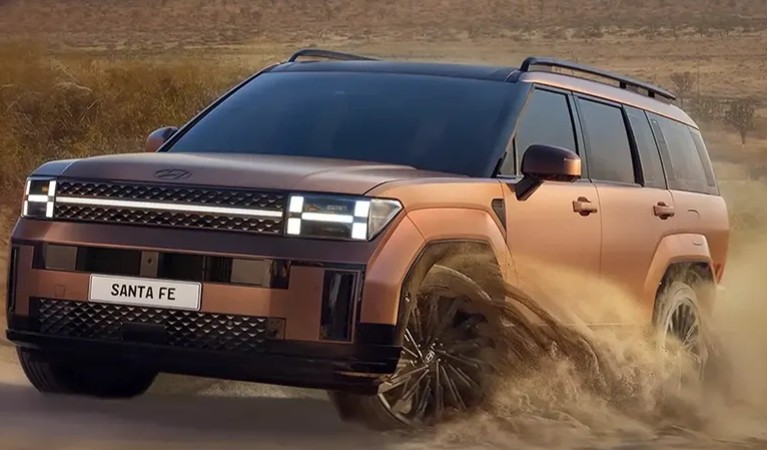
Choosing between the Hyundai Santa Fe vs Nissan Rogue looks straightforward until we actually start comparing them. Both are practical family SUVs, both offer modern technology, available all-wheel drive, and sensible everyday usability. Yet they approach the SUV formula from noticeably different directions.
The Nissan Rogue is the lighter, more compact, more fuel-conscious option. It is designed primarily as a five-seat crossover that slips comfortably into city life. The Hyundai Santa Fe feels like the bigger sibling who showed up with camping equipment, extra luggage, and room for two more passengers.
For the current U.S. lineup, that distinction is especially clear. The 2026 Hyundai Santa Fe offers three-row seating and either a 277-horsepower turbocharged gasoline engine or a 231-horsepower hybrid system. The current Nissan Rogue is fundamentally a five-passenger compact SUV, with the conventional Rogue producing 201 horsepower from its VC-Turbo engine.
So which deserves your money? Let's pull these SUVs apart piece by piece.
Content in this publication
- Hyundai Santa Fe vs Nissan Rogue at a Glance
- Exterior Design: Boxy Santa Fe or Sleeker Rogue?
- Interior Space: This Is Where the Santa Fe Changes the Argument
- Cargo Space: Both Are Surprisingly Practical
- Santa Fe vs Rogue Engine Performance
- Hyundai Santa Fe Hybrid vs Nissan Rogue
- Ride Comfort and Everyday Driving
- All-Wheel Drive and Bad-Weather Capability
- Interior Design and Technology
- Seats and Family Comfort
- Fuel Costs: Think Beyond the MPG Sticker
- Hyundai Santa Fe vs Nissan Rogue Price and Value
- Warranty: Hyundai Has a Major Advantage
- Reliability and Long-Term Ownership
- Which SUV Is Better for Commuters?
- Which SUV Is Better for Families?
- Which Is Better for Road Trips?
- Which Is Better for City Drivers?
- Which Has the Better Engine Choice?
- Santa Fe vs Rogue: Pros and Cons in Real Life
- Who Should Buy the Hyundai Santa Fe?
- Who Should Buy the Nissan Rogue?
- Hyundai Santa Fe vs Nissan Rogue: Our Verdict
- Frequently Asked Questions
- Conclusion
Hyundai Santa Fe vs Nissan Rogue at a Glance
The easiest way to understand this matchup is to think about priorities.
The Santa Fe favors space, flexibility, power, and family versatility. The Rogue favors efficiency, maneuverability, affordability, and five-passenger practicality.
That difference matters because these SUVs don't really occupy identical niches anymore. Hyundai transformed the Santa Fe into a particularly boxy, spacious family vehicle, while Nissan continues positioning the Rogue as a compact five-seat crossover. Nissan explicitly describes the Rogue as a five-passenger compact SUV.
In other words, comparing them is less like choosing between two identical running shoes and more like choosing between a hiking boot and a lightweight trainer. Both get us where we're going; they simply suit different journeys.
Exterior Design: Boxy Santa Fe or Sleeker Rogue?
Few mainstream SUVs have changed personality as dramatically as the latest Santa Fe.
Its upright body, squared-off tailgate, long roofline, and geometric detailing give it an almost adventure-SUV personality. Hyundai appears to have prioritized usable interior dimensions rather than chasing an aggressively tapered roof.
The Rogue is more conventional. Its styling remains recognizable as a modern crossover, with smoother lines and proportions that make it visually smaller and somewhat easier to imagine navigating crowded streets.
Neither philosophy is automatically better.
If we want our family SUV to have considerable road presence, the Santa Fe wins. If we'd rather have something less bulky-looking and more traditional, the Rogue has an advantage.
Which SUV Is Easier Around Town?
Here the Rogue's compact-SUV roots work in its favor.
A vehicle used for school runs, supermarkets, parking garages, and urban commuting doesn't necessarily benefit from being larger. Smaller dimensions can make parking and maneuvering far less stressful.
The Santa Fe isn't an enormous body-on-frame SUV, but its greater family-oriented footprint makes itself known.
Think of the Rogue as a backpack and the Santa Fe as a rolling suitcase. The suitcase carries more, but the backpack is easier to move through a crowd.
Interior Space: This Is Where the Santa Fe Changes the Argument
This may be the most important difference in the entire Nissan Rogue vs Hyundai Santa Fe debate.
The Santa Fe provides three rows.
The regular Rogue provides two.
Suddenly, we're not discussing dashboard materials or cupholder locations. We're discussing whether we can carry five people or potentially accommodate seven.
Hyundai lists three-row seating on the 2026 Santa Fe Hybrid, while Nissan identifies the Rogue as a five-passenger SUV.
For families occasionally transporting grandparents, children's friends, or additional passengers, those extra seats could outweigh virtually every other advantage the Nissan has.
Is the Santa Fe Third Row Actually Useful?
We should keep expectations realistic.
The Santa Fe is not a Chevrolet Suburban. Third-row accommodation in vehicles of this size is typically best treated as extra flexibility rather than limousine-class seating.
But having occasional seats is quite different from having no third row at all.
If we normally travel with four people but occasionally need six, the Santa Fe solves a problem the conventional Rogue simply cannot.
Who Needs the Third Row Most?
Families with younger children will probably extract the most value from it. Adults may be happier in the first two rows on longer journeys, while children can make better use of the rear.
If our household never carries more than five people, however, the Rogue's two-row arrangement may actually seem refreshingly simple. Why haul around seats we'll never use?
Cargo Space: Both Are Surprisingly Practical
Cargo comparisons get interesting because passenger count doesn't tell the whole story.
Hyundai lists 79.6 cubic feet of cargo capacity behind the front seats, 40.5 cubic feet behind the second row, and 14.6 cubic feet behind the third row for the 2026 Santa Fe Hybrid.
Nissan lists a maximum 74.1 cubic feet of cargo capacity in the Rogue when the second-row seats are folded.
That's genuinely impressive for the Nissan.
With every rear seat folded, the Santa Fe still provides the larger maximum space, but the difference isn't enormous. Where Hyundai's packaging really becomes valuable is flexibility: passengers can be spread across three rows when required.
Which Has the Better Trunk for Families?
For five people plus luggage, both vehicles can work well.
For six or seven occupants plus luggage, physics starts knocking on the door. With the Santa Fe's third row upright, Hyundai lists 14.6 cubic feet behind it.
That's useful, but a family road trip with every seat occupied may still require careful packing or external cargo solutions.
The Rogue avoids that particular compromise because it never attempts to carry seven passengers in the first place.
Santa Fe vs Rogue Engine Performance
Here's another area where their personalities diverge sharply.
The gasoline Hyundai Santa Fe uses a 2.5-liter turbocharged four-cylinder producing 277 horsepower.
The conventional Rogue uses Nissan's VC-Turbo powertrain and produces 201 horsepower and 225 lb-ft of torque.
On paper, that's a substantial horsepower advantage for Hyundai.
And we can feel what Hyundai is trying to accomplish. A larger three-row vehicle needs enough muscle to handle passengers, luggage, highway merging, and steep grades without feeling sleepy.
The Rogue isn't chasing the same objective. Nissan instead balances usable torque and fuel economy in a smaller package.
Which Feels Faster?
The Santa Fe should be our first stop if acceleration and effortless highway power are important.
An advantage of roughly 76 horsepower isn't trivial.
That doesn't automatically mean the Nissan feels inadequate. Everyday driving rarely requires maximum horsepower, and a lighter compact crossover can make perfectly good use of a smaller output.
But load both vehicles with people and luggage, point them toward a steep highway climb, and we'd rather have the Hyundai's stronger gasoline engine.
Does the Rogue VC-Turbo Make Sense?
Nissan's variable-compression turbocharged engine is technically interesting because its design aims to balance performance demands with efficiency.
But buyers shouldn't choose a vehicle because its engine sounds clever in a brochure.
The question is simpler: does it deliver what we need?
For ordinary commuting and family use, 201 horsepower is perfectly reasonable. For buyers wanting stronger acceleration or frequently carrying substantial loads, the Santa Fe's 277-horsepower gasoline engine is more appealing.
Hyundai Santa Fe Hybrid vs Nissan Rogue
Now things get more interesting.
The Santa Fe is available as a conventional hybrid, combining a turbocharged 1.6-liter gasoline engine with its electric components for 231 combined horsepower and 271 lb-ft of combined torque. Hyundai also offers optional HTRAC all-wheel drive.
That creates a very attractive middle ground.
We get three rows and plenty of space without accepting the fuel consumption of the 277-horsepower gasoline Santa Fe.
For 2026, Hyundai estimates 37 mpg city, 36 highway, and 36 combined for front-wheel-drive Santa Fe Hybrid trims, while AWD versions are rated at 35 city, 34 highway, and 34 combined.
The conventional Rogue remains impressively economical, though. Current Rogue specifications list certain configurations at up to 29 mpg city, 36 highway, and 32 combined, with figures varying by trim and drivetrain.
Fuel Economy: Rogue or Santa Fe?
If we're comparing the Rogue against the gasoline Santa Fe, Nissan takes a decisive efficiency victory.
Hyundai rates the 2026 Santa Fe SE FWD at 20 mpg city, 29 highway, and 24 combined, while AWD drops to 23 combined.
That's substantially thirstier than many Rogue configurations.
But compare the Rogue with the Santa Fe Hybrid, and the picture flips.
The front-wheel-drive Santa Fe Hybrid's 36-mpg combined estimate actually exceeds the fuel economy listed for conventional Rogue configurations while providing significantly more passenger flexibility.
That's why we'd strongly consider the hybrid if fuel expenses matter and we want the Hyundai's additional space.
You may be interested in reading Hyundai Santa Fe vs Kia Sportage: Which SUV Is Better?
Ride Comfort and Everyday Driving
Specifications tell us how vehicles look on paper. Daily driving determines whether we still like them six months later.
The Rogue's greatest strength is that it fits naturally into normal life. It isn't trying to behave like a truck or an oversized luxury SUV. For commuting, errands, and highway travel, its compact proportions make sense.
The Santa Fe feels like the more substantial family machine. Its greater size and stronger available power make it better suited to buyers who see their SUV as the household's primary vehicle.
Which philosophy sounds more attractive?
If 80% of our mileage consists of commuting alone, the Rogue probably makes more sense.
If the vehicle frequently carries children, luggage, groceries, pets, and enough miscellaneous family equipment to open a small sporting-goods store, the Santa Fe earns its footprint.
All-Wheel Drive and Bad-Weather Capability
Both models can be equipped with all-wheel drive.
Hyundai offers its HTRAC AWD system on Santa Fe models, including the hybrid lineup, while Nissan offers available AWD on the Rogue.
For drivers dealing with snow, wet roads, gravel, or slippery hills, either setup can provide useful extra traction.
However, we shouldn't confuse available AWD with hardcore four-wheel-drive capability.
Neither SUV is designed to replace a Wrangler on difficult trails.
Which Is Better for Light Adventure?
The Santa Fe's overall design and available configurations give it the stronger adventure-family personality.
It's also the vehicle we'd rather pack for a weekend involving several passengers and camping gear.
The Rogue remains perfectly suitable for gravel roads, ski trips, trailhead parking lots, and ordinary bad-weather driving when appropriately equipped.
For serious off-roading, we'd look elsewhere.
Interior Design and Technology
Open the doors and the two vehicles again reveal different priorities.
The modern Santa Fe cabin emphasizes broad horizontal surfaces and a more upscale, almost lounge-like presentation in higher trims. Hyundai's current lineup includes large digital displays and substantial convenience technology.
Even the 2026 Santa Fe Hybrid SE includes a 12.3-inch touchscreen, according to Hyundai.
The Rogue also leans heavily into modern infotainment, connectivity, and driver-assistance technology, particularly as we climb through its trim range.
But technology isn't merely about screen dimensions.
What matters is whether the interface is intuitive when we're driving at 65 mph with somebody asking us to change the temperature while navigation announces an upcoming exit.
The Santa Fe has the stronger visual wow factor, especially in upper trims.
Its broad cabin, distinctive layout, and greater overall dimensions can make it feel like a more expensive class of vehicle.
The Nissan isn't crude by any means. Its cabin is practical and suitably contemporary. But if our buying decision is heavily influenced by the feeling we get when opening the driver's door, the Hyundai may be harder to resist.
Seats and Family Comfort
For smaller households, the Rogue's five-passenger capacity is plenty.
A couple with one or two children might never use a third row. In that scenario, buying extra seating simply because it exists makes little sense.
But family circumstances change.
Children make friends. Grandparents visit. Carpools happen. Suddenly that tiny third row we dismissed at the dealership becomes surprisingly useful.
That's the hidden strength of the Santa Fe: flexibility.
We aren't necessarily buying seven seats because we need seven seats every Tuesday. We're buying the ability to carry more people when Tuesday unexpectedly becomes complicated.
Fuel Costs: Think Beyond the MPG Sticker
When evaluating Hyundai Santa Fe vs Nissan Rogue fuel economy, it's tempting to crown one winner and move on.
Reality is more nuanced.
Our choice looks different depending on powertrain:
- Choose the Rogue if we want strong fuel economy without paying for a larger three-row SUV.
- Choose the Santa Fe gasoline model if power and space matter more than minimizing fuel consumption.
- Choose the Santa Fe Hybrid if we want three-row flexibility with excellent EPA-estimated efficiency.
- Choose AWD carefully because drivetrain selection can reduce fuel economy.
- Calculate annual mileage rather than obsessing over one MPG number; high-mileage drivers benefit far more from efficiency improvements than someone covering only a few thousand miles per year.
That last point matters.
An SUV is a financial decision disguised as a shiny object. Fuel economy, insurance, depreciation, financing, tires, and maintenance continue charging us long after the excitement of delivery day disappears.
Hyundai Santa Fe vs Nissan Rogue Price and Value
The Rogue generally enters the conversation at a lower price.
Nissan lists the current Rogue from approximately $30,490 before its listed destination charge on its 2026.5 specifications page, while Hyundai lists the gasoline 2026 Santa Fe starting around $35,050 on its warranty/vehicle information page. Pricing varies by trim, equipment, destination charges, incentives, and model-year timing.
That's not an insignificant gap.
But simply calling the Rogue cheaper misses what we're buying.
The Hyundai offers additional passenger capacity and significantly more gasoline-engine horsepower. The Rogue asks us to pay less for a smaller five-seat vehicle.
Value depends on whether we'll actually use what the extra money buys.
When Is the Rogue the Better Value?
Suppose we have four people in the household, live in a city, rarely haul bulky equipment, and prioritize operating costs.
Why buy more SUV than we need?
The Rogue's lower entry point and strong conventional gasoline fuel economy make a compelling argument.
When Is the Santa Fe Worth Paying More For?
Now imagine three children, frequent family visits, road trips, or regular cargo hauling.
Suddenly the additional space isn't luxury. It's functionality.
And that's worth paying for.
The cheapest vehicle isn't necessarily the best value. A cheaper SUV that doesn't meet our needs is simply the wrong SUV at a lower price.
Warranty: Hyundai Has a Major Advantage
Warranty coverage is one of the clearest differences.
Hyundai lists a 5-year/60,000-mile new-vehicle limited warranty and 10-year/100,000-mile powertrain limited warranty for its current Santa Fe lineup.
Nissan states that its new vehicles generally receive a 3-year/36,000-mile basic warranty and 5-year/60,000-mile powertrain warranty.
For buyers planning to keep their SUV for many years, Hyundai's longer coverage is meaningful.
Of course, warranties aren't predictions of reliability. They are coverage agreements with specific conditions and exclusions.
Still, when we're comparing two expensive vehicles, longer factory protection is difficult to ignore.
Santa Fe Hybrid Warranty Coverage
Hybrid shoppers get another reassuring figure.
Hyundai lists the Santa Fe Hybrid's hybrid/electric battery warranty at 10 years or 100,000 miles, subject to warranty terms and limitations.
That should help calm some of the anxiety buyers may have about moving from a conventional gasoline vehicle into a hybrid.
Reliability and Long-Term Ownership
This is where we'd resist making sweeping promises.
Vehicle reliability depends on model year, powertrain, maintenance, usage, manufacturing changes, and sometimes plain luck. Saying every Rogue will be more reliable than every Santa Fe—or vice versa—would be meaningless.
Instead, we'd look at the ownership proposition.
The Rogue's efficient turbocharged engine and compact packaging make sense for someone focused on economical everyday transportation.
The Santa Fe offers more mechanical choices: a powerful gasoline turbo engine or an efficient hybrid.
Hyundai's substantially longer factory powertrain coverage may also reduce some financial uncertainty during the early ownership years.
For used examples, though, maintenance history matters enormously.
You may be interested in readingHyundai Santa Fe vs Kia Sportage: Which SUV Is Better?You may be interested in reading
Hyundai Santa Fe vs Honda Pilot: Which Three-Row SUV Is Better?A beautifully maintained SUV with service records can be a smarter purchase than an abused example of a model with a better reputation.
Which SUV Is Better for Commuters?
The Nissan Rogue.
For a typical commuter who carries one or two people most of the time, its five-seat layout, smaller footprint, lower starting price, and excellent gasoline fuel economy form a coherent package.
We don't need a third row to carry a laptop bag.
Nor do we necessarily need 277 horsepower to crawl through morning traffic.
The Rogue is the rational choice when efficiency and ease matter more than maximum versatility.
Which SUV Is Better for Families?
The Hyundai Santa Fe.
This is one category where its advantage is difficult to overlook.
Three-row seating fundamentally changes what the vehicle can do. Add substantial cargo capacity, a stronger gasoline engine, and the availability of an efficient hybrid, and the Santa Fe becomes an unusually flexible family vehicle.
The Nissan still makes sense for smaller families.
But once we regularly approach the five-person limit, the Santa Fe gives us breathing room.
Which Is Better for Road Trips?
We'd lean toward the Santa Fe Hybrid.
Why?
It combines strong fuel economy with considerably greater passenger flexibility and 79.6 cubic feet of maximum cargo space behind the front seats.
That's a very appealing recipe for long-distance family travel.
The Rogue counters with excellent gasoline efficiency and 74.1 cubic feet of maximum cargo capacity, making it a terrific road-trip companion for couples and smaller families.
If two adults are crossing the country, we'd happily take the Nissan.
If we're taking children, luggage, coolers, bags, pillows, and half the contents of our house, give us the Hyundai.
Which Is Better for City Drivers?
Here's where the pendulum swings back toward Nissan.
A third row is brilliant when we're using it. When we're alone trying to squeeze into an awkward downtown parking spot, it doesn't help much.
The Rogue's compact crossover format simply suits dense urban environments better.
We'd particularly favor it for drivers who spend most of their time commuting but occasionally need an SUV's cargo flexibility.
It's the more economical amount of vehicle.
Which Has the Better Engine Choice?
We'd give Hyundai this category.
The regular Santa Fe's 277-horsepower turbo engine offers considerably stronger output than the Rogue's 201 horsepower, while the Santa Fe Hybrid delivers 231 combined horsepower and up to 36 mpg combined in FWD form.
That gives buyers two genuinely different personalities.
Want power? Gasoline Santa Fe.
Want efficiency? Santa Fe Hybrid.
The Rogue's conventional powertrain works well within its mission, but Hyundai gives shoppers broader choices.
Santa Fe vs Rogue: Pros and Cons in Real Life
Rather than getting lost in tiny specification differences, we'd boil the comparison down this way.
The Santa Fe's strengths are its third row, stronger standard gasoline performance, optional hybrid efficiency, versatile cargo area, distinctive design, and long warranty coverage. Its disadvantages are equally logical: it's a larger vehicle, costs more at the entry level, and the non-hybrid version consumes considerably more fuel than the Rogue.
The Nissan Rogue's strengths are its strong gasoline fuel economy, lower starting price, generous two-row cargo capacity, easier urban dimensions, and straightforward five-passenger mission. Its weaknesses are the absence of a third row in the conventional model, substantially less horsepower than the gasoline Santa Fe, and shorter factory warranty coverage.
Neither set of compromises is inherently bad.
They're simply different.
Who Should Buy the Hyundai Santa Fe?
Buy the Santa Fe if we regularly transport a larger family, anticipate needing more than five seats, want stronger acceleration, carry substantial cargo, or simply prefer owning one versatile vehicle capable of handling nearly every family duty.
The hybrid is particularly compelling.
It removes one of the gasoline Santa Fe's biggest compromises—fuel consumption—while retaining three-row practicality. Hyundai's estimated 36 mpg combined for front-wheel-drive versions makes that combination hard to ignore.
We'd also favor the Santa Fe if long factory warranty coverage matters strongly to us.
Who Should Buy the Nissan Rogue?
Buy the Rogue if our household fits comfortably into five seats and we don't foresee that changing.
It's particularly well suited to commuters, couples, small families, city dwellers, and anyone who would rather save money than purchase space they'll rarely use.
Its maximum 74.1 cubic feet of cargo capacity means choosing the smaller SUV doesn't mean surrendering everyday usefulness.
And with certain versions rated up to 32 mpg combined, the conventional Rogue can be impressively economical without requiring a hybrid powertrain.
Hyundai Santa Fe vs Nissan Rogue: Our Verdict
So, is the Hyundai Santa Fe better than the Nissan Rogue?
For families, we'd choose the Hyundai Santa Fe, particularly the Santa Fe Hybrid.
Its third-row seating, powerful available gasoline engine, efficient hybrid option, impressive cargo capacity, and longer factory warranty create a remarkably complete family package.
But the Rogue shouldn't be treated as the loser.
For a buyer who needs only five seats, it may actually be the smarter purchase. It costs less to enter, offers excellent cargo room for its class, returns strong gasoline fuel economy, and carries less unnecessary size around town.
That's the key to this comparison.
Choose the Nissan Rogue because you want efficiency and simplicity. Choose the Hyundai Santa Fe because you want capability and flexibility.
If our family is growing, our road trips are frequent, or that third row will be used even occasionally, we'd spend the extra money on the Santa Fe.
If five seats are enough and staying economical matters most, we'd save our cash and take the Rogue.
Sometimes the best SUV isn't the one with the longest specification sheet. It's the one whose compromises match our life.
Frequently Asked Questions
Is the Hyundai Santa Fe bigger than the Nissan Rogue?
Yes. The Santa Fe is positioned as the more passenger-focused option and provides three-row seating, whereas the conventional Nissan Rogue is a five-passenger compact SUV. Hyundai also lists up to 79.6 cubic feet of cargo space behind the Santa Fe's front seats, versus Nissan's 74.1-cubic-foot maximum for the Rogue.
Which gets better gas mileage, Santa Fe or Rogue?
The answer depends on the Santa Fe powertrain. The conventional Rogue can achieve up to 32 mpg combined in certain current configurations, significantly beating the gasoline Santa Fe SE's 24 mpg combined FWD rating. However, the Santa Fe Hybrid can achieve an estimated 36 mpg combined with FWD.
Does the Nissan Rogue have a third row?
The conventional current Nissan Rogue is a five-passenger compact SUV, so buyers needing three-row seating should look toward the Santa Fe in this comparison.
Which is more powerful, Hyundai Santa Fe or Nissan Rogue?
The gasoline Santa Fe. Hyundai's 2026 Santa Fe 2.5-liter turbocharged engine produces 277 horsepower, while the conventional Rogue's VC-Turbo engine produces 201 horsepower and 225 lb-ft of torque. The Santa Fe Hybrid produces 231 combined horsepower.
Should I buy a Nissan Rogue or Hyundai Santa Fe?
We'd choose the Rogue for commuting, five-passenger households, city driving, and lower-cost efficiency. We'd choose the Santa Fe for larger families, road trips, extra passenger flexibility, stronger performance, and buyers wanting a hybrid three-row SUV. Neither is universally better; the smarter choice depends on how much vehicle we actually need.
Conclusion
The Hyundai Santa Fe vs Nissan Rogue comparison ultimately comes down to a surprisingly simple question: do we want a compact five-passenger SUV or a more versatile three-row family vehicle?
The Rogue is wonderfully rational. It offers plenty of cargo capacity, attractive fuel economy, a lower entry price, and dimensions that won't make a crowded parking garage feel like an obstacle course.
The Santa Fe asks us to spend more and accept a bigger vehicle, but it pays us back with greater flexibility. Seven-passenger potential, stronger gasoline performance, an excellent hybrid alternative, generous cargo room, and Hyundai's lengthy warranty make it especially compelling as a family's main vehicle.
Our pick?
Santa Fe Hybrid for the best all-round family package. Rogue for the smarter compact-SUV choice.
One gives us more vehicle.
The other gives us exactly enough.
You may be interested in readingHyundai Santa Fe vs Kia Sportage: Which SUV Is Better?You may be interested in reading
Hyundai Santa Fe vs Honda Pilot: Which Three-Row SUV Is Better?You may be interested in reading
Hyundai Santa Fe Versus Honda CR-V: Which SUV Is Better?And depending on our lifestyle, either philosophy can be the right one.
If you want to know other articles similar to Hyundai Santa Fe vs Nissan Rogue: Which SUV Should You Buy? you can visit the category Models.
Kia Sorento Models: Complete Guide to Trims, Engines and Versions
BYD Shark 6 vs Ranger vs HiLux: Which Ute Makes the Most Sense in 2026?
BYD Shark 6 vs MG U9: Which Ute Makes More Sense in 2026?
BYD Shark 6 vs Ford Ranger Raptor: Which Performance Ute Is Better in 2026?
BYD Shark 6 vs Kia Tasman: Which Ute Is Better?
BYD Shark 6 vs 7: What We Know So Far
Leave a Reply
More content of your interest