

Hyundai Santa Fe vs Honda Pilot: Which Three-Row SUV Is Better?

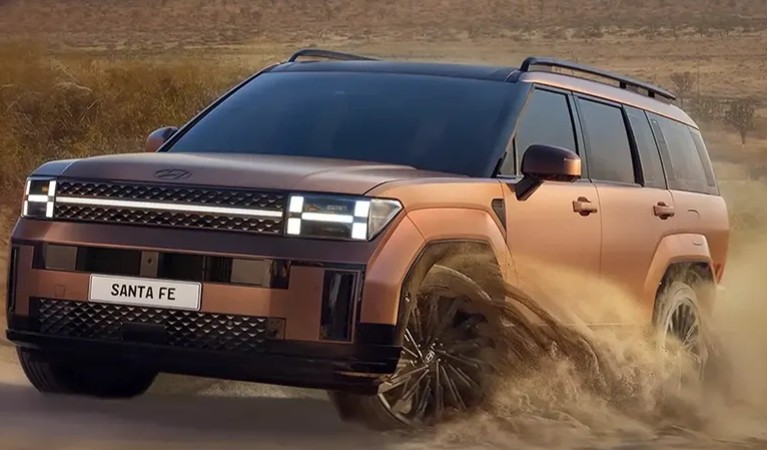
Choosing between the Hyundai Santa Fe and Honda Pilot looks straightforward until we actually start comparing them. Both have three rows, family-friendly cabins, modern safety technology, available all-wheel drive, and enough versatility for road trips, school runs, and weekends away. Yet these SUVs approach the family-car formula from very different directions.
The Hyundai Santa Fe feels like the more adventurous and unconventional choice. Its squared-off body, modern dashboard, available hybrid powertrain, and surprisingly spacious interior make it feel fresh without requiring the footprint of a truly large SUV. The Honda Pilot takes a more traditional route. It is bigger, stronger, more spacious, and powered by a naturally aspirated V6 that gives it the muscle expected from a substantial three-row family vehicle.
For 2026, Hyundai lists the gasoline Santa Fe with a 277-horsepower turbocharged 2.5-liter four-cylinder, while Honda gives every Pilot a 285-horsepower V6 paired with a 10-speed automatic transmission. Those numbers may look close on paper, but they tell only half the story.
So which SUV deserves the driveway? Let's dig deeper.
Content in this publication
- Hyundai Santa Fe vs Honda Pilot at a Glance
- Which Is Bigger: Hyundai Santa Fe or Honda Pilot?
- Interior Space and Passenger Comfort
- Third-Row Seating: Pilot Takes the Lead
- Cargo Space: How Much Can Each Carry?
- Hyundai Santa Fe vs Honda Pilot Engine Performance
- Santa Fe Hybrid Changes the Conversation
- Fuel Economy: Santa Fe Wins
- Towing Capacity: Honda Pilot Wins
- Ride Quality and Everyday Driving
- Handling and Steering
- All-Wheel Drive and Bad-Weather Capability
- Interior Design: Hyundai Feels More Futuristic
- Safety and Driver Assistance
- Reliability: Honda Pilot vs Hyundai Santa Fe
- Value for Money
- Hyundai Santa Fe Pros and Cons
- Honda Pilot Pros and Cons
- Which SUV Is Better for a Family?
- Hyundai Santa Fe vs Honda Pilot for City Driving
- Hyundai Santa Fe vs Honda Pilot for Highway Driving
- Which Has the Better Third Row?
- Which Is Better for Camping?
- Hyundai Santa Fe vs Honda Pilot: Which Should You Buy?
- Conclusion
- Frequently Asked Questions
Hyundai Santa Fe vs Honda Pilot at a Glance
The simplest way to understand this comparison is to think of the Santa Fe as the more compact, efficiency-conscious three-row SUV and the Pilot as the roomier, more traditional family hauler.
The Santa Fe offers three-row seating while remaining approximately 190 inches long, meaning it does not feel enormous in parking garages or crowded neighborhoods. Hyundai's current Santa Fe Hybrid also provides 151 cubic feet of passenger volume and up to 79.6 cubic feet of cargo space behind the front seats.
The Pilot goes considerably bigger. Honda lists seating for up to eight and maximum cargo capacity exceeding 111 cubic feet depending on configuration.
That difference immediately establishes the personality of each SUV.
Choose the Santa Fe and we're essentially getting clever packaging in a manageable footprint. Choose the Pilot and we're prioritizing maximum family space.
Which Is Bigger: Hyundai Santa Fe or Honda Pilot?
The Honda Pilot is the larger vehicle, and you can feel that difference almost everywhere.
Its longer body provides additional breathing room for passengers and cargo, particularly when the third row is being used regularly. The Santa Fe's third row is useful, but it makes more sense for children, teenagers, occasional passengers, or shorter journeys.
The Pilot's cabin behaves more like the interior of a genuinely large family SUV. Hyundai has performed something of a packaging magic trick with the Santa Fe, but physics eventually wins.
If we routinely transport six, seven, or eight people, the Pilot's extra dimensions become an advantage rather than an inconvenience.
If most journeys involve four or five occupants and the third row is only needed periodically, the Santa Fe may actually be the smarter size.
Santa Fe Size Advantages
The Hyundai's smaller footprint pays dividends in everyday driving.
Parking is easier. Narrow streets feel less intimidating. Urban maneuverability improves. There's simply less SUV wrapped around us.
That's important because many families purchase three-row SUVs for the handful of occasions each month when those extra seats matter, yet spend the other 90 percent of their driving navigating ordinary roads with two or four people aboard.
In that situation, carrying around unnecessary length can feel like wearing hiking boots to walk through the supermarket.
Pilot Size Advantages
The Pilot turns that argument upside down.
When we genuinely need space, having it available is wonderful.
Honda gives the Pilot seating for up to eight, although certain configurations use second-row captain's chairs and seat seven. Its available multifunction second-row arrangement can also incorporate a removable center seat, adding impressive flexibility.
That makes the Pilot particularly attractive to bigger families.
Interior Space and Passenger Comfort
This may be the most important section of the entire Hyundai Santa Fe vs Honda Pilot comparison.
Both SUVs can handle family duties, but the Honda is ultimately the more accommodating passenger vehicle.
The Santa Fe's boxier shape helps considerably. Its tall roof and upright proportions make the interior feel airy, and Hyundai has resisted the temptation to sacrifice practicality in the name of dramatic styling.
Front-seat occupants have plenty of room. Second-row passengers should also be comfortable on long journeys.
The third row is where the gap becomes more noticeable.
Second-Row Comfort
The Santa Fe feels almost premium from the second row forward, particularly in higher trims.
Depending on configuration, buyers can find upscale materials, heated or ventilated seating features, panoramic glass, charging points, and clever storage areas.
The Pilot has a different strength: flexibility.
Honda's available stowable second-row center seat is especially clever. It allows families to choose between bench-seat versatility and something resembling captain's-chair access without permanently committing to one layout. Honda specifically highlights this removable middle seat on several 2026 Pilot trims.
It's one of those features that sounds minor until we actually live with the vehicle.
Which Second Row Is Better for Families?
For smaller families wanting a more stylish and relaxing cabin, we'd lean Santa Fe.
For families constantly rearranging passengers, child seats, grandparents, school friends, and luggage, the Pilot's interior flexibility gives it an edge.
Third-Row Seating: Pilot Takes the Lead
This one isn't particularly close.
Although the Santa Fe provides a legitimate third row, the Pilot is the vehicle we'd rather own if those rear seats were occupied regularly.
Honda designed the Pilot around three-row family use. Hyundai essentially managed to fit impressive three-row capability into a smaller platform.
That's an important distinction.
Think of the Santa Fe third row as bonus real estate.
Think of the Pilot third row as an integral part of the house.
For occasional use, Hyundai's solution is perfectly sensible. For a household with three or four children, Honda's larger cabin makes life easier.
Cargo Space: How Much Can Each Carry?
Here again, the Pilot wins on outright capacity.
Honda lists maximum cargo capacity of more than 111 cubic feet depending on configuration, with some versions reaching as much as 113.7 cubic feet.
The 2026 Santa Fe Hybrid, by comparison, provides 79.6 cubic feet behind the front seats, 40.5 cubic feet behind the second row, and 14.6 cubic feet with all three rows upright.
Those aren't poor Hyundai numbers. Far from it.
The Santa Fe is impressively practical relative to its exterior dimensions.
But if we're trying to load several suitcases, sports equipment, a stroller, camping gear, and enough snacks to survive crossing three states with children, we'll appreciate the Honda's extra room.
Which SUV Is Better for Road Trips?
For four or five passengers, the Santa Fe can be fantastic.
For six or more occupants plus luggage, we'd choose the Pilot.
It's that simple.
Hyundai Santa Fe vs Honda Pilot Engine Performance
Under the hood, these SUVs couldn't be much more different philosophically.
The gasoline Santa Fe uses a 2.5-liter turbocharged four-cylinder producing 277 horsepower.
The Honda Pilot uses a 285-horsepower V6 paired with a 10-speed automatic.
Horsepower is nearly identical, yet the driving experience isn't.
Santa Fe 2.5 Turbo
Turbocharged engines tend to deliver strong midrange torque, and the Santa Fe feels energetic when accelerating through normal traffic.
It is surprisingly quick for something shaped a little like a luxury refrigerator.
Hyundai's powertrain gives the SUV an eager character, and drivers coming from smaller crossovers may find it more responsive than expected.
Still, a turbocharged four-cylinder working inside a three-row SUV inevitably feels different from Honda's larger naturally aspirated engine.
Honda Pilot V6
There's something refreshingly uncomplicated about the Pilot's V6.
Press the accelerator and power builds progressively. There's no need to wait for turbo boost, and the engine feels naturally suited to hauling passengers, climbing hills, and towing trailers.
It may not transform the Pilot into a sports SUV, but it gives the vehicle an easy confidence.
Which Engine Would We Choose?
For ordinary commuting, Hyundai's turbo engine is more than adequate.
For frequent heavy loads, mountainous roads, towing, or simply drivers who prefer traditional V6 smoothness, the Pilot gets our vote.
You may be interested in reading Hyundai Santa Fe Versus Honda CR-V: Which SUV Is Better?
Santa Fe Hybrid Changes the Conversation
Here's where Hyundai lands its strongest punch.
Honda currently does not offer the Pilot with a hybrid powertrain, while Hyundai sells a Santa Fe Hybrid using a turbocharged 1.6-liter hybrid setup.
Hyundai advertises up to 36 mpg combined for the 2026 Santa Fe Hybrid, depending on configuration.
That dramatically changes the ownership equation for high-mileage drivers.
Imagine covering 15,000 or 20,000 miles every year. Suddenly fuel economy becomes more than a specification buried halfway down the brochure. It's money leaving our bank account every week.
The Pilot's V6 provides greater muscularity, but the Santa Fe Hybrid responds with efficiency.
Fuel Economy: Santa Fe Wins
Fuel economy is one of Hyundai's clearest advantages.
A 2026 Santa Fe SEL with front-wheel drive is EPA-rated at 20 mpg city, 29 mpg highway, and 24 mpg combined.
Move to the Santa Fe Hybrid and efficiency can improve substantially.
Honda lists Pilot fuel economy that varies by drivetrain and trim, with the most efficient configurations reaching ratings such as 19 mpg city and 27 mpg highway, while rugged TrailSport versions are rated lower.
If reducing fuel consumption is one of our main priorities, Hyundai offers the more compelling answer.
Best Choice for High-Mileage Drivers
We would strongly consider the Santa Fe Hybrid.
That doesn't mean everyone should buy the hybrid automatically. Purchase price, local fuel prices, annual mileage, and driving environment all matter.
But for commuters covering serious distances, Hyundai's efficiency advantage can become meaningful.
Towing Capacity: Honda Pilot Wins
Planning to tow?
The Pilot is the stronger tool.
Honda advertises a maximum 5,000-pound towing capacity when properly equipped.
The regular 2026 Santa Fe is rated to tow 3,500 pounds with trailer brakes in most configurations, while the XRT can reach 4,500 pounds when properly configured.
That gives Honda an advantage for larger trailers, boats, and recreational equipment.
The Santa Fe can certainly handle lighter towing duties, but the Pilot's powertrain and chassis are better aligned with owners expecting to tow frequently.
What About Santa Fe Hybrid Towing?
Hybrid towing capacity is lower.
Hyundai's specifications show a 2,000-pound braked towing limit for current Santa Fe Hybrid configurations.
That's fine for modest trailers, but serious towing duties tilt decisively toward Honda.
Ride Quality and Everyday Driving
Neither SUV is designed to attack corners like a hot hatchback.
Good.
That's not what family SUVs are supposed to do.
The Santa Fe feels slightly easier to place on the road because of its smaller dimensions. Around town, it feels less cumbersome and more crossover-like.
The Pilot's larger footprint is noticeable, but its suspension prioritizes comfort. Long interstate journeys suit it particularly well.
If our weekly routine involves cramped parking garages and heavy urban traffic, the Hyundai feels more natural.
If our routine involves long-distance travel with a full cabin, the Honda settles into its role beautifully.
Handling and Steering
Hyundai gives the Santa Fe fairly predictable steering and a composed chassis.
It won't make us wake up early on Sunday morning looking for mountain roads, but it behaves securely and confidently.
The Pilot feels larger and heavier because it is larger. Yet Honda has done a solid job keeping it manageable.
Neither vehicle wins because of steering feel alone.
The decision comes down to priorities: Santa Fe for maneuverability, Pilot for big-SUV composure.
All-Wheel Drive and Bad-Weather Capability
Both SUVs offer all-wheel-drive systems.
Hyundai calls its system HTRAC AWD, while Honda offers i-VTM4 AWD.
Honda's system becomes particularly interesting in versions designed for adventure driving. TrailSport models include an off-road-tuned suspension, all-terrain tires, skid plates, recovery points, Trail Torque Logic, and seven selectable drive modes.
Hyundai answers with the Santa Fe XRT, which brings more rugged styling and additional capability, along with the model's higher 4,500-pound maximum towing figure.
Santa Fe XRT vs Pilot TrailSport
If we're choosing specifically for camping roads, snow, trails, or light off-road use, the Pilot TrailSport is the more serious package.
The Santa Fe XRT certainly looks the part and adds useful capability, but Honda has pushed the TrailSport further toward legitimate adventure duty.
Interior Design: Hyundai Feels More Futuristic
Walk into the Santa Fe after sitting in older three-row SUVs and the difference can be startling.
Hyundai has embraced wide digital displays, clean horizontal surfaces, abundant storage, and a design language that feels closer to a contemporary living room than an old-school SUV.
The square exterior theme also benefits the cabin.
It feels open.
Honda's Pilot interior is handsome but more conventional. That's not necessarily bad. In fact, buyers who prefer logical controls and restrained styling may favor the Honda.
Technology and Infotainment
Technology is strong in both models.
The Santa Fe offers features such as a 12.3-inch touchscreen, wireless Apple CarPlay, wireless Android Auto, high-power USB charging, and Hyundai's Bluelink+ connected services on relevant trims.
The latest Pilot also offers a 12.3-inch touchscreen, wireless Apple CarPlay and Android Auto, and Google built-in on current trims.
Neither feels technologically outdated.
Our preference comes down mostly to interface style.
Hyundai looks more dramatic.
Honda feels more straightforward.
Safety and Driver Assistance
Family SUVs live or die by how confidently they handle daily traffic, and both manufacturers provide extensive driver-assistance technology.
The Pilot includes features such as collision mitigation braking, road-departure mitigation, blind-spot monitoring with cross-traffic alert, adaptive cruise control with low-speed follow, and available parking assistance technology.
Hyundai also equips the Santa Fe with a wide range of advanced driving and collision-avoidance systems depending on trim.
Rather than choosing solely by the number of safety acronyms printed on the brochure, we'd test-drive both and pay attention to how naturally their lane-centering, adaptive-cruise, camera, and warning systems behave.
The best driver-assistance system is the one we don't constantly want to switch off.
Reliability: Honda Pilot vs Hyundai Santa Fe
Honda has spent decades building a reputation around durable family vehicles, so it isn't surprising that many shoppers automatically associate the Pilot with long-term dependability.
That history matters.
But reliability is more complicated than simply looking at the badge.
Individual model years, engines, transmissions, manufacturing changes, maintenance history, and even driving environment can affect ownership experience.
Hyundai has also improved its vehicles dramatically over the years while backing new models with competitive warranty coverage.
You may be interested in readingHyundai Santa Fe Versus Honda CR-V: Which SUV Is Better?You may be interested in reading
Hyundai Santa Fe and Palisade: Which Hyundai SUV Is Better?Which Is Better for Long-Term Ownership?
For someone planning to keep an SUV for ten years or more and who prioritizes a conventional naturally aspirated engine, the Pilot's V6 architecture may feel reassuring.
The Santa Fe's appeal lies more heavily in technology, efficiency, design, and available hybridization.
For used vehicles, we'd judge the individual vehicle rather than blindly picking one manufacturer.
Maintenance records matter far more than shiny paint.
Value for Money
Here's where things become interesting.
The Pilot is larger, but it is generally positioned above the Santa Fe in price.
Honda lists the 2026 Pilot with a starting MSRP of $42,395 before destination and other charges, while higher trims rise substantially from there.
Hyundai's Santa Fe lineup offers a lower entry point while still supplying three rows and a generous level of equipment.
That gives Hyundai a powerful value proposition.
We're getting the look and practicality of a three-row SUV without necessarily paying traditional big-SUV money.
Does the Pilot Justify Its Higher Price?
For the right family, yes.
We aren't simply paying for a badge.
We're paying for more interior room, greater maximum cargo capacity, seating for up to eight, stronger towing ability, and a V6 powertrain.
The question is whether we actually need those advantages.
Buying capability we'll never use is like paying extra for a hotel suite and spending the entire vacation beside the pool.
Hyundai Santa Fe Pros and Cons
The Santa Fe's strongest qualities are easy to identify. It offers striking styling, a manageable footprint, three-row versatility, impressive technology, strong gasoline performance, and an especially compelling hybrid option.
However, shoppers should remember that it isn't as large as the Pilot. Third-row space and maximum cargo capacity aren't in the same league, and its maximum towing ability trails Honda's.
Its advantages make the most sense for drivers who want flexibility without moving into a truly large SUV.
Honda Pilot Pros and Cons
The Pilot's strengths revolve around space and capability.
We get an adult-friendly family cabin, seating for up to eight, excellent cargo flexibility, a naturally aspirated V6, available sophisticated AWD, and up to 5,000 pounds of towing capacity.
The trade-off?
It's bigger, consumes more fuel than a Santa Fe Hybrid, and can cost considerably more as we climb through the trim range.
Which SUV Is Better for a Family?
Here's the easiest way we'd divide the decision:
- Choose the Hyundai Santa Fe if we typically carry four or five people, occasionally use the third row, want better fuel-economy potential, prefer modern styling, or need something easier to maneuver.
- Choose the Santa Fe Hybrid if fuel costs are a major consideration and heavy towing isn't.
- Choose the Honda Pilot if six to eight passengers are common.
- Choose the Pilot if maximum cargo capacity matters.
- Choose the Pilot if we regularly tow heavier trailers.
- Choose the Pilot TrailSport if weekend adventures include rougher roads and mild off-road driving.
- Choose the Santa Fe if value and equipment-per-dollar matter more than outright size.
Hyundai Santa Fe vs Honda Pilot for City Driving
Santa Fe.
Its smaller exterior dimensions are simply easier to live with.
If we're parallel parking, maneuvering through underground garages, squeezing into shopping-center spaces, or driving through dense neighborhoods every day, those missing inches become surprisingly valuable.
The Pilot isn't difficult to drive, but there's no escaping its size.
Hyundai Santa Fe vs Honda Pilot for Highway Driving
Pilot, by a narrow margin.
The Honda feels like it was designed to swallow interstate miles.
Its larger cabin, V6 performance, substantial cargo space, and relaxed character make it particularly well suited to long family journeys.
That said, the Santa Fe Hybrid offers an extremely persuasive counterargument if we care about how many fuel stops those journeys require.
Which Has the Better Third Row?
Honda Pilot.
No suspense here.
The Pilot's larger dimensions allow the third row to function as a genuine passenger area rather than merely emergency seating.
Families with teenagers will appreciate that distinction.
Which Is Better for Camping?
It depends on what kind of camping we're talking about.
A couple with two children carrying tents and sleeping bags? Santa Fe.
Six passengers hauling equipment into the mountains? Pilot.
Pulling a heavier camper? Pilot again.
Trying to minimize fuel consumption during a 1,000-mile vacation? Santa Fe Hybrid.
Driving rough tracks toward remote campsites? Pilot TrailSport becomes especially attractive.
Hyundai Santa Fe vs Honda Pilot: Which Should You Buy?
This comparison doesn't produce one universal winner because these vehicles aren't really trying to solve exactly the same problem.
The Hyundai Santa Fe is the smarter choice for buyers who want a three-row SUV without the bulk of a traditional three-row SUV.
That sounds contradictory, but that's precisely its appeal.
It gives us extra seating, clever packaging, distinctive styling, modern technology, and an available hybrid powertrain inside a footprint that remains manageable.
The Honda Pilot is the better choice when space and capability take priority.
If the third row will be occupied frequently, the cargo area will regularly be filled, or a trailer will often be attached to the back, the Honda starts pulling away.
Our Verdict
For a family of four that only occasionally needs seven seats, we'd lean toward the Hyundai Santa Fe, particularly the hybrid.
For a family of five, six, or more that travels regularly, we'd choose the Honda Pilot.
The Santa Fe is the cleverer package.
The Pilot is the more capable family hauler.
And sometimes choosing between two SUVs isn't about finding which one is objectively better. It's about figuring out which compromises we'll actually notice every morning when we walk into the driveway.
Conclusion
The Hyundai Santa Fe vs Honda Pilot debate ultimately comes down to efficiency and maneuverability versus outright space and capability.
The Santa Fe feels fresh, distinctive, and intelligently packaged. It gives families a usable third row without forcing them into an enormous vehicle, and the availability of a hybrid powertrain makes it particularly attractive to drivers watching fuel costs.
The Pilot takes the classic three-row SUV formula and executes it extremely well. Its roomy interior, flexible seating, large cargo capacity, strong V6, 5,000-pound maximum towing ability, and available TrailSport hardware give it an edge when family duties become demanding.
So we'd choose the Santa Fe when everyday efficiency and practicality matter most.
We'd choose the Pilot when the SUV routinely needs to behave like a small bus, luggage van, tow vehicle, and weekend adventure machine all at once.
Neither approach is wrong.
They're simply built for different versions of family life.
Frequently Asked Questions
1. Is the Honda Pilot bigger than the Hyundai Santa Fe?
Yes. The Honda Pilot is the larger SUV and offers significantly greater maximum cargo capacity along with seating for up to eight passengers. The Santa Fe is more compact and generally seats up to seven, making it easier to maneuver while still providing three-row flexibility.
2. Which is more fuel-efficient, the Hyundai Santa Fe or Honda Pilot?
The Hyundai Santa Fe has the advantage, particularly when equipped with its available hybrid powertrain. Hyundai advertises up to 36 mpg combined for certain 2026 Santa Fe Hybrid configurations.
3. Which can tow more, the Santa Fe or Pilot?
The Honda Pilot can tow more. Honda lists a maximum towing capacity of 5,000 pounds when properly equipped. Most gasoline Santa Fe configurations are rated for up to 3,500 pounds with trailer brakes, while the XRT can reach 4,500 pounds under the appropriate configuration.
4. Is the Santa Fe's third row suitable for adults?
It can accommodate adults for shorter trips, but the Santa Fe's third row is better suited to children or occasional passengers. If adults will regularly occupy the third row, the roomier Honda Pilot is generally the stronger choice.
You may be interested in readingHyundai Santa Fe Versus Honda CR-V: Which SUV Is Better?You may be interested in reading
Hyundai Santa Fe and Palisade: Which Hyundai SUV Is Better?You may be interested in reading
Hyundai Santa Fe or Similar Car Rental: What Does It Actually Mean?5. Is the Hyundai Santa Fe or Honda Pilot better for a large family?
The Honda Pilot is usually better for larger families because it offers seating for up to eight, more cargo capacity, and a more accommodating third row. The Santa Fe makes more sense for smaller families that occasionally need extra seating but value efficiency and easier maneuverability.
If you want to know other articles similar to Hyundai Santa Fe vs Honda Pilot: Which Three-Row SUV Is Better? you can visit the category Models.
Honda Passport vs Toyota 4Runner: Which SUV Is Better?
Honda Passport vs Ford Bronco: Which SUV Is Better?
Honda Passport vs Ford Explorer: Which SUV Is Better?
Honda Passport or Pilot: Which SUV Is Better?
Honda Passport vs Jeep Grand Cherokee: Which SUV Is Better?
Honda Passport vs Nissan Pathfinder: Which SUV Is Better?
Leave a Reply
More content of your interest