
Hyundai Santa Fe or Similar Car Rental: What Does It Actually Mean?

You have found a rental deal that looks perfect. The listing says “Hyundai Santa Fe or similar”, the price seems reasonable, and the photo shows exactly the kind of roomy SUV you want. Easy decision, right?
Not quite.
Those three little words — “or similar” — do a lot of heavy lifting in the car rental world. They mean you are usually booking a vehicle category rather than a guaranteed Hyundai Santa Fe. When we arrive at the rental counter, we could drive away in a Santa Fe, but we could also receive another SUV with broadly comparable passenger capacity, luggage space, transmission type, and overall vehicle class.
That is not necessarily bad news. In fact, understanding how rental categories work can help us avoid disappointment and sometimes even land a better vehicle than expected.
In this guide, we will break down exactly what a Hyundai Santa Fe or similar car rental means, which vehicles may fall into the same category, how much room we should expect, whether it works for families and road trips, and what questions we should ask before collecting the keys.
Content in this publication
- What Does “Hyundai Santa Fe or Similar” Mean in Car Rental?
- Can We Guarantee a Hyundai Santa Fe When Booking?
- Which Cars Are Similar to a Hyundai Santa Fe?
- Hyundai Santa Fe vs Kia Sorento Rental
- Hyundai Santa Fe vs Toyota RAV4 Rental
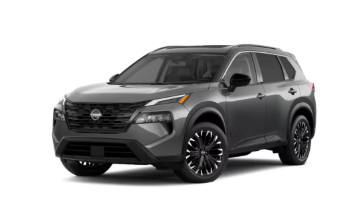
- Hyundai Santa Fe vs Nissan Rogue Rental
- Hyundai Santa Fe vs Mitsubishi Outlander Rental
- How Many People Fit in a Hyundai Santa Fe Rental?
- How Much Luggage Fits in a Hyundai Santa Fe or Similar?
- Is a Hyundai Santa Fe or Similar Good for Airport Rentals?
- Is a Hyundai Santa Fe Rental Good for a Road Trip?
- What About Fuel Economy?
- Should We Choose AWD or 4WD?
- What Features Can We Expect?
- Can We Request Apple CarPlay or Android Auto?
- Is a Hyundai Santa Fe or Similar Suitable for Child Seats?
- Is a Hyundai Santa Fe or Similar Big Enough for Five Adults?
- Hyundai Santa Fe or Similar vs Full-Size SUV
- Hyundai Santa Fe or Similar vs Minivan Rental
- How Rental Companies Decide What Counts as “Similar”
- Could We Receive an Upgrade Instead?
- What If the Replacement Vehicle Is Too Small?
- What Should We Check Before Driving Away?
- Do We Need Rental Car Insurance?
- How Can We Get the Best Hyundai Santa Fe or Similar Rental Price?
- Is It Better to Prepay or Pay at Pickup?
- Should We Rent at the Airport or Off-Airport?
- What Should We Do If We Specifically Want a Hyundai Santa Fe?
- Who Should Rent a Hyundai Santa Fe or Similar?
- Who Should Choose Something Else?
- The Biggest Mistake Travelers Make With “Or Similar” Rentals
- How to Book a Hyundai Santa Fe or Similar Without Regrets
- A Simple Example: Family Vacation
- Final Thoughts: Is a Hyundai Santa Fe or Similar Rental Worth It?
- Frequently Asked Questions
- 1. What does Hyundai Santa Fe or similar mean when renting a car?
- 2. Which cars might I get instead of a Hyundai Santa Fe?
- 3. Is a Hyundai Santa Fe or similar rental big enough for five people?
- 4. Does a Hyundai Santa Fe rental automatically come with AWD?
- 5. Can I request an actual Hyundai Santa Fe at pickup?
What Does “Hyundai Santa Fe or Similar” Mean in Car Rental?
Rental companies rarely promise a specific make and model unless the reservation explicitly says the vehicle is guaranteed.
Instead, they organize their fleets into groups.
A Hyundai Santa Fe might be presented as a midsize SUV, intermediate SUV, standard SUV, or another broadly comparable rental class depending on the country and rental company.
So when we reserve a Hyundai Santa Fe or similar rental, we are essentially saying:
We want an SUV with roughly this level of size, comfort, seating capacity, and luggage capability.
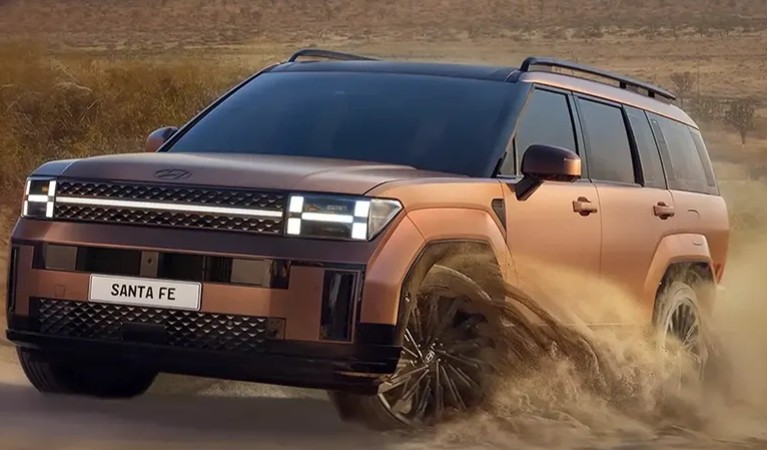
The Santa Fe pictured on the booking page acts more like an example than a promise.
Think of the photograph like the image on a hotel room category. The exact furniture might differ, but the room should still meet the category specifications.
Does “or Similar” Mean Any Random SUV?
Usually, no.
The replacement vehicle should normally belong to the same rental group or a comparable one. Rental fleets and classifications differ, though, so two companies may classify the same SUV differently.
For example, vehicles offered in a broadly similar category might include models such as:
- Kia Sorento
- Nissan Rogue or X-Trail
- Mitsubishi Outlander
- Toyota RAV4
- Ford Escape or Kuga
- Volkswagen Tiguan
- Mazda CX-5
- Chevrolet Equinox
- Subaru Forester
- Comparable midsize crossovers available in the local fleet
However, this does not mean every one of those vehicles will always be treated as a direct Santa Fe equivalent.
Fleet composition changes by airport, city, season, and rental company.
Can We Guarantee a Hyundai Santa Fe When Booking?
In most conventional rentals, we should assume the answer is no unless the company specifically states otherwise.
That distinction matters.
A booking page showing a shiny Hyundai Santa Fe can make it feel as though we are reserving that exact SUV. Yet the reservation normally guarantees the category.
When Might the Exact Model Be Guaranteed?
Certain specialist services, premium rental programs, car-sharing platforms, or model-specific rental products may allow us to reserve a particular vehicle.
Traditional airport rental companies tend to work differently because their fleets move constantly.
Imagine a Santa Fe rented in Los Angeles today and returned in San Diego tomorrow. Another vehicle may have gone in for maintenance. A customer may extend a booking unexpectedly. Suddenly the exact model originally pictured is unavailable.
That flexibility is why rental companies use the phrase “or similar.”
Which Cars Are Similar to a Hyundai Santa Fe?
This is where things become interesting.
The Hyundai Santa Fe sits in a part of the SUV market where vehicles can overlap considerably. Some alternatives may be slightly shorter, some might offer a third row depending on the generation and market, and others may provide more cargo room.
So similarity is not purely about exterior dimensions.
Rental companies often focus more heavily on practical characteristics.
Hyundai Santa Fe vs Kia Sorento Rental
The Kia Sorento is one of the most natural alternatives to a Santa Fe.
Both target families wanting something roomier than a compact crossover without stepping all the way into a large SUV.
Depending on model year and market, a Sorento may provide:
- Similar road-trip comfort
- Comparable cabin width
- Strong luggage versatility
- Available three-row seating
- Similar driving position
- Modern safety and infotainment equipment
If we booked a Santa Fe and received a Sorento, most travelers would probably consider it a reasonable substitute.
Which Is Better for Families?
That depends heavily on the actual configuration.
If the Sorento supplied by the rental company has three rows while the expected Santa Fe configuration does not, the Kia could actually be more useful.
However, a third row often comes at the expense of luggage space when all seats are occupied.
That brings us to one of the most important rental rules: seat count and suitcase count need to be considered together.
Hyundai Santa Fe vs Toyota RAV4 Rental
A Toyota RAV4 can sometimes appear around similar rental categories, although it is typically a little smaller than the Santa Fe.
For two adults and two children, that may make almost no practical difference.
For five adults carrying five large suitcases?
Now the distinction becomes much more noticeable.
A RAV4 can still be an excellent rental SUV because it is:
- Easy to drive
- Reasonably fuel-efficient
- Comfortable for everyday travel
- Manageable in city parking
- Spacious enough for many families
But if luggage capacity is the main reason we selected a Santa Fe-sized rental, we would want to confirm that any substitute actually meets our needs.
Hyundai Santa Fe vs Nissan Rogue Rental
The Nissan Rogue, known as the X-Trail in some markets, is another model travelers may encounter.
It generally offers the elevated driving position and versatile cargo area people expect from a crossover.
For ordinary vacations, sightseeing, commuting, and airport transfers, it can be perfectly suitable.
However, again, the crucial question is not whether the badge says Nissan or Hyundai.
The real question is:
Can this specific vehicle carry our passengers and luggage comfortably?
That is the lens we should use when evaluating any substitution.
Hyundai Santa Fe vs Mitsubishi Outlander Rental
The Mitsubishi Outlander deserves special mention because some versions include a third row.
That sounds fantastic on paper.
Seven seats must be better than five, right?
Not automatically.
The Third-Row Trap
Small third rows can be extremely useful for children or occasional passengers, but using them often reduces available cargo room significantly.
Picture seven passengers arriving at an airport with seven checked suitcases.
The problem becomes obvious before anyone even starts the engine.
When renting an SUV, we should never evaluate seating capacity in isolation.
A Better Question to Ask
Instead of asking:
“Does it have seven seats?”
Ask:
“Can it carry seven people plus all our luggage?”
Those are very different questions.
How Many People Fit in a Hyundai Santa Fe Rental?
Most Hyundai Santa Fe configurations are designed around family use and typically carry around five passengers comfortably, although seating configurations depend on model year and region.
Rental agencies may also place vehicles with different seating layouts into comparable groups.
For maximum comfort, we would generally think of a Santa Fe-sized SUV as ideal for:
- Two adults with several suitcases
- A couple traveling on a long road trip
- Four adults
- Two adults and two or three children
- A small family carrying vacation gear
Five adults can fit, but comfort depends on trip length and passenger size.
Five adults across several hundred miles feels very different from five adults driving twenty minutes from the airport.
How Much Luggage Fits in a Hyundai Santa Fe or Similar?
For many travelers, this is the question that actually determines whether the booking works.
Rental websites often display suitcase icons, but those graphics can be optimistic.
Real luggage is awkward.
A rigid 28-inch suitcase does not bend around the wheel arch. A stroller cannot magically disappear beneath a backpack. Golf clubs have a habit of consuming half a trunk.
A Practical Packing Estimate
A Santa Fe-sized SUV will generally work well for a family with a sensible mixture of:
- Medium suitcases
- Carry-on bags
- Backpacks
- Soft duffel bags
- A folded stroller
- Smaller travel accessories
But if every passenger arrives with a large hard-shell suitcase, space disappears quickly.
Soft Bags Can Be a Rental-SUV Superpower
This sounds trivial until we try fitting everything into a vehicle.
Soft luggage can squeeze into gaps that rigid cases cannot. If we know the trip will involve a packed SUV, replacing one or two hard suitcases with duffel bags can make loading considerably easier.
Is a Hyundai Santa Fe or Similar Good for Airport Rentals?
Yes. In many situations, it is an excellent airport rental category.
The combination of cargo flexibility and manageable exterior dimensions makes midsize SUVs attractive to travelers arriving with luggage.
They also tend to be less intimidating than genuinely large SUVs.
We get an elevated seating position without feeling as though we are piloting a small delivery truck through a parking garage.
Why Airport Travelers Like This Category
A Santa Fe-style rental can work particularly well when we need:
You may be interested in reading Hyundai Santa Fe Versus Kia Telluride: Which SUV Makes More Sense?
- Space for several suitcases
- Easy entry and exit
- Comfortable highway cruising
- Room for children
- Flexible rear seating
- A higher driving position
- More practicality than a sedan
That flexibility explains why SUVs have become such a common rental choice.
Is a Hyundai Santa Fe Rental Good for a Road Trip?
This is arguably where the category makes the most sense.
For a long-distance journey, we want enough space that passengers are not sitting with backpacks on their laps for six hours.
A midsize SUV provides breathing room.
The seating position is comfortable, the cargo area is useful, and highway driving usually feels relaxed.
Road-Trip Advantages
Compared with a small crossover or economy car, we may gain:
- More rear-seat space
- Better cargo flexibility
- Higher seating
- More comfortable family travel
- Easier loading
- Greater versatility for rural destinations
There is something wonderfully simple about opening a large tailgate and throwing in bags without playing three-dimensional luggage Tetris.
What About Fuel Economy?
This is one area where choosing a larger rental vehicle can cost us more.
A Santa Fe or similar midsize SUV will generally consume more fuel than an economy hatchback or compact sedan.
How much more depends on the engine, drivetrain, traffic, road conditions, and whether the supplied model is gasoline, diesel, hybrid, or another powertrain.
Do Not Assume You Will Get a Hybrid
Even if the model pictured online exists as a hybrid, that does not necessarily mean the vehicle waiting for us will be one.
If fuel economy matters strongly, check whether the reservation category explicitly guarantees a hybrid.
Otherwise, budget as though we could receive a conventional gasoline SUV.
Should We Choose AWD or 4WD?
Another common misunderstanding involves all-wheel drive.
A customer sees an SUV and naturally assumes it comes with AWD.
That is not always true.
Many crossovers are sold with front-wheel drive, and rental fleets may contain both versions.
When AWD Matters
It may be useful when driving through:
- Snow
- Mountain regions
- Loose gravel
- Wet rural roads
- Areas where traction conditions change quickly
For ordinary dry-weather city or highway travel, it may not matter much.
AWD Does Not Turn a Rental SUV Into an Off-Roader
This deserves emphasis.
Even when a Santa Fe or similar rental has AWD, rental agreements often restrict off-road driving.
An SUV-shaped vehicle is not automatically permission to tackle unpaved trails.
Always check the rental contract before leaving paved public roads.
What Features Can We Expect?
Rental specifications can be surprisingly inconsistent.
The listing may promise essentials such as automatic transmission and air conditioning, while individual vehicles can vary considerably in equipment.
One Santa Fe might have:
- Apple CarPlay
- Android Auto
- Adaptive cruise control
- Blind-spot monitoring
- Parking sensors
- Heated seats
- A reversing camera
Another vehicle in the same category could have a different feature set.
Therefore, we should never reserve a generic rental category solely because the example vehicle has one specific convenience feature.
Can We Request Apple CarPlay or Android Auto?
We can ask, but unless the feature is guaranteed by the booking, availability may depend on the exact vehicle we receive.
This can matter on a long trip.
Phone integration makes navigation far easier than balancing a phone on the center console like a tiny digital compass.
If smartphone connectivity is essential, mention it when collecting the vehicle and ask whether another available car in the category includes it.
Is a Hyundai Santa Fe or Similar Suitable for Child Seats?
Generally, this category is family-friendly.
The wider rear seating area and larger doors can make installing child seats easier than in compact cars.
However, parents should think about more than just whether the seats physically fit.
We also need enough trunk space after adding:
- A stroller
- Diaper bags
- Suitcases
- Toys
- Travel cots
- Groceries
A family of four can fill a midsize SUV astonishingly quickly.
Renting Child Seats vs Bringing Our Own
Rental companies commonly offer child seats for an additional fee, although availability and policies vary.
Bringing our own seat provides familiarity, but transporting it through an airport is inconvenient.
There is no universal winner here.
What matters most is ensuring the correct child restraint is available and appropriate for the child's size and the legal requirements of the destination.
Is a Hyundai Santa Fe or Similar Big Enough for Five Adults?
For shorter trips, generally yes.
For a week-long road trip, we would look much more carefully at luggage.
Five adults may require:
- Five suitcases
- Five carry-ons
- Personal bags
- Shopping space
- Possibly outdoor equipment
At that point, passenger capacity becomes less important than usable cargo volume.
When We Should Upgrade
Consider moving to a larger SUV or minivan when traveling with:
- Five adults plus large luggage
- Six or more passengers
- Multiple child seats
- Golf bags
- Ski equipment
- Large strollers
- Camping equipment
- Several weeks of luggage
Paying a little more for space can be cheaper than spending an entire vacation surrounded by bags.
Hyundai Santa Fe or Similar vs Full-Size SUV
A full-size SUV gives us another level of space, but it also brings compromises.
Large SUVs can be harder to park, more expensive to fuel, and noticeably bulkier in urban areas.
A Santa Fe-sized vehicle sits in a useful middle ground.
It is big enough to feel genuinely practical without becoming cumbersome.
Choose a Santa Fe-Type SUV When We Want
- Good family space
- Moderate fuel consumption
- Easier parking
- Comfortable highway travel
- Room for several bags
Choose a Larger SUV When We Need
- More passenger room
- More luggage capacity
- Three usable rows
- Towing capability where allowed
- Maximum interior space
Hyundai Santa Fe or Similar vs Minivan Rental
Here is an unpopular truth among people who think SUVs always look cooler:
For carrying lots of people and luggage, a minivan can be incredibly difficult to beat.
If six or seven passengers are traveling together, a minivan may offer a more useful cabin than a midsize SUV.
Sliding doors are convenient, third-row access tends to be better, and luggage packaging can be excellent.
If our priority is practicality rather than appearance, we should compare both categories before booking.
How Rental Companies Decide What Counts as “Similar”
Rental fleets operate more like moving puzzle pieces than fixed showrooms.
Vehicles enter and leave locations constantly.
Cars need maintenance. Customers return vehicles late. Reservations change. Fleets vary between cities.
Because of this, rental companies use classification systems based on characteristics such as:
- Vehicle size
- Body style
- Transmission
- Passenger capacity
- Approximate luggage capacity
- Air conditioning
- Drive type
- General market segment
The exact badge on the grille is usually secondary.
Could We Receive an Upgrade Instead?
Yes, sometimes.
If the reserved category is unavailable, the company may supply a larger or higher-class vehicle without charging an upgrade fee.
That sounds like winning the rental lottery.
Sometimes it is.
But an upgrade is not automatically better.
When an Upgrade Can Become a Downgrade
Imagine we reserve a Santa Fe-sized SUV because we want manageable fuel consumption.
The agent offers a huge SUV.
Great — until we realize:
- Fuel costs are higher
- Parking becomes harder
- Narrow streets feel intimidating
- The vehicle may not fit easily in our hotel garage
So if offered an upgrade, ask what vehicle we are actually receiving.
Bigger is useful only when bigger solves our problem.
What If the Replacement Vehicle Is Too Small?
This is where checking the vehicle before leaving the rental location becomes crucial.
Suppose we booked a category advertising space for five passengers and several bags, but the vehicle offered cannot realistically accommodate our luggage.
Do not simply drive away and hope everything works.
Politely explain why the vehicle does not meet the practical needs represented by the booked category.
Ask whether another vehicle is available.
Take Screenshots Before the Trip
This is one of the simplest rental tips we can recommend.
Save screenshots showing:
- Vehicle category
- Example car
- Passenger capacity
- Luggage allowance
- Transmission type
- Drive type if specified
- Included features
- Price
- Booking terms
If something is significantly different at pickup, we have a much clearer reference.
What Should We Check Before Driving Away?
A few minutes in the parking lot can save enormous frustration later.
You may be interested in readingHyundai Santa Fe Versus Kia Telluride: Which SUV Makes More Sense?You may be interested in reading
Hyundai Santa Fe vs Subaru Forester: Which SUV Should We Buy?Before leaving, check the following:
- Photograph the exterior. Record scratches, dents, wheel damage, and windshield chips.
- Check the fuel level. Make sure it matches the rental agreement.
- Test the lights. Especially important if driving after dark.
- Check the tires visually. Look for obvious damage or low pressure.
- Connect your phone. Make sure navigation and charging work.
- Adjust mirrors and seats. Do this before entering traffic.
- Locate basic controls. Find the headlights, wipers, parking brake, and fuel-door release.
- Confirm luggage fits. This should happen before leaving the facility.
- Ask what fuel it uses. Never guess.
- Understand the return policy. Know where and how the vehicle must be returned.
Five minutes spent here can prevent an hour of confusion later.
Do We Need Rental Car Insurance?
Insurance is one of the most confusing parts of renting any car.
The answer depends on where we rent, our existing car insurance, the payment card used, and the rental company's terms.
Common products may include forms of collision damage protection, theft protection, liability coverage, or supplemental coverage.
Avoid Assuming We Are Automatically Covered
Some credit cards offer rental protection, but conditions vary.
There may be exclusions for:
- Certain countries
- Certain vehicle classes
- Long rental periods
- Luxury vehicles
- Tires and glass
- Off-road incidents
- Additional drivers
Before relying on outside coverage, verify exactly what it includes.
How Can We Get the Best Hyundai Santa Fe or Similar Rental Price?
Rental pricing behaves almost like airline pricing.
Rates can move based on demand, location, season, fleet availability, and booking timing.
A few strategies can help.
Compare the Total Price, Not the Headline Price
A cheap daily rate can become expensive after adding:
- Airport fees
- Taxes
- Additional drivers
- Young-driver fees
- Child seats
- Insurance
- One-way charges
- Toll products
- Fuel charges
The only useful comparison is the final estimated cost.
Check Multiple Vehicle Categories
Sometimes a strange pricing situation occurs where a larger SUV costs almost the same as a smaller one.
At other times, a premium crossover may be cheaper because inventory is higher.
Never assume category size perfectly matches price.
Is It Better to Prepay or Pay at Pickup?
Prepaid rates can sometimes be cheaper, but flexibility may be reduced.
Pay-at-pickup bookings often make more sense when plans could change.
Before choosing, check cancellation conditions carefully.
A saving of twenty dollars is not much of a saving if changing the reservation later costs considerably more.
Should We Rent at the Airport or Off-Airport?
Airport locations are convenient.
We leave baggage claim, walk to the rental facility, and begin the trip.
That convenience may come with additional fees.
Off-airport branches can sometimes offer lower rates, although transport costs and opening hours need to be considered.
Airport Rental Makes Sense When
- We arrive late
- We have lots of luggage
- We are traveling with children
- We need the vehicle immediately
- Convenience matters more than saving a small amount
Off-Airport Rental Can Make Sense When
- We are staying in the city first
- Public transport is easy
- Rental rates differ significantly
- We do not need the car immediately
What Should We Do If We Specifically Want a Hyundai Santa Fe?
Call the pickup location shortly before the rental and ask whether a Santa Fe is currently in the fleet.
They may not be able to guarantee it, but knowing what is available can improve our chances.
We can also politely request the model at pickup.
Rental staff often have several vehicles available within one category.
If the exact Hyundai is there and ready, asking costs nothing.
But Do Not Build the Entire Trip Around One Model
Unless the reservation explicitly guarantees it, we should still plan for an equivalent vehicle.
That mindset prevents unnecessary disappointment.
Who Should Rent a Hyundai Santa Fe or Similar?
This category sits in a sweet spot for many travelers.
It is especially appealing for:
- Families of three to five
- Couples carrying lots of luggage
- Long-distance road trips
- Travelers visiting national parks
- Airport-to-resort journeys
- Small groups
- People who prefer an elevated seating position
- Drivers wanting more room without renting a giant SUV
It gives us flexibility without moving too far into oversized-vehicle territory.
Who Should Choose Something Else?
A Santa Fe-type rental is not always the best answer.
Choose a Smaller Car If
We are mainly driving in crowded city centers and have minimal luggage.
Compact vehicles cost less to fuel and are dramatically easier to park.
Choose a Minivan If
We have six or seven passengers and substantial baggage.
Choose a Full-Size SUV If
We genuinely need much more passenger or cargo room.
Choose a Luxury SUV If
Premium interior quality and equipment are major priorities.
Choose a Guaranteed Hybrid Category If
Fuel efficiency is central to the trip.
The Biggest Mistake Travelers Make With “Or Similar” Rentals
The biggest mistake is focusing too much on the model name.
We see “Hyundai Santa Fe” and immediately start researching the Santa Fe's touchscreen, engine, cargo measurements, and trim features.
But the better approach is to research the rental category.
Ask ourselves:
How many people are traveling?
How many large bags do we have?
Do we need AWD?
Do we require seven seats?
Are we driving mostly in cities or on highways?
Do we need child seats?
Once those questions are answered, the badge becomes far less important.
How to Book a Hyundai Santa Fe or Similar Without Regrets
We can make the whole process much easier by following a simple approach.
Step 1: Count Passengers Honestly
Do not treat the maximum passenger number as the comfortable passenger number.
Step 2: Count Large Suitcases
Luggage often determines the correct vehicle category more than people do.
Step 3: Check the Rental Class
Look beyond the example photograph.
Step 4: Read the Fine Print
Pay attention to mileage, fuel policy, deposit requirements, age restrictions, insurance, and additional drivers.
Step 5: Screenshot the Reservation
Keep a record of what was advertised.
Step 6: Inspect the Supplied Vehicle
Make sure it genuinely meets your needs before leaving.
Step 7: Ask for Another Vehicle If Necessary
Rental staff cannot solve a problem they do not know exists.
A Simple Example: Family Vacation
Imagine we are a family of four traveling for ten days.
We have:
- Two adults
- Two children
- Three medium suitcases
- Two backpacks
- One stroller
A Hyundai Santa Fe or similar car rental should generally be a sensible category.
Now change the scenario.
We have:
- Five adults
- Five large suitcases
- Four carry-ons
- Golf clubs
Suddenly the same category becomes questionable.
The rental vehicle has not changed.
Our needs have.
That is why choosing a car rental is really a packing problem disguised as a transportation problem.
Final Thoughts: Is a Hyundai Santa Fe or Similar Rental Worth It?
For many travelers, absolutely.
A Hyundai Santa Fe or similar rental delivers one of the most useful combinations in the rental market: enough space for families and luggage, comfortable road manners, an elevated driving position, and dimensions that remain manageable in everyday traffic.
The key is understanding what we are actually reserving.
We are usually not buying temporary access to one specific Hyundai Santa Fe. We are reserving a vehicle category.
Once we accept that distinction, the entire booking process becomes easier.
Instead of worrying about the badge, we can focus on what truly matters: passenger comfort, suitcase space, fuel costs, equipment, drive type, and whether the vehicle suits the journey ahead.
Because at the end of the day, the best rental car is not necessarily the one pictured on the reservation page.
It is the one that swallows our luggage, keeps everyone comfortable, and disappears quietly into the background while we enjoy the trip.
Frequently Asked Questions
1. What does Hyundai Santa Fe or similar mean when renting a car?
It generally means the Hyundai Santa Fe is an example vehicle within a rental category. The company may provide a Santa Fe or another SUV with comparable passenger capacity, size, transmission, and luggage capability.
2. Which cars might I get instead of a Hyundai Santa Fe?
Possible alternatives can include vehicles such as the Kia Sorento, Nissan Rogue or X-Trail, Mitsubishi Outlander, Toyota RAV4, Volkswagen Tiguan, Mazda CX-5, Ford Escape or other comparable SUVs. Exact models vary by rental company and location.
3. Is a Hyundai Santa Fe or similar rental big enough for five people?
It can be, particularly for shorter journeys. For five adults on a long trip, luggage space becomes the bigger concern. If everyone has a large suitcase, a larger SUV or minivan may be more comfortable.
You may be interested in readingHyundai Santa Fe Versus Kia Telluride: Which SUV Makes More Sense?You may be interested in reading
Hyundai Santa Fe vs Subaru Forester: Which SUV Should We Buy?You may be interested in reading
 Toyota Sequoia Trim Levels: Complete 2026 Guide
4. Does a Hyundai Santa Fe rental automatically come with AWD?
No. Do not assume AWD simply because the vehicle is an SUV. If all-wheel drive is essential for your trip, make sure it is specifically included or guaranteed by the rental reservation.
5. Can I request an actual Hyundai Santa Fe at pickup?
Yes. You can ask whether a Santa Fe is available, and rental staff may provide one if it is in the fleet. However, unless the booking specifically guarantees the model, the company can normally substitute another vehicle in the same category.
If you want to know other articles similar to Hyundai Santa Fe or Similar Car Rental: What Does It Actually Mean? you can visit the category Models.
Nissan Rogue Dark Armor vs Platinum: Which Trim Is Better?

Kia Sorento Models: Complete Guide to Trims, Engines and Versions
BYD Shark 6 vs Ranger vs HiLux: Which Ute Makes the Most Sense in 2026?
BYD Shark 6 vs MG U9: Which Ute Makes More Sense in 2026?
BYD Shark 6 vs Ford Ranger Raptor: Which Performance Ute Is Better in 2026?
BYD Shark 6 vs Kia Tasman: Which Ute Is Better?
Leave a Reply
More content of your interest