
Hyundai Santa Fe Versus Kia Telluride: Which SUV Makes More Sense?

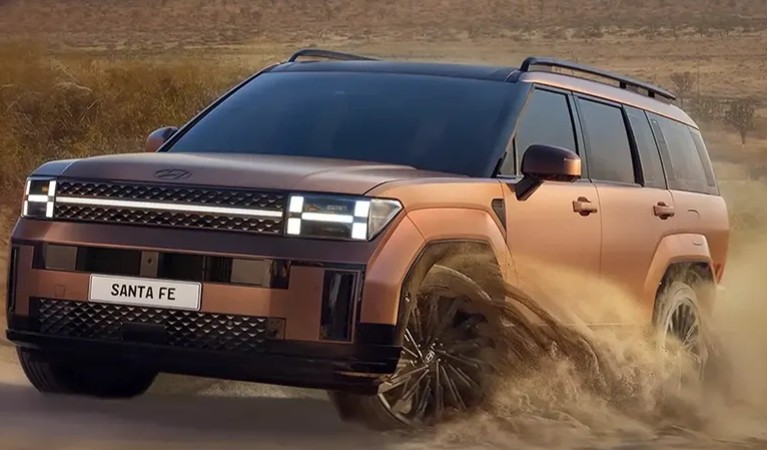
Choosing between the Hyundai Santa Fe versus Kia Telluride can feel surprisingly complicated. Both SUVs come from closely related Korean brands, both offer family-friendly cabins, both lean heavily into technology, and both deliver far more refinement than their mainstream badges might suggest.
Yet they are not really chasing the exact same buyer.
The Hyundai Santa Fe has evolved into a distinctive, practical SUV with bold styling, clever interior packaging, and an emphasis on efficiency and everyday usability. The Kia Telluride, meanwhile, approaches family transportation like a larger touring SUV. It prioritizes passenger space, traditional V6-style capability in many versions, long-distance comfort, and a genuinely usable three-row layout.
So which should we choose?
That depends less on which SUV is "better" and more on what we expect our SUV to do every day. Let's dig into the details.
Content in this publication
- Hyundai Santa Fe vs Kia Telluride at a Glance
- Exterior Design: Two Completely Different Personalities
- Interior Design: Where Both SUVs Feel Expensive
- Interior Quality: Which One Feels More Premium?
- Passenger Space: The Telluride Shows Its Size
- Third-Row Seating: Telluride Takes the Advantage
- Cargo Space: Do We Carry People or Luggage?
- Engine Performance: Different Approaches
- Santa Fe Performance: Turbocharged Punch
- Telluride Performance: Smooth and Predictable
- Fuel Economy: Santa Fe Has the Stronger Argument
- Ride Comfort: Telluride Feels Like a Cruiser
- Handling: Santa Fe Feels Easier Around Town
- Technology: Hyundai and Kia Know Their Screens
- Safety Technology
- Parking and Visibility
- Towing: Telluride Is Better Suited to Heavier Jobs
- Off-Road Ability: Neither Is a Hardcore 4x4
- Family Friendliness: Small Details Matter
- Hyundai Santa Fe Advantages
- Kia Telluride Advantages
- Which SUV Is Better for City Driving?
- Which Is Better for Road Trips?
- Which Is Better for Families With Three Children?
- Which Feels More Luxurious?
- Ownership Costs
- Reliability Considerations
- Resale Value
- Hyundai Santa Fe Versus Kia Telluride: Who Should Buy the Santa Fe?
- Who Should Buy the Kia Telluride?
- Santa Fe vs Telluride: The Most Important Question
- Final Verdict: Hyundai Santa Fe Versus Kia Telluride
- Frequently Asked Questions
- 1. Is the Kia Telluride bigger than the Hyundai Santa Fe?
- 2. Is the Hyundai Santa Fe better on gas than the Kia Telluride?
- 3. Which is better for a family, Santa Fe or Telluride?
- 4. Which is better for towing, Hyundai Santa Fe or Kia Telluride?
- 5. Should we buy a Santa Fe or Telluride for road trips?
Hyundai Santa Fe vs Kia Telluride at a Glance
Before we crawl through every cupholder and debate the finer points of suspension tuning, let's establish the fundamental difference.
The Telluride is generally the larger vehicle. It was designed from the beginning as a substantial three-row family SUV, while the Santa Fe sits slightly below it in Hyundai's broader SUV hierarchy.
Modern Santa Fe models have become considerably roomier and can also provide three-row seating, but the Telluride remains the stronger choice when the third row will be occupied regularly.
Think of it this way: the Santa Fe feels like a cleverly packaged family SUV that happens to have extra seating available. The Telluride feels like a genuine family hauler designed around carrying several passengers.
That distinction influences almost everything else.
Exterior Design: Two Completely Different Personalities
Park these SUVs side by side and nobody will confuse them.
The Santa Fe Goes Bold
Recent Santa Fe styling is unapologetically boxy. Hyundai appears to have thrown away the traditional crossover rulebook and reached for a ruler instead.
The upright roofline, squared-off body, strong shoulder lines, and broad tailgate give the Santa Fe an adventurous appearance. It looks more like something designed for camping trips than school drop-offs, even if school runs will probably make up most of its working life.
There is something refreshing about that.
Many SUVs seem as though they were shaped by the same wind tunnel. The Santa Fe refuses to blend into the parking lot.
The Telluride Looks More Traditional
The Kia Telluride has a more conventional premium-SUV silhouette.
It is large, upright, muscular, and cleanly proportioned. Depending on the trim, darker exterior accents and larger wheels can make it appear almost luxury-brand expensive.
Its styling has aged remarkably well because Kia resisted unnecessary drama.
Which Design Wins?
Purely subjective.
We would choose the Santa Fe if personality matters most.
We would choose the Telluride if we prefer a more mature, substantial appearance.
Interior Design: Where Both SUVs Feel Expensive
Open the doors and the comparison becomes much closer.
Both Hyundai and Kia have become extremely good at creating interiors that look richer than their price tags suggest.
The Santa Fe, however, tends to feel more contemporary.
Its horizontal dashboard, large digital displays, useful storage spaces, and squared interior architecture mirror the exterior design. Everything feels carefully organized rather than randomly placed.
The Telluride's cabin is slightly more traditional, but that is hardly an insult.
Its controls are generally easy to understand, its dashboard feels substantial, and higher trims can look surprisingly luxurious.
Wood-effect trim, large screens, comfortable seats, and tasteful ambient details make it easy to forget that we are sitting inside a mainstream-brand SUV.
This is one of those comparisons where price and trim level matter enormously.
A basic Santa Fe cannot reasonably be compared with a heavily equipped Telluride, and vice versa.
At broadly comparable equipment levels, both vehicles impress.
The Santa Fe feels more modern and design-focused, whereas the Telluride feels more traditionally upscale.
Touchpoints around the dashboard and doors are generally pleasant, although harder plastics naturally appear lower in the cabins.
Neither feels cheap where it matters.
That may sound like faint praise, but remember where mainstream SUVs were 15 years ago. We've come a long way.
Passenger Space: The Telluride Shows Its Size
Space is one of the most important differences in the Hyundai Santa Fe versus Kia Telluride debate.
If we're regularly carrying a large family, the Telluride begins pulling ahead.
Front-Seat Comfort
Both SUVs offer plenty of front-seat room.
Drivers sit relatively high with commanding visibility, although the different dashboard layouts create distinct atmospheres.
The Santa Fe feels airy and open.
The Telluride feels broader and more substantial.
Neither should give average-sized adults much to complain about.
Second-Row Space
Again, both perform well.
Depending on configuration, the second row may use either a bench or individual captain's chairs.
Captain's chairs make the cabin feel more luxurious and simplify access to the third row, while a bench maximizes passenger capacity.
For families with young children, think carefully before choosing.
A beautiful pair of captain's chairs may look fantastic in the showroom, but that extra middle seat can suddenly become precious when grandparents come along.
Third-Row Seating: Telluride Takes the Advantage
Here we reach one of the clearest differences.
The Telluride's larger dimensions generally make its third row more suitable for regular use.
Adults may not want to spend eight hours back there, but shorter journeys are realistic, particularly when second-row passengers cooperate with seat positioning.
The Santa Fe's third row is better considered occasional seating for many families.
Children should generally be happier there than tall adults.
If we only need the third row a few times per month, the Santa Fe's arrangement could be perfectly adequate.
If we intend to carry six or seven people almost every day, however, the Telluride makes considerably more sense.
Cargo Space: Do We Carry People or Luggage?
Cargo space becomes particularly important with all three rows occupied.
Large three-row SUVs often perform impressive magic tricks when the rear seats are folded, but the real test comes when every seat is being used.
The Telluride's greater overall size generally provides more flexibility for families carrying passengers and their belongings simultaneously.
The Santa Fe's squared body shape helps enormously.
Its large, upright rear opening makes loading bulky items easier, and folding the rear seats creates a useful, van-like cargo area.
The Santa Fe Has a Clever Tailgate Advantage
One interesting element of the Santa Fe's design philosophy is how strongly Hyundai emphasizes the rear cargo area.
Open the tailgate and the wide opening almost becomes a sheltered outdoor seating space.
For camping, sporting events, beach days, or simply changing muddy shoes after a hike, that can be surprisingly useful.
It's one of those features that sounds like marketing until we actually use it.
Then we wonder why more SUVs aren't designed this way.
Engine Performance: Different Approaches
Performance varies by year, market, trim, and powertrain, so buyers should always confirm specifications for the exact vehicle being considered.
Generally speaking, though, the Santa Fe and Telluride take different routes.
The Santa Fe has increasingly embraced turbocharged and electrified powertrain options.
The Telluride traditionally relies on a larger naturally aspirated gasoline engine.
That creates noticeably different personalities.
Santa Fe Performance: Turbocharged Punch
Turbocharged Santa Fe versions tend to deliver strong low- and mid-range torque.
Press the accelerator and the vehicle can feel surprisingly lively for a family SUV.
Turbo engines are particularly enjoyable around town because useful torque arrives relatively early.
That makes merging, passing, and climbing hills feel effortless.
The downside?
Power delivery can occasionally feel less linear than the smooth progression of a larger naturally aspirated engine.
Telluride Performance: Smooth and Predictable
The Telluride's larger engine gives it a more traditional SUV character.
Power delivery tends to be smooth rather than explosive.
You may be interested in reading Hyundai Santa Fe vs Subaru Forester: Which SUV Should We Buy?
It may not pin us against the seat, but that is not really the point.
The Telluride feels happiest cruising along highways with passengers, luggage, and perhaps something attached to the tow hitch.
Acceleration is usually adequate rather than thrilling.
And honestly, does anyone buy a three-row Telluride because they want to win traffic-light drag races?
Probably not.
Fuel Economy: Santa Fe Has the Stronger Argument
If fuel costs matter, the Santa Fe deserves serious attention.
Its smaller footprint and availability of more efficiency-oriented powertrains can make it substantially more economical than the larger Telluride, depending on the configuration.
This matters more than many buyers initially realize.
Imagine driving 15,000 miles every year.
Even a relatively modest difference in fuel consumption accumulates quickly over five or six years.
Suddenly the larger SUV's extra room is not free.
We're paying for it every time we visit the gas station.
Hybrid Santa Fe Models Change the Equation
The availability of hybrid power is an especially important Santa Fe advantage.
A hybrid can make tremendous sense for suburban families who spend significant time in stop-and-go traffic.
Electric assistance allows the gasoline engine to work more efficiently, particularly at lower speeds.
Drivers who spend most of their time on highways may see a smaller advantage, but the reduced fuel consumption can still make ownership easier on the wallet.
Ride Comfort: Telluride Feels Like a Cruiser
The Telluride's longer body and family-focused tuning typically create a composed ride.
It feels planted on highways and relaxed over long distances.
That larger-SUV character can be comforting on road trips.
The Santa Fe is also comfortable, although its slightly smaller dimensions make it feel more maneuverable and responsive.
Neither is remotely sporty in the traditional sense.
But they don't need to be.
A family SUV should absorb potholes without launching coffee toward the headliner.
Both generally understand the assignment.
Handling: Santa Fe Feels Easier Around Town
Size has consequences.
The Telluride's greater dimensions are wonderful when we're sitting inside it.
They become less wonderful when we're trying to squeeze into a tight city parking space.
The Santa Fe feels easier to place on narrow roads and typically requires less mental arithmetic when navigating crowded parking garages.
Its smaller footprint can make daily ownership noticeably less stressful.
For drivers living in dense urban environments, this advantage should not be underestimated.
Telluride Highway Stability
On wide highways, however, the Telluride's size becomes an advantage.
The vehicle feels substantial and settled.
Crosswinds, rough pavement, and long sweeping roads rarely disturb its calm personality.
That makes it an excellent long-distance family vehicle.
Technology: Hyundai and Kia Know Their Screens
Technology has become one of the strongest areas for both brands.
Modern versions may offer features such as:
- Large digital instrument displays
- Wide touchscreen infotainment systems
- Apple CarPlay and Android Auto compatibility
- Multiple USB charging ports
- Wireless phone charging
- Surround-view cameras
- Digital-key functionality
- Premium audio systems
- Smartphone-based connected services
The exact feature list varies by year and trim, but the overall theme is clear: neither SUV feels technologically outdated.
Santa Fe Technology Feels Slightly More Futuristic
The Santa Fe's cabin design integrates its screens particularly well.
The interface feels like part of the dashboard rather than a tablet that someone remembered to attach at the last minute.
We also appreciate physical controls for frequently used functions.
Touchscreens are wonderful for navigation.
They are less wonderful when we simply want to adjust the temperature while bouncing down a rough road.
Safety Technology
Family buyers naturally place safety high on the priority list.
Both SUVs can offer comprehensive driver-assistance technology, depending on configuration.
Common systems may include forward-collision assistance, blind-spot monitoring, adaptive cruise control, lane-keeping assistance, parking sensors, rear cross-traffic assistance, and camera-based parking aids.
Higher trims may add increasingly sophisticated highway-driving systems.
However, we should remember one important point.
Driver-assistance technology assists the driver. It does not replace the driver.
No amount of software turns us into passengers behind the steering wheel.
Parking and Visibility
The Santa Fe's relatively squared body provides good visual reference points.
We can more easily estimate where the corners of the vehicle are compared with heavily rounded crossovers.
The Telluride is larger, so available parking cameras become even more valuable.
A surround-view camera can transform parallel parking from a mildly stressful puzzle into something almost effortless.
Once we've owned an SUV with a good 360-degree camera, returning to a standard reversing camera feels oddly primitive.
Towing: Telluride Is Better Suited to Heavier Jobs
Anyone planning to tow regularly should pay close attention to the exact tow ratings of the year, trim, drivetrain, and towing equipment being considered.
In general, the Telluride's larger-engine platform and overall dimensions make it the more natural towing vehicle.
It is better suited to buyers thinking about larger trailers, recreational equipment, or frequent towing.
The Santa Fe can still handle lighter recreational towing in appropriately equipped versions.
But if towing sits near the top of our priority list, the Kia deserves the advantage.
Off-Road Ability: Neither Is a Hardcore 4x4
Both vehicles can be offered with all-wheel-drive systems and rugged-looking trims.
That does not make either one a dedicated rock crawler.
For snow, gravel roads, muddy campsites, wet grass, and light trails, AWD can provide useful additional traction.
For deep mud, large rocks, extreme articulation, or serious backcountry exploration, we would rather have something designed around proper off-road hardware.
Santa Fe Feels More Adventure-Oriented
Interestingly, the Santa Fe's visual design makes it look like the more adventurous machine.
Its boxy body and outdoor-focused details invite roof boxes, bicycles, hiking gear, and camping equipment.
So while the Telluride may be larger, the Santa Fe can feel more naturally suited to active lifestyles.
Family Friendliness: Small Details Matter
Specifications don't tell us everything.
Family cars live messy lives.
There are water bottles rolling under seats, backpacks wedged into footwells, tablets charging from every available USB port, crumbs hiding in impossible locations, and someone inevitably asking, "Are we there yet?"
What matters is how easily the vehicle absorbs the chaos.
Both SUVs do a good job, but in different ways.
The Santa Fe impresses with clever packaging and storage.
The Telluride impresses with sheer passenger space.
Hyundai Santa Fe Advantages
The Santa Fe makes the strongest argument for buyers who want versatility without moving into an especially large SUV.
Its major strengths include:
- Easier urban maneuverability.
- Potentially better fuel economy.
- Available hybrid powertrains in many markets.
- Distinctive exterior styling.
- Modern interior design.
- Useful cargo-area packaging.
- Strong technology offerings.
- Occasional third-row flexibility.
For a family of four or five that occasionally needs extra seats, the formula is compelling.
Kia Telluride Advantages
The Telluride becomes difficult to beat when space is the priority.
You may be interested in readingHyundai Santa Fe vs Subaru Forester: Which SUV Should We Buy?You may be interested in reading
 Toyota Sequoia Trim Levels: Complete 2026 Guide
Its key advantages typically include:
- More accommodating third-row seating.
- Greater overall passenger room.
- Strong cargo versatility.
- Smooth highway manners.
- Substantial towing capability when properly configured.
- Refined interior presentation.
- Confident road presence.
- Better suitability for larger families.
If we constantly travel with six or more occupants, the Telluride simply makes life easier.
Which SUV Is Better for City Driving?
The Hyundai Santa Fe.
This is where smaller dimensions become an everyday gift.
Parking spaces suddenly look bigger.
Narrow streets feel less intimidating.
Crowded shopping-center garages stop resembling obstacle courses.
The Telluride can absolutely function as a daily urban vehicle, especially with parking cameras and sensors.
But why carry extra size around every day if we rarely use it?
Which Is Better for Road Trips?
The Kia Telluride has an edge.
Long-distance trips magnify the value of interior volume.
Passengers can spread out.
The third row becomes more useful.
More luggage fits behind the seats.
And the larger vehicle's relaxed road manners make hours of highway driving feel natural.
That said, a Santa Fe hybrid could be extremely appealing for travelers trying to minimize fuel costs.
The best choice therefore depends on whether we value maximum space or maximum efficiency.
Which Is Better for Families With Three Children?
This is a fascinating middle ground.
Three children can fit comfortably in either SUV, depending on seat configuration and child-seat requirements.
But family life tends to expand.
Friends come along.
Grandparents visit.
Sports gear multiplies mysteriously overnight.
If we expect frequent six- or seven-person trips, buying the Telluride now could prevent us from wishing for more space later.
If most journeys involve five people or fewer, the Santa Fe may be the smarter and more economical solution.
Which Feels More Luxurious?
At higher trim levels, the difference becomes surprisingly narrow.
The Telluride has built much of its reputation around delivering near-luxury ambiance without requiring a luxury-brand badge.
The Santa Fe has responded with an increasingly sophisticated cabin.
We might describe the difference like this:
The Telluride feels like a traditional premium SUV.
The Santa Fe feels like a modern designer SUV.
One wears a tailored jacket.
The other wears minimalist sneakers and carries an expensive laptop.
Ownership Costs
Purchase price is only the beginning.
We also need to think about:
- Fuel
- Insurance
- Tires
- Maintenance
- Registration
- Depreciation
- Financing costs
- Repair expenses
The Santa Fe's efficiency and smaller size may reduce some everyday costs.
For example, larger wheels and tires typically cost more to replace, while increased fuel consumption gradually adds to the Telluride's running expenses.
The Telluride's extra capability may justify those costs for families that genuinely need it.
The mistake is paying for capability we never use.
Reliability Considerations
Hyundai and Kia vehicles share certain engineering resources, but reliability can vary considerably depending on year, engine, transmission, and individual vehicle history.
Used buyers should avoid treating the badge alone as a guarantee.
A well-maintained vehicle with complete service documentation is often more attractive than a supposedly "better" model that has been neglected.
Before purchasing used, we would check:
- Maintenance history
- Open recalls
- Previous accident history
- Oil consumption
- Transmission operation
- Electronics
- Air-conditioning performance
- Tire wear
- Suspension noises
- Diagnostic trouble codes
A professional pre-purchase inspection is money well spent.
Resale Value
Both models have developed strong recognition in the SUV market, but resale value depends on location, trim level, mileage, age, condition, and broader market demand.
Popular configurations generally perform better.
Neutral exterior colors, desirable drivetrains, clean service records, and moderate mileage all help.
However, buying solely based on predicted resale value can be a trap.
The vehicle we enjoy using for six years may ultimately be worth more to us than the one predicted to retain an extra percentage point of value.
Hyundai Santa Fe Versus Kia Telluride: Who Should Buy the Santa Fe?
Choose the Hyundai Santa Fe if we:
- Usually carry four or five people.
- Occasionally need a third row.
- Want better fuel efficiency.
- Prefer a smaller vehicle for city driving.
- Like bold, unconventional styling.
- Want hybrid availability.
- Prioritize clever cargo packaging.
- Don't need maximum towing ability.
The Santa Fe is the rational choice for many families because it gives us most of the utility of a larger SUV without carrying quite as much bulk.
Who Should Buy the Kia Telluride?
Choose the Kia Telluride if we:
- Regularly carry six or more passengers.
- Need a genuinely useful third row.
- Take frequent family road trips.
- Want more interior room.
- Tow recreational equipment.
- Prefer smooth, traditional engine characteristics.
- Value maximum family practicality over fuel economy.
- Simply enjoy driving a larger SUV.
The Telluride is the stronger tool for bigger jobs.
Santa Fe vs Telluride: The Most Important Question
Forget horsepower for a moment.
Forget wheel sizes.
Forget whether one touchscreen is an inch larger than another.
Ask this instead:
How many people will actually be inside the vehicle 90% of the time?
If the answer is four or five, the Santa Fe begins making enormous sense.
If the answer is six or seven, buy the Telluride and enjoy the extra breathing room.
Buying an SUV is often like buying a house.
We tend to imagine the biggest gathering we'll ever host rather than the life we actually live every Tuesday morning.
Choose for normal life first.
Exceptional situations come second.
Final Verdict: Hyundai Santa Fe Versus Kia Telluride
There is no universal winner in the Hyundai Santa Fe versus Kia Telluride comparison because these SUVs solve slightly different problems.
The Hyundai Santa Fe is the smarter all-rounder for buyers who want flexible seating, modern technology, strong practicality, and potentially lower fuel costs without driving something especially large.
It feels fresh, clever, and appropriately sized for many households.
The Kia Telluride is the better large-family SUV.
Its roomier third row, generous passenger space, confident highway manners, and greater towing-oriented capability make it especially attractive for families who frequently use every seat.
If we rarely need a proper third row, we'd lean toward the Santa Fe.
If we constantly hear someone shouting, "Move your seat forward, I can't fit back here," the Telluride is probably telling us something.
Both are excellent family SUVs.
The real winner is simply the one whose size matches our life.
Frequently Asked Questions
1. Is the Kia Telluride bigger than the Hyundai Santa Fe?
Yes. The Telluride generally occupies a larger three-row SUV class and provides more passenger room, particularly in the third row. The Santa Fe is easier to maneuver while still offering impressive interior flexibility.
2. Is the Hyundai Santa Fe better on gas than the Kia Telluride?
Generally, yes. Santa Fe models can offer smaller and more efficiency-focused powertrains, including hybrid options in many markets. Actual fuel consumption varies depending on year, engine, drivetrain, driving conditions, and driving style.
3. Which is better for a family, Santa Fe or Telluride?
For families of four or five, the Santa Fe may provide enough room while being easier and cheaper to operate. Families regularly carrying six or more passengers will usually benefit from the Telluride's larger cabin and more practical third row.
4. Which is better for towing, Hyundai Santa Fe or Kia Telluride?
The Telluride is generally the stronger choice for frequent or heavier towing, although exact towing limits depend on model year, trim, drivetrain, and equipment. Always confirm the manufacturer's rating for the specific vehicle.
You may be interested in readingHyundai Santa Fe vs Subaru Forester: Which SUV Should We Buy?You may be interested in reading
Toyota Sequoia Trim Levels: Complete 2026 GuideYou may be interested in reading
Toyota Sequoia Years to Avoid: Which Models Should We Think Twice About?5. Should we buy a Santa Fe or Telluride for road trips?
The Telluride is particularly good for long trips involving many passengers because of its larger cabin and third-row space. The Santa Fe can be the better road-trip choice for smaller families that prioritize fuel efficiency, maneuverability, and lower running costs.
If you want to know other articles similar to Hyundai Santa Fe Versus Kia Telluride: Which SUV Makes More Sense? you can visit the category Models.
Volkswagen T-Cross vs Volkswagen T-Roc: Which Is Better?
Hyundai Tucson Weight: Complete Guide to Curb, Gross, and Payload Specs
Honda Passport vs Toyota 4Runner: Which SUV Is Better?
Honda Passport vs Ford Bronco: Which SUV Is Better?
Honda Passport vs Ford Explorer: Which SUV Is Better?
Honda Passport or Pilot: Which SUV Is Better?
Leave a Reply
More content of your interest