

Hyundai Santa Fe vs Kia Sportage: Which SUV Is Better?

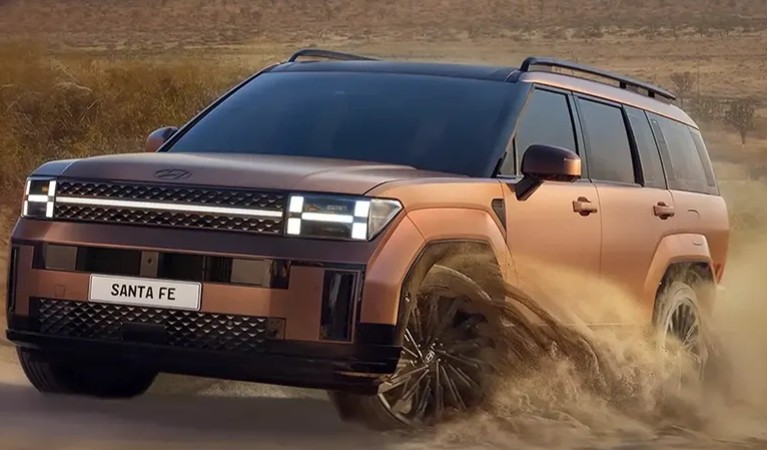
Choosing between the Hyundai Santa Fe and Kia Sportage looks straightforward until we spend a few minutes with the specifications. Both come from closely related Korean manufacturers, both offer attractive technology, both have hybrid options, and both aim at families who want the usefulness of an SUV without moving into something enormous.
Yet these two vehicles are not really direct twins.
The Hyundai Santa Fe is the larger, more family-oriented SUV, with three rows of seating and considerably more overall space. The Kia Sportage is a smaller five-seat crossover, built around easier maneuverability, lower purchase prices, and excellent everyday efficiency.
For the 2026 model year in the U.S., Hyundai lists the Santa Fe with a starting MSRP of about $34,800, while Kia lists the gasoline Sportage from $28,790. That price difference immediately tells us something: although shoppers frequently compare them, they occupy slightly different positions in the SUV world.
So, which one makes more sense?
If we're transporting children, luggage, dogs, relatives, and half the contents of our house, the Santa Fe starts looking very tempting. If we're mostly commuting, shopping, road-tripping with four or fewer passengers, or simply trying to keep our costs down, the Sportage has a strong argument.
Let's dig much deeper.
Content in this publication
- Hyundai Santa Fe vs Kia Sportage at a Glance
- Santa Fe vs Sportage: Size Is the Biggest Difference
- Cargo Space: Both Are Surprisingly Practical
- Engine Performance: The Santa Fe Brings More Muscle
- Hyundai Santa Fe Hybrid vs Kia Sportage Hybrid
- Fuel Economy: Sportage Has the Natural Advantage
- Interior Design: Two Different Flavors of Modern
- Technology: Neither SUV Feels Cheap
- Comfort: Which One Is Better for Long Trips?
- Driving Experience: Sportage for Town, Santa Fe for Highways
- AWD and Light Adventure Driving
- Towing: Santa Fe Is the Better Starting Point
- Price: Kia Sportage Wins the Budget Battle
- Which SUV Is Cheaper to Own?
- Reliability and Warranty
- Hyundai Santa Fe vs Kia Sportage for a Family
- Santa Fe vs Sportage for Commuting
- Which Has the Better Styling?
- Hyundai Santa Fe Pros and Cons
- Kia Sportage Pros and Cons
- Which Should We Buy Used?
- Hyundai Santa Fe vs Kia Sportage: Which Offers Better Value?
- Who Should Buy the Hyundai Santa Fe?
- Who Should Buy the Kia Sportage?
- Final Verdict: Hyundai Santa Fe or Kia Sportage?
- Frequently Asked Questions
Hyundai Santa Fe vs Kia Sportage at a Glance
Before we get buried under specifications, here's the fundamental difference.
| Category | Hyundai Santa Fe | Kia Sportage |
|---|---|---|
| Seating | Up to 7 | 5 |
| SUV type | Larger three-row crossover | Compact two-row crossover |
| Standard gas engine | 2.5L turbocharged four-cylinder | 2.5L four-cylinder |
| Hybrid available | Yes | Yes |
| Plug-in hybrid | Market dependent | Available in U.S. lineup |
| Maximum cargo focus | Excellent with rows folded | Excellent for compact SUV |
| Best suited to | Families needing more space | Couples/smaller families |
| Starting price | Higher | Lower |
| City maneuverability | Good | Better |
| Third row | Yes | No |
The decision may already be taking shape. These SUVs overlap in price and philosophy, but their missions differ.
Santa Fe vs Sportage: Size Is the Biggest Difference
The easiest way to understand this comparison is to imagine the Santa Fe and Sportage parked next to each other.
The Sportage feels like the traditional compact SUV: roomy enough to be genuinely practical, but still manageable in crowded parking lots.
The Santa Fe stretches the idea further. Its boxier proportions, longer body, and additional seating make it more like a small adventure wagon crossed with a family SUV.
That's important because bigger isn't automatically better.
If we're living in a city, squeezing into underground parking garages, making tight U-turns, and carrying only two or three people most days, extra size becomes something we have to haul around whether we're using it or not.
But once a third row enters our life, the situation flips.
The Santa Fe Has the Third-Row Advantage
The 2026 Santa Fe is fundamentally designed as a three-row SUV, with seven-passenger configurations available.
That single difference may settle the whole comparison for families.
Suppose we have three children and occasionally need to bring their friends along. The Sportage forces everyone into two rows. The Santa Fe gives us another seating zone.
The third row isn't limousine territory, of course. Like most SUVs of this size, it's more appropriate for children or occasional adult use than transporting six-foot passengers across the country.
Still, seats that exist are considerably more useful than seats that don't.
The Sportage Makes More Sense If Five Seats Are Enough
Kia's 2026 Sportage seats five.
Far from being a disadvantage for everyone, this simpler configuration gives the Sportage a wonderfully practical two-row layout.
There is no third row consuming cargo space. Rear passengers get generous room, and the luggage compartment remains substantial.
For couples, commuters, retirees, or families with one or two children, we may never miss the Santa Fe's extra seats.
Cargo Space: Both Are Surprisingly Practical
This category becomes interesting.
The larger Hyundai naturally offers tremendous maximum carrying ability. Published figures for the 2026 Santa Fe put capacity around 40.5 cubic feet behind the second row and 79.6 cubic feet behind the first row, depending on configuration.
That gives us something resembling a mobile storage unit when the rear seats are folded.
Furniture? Camping equipment? Strollers? Airport luggage? Costco expedition gone slightly out of control?
The Santa Fe handles those situations beautifully.
But Don't Underestimate the Sportage
The Sportage fights back harder than its smaller footprint suggests.
Kia lists up to 39.6 cubic feet behind the second row and 74.1 cubic feet with that row folded, depending on cargo-floor position.
Read those figures again.
For a compact SUV, that's substantial.
It means the Sportage offers almost Santa Fe-like luggage capacity when we're comparing the area behind the second row. The Hyundai's biggest versatility advantage comes from having a third row plus the ability to create a much larger cabin when everything is folded.
Which One Wins for Cargo?
Overall, Santa Fe wins, especially for maximum flexibility.
Yet if we're comparing normal five-passenger use, the Sportage deserves serious credit. It makes remarkably efficient use of its footprint.
Engine Performance: The Santa Fe Brings More Muscle
Their gasoline engines reveal another major difference.
The 2026 Santa Fe uses a turbocharged 2.5-liter four-cylinder engine. In current specifications, it produces around 277 horsepower and 311 lb-ft of torque.
That is strong output for a family crossover.
Push the accelerator and the Santa Fe has the muscle needed for highway merging, passing, loaded road trips, and climbing hills without feeling as though we've asked the engine to solve a mathematical equation first.
The standard Sportage takes a calmer approach.
Its naturally aspirated 2.5-liter engine prioritizes usable everyday performance rather than outright speed. For normal commuting, it's perfectly sensible. But if we drive the two SUVs back-to-back, the Santa Fe's turbocharged torque gives it considerably greater authority.
Which Is Faster?
The Santa Fe.
Pretty comfortably.
But that's not necessarily a reason to buy it.
Most Sportage buyers aren't looking for stoplight drama. They're looking for a crossover that gets them to work, carries groceries, handles vacations, and doesn't gulp fuel unnecessarily.
The standard Sportage fits that mission nicely.
Hyundai Santa Fe Hybrid vs Kia Sportage Hybrid
Now the contest becomes much closer.
Both manufacturers offer electrified alternatives, and for many buyers we'd seriously consider the hybrids before signing anything.
Hyundai lists the 2026 Santa Fe Hybrid from roughly $36,400 MSRP in SE trim. Kia's 2026 Sportage Hybrid starts around $30,490 MSRP, substantially reducing the entry cost for shoppers who want better fuel economy.
Once again, though, remember what we're paying for.
The Santa Fe Hybrid is the larger three-row vehicle. The Sportage Hybrid is the lighter five-seat compact SUV.
Sportage Hybrid Makes a Strong Efficiency Case
The Sportage Hybrid is arguably the sweet spot of the Sportage range.
It combines the packaging we like about the regular model with significantly stronger fuel-economy potential. It also brings extra responsiveness compared with the naturally aspirated gasoline model.
If we primarily drive in urban and suburban environments, where hybrid systems repeatedly recover energy and shut the gasoline engine off when appropriate, this version makes enormous sense.
Santa Fe Hybrid Is the Family-Friendly Alternative
The Santa Fe Hybrid answers a different question:
What if we need three rows but don't want traditional three-row-SUV fuel consumption?
That's where it shines.
Instead of downsizing the whole vehicle to save gasoline, we're downsizing the fuel bill while retaining much of the passenger and cargo flexibility.
For a high-mileage family, that combination could matter more than outright horsepower.
Fuel Economy: Sportage Has the Natural Advantage
Physics doesn't negotiate.
A smaller, lighter SUV generally has an easier time returning good fuel economy than a larger three-row vehicle.
In gasoline form, the 2026 Sportage can reach an EPA-rated 28 mpg combined in certain front-wheel-drive configurations, with ratings varying according to drivetrain and trim.
The Santa Fe's combination of extra size, weight, and turbocharged output means it is generally the thirstier choice when comparing conventional gasoline versions.
If fuel cost sits near the top of our priority list, we'd lean toward the Sportage—particularly the Sportage Hybrid.
Interior Design: Two Different Flavors of Modern
Both cabins demonstrate how far Hyundai and Kia have moved beyond their old reputation as purely value-oriented manufacturers.
Modern versions feel thoughtfully designed rather than merely inexpensive.
The Santa Fe's interior matches its squared-off exterior. The dashboard feels broad and architectural, and the overall impression is airy.
There's a sense that Hyundai designed the interior around weekends away rather than merely commutes to work.
You may be interested in reading Hyundai Santa Fe vs Honda Pilot: Which Three-Row SUV Is Better?
The Sportage has a slightly sportier character.
For 2026, Kia refreshed the cabin with changes including a revised dashboard, steering wheel, and available panoramic-style dual 12.3-inch displays.
Neither feels like the obvious budget choice.
Santa Fe Feels More Like a Lounge
Spend time inside the Santa Fe and its extra physical size becomes obvious.
The cabin feels wider and more substantial. Higher trims push the atmosphere toward near-premium territory with sophisticated materials and convenience features.
If the SUV is going to become the family's rolling living room, we prefer the Santa Fe.
Sportage Feels More Driver-Focused
The Kia surrounds passengers with technology but retains the intimacy of a compact crossover.
Controls fall naturally within reach, the dashboard looks modern, and we're not staring across acres of interior space just to find something.
There's a cozy efficiency to it.
Technology: Neither SUV Feels Cheap
Technology used to be something we chose as an expensive option.
Now it's half the battlefield.
Both SUVs can provide large digital displays, smartphone connectivity, available premium audio, wireless convenience features, multiple USB ports, driver-assistance systems, and increasingly sophisticated camera technology.
The 2026 Sportage refresh strengthens this area further with its prominent 12.3-inch display technology.
Hyundai's Santa Fe counters with a similarly digital cabin and a broader array of upscale features as we climb through the trims.
In reality, there's no universal technology winner here.
Our advice? Don't compare brochures. Compare the exact trims we're considering.
An affordable Sportage and loaded Santa Fe can feel like vehicles from different price categories.
Comfort: Which One Is Better for Long Trips?
If we're planning regular long-distance journeys, we'd give the Santa Fe a slight advantage.
Why?
Not because the Sportage is uncomfortable. Quite the opposite. Its passenger accommodation is impressive, although reviewers have noted that the seat cushions can feel firm on especially long journeys.
The Santa Fe simply has more room to spread out.
Passengers have greater flexibility, luggage can be rearranged more easily, and the three-row configuration gives families options when everyone starts irritating everyone else after four hours.
Parents will understand.
Sometimes ten inches of separation between siblings is worth more than another 50 horsepower.
Driving Experience: Sportage for Town, Santa Fe for Highways
Here's where lifestyle matters more than specification sheets.
Around Town
We'd choose the Sportage.
Its smaller dimensions make parking, narrow streets, garages, and daily errands less intimidating.
It feels more like an ordinary car wearing hiking boots.
The Santa Fe is hardly gigantic, but we remain more aware of its dimensions.
On the Highway
The equation changes.
The Santa Fe's stronger turbocharged engine, longer-distance orientation, and larger cabin make it an excellent highway cruiser.
The extra torque gives us confidence when overtaking or merging.
What About Handling?
Neither one is pretending to be a sports car.
That's fine.
The Sportage's smaller footprint can make it feel a little nimbler, while the Santa Fe's priorities lean toward stability and comfort.
If our idea of driving fun involves attacking mountain roads every weekend, we'd probably be considering a different category entirely.
AWD and Light Adventure Driving
Both vehicles can be equipped for drivers who regularly encounter rain, snow, gravel, campsites, or rougher roads.
But neither should automatically be confused with a hardcore off-roader.
Certain trims lean more heavily into rugged styling and capability. Hyundai's Santa Fe XRT, for example, sits toward the adventure-oriented side of its range, while Kia's X-Pro models target buyers wanting a more outdoorsy Sportage.
The 2026 Sportage X-Pro Prestige includes AWD, all-terrain tires, and dedicated terrain-related equipment.
For camping trails, snowy roads, and gravel tracks, either can work well in the right configuration.
For rock crawling?
We'd shop elsewhere.
Towing: Santa Fe Is the Better Starting Point
If towing sits high on the shopping list, the larger Hyundai deserves attention.
Its stronger turbocharged gasoline engine makes more sense when pulling weight, particularly if we're considering small trailers or recreational equipment.
The Sportage remains capable of light towing in properly equipped form. Kia's published 2026 specifications vary by version and equipment, and some configurations are rated up to around 2,500 pounds with trailer brakes.
However, buyers who routinely tow shouldn't simply compare maximum advertised numbers.
We need to consider passenger weight, cargo, tongue load, drivetrain, cooling equipment, trailer brakes, and the exact rating for the model we're buying.
For casual towing, either might work.
For repeated heavier-duty use, we'd favor the Santa Fe.
Price: Kia Sportage Wins the Budget Battle
Here's perhaps the Sportage's strongest weapon.
A starting price around $28,790 MSRP for the 2026 gasoline Sportage places it well below the Santa Fe's roughly $34,800 starting MSRP.
That's approximately a $6,000 difference before we start playing with trims, drivetrains, destination charges, taxes, and options.
Six thousand dollars isn't pocket change.
It could cover years of fuel, insurance premiums, accessories, maintenance, or a significant chunk of financing costs.
But Is the Santa Fe Overpriced?
Not necessarily.
We're buying more vehicle.
There's another row, more overall interior flexibility, stronger gasoline performance, and a larger-SUV experience.
Comparing only sticker prices would be like asking why a three-bedroom apartment costs more than a two-bedroom one.
The better question is whether we'll actually use that third bedroom.
Which SUV Is Cheaper to Own?
Without knowing insurance rates, local fuel prices, financing terms, annual mileage, depreciation, and repair histories for an individual vehicle, we can't declare an absolute winner.
But we can identify the likely pattern.
The Sportage's lower purchase price and generally stronger fuel-efficiency potential give it the advantage for buyers focused on minimizing routine ownership costs.
Its tires and consumables may also be less expensive depending on trim and wheel size.
The Santa Fe asks us to pay more for capability and space.
If those things matter, the premium is understandable.
If we're driving around with five empty seats and an empty luggage compartment every day, we're effectively paying to transport air.
Reliability and Warranty
Hyundai and Kia have both built their modern sales strategies partly around strong warranty coverage, and the basic U.S. warranty listed for the 2026 Sportage is 5 years/60,000 miles.
Still, reliability deserves a more nuanced approach than declaring one badge "reliable" and another "unreliable."
You may be interested in readingHyundai Santa Fe vs Honda Pilot: Which Three-Row SUV Is Better?You may be interested in reading
Hyundai Santa Fe Versus Honda CR-V: Which SUV Is Better?These vehicles share some corporate engineering DNA, but different powertrains, model years, production changes, and components can create different ownership experiences.
When buying used, we'd care far more about the exact engine, service history, recall completion, mileage, and condition than the logo on the hood.
Hyundai Santa Fe vs Kia Sportage for a Family
This is where the Santa Fe earns its strongest victory.
Consider what happens as families grow.
One child becomes two. Two occasionally become three friends plus grandparents. Suddenly that perfectly sensible five-seat crossover feels like a suitcase we keep trying to close by sitting on it.
The Santa Fe gives us breathing room.
We get the option of carrying more passengers, creating different seating arrangements, or folding the third row when we need cargo capacity instead.
Our family-oriented advantages look like this:
- Choose the Santa Fe if we regularly carry more than five people, take long family trips, need flexible seating, carry bulky equipment, or simply prefer having room in reserve.
- Choose the Sportage if our household usually carries four or fewer people, we prioritize economy, live in a dense city, want easier parking, or don't see ourselves genuinely using a third row.
- Choose a hybrid version if annual mileage is high enough that better fuel economy matters significantly.
- Choose AWD based on actual conditions, not simply because an SUV looks more complete with it.
- Compare trims carefully, because a well-equipped Sportage may satisfy us better than a bare-bones larger SUV.
That's really the heart of the comparison.
Santa Fe vs Sportage for Commuting
Now we'd swing toward Kia.
A commuter vehicle spends enormous amounts of time carrying one person.
Do we need seven seats for that?
Probably not.
The Sportage delivers the SUV seating position and useful cargo room we want without asking us to manage the dimensions or running costs of something larger.
Add the Sportage Hybrid to the equation and the argument becomes stronger still.
For an urban commuter who occasionally needs lots of luggage space, the Kia may be the more rational machine.
Which Has the Better Styling?
This one is wonderfully subjective.
Hyundai went bold with the latest Santa Fe.
Its upright body, square tailgate, distinctive lighting, and almost Land Rover-like proportions make it impossible to confuse with the softer Santa Fe generations of the past.
Some people will love it immediately.
Others might need a week.
The Sportage is sleeker and more conventionally crossover-like. Kia also revised its exterior styling for 2026, adopting a more upright lighting treatment that brings it closer to the company's newer design language.
We'd describe them this way:
The Santa Fe looks like it's already packed for Yellowstone.
The Sportage looks like it's heading to a downtown coffee shop before leaving for the mountains on Saturday.
Neither approach is wrong.
Hyundai Santa Fe Pros and Cons
The Santa Fe's biggest strengths are obvious: three-row seating, strong cargo versatility, muscular gasoline performance, distinctive styling, comfortable road-trip manners, and a cabin that can feel surprisingly upscale.
The tradeoffs follow naturally.
It costs more, occupies more space, and typically consumes more fuel than the smaller Sportage when equivalent conventional gasoline models are compared.
Most importantly, buyers who never use the third row may be purchasing capability they don't really need.
Kia Sportage Pros and Cons
The Sportage counters with lower pricing, efficient use of interior space, easier urban maneuverability, generous cargo capacity for its footprint, an attractive hybrid option, and updated 2026 technology.
Its compromises are equally straightforward.
Five seats are the limit. The regular gasoline engine doesn't deliver the Santa Fe's turbocharged punch, and its smaller overall package can't match the Hyundai when we genuinely need three-row flexibility.
Yet those disadvantages disappear for the right buyer.
A five-seat SUV isn't inadequate when we only need five seats.
It's efficient.
Which Should We Buy Used?
On the used market, we'd change the way we evaluate this comparison.
Instead of asking simply, "Santa Fe or Sportage?" we'd compare individual vehicles.
A meticulously maintained Sportage with complete service records may be a much safer purchase than a neglected Santa Fe—and vice versa.
Pay attention to maintenance history, accident history, tires, brakes, electronic functions, warning lights, drivetrain behavior, recall completion, fluid leaks, battery condition, and evidence of poor repairs.
A pre-purchase inspection from an independent mechanic is money well spent.
The cheapest example online can become the most expensive one in our driveway surprisingly quickly.
Hyundai Santa Fe vs Kia Sportage: Which Offers Better Value?
Value isn't the same thing as being cheap.
That's worth remembering.
The Sportage provides better value for many mainstream buyers because it delivers enormous practicality at a lower starting price. Someone who only needs five seats loses very little by choosing it.
The Santa Fe offers better value for families who actually need its capabilities.
If having seven seats prevents us from buying an even larger and more expensive SUV, suddenly the Santa Fe looks like the bargain.
Context changes everything.
Who Should Buy the Hyundai Santa Fe?
Buy the Santa Fe if passenger flexibility matters more than squeezing every possible mile from a gallon of gasoline.
It's especially compelling for growing families, regular road-trippers, outdoor enthusiasts carrying substantial gear, drivers who prefer stronger gasoline performance, and anyone who expects a third row to be useful even occasionally.
Think of it as the Swiss Army knife of this comparison.
We might not use every blade every day, but having them available can be extremely convenient.
Who Should Buy the Kia Sportage?
Buy the Sportage if five seats are sufficient and we'd rather put our money toward features, efficiency, or simply keeping the purchase price lower.
It's especially easy to recommend for commuters, couples, smaller families, urban drivers, first-time SUV owners, and anyone attracted to the efficiency of the hybrid.
The Sportage isn't simply a cheaper Santa Fe.
It's a different solution.
And for plenty of buyers, it's the smarter one.
Final Verdict: Hyundai Santa Fe or Kia Sportage?
After comparing the Hyundai Santa Fe vs Kia Sportage, we're left with one clear conclusion: there isn't a universal winner because these SUVs solve different problems.
The Hyundai Santa Fe wins for space, passenger capacity, gasoline-engine performance, family flexibility, and long-distance versatility. If we need three rows, the decision becomes particularly simple because the Sportage cannot provide them.
The Kia Sportage wins for affordability, maneuverability, everyday efficiency, and simplicity. It gives us a tremendous amount of passenger and cargo space for a compact SUV without forcing us into a larger vehicle.
If we're a family of five—or potentially more—and regularly load the SUV for vacations, we'd pick the Santa Fe.
If we're a couple or smaller family and mostly use the vehicle for commuting, errands, and occasional road trips, we'd take the Sportage, with the Sportage Hybrid being particularly appealing.
So instead of asking which SUV is objectively better, ask something more useful:
How often will we actually use the Santa Fe's extra space?
If the answer is "constantly," buy the Hyundai.
If the answer is "almost never," save the money and enjoy the Kia.
Frequently Asked Questions
1. Is the Hyundai Santa Fe bigger than the Kia Sportage?
Yes. The Santa Fe is the larger SUV and offers three-row seating, while the Sportage is a compact two-row crossover with seating for five. The Hyundai therefore makes more sense for buyers who regularly need additional passenger flexibility.
2. Which is better, Hyundai Santa Fe or Kia Sportage?
The Santa Fe is better for larger families, three-row seating, stronger gasoline performance, and maximum versatility. The Sportage is better for buyers prioritizing affordability, efficiency, easier maneuverability, and a smaller footprint. Neither is universally better; our lifestyle determines the winner.
3. Which has more cargo space, Santa Fe or Sportage?
The Santa Fe ultimately offers greater maximum versatility, with published capacity approaching 80 cubic feet behind the front seats. However, the Sportage is exceptionally spacious for its size, offering up to 39.6 cubic feet behind its second row and 74.1 cubic feet with that row folded in certain configurations.
You may be interested in readingHyundai Santa Fe vs Honda Pilot: Which Three-Row SUV Is Better?You may be interested in reading
Hyundai Santa Fe Versus Honda CR-V: Which SUV Is Better?You may be interested in reading
Hyundai Santa Fe and Palisade: Which Hyundai SUV Is Better?4. Is the Kia Sportage cheaper than the Hyundai Santa Fe?
Yes. In the U.S., Kia lists the 2026 gasoline Sportage from roughly $28,790 MSRP, while Hyundai lists the 2026 Santa Fe from about $34,800 MSRP, before applicable destination charges, options, taxes, and dealer-related costs.
5. Which is better for a family, Kia Sportage or Hyundai Santa Fe?
For families needing more than five seats, the Santa Fe is the obvious choice because it offers a third row. Families with one or two children who value lower costs, easier parking, and strong fuel economy may find the Sportage more practical. We'd choose based on the number of people we carry regularly rather than buying extra space simply because it's available.
If you want to know other articles similar to Hyundai Santa Fe vs Kia Sportage: Which SUV Is Better? you can visit the category Models.
Kia Sorento Models: Complete Guide to Trims, Engines and Versions
BYD Shark 6 vs Ranger vs HiLux: Which Ute Makes the Most Sense in 2026?
BYD Shark 6 vs MG U9: Which Ute Makes More Sense in 2026?
BYD Shark 6 vs Ford Ranger Raptor: Which Performance Ute Is Better in 2026?
BYD Shark 6 vs Kia Tasman: Which Ute Is Better?
BYD Shark 6 vs 7: What We Know So Far
Leave a Reply
More content of your interest