

Toyota Sequoia Lexus Equivalent: Which Lexus Is Closest?

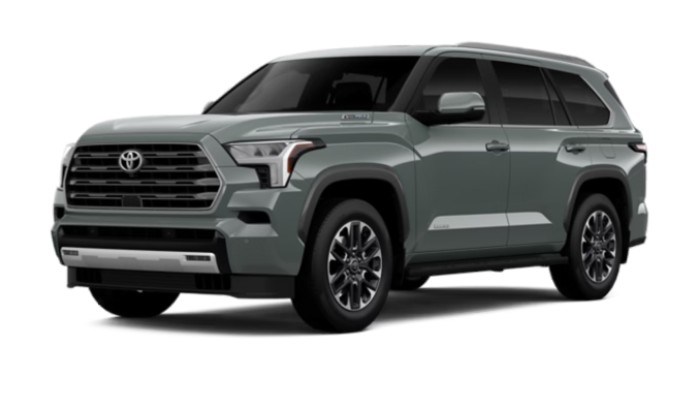
If you're searching for the Toyota Sequoia Lexus equivalent, you've probably discovered that the answer isn't quite as simple as swapping a Toyota badge for a Lexus badge. Toyota and Lexus share plenty of engineering DNA, but their large SUVs don't line up like identical twins.
The Lexus model most commonly considered the closest equivalent to the Toyota Sequoia is the Lexus LX, particularly if we're comparing overall size, body-on-frame construction, three-row capability, towing potential, off-road toughness, and flagship-SUV status.
Still, there's an important catch.
The Sequoia and Lexus LX aren't mechanically identical vehicles. In fact, the LX has traditionally been more closely related to the Toyota Land Cruiser than the Sequoia. So while the LX is arguably the closest Lexus alternative in terms of mission and market position, calling it a simple "luxury Sequoia" misses some important differences.
Let's dig into those differences and figure out which Lexus actually makes sense if you like the Toyota Sequoia but want something more luxurious.
Content in this publication
- What Is the Lexus Equivalent of the Toyota Sequoia?
- Is the Lexus LX Really a Luxury Toyota Sequoia?
- Toyota Sequoia vs Lexus LX at a Glance
- Toyota Sequoia Platform and Construction
- Lexus LX Platform: The Land Cruiser Connection
- Toyota Sequoia vs Lexus LX Exterior Size
- Interior Space: Sequoia Has a Practical Advantage
- Third-Row Seating: Which One Is Better for Families?
- Toyota Sequoia Lexus Equivalent Interior Quality
- Performance: Toyota Sequoia vs Lexus LX
- Toyota Sequoia vs Lexus LX Towing Capability
- Off-Road Capability: Lexus LX Has Serious Credentials
- Toyota Sequoia TRD Pro vs Lexus LX
- Ride Quality: The Lexus Difference Becomes Obvious
- Technology and Infotainment
- Safety Technology
- Fuel Economy: Neither Is a Tiny Hybrid
- Reliability: Toyota vs Lexus
- Maintenance Costs: Sequoia Usually Has the Advantage
- Toyota Sequoia vs Lexus LX Price
- What About the Lexus GX?
- Lexus GX vs Toyota Sequoia
- What About the Lexus TX?
- Which Lexus Feels Most Like a Sequoia?
- Toyota Sequoia vs Lexus LX for Daily Driving
- Toyota Sequoia vs Lexus LX for Road Trips
- Which Is Better for Large Families?
- Which SUV Holds Its Value Better?
- Buying a Used Sequoia or Lexus LX
- Is the Toyota Sequoia Better Value Than the Lexus LX?
- Toyota Sequoia Lexus Equivalent: Which One Should You Buy?
- Does Lexus Need a True Sequoia Twin?
- Final Thoughts on the Toyota Sequoia Lexus Equivalent
- Frequently Asked Questions
What Is the Lexus Equivalent of the Toyota Sequoia?
For most buyers, the Lexus LX is the nearest Lexus equivalent to the Toyota Sequoia.
Both are large, premium-oriented, body-on-frame SUVs designed to carry families while still offering meaningful towing and off-road capability. They're essentially built for people who want something substantially tougher than the typical crossover.
Think of the Sequoia as the rugged family workhorse and the LX as the executive SUV that isn't afraid to get its expensive shoes dirty.
However, the relationship isn't as direct as Toyota Highlander versus Lexus TX-style comparisons.
The Lexus LX has historically shared its basic architecture with Toyota's Land Cruiser family rather than being a Sequoia wearing nicer leather.
That distinction matters.
Is the Lexus LX Really a Luxury Toyota Sequoia?
Not exactly.
Calling the Lexus LX a luxury Sequoia is convenient because the two vehicles occupy similar territory, but technically speaking, it oversimplifies their relationship.
The LX traditionally represents the luxury interpretation of Toyota's flagship Land Cruiser platform. Meanwhile, the Sequoia developed as Toyota's full-size SUV aimed heavily at markets such as North America.
Their family trees overlap because Toyota develops both brands, but they're more like cousins than identical siblings.
Why People Still Compare Them
The comparison makes sense because both vehicles offer many of the qualities full-size SUV shoppers care about:
- Three-row seating configurations
- Body-on-frame construction
- Strong towing capability
- Powerful engines
- Four-wheel-drive availability
- Large exterior dimensions
- Premium trims
- Serious highway comfort
- Off-road capability
- Toyota-family durability philosophy
In practical terms, someone shopping for a Sequoia who suddenly decides, "I want this idea, but considerably more luxurious," will naturally end up looking at the Lexus LX.
Toyota Sequoia vs Lexus LX at a Glance
On paper, these two SUVs appear to be chasing similar customers. Behind the wheel, however, their personalities are dramatically different.
The Toyota Sequoia prioritizes family practicality, towing, adventure, durability, and relative value within the expensive full-size SUV category.
The Lexus LX emphasizes luxury, prestige, cabin refinement, sophisticated suspension technology, and a more exclusive ownership experience.
We could describe the difference this way: the Sequoia arrives at the campsite pulling the trailer. The LX arrives at the same campsite carrying passengers who expect chilled seats and excellent sound quality along the way.
Toyota Sequoia Platform and Construction
Modern Sequoia models use Toyota's body-on-frame truck architecture.
That matters because body-on-frame SUVs generally approach heavy-duty tasks differently from car-based crossovers. Rather than feeling like an oversized sedan, the Sequoia retains some of the robustness associated with pickup trucks.
That architecture helps support the Sequoia's reputation as a genuine towing and adventure vehicle.
Why Body-on-Frame Construction Matters
Body-on-frame construction can offer advantages when the SUV will regularly encounter:
- Trailers
- Uneven terrain
- Dirt roads
- Boats
- Heavy passenger loads
- Camping equipment
- Long-distance towing
- Rough working environments
There are downsides too. Big body-on-frame SUVs can feel heavier, consume more fuel, and require more deliberate handling than smaller crossovers.
Yet if you're considering a Sequoia or LX, chances are nimble hatchback handling wasn't first on your wish list anyway.
Lexus LX Platform: The Land Cruiser Connection
This is where the Toyota Sequoia Lexus equivalent discussion gets interesting.
The Lexus LX belongs to the same broad engineering family as Toyota's legendary Land Cruiser rather than being derived directly from the Sequoia.
That heritage gives the LX a particularly strong emphasis on combining extreme durability with luxury.
Where many premium SUVs seem designed primarily for city streets, the LX has historically maintained genuine off-road engineering beneath its polished exterior.
That's part of its charm.
You can arrive at an upscale hotel one evening and venture down an unpaved mountain road the next morning without the vehicle experiencing an identity crisis.
Toyota Sequoia vs Lexus LX Exterior Size
Both SUVs have serious road presence.
Neither disappears into a parking lot.
The Toyota Sequoia tends to lean toward the traditional American interpretation of a full-size SUV: long, tall, broad, and visually substantial.
The Lexus LX also feels imposing but generally approaches its proportions with a more formal luxury-SUV design.
Which One Feels Bigger?
Depending on model year and configuration, the Sequoia can feel particularly substantial because it's designed with family cargo needs strongly in mind.
The LX feels large too, but Lexus balances utility with luxury packaging and styling considerations.
That means exterior dimensions alone don't tell us everything about interior usefulness.
The bigger question is what happens once we load passengers and luggage.
Interior Space: Sequoia Has a Practical Advantage
This is one area where the Sequoia can make a surprisingly strong case against its more expensive Lexus cousin.
Full-size SUV buyers frequently want usable third-row seating and enough cargo room behind it to carry actual belongings.
The Toyota Sequoia focuses heavily on family duty.
Its cabin prioritizes:
- Three-row flexibility
- Family-oriented storage
- Practical loading
- Passenger capacity
- Everyday usability
The Lexus LX is undoubtedly more luxurious, but depending on configuration, its interior packaging doesn't necessarily turn every additional dollar into extra cargo space.
Luxury doesn't magically bend the laws of geometry.
Third-Row Seating: Which One Is Better for Families?
If transporting several people regularly is your main priority, we'd look very closely at the Sequoia before automatically assuming the Lexus must be better.
The LX's third-row arrangements can vary depending on trim and generation, while luxury configurations may place more emphasis on second-row comfort.
A Sequoia often makes more sense for families routinely carrying children, teenagers, sports equipment, groceries, and luggage.
The Lexus LX Can Prioritize Second-Row Luxury
Some high-end LX configurations aren't really trying to maximize passenger count.
They're designed more like private aircraft cabins.
That approach is wonderful if you're primarily carrying four adults. It isn't necessarily ideal if your Saturday schedule includes three kids, two grandparents, several backpacks, and a golden retriever.
Different missions, different winners.
Toyota Sequoia Lexus Equivalent Interior Quality
Now we reach the category where Lexus clearly earns its premium positioning.
Inside the LX, the materials, sound insulation, detailing, switchgear, seating surfaces, and general ambience move substantially upscale.
The Sequoia can be very nicely equipped in higher trims, but there's still a difference between "premium Toyota" and "flagship Lexus."
Luxury Materials Make the Difference
Inside an LX, expect the design philosophy to emphasize things such as:
- Premium leather upholstery
- Sophisticated trim materials
- Greater attention to cabin isolation
- More elaborate ambient design
- High-end audio systems
- Advanced seating functions
- Refined climate-control features
- Luxury-focused technology
The Sequoia gives you comfort.
The LX tries to create an environment.
There's a difference.
Performance: Toyota Sequoia vs Lexus LX
Modern versions of both SUVs rely on turbocharged and electrified powertrain technology rather than sticking entirely with the old-school large-displacement V8 formula associated with earlier generations.
The Sequoia's modern hybrid setup delivers substantial torque and strong acceleration for a vehicle of its size.
The Lexus LX takes a different approach depending on market and model specification, but it similarly aims to deliver effortless performance rather than sports-car theatrics.
Neither SUV is lightweight.
Yet modern turbocharging allows them to move with surprising urgency.
How Does the Sequoia Feel?
The Sequoia's power delivery suits towing and highway driving particularly well.
There's plenty of low-end muscle, which means it doesn't feel like the engine is constantly fighting the SUV's considerable mass.
Press the accelerator and the response can be far more energetic than the vehicle's dimensions suggest.
How Does the Lexus LX Feel?
The LX typically emphasizes smoothness and controlled power delivery.
Instead of trying to feel aggressive, Lexus engineers generally tune the experience to make acceleration seem effortless.
That's the luxury trick.
The vehicle is doing a huge amount of mechanical work, but the passengers aren't supposed to notice much of it.
Toyota Sequoia vs Lexus LX Towing Capability
Towing is a major reason people buy vehicles in this category.
The Sequoia is particularly attractive for buyers who need to tow boats, campers, recreational vehicles, or substantial utility trailers.
Depending on configuration and model year, Sequoia towing capability can be genuinely impressive.
The Lexus LX can tow as well, although its mission is slightly more balanced between utility and luxury.
Which Would We Choose for Frequent Towing?
If towing were one of our primary requirements, we'd probably lean toward the Sequoia.
Why?
Because it delivers heavy-duty capability without forcing us to worry quite as much about putting an extremely expensive luxury SUV through dirty, demanding work.
The Lexus can certainly handle adventure.
But towing a muddy trailer through a construction site somehow feels less stressful when the vehicle isn't dressed like a penthouse suite.
Off-Road Capability: Lexus LX Has Serious Credentials
Here's an area where shoppers unfamiliar with Lexus sometimes underestimate the LX.
It isn't merely a boulevard cruiser.
Its Land Cruiser-related engineering gives it real off-road credibility.
Depending on model and market, available technologies can include sophisticated four-wheel-drive systems, terrain management functions, electronically controlled suspension components, and systems designed to improve traction on loose or difficult surfaces.
Does That Make the LX Better Off Road?
Potentially, yes.
You may be interested in reading Volvo XC90 vs Audi Q7: Which Luxury SUV Is Better?
But capability and willingness are different things.
Would we drive an LX down a rocky trail? Mechanically, absolutely.
Would every owner enjoy dragging expensive wheels and paint through branches and stones? That's another question.
The Sequoia, especially in adventure-oriented trims, can encourage more carefree exploration.
Toyota Sequoia TRD Pro vs Lexus LX
The Sequoia TRD Pro deserves special mention because it changes the character of the comparison.
Rather than trying to imitate Lexus luxury, TRD Pro models lean heavily into Toyota's adventure identity.
We're talking about the visual and mechanical language of off-road driving: tougher suspension tuning, distinctive styling, underbody protection, all-terrain-oriented hardware, and a general willingness to leave pavement behind.
The Lexus LX can be extraordinarily capable off road, but its execution is different.
Two Different Types of Adventure SUV
The TRD Pro feels like something we'd pack with recovery gear, hiking boots, and coolers.
The LX feels like something we'd take across a desert while enjoying ventilated seats.
Both approaches work.
They simply tell different stories.
Ride Quality: The Lexus Difference Becomes Obvious
Luxury isn't just about soft leather.
A huge portion of what separates expensive SUVs from mainstream ones happens through vibration control, chassis tuning, noise reduction, suspension behavior, and steering calibration.
This is where the Lexus LX can justify part of its premium.
The Sequoia Still Drives Like a Large SUV
The Sequoia is comfortable, especially considering its truck-based construction, but physics remains physics.
It's heavy and tall.
You'll notice its mass when changing direction or moving across uneven pavement.
The LX Works Harder to Hide Its Weight
The LX uses sophisticated suspension engineering to make its bulk feel more controlled.
It won't suddenly behave like a compact sports sedan, but the overall driving environment usually feels calmer and more isolated.
On a six-hour highway journey, those small refinements begin adding up.
Technology and Infotainment
Modern Sequoia models already offer plenty of technology, so moving to Lexus doesn't necessarily mean jumping from basic equipment to science fiction.
Instead, the difference tends to lie in presentation, integration, and premium features.
The Toyota focuses on usable technology.
Lexus layers additional luxury around it.
Features Buyers Commonly Look For
Depending on trim and model year, shoppers may encounter equipment such as:
- Large touchscreen interfaces
- Smartphone integration
- Digital instrument displays
- Premium audio
- Surround-view cameras
- Driver-assistance technology
- Wireless charging
- Multiple USB connections
- Connected navigation
- Advanced climate controls
The LX generally pushes deeper into premium territory, particularly with audio, seat controls, passenger displays, and luxury-focused convenience features.
Safety Technology
Toyota and Lexus share a strong corporate focus on driver-assistance technology.
Depending on model year, both vehicles can offer systems designed to support the driver during highway travel, parking, and emergency situations.
Typical technologies may include adaptive cruise control, lane-management assistance, automatic emergency braking, blind-spot monitoring, parking sensors, and camera systems.
Luxury Doesn't Eliminate Driver Responsibility
It's worth emphasizing that these systems remain driver-assistance tools.
They don't turn either SUV into an autonomous vehicle.
A giant luxury SUV still requires a human being paying attention behind the wheel.
Preferably one who remembers how tall the parking garage entrance is.
Fuel Economy: Neither Is a Tiny Hybrid
Anyone searching for the Toyota Sequoia Lexus equivalent should keep expectations realistic regarding fuel costs.
These are substantial vehicles.
Even with modern hybridization, turbocharging, and improved transmissions, moving thousands of pounds through the air requires energy.
The Sequoia's hybrid technology helps improve efficiency while delivering substantial torque, but it's still a full-size SUV.
The LX faces the same fundamental challenge.
Should Fuel Economy Decide the Purchase?
If minimizing fuel consumption is your highest priority, neither vehicle is likely to be your ideal starting point.
But if you need full-size SUV capability, small improvements in efficiency can become meaningful across years of ownership.
Think of it as making a big ship more efficient rather than transforming it into a sailboat.
Reliability: Toyota vs Lexus
Toyota and Lexus both enjoy strong reputations for durability, although specific reliability varies by generation, engine, transmission, electronics, maintenance history, and individual vehicle.
The bigger consideration with the LX isn't necessarily whether it will last.
It's what happens when sophisticated luxury equipment eventually requires attention.
Luxury Equipment Can Increase Repair Complexity
An LX may include significantly more complex components than a basic Sequoia.
Examples can include:
- Advanced suspension equipment
- Additional electronics
- More elaborate seating systems
- Premium infotainment hardware
- Power-operated convenience features
- Luxury climate-control systems
The Toyota's relative simplicity in certain areas can potentially make long-term ownership less intimidating.
That's especially relevant when shopping used.
Maintenance Costs: Sequoia Usually Has the Advantage
Owning a Lexus flagship SUV isn't necessarily financially painful, but buyers should expect premium-vehicle costs.
Routine servicing, tires, brakes, suspension components, and luxury-specific hardware can become more expensive.
The Sequoia isn't cheap to operate either.
Large tires, substantial brakes, complex powertrains, and truck-sized components don't magically become budget items because there's a Toyota badge on the grille.
Still, the Sequoia generally offers the more sensible long-term financial proposition.
Toyota Sequoia vs Lexus LX Price
Price might be the biggest dividing line between these two SUVs.
The Sequoia already occupies expensive territory, especially in upper trims.
The Lexus LX then takes another substantial step upward.
Why?
Because you're paying for more than capability.
You're paying for luxury positioning, materials, refinement, brand exclusivity, and additional equipment.
Does the Lexus LX Justify the Extra Money?
For some buyers, absolutely.
If you spend hours commuting, routinely transport clients, value exceptional cabin refinement, or simply want one of Lexus's most prestigious SUVs, the LX can make sense.
For others, the additional money doesn't create enough extra utility.
A well-equipped Sequoia may perform nearly every practical task they require while leaving a substantial amount of money in the bank.
What About the Lexus GX?
This is where our Toyota Sequoia Lexus equivalent discussion needs a second candidate.
The Lexus GX can also enter the conversation.
It's another body-on-frame Lexus SUV with genuine off-road credentials, three-row availability depending on configuration, and strong Toyota-family engineering.
However, it generally occupies a slightly different size and market position from the Sequoia.
Is the Lexus GX Closer to the Sequoia Than the LX?
In price, rugged character, or buyer mentality, sometimes.
In overall flagship positioning and full-size presence, not usually.
The GX often feels like the middle ground.
It's more luxurious than a typical Toyota SUV but generally less extravagant and less enormous than the LX.
For buyers who think the Sequoia is bigger than necessary, the GX may actually be the smarter Lexus alternative.
Lexus GX vs Toyota Sequoia
These vehicles appeal to somewhat different customers.
The Sequoia prioritizes maximum family usefulness and towing-oriented capability.
The GX blends rugged engineering with a more compact luxury-SUV footprint.
A Sequoia makes more sense if you routinely use all three rows or pull substantial trailers.
A GX might be preferable if you want upscale road-trip comfort and off-road capability without piloting something quite as massive.
Who Should Choose the GX?
Consider the Lexus GX if you want:
- Luxury without stepping up to LX pricing
- Strong off-road ability
- Body-on-frame toughness
- A somewhat easier-to-manage footprint
- Premium interior materials
- Lexus dealership treatment
It's not a direct Sequoia replacement, but it's certainly worth test-driving.
What About the Lexus TX?
Someone shopping primarily by seating capacity might also stumble upon the Lexus TX.
However, the TX serves a different purpose.
It's a luxury three-row crossover rather than the same kind of rugged body-on-frame SUV represented by the Sequoia.
That's an important distinction.
Lexus TX vs Toyota Sequoia
If you're buying for paved-road family duty, the TX could actually make more sense.
A crossover architecture generally prioritizes interior space, passenger comfort, easier handling, and road manners rather than serious off-road work.
So if your Sequoia search started merely because you wanted three rows, ask yourself a useful question:
You may be interested in readingVolvo XC90 vs Audi Q7: Which Luxury SUV Is Better?You may be interested in reading
Volvo XC90 vs BMW X5: Which Luxury SUV Is Better?Do we genuinely need truck-based capability?
If the answer is no, a Lexus TX could potentially be a better luxury-family solution.
Which Lexus Feels Most Like a Sequoia?
The answer depends on what part of the Sequoia appeals to you.
If it's the size and flagship SUV character, choose the LX.
If it's the rugged body-on-frame personality but you don't need maximum dimensions, consider the GX.
If it's mainly the spacious three-row family layout, consider the TX.
This gives us a useful shortcut:
| What You Like About the Sequoia | Closest Lexus Choice |
|---|---|
| Full-size SUV presence | Lexus LX |
| Rugged off-road personality | Lexus GX or LX |
| Three-row luxury family use | Lexus TX |
| Premium flagship experience | Lexus LX |
| Easier city maneuverability | Lexus GX |
| Crossover-style road comfort | Lexus TX |
Toyota Sequoia vs Lexus LX for Daily Driving
Daily driving exposes the compromises of large SUVs quickly.
Parking spaces suddenly shrink.
Drive-through lanes become engineering challenges.
Fuel stations become frequent acquaintances.
The LX makes those realities more pleasant through refinement and comfort, while the Sequoia counters with practicality and a somewhat more utilitarian attitude.
City Driving
The LX provides a more polished atmosphere, but neither vehicle is ideal if your routine involves narrow streets and tiny underground parking lots.
Cameras and parking sensors become your best friends.
The Sequoia's size similarly demands attention.
If urban driving dominates your routine, the smaller Lexus GX—or even TX—may prove easier to live with.
Highway Driving
On highways, both SUVs begin making more sense.
They offer commanding seating positions, substantial power reserves, comfortable cabins, and the kind of road presence that makes long-distance journeys feel relaxed.
The LX generally wins for quietness and sophistication.
The Sequoia wins if you place greater value on practical capability for the money.
Toyota Sequoia vs Lexus LX for Road Trips
Here's where we'd happily take either one.
A Sequoia can swallow people and travel gear while cruising comfortably for hundreds of miles.
The LX elevates the experience with extra insulation and luxury features.
Imagine driving across several states.
In the Toyota, we're thinking about how much equipment we've brought.
In the Lexus, we're wondering why our living room doesn't have seats this comfortable.
The right answer depends on whether practicality or pampering matters more.
Which Is Better for Large Families?
For many families, the Toyota Sequoia may actually be the smarter vehicle.
Luxury sounds attractive until we consider backpacks, spilled drinks, muddy shoes, sports equipment, and children climbing through every seating row.
A Sequoia feels comfortable doing family work.
You don't feel as though each breadcrumb is damaging a museum exhibit.
The LX makes greater sense when luxury and prestige matter as much as raw passenger utility.
Which SUV Holds Its Value Better?
Toyota and Lexus SUVs have historically attracted buyers who value durability, and desirable body-on-frame models can remain popular in the used market.
Still, resale value depends heavily on variables such as mileage, condition, market demand, trim, drivetrain, maintenance records, and generation.
We wouldn't choose between these two solely because someone claims one will "never depreciate."
Everything depreciates eventually.
Some vehicles simply descend the staircase more slowly.
Buying a Used Sequoia or Lexus LX
Used models create a completely different equation.
An older LX can sometimes cost surprisingly little compared with its original price.
That's tempting.
Extremely tempting.
But the purchase price tells only part of the story.
What to Check Before Buying
Before buying either vehicle used, we'd inspect:
- Full maintenance records
- Chassis and underbody condition
- Evidence of towing abuse
- Suspension condition
- Cooling-system health
- Oil or fluid leaks
- Four-wheel-drive operation
- Electronics
- Tires
- Brakes
- Accident history
- Rust in corrosion-prone regions
With the LX, we'd pay particular attention to expensive luxury and suspension systems.
A cheap flagship SUV can quickly remind us why it originally cost flagship money.
Is the Toyota Sequoia Better Value Than the Lexus LX?
For most practical buyers, yes.
The Sequoia provides enormous capability without charging for every layer of Lexus luxury.
That doesn't mean the LX is overpriced.
It simply provides a different kind of value.
Sequoia Value Comes From Capability
A Sequoia delivers tremendous utility:
You can transport a large family, tow recreational equipment, tackle rough roads, carry significant luggage, and drive long distances comfortably.
Lexus Value Comes From Refinement
The LX adds another dimension.
You're paying for the experience of doing those things in a quieter, more luxurious, more prestigious environment.
Neither interpretation of value is objectively correct.
It depends entirely on what matters to us.
Toyota Sequoia Lexus Equivalent: Which One Should You Buy?
Here's the simple version.
Choose the Toyota Sequoia if you want maximum practicality, strong towing capability, rugged construction, three-row usefulness, and better relative value.
Choose the Lexus LX if you want similar large-SUV capability wrapped in significantly more luxury and don't mind paying for it.
Choose the Lexus GX if you'd prefer something rugged and upscale but somewhat smaller.
Choose the Lexus TX if what you really need is luxurious three-row family transportation rather than genuine truck-based capability.
Our Practical Buyer Breakdown
We'd approach the decision like this:
- Large family: Toyota Sequoia
- Luxury-focused buyer: Lexus LX
- Frequent towing: Toyota Sequoia
- Prestige and comfort: Lexus LX
- Off-roading with luxury: Lexus GX or LX
- Mostly suburban driving: Lexus TX
- Value-conscious buyer: Toyota Sequoia
- Second-row executive comfort: Lexus LX
- Adventure without maximum size: Lexus GX
Does Lexus Need a True Sequoia Twin?
That's an interesting question.
Toyota has successfully separated its SUVs by purpose rather than creating exact luxury copies of every model.
And perhaps that's smarter.
A Lexus-branded Sequoia identical underneath might compete awkwardly with the LX and GX.
Instead, Lexus gives shoppers multiple interpretations of upscale utility.
The LX delivers flagship toughness.
The GX delivers rugged luxury in a more manageable package.
The TX tackles luxury family transportation.
Meanwhile, Toyota lets the Sequoia remain unapologetically practical.
Sometimes differentiation is more useful than duplication.
Final Thoughts on the Toyota Sequoia Lexus Equivalent
So, what is the true Toyota Sequoia Lexus equivalent?
The Lexus LX is the closest overall answer, particularly when we're comparing large body-on-frame SUVs with serious capability and premium appointments.
But it isn't literally a rebadged Sequoia.
The LX traces its engineering heritage more directly toward Toyota's Land Cruiser family, while the Sequoia follows its own full-size SUV path.
That's why shoppers shouldn't stop at the badge comparison.
Think instead about what you actually want from your SUV.
Need three rows, towing power, family practicality, and ruggedness? The Sequoia may be difficult to beat.
Want most of that ability with substantially greater luxury? The LX deserves your attention.
Want rugged Lexus character in a slightly smaller package? Look at the GX.
And if you only need comfortable three-row transportation for paved roads, the TX might make more sense than any of them.
In other words, there isn't one perfect Lexus replacement for every Sequoia buyer.
There are several—and choosing the right one comes down to which part of the Sequoia formula matters most to you.
Frequently Asked Questions
1. What Lexus is equivalent to the Toyota Sequoia?
The Lexus LX is generally considered the closest Lexus equivalent to the Toyota Sequoia because both are large, body-on-frame SUVs offering substantial passenger capacity, towing ability, four-wheel-drive capability, and premium features. However, the LX is more directly related to Toyota's Land Cruiser family than to the Sequoia itself.
2. Is the Lexus LX just a luxury Toyota Sequoia?
No. Although the Lexus LX and Toyota Sequoia compete in similar territory, the LX isn't simply a luxury Sequoia with different badges. The LX historically shares closer engineering ties with the Toyota Land Cruiser, while the Sequoia follows Toyota's separate full-size SUV development path.
3. Is the Lexus GX similar to the Toyota Sequoia?
Yes, but the GX is generally smaller and positioned differently. Both use rugged body-on-frame construction and offer strong off-road capability. Buyers who like the Sequoia's toughness but want a smaller luxury SUV may find the Lexus GX particularly appealing.
4. Which is better, Toyota Sequoia or Lexus LX?
The Sequoia is usually the better choice for buyers prioritizing family practicality, towing, ruggedness, and overall value. The Lexus LX is better suited to buyers who want flagship luxury, superior cabin refinement, prestigious branding, and advanced comfort features while retaining serious SUV capability.
You may be interested in readingVolvo XC90 vs Audi Q7: Which Luxury SUV Is Better?You may be interested in reading
Volvo XC90 vs BMW X5: Which Luxury SUV Is Better?You may be interested in reading
Volvo XC90 vs Mazda CX-9: Which Three-Row SUV Is Better?5. Is there a Lexus version of the Toyota Sequoia TRD Pro?
There isn't a direct Lexus equivalent to the Sequoia TRD Pro. The Lexus LX and GX both offer substantial off-road capability, but they approach adventure from a more premium perspective. If rugged trail-focused character matters most, the Sequoia TRD Pro remains a uniquely Toyota interpretation of the full-size adventure SUV.
If you want to know other articles similar to Toyota Sequoia Lexus Equivalent: Which Lexus Is Closest? you can visit the category Models.
Kia Sorento Models: Complete Guide to Trims, Engines and Versions
BYD Shark 6 vs Ranger vs HiLux: Which Ute Makes the Most Sense in 2026?
BYD Shark 6 vs MG U9: Which Ute Makes More Sense in 2026?
BYD Shark 6 vs Ford Ranger Raptor: Which Performance Ute Is Better in 2026?
BYD Shark 6 vs Kia Tasman: Which Ute Is Better?
BYD Shark 6 vs 7: What We Know So Far
Leave a Reply
More content of your interest