
Toyota Sequoia Engine Options: Complete Guide by Generation

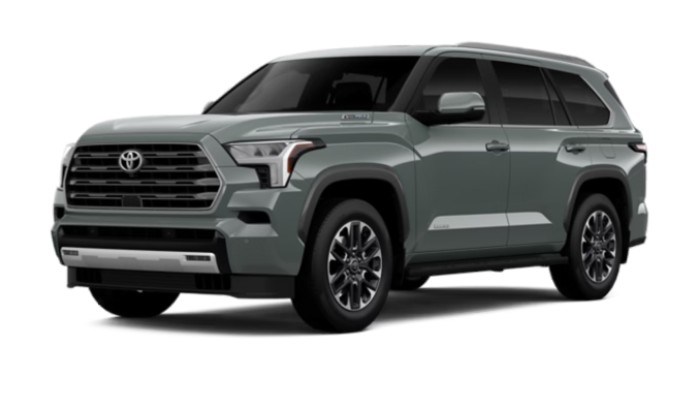
The Toyota Sequoia has never been the kind of SUV that whispers its intentions. From the beginning, it was built to haul families, tow trailers, swallow highway miles, and tackle the sort of jobs that make smaller crossovers look nervously toward the exit. Naturally, much of that personality comes from what sits beneath the hood.
When we dig into Toyota Sequoia engine options, we find an interesting evolution. Early models relied on traditional naturally aspirated V8 power, later versions grew stronger and more refined, and the newest generation made one of the biggest mechanical changes in Sequoia history by swapping the V8 formula for a twin-turbocharged hybrid V6.
That change tells us a lot about where large SUVs are heading. More power no longer necessarily means a larger engine. Turbocharging, electrification, and smarter transmissions have rewritten the old rulebook.
But which Sequoia engine is actually best? Which one is simplest? Which offers the strongest towing capability? And should used-SUV shoppers favor the legendary V8 models or step into Toyota's newer hybrid era?
Let's unpack the entire story.
Content in this publication
- Toyota Sequoia Engine Options at a Glance
- First-Generation Toyota Sequoia Engine Options
- How the First-Generation Engine Improved Over Time
- Second-Generation Toyota Sequoia Engine Options
- 5.7-Liter i-FORCE V8
- Was There a 4.6-Liter Toyota Sequoia V8?
- Why Toyota Kept the 5.7-Liter V8 for So Long
- Third-Generation Toyota Sequoia Engine Options
- 3.4-Liter Twin-Turbo Hybrid V6
- Toyota Sequoia V8 vs Hybrid V6
- Which Toyota Sequoia Engine Has the Most Horsepower?
- Which Toyota Sequoia Engine Has the Most Torque?
- Toyota Sequoia Engine Options for Towing
- Toyota Sequoia Engine Fuel Economy
- Which Sequoia Engine Is Most Reliable?
- Best Toyota Sequoia Engine for Used Buyers
- Best Toyota Sequoia Engine for Maximum Performance
- Best Toyota Sequoia Engine for Simplicity
- How Sequoia Transmissions Changed with the Engines
- Naturally Aspirated vs Twin-Turbo Sequoia Engines
- How to Choose the Right Toyota Sequoia Engine
- What to Inspect Before Buying a Used Sequoia Engine
- Toyota Sequoia Engine Evolution: What It Tells Us
- Are the Old Toyota Sequoia V8 Engines Still Worth Buying?
- Is the New Hybrid Engine Better Than the V8?
- Final Thoughts on Toyota Sequoia Engine Options
- Frequently Asked Questions
Toyota Sequoia Engine Options at a Glance
Across its generations, the Sequoia's engine lineup has been surprisingly straightforward compared with many rivals. Toyota generally avoided giving buyers a confusing catalog of four or five powertrains.
Instead, each era tended to revolve around one primary engine family.
The major Toyota Sequoia engines include:
- 4.7-liter naturally aspirated V8
- 5.7-liter naturally aspirated V8
- 3.4-liter twin-turbo V6 hybrid, marketed as i-FORCE MAX
Depending on model year, drivetrain configuration, and generation, specifications vary.
What's fascinating is how differently these engines deliver their muscle. The 4.7-liter V8 feels smooth and traditional. The 5.7-liter V8 brings considerably more authority. The hybrid V6, meanwhile, produces its strength almost instantly, with electric assistance filling in torque where an older naturally aspirated engine would need to build revs.
Think of it as three generations speaking different dialects of the same language: capability.
First-Generation Toyota Sequoia Engine Options
The first-generation Sequoia arrived for the early 2000s as Toyota's full-size SUV answer to established American competitors.
Its power source was a V8 closely related to engines used elsewhere in Toyota's truck and SUV family.
4.7-Liter V8 Engine
The original Sequoia used Toyota's 4.7-liter V8, a naturally aspirated engine remembered by many owners for its smooth operation and durability.
Early versions produced roughly 240 horsepower, although output increased as Toyota updated the powertrain over the generation.
Later models benefited from engine revisions that pushed output considerably higher.
Numbers tell only part of the story, however.
The 4.7-liter V8's personality is one of progressive, predictable power. Push the accelerator and the SUV builds momentum smoothly rather than delivering the sudden surge associated with modern turbocharged engines.
For everyday driving, that character can still feel surprisingly pleasant.
Why the 4.7-Liter Sequoia V8 Became Popular
Toyota's 4.7-liter V8 developed a strong reputation because it paired respectable capability with relatively conventional engineering.
We're talking about an era before widespread turbocharging, complex hybrid systems, and ten-speed transmissions.
That simplicity appeals enormously to some used-SUV shoppers.
An older Sequoia may still require substantial maintenance simply because of age, mileage, corrosion, seals, suspension wear, cooling-system components, and other factors. Yet mechanically, the basic engine architecture is easier to understand than today's highly integrated hybrid systems.
The Character of the Early V8
There is something satisfyingly mechanical about the first-generation engine.
It does not try to disguise the Sequoia's size.
You press the throttle, hear the V8 working, and feel several thousand pounds of SUV begin moving with steady determination. It is less like launching from a slingshot and more like pushing a heavy boat away from a dock: deliberate, smooth, and confident.
For drivers who value old-school SUV behavior, that is part of the attraction.
How the First-Generation Engine Improved Over Time
Toyota did not simply leave the Sequoia's 4.7-liter engine untouched throughout the generation.
Later versions received technical improvements that increased output and made the big SUV more competitive.
One important development involved Toyota's variable valve timing technology, which improved engine breathing and helped produce more power.
Consequently, newer examples of the first generation generally feel stronger than the earliest Sequoias.
Early vs Later 4.7-Liter Engines
If we're comparing used first-generation models, model year matters.
The basic displacement remained 4.7 liters, but later versions offer noticeably better performance.
That makes the later first-generation Sequoias particularly interesting for buyers who want the simpler design and dimensions of the older SUV without settling for the weakest version of the engine.
Still, condition matters more than a small horsepower difference.
A beautifully maintained older Sequoia with detailed service records can be a much smarter purchase than a newer example that has been neglected.
Second-Generation Toyota Sequoia Engine Options
The second-generation Sequoia represented a substantial step forward.
It grew more sophisticated, more powerful, and more capable. Toyota also offered one of the engines that would become synonymous with its full-size trucks and SUVs: the 5.7-liter i-FORCE V8.
Depending on the year, certain early second-generation Sequoias could also be found with a smaller V8, but the 5.7-liter quickly became the powertrain most buyers associate with this generation.
5.7-Liter i-FORCE V8
If the 4.7-liter engine was respectable, the 5.7-liter V8 turned the volume knob considerably higher.
Producing around 381 horsepower and 401 lb-ft of torque in familiar Sequoia applications, the engine transformed the SUV's performance.
Those numbers remain respectable even in an era of turbocharged powertrains.
More importantly, the 5.7-liter engine delivered its power naturally.
There was no turbocharger waiting to build boost and no electric motor supplementing the engine. You pressed the throttle, the transmission selected an appropriate gear, the V8 inhaled deeply, and the Sequoia moved.
Why the 5.7-Liter V8 Feels So Different
Displacement matters.
A large naturally aspirated engine produces power with a character that modern smaller turbo engines struggle to imitate.
Throttle response feels linear. The exhaust note sounds substantial. Power builds predictably.
When towing or climbing a grade, the engine may rev harder than a modern turbocharged alternative, but it never feels confused about what it is supposed to do.
This simplicity gives the 5.7-liter Sequoia a certain honesty.
It's a big SUV powered by a big engine.
Nothing mysterious there.
Performance of the 5.7-Liter Sequoia
Despite its considerable size, a second-generation Sequoia with the 5.7-liter V8 can feel surprisingly energetic.
Acceleration is strong enough for highway merging and passing, while torque delivery suits towing and heavy loads.
Of course, nobody should expect sports-car reactions. The Sequoia remains a body-on-frame full-size SUV.
But the engine rarely feels overwhelmed by the vehicle around it.
That's important.
A smaller engine that constantly has to work at its limits can make a large SUV feel strained. The 5.7-liter V8 generally gives the Sequoia a healthy reserve of power.
Was There a 4.6-Liter Toyota Sequoia V8?
Yes. Some early second-generation Toyota Sequoia models were offered with a 4.6-liter V8.
This engine occupied an interesting middle ground.
It delivered more modern technology than the older 4.7-liter unit while sitting below the flagship 5.7-liter engine in output.
The smaller V8 makes sense on paper for buyers who do not require maximum towing performance.
Yet on the used market, the 5.7-liter tends to attract more attention because it better suits the Sequoia's personality.
4.6-Liter vs 5.7-Liter Sequoia
If we're choosing between these engines, the decision comes down largely to priorities.
The 4.6-liter can provide perfectly adequate performance for normal family use. The 5.7-liter, however, offers stronger acceleration and greater confidence when towing or carrying substantial loads.
Fuel consumption should also enter the conversation, although neither naturally aspirated V8 turns a Sequoia into an economy champion.
That's like choosing between two refrigerators based primarily on portability. Efficiency simply was not the central purpose of these vehicles.
Why Toyota Kept the 5.7-Liter V8 for So Long
Automakers normally replace engines frequently as emissions regulations, technology, and consumer expectations evolve.
Toyota took a different approach with the Sequoia's 5.7-liter V8.
The engine remained central to the lineup for many years.
Why?
Because it worked.
Owners understood it. Mechanics became familiar with it. Its performance suited the SUV, and its long production run gave Toyota ample opportunity to refine the package.
This doesn't mean every 5.7-liter Sequoia is automatically trouble-free. No engine earns immortality simply because owners praise it online.
Maintenance history remains essential.
Yet longevity in production can be reassuring because it means the engine was not an experimental one-year curiosity.
Third-Generation Toyota Sequoia Engine Options
Then Toyota tore up the old blueprint.
The third-generation Sequoia abandoned naturally aspirated V8 power altogether.
In its place came Toyota's i-FORCE MAX hybrid powertrain, centered around a twin-turbocharged V6.
For traditionalists, losing the V8 was controversial.
For engineers, the change made perfect sense.
The new system provides more torque, competitive horsepower, and improved efficiency while integrating electrification into the drivetrain.
3.4-Liter Twin-Turbo Hybrid V6
The modern Sequoia uses a 3.4-liter twin-turbocharged V6 paired with an electric motor.
Toyota brands the system i-FORCE MAX.
Total system output is approximately 437 horsepower and 583 lb-ft of torque, giving the latest Sequoia considerably more torque than the outgoing 5.7-liter V8.
That is the number worth noticing.
Horsepower grabs headlines, but torque defines much of how a large SUV feels during everyday driving.
And 583 lb-ft is serious muscle.
How the i-FORCE MAX Hybrid Works
This is not a hybrid designed primarily to creep around town on electric power like a compact economy car.
Instead, the electric motor works with the gasoline engine to strengthen performance and efficiency.
Electric torque arrives quickly, helping the Sequoia pull away smoothly while the turbocharged V6 contributes substantial power as speed increases.
The result feels very different from the old V8.
Where the 5.7-liter engine builds power in a broad, linear sweep, the hybrid delivers a much larger punch of low-speed torque.
Why Electric Torque Matters
Electric motors can produce torque virtually immediately.
That is extremely useful in a heavy SUV.
Imagine pushing a massive shopping cart. The hardest part is getting it moving. Once it rolls, maintaining momentum requires less effort.
The electric motor effectively helps with that first shove.
This contributes to the latest Sequoia's strong initial response.
Toyota Sequoia V8 vs Hybrid V6
Here is where the debate gets interesting.
A traditional enthusiast might look at "V6 hybrid" and assume Toyota downsized the engine at the expense of capability.
The actual performance numbers tell another story.
The hybrid V6 delivers substantially more torque than the 5.7-liter V8 and also exceeds it in horsepower.
But driving character matters as much as raw output.
Advantages of the 5.7-Liter V8
The old V8 offers several appealing characteristics:
- Naturally aspirated throttle response
- Familiar mechanical layout
- Distinctive V8 sound
- Long production history
- Strong aftermarket and service familiarity
- Proven suitability for heavy SUV duty
Its biggest disadvantages are fuel consumption and older overall technology.
Advantages of the i-FORCE MAX Hybrid
The hybrid powertrain offers:
- Considerably higher torque
- Stronger low-rpm response
- Modern ten-speed automatic transmission
- Better efficiency potential
- More sophisticated power delivery
- Excellent towing-oriented performance
Its tradeoff is complexity.
A twin-turbo engine, high-voltage battery, electric motor, sophisticated electronics, and modern transmission naturally create more systems than a conventional naturally aspirated V8.
That does not automatically mean poor reliability. It simply means ownership is mechanically different.
Which Toyota Sequoia Engine Has the Most Horsepower?
The current i-FORCE MAX hybrid powertrain is the horsepower champion among production Sequoia engines.
With roughly 437 horsepower, it exceeds the familiar 381-horsepower 5.7-liter V8.
Earlier 4.7-liter versions produce substantially less.
However, horsepower alone should not determine which Sequoia we choose.
The 381-horsepower V8 remains more than adequate for normal driving, while an older 4.7-liter Sequoia can still make sense for someone prioritizing purchase price and simplicity.
Context matters.
A family commuting around town has very different needs from someone towing a large trailer through mountain passes.
Which Toyota Sequoia Engine Has the Most Torque?
Again, the i-FORCE MAX hybrid wins.
Its roughly 583 lb-ft of torque represents a dramatic increase over the 401 lb-ft produced by the 5.7-liter V8.
More importantly, that torque arrives low in the rev range.
For towing, passing, steep climbs, and simply moving the Sequoia's considerable mass, the difference is meaningful.
The new drivetrain feels muscular without needing to rev dramatically.
That's one of the clearest demonstrations of how modern electrified powertrains can replace displacement with technology.
Toyota Sequoia Engine Options for Towing
Towing is one of the main reasons people shop for a full-size SUV.
Naturally, engine choice matters.
Best Sequoia Engine for Heavy Towing
For outright torque and modern towing performance, the i-FORCE MAX hybrid is the standout.
The enormous torque figure gives the current generation substantial pulling strength.
That said, the 5.7-liter V8 remains an excellent towing engine and may appeal more to buyers looking for a used Sequoia.
The older 4.7-liter V8 can tow as well, but shoppers planning regular heavy-duty towing should pay close attention to the specific model year's tow rating, axle configuration, hitch equipment, payload, and vehicle condition.
Engine Power Is Only Part of the Equation
This is important: towing capacity is not determined by engine output alone.
We also need to consider:
- Gross vehicle weight rating
- Gross combined weight rating
- Payload capacity
- Hitch rating
- Cooling systems
- Brakes
- Rear axle configuration
- Drivetrain
- Trailer tongue weight
- Vehicle equipment
A powerful engine doesn't magically erase these limits.
Toyota Sequoia Engine Fuel Economy
If there is one criticism that followed the older Sequoia almost everywhere, it was thirst.
Large naturally aspirated V8s moving heavy body-on-frame SUVs require fuel. There is no clever way around basic physics.
The 5.7-liter engine in particular earned a reputation for strong power but substantial consumption.
Does the Hybrid Sequoia Save Fuel?
The modern hybrid powertrain generally improves efficiency compared with the old V8 formula, but expectations should remain realistic.
This is still a full-size, three-row SUV with truck-based construction and serious towing capability.
The hybrid system isn't going to make it sip fuel like a small Toyota Corolla Hybrid.
Instead, think of the technology as reducing the penalty of moving such a large vehicle.
That's still valuable.
Over tens of thousands of miles, even modest improvements in fuel consumption can translate into meaningful savings.
Which Sequoia Engine Is Most Reliable?
Reliability comparisons between generations require caution.
Older engines have decades of real-world history. Newer engines do not.
That gives the 4.7-liter and 5.7-liter V8s an obvious advantage when we're judging long-term track records.
The Reputation of the 4.7-Liter V8
Toyota's 4.7-liter V8 is widely regarded as a durable engine when properly maintained.
Many high-mileage Toyota trucks and SUVs have used versions of this powerplant.
Yet age itself becomes the enemy.
A 20-year-old Sequoia can suffer problems unrelated to fundamental engine design, including deteriorated hoses, seals, wiring, cooling-system components, mounts, sensors, and other wear items.
So "reliable engine" does not necessarily mean "maintenance-free old SUV."
The Reputation of the 5.7-Liter V8
The 5.7-liter V8 also built a strong following.
Its long service history makes it attractive to buyers who want serious power without turbochargers or hybrid components.
Again, proper maintenance matters enormously.
Service records are often more valuable than an online reliability score.
What About the Hybrid V6?
The i-FORCE MAX powertrain is newer, so it simply cannot match the decades of evidence available for Toyota's older V8s.
That does not mean we should distrust it.
It means we should distinguish between known long-term durability and expected durability based on engineering and manufacturer reputation.
Only time can completely answer the question.
Best Toyota Sequoia Engine for Used Buyers
For many used-SUV shoppers, the 5.7-liter V8 occupies the sweet spot.
It provides strong power, familiar mechanical architecture, widespread parts availability, and years of ownership history.
It also comes in Sequoias that are modern enough to provide considerably more comfort and technology than first-generation models.
The catch?
Fuel costs.
Anyone commuting extensively in a 5.7-liter Sequoia should budget accordingly.
Best Toyota Sequoia Engine for Maximum Performance
If we're chasing the strongest factory performance, the i-FORCE MAX wins.
Its combination of turbocharging and electric assistance creates a wall of torque that older Sequoias simply cannot match.
Power delivery is immediate, effortless, and remarkably strong for such a large SUV.
For buyers who regularly tow, travel at altitude, or simply want the most capable contemporary drivetrain, the modern setup is highly compelling.
Best Toyota Sequoia Engine for Simplicity
Here's where the older V8s fight back.
A naturally aspirated 4.7-liter or 5.7-liter V8 does without:
- Turbochargers
- Hybrid traction batteries
- High-voltage electronics
- Electric drive motors
There are still plenty of sophisticated systems, of course, but mechanically the concept is relatively conventional.
For long-term DIY-minded ownership, that simplicity has appeal.
However, simplicity should never be confused with cheap ownership.
Big tires, large brakes, substantial suspension components, aging electronics, and high fuel consumption remain part of Sequoia life.
How Sequoia Transmissions Changed with the Engines
An engine never works alone.
Transmission technology changed dramatically across the Sequoia's lifetime, and those changes strongly influence how each engine feels.
Early Sequoias used fewer forward gears, meaning the engine had to operate across a wider rpm range.
Later V8 models gained more sophisticated automatic transmissions, improving both performance and refinement.
The newest Sequoia pairs its hybrid drivetrain with a 10-speed automatic transmission.
Why More Gears Matter
More gears allow engineers to keep the engine closer to its ideal operating range.
During acceleration, shorter lower gears help the SUV get moving.
At highway speeds, taller upper gears reduce engine rpm.
The result can improve response, fuel efficiency, towing performance, and refinement.
That's why comparing engines purely by displacement misses half the story.
A modern 3.4-liter V6 paired with electric assistance and ten gears can outperform a much larger old V8 in nearly every measurable performance category.
Naturally Aspirated vs Twin-Turbo Sequoia Engines
The philosophical divide between old and new Sequoias comes down to how power is created.
Naturally Aspirated V8
Air enters the engine according to atmospheric pressure and piston movement.
The advantages are familiar:
- Linear response
- Simpler intake architecture
- Traditional V8 sound
- Predictable power delivery
Twin-Turbo V6
Turbochargers force additional air into the engine, allowing a smaller displacement engine to burn more fuel and produce significantly more power when required.
Add electric assistance and the gap becomes even larger.
Does Smaller Displacement Mean Less Capability?
Not anymore.
The modern Sequoia proves this beautifully.
Its engine displaces considerably less than the old 5.7-liter V8, yet produces more horsepower and dramatically more torque.
Technology has effectively replaced cubic inches.
Whether buyers prefer that approach emotionally is another question entirely.
How to Choose the Right Toyota Sequoia Engine
We can narrow the decision down fairly quickly.
Choose an older 4.7-liter V8 if affordability, traditional engineering, and old-school Toyota character are your main priorities.
Choose the 5.7-liter V8 if you want a used Sequoia with substantial power, proven history, and classic naturally aspirated performance.
Choose the i-FORCE MAX hybrid if you want maximum torque, newer technology, stronger efficiency, and the most modern Sequoia driving experience.
But don't buy an engine in isolation.
Buy the whole vehicle.
A poorly maintained 5.7-liter Sequoia isn't automatically better than a pristine 4.7-liter example. Likewise, buyers considering a newer model should evaluate trim level, warranty coverage, towing requirements, technology, seating configuration, and total ownership costs.
What to Inspect Before Buying a Used Sequoia Engine
Before purchasing any used Sequoia, we would inspect far more than the dipstick.
Pay attention to:
- Cold-start behavior
- Engine noises
- Oil leaks
- Coolant condition
- Maintenance documentation
- Transmission shifts
- Exhaust smoke
- Warning lights
- Cooling-system condition
- Evidence of towing abuse
- Rust or corrosion underneath
- Fluid service history
A pre-purchase inspection by an experienced technician can be worth every dollar.
That's especially true for older Sequoias, where deferred maintenance can quietly turn a bargain into a financial sinkhole.
Toyota Sequoia Engine Evolution: What It Tells Us
The Sequoia's engine history mirrors the evolution of the automotive industry itself.
The first generation relied on modest but dependable V8 power.
The second generation embraced displacement, giving buyers a muscular 5.7-liter engine that suited America's appetite for large trucks and SUVs.
The third generation moved toward electrification and downsizing without sacrificing performance.
It's an interesting progression.
We went from:
bigger engine → more power
to:
smarter engine → more power
And that transition is likely to define the future of large SUVs.
Are the Old Toyota Sequoia V8 Engines Still Worth Buying?
Absolutely—under the right circumstances.
A well-maintained V8 Sequoia can still be an excellent family SUV, towing vehicle, road-trip machine, or long-term utility vehicle.
What we should not do is romanticize old engines to the point of ignoring age.
A 15- or 20-year-old Toyota is still a 15- or 20-year-old vehicle.
Rubber deteriorates. Fluids get neglected. Suspension parts wear. Electronics age. Corrosion develops.
The Toyota badge doesn't suspend physics.
Still, there is something appealing about the older V8 formula. These engines offer smooth power, straightforward operation, and a character increasingly difficult to find in new SUVs.
Is the New Hybrid Engine Better Than the V8?
"Better" depends on what we value.
Measured purely by output, torque, transmission technology, and efficiency, the hybrid drivetrain has obvious advantages.
Measured by simplicity, sound, and long-established durability data, the 5.7-liter V8 retains a strong case.
This is less about one engine defeating another and more about two different eras solving the same problem.
The V8 solves it with displacement.
The hybrid solves it with boost, electricity, software, and sophisticated transmission control.
Both can work extremely well.
They simply arrive at the destination by different roads.
Final Thoughts on Toyota Sequoia Engine Options
The story of Toyota Sequoia engine options is remarkably clear once we strip away the marketing language.
The early 4.7-liter V8 established the Sequoia as a durable, capable full-size SUV. The 5.7-liter V8 elevated performance and became one of the defining engines of the model's history. The modern i-FORCE MAX hybrid then changed the formula completely, replacing raw displacement with turbocharging and electric assistance.
If we want traditional Toyota V8 character, the older models remain attractive.
If we want maximum torque and modern technology, the hybrid Sequoia is unquestionably the more advanced machine.
And if we're shopping used, condition should always outrank reputation.
Engines aren't legends sitting on pedestals. They're machines that need clean oil, proper cooling, timely maintenance, and responsible owners.
Choose carefully, maintain it well, and virtually every chapter of the Sequoia engine story has something worthwhile to offer.
Frequently Asked Questions
What engine does the Toyota Sequoia have?
Current-generation Toyota Sequoia models use an i-FORCE MAX hybrid powertrain built around a 3.4-liter twin-turbocharged V6 and an electric motor. Earlier generations primarily used naturally aspirated V8 engines.
Did the Toyota Sequoia ever have a 5.7-liter V8?
Yes. The 5.7-liter i-FORCE V8 was the signature engine of much of the second-generation Sequoia lineup. It produced roughly 381 horsepower and 401 lb-ft of torque.
Is the Sequoia hybrid more powerful than the 5.7 V8?
Yes. The i-FORCE MAX hybrid produces approximately 437 horsepower and 583 lb-ft of torque, giving it significantly more torque and greater total horsepower than the previous 5.7-liter V8.
Which Toyota Sequoia engine is best for reliability?
The older 4.7-liter and 5.7-liter V8s have the advantage of much longer real-world histories. The best choice ultimately depends on maintenance history, mileage, age, and condition rather than engine reputation alone.
Which Toyota Sequoia engine is best for towing?
The i-FORCE MAX hybrid is particularly well suited to towing because of its very high torque output and modern power delivery. The 5.7-liter V8 is also a strong option, especially for used buyers. Always follow the specific towing and payload limits for the exact model and configuration.
If you want to know other articles similar to Toyota Sequoia Engine Options: Complete Guide by Generation you can visit the category Service and Parts.
Nissan Qashqai Fuel Tank Capacity: Complete Guide

Suzuki Swift Fuel Tank Capacity: Complete Guide
Mazda CX-5 Weight (2013–2026): Complete Guide in Pounds and KG
Kia Sportage Dashboard Symbols and Warning Lights

MINI Cooper Weight (2002–2027): Complete Weight Chart & Guide
Toyota RAV4 Engine Sizes: Complete Guide (1994–2026)
Leave a Reply
More content of your interest