

Volvo XC90 vs Audi Q7: Which Luxury SUV Is Better?

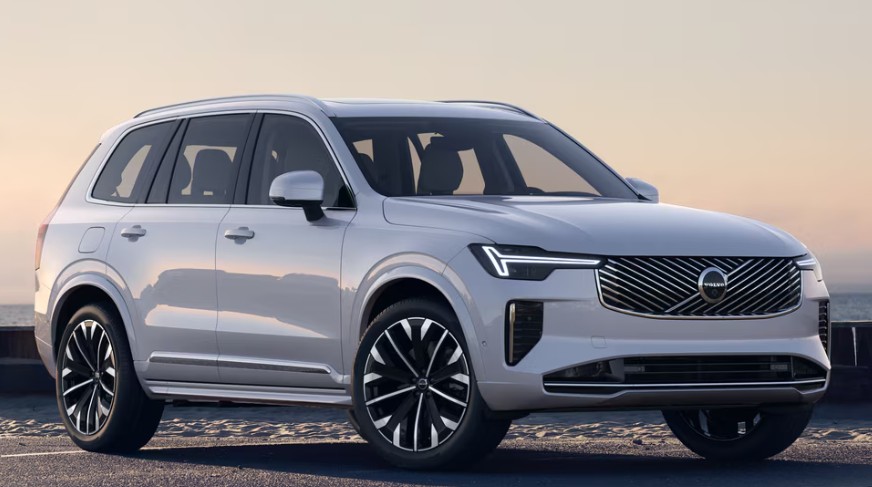
Choosing between the Volvo XC90 vs Audi Q7 is a little like deciding between a beautifully designed Scandinavian home and a high-end German sports lounge. Both are luxurious, both can carry seven people, and both deliver the sort of refinement we expect when spending serious money on a premium SUV. Yet once we live with them—or simply look beyond their polished brochures—their personalities begin to separate.
The Volvo XC90 takes a calm, minimalist approach. Its cabin feels airy, its design remains understated, and its emphasis on comfort and electrification makes it particularly attractive to families. The Audi Q7 feels more technical and athletic. It combines a sophisticated interior with strong engines, standard quattro all-wheel drive, and handling that can make us forget we're piloting a three-row SUV.
For a useful current reference, we're primarily looking at the 2026 U.S.-market XC90 and Q7, while remembering that engines, trim names, equipment, prices, and fuel-economy figures differ by country.
Volvo lists the 2026 XC90 as a six- or seven-seat luxury SUV, with mild-hybrid versions and a separate plug-in-hybrid XC90 available. Audi's 2026 Q7 remains a three-row SUV with 45 TFSI four-cylinder and 55 TFSI V6 configurations, both paired with quattro all-wheel drive and an eight-speed automatic.
So, which one deserves our driveway? Let's compare them properly.
Content in this publication
- Volvo XC90 vs Audi Q7 at a Glance
- Exterior Design: Scandinavian Calm vs German Muscle
- Interior Quality and Cabin Design
- Passenger Space and Three-Row Practicality
- Cargo Space and Everyday Usability
- Volvo XC90 vs Audi Q7 Performance
- XC90 Plug-In Hybrid Changes the Equation
- Fuel Economy
- Audi Q7 vs Volvo XC90 Driving Experience
- All-Wheel Drive and Bad-Weather Confidence
- Technology and Infotainment
- Safety
- Luxury and Comfort
- Front-Seat Comfort
- Second- and Third-Row Comfort
- Towing and Adventure Use
- Reliability: Volvo XC90 vs Audi Q7
- Maintenance Costs
- Volvo XC90 vs Audi Q7 Price
- Volvo XC90 vs Audi Q7 for Families
- Audi Q7 vs Volvo XC90 for Driving Enthusiasts
- Which SUV Is Better for Long Trips?
- Which Is Better in the City?
- Volvo XC90 vs Audi Q7: Pros and Cons
- Who Should Buy the Volvo XC90?
- Who Should Buy the Audi Q7?
- XC90 B6 vs Q7 55 TFSI
- XC90 Plug-In Hybrid vs Audi Q7
- Used Volvo XC90 vs Used Audi Q7
- Which One Holds Up Better as a Luxury Experience?
- Our Verdict: Volvo XC90 or Audi Q7?
- FAQs About Volvo XC90 vs Audi Q7
- Closing Thoughts
Volvo XC90 vs Audi Q7 at a Glance
Before diving deep, here is the easiest way to understand these SUVs.
The Volvo XC90 is generally the stronger choice if we prioritize elegant design, family-oriented comfort, an available plug-in-hybrid powertrain, and a relaxed driving experience.
The Audi Q7 makes more sense if we want sharper performance, traditional German luxury, strong all-wheel-drive credentials, and a more engaging feeling behind the wheel.
Neither SUV is objectively better for everybody. They simply approach luxury from different directions.
Quick Comparison
| Category | Volvo XC90 | Audi Q7 |
|---|---|---|
| Overall character | Calm and elegant | Sporty and sophisticated |
| Seating | 6 or 7 depending on configuration | 7 |
| Drivetrain | AWD configurations | quattro AWD |
| Hybrid availability | Mild hybrid and plug-in hybrid | Gasoline-focused U.S. Q7 lineup |
| Interior style | Scandinavian minimalism | High-tech German luxury |
| Ride character | Relaxed and comfortable | Controlled and athletic |
| Performance emphasis | Comfort and electrification | Strong acceleration and handling |
| Best suited to | Families and comfort seekers | Drivers wanting luxury plus dynamics |
Specifications vary by trim and market, so we should always compare the exact vehicles available locally.
This may be the most subjective part of the Audi Q7 vs Volvo XC90 debate.
The XC90 doesn't shout. It doesn't need to.
Its upright profile, clean surfaces, recognizable lighting signature, and restrained grille give it an expensive appearance without turning it into a rolling billboard. Volvo's design has aged remarkably well because it avoids excessive ornamentation.
The Q7 follows another path. Audi gives it a wider, more assertive stance, a substantial grille, sharper detailing, and a slightly sportier attitude.
Which One Looks More Expensive?
That depends on what luxury means to us.
The XC90 resembles an expensive watch with no giant logo on its face. People who understand it recognize the quality immediately.
The Q7 is more visibly premium. Larger wheels, aggressive exterior packages, sophisticated lighting, and Audi's familiar design language make it look decidedly German and upscale.
We'd give the XC90 the advantage for timeless elegance and the Q7 the edge for road presence.
Interior Quality and Cabin Design
Step inside either SUV and the mood changes dramatically.
Volvo XC90 Interior
The XC90 cabin embraces Scandinavian minimalism.
Rather than surrounding us with dozens of buttons, Volvo concentrates many controls within its central interface. The dashboard is clean, the materials feel thoughtfully selected, and available upscale upholstery and decorative trim can make the XC90 feel closer to a modern Scandinavian hotel than a conventional SUV.
There is also something refreshing about how uncluttered it feels.
After driving vehicles filled with glossy black panels, giant vents, switches, knobs, and screens everywhere, the XC90 can feel like somebody finally cleared the desk.
Audi Q7 Interior
The Q7 takes a more technological approach.
Audi's cabin feels engineered rather than decorated. Displays, digital instrumentation, sophisticated lighting, premium materials, and precise switchgear create an environment that feels serious and expensive.
The Q7 also has the unmistakable solidity associated with Audi interiors.
Close a door and there is often that satisfying sense of mechanical density—the automotive equivalent of closing the door on a bank vault.
Which Cabin Is Better?
For design simplicity, we'd choose the Volvo XC90.
For a cockpit-like feel and technical sophistication, we'd choose the Audi Q7.
Neither feels cheap. The difference is emotional rather than purely material.
Passenger Space and Three-Row Practicality
Both vehicles belong to the premium three-row SUV category, but neither should be confused with something as enormous as a Chevrolet Suburban.
The first and second rows are where adults will spend most of their time comfortably.
The third row is useful, especially for children, teenagers, or shorter trips with adults, but buyers who regularly transport seven large adults may want an even larger SUV.
XC90 Seating Flexibility
Volvo offers the XC90 in six- or seven-seat configurations on relevant versions, giving families the possibility of choosing second-row captain's chairs instead of a traditional bench. Volvo currently describes the U.S. XC90 as a six- or seven-seat family SUV.
Captain's chairs can make third-row access much easier, especially when we're constantly loading children into the back.
Q7 Seating Configuration
The Q7 emphasizes its conventional three-row layout and seven-passenger usefulness. Audi's newest Q7 marketing continues to position the model as a three-row luxury SUV.
Which Is Better for Families?
We lean toward the XC90.
The reason isn't simply space. Its whole personality feels family-oriented: relaxed driving, restrained styling, flexible seating, and a cabin designed around comfort rather than outright sportiness.
The Q7 remains highly practical, but it feels slightly more driver-focused.
Cargo Space and Everyday Usability
Cargo figures never tell the entire story.
What matters is how easy it is to load groceries, luggage, sports equipment, strollers, or several suitcases while still carrying passengers.
With the third row raised, neither vehicle offers cargo space comparable with a giant full-size SUV. Fold the rear seats, however, and both become substantially more useful.
The XC90's relatively square rear shape works in its favor. Volvo has clearly treated utility as part of the design rather than something added afterward.
The Q7 is practical too, although its sleeker attitude can make it feel slightly less box-like.
For ordinary family duty, the difference is small enough that we'd recommend testing our largest stroller, dog crate, golf clubs, or luggage before buying.
Sometimes five minutes with an open tailgate tells us more than twenty specification sheets.
Volvo XC90 vs Audi Q7 Performance
Here the Q7 begins swinging harder.
Audi Q7 45 TFSI
For the 2026 U.S. model, Audi lists the Q7 45 TFSI with a turbocharged 2.0-liter four-cylinder producing 261 horsepower and 273 lb-ft of torque. Audi claims 0–60 mph in 6.7 seconds.
That's respectable performance for a large luxury SUV.
Still, if we regularly carry passengers, tow, climb steep roads, or simply enjoy effortless acceleration, the more powerful engine is tempting.
Audi Q7 55 TFSI
The 2026 Q7 55 TFSI gets a 3.0-liter V6 producing 335 horsepower and 369 lb-ft of torque, with Audi listing a 5.5-second 0–60 mph time.
That's quick.
Press the accelerator and the Q7 no longer feels like a big seven-seat family hauler. It gathers speed with the confidence of a considerably smaller performance vehicle.
Volvo XC90 B5 and B6 Mild Hybrids
The XC90 takes a different route with electrified gasoline powertrains.
For the 2026 U.S. XC90, Volvo lists a B5 AWD mild-hybrid version producing 247 hp, while the B6 offers more performance. Volvo also lists EPA estimates of 23 mpg city, 30 highway and 26 combined for the B5 AWD, while the B6 is rated at 20 city, 26 highway and 23 combined.
Volvo isn't chasing the same mechanical personality as Audi. The XC90 powertrain feels designed to move the SUV smoothly rather than turn every highway entrance into a qualifying lap.
Performance Winner: Audi Q7
If acceleration and enthusiastic driving matter, the Q7—especially with the V6—is our choice.
XC90 Plug-In Hybrid Changes the Equation
This is where Volvo has a major card to play.
The XC90 Plug-in Hybrid allows owners to complete some daily journeys using electricity while still retaining a gasoline engine for longer trips.
For the 2026 U.S. XC90 plug-in hybrid, Volvo quotes up to 32 miles of electric range. That figure varies substantially across testing standards and markets; for example, Volvo quotes higher WLTP-based electric-range figures in Europe.
Suppose our commute is 10 miles each way and we can charge at home every night. A plug-in XC90 could potentially complete much of that routine without frequently waking the gasoline engine.
Then, when we decide to drive several hundred miles for vacation, we still have the flexibility of gasoline.
That's appealing.
Do We Need to Plug in the XC90 Mild Hybrid?
No.
The mild-hybrid XC90 and plug-in XC90 are fundamentally different systems. Volvo explains that the mild hybrid uses a battery to assist the gasoline engine without external charging, whereas the plug-in hybrid carries a larger battery that can be charged externally and allows electric-only driving.
That distinction is worth understanding before shopping.
Fuel Economy
Fuel economy depends heavily on engine selection and driving style.
Audi's official 2026 U.S. specifications rate the Q7 45 TFSI at 20 mpg city, 26 highway and 22 combined, while the Q7 55 TFSI is rated at 18 city, 23 highway and 20 combined.
Volvo's B5 AWD numbers are stronger on paper at 23 city, 30 highway and 26 combined, while the B6 drops to 23 mpg combined.
The plug-in-hybrid XC90 complicates conventional mpg comparisons because actual gasoline use depends enormously on charging frequency.
If we charge every night and mainly drive short distances, fuel consumption could be dramatically lower than that of a conventional gasoline luxury SUV.
If we never plug it in, we're carrying around expensive hybrid hardware without taking full advantage of it.
Audi Q7 vs Volvo XC90 Driving Experience
Numbers only explain half the story.
How the XC90 Drives
The Volvo prefers composure.
Steering is light enough for city driving, visibility is good for a vehicle of this size, and the overall character encourages us to settle into the seat rather than attack corners.
That suits the XC90 perfectly.
It feels like a vehicle designed around the question, "How do we make a long journey less tiring?"
You may be interested in reading Volvo XC90 vs BMW X5: Which Luxury SUV Is Better?
How the Q7 Drives
The Q7 asks a different question:
"How do we make a seven-seat SUV feel smaller than it actually is?"
The steering and chassis generally feel more athletic. The vehicle remains comfortable, but there is more eagerness when changing direction.
Available equipment can push the Q7 further toward sporty territory. For 2026, Audi offers a Sport plus package on the Q7 55 TFSI that includes sport adaptive air suspension among other upgrades.
Which Has the Better Ride?
We'd choose the Volvo for serene cruising and the Audi for controlled, responsive driving.
The ideal winner depends on the roads beneath us.
On endless highways? XC90.
On winding pavement? Q7.
All-Wheel Drive and Bad-Weather Confidence
Both vehicles are well suited to challenging weather when equipped with suitable tires.
Audi's quattro all-wheel-drive system is standard in the U.S. Q7 configurations listed by Audi, paired with an eight-speed Tiptronic automatic. Audi has built much of its reputation around quattro technology and its ability to improve traction across varying road conditions.
The XC90 powertrains compared here also use AWD.
That makes either vehicle a sensible choice for snow, rain, gravel roads, ski trips, or slippery driveways.
Can the XC90 or Q7 Go Off-Road?
Technically, yes.
Should we treat them like a Jeep Wrangler? Probably not.
These are luxury crossovers designed primarily for pavement, occasional poor roads, snow, gravel, and moderate trails. Expensive wheels, low-profile tires, painted bumpers, and luxury-car repair bills discourage serious rock crawling.
For cabin-to-ski-resort duty, both are excellent.
For crossing a jungle, we'd choose something else.
Technology and Infotainment
Modern luxury SUVs live or die by software almost as much as engines.
Volvo's Approach
Volvo keeps the dashboard visually simple and places considerable functionality within its central touchscreen.
This creates a clean environment but can mean digging through menus for functions that once had physical buttons.
Some drivers love that.
Others would happily trade a little Scandinavian purity for another knob or two.
Audi's Approach
Audi builds a more visibly digital environment.
The Q7's screens and configurable displays make it feel like we've stepped into a modern cockpit. There's more visual information, but Audi generally organizes it logically.
If we enjoy screens and configurability, Audi has the edge.
If we want visual calm, Volvo wins.
Safety
Safety has been woven into Volvo's identity for decades, and that reputation remains one of the biggest reasons families consider an XC90.
However, buyers shouldn't assume the Audi is somehow an unsafe alternative. Modern Q7 models offer a wide range of active safety and driver-assistance systems as well.
Rather than choosing purely on brand reputation, we should compare the exact safety equipment fitted to the trim we're buying. Features can differ between base and upper trims, packages, model years, and countries.
Which Feels More Safety-Focused?
The XC90.
That isn't simply because of crash-test numbers. Safety feels integrated into Volvo's entire brand philosophy.
For parents, that can matter emotionally as much as technically.
Luxury and Comfort
Here's an interesting distinction.
The Audi often feels more conventionally luxurious.
The Volvo feels more relaxing.
Those aren't exactly the same thing.
Audi gives us crisp graphics, premium switches, sophisticated ambient presentation, and a polished German aesthetic.
Volvo relies more heavily on texture, space, seats, restraint, and atmosphere.
Imagine choosing between a five-star business hotel and an exclusive Scandinavian retreat.
Both are luxurious. One impresses us with technology; the other lowers our blood pressure.
Front-Seat Comfort
Volvo has long paid close attention to seat ergonomics, and the XC90's front seats are among the vehicle's strongest assets.
For long-distance drivers, that could matter more than another 40 horsepower.
The Audi's seats are supportive as well, particularly when upgraded, and the Q7's more driver-oriented cockpit may appeal to somebody who wants to feel enclosed by the vehicle rather than sitting in an airy lounge.
If we spend three hours commuting every day, we'd sit in both before signing anything.
A brilliant infotainment system doesn't help much when our back hurts after 90 minutes.
Second- and Third-Row Comfort
Second-row passengers fare well in both SUVs.
The third row is another story.
As with most midsize three-row luxury SUVs, we'd consider the rear row useful rather than enormous.
Children? No problem.
Teenagers? Usually workable.
Adults going across town? Fine.
Three adults embarking on a six-hour road trip in the back? Nobody is going to send us a thank-you card.
For families using all three rows frequently, the XC90's available six-seat arrangement can be particularly convenient because the aisle between the second-row seats simplifies access.
Towing and Adventure Use
Towing ability depends on the exact powertrain, equipment, market, and trailer configuration.
Both SUVs can be capable tow vehicles when correctly specified, but anyone towing regularly should check the owner's manual and exact vehicle certification rather than relying on a generic internet number.
The Q7's torquey V6 feels especially well suited to pulling heavier loads.
The XC90 counters with smooth AWD performance and the possibility of electrified power.
For occasional boat or small caravan duty, either can work.
For constant heavy towing, we'd lean toward the Q7 V6—or perhaps toward a vehicle designed specifically around towing.
Reliability: Volvo XC90 vs Audi Q7
Reliability is one category where sweeping statements are dangerous.
Both are sophisticated European luxury SUVs filled with turbocharging, electronics, advanced driver assistance, complex infotainment, and—in Volvo's case—varying degrees of electrification.
That means maintenance history matters enormously when buying used.
A meticulously serviced Q7 could be a far wiser purchase than a neglected XC90, and vice versa.
What Should Used Buyers Check?
Before buying either one, we'd focus on:
- Complete service history.
- Warning lights and stored diagnostic codes.
- Infotainment operation.
- Cameras and driver-assistance systems.
- Suspension noises.
- Oil or coolant leaks.
- Tire wear patterns.
- Battery condition.
- Charging-system operation on an XC90 plug-in hybrid.
- Evidence of accident repairs.
- Recall completion.
- Independent pre-purchase inspection.
Luxury SUVs Reward Preventive Maintenance
Cheap maintenance and luxury SUVs rarely belong in the same sentence.
If our budget allows us to purchase the vehicle but not comfortably maintain it, moving down one segment may produce a happier ownership experience.
Maintenance Costs
Neither SUV should be expected to cost as little to maintain as a Toyota RAV4.
Large tires are expensive. Brakes are expensive. Electronics are complex. Labor rates at premium-brand dealers can be high.
Audi's larger V6 and available performance equipment potentially add mechanical complexity, while Volvo's hybrid systems introduce their own components.
Extended warranty coverage can therefore be worth considering when buying a used example after the factory warranty period.
The smart purchase isn't necessarily whichever SUV has the lowest sticker price.
It's the one whose total ownership cost fits our budget.
Volvo XC90 vs Audi Q7 Price
Prices shift with model year, trim, incentives, options, and destination charges, but their entry points are close enough to make this a genuine head-to-head comparison.
Audi lists a 2026 Q7 45 TFSI starting MSRP of $62,000 and the Q7 55 TFSI at $67,600 in its U.S. technical specifications.
Volvo lists the 2026 XC90 mild hybrid from $62,445 MSRP on its U.S. site, while the plug-in-hybrid XC90 begins considerably higher at $77,595 MSRP.
Options can dramatically change those numbers. Audi, for example, notes that a heavily equipped 2026 Q7 55 TFSI Prestige configuration can reach around $90,000 before destination and other charges.
Which Offers Better Value?
At the lower end, the comparison is remarkably close.
You may be interested in readingVolvo XC90 vs BMW X5: Which Luxury SUV Is Better?You may be interested in reading
Volvo XC90 vs Mazda CX-9: Which Three-Row SUV Is Better?The question becomes whether we value Volvo's design and efficiency more or Audi's performance and technology.
Once we climb the trim ladder, discipline matters.
A few innocent clicks on the configurator can turn either SUV into a very expensive machine.
Volvo XC90 vs Audi Q7 for Families
For family use, we'd give the XC90 a narrow victory.
Why?
Its calm cabin, flexible seating, restrained driving character, available plug-in-hybrid option, and safety-centered identity fit family life beautifully.
It feels designed for school runs, road trips, airport runs, weekend luggage, and long journeys where nobody wants to arrive exhausted.
The Audi handles all those tasks too, but its biggest advantages become apparent when the driver wants more involvement.
Audi Q7 vs Volvo XC90 for Driving Enthusiasts
Here the Q7 wins.
The available 335-hp V6 has considerably more personality than we'd expect from a practical seven-seat family SUV, and Audi's chassis gives the Q7 an athletic edge.
Audi officially quotes 0–60 mph in 5.5 seconds for the 2026 Q7 55 TFSI.
That's properly quick.
Nobody buys a three-row SUV to set lap records, but it's nice when a family vehicle doesn't feel like a refrigerator on wheels.
Which SUV Is Better for Long Trips?
This one is close.
We'd choose the XC90 if comfort, quietness, seat quality, and relaxed cruising dominate the decision.
We'd choose the Q7 if our journeys include mountain roads, high-speed motorway driving, or frequent overtaking where stronger acceleration makes the vehicle feel effortless.
The XC90 is the SUV we'd want after a stressful day.
The Q7 is the SUV we'd want when the road suddenly gets interesting.
Which Is Better in the City?
Neither is tiny.
Parking garages, narrow streets, and crowded city centers remind us quickly that these are substantial vehicles.
Still, cameras, parking sensors, and driver-assistance technology make them manageable.
The XC90's upright driving position and calm controls make urban driving relatively relaxing.
The Q7's steering and polished drivetrain also work well around town, though larger wheel options may compromise ride quality over potholes.
If we spend most of our lives navigating tight urban streets, we'd seriously question whether we need a three-row SUV at all.
Volvo XC90 vs Audi Q7: Pros and Cons
Volvo XC90 Pros
- Beautiful Scandinavian interior.
- Available six- or seven-seat configurations.
- Mild-hybrid powertrains.
- Plug-in-hybrid option.
- Relaxed highway manners.
- Strong family appeal.
- Distinctive styling without being flashy.
- Competitive fuel economy in B5 form.
Volvo XC90 Cons
- Less sporty than the Q7.
- Touchscreen-heavy interface may frustrate some drivers.
- Plug-in hybrid costs substantially more than the entry mild hybrid.
- Third row isn't enormous.
- Complex luxury technology can make older examples expensive to repair.
Audi Q7 Pros
- Strong V6 performance.
- Excellent quattro AWD system.
- Sophisticated cabin.
- Athletic handling for its size.
- Seven-seat practicality.
- Premium technology.
- Refined eight-speed automatic.
- Broad performance range.
Audi Q7 Cons
- V6 fuel economy is relatively modest.
- Options can make the price climb quickly.
- Less electrification flexibility than the XC90 in the current U.S. comparison.
- Third-row space remains better suited to occasional adult use.
- Large wheels and luxury components can be costly to replace.
Who Should Buy the Volvo XC90?
The XC90 suits buyers who view luxury as tranquility rather than performance.
We'd recommend it if we:
- Prioritize comfort.
- Have children.
- Love minimalist design.
- Want an available plug-in hybrid.
- Drive many short daily journeys and can charge at home.
- Prefer understated vehicles.
- Spend lots of time on highways.
- Value seating flexibility.
It's particularly compelling as a premium family SUV.
Who Should Buy the Audi Q7?
Choose the Q7 if driving enjoyment matters almost as much as family practicality.
It makes sense if we:
- Want stronger acceleration.
- Prefer German interior design.
- Like a more driver-centered cockpit.
- Want quattro AWD.
- Frequently drive on winding roads.
- Prefer a conventional gasoline powertrain.
- Want seven seats without abandoning sporty road manners.
The Q7 is what happens when somebody asks engineers to build a family SUV without removing all the fun.
XC90 B6 vs Q7 55 TFSI
This is arguably the most interesting direct comparison for conventional-powertrain shoppers.
The Q7 55 TFSI has the stronger performance personality.
The XC90 B6 counters with electrified assistance and Volvo's softer luxury philosophy.
If we're judging purely from the driver's seat, we'd select the Q7 55 TFSI.
If the entire family's comfort carries equal weight, the XC90 B6 becomes extremely persuasive.
XC90 Plug-In Hybrid vs Audi Q7
The plug-in XC90 creates a different sort of contest.
Now we're not merely comparing luxury and horsepower.
We're comparing ownership strategies.
If we have home charging and a predictable daily commute, the XC90 plug-in hybrid can potentially complete many short trips electrically. Volvo currently quotes up to 32 miles of EPA-style electric range for the U.S. 2026 model.
The Q7 cannot provide the same electric-driving experience in the current U.S. lineup.
For electrification, the XC90 wins clearly.
For traditional engine character and sporty road behavior, the Q7 remains compelling.
Used Volvo XC90 vs Used Audi Q7
Used buyers need to shift priorities.
The badge matters less.
Condition matters more.
A well-maintained four-year-old XC90 with complete records is preferable to a neglected two-year-old Q7 at a suspiciously low price.
The reverse is equally true.
We should never buy either SUV without inspecting maintenance documentation and having the vehicle examined by somebody familiar with European luxury cars.
That inspection might cost a few hundred dollars.
Skipping it could cost thousands.
Which One Holds Up Better as a Luxury Experience?
Styling ages differently from technology.
The XC90's minimalist design may give it an advantage here because the interior isn't trying quite as hard to look futuristic.
Minimalism ages slowly.
Audi's technology-heavy cabin can look spectacular when new, but digital interfaces tend to date faster because newer screens and software appear every few years.
Mechanically, however, both can remain satisfying vehicles when maintained correctly.
Our Verdict: Volvo XC90 or Audi Q7?
The Volvo XC90 vs Audi Q7 battle doesn't produce one universal winner.
Our choice comes down to personality.
Choose the Volvo XC90 if we want serenity, understated design, flexible family accommodation, respectable efficiency, and access to a genuinely useful plug-in-hybrid option.
Choose the Audi Q7 if we want stronger performance, sharper handling, quattro confidence, and a more technical German luxury experience.
If we had a young family and mostly drove highways and suburban streets, we'd lean toward the XC90.
If we enjoyed driving and wanted our three-row SUV to feel surprisingly agile, we'd choose the Q7, particularly with the 55 TFSI V6.
The XC90 feels like a calm conversation.
The Q7 feels like a firm handshake.
Both are excellent. We simply need to decide which personality we want to live with every day.
FAQs About Volvo XC90 vs Audi Q7
1. Is the Volvo XC90 better than the Audi Q7?
The XC90 can be better for buyers prioritizing comfort, Scandinavian design, family-friendly flexibility, and plug-in-hybrid capability. The Q7 is generally more appealing to drivers who prioritize performance, sporty handling, quattro AWD, and a technology-rich cabin. Neither is universally superior.
2. Which is more fuel-efficient, the Volvo XC90 or Audi Q7?
In current U.S. specifications, the XC90 B5 has an advantage over the gasoline Q7 models. Volvo lists the B5 AWD at an EPA-estimated 26 mpg combined, while Audi lists 22 mpg combined for the Q7 45 TFSI and 20 mpg for the Q7 55 TFSI. The XC90 plug-in hybrid can reduce gasoline use further when charged regularly.
3. Is the Audi Q7 faster than the Volvo XC90?
It depends on the engines compared. The Q7 55 TFSI is particularly quick, with Audi quoting 335 hp and a 5.5-second 0–60 mph time for the 2026 U.S. model. Volvo's plug-in-hybrid XC90 also delivers strong performance, so buyers should compare equivalent powertrains rather than simply comparing model names.
4. Which has more family appeal, XC90 or Q7?
We'd give the Volvo XC90 a slight advantage for families because of its calm cabin, available six- or seven-seat layouts, comfortable character, and available plug-in hybrid. The Q7 remains an excellent family SUV, especially for parents who want stronger driving dynamics.
5. Should I buy a used Volvo XC90 or Audi Q7?
Buy whichever example has the strongest maintenance history and condition. Both are complex luxury SUVs, so service records, diagnostic checks, tire condition, suspension condition, electronics, and a professional pre-purchase inspection matter more than choosing purely by badge.
Closing Thoughts
Comparing the Volvo XC90 vs Audi Q7 teaches us something important about premium SUVs: luxury doesn't have one definition.
Volvo believes luxury should calm us down.
Audi believes luxury should make everything feel precise.
The XC90 combines Scandinavian styling, comfortable seating, family-friendly practicality, mild-hybrid technology, and available plug-in electrification into an SUV that feels effortlessly mature.
The Q7 counters with powerful engines, quattro AWD, precise handling, premium technology, and enough performance to make a seven-seat vehicle unexpectedly entertaining.
For comfort and family life, our vote goes narrowly to the Volvo XC90.
For performance and driving enjoyment, the Audi Q7 takes the crown.
Either way, we're choosing between two of the most complete European three-row luxury SUVs on the market rather than between a good vehicle and a bad one.
You may be interested in readingVolvo XC90 vs BMW X5: Which Luxury SUV Is Better?You may be interested in reading
Volvo XC90 vs Mazda CX-9: Which Three-Row SUV Is Better?You may be interested in reading
Volvo XC90 or Range Rover: Which Luxury SUV Is Better?And that's a nice problem to have.
If you want to know other articles similar to Volvo XC90 vs Audi Q7: Which Luxury SUV Is Better? you can visit the category Models.
Kia Sorento Models: Complete Guide to Trims, Engines and Versions
BYD Shark 6 vs Ranger vs HiLux: Which Ute Makes the Most Sense in 2026?
BYD Shark 6 vs MG U9: Which Ute Makes More Sense in 2026?
BYD Shark 6 vs Ford Ranger Raptor: Which Performance Ute Is Better in 2026?
BYD Shark 6 vs Kia Tasman: Which Ute Is Better?
BYD Shark 6 vs 7: What We Know So Far
Leave a Reply
More content of your interest