
Volvo XC90 or Range Rover: Which Luxury SUV Is Better?

Choosing between a Volvo XC90 or Range Rover sounds simple until we actually start comparing them. Both are large, prestigious SUVs. Both can carry a family in serious comfort. Both offer electrified powertrains, sophisticated technology, premium cabins, and enough road presence to make an ordinary supermarket run feel slightly more important than it really is.
Yet these two SUVs approach luxury from almost opposite directions.
The Volvo XC90 is restrained. Scandinavian design gives it the atmosphere of an expensive modern home: clean lines, soft materials, clever details, and very little visual noise. The Range Rover takes another route. It feels more imposing, more luxurious and considerably more extravagant. Driving one can feel less like taking the family to dinner and more like arriving at a private hotel.
There is also a considerable difference in positioning and price. The XC90 sits comfortably within the premium three-row SUV market, while the full-size Range Rover occupies a much higher luxury tier. For reference, Volvo lists the 2026 XC90 in the United States from $62,445, while equipment, powertrain and regional pricing naturally change the final figure.
So, is spending substantially more on the Range Rover worthwhile? Or is the XC90 actually the smarter luxury SUV?
Let's find out.
Content in this publication
- Volvo XC90 vs Range Rover at a Glance
- Which Looks Better?
- Interior Quality: Scandinavian Calm or British Luxury?
- Comfort Is Where the Range Rover Earns Its Reputation
- Volvo XC90 or Range Rover for Families?
- Third-Row Space and Usability
- Cargo Space and Everyday Practicality
- Engine Options and Performance
- Which Plug-In Hybrid Is Better?
- Volvo XC90 vs Range Rover Fuel Economy
- Handling and Driving Experience
- Off-Road Ability: This One Isn't Close
- Technology and Infotainment
- Safety: Volvo's Natural Territory
- Luxury and Prestige
- Reliability and Ownership Considerations
- Which Is Cheaper to Maintain?
- Volvo XC90 or Range Rover for Long Trips?
- Which Is Better in the City?
- Which One Offers Better Value?
- Who Should Buy the Volvo XC90?
- Who Should Buy the Range Rover?
- Volvo XC90 or Range Rover: Which Should We Buy?
- Final Verdict
- Frequently Asked Questions
Volvo XC90 vs Range Rover at a Glance
Before getting buried beneath engines, screens and leather choices, we can reduce this comparison to one simple idea.
The Volvo XC90 is the sensible luxury SUV.
The Range Rover is the indulgent luxury SUV.
That doesn't mean the Volvo is boring or the Range Rover irrational. Instead, they simply prioritize different things.
| Category | Volvo XC90 | Range Rover |
|---|---|---|
| Overall character | Elegant and understated | Opulent and imposing |
| Family practicality | Excellent | Excellent, configuration-dependent |
| Interior philosophy | Minimalist Scandinavian | Traditional modern luxury |
| Driving character | Comfortable and composed | Extremely refined and commanding |
| Off-road ability | Moderate | Outstanding |
| Powertrain choice | Mild hybrid and plug-in hybrid | Petrol, diesel and plug-in hybrid depending on market |
| Seating | 6 or 7 depending on configuration | 5 normally; 7-seat LWB available |
| Running costs | Generally easier to justify | Potentially much higher |
| Value for money | Strong | Luxury-first |
| Best for | Premium family transport | Maximum luxury and capability |
The important detail here is that these aren't perfect direct rivals. A Range Rover competes at a substantially higher point in the luxury market.
That makes our question more interesting.
Instead of simply asking, "Which one is better?" we should ask, "Does the Range Rover give us enough extra luxury and ability to justify its extra cost?"
Which Looks Better?
Design is subjective, obviously, but these two vehicles send dramatically different messages.
Volvo XC90 Exterior Design
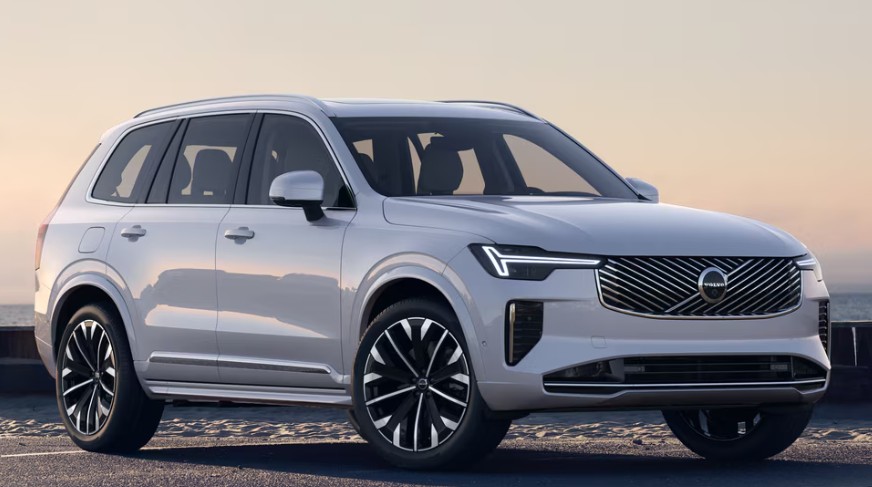
The XC90 has aged remarkably gracefully because Volvo never tried to make it shout.
Its proportions are clean, its bodywork is restrained, and the recognizable Thor's Hammer lighting signature gives the front enough personality without turning the grille into something resembling the entrance to an airport terminal.
The current XC90 remains roughly 4.95 metres long, giving it substantial road presence without making it absurdly cumbersome for everyday driving. Volvo lists its length at 4,953 mm.
That's one of the XC90's hidden strengths.
It feels large enough to deliver three-row practicality but not so enormous that every underground parking garage becomes a geometry examination.
Range Rover Exterior Design
The Range Rover works differently.
Few SUVs have such recognizable proportions. The upright front, floating roof effect, tall sides and almost architectural body shape make it unmistakable.
It's minimalist, but not subtle.
The interesting thing is that Range Rover has gradually removed unnecessary visual details rather than adding them. The result resembles a beautifully polished monolith.
Park a Range Rover beside an XC90 and neither looks cheap. The Range Rover, however, unquestionably has the greater sense of occasion.
Design Winner: Range Rover
For understated elegance, we might prefer the Volvo.
For pure prestige and presence, the Range Rover wins.
This is where the personality difference becomes impossible to ignore.
Step into an XC90 and everything seems designed to reduce stress.
Step into a Range Rover and everything seems designed to remind us that we've bought a Range Rover.
Inside the Volvo XC90
Volvo's interiors have long been among the most distinctive in the premium market.
Rather than covering every surface with buttons, chrome and screens, Volvo uses a cleaner architecture. Materials, textures, vertical dashboard elements and restrained detailing create a relaxing atmosphere.
The result works especially well in lighter interior combinations.
There's something refreshing about it. Many modern luxury SUVs feel as though somebody walked into an electronics store and glued every available display to the dashboard. The XC90 feels calmer.
It's the automotive equivalent of walking into a quiet Scandinavian living room after spending an hour inside a casino.
Inside the Range Rover
The Range Rover takes luxury another step upward.
Materials can become extraordinary depending on specification, while higher trims offer features approaching limousine territory. The current model range includes configurations with sophisticated seating, premium audio systems and extensive rear-passenger comfort equipment. On certain versions, Range Rover offers heated, cooled and massaging front seating as well as Executive Class rear seating.
That's important.
The XC90 is premium.
The Range Rover can become genuinely decadent.
Interior Winner: Range Rover
The Volvo cabin may actually appeal more to buyers who dislike visual excess, but in terms of material extravagance and outright luxury, the Range Rover operates at another level.
Comfort Is Where the Range Rover Earns Its Reputation
Luxury isn't only about what we can touch.
Ride quality matters enormously.
And this is one area where Range Rover's engineering philosophy pays dividends.
XC90 Ride Comfort
The XC90 is fundamentally designed around family comfort rather than sporty handling.
That's exactly the right decision.
Steering is easy, highway cruising is relaxing and the driving position gives us excellent visibility. Depending on specification and wheel size, the ride can be pleasantly smooth.
Larger wheels can inevitably reduce some of that softness, though.
That's worth remembering when configuring either vehicle. Twenty-two or twenty-three-inch wheels may look fantastic outside a restaurant, but potholes don't care about Instagram.
Range Rover Ride Comfort
A Range Rover feels different almost immediately.
There is a sense of isolation between the cabin and whatever unfortunate surface happens to exist underneath it.
It doesn't merely absorb bumps. It often seems to flatten the road.
The high seating position contributes to that sensation. We look down the road rather than merely along it, while the body feels substantial and planted.
The Range Rover is one of those vehicles where slowing down can actually make the journey feel more enjoyable.
Comfort Winner: Range Rover
The XC90 is comfortable.
The Range Rover turns comfort into one of the central reasons for buying the vehicle.
Volvo XC90 or Range Rover for Families?
Now things become much closer.
For actual family life—not just luxury—the Volvo makes an extremely strong argument.
XC90 Seating Capacity
Volvo offers the XC90 with six- or seven-seat configurations depending on version and market. Volvo's current US material describes the XC90 as a 6- or 7-seat SUV.
That immediately makes it suitable for families needing regular access to a third row.
The interior doesn't feel designed purely for wealthy adults. It feels designed around adults, children, bags, school runs and long journeys.
That's a major distinction.
Can a Range Rover Seat Seven?
Yes—but configuration matters.
The standard Range Rover isn't automatically a three-row family SUV. Range Rover currently offers Standard Wheelbase, Long Wheelbase and Long Wheelbase Seven Seat body styles.
The seven-seat Long Wheelbase version is serious family machinery. Range Rover says its three-row LWB configuration is designed to accommodate as many as seven adults.
It's enormous, exceptionally luxurious and wonderfully spacious.
But for a household simply needing seven seats, buying one can feel a bit like hiring a private jet to visit your grandparents.
Family Winner: Volvo XC90
For most families, the XC90 offers the better blend of dimensions, practicality, comfort and financial sanity.
Third-Row Space and Usability
A seven-seat badge doesn't automatically mean seven adults will be happy.
Sometimes manufacturers seem to interpret "third row" as "two emergency chairs for people who have lost an argument."
The XC90's third row is genuinely useful, particularly for children and shorter journeys with adults.
Access is reasonable and the seating configuration makes switching between passenger and cargo duties straightforward.
The seven-seat Range Rover LWB takes a more ambitious approach. Because the entire vehicle is larger and the wheelbase is stretched, Range Rover can provide legitimate three-row accommodation rather than token occasional seats. The manufacturer specifically promotes heated seating across all three rows on certain seven-seat specifications.
So technically, the Range Rover can provide the superior seven-seat experience.
Practically, however, the XC90 remains easier to recommend because buyers don't need to move into the Range Rover's gigantic long-wheelbase format simply to gain the extra seats.
Cargo Space and Everyday Practicality
Fold seats down and the XC90 becomes impressively useful.
Volvo lists approximately 2,040 mm of floor load length with the appropriate seats folded, showing how much usable interior length can be created when passenger capacity isn't required.
That matters for furniture, luggage, sports equipment, pushchairs or the mysterious collection of objects families somehow accumulate every weekend.
The Range Rover also offers enormous carrying potential, particularly in long-wheelbase form.
Yet there's another type of practicality people sometimes ignore: physical manageability.
A massive luxury SUV isn't necessarily more convenient.
The Volvo's smaller exterior dimensions make urban parking, narrow streets and crowded garages easier. The Range Rover provides more presence and potentially more interior space, but we're responsible for piloting considerably more vehicle.
You may be interested in reading Volvo XC90 vs Mercedes GLS: Which Luxury SUV Is Better?
For suburban or city family life, we'd choose the XC90.
Engine Options and Performance
Here's where specifications become highly market-dependent.
Both manufacturers offer electrification, but their philosophies differ.
Volvo XC90 Mild Hybrid
Current XC90 models are available with mild-hybrid petrol powertrains in various markets.
For example, Volvo's US specification currently lists B5 and B6 AWD mild-hybrid configurations. The B5 is rated at 247 hp on the US specification page, while the B6 sits above it as the stronger mild-hybrid alternative.
Nobody should buy an XC90 expecting sports-car theatre.
That's not the point.
Power delivery is designed around relaxed, confident movement. There's enough performance for overtaking, highway merging and carrying passengers without making every green traffic light an invitation to behave badly.
Volvo XC90 Plug-In Hybrid
The plug-in hybrid is much more interesting.
Volvo's 2026 US XC90 plug-in hybrid is rated for up to 32 miles of electric range, while figures vary by testing system and country.
UK specifications, for example, quote higher WLTP figures because the European WLTP procedure and US EPA methodology are different and should not be directly compared.
For buyers who can regularly charge at home, this transforms the vehicle.
Short local journeys can potentially be completed with very little petrol use, while the combustion engine remains available for longer trips.
It's arguably the powertrain that best suits the XC90's character.
Range Rover Engines
The Range Rover's engine family is broader and more ambitious, although availability varies significantly by country.
Current Range Rover specifications include electrified options, and the P460e and P550e plug-in hybrid variants combine a 3.0-litre six-cylinder Ingenium petrol engine with an electric motor.
Some Range Rover variants also offer considerably more powerful engines, especially at the upper end of the range.
This is another fundamental difference.
The XC90 asks, "How much performance does a luxury family SUV realistically need?"
The Range Rover occasionally replies, "Yes."
Performance Winner: Range Rover
If outright power matters, Range Rover has the higher ceiling.
If efficiency and everyday usability matter more, the Volvo's electrified options make tremendous sense.
Which Plug-In Hybrid Is Better?
This depends heavily on driving habits.
A plug-in hybrid SUV only delivers its biggest advantage when we actually plug it in.
Sounds obvious, doesn't it?
Yet plenty of people buy PHEVs and then treat the charging port like decorative trim.
The XC90 PHEV is particularly attractive for households doing repeated school runs, commuting, shopping and other predictable short-distance journeys.
The Range Rover PHEV applies the same idea to a much larger and more luxurious vehicle.
For drivers seeking to reduce fuel use without abandoning long-distance flexibility, either can work.
Our preference would depend on priorities.
If the objective is sensible electrified family transport, XC90.
If the objective is keeping Range Rover levels of luxury while adding electric-driving capability, Range Rover PHEV.
Volvo XC90 vs Range Rover Fuel Economy
We shouldn't give a single winner here without specifying engines, markets and testing systems.
Fuel economy changes dramatically between mild hybrids, plug-in hybrids and more powerful Range Rover engines.
Charging habits also completely reshape PHEV consumption.
An owner who drives 20 miles per day and charges every night may barely use the petrol engine during the working week.
Someone travelling hundreds of motorway miles without charging will see very different numbers.
That's why the realistic question isn't simply "Which gets better MPG?"
It's "Which powertrain matches our driving?"
Generally, though, buyers prioritizing fuel costs will find the XC90 easier to justify than a high-output full-size Range Rover.
Handling and Driving Experience
Neither SUV exists primarily to carve through mountain roads.
That's good.
There are already plenty of supposedly family-friendly SUVs with suspensions apparently tuned by people who think children enjoy being shaken.
The XC90 feels controlled, predictable and easy.
Steering is relatively light. Visibility is strong. The vehicle generally shrinks around us once we're moving.
The Range Rover emphasizes effortlessness.
Its elevated seating position, substantial body and sophisticated chassis create a sense of authority. Rather than darting through corners, it flows.
If the XC90 feels like a beautifully tailored everyday jacket, the Range Rover feels like a private lounge that happens to have four-wheel drive.
Off-Road Ability: This One Isn't Close
Anyone genuinely planning to leave paved roads should pay attention here.
The Range Rover's identity has always combined luxury with serious all-terrain capability.
That dual personality is one reason it remains unusual.
It can arrive outside a five-star hotel looking perfectly appropriate and then tackle terrain where many luxury crossovers would start reconsidering their career choices.
The XC90 offers all-wheel-drive configurations and useful ground clearance—Volvo lists roughly 205 to 216 mm depending on specification—but it's primarily a road-focused luxury SUV.
It can handle snow, loose surfaces, country tracks and moderate terrain.
But it isn't trying to out-Range-Rover a Range Rover.
Off-Road Winner: Range Rover
By a considerable margin.
Technology and Infotainment
Both cabins rely heavily on digital technology, though each integrates it differently.
Volvo's interface suits the vehicle's minimalist philosophy. The objective is to reduce clutter by consolidating functions digitally.
That looks beautiful.
Whether it always works better than physical controls is another question.
Sometimes we don't need a revolutionary touchscreen solution. Sometimes we just want to change the temperature without opening a menu.
Range Rover similarly incorporates sophisticated digital interfaces while maintaining a strong visual emphasis on luxury.
The exact equipment available varies dramatically across trim levels, particularly once we move toward HSE, Autobiography and SV territory.
At the upper end, features become extraordinary rather than merely useful.
Range Rover SV, for instance, is available with 13.1-inch rear entertainment screens as part of its luxury-focused rear-seat experience.
For ordinary usability, Volvo keeps things comparatively restrained.
For gadget-rich indulgence, Range Rover goes considerably further.
Safety: Volvo's Natural Territory
Mention Volvo and safety immediately enters the conversation.
That's not merely marketing history; safety has become a central part of Volvo's brand identity and vehicle-development philosophy.
The XC90 fits naturally into that story.
Its calm driving character also supports the idea. It isn't constantly encouraging us to drive faster. Visibility is good, controls are generally predictable, and the vehicle feels designed primarily around transporting people securely and comfortably.
Range Rover also offers extensive modern driver-assistance technology, of course.
But emotionally, safety remains one of the strongest reasons buyers gravitate toward Volvo.
Safety-Minded Buy: Volvo XC90
Families placing safety philosophy near the top of their priorities will naturally find the XC90 compelling.
Luxury and Prestige
Now we arrive at territory where rational spreadsheets start losing power.
Cars aren't always logical purchases.
Sometimes we want something because opening the garage door and seeing it makes us happy.
The Range Rover has enormous prestige.
Its shape, history and positioning give it a presence few SUVs can replicate.
The XC90 communicates wealth differently. It's understated. Someone choosing a high-spec Volvo may have deliberately avoided louder alternatives.
Neither approach is wrong.
You may be interested in readingVolvo XC90 vs Mercedes GLS: Which Luxury SUV Is Better?You may be interested in reading
Volvo XC90 vs Range Rover Sport: Which Luxury SUV Should You Buy?But if our definition of luxury includes occasion, exclusivity and visual status, Range Rover wins comfortably.
Prestige Winner: Range Rover
The Volvo whispers.
The Range Rover doesn't exactly shout—but everyone still hears it.
Reliability and Ownership Considerations
This section deserves nuance.
Modern luxury SUVs are complicated machines.
Electrified powertrains, advanced suspension systems, digital interfaces, driver-assistance sensors, climate systems and enormous amounts of computing hardware create extraordinary capability—but also complexity.
That means prospective owners shouldn't choose solely according to purchase price.
We should also investigate warranty coverage, servicing costs, insurance, local dealer quality and the cost of maintaining the exact engine and specification we're considering.
This becomes particularly important with used Range Rovers.
An older luxury SUV may depreciate dramatically while its parts and repair complexity remain very much attached to its original luxury positioning.
A cheap Range Rover isn't necessarily a cheap car to own.
The XC90 isn't a basic machine either, especially in plug-in-hybrid form, but its lower market positioning can make the overall ownership equation easier to stomach.
Which Is Cheaper to Maintain?
For most buyers, we'd expect the XC90 to be the easier vehicle financially.
That doesn't mean servicing one is inexpensive.
It's still a premium European SUV packed with sophisticated equipment.
But the Range Rover reaches another level of mechanical and electronic complexity depending on configuration. Large wheels, sophisticated chassis systems, premium components and high-output powertrains can all increase ownership costs.
Insurance can also become significant.
Before buying either used, we'd strongly prioritize a vehicle with complete service history over one with the most attractive wheels, colour or trim level.
A beautiful neglected luxury SUV can become a very expensive lawn ornament.
Volvo XC90 or Range Rover for Long Trips?
This is a surprisingly difficult category.
The Range Rover delivers extraordinary motorway comfort.
Passengers sit inside a quiet, spacious environment while the vehicle seems to dissolve long distances.
The XC90, however, is also excellent for road trips.
Its comfortable seating, sensible dimensions and family-friendly cabin make it exceptionally easy to live with.
If we were transporting five adults for several hours and budget didn't matter, we'd take the Range Rover.
If we were loading children, luggage, snacks, charging cables, backpacks and whatever else mysteriously appears five minutes before a family holiday, we'd probably prefer the XC90.
Which Is Better in the City?
The XC90.
Not because it's small—it absolutely isn't.
It's simply less enormous.
That matters.
Narrow parking spaces, underground garages, school entrances and old city streets have a wonderful ability to make large SUVs suddenly feel like cargo ships.
Range Rover cameras and parking technology certainly help, but physics hasn't received a software update yet.
The XC90 gives us the luxury SUV experience without demanding quite as much physical space.
Which One Offers Better Value?
This could be the deciding factor.
The Volvo XC90 provides an enormous proportion of what most people actually want from a luxury SUV: premium materials, sophisticated styling, seven-seat availability, strong safety credentials, modern technology, electrified powertrains and excellent road-trip comfort.
The Range Rover provides more.
More luxury.
More presence.
More capability.
More potential performance.
More exclusivity.
But it also asks us to pay significantly more to obtain those advantages.
Value therefore depends on whether we genuinely use or appreciate what the extra money buys.
If we're simply travelling between home, work, school and holiday destinations, the XC90 arguably provides the more intelligent package.
If we specifically want the Range Rover experience, nothing about an XC90 will magically turn it into one.
Who Should Buy the Volvo XC90?
The XC90 makes the strongest case for buyers who want premium transportation without turning luxury into a spectacle.
It suits people who prioritize:
- A practical six- or seven-seat interior.
- Elegant Scandinavian styling.
- Strong family usability.
- A manageable footprint for a three-row SUV.
- Mild-hybrid or plug-in-hybrid choices.
- Comfort without excessive showmanship.
- Lower purchase and ownership costs than a full-size Range Rover.
- Safety-focused design.
- Good value within the premium SUV segment.
Most importantly, the XC90 rarely feels like we're sacrificing much.
That's what makes it so compelling.
Who Should Buy the Range Rover?
The Range Rover makes more sense when luxury itself is part of the objective.
It's for buyers who aren't merely searching for transportation.
They want the experience.
If the commanding driving position, beautiful interior, sophisticated chassis, serious off-road capability and unmistakable Range Rover presence make us smile every time we get behind the wheel, then comparing spreadsheets probably misses the point.
A Range Rover is an emotional purchase wrapped inside an extraordinarily capable SUV.
Volvo XC90 or Range Rover: Which Should We Buy?
For most buyers choosing purely on logic, we'd pick the Volvo XC90.
It offers enough luxury to feel genuinely special, enough space for a large family, useful electrified powertrains and a more approachable ownership proposition.
The Range Rover wins more individual categories.
It's more luxurious.
It's more prestigious.
It's more capable off road.
It offers greater performance potential.
It can provide extraordinary passenger comfort.
Yet being "better" in absolute terms doesn't automatically make it the better purchase.
The XC90's genius lies in giving us perhaps 80 or 90 percent of the experience most luxury SUV buyers actually need without forcing us into the financial territory occupied by a flagship Range Rover.
But there is one important exception.
If we're asking this question because we've always wanted a Range Rover, buy the Range Rover if the finances comfortably allow it.
An XC90 purchased as a substitute for the vehicle we truly wanted may never completely satisfy us.
Final Verdict
The battle between the Volvo XC90 or Range Rover isn't really Sweden versus Britain.
It's restraint versus indulgence.
The XC90 is like an architect-designed Scandinavian house: beautiful, peaceful, functional and quietly expensive.
The Range Rover is the countryside estate at the end of the road.
Both are desirable.
They simply answer different questions.
For families, everyday practicality, value and understated luxury, the Volvo XC90 is our winner.
For ultimate refinement, prestige, off-road capability and sheer sense of occasion, the Range Rover wins.
If our money mattered—and it usually does—we'd choose the XC90.
If money mattered considerably less?
Well, suddenly those Range Rover keys start looking rather attractive.
Frequently Asked Questions
Is a Volvo XC90 better than a Range Rover?
The Volvo XC90 is arguably better for buyers prioritizing family practicality, value, manageable dimensions and understated luxury. The Range Rover is superior in outright luxury, prestige and off-road ability. Neither is universally better; they're aimed at different levels of the premium SUV market.
Is the Volvo XC90 as luxurious as a Range Rover?
The XC90 is unquestionably a luxury SUV, but the full-size Range Rover occupies a more exclusive segment. Higher Range Rover specifications offer much more elaborate seating, trim and rear-passenger features, including exceptionally luxurious Autobiography and SV configurations.
Which is better for a family, Volvo XC90 or Range Rover?
For most families, we'd choose the XC90. Its six- or seven-seat configurations, sensible dimensions and family-focused interior make it easier to live with. Buyers wanting maximum passenger room can choose a Range Rover Long Wheelbase Seven Seat, which is specifically available as a three-row model.
You may be interested in readingVolvo XC90 vs Mercedes GLS: Which Luxury SUV Is Better?You may be interested in reading
Volvo XC90 vs Range Rover Sport: Which Luxury SUV Should You Buy?You may be interested in reading
Volvo XC90 or BMW X7: Which Luxury SUV Should You Buy?Can a Range Rover seat seven people?
Yes. The current full-size Range Rover range includes a Long Wheelbase Seven Seat configuration alongside Standard Wheelbase and conventional Long Wheelbase models.
Which is better off road, Volvo XC90 or Range Rover?
The Range Rover is the clear choice for demanding off-road use. The XC90 offers useful all-wheel-drive capability and adequate ground clearance for poor weather, loose roads and moderate terrain, but it is fundamentally a road-oriented premium family SUV rather than a dedicated luxury off-roader.
If you want to know other articles similar to Volvo XC90 or Range Rover: Which Luxury SUV Is Better? you can visit the category Models.
Volkswagen T-Cross vs Volkswagen T-Roc: Which Is Better?
Hyundai Tucson Weight: Complete Guide to Curb, Gross, and Payload Specs

Honda Passport vs Toyota 4Runner: Which SUV Is Better?
Honda Passport vs Ford Bronco: Which SUV Is Better?
Honda Passport vs Ford Explorer: Which SUV Is Better?
Honda Passport or Pilot: Which SUV Is Better?
Leave a Reply
More content of your interest