
Volvo XC90 vs Mercedes GLS: Which Luxury SUV Is Better?

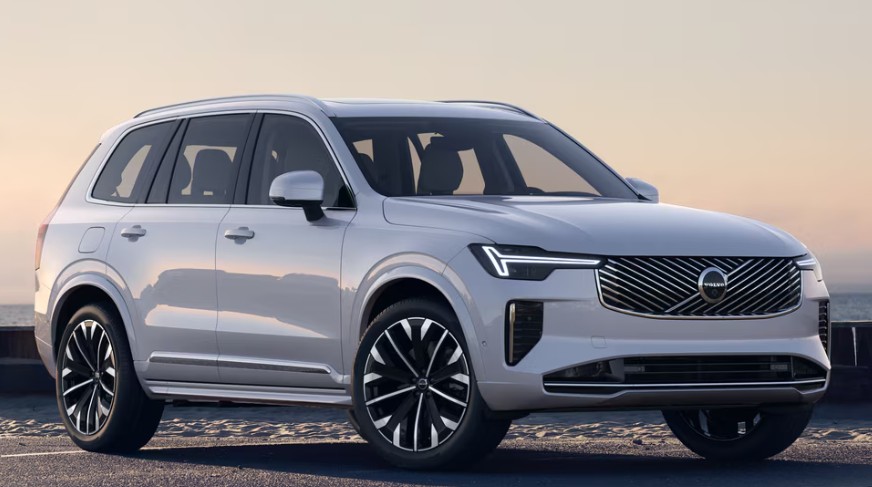
Choosing between the Volvo XC90 vs Mercedes GLS is a bit like deciding between a beautifully designed Scandinavian retreat and a five-star German hotel on wheels. Both SUVs promise luxury, three-row practicality, premium technology, and enough road presence to make an ordinary school run feel surprisingly sophisticated. Yet they approach the luxury-SUV formula from very different directions.
The Volvo XC90 is elegant without shouting about it. Its cabin favors clean lines, subtle materials, restrained design, and an atmosphere that feels calm almost immediately. The Mercedes GLS takes another route. It is larger, more imposing, more extravagant, and generally more interested in surrounding us with technology, comfort features, and unmistakable prestige.
So which one deserves a place in our driveway?
There isn't a universal answer. Buyers searching for understated luxury, manageable dimensions, and a relaxed driving experience may naturally gravitate toward the Volvo. Families wanting maximum passenger space, stronger performance options, and a genuinely flagship-level SUV experience may find the GLS difficult to resist.
Let's compare the Volvo XC90 and Mercedes GLS where it really matters.
Content in this publication
- Volvo XC90 vs Mercedes GLS at a Glance
- Exterior Design: Scandinavian Restraint vs German Presence
- Why the Mercedes GLS Looks More Expensive
- Size and Everyday Usability
- Interior Design: Two Very Different Definitions of Luxury
- Seat Comfort and Driving Position
- Second-Row Passenger Space
- Third-Row Space: Where the GLS Pulls Ahead
- Cargo Space and Family Practicality
- Volvo XC90 vs Mercedes GLS Performance
- Ride Comfort
- Handling and Steering
- Fuel Economy and Efficiency
- Technology and Infotainment
- Safety and Driver Assistance
- Towing Ability
- Off-Road Capability
- Reliability and Ownership Complexity
- Maintenance Costs
- Volvo XC90 vs Mercedes GLS Price
- Resale Value and Depreciation
- Which SUV Is Better for Families?
- Which SUV Is More Luxurious?
- Volvo XC90 vs Mercedes GLS: Pros and Cons
- Who Should Buy the Volvo XC90?
- Who Should Buy the Mercedes GLS?
- Volvo XC90 vs Mercedes GLS: Which Is Better Overall?
- Final Verdict
- Frequently Asked Questions
Volvo XC90 vs Mercedes GLS at a Glance
Before digging into the details, it helps to understand what these SUVs represent.
The Volvo XC90 is essentially Volvo's interpretation of a premium family SUV. It combines three-row seating with minimalist styling, extensive safety technology, electrified powertrain options in many markets, and a cabin designed around comfort rather than spectacle.
The Mercedes GLS sits higher in the luxury-SUV hierarchy. It is Mercedes-Benz's large three-row flagship SUV and is positioned as something close to an S-Class with extra ground clearance. It generally provides more interior room, more engine choices, greater towing potential depending on configuration, and considerably more visual drama.
Our quick summary looks like this:
- Choose the Volvo XC90 for understated luxury, elegant design, easier urban driving, and a serene Scandinavian interior.
- Choose the Mercedes GLS for maximum space, stronger performance, greater luxury potential, and a more commanding road presence.
That sounds simple, but the differences become much more interesting once we climb inside.
The styling battle between these SUVs isn't really about which looks better. It is about what kind of luxury we prefer.
Why the Volvo XC90 Still Looks Elegant
The XC90 has always been good at aging gracefully.
Instead of relying on excessive chrome, enormous vents, or aggressively sculpted bodywork, Volvo uses relatively clean surfaces and recognizable proportions. The vertical grille and distinctive lighting create enough personality without making the SUV look like it is trying too hard.
That restraint is part of the appeal.
We can park an XC90 outside an expensive restaurant, a countryside hotel, or a suburban school and it never seems out of place. It looks premium but doesn't demand attention.
The XC90's Design Philosophy
Think tailored Scandinavian furniture rather than a diamond-covered watch.
The XC90 communicates luxury through proportion and detail instead of sheer visual aggression. Buyers who dislike increasingly flamboyant premium SUVs may find that refreshing.
Why the Mercedes GLS Looks More Expensive
The Mercedes GLS takes the opposite approach.
It is physically larger and visually more substantial. Its broad grille, wide stance, long body, large wheels, and substantial height give it genuine flagship presence.
Park a GLS beside an XC90 and the Mercedes often appears to belong to the next class up.
That is partly because it does.
The GLS competes in the full-size premium SUV category, while the XC90 occupies a slightly more compact space. Buyers comparing them should therefore remember that this isn't a perfectly equal size comparison.
Still, plenty of families cross-shop them because both provide three rows and premium-brand ownership.
Size and Everyday Usability
Size can sound impressive in a brochure. In real life, however, bigger isn't automatically better.
The Mercedes GLS offers more exterior bulk, which contributes to its spacious cabin. The trade-off appears the first time we enter a tight underground garage.
The XC90 generally feels easier to position.
Its dimensions make it friendlier for narrow urban streets, crowded shopping centers, and typical residential parking spaces. Drivers moving from a midsize SUV may find it surprisingly approachable.
The GLS feels like a proper large SUV.
Modern cameras and parking technology help enormously, but physics remains physics. We are still driving around in a substantial vehicle.
Which SUV Is Better in the City?
For urban use, we'd lean toward the Volvo XC90.
It provides the elevated seating position and three-row flexibility people want from a luxury SUV without feeling quite as cumbersome.
The Mercedes GLS becomes more appealing when our daily environment offers wider roads, larger parking spaces, and fewer tight corners.
Out in the suburbs or on long highway journeys, its size becomes less of a disadvantage and more of an asset.
Interior Design: Two Very Different Definitions of Luxury
Open the doors and the personalities become even clearer.
The XC90 cabin can feel like stepping into a modern Nordic living room.
The GLS cabin feels more like entering a technology-rich executive lounge.
Neither approach is wrong.
Inside the Volvo XC90
Volvo tends to favor simplicity.
The dashboard is comparatively uncluttered, the design is vertically oriented, and decorative materials often provide warmth without overwhelming the space.
There is a deliberate sense of calm.
Some buyers will adore that. Others may sit inside the Mercedes immediately afterward and wonder whether the Volvo looks almost too restrained.
That's the central question: do we equate luxury with serenity or spectacle?
Inside the Mercedes GLS
Mercedes generally gives the GLS considerably more visual theater.
Large digital displays dominate the dashboard, ambient lighting can transform the mood at night, and the overall architecture creates a stronger sense of technological sophistication.
The GLS also has the advantage of size.
Its cabin feels broad and substantial, reinforcing its flagship status.
Which Cabin Feels More Premium?
The Mercedes typically wins if our definition of premium includes visual impact, technology, extensive customization, and sheer scale.
The Volvo can feel equally special in a quieter way.
It doesn't necessarily try to impress us during the first thirty seconds. Instead, it attempts to make every drive feel peaceful.
Seat Comfort and Driving Position
Volvo has built a strong reputation around seating comfort, and the XC90 continues that philosophy.
Its front seats are typically supportive rather than excessively soft. That matters during long journeys because good posture often proves more valuable than sofa-like cushioning after several hours.
The Mercedes GLS can also provide superb seat comfort, especially as equipment levels rise.
The difference is that Mercedes offers more potential for indulgence.
Depending on trim and configuration, buyers may find advanced seat adjustments, ventilation, massage functions, heating options, and other comfort features.
Best for Long-Distance Driving
This category is surprisingly close.
We love the XC90's relaxed seating position and calm cabin, while the GLS benefits from its substantial size, smooth ride, generous passenger space, and more powerful engine options.
If we frequently cover hundreds of motorway or interstate miles, the GLS has the stronger grand-touring character.
The XC90 remains excellent for long trips but feels more like a sophisticated family SUV than a rolling luxury limousine.
Second-Row Passenger Space
Families comparing the Mercedes GLS vs Volvo XC90 should pay particular attention to the second row.
Both vehicles can accommodate adults comfortably, but the Mercedes has a natural advantage because of its larger overall dimensions.
It provides a stronger sense of openness.
The XC90 still offers enough room for most families, and its slimmer exterior dimensions don't necessarily make the cabin feel cramped. However, taller passengers spending hours in the second row may appreciate the Mercedes.
Captain's Chairs or Bench Seating?
Configurations vary depending on market and model, but this is an important consideration.
Captain's chairs create a luxurious second-row experience and make third-row access easier. Bench seating maximizes passenger capacity.
Before buying either SUV, we should think about how often seven seats will actually be used.
A six-seat layout may feel wonderful until the day we suddenly need to transport seven people.
Third-Row Space: Where the GLS Pulls Ahead
Third-row seats are one of those features that look identical on a specification sheet but can feel very different in reality.
The Volvo XC90 provides useful third-row accommodation, particularly for children and shorter journeys.
Adults can use it, but we wouldn't necessarily choose the rearmost seats for a cross-country road trip.
The Mercedes GLS is generally better suited to regular third-row use.
Its larger body creates more usable passenger space, making the third row feel less like emergency accommodation and more like an intentional part of the cabin.
Which Is Better for Seven Adults?
The Mercedes GLS.
If we routinely carry six or seven adults, the GLS is simply the more convincing solution.
If the third row is mainly for children, school friends, or occasional passengers, the XC90's more compact package makes plenty of sense.
Cargo Space and Family Practicality
Cargo capacity changes dramatically depending on how many seats are being used.
With the third row upright, both SUVs inevitably sacrifice luggage room compared with five-seat configurations. Folding seats creates considerably more flexibility.
The GLS's larger body once again gives it an advantage when maximum cargo volume matters.
Think airport transfers, large suitcases, sports equipment, strollers, camping gear, or the mysterious collection of items families somehow accumulate during road trips.
The XC90 remains practical but doesn't attempt to compete with the GLS on sheer volume.
Which SUV Is Easier for Everyday Family Life?
Here's the interesting part: more cargo room doesn't automatically mean greater convenience.
The XC90's smaller exterior footprint can make grocery runs, school pickups, and crowded car parks easier.
So we'd divide the decision this way:
You may be interested in reading Volvo XC90 vs Range Rover Sport: Which Luxury SUV Should You Buy?
GLS: better when carrying lots of passengers and luggage.
XC90: better when we want three-row flexibility without driving a genuinely large SUV every day.
Volvo XC90 vs Mercedes GLS Performance
The performance difference can be substantial.
The Volvo XC90 generally emphasizes efficient, refined power delivery rather than dramatic acceleration. Modern XC90 configurations have increasingly leaned toward electrification, including mild-hybrid and plug-in-hybrid approaches depending on model and market.
The Mercedes GLS offers a wider performance envelope.
Even standard versions are designed to move a large SUV confidently, while higher-performance variants can deliver acceleration that seems almost absurd for something this big.
XC90: Smooth Rather Than Aggressive
The Volvo feels best when driven smoothly.
Its character encourages relaxed progress. We settle into the seat, turn on some music, and let the SUV glide rather than attack every corner.
Performance is generally more than adequate for family use.
Certain electrified versions can be genuinely quick, but outright speed doesn't define the XC90 experience.
GLS: Power Comes More Naturally
The Mercedes GLS benefits from engines designed for a larger and heavier vehicle.
Acceleration can feel effortless, particularly with stronger powertrain options.
That matters when overtaking, merging onto highways, or towing.
The GLS rarely feels like it is struggling with its own weight.
Which One Is Faster?
The answer depends heavily on engine and trim, but the GLS lineup offers greater performance potential overall.
Buyers prioritizing effortless acceleration and engine character should probably start with Mercedes.
Ride Comfort
Luxury SUVs live or die by how they deal with ugly roads.
A cabin filled with leather and screens doesn't feel luxurious if potholes send shockwaves through the seats.
Both vehicles focus heavily on comfort, but the GLS has greater potential to deliver that floating luxury-car sensation, particularly when equipped with sophisticated suspension systems.
The XC90 usually feels controlled and composed rather than excessively soft.
Does the Volvo Feel Sportier?
Not exactly sporty, but more manageable.
Its smaller proportions can make it feel slightly more natural through tighter roads.
The GLS's strength lies elsewhere. It prefers long sweepers, highways, and relaxed cruising.
Trying to hustle a giant three-row luxury SUV through narrow mountain roads isn't really the point anyway.
Handling and Steering
The XC90's steering tends to emphasize ease.
That suits its character perfectly. We aren't buying one because we want a seven-seat sports car.
Its manageable size makes it feel predictable and easy to place.
The GLS also prioritizes comfort, but advanced chassis technology can hide much of its considerable mass.
Still, we remain aware that there is a lot of SUV around us.
For drivers who regularly navigate narrow country roads, tighter city streets, or compact garages, the Volvo feels less intimidating.
Fuel Economy and Efficiency
Efficiency is one area where the XC90's philosophy becomes especially attractive.
Volvo's growing emphasis on electrification makes the XC90 appealing to buyers who want luxury-SUV practicality without automatically accepting enormous fuel bills.
Plug-in-hybrid versions can be particularly interesting when drivers have access to home charging and complete many shorter journeys.
The GLS is larger, heavier, and generally more performance-oriented.
That combination rarely produces spectacular fuel economy.
Could the XC90 Save Us Money on Fuel?
Potentially, yes.
But real-world efficiency depends on powertrain, driving style, road conditions, charging habits, temperature, and journey type.
A plug-in hybrid used primarily without charging won't necessarily deliver the efficiency people imagine.
Conversely, one that spends weekdays completing short electric-assisted trips can dramatically change the ownership equation.
Technology and Infotainment
This battle depends heavily on personal preference.
Mercedes tends to overwhelm us—in a good way, depending on our taste—with digital displays, menus, customization, ambient lighting, voice controls, and technology.
Volvo takes a cleaner approach.
Mercedes GLS Technology Experience
The GLS generally feels more futuristic.
Its screen layout dominates the dashboard and gives drivers access to a broad range of vehicle settings.
Tech enthusiasts may love exploring everything.
Less tech-focused drivers may need some time before interactions become second nature.
Volvo XC90 Infotainment Experience
The XC90 interface aims for simplicity, although moving too many functions into a touchscreen can sometimes make basic tasks less immediate than traditional physical controls.
Once familiar with the system, the cabin's uncluttered appearance starts making more sense.
Which Has Better Technology?
Mercedes wins for quantity and visual impact.
Volvo wins for buyers who prefer technology to blend into the cabin rather than dominate it.
Safety and Driver Assistance
Safety is central to Volvo's identity.
The XC90 reflects decades of brand philosophy focused on occupant protection and accident prevention.
Modern examples include a broad collection of driver-assistance technologies designed to reduce fatigue and improve awareness.
Mercedes also invests heavily in advanced safety systems.
At this level of the market, neither vehicle should be viewed as lacking sophisticated driver assistance.
What differs is branding.
Volvo makes safety feel like the core of the product.
Mercedes frames it as one important part of a broader luxury and technology experience.
Which SUV Is Safer?
It would be irresponsible to declare a universal winner without comparing the exact model years, safety tests, equipment packages, and markets involved.
For buyers, the better strategy is to compare the specific vehicles being considered and verify which active-safety features are standard rather than optional.
Towing Ability
Drivers who tow caravans, boats, or trailers should pay close attention here.
The Mercedes GLS's larger platform and stronger engine options can make it particularly appealing for serious towing.
The Volvo XC90 can also be a capable tow vehicle, but maximum ratings depend heavily on engine, drivetrain, model year, and market.
Best Luxury SUV for Frequent Towing
We'd lean toward the Mercedes GLS for buyers regularly towing heavier loads.
Its power, size, and overall architecture are better aligned with that kind of work.
For occasional recreational towing, the XC90 may provide everything many owners actually need.
Always confirm the exact legal towing rating of the vehicle and trailer combination before purchasing.
Off-Road Capability
Neither SUV should be confused with a stripped-down expedition vehicle.
Still, both offer enough ground clearance, traction technology, and all-wheel-drive capability in suitable configurations to handle snow, muddy access roads, gravel tracks, and light off-road conditions.
The GLS can feel more substantial and capable in difficult terrain, but its size can also become a problem on narrow trails.
The Volvo's smaller footprint makes it easier to place.
Which Would We Take Into the Mountains?
For snowy paved roads and gravel access routes, either can work well.
For genuinely demanding off-road use, we'd question whether either luxury SUV is the smartest tool for the job, particularly considering expensive bodywork and large wheels.
Sometimes discretion is the better part of adventure.
Reliability and Ownership Complexity
Premium SUVs contain a lot of technology.
That makes them comfortable and impressive, but it also means ownership can become expensive as vehicles age.
Suspension systems, electronic modules, advanced infotainment, turbocharging, hybrid hardware, sensors, cameras, and luxury accessories all add complexity.
Neither the XC90 nor GLS should be purchased used purely because the price has fallen dramatically.
A cheap luxury SUV can become a very expensive luxury SUV surprisingly quickly.
What Should Used Buyers Check?
A careful pre-purchase inspection matters enormously.
We would look for:
- Complete service history.
- Evidence of correct scheduled maintenance.
- Warning lights or intermittent electrical faults.
- Suspension noises or uneven vehicle height.
- Smooth transmission operation.
- Proper operation of climate control and infotainment.
- Condition of expensive tires and brakes.
- Battery health on electrified versions.
- Confirmation that recalls and software campaigns were completed.
A beautiful cabin shouldn't distract us from mechanical reality.
You may be interested in readingVolvo XC90 vs Range Rover Sport: Which Luxury SUV Should You Buy?You may be interested in reading
Volvo XC90 or BMW X7: Which Luxury SUV Should You Buy?Maintenance Costs
Mercedes GLS ownership will generally reflect its flagship status.
Large wheels mean expensive tires. Large brakes aren't cheap. Complex suspension systems can be costly when repairs are eventually needed.
The Volvo XC90 isn't inexpensive to maintain either, but its slightly smaller scale may make some running costs easier to tolerate.
That doesn't mean the Volvo is a budget choice.
Both are premium vehicles and should be maintained accordingly.
Warranty Coverage Matters
Warranty terms vary by country and model year, so buyers should investigate local coverage carefully.
For used examples, an extended warranty from a reputable provider may be worth considering when the vehicle contains expensive electronic, suspension, or hybrid systems.
Volvo XC90 vs Mercedes GLS Price
This is where the comparison begins tilting significantly toward Volvo.
The XC90 typically occupies a lower price bracket than the GLS, especially once options enter the picture.
Mercedes buyers can push a GLS into genuinely expensive territory.
But we shouldn't compare sticker prices alone.
Equipment levels matter.
A heavily specified XC90 may include features that require expensive option packages on another vehicle, while the GLS can offer capabilities unavailable on the Volvo.
Which Offers Better Value?
For many families, the XC90.
It delivers three-row luxury, sophisticated styling, useful technology, and premium-brand appeal without necessarily moving into full-size flagship-SUV pricing.
The GLS justifies its premium through greater space, more performance possibilities, higher luxury potential, and stronger road presence.
Value therefore depends on what we actually use.
Paying for enormous third-row space makes little sense if those seats stay folded 350 days a year.
Resale Value and Depreciation
Luxury vehicles can depreciate significantly, particularly when expensive options quickly become yesterday's technology.
That can make used examples extremely tempting.
The trick is understanding why the price dropped.
A three- or four-year-old premium SUV may cost dramatically less than new, but maintenance doesn't depreciate at the same rate.
A used $100,000 vehicle may become a $50,000 vehicle.
It still has $100,000-vehicle components.
That's worth remembering.
Which SUV Is Better for Families?
For the average family, the Volvo XC90 may be the sweet spot.
It offers enough passenger space, a useful third row, a sophisticated cabin, and relatively manageable dimensions.
Parents who spend weekdays navigating schools, supermarkets, office garages, and suburban streets may appreciate that balance.
The GLS becomes the stronger family option when space takes priority over compactness.
Large families traveling frequently with luggage will appreciate the extra room.
XC90 for Smaller Families
A family of four or five that occasionally needs two extra seats may find the XC90 almost ideal.
We get three-row flexibility without dragging around more vehicle than necessary.
GLS for Larger Families
Families regularly transporting six or seven people should seriously consider the Mercedes.
Its greater third-row usability changes the ownership experience.
Those seats aren't merely occasional extras; they can become genuinely practical passenger accommodation.
Which SUV Is More Luxurious?
The Mercedes GLS wins in conventional luxury terms.
It has greater visual drama, more interior space, stronger customization potential, more powerful available engines, and the aura of being the brand's flagship SUV.
But luxury means different things to different people.
Some of us don't want flashing ambient lighting and an enormous digital dashboard.
We want silence.
Comfort.
Beautiful materials.
Good seats.
A cabin that lowers our blood pressure instead of raising our heart rate.
That is where the XC90 shines.
Volvo XC90 vs Mercedes GLS: Pros and Cons
Volvo XC90 Pros
- Elegant Scandinavian design.
- Easier to maneuver than the larger GLS.
- Comfortable and supportive seating.
- Useful three-row practicality.
- Strong emphasis on safety.
- Attractive electrified powertrain options.
- Premium cabin without excessive visual clutter.
- Typically more accessible pricing than the GLS.
Volvo XC90 Cons
- Third row is less spacious for adults.
- Cargo room cannot match the larger Mercedes.
- Some drivers may find the interior too minimalist.
- Performance choices are less extensive.
- Premium maintenance costs still apply.
Mercedes GLS Pros
- Spacious three-row interior.
- More comfortable third row for regular adult use.
- Strong performance potential.
- Impressive technology.
- Flagship-level luxury.
- Excellent highway cruiser.
- Greater cargo flexibility.
- Strong towing credentials in suitable configurations.
Mercedes GLS Cons
- Considerably larger exterior dimensions.
- Higher purchase price.
- Potentially expensive long-term maintenance.
- Fuel consumption can be substantial.
- Complex technology may feel overwhelming.
- Tight parking spaces become noticeably tighter.
Who Should Buy the Volvo XC90?
The XC90 makes sense when we want luxury without extravagance.
It suits drivers who value intelligent design more than visual theater.
We'd particularly recommend considering it if most of these statements sound familiar:
We regularly drive in cities or crowded suburbs.
We need seven seats occasionally rather than constantly.
We care about efficient powertrain options.
We prefer minimalist interiors.
We want a premium SUV that doesn't feel enormous.
We value comfort and safety more than outright performance.
For that buyer, the Volvo can feel like the smarter decision rather than the cheaper compromise.
Who Should Buy the Mercedes GLS?
The GLS is for buyers who actually want a big luxury SUV.
Not something pretending to be one.
If passenger room, performance, long-distance comfort, towing capability, and prestige rank near the top of our list, the Mercedes earns its place.
It makes particular sense for families regularly carrying six or seven occupants.
It also suits buyers upgrading from another full-size SUV who don't want to sacrifice interior space simply to gain a premium badge.
The GLS is expensive because it offers more vehicle.
The important question is whether we need that "more."
Volvo XC90 vs Mercedes GLS: Which Is Better Overall?
If we judge purely by space, performance potential, and flagship luxury, the Mercedes GLS wins.
It is bigger, roomier, more powerful in many configurations, and capable of delivering a truly opulent ownership experience.
But that doesn't automatically make it the better purchase.
The Volvo XC90 may actually suit more buyers.
Its dimensions are easier to live with, its cabin feels beautifully restrained, and it provides the practical advantages of three rows without turning every parking maneuver into a strategic operation.
The XC90 asks, "How much luxury do we really need?"
The GLS responds, "Why stop at enough?"
Both philosophies are surprisingly persuasive.
Final Verdict
The Volvo XC90 vs Mercedes GLS comparison ultimately comes down to scale and personality.
Choose the Volvo XC90 if we want a refined three-row SUV that balances luxury, practicality, efficiency, and everyday usability. It feels thoughtful rather than excessive, and that's exactly why many buyers love it.
Choose the Mercedes GLS if we want something grander. It offers more passenger space, greater performance potential, stronger flagship presence, and a cabin that can feel like a luxury lounge traveling at highway speed.
For a family of four or five that occasionally uses the third row, we'd lean toward the XC90.
For a family regularly carrying six or seven people, we'd favor the GLS.
There is also a financial question worth asking.
Would we rather buy the more expensive SUV simply because it offers more, or buy the smaller luxury SUV because it already provides everything we genuinely need?
Sometimes the best luxury isn't having the most.
It's having exactly enough.
Frequently Asked Questions
Is the Mercedes GLS bigger than the Volvo XC90?
Yes. The Mercedes GLS belongs to a larger luxury-SUV class and generally provides more overall passenger and cargo space. That extra size is particularly noticeable in the third row. The Volvo XC90 remains a three-row SUV but is easier to maneuver in cities and tight parking areas.
Is the Volvo XC90 more reliable than the Mercedes GLS?
Reliability can vary substantially by model year, engine, maintenance history, and individual vehicle condition. Both SUVs contain sophisticated technology that can become costly to repair as they age. Used buyers should prioritize a complete service record and an independent pre-purchase inspection over brand reputation alone.
Which is better for families, the Volvo XC90 or Mercedes GLS?
The XC90 may be better for smaller families that need the third row occasionally because it combines seven-seat flexibility with more manageable exterior dimensions. The GLS is better suited to larger families that regularly carry six or seven passengers and need maximum luggage space.
You may be interested in readingVolvo XC90 vs Range Rover Sport: Which Luxury SUV Should You Buy?You may be interested in reading
Volvo XC90 or BMW X7: Which Luxury SUV Should You Buy?You may be interested in reading
Volvo XC90 or Acura MDX: Which Luxury SUV Is Better?Which is more luxurious, Volvo XC90 or Mercedes GLS?
The Mercedes GLS generally offers the more extravagant luxury experience thanks to its larger cabin, extensive technology, broader equipment possibilities, and flagship positioning. The Volvo XC90 focuses instead on understated Scandinavian luxury, minimalist design, comfortable seats, and a calmer atmosphere.
Should we buy a Volvo XC90 or Mercedes GLS?
Buy the Volvo XC90 if we prioritize elegant design, easier everyday driving, three-row versatility, and better value. Buy the Mercedes GLS if our priorities are maximum interior space, powerful performance, regular third-row use, towing capability, and flagship luxury.
If you want to know other articles similar to Volvo XC90 vs Mercedes GLS: Which Luxury SUV Is Better? you can visit the category Models.
Volkswagen T-Cross vs Volkswagen T-Roc: Which Is Better?
Hyundai Tucson Weight: Complete Guide to Curb, Gross, and Payload Specs

Honda Passport vs Toyota 4Runner: Which SUV Is Better?
Honda Passport vs Ford Bronco: Which SUV Is Better?
Honda Passport vs Ford Explorer: Which SUV Is Better?
Honda Passport or Pilot: Which SUV Is Better?
Leave a Reply
More content of your interest