

Volvo XC90 vs BMW X5: Which Luxury SUV Is Better?

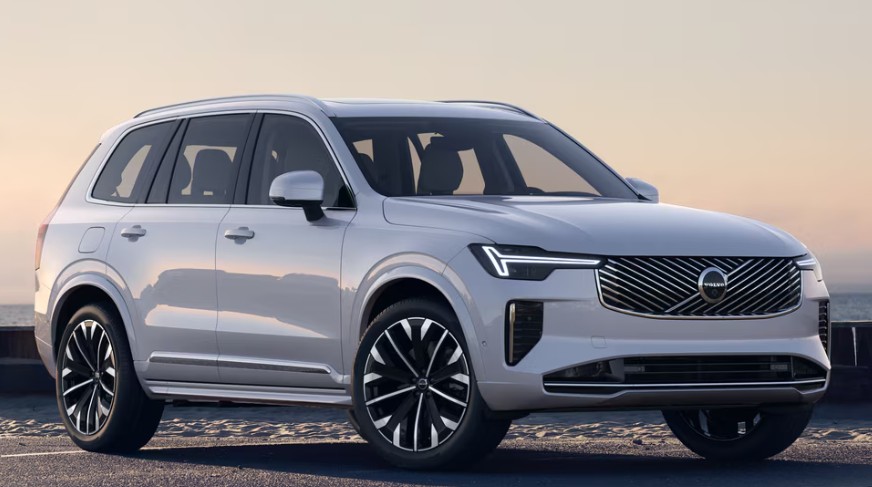
Put the Volvo XC90 vs BMW X5 side by side and we get two luxury SUVs chasing similar buyers in very different ways. Both promise comfort, premium materials, strong engines, advanced technology, and enough practicality to handle daily family life. Yet after a few miles behind the wheel, their personalities begin to separate like two roads at a mountain pass.
The Volvo XC90 feels calm, sophisticated, spacious, and deliberately understated. It is the SUV we can imagine parked outside a Scandinavian cabin with skis strapped to the roof and three kids arguing over snacks inside.
The BMW X5 takes another approach. It feels more athletic, more driver-focused, and more eager to remind us that BMW still cares about what happens when the road starts twisting.
So, which one should we buy?
For most families requiring three rows, the Volvo XC90 is the more practical choice. For drivers who prioritize performance, towing capacity, and handling, the BMW X5 is generally the more compelling SUV.
But that simple answer barely scratches the surface.
Content in this publication
- Volvo XC90 vs BMW X5 at a Glance
- Exterior Design: Scandinavian Calm Meets German Muscle
- Interior Quality: Two Different Definitions of Luxury
- Seating Capacity: A Major Volvo XC90 Advantage
- Passenger Comfort
- Cargo Space: Volvo XC90 vs BMW X5
- Performance: BMW Takes the Gloves Off
- Volvo XC90 Plug-In Hybrid vs BMW X5 Plug-In Hybrid
- Fuel Economy and Everyday Efficiency
- Towing Capacity: BMW X5 Wins
- Technology and Infotainment
- Safety: Volvo's Traditional Strong Point
- Reliability and Long-Term Ownership
- Maintenance Costs
- BMW X5 vs Volvo XC90 for Families
- BMW X5 vs Volvo XC90 for Driving Enthusiasts
- Which SUV Is Better for Road Trips?
- Volvo XC90 vs BMW X5: Pros and Cons
- Who Should Buy the Volvo XC90?
- Who Should Buy the BMW X5?
- Volvo XC90 vs BMW X5: Which One Should We Buy?
- Final Verdict
- Frequently Asked Questions
Volvo XC90 vs BMW X5 at a Glance
Before digging into the details, here is the easiest way to understand the differences.
| Category | Volvo XC90 | BMW X5 |
|---|---|---|
| Character | Relaxed and elegant | Sporty and powerful |
| Seating | Up to 6 or 7 | 5 |
| Third row | Yes | No on current U.S. X5 |
| Maximum cargo space | Up to 85.7 cu. ft. | Around 71-72 cu. ft., depending on model |
| Maximum towing | Around 5,000 lb on XC90 PHEV | More than 7,000 lb on properly equipped models |
| Ride philosophy | Comfort-focused | Performance-focused |
| Interior style | Minimalist Scandinavian | Sporty German luxury |
| Best suited for | Families | Enthusiastic drivers |
| Plug-in hybrid available | Yes | Yes |
Current U.S.-market XC90 models offer six- or seven-seat configurations, giving Volvo a significant advantage for larger families. BMW describes the X5 as accommodating five adults.
That seating difference might decide this comparison before we even start.
The XC90 and X5 look expensive without needing enormous badges or theatrical styling tricks.
Yet they communicate luxury differently.
Volvo XC90 Design
The XC90 has aged remarkably gracefully because Volvo never designed it around passing trends. Its proportions are clean, its bodywork is restrained, and its lighting gives it enough personality without making the SUV look angry.
There is something architectural about it.
Rather than shouting, the XC90 seems to whisper, we know exactly what we are.
That approach particularly suits buyers who want an upscale vehicle without drawing excessive attention.
BMW X5 Design
The BMW X5 carries considerably more visual aggression.
A broad grille, muscular shoulders, larger air intakes, and sportier detailing make it look ready to sprint even when sitting in a parking lot.
Which SUV Looks Better?
Design is subjective, but we would separate them this way:
Choose the XC90 if understated elegance matters more. Choose the X5 if you want your luxury SUV to have a stronger road presence.
Neither approach is wrong. They simply appeal to different personalities.
Interior Quality: Two Different Definitions of Luxury
Open the doors and the philosophical difference becomes even more obvious.
The Volvo cabin feels like stepping into a modern Scandinavian living room.
The BMW feels like climbing into a premium driver's cockpit.
Inside the Volvo XC90
Minimalism dominates the XC90.
Volvo uses clean horizontal lines, attractive trim, soft surfaces, and relatively restrained controls. Depending on specification, different premium upholstery and decorative finishes can make the cabin feel genuinely special.
The atmosphere matters as much as the equipment.
After a stressful day, the XC90 seems designed to lower our blood pressure rather than raise our pulse.
Its vertical center display houses many vehicle functions, keeping physical clutter relatively low.
Inside the BMW X5
BMW provides a more technical environment.
The dashboard curves toward the driver, large digital displays dominate the front cabin, and the controls make the X5 feel more performance oriented.
Its interior can also feel more substantial and sporty than Volvo's.
If Volvo resembles boutique furniture, BMW resembles a high-end command center.
XC90 vs X5 Interior Winner
Neither vehicle embarrasses itself here.
We would give the Volvo a slight advantage for atmosphere and minimalist elegance, while the BMW wins for its driver-focused layout and technological drama.
Your preference matters more than any objective ranking.
Seating Capacity: A Major Volvo XC90 Advantage
Here is where the comparison stops being subjective.
The current Volvo XC90 can provide six or seven seats, with three rows in those configurations.
BMW's current U.S. X5 is fundamentally a five-seat SUV. BMW itself describes the X5 cabin as accommodating up to five adults.
That matters enormously.
Why the XC90 Works Better for Bigger Families
Suppose we regularly carry two adults and four children.
The XC90 works.
The X5 does not without another vehicle.
That alone can turn the entire buying decision upside down.
The Volvo's third row is naturally better suited to children and smaller passengers than full-sized adults on long journeys, but having those extra seats gives us flexibility the BMW simply cannot match.
Do You Actually Need Seven Seats?
This is the question buyers should ask themselves.
If we use the third row several times per month, the XC90 becomes difficult to ignore.
If we almost never carry more than four or five people, BMW's lack of a third row becomes far less important.
Passenger Comfort
Luxury SUVs need to perform a deceptively difficult trick: they have to keep passengers comfortable without feeling like enormous floating boats.
The XC90 prioritizes calmness.
The X5 blends comfort with considerably stronger dynamic intent.
XC90 Ride Comfort
The Volvo typically feels relaxed on long journeys. Its suspension tuning favors composure rather than aggressive body control.
That character matches the rest of the vehicle.
Everything seems designed around reducing effort.
Highway cruising is where it feels most natural. Settle into the seat, turn on the music, and miles disappear.
X5 Ride Comfort
The BMW is also comfortable, particularly when configured appropriately, but its chassis communicates more of the road.
We feel slightly more connected to what is happening beneath the tires.
Some buyers will love that.
Others will prefer Volvo's softer personality.
Cargo Space: Volvo XC90 vs BMW X5
Cargo capacity can become confusing because manufacturers measure storage differently and configurations can affect published numbers.
Still, the broader comparison is clear.
Volvo publishes a maximum XC90 cargo capacity of 85.7 cubic feet with the seats configured for maximum storage.
The XC90's cargo area is also designed around a wide, flat load floor, and seats can be folded individually or by row.
BMW lists approximately 33.9 cubic feet behind the second row for the 2026 X5 xDrive40i, while BMW's current information for the X5 plug-in hybrid shows slightly different capacities depending on configuration.
Volvo Cargo Flexibility
In seven-seat XC90 configurations, Volvo lists approximately 9.3 cubic feet using its standard cargo measurement with the third row raised, 23 cubic feet behind the second row, and substantially more with the rows folded. Volvo also quotes up to 85.7 cubic feet using its maximum-volume measurement.
In other words, carrying seven people leaves relatively limited luggage space.
That is common among three-row SUVs.
Fold the third row, however, and the XC90 becomes much more useful.
BMW X5 Cargo Space
The X5 benefits from not having to accommodate a third row in current U.S. models.
Its cargo bay is wide and practical, making it excellent for luggage, groceries, sports equipment, or a weekend road trip.
If we need five seats plus substantial cargo space, the X5 works brilliantly.
If we need six or seven passengers, Volvo wins before luggage capacity even enters the conversation.
Performance: BMW Takes the Gloves Off
This is where BMW begins punching harder.
The X5 has always been one of those SUVs that tries to convince us physics is negotiable.
A tall, heavy luxury crossover should not feel especially eager on a twisting road.
Yet the X5 often does.
BMW X5 Driving Experience
BMW tunes the X5 around its driver.
You may be interested in reading Volvo XC90 vs Mazda CX-9: Which Three-Row SUV Is Better?
Steering, body control, transmission behavior, and engine response combine to make the SUV feel smaller than its dimensions suggest.
Accelerate out of a corner and the X5 feels alive.
It does not merely transport us.
It invites us to participate.
Volvo XC90 Driving Experience
The XC90 approaches performance differently.
It certainly offers ample power, particularly in plug-in hybrid form, but acceleration is not the vehicle's entire personality.
The Volvo feels happier transporting six people down an interstate than attacking a mountain pass.
That does not make it slow or dull.
It simply has different priorities.
Which Is More Fun to Drive?
The BMW X5 wins.
For buyers who genuinely enjoy driving, that advantage can outweigh practically everything else.
The X5 delivers the stronger combination of athleticism, steering confidence, and performance-oriented character.
Volvo XC90 Plug-In Hybrid vs BMW X5 Plug-In Hybrid
Both manufacturers offer plug-in hybrid powertrains, making this one of the most interesting parts of the comparison.
The XC90 plug-in hybrid combines electric driving with the practicality of three-row seating.
Volvo currently quotes an EPA-estimated electric range of up to 32 miles for the U.S.-market XC90 plug-in hybrid.
That can cover many short commutes without regularly starting the gasoline engine, provided we charge consistently.
Why Plug-In Hybrids Make Sense Here
A luxury SUV is heavy.
Moving that weight through city traffic consumes energy.
A plug-in hybrid gives us the opportunity to tackle shorter daily journeys electrically while retaining a gasoline engine for longer trips.
That flexibility can feel like having two vehicles sharing one garage space.
But there is a catch.
If we rarely charge the battery, we carry around expensive hybrid hardware without exploiting its biggest advantage.
Who Should Buy a PHEV?
A plug-in hybrid makes the most sense when we have convenient home or workplace charging and frequently drive shorter distances.
For drivers who cannot charge regularly, conventional gasoline or mild-hybrid configurations may prove simpler.
Fuel Economy and Everyday Efficiency
Efficiency depends heavily on engine choice, driving conditions, wheel size, temperature, and charging habits.
That means comparing one generic "XC90 MPG" figure with one generic "X5 MPG" number can be misleading.
For reference, BMW currently lists the 2026 X5 xDrive40i at 23 mpg city and 27 mpg highway on its U.S. specifications page.
Meanwhile, the XC90 plug-in hybrid's electric capability allows owners to replace a substantial portion of local gasoline driving when charging regularly. Volvo quotes up to 32 miles of EPA-estimated EV range.
Real-World Efficiency Depends on How We Drive
A commuter covering 15 miles each way and charging every night may obtain dramatically different fuel consumption from someone driving 500-mile highway journeys.
That is why we should choose the powertrain around our routine rather than chasing a single advertised number.
Towing Capacity: BMW X5 Wins
Planning to tow a boat, camper, horse trailer, or heavy recreational equipment?
BMW has the advantage.
BMW states that properly configured current X5 models can tow more than 7,000 pounds, with its current model information listing maximum capacities in roughly the 7,200-to-7,700-pound range depending on configuration and equipment.
Volvo's current U.S. support specifications list the XC90 plug-in hybrid at a maximum 5,000-pound braked-trailer weight.
That is not a tiny difference.
It can determine whether the vehicle is suitable for our trailer at all.
Towing Winner
For serious towing duties:
BMW X5.
For moderate recreational towing:
Either may work, provided the exact vehicle configuration and trailer weight remain within manufacturer limits.
Always check the specific model's tow rating, payload, hitch specifications, trailer brakes, and tongue-weight requirements before towing.
Technology and Infotainment
Modern luxury SUVs increasingly resemble computers with leather seats.
Both the XC90 and X5 embrace that reality.
Volvo's Technology Philosophy
Volvo favors simplicity.
Many controls are integrated into the central display, creating a clean dashboard.
Google-based connected services on recent XC90 models make functions such as navigation and voice interaction feel familiar to users already living inside Google's ecosystem.
The downside?
Drivers who prefer dedicated physical buttons may need time to adapt.
BMW's Technology Philosophy
BMW offers a richer cockpit experience.
Its infotainment presentation tends to place more information directly in front of the driver and gives the cabin a stronger digital personality.
BMW also tends to offer extensive configuration possibilities.
Tech enthusiasts may prefer it.
Minimalists may prefer Volvo.
Safety: Volvo's Traditional Strong Point
Volvo and safety have been intertwined for decades, so naturally the XC90 attracts buyers who put occupant protection near the top of their shopping list.
Modern BMW models also include extensive driver-assistance and active-safety technology, however, so we should not assume the X5 is somehow a primitive alternative.
Both vehicles can provide sophisticated assistance systems depending on market and equipment.
The bigger distinction is philosophical.
How the XC90 Feels
Volvo's entire personality seems built around protecting its occupants.
Visibility, seating position, calm controls, and family-oriented packaging reinforce that impression.
How the X5 Feels
BMW safety technology works within a vehicle whose personality is still focused strongly on the driver.
Think of it this way:
The XC90 feels like a protective family lounge.
The X5 feels like a sports sedan wearing hiking boots.
Reliability and Long-Term Ownership
Anyone buying a complicated luxury SUV should enter ownership with realistic expectations.
Both vehicles combine turbocharged engines, extensive electronics, sophisticated infotainment systems, driver-assistance hardware, all-wheel-drive technology, and—depending on configuration—electrified powertrains.
That complexity can become expensive once warranties expire.
Should We Buy an Extended Warranty?
For owners planning to keep either SUV deep into its later years, an extended warranty can be worth considering depending on its coverage and cost.
Do not simply assume every warranty is valuable.
Read what it excludes.
A cheap warranty that excludes the expensive components we actually worry about is about as helpful as an umbrella full of holes.
Used XC90 vs Used X5
With either vehicle, maintenance history matters enormously.
We would rather buy a slightly higher-mileage example with comprehensive servicing than a suspiciously cheap low-mileage vehicle accompanied by gaps in its records.
A pre-purchase inspection from a technician familiar with the brand is money well spent.
Maintenance Costs
Neither SUV belongs in the bargain-maintenance category.
Premium tires cost more.
Large brakes cost more.
You may be interested in readingVolvo XC90 vs Mazda CX-9: Which Three-Row SUV Is Better?You may be interested in reading
Volvo XC90 or Range Rover: Which Luxury SUV Is Better?Sophisticated suspension components can cost more.
Complex electronics can cost more.
And performance-oriented BMW variants may increase some running costs further.
Volvo ownership is not necessarily inexpensive either, particularly when advanced hybrid hardware enters the equation.
Which Is Cheaper to Maintain?
The answer depends too heavily on engine, model year, warranty coverage, location, mileage, and repair history to declare a universal winner.
Instead, we would compare actual insurance quotes, scheduled-service pricing, tire replacement cost, warranty terms, and local specialist availability before purchasing either one.
That homework is boring.
It is also considerably less boring than receiving a four-figure repair bill.
BMW X5 vs Volvo XC90 for Families
Now we arrive at one of the easiest conclusions in this entire comparison.
The XC90 is the stronger family SUV when six or seven seats are required.
Current U.S. XC90 configurations can seat six or seven, while the current U.S. X5 accommodates five.
That gives Volvo a fundamental advantage for larger households.
Why Families May Prefer the XC90
Its strengths line up neatly with family needs: flexible seating, a genuine third row, substantial maximum cargo capacity, relaxed road manners, and an interior that feels calm rather than aggressively sporty.
The XC90 is essentially built around the messy reality of family life.
School bags.
Strollers.
Sports equipment.
Grandparents.
Friends.
Holiday luggage.
One SUV has to swallow everything.
The Volvo generally does that job better.
BMW X5 vs Volvo XC90 for Driving Enthusiasts
Take the children, luggage, and third-row requirements out of the equation and the contest changes dramatically.
Now BMW starts looking much more attractive.
Why Enthusiasts May Prefer the X5
The X5 offers the more engaging driving character.
It feels designed by engineers who wanted to make a luxury SUV behave like something considerably smaller.
Its stronger towing capability also broadens its appeal for buyers combining luxury transportation with heavy recreational equipment.
If our perfect Sunday involves searching for a winding road rather than transporting seven people to soccer practice, the X5 probably makes more sense.
Which SUV Is Better for Road Trips?
This depends entirely on who is coming.
Four passengers?
We would happily take either.
Six passengers?
XC90.
A large trailer?
X5.
A relaxed cross-country journey?
XC90.
A scenic mountain road?
X5.
That is the beauty of this comparison.
Neither vehicle is categorically "better." Each simply excels at a different version of luxury SUV ownership.
Volvo XC90 vs BMW X5: Pros and Cons
If we reduce everything to the essentials, the trade-offs become easy to see:
- Volvo XC90 advantages: six- or seven-seat capability, genuine third row, up to 85.7 cubic feet of maximum cargo capacity, elegant Scandinavian cabin, relaxed ride, strong family practicality, and available plug-in hybrid technology.
- Volvo XC90 disadvantages: less engaging to drive than the BMW, lower maximum towing capability, and the third row reduces cargo room when occupied.
- BMW X5 advantages: stronger performance-oriented character, better handling, considerably higher maximum towing capability on suitable configurations, excellent five-passenger cargo space, and an impressive driver-focused cabin.
- BMW X5 disadvantages: current U.S. models lack the XC90's six- or seven-seat versatility, while higher-performance configurations can encourage higher ownership costs.
- Best overall family choice: Volvo XC90.
- Best driver's choice: BMW X5.
- Best towing choice: BMW X5.
- Best seven-seat choice: Volvo XC90.
Who Should Buy the Volvo XC90?
Choose the XC90 if passenger flexibility sits near the top of your priorities.
It makes particularly strong sense when we regularly need more than five seats.
We would also choose it when understated styling, peaceful highway manners, family practicality, and a minimalist cabin matter more than razor-sharp handling.
The XC90 does not try to turn every school run into qualifying at Nürburgring.
And that is exactly the point.
It treats luxury as tranquility.
Who Should Buy the BMW X5?
Choose the X5 when we rarely need more than five seats and actually care how an SUV behaves when the road bends.
It is also the stronger candidate for heavier towing.
BMW's current U.S. information gives properly configured X5 models towing capability comfortably beyond the XC90 plug-in hybrid's 5,000-pound rating.
The X5 feels less like a family bus and more like an oversized performance car.
If that sentence makes us smile, we probably already know which SUV we want.
Volvo XC90 vs BMW X5: Which One Should We Buy?
After comparing practicality, seating, cargo space, performance, towing, technology, comfort, and daily usability, our recommendation depends on one fundamental question:
Do we need the third row?
If yes, buy the Volvo XC90.
That sixth or seventh seat changes everything. Add the Volvo's serene interior, flexible cargo area, comfortable road manners, and available plug-in hybrid powertrain, and we have one of the most appealing luxury SUVs for larger families.
If no, the BMW X5 becomes incredibly difficult to beat.
It is more engaging behind the wheel, offers stronger towing capability in suitable configurations, provides excellent cargo space for five-passenger use, and delivers the kind of driving experience that made BMW famous.
Think of the XC90 as a luxury lounge capable of carrying the whole family.
Think of the X5 as a sports sedan that spent several years lifting weights.
Different tools.
Different personalities.
Both excellent when chosen for the right job.
Final Verdict
The Volvo XC90 vs BMW X5 comparison does not produce one universal champion.
For family practicality, seating flexibility, and relaxed luxury, we choose the Volvo XC90.
For performance, towing, and driver enjoyment, we choose the BMW X5.
If we had three children and frequently carried additional passengers, the XC90 would be our obvious pick.
If we needed only five seats and enjoyed driving, we would take the X5.
Sometimes the best SUV is not the one with the biggest engine, largest screen, or fanciest badge.
It is simply the one that fits our life.
Frequently Asked Questions
1. Is the Volvo XC90 better than the BMW X5?
The XC90 is better for buyers needing six or seven seats and greater family flexibility. The BMW X5 is generally better for buyers prioritizing performance, handling, and heavier towing. Current U.S.-market XC90 models offer six- or seven-seat configurations, whereas BMW describes the current X5 as a five-passenger SUV.
2. Which is bigger inside, the BMW X5 or Volvo XC90?
The XC90 offers greater passenger flexibility because it can provide three rows and up to seven seats. Volvo also publishes a maximum cargo figure of 85.7 cubic feet with the seats configured for maximum storage. The X5 provides generous cargo space for a two-row luxury SUV but is fundamentally designed around five occupants.
3. Which is faster, the Volvo XC90 or BMW X5?
It depends on the engines being compared, but the BMW X5 range places a stronger emphasis on outright performance. Even where acceleration figures are relatively close, the BMW typically delivers the sportier driving character through its chassis, steering, and powertrain calibration.
4. Which is better for towing, the XC90 or X5?
The BMW X5 is the stronger choice for heavy towing. Current BMW information lists maximum towing capacities exceeding 7,000 pounds on appropriately configured X5 models, whereas Volvo lists a 5,000-pound maximum braked-trailer weight for the current U.S. XC90 plug-in hybrid.
5. Is the Volvo XC90 or BMW X5 better for a family?
For a larger family, we would choose the XC90 because its six- and seven-seat configurations provide genuine three-row versatility. For a family of four or five that values sporty driving and does not require a third row, the X5 may be the more rewarding choice.
You may be interested in readingVolvo XC90 vs Mazda CX-9: Which Three-Row SUV Is Better?You may be interested in reading
Volvo XC90 or Range Rover: Which Luxury SUV Is Better?You may be interested in reading
Volvo XC90 vs Mercedes GLS: Which Luxury SUV Is Better?If you want to know other articles similar to Volvo XC90 vs BMW X5: Which Luxury SUV Is Better? you can visit the category Models.
Nissan Rogue Dark Armor vs Platinum: Which Trim Is Better?

Kia Sorento Models: Complete Guide to Trims, Engines and Versions
BYD Shark 6 vs Ranger vs HiLux: Which Ute Makes the Most Sense in 2026?
BYD Shark 6 vs MG U9: Which Ute Makes More Sense in 2026?
BYD Shark 6 vs Ford Ranger Raptor: Which Performance Ute Is Better in 2026?
BYD Shark 6 vs Kia Tasman: Which Ute Is Better?
Leave a Reply
More content of your interest