
Toyota Sequoia Most Reliable Years: Which Models Should We Buy?

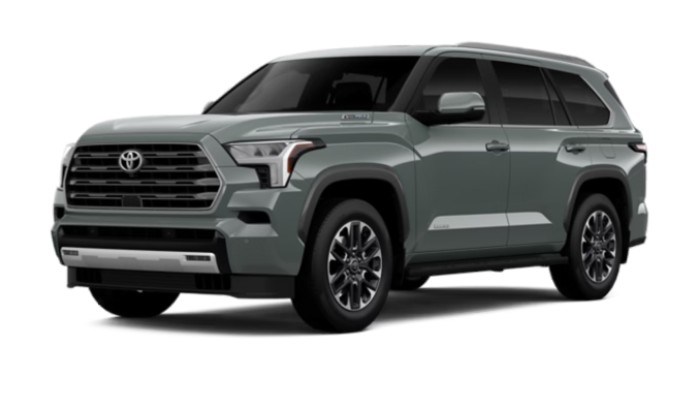
The Toyota Sequoia has always been a bit of a dinosaur—and we mean that as a compliment. It is enormous, unapologetically truck-based, and historically powered by V8 engines that seem happier swallowing highway miles than sitting in a suburban driveway. For used-SUV shoppers, though, one question matters more than horsepower or third-row legroom: what are the Toyota Sequoia most reliable years?
If we want the short version, 2015 through 2022 stand out as some of the strongest Toyota Sequoia years to consider, particularly when we value proven mechanicals and want to avoid some of the age-related concerns attached to earlier trucks. Models from roughly 2012 through 2014 can also be excellent buys, while carefully maintained 2005–2007 examples remain interesting for shoppers who understand the realities of owning a vehicle approaching two decades old.
The Sequoia's second generation deserves most of our attention. Toyota kept the platform around for an unusually long time, giving the company years to refine a relatively straightforward formula centered on the naturally aspirated 5.7-liter V8. Toyota documented the 5.7-liter engine at 381 horsepower and 401 lb-ft of torque in the Sequoia, paired with a six-speed automatic.
That doesn't mean every Sequoia is bulletproof. Age, corrosion, maintenance history, towing abuse, accident damage, and previous ownership matter enormously. A pristine 2012 can easily be a wiser purchase than an abused 2019.
So instead of simply throwing model years into "good" and "bad" boxes, let's dig into which Sequoias offer the best reliability prospects, why certain years make more sense than others, and exactly what we should inspect before handing over our money.
Content in this publication
- What Are the Toyota Sequoia Most Reliable Years?
- Why the Second-Generation Sequoia Is the Reliability Sweet Spot
- 2018–2022 Toyota Sequoia: Our Top Overall Choice
- 2015–2017 Toyota Sequoia: The Value Sweet Spot
- 2012–2014 Toyota Sequoia: A Smart Budget Choice
- 2010–2011 Toyota Sequoia: Still Worth Considering?
- 2008–2009 Toyota Sequoia: Should We Avoid Them?
- What About the First-Generation Toyota Sequoia?
- Are 2001–2004 Toyota Sequoias Reliable?
- 2021–2022 Sequoia: The Last of the Old-School V8 Era
- What About the 2023 Toyota Sequoia?
- Why 2023+ Models Should Be Judged Separately
- How Long Can a Toyota Sequoia Last?
- Does Mileage Matter When Buying a Used Sequoia?
- The Importance of Maintenance Records
- Check Every Used Sequoia for Open Recalls
- Toyota Sequoia Reliability vs Fuel Economy
- Which Toyota Sequoia Generation Would We Buy?
- Best Toyota Sequoia Year for the Money
- Best Sequoia Years for Maximum Long-Term Ownership
- What Is the Single Most Important Thing to Check?
- Are Toyota Sequoias Expensive to Maintain?
- Which Toyota Sequoia Years Should We Be More Careful With?
- Final Verdict: Toyota Sequoia Most Reliable Years
- Frequently Asked Questions
What Are the Toyota Sequoia Most Reliable Years?
For shoppers wanting a simple starting point, we would concentrate on the following periods:
- 2018–2022: Our favorite overall range if budget allows. These are mature second-generation vehicles with newer safety and convenience technology and fewer years of age-related deterioration.
- 2015–2017: Excellent value picks. They retain the long-running 5.7-liter V8 drivetrain while typically costing noticeably less than the final model years.
- 2012–2014: Strong choices for value-focused shoppers, provided service history and underbody condition check out.
- 2010–2011: Potentially dependable but now old enough that condition matters substantially more than the model-year badge.
- 2005–2007: Among the more appealing late first-generation examples mechanically, but corrosion, previous recall completion, rubber components, suspension wear, and general age deserve close inspection.
- 2008–2009: Not automatically vehicles to avoid, but early examples of the redesigned second generation deserve a more thorough pre-purchase inspection.
- 2001–2004: Capable of running for very high mileage, yet their age means buying one today should be treated as buying an old truck rather than simply buying a reliable Toyota.
- 2023 and newer: Dramatically redesigned and technologically advanced, but still too young to judge by the same long-term standard as the old V8 generation.
Notice something important? We are not declaring that every vehicle from one particular year is good while every example from another year is bad. Reliability doesn't work like a traffic light. A used SUV's maintenance and operating environment can matter as much as the year printed on its registration.
Why the Second-Generation Sequoia Is the Reliability Sweet Spot
The second-generation Sequoia arrived with a much more modern platform and ultimately became one of those vehicles Toyota kept around for years rather than replacing every five or six seasons.
That long production life is attractive to used-car shoppers.
Why?
Because continuous production allows manufacturers, suppliers, technicians, and owners to become extremely familiar with a vehicle. Instead of chasing an entirely new engineering architecture every few years, later examples can benefit from a mature design.
The 5.7-Liter V8 Is a Major Attraction
Much of the second-generation Sequoia's appeal revolves around Toyota's naturally aspirated 5.7-liter V8.
Toyota rated the engine at 381 horsepower and 401 lb-ft of torque and matched it to a six-speed automatic transmission. Toyota also specified regular-grade gasoline for the Sequoia engines offered for 2012.
It isn't remotely economical by modern crossover standards.
But fuel economy isn't the reason we buy a Sequoia.
The attraction is relatively uncomplicated, old-school performance. There is no small-displacement turbo engine working overtime to move nearly three tons of SUV. The engine behaves more like a large hammer: not subtle, not light, but remarkably well suited to the job.
Later Production Years Benefit From Maturity
By the middle and later portions of the second generation, Toyota had been producing the basic vehicle architecture for years.
That is why a 2015, 2017, or 2019 Sequoia can be more attractive to a reliability-oriented buyer than the latest possible SUV for the same money.
It isn't merely about Toyota's reputation.
We are buying a mature platform.
And when reliability is our main priority, boring maturity can be beautiful.
2018–2022 Toyota Sequoia: Our Top Overall Choice
If we had to narrow the search to one range, 2018–2022 would be near the top of the shopping list.
These vehicles combine the familiar second-generation mechanical foundation with the advantage of being younger than earlier examples. That matters more than we might initially think.
A ten-year difference means ten fewer winters attacking the frame, ten fewer years of heat cycling seals and hoses, and potentially tens of thousands fewer miles of suspension wear.
Why 2018–2022 Models Make Sense
The fundamental argument is simple: they represent the closing chapter of a long-running generation.
When we buy one, we are not experimenting with an all-new drivetrain. We are getting an SUV based around components that had already accumulated years of real-world use.
Meanwhile, these later models can offer technology and interior updates that make them easier to live with than a much older Sequoia.
The trade-off is price.
Late second-generation Sequoias can command surprisingly strong used values precisely because shoppers know what they are getting. A low-mileage example can sometimes cost enough to make us wonder whether stepping into a newer SUV makes more sense.
Still, buyers prioritizing proven mechanical history should keep these years near the top of the list.
2015–2017 Toyota Sequoia: The Value Sweet Spot
Here is where things get especially interesting.
A 2015–2017 Sequoia may deliver one of the better combinations of purchase price, proven engineering, and remaining service life.
Think of these years as arriving after the platform's awkward teenage stage but before the newest second-generation examples acquired their premium used-car prices.
Why We Like These Years
The drivetrain was familiar. The underlying vehicle was mature. Parts and repair knowledge were widespread.
At the same time, these vehicles aren't necessarily so old that every piece of rubber underneath the hood feels like an archaeological artifact.
That balance matters.
A vehicle doesn't suddenly become unreliable when it turns ten years old. What changes is the type of maintenance we should expect.
A 2016 Sequoia might have an excellent engine and transmission yet need shocks, bushings, wheel bearings, cooling-system work, brakes, or other wear items. None of these automatically makes it a bad SUV.
We simply need to budget realistically.
Would We Buy a High-Mileage 2015–2017 Sequoia?
Potentially, yes.
Mileage alone tells only half the story.
A 150,000-mile highway-driven Sequoia with consistent maintenance records can be substantially more appealing than a 90,000-mile truck that spent years towing heavy trailers while receiving sporadic oil changes.
Maintenance history is the autobiography of a used vehicle.
Read it before buying.
2012–2014 Toyota Sequoia: A Smart Budget Choice
Move a few years further back and values can become even more appealing.
The 2012–2014 Sequoia occupies an interesting spot because it delivers much of the mechanical character buyers want without the higher asking prices associated with newer examples.
Toyota's documentation for the 2012 model confirms the available 5.7-liter V8, six-speed automatic and up-to-7,400-pound towing capability depending on configuration and equipment.
For us, these years make sense when condition is excellent.
That's the key phrase.
Condition is excellent.
By now, we're dealing with SUVs more than a decade old. Service history and climate therefore deserve almost as much attention as mileage.
Rust Can Matter More Than the Odometer
Suppose we're choosing between two Sequoias.
One has 115,000 miles but lived its entire life around heavily salted winter roads.
The other has 155,000 miles and spent its life in a dry climate with regular servicing.
Which would we rather inspect first?
Probably the second.
Rust doesn't care how silky the engine sounds.
A severely corroded chassis can transform a supposedly inexpensive truck into a headache with wheels.
2010–2011 Toyota Sequoia: Still Worth Considering?
Absolutely—but we should become increasingly selective.
The 2010 and 2011 Sequoia models belong to the established second-generation family and can still offer tremendous utility.
Toyota described the 2011 model with the same 381-horsepower 5.7-liter V8 and 401 lb-ft of torque familiar to many Sequoia shoppers.
Mechanically, that is encouraging.
Chronologically, however, we're buying a vehicle well into its teenage years.
And time eventually wins every argument with rubber, plastic, paint, seals, wiring connections, suspension bushings, and interior materials.
What Matters More Than Model Year Here?
Documentation.
We would rather see a thick folder of invoices than shiny aftermarket wheels.
Evidence of regular fluid changes, cooling-system maintenance, brake work, suspension repairs, and responsible ownership tells us far more than a freshly detailed engine bay.
A Cheap Sequoia Isn't Cheap If It Needs Everything
This is where bargain hunters get caught.
The purchase price feels fantastic.
Then tires arrive. Brakes follow. A suspension overhaul joins the party. Something starts leaking. Air conditioning needs attention.
Suddenly that bargain is eating money like the V8 eats gasoline.
A pre-purchase inspection is therefore worth treating as part of the purchase price rather than an optional expense.
2008–2009 Toyota Sequoia: Should We Avoid Them?
We wouldn't automatically avoid them.
But we would shop more carefully.
The 2008 model marked the beginning of the second-generation Sequoia, and first-year redesigns naturally deserve additional scrutiny because so much changes at once.
That doesn't mean a 2008 is destined to fail.
It means we should compare it carefully against a similarly priced later example.
If a pristine 2008 has complete records, no concerning corrosion, no warning lights, clean fluids, excellent suspension behavior, and a trustworthy inspection, it may outperform a neglected later model.
Reliability rankings can't inspect the actual SUV sitting in front of us.
We can.
What About the First-Generation Toyota Sequoia?
The original Sequoia has earned plenty of affection among Toyota enthusiasts.
These SUVs are appealing in a wonderfully old-fashioned way. They feel like big mechanical tools rather than rolling computers.
But in 2026, even the newest first-generation examples are old vehicles.
That's unavoidable.
You may be interested in reading Toyota Sequoia Alternatives: Best Full-Size SUVs to Consider
2005–2007 Sequoia Models Are the Ones We'd Watch
When shopping the first generation, later production years are generally where we would focus our attention.
Why chase the newest examples?
Age reduction.
Even a difference of three or four years becomes meaningful when we're discussing vehicles roughly two decades old.
But shoppers need to research recall history particularly carefully with older Sequoias. NHTSA's Takata recall information stresses the importance of checking a specific vehicle by VIN because affected airbag inflators can present serious safety risks, and older Sequoia model years were among vehicles involved in Takata-related campaigns.
Frame Condition Is Non-Negotiable
If we're inspecting an old Sequoia from a snowy region, the underside deserves serious attention.
Surface rust and structural corrosion are completely different animals.
One is cosmetic aging.
The other can determine whether we should walk away.
Don't Judge an Old Sequoia by Its Paint
A beautifully polished first-generation SUV can look spectacular in online photos.
That tells us surprisingly little.
Get underneath it.
Look at the frame.
Check suspension mounting areas.
Inspect brake and fuel lines.
Have a qualified technician evaluate questionable corrosion.
The prettiest truck in the parking lot can still have an ugly story underneath.
Are 2001–2004 Toyota Sequoias Reliable?
They can be mechanically durable, but this question needs context.
When someone says a 2002 Sequoia is "reliable," what exactly do we mean?
Can its engine potentially continue running for many more miles?
Perhaps.
Will a 24-year-old SUV behave like a low-maintenance five-year-old vehicle?
Probably not.
That's the distinction buyers sometimes miss.
Mechanical longevity and ownership simplicity aren't the same thing.
Even strong engines live inside vehicles filled with aging pumps, hoses, bearings, seals, sensors, bushings, switches, motors, wiring, weatherstripping, and suspension pieces.
By this age, we should buy the individual vehicle rather than the reputation.
2021–2022 Sequoia: The Last of the Old-School V8 Era
The final second-generation model years have a special appeal.
They represent the end of an era before Toyota completely reinvented the Sequoia.
For someone who specifically wants the established naturally aspirated V8 configuration, a well-maintained 2021 or 2022 may be close to the ideal target.
The problem?
Everybody else has figured that out too.
Late examples can be expensive.
Is Paying More for a 2021 or 2022 Worth It?
It depends on how long we intend to keep it.
If we're searching for a full-size SUV we hope to own for many years, paying extra for a younger, well-documented vehicle can make sense.
But don't become obsessed with the final model year.
A clean 2018 with careful ownership may be a smarter purchase than a 2022 carrying questionable accident history or neglected maintenance.
The VIN doesn't tell us how the previous owner treated the accelerator.
Service records might.
What About the 2023 Toyota Sequoia?
The 2023 Sequoia changed almost everything.
Toyota described it as a completely redesigned third generation and replaced the previous naturally aspirated V8 formula with the i-FORCE MAX twin-turbo V6 hybrid, rated at 437 horsepower and 583 lb-ft of torque.
That is a massive technological shift.
The new powertrain combines a twin-turbo V6, electric motor, battery, and 10-speed automatic architecture instead of simply continuing the old V8 arrangement. Toyota states that the third-generation Sequoia is exclusively hybrid.
Is the 2023 Sequoia Unreliable?
That's not the conclusion we should draw.
The better answer is that it has not yet accumulated the decades of ownership evidence available for older Sequoias.
There is an enormous difference between saying "we don't yet know its 15-year reliability" and saying "it is unreliable."
We cannot fast-forward time.
Buyers who want modern efficiency, enormous torque, newer technology, and contemporary safety equipment may prefer the third generation anyway.
Buyers whose number-one priority is an extensively proven long-term configuration may feel more comfortable with a late second-generation V8.
Both decisions can be rational.
Why 2023+ Models Should Be Judged Separately
Comparing a 2023+ Sequoia directly with a 2018 model on long-term reliability is like comparing a rookie athlete with a veteran.
The rookie may eventually be better.
We just don't have the same résumé yet.
Toyota moved the Sequoia into a fundamentally different technological era with its twin-turbo hybrid drivetrain.
That gives newer models several advantages, but also means their ultimate 150,000- or 200,000-mile ownership profile will take years to establish.
How Long Can a Toyota Sequoia Last?
This is one of the most searched questions surrounding the model, and it's tempting to answer with a gigantic mileage number.
But we shouldn't confuse anecdotes with guarantees.
Some well-maintained Toyota trucks accumulate extraordinary mileage. That doesn't mean every Sequoia will automatically reach an arbitrary milestone without expensive repairs.
A better approach is to ask whether the powertrain, chassis, maintenance history, climate exposure, and previous usage support continued ownership.
An SUV that has been maintained proactively has a fighting chance.
One that has been neglected for years doesn't magically become durable because Toyota badges are bolted to the grille.
Does Mileage Matter When Buying a Used Sequoia?
Of course.
Just not in isolation.
Imagine three examples:
A 2018 with 170,000 highway miles.
A 2015 with 110,000 mixed miles.
A 2019 with 75,000 miles spent pulling a large trailer with minimal maintenance.
Which one is best?
Without records and inspection results, we simply don't know.
That is why mileage should trigger questions rather than automatically provide answers.
High Mileage Isn't Automatically Bad
Long-distance driving can actually be relatively gentle on many vehicle components compared with constant short-distance operation.
A high-mileage Sequoia with immaculate records can therefore deserve serious consideration.
What we don't want is high mileage combined with mystery.
No records.
Unknown towing history.
Old tires.
Dirty fluids.
Multiple warning lights.
Freshly erased diagnostic codes.
That's when our internal alarm bells should start ringing.
The Importance of Maintenance Records
If reliability is our priority, maintenance records may be the most valuable "option" fitted to a used Sequoia.
Leather seats are nice.
A sunroof is nice.
A stack of service invoices is better.
You may be interested in readingToyota Sequoia Alternatives: Best Full-Size SUVs to ConsiderYou may be interested in reading
 Mazda 6 Generations: Complete Guide by Year and Generation
Consistent oil changes tell us the previous owner understood basic maintenance. Records of coolant, transmission-related servicing, brakes, differentials, transfer-case servicing where applicable, suspension repairs, and other maintenance help reveal whether the owner addressed the whole vehicle instead of simply changing engine oil and hoping for the best.
Towing History Deserves Attention
The Sequoia is built to work.
Toyota rated certain configurations of the 2011 and 2012 Sequoia at up to 7,400 pounds of towing capacity depending on model and equipment.
That capability is excellent.
It also means some used examples have lived hard lives.
Regular heavy towing can increase stress on brakes, cooling systems, driveline components, suspension, and transmissions.
A hitch receiver isn't automatically bad news.
It is simply a clue.
Ask questions.
Check Every Used Sequoia for Open Recalls
Regardless of which year we choose, running the VIN through the official recall database should be routine.
NHTSA specifically recommends checking recalls using the vehicle's 17-character VIN, which allows us to determine whether a particular vehicle has unresolved safety recall work.
That's more useful than assuming that every vehicle from a certain year has—or hasn't—received a repair.
Recall campaigns can be VIN-specific.
Previous owners may already have completed them.
Others may not have.
Verify rather than guess.
Toyota Sequoia Reliability vs Fuel Economy
Here comes the elephant in the garage.
Older V8 Sequoias can be wonderfully durable machines, but nobody will confuse them with economy cars.
That matters because reliability isn't the same as affordability.
We could buy an extremely dependable Sequoia and still spend a significant amount of money keeping gasoline in it.
For buyers covering enormous annual mileage without towing or needing three rows, a smaller SUV may make more financial sense.
But if we genuinely need a body-on-frame full-size SUV, accepting fuel consumption may be part of the deal.
Sometimes reliability comes wearing size-13 boots.
Which Toyota Sequoia Generation Would We Buy?
For maximum confidence based on a long-established drivetrain, we'd lean toward a later second-generation model.
Specifically, we'd start searching around 2015–2022, then choose the cleanest, best-maintained example within budget.
If value mattered more, we'd happily explore 2012–2014.
If our budget pushed us toward the first generation, we'd concentrate on condition rather than chasing the cheapest SUV available.
And if we wanted the latest technology, stronger torque output, improved efficiency potential, and a more modern cabin, we'd consider the third generation while recognizing that its long-term durability story is still being written.
Best Toyota Sequoia Year for the Money
If we had to nominate a practical sweet spot rather than one magical model year, 2015–2019 deserves particular attention.
These models sit in an attractive middle ground.
They're younger than the early second-generation trucks, use the familiar V8-based formula, and may cost substantially less than pristine 2021–2022 examples.
Within that range, however, we'd buy condition over calendar year every time.
A great 2016 beats a terrible 2019.
That principle is worth remembering throughout the entire shopping process.
Best Sequoia Years for Maximum Long-Term Ownership
If our goal were to purchase one and keep it for another decade, we'd look first toward 2018–2022 examples with documented maintenance and reasonable mileage.
Buying younger gives us more time before age itself becomes the dominant maintenance factor.
It may cost more upfront, but the purchase can make sense when amortized over a long ownership period.
Naturally, we'd still insist on an independent inspection.
Toyota reliability is a reason to inspect a used Sequoia carefully—not an excuse to skip the inspection.
What Is the Single Most Important Thing to Check?
Condition underneath the vehicle.
Seriously.
Engines get most of the attention because engines are exciting. Yet an excellent engine mounted inside a badly corroded or neglected chassis doesn't create an excellent purchase.
Climate history can dramatically influence an older truck.
We want to understand where the Sequoia spent its life, how it was maintained, whether it towed regularly, whether it has accident repairs, and how its underside has aged.
The VIN Is Our Starting Point, Not the Finish Line
Run history reports.
Check recalls.
Inspect service records.
Scan the vehicle electronically.
Drive it cold.
Drive it fully warmed up.
Listen.
Feel.
Then have a technician put it on a lift.
Used-car shopping rewards patience more than enthusiasm.
Are Toyota Sequoias Expensive to Maintain?
Routine maintenance shouldn't surprise anyone familiar with large SUVs, but the Sequoia's size increases certain expenses.
Big tires cost more.
Large brakes cost more.
Suspension components can cost more than those on a Corolla.
Fuel certainly costs more.
So when people call the Sequoia "reliable," we should interpret that correctly.
Reliability doesn't mean free ownership.
It means we're searching for a vehicle with a strong probability of delivering dependable service when maintained properly.
Those are very different concepts.
Which Toyota Sequoia Years Should We Be More Careful With?
We would apply extra scrutiny to early first-generation vehicles, early second-generation examples, and the first years of the completely redesigned third generation—but for different reasons.
Early first-generation trucks are simply very old now.
Early second-generation vehicles combine age with first-years-of-a-redesign considerations.
The newest generation isn't old; quite the opposite. It simply lacks the same long-term history available from vehicles that have already spent a decade or more on the road.
None of those categories automatically means "avoid."
It means adjust the inspection strategy.
That's a much more useful approach than treating used vehicles like lottery numbers.
Final Verdict: Toyota Sequoia Most Reliable Years
So, which Toyota Sequoia should we actually buy?
For buyers primarily concerned with proven reliability, 2015–2022 second-generation Sequoias deserve to sit at the top of the shortlist, with 2018–2022 offering perhaps the strongest overall combination of mechanical maturity and reduced vehicle age.
The 2012–2014 models can provide excellent value if they're clean and thoroughly maintained. Earlier Sequoias can still make sense, especially well-preserved late first-generation trucks, but age and corrosion increasingly become deciding factors.
The 2023+ Sequoia is a completely different proposition. Toyota replaced the old V8 formula with a 437-horsepower, 583-lb-ft i-FORCE MAX twin-turbo V6 hybrid system. It offers impressive modern performance, but we need more years of ownership data before discussing its 15- or 20-year durability with the same confidence as the established V8 generation.
If we wanted to simplify the entire article into one buying rule, it would be this:
Buy the best-maintained late second-generation Sequoia we can comfortably afford—not merely the newest or lowest-mileage one we can find.
Reliability is rarely hidden in a model-year number.
It's hidden in the maintenance records, underneath the chassis, inside the fluids, and in the story the previous owner left behind.
Choose carefully, and the Sequoia can still make a compelling case as the automotive equivalent of a good pair of work boots: huge, thirsty, slightly old-fashioned—and built for a long day.
Frequently Asked Questions
1. What are the best Toyota Sequoia years for reliability?
We would put 2015–2022 near the top of the shopping list, with 2018–2022 particularly attractive for buyers who can afford newer examples. They combine a mature second-generation platform with fewer years of age-related wear. Earlier vehicles can also be excellent, but their individual condition matters increasingly as they get older.
2. Is a 2016 Toyota Sequoia reliable?
A properly maintained 2016 Sequoia can be a compelling used full-size SUV. It belongs to the mature portion of the second generation and uses the established naturally aspirated V8 formula. At this age, however, we should inspect the suspension, cooling system, underbody, drivetrain, brakes, fluids, and maintenance history rather than relying exclusively on Toyota's reputation.
3. Should we buy a high-mileage Toyota Sequoia?
Yes, if its condition and maintenance history justify it. High mileage isn't automatically a problem, particularly when a vehicle accumulated those miles primarily on highways and received consistent maintenance. We would rather buy a documented high-mileage Sequoia than a lower-mileage vehicle with evidence of neglect, corrosion, heavy abuse, or unknown service history.
4. Is the 2023 Toyota Sequoia more reliable than older V8 models?
It is too early to make a confident long-term comparison. The 2023 model introduced the third-generation Sequoia and Toyota's i-FORCE MAX twin-turbo V6 hybrid powertrain, replacing the previous naturally aspirated V8 configuration. Its modern design has advantages, but the older V8 Sequoia has a much longer real-world history from which buyers can judge long-term ownership.
5. Which Toyota Sequoia should we avoid buying?
Rather than blacklisting a single year, we'd avoid any Sequoia with serious corrosion, poor maintenance records, unresolved safety recalls, accident damage that wasn't repaired correctly, drivetrain warning signs, or obvious evidence of neglect. On older vehicles, condition can outweigh model year. Checking the specific VIN for outstanding recalls through NHTSA is an essential part of the buying process.
You may be interested in readingToyota Sequoia Alternatives: Best Full-Size SUVs to ConsiderYou may be interested in reading
Mazda 6 Generations: Complete Guide by Year and GenerationYou may be interested in reading
Mazda 6 Years to Avoid: Which Models Should You Think Twice About?If you want to know other articles similar to Toyota Sequoia Most Reliable Years: Which Models Should We Buy? you can visit the category Models.
Kia Sorento Models: Complete Guide to Trims, Engines and Versions
BYD Shark 6 vs Ranger vs HiLux: Which Ute Makes the Most Sense in 2026?
BYD Shark 6 vs MG U9: Which Ute Makes More Sense in 2026?
BYD Shark 6 vs Ford Ranger Raptor: Which Performance Ute Is Better in 2026?
BYD Shark 6 vs Kia Tasman: Which Ute Is Better?
BYD Shark 6 vs 7: What We Know So Far
Leave a Reply
More content of your interest