

Mazda 6 Trim Levels: Complete Guide to Choosing the Right Version

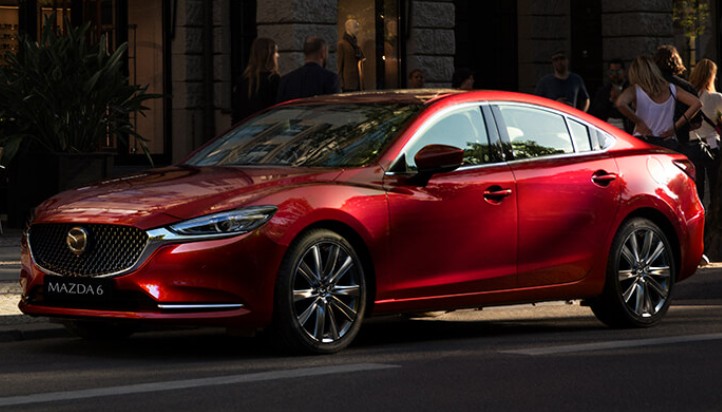
Choosing between Mazda 6 trim levels can feel surprisingly complicated. At first glance, the formula appears simple: pick a Mazda 6, choose how much equipment we want, select an engine, and drive away. Then we start seeing names such as Sport, Touring, Grand Touring, Signature, Atenza, GT SP, SE-L, and GT Sport Nav+, and suddenly the trim ladder starts looking more like a family tree.
The reason is straightforward. Mazda sold the Mazda 6 across numerous countries for many years, and the company didn't use one universal trim structure. A Mazda 6 Touring in the United States isn't automatically equivalent to a Touring sold in Australia, while British buyers encountered an entirely different naming convention.
That matters enormously when we're shopping for a used Mazda 6.
A higher trim can bring leather upholstery, a stronger engine, heated and ventilated seats, premium Bose audio, additional driver-assistance equipment, larger wheels, and more sophisticated interior materials. Yet buying the most expensive specification isn't always the smartest move.
Sometimes the middle trim is the sweet spot.
Let's break down the Mazda 6 lineup, explain what the major trims actually offer, and figure out which version makes the most sense for different buyers.
Important: Mazda 6 specifications vary by model year, engine, body style, and country. Always verify a particular vehicle by VIN and original market specification before purchasing.
Content in this publication
- Understanding Mazda 6 Trim Levels
- Mazda 6 Trim Levels in the United States
- Mazda 6 Touring
- Mazda 6 Grand Touring
- Mazda 6 Grand Touring Reserve
- Mazda 6 Carbon Edition
- Mazda 6 Signature
- Quick Comparison of U.S. Mazda 6 Trims
- Mazda 6 Trim Levels in Australia
- Mazda 6 G25 Touring
- Mazda 6 GT SP
- Mazda 6 Atenza
- Mazda 6 Trim Levels in the UK
- Mazda 6 SE-L and SE-L Nav
- Mazda 6 Sport Nav
- Mazda 6 GT Sport Nav+
- How Mazda 6 Trim Levels Changed Over the Generations
- Which Mazda 6 Trim Has the Turbo Engine?
- Which Mazda 6 Trim Has Leather Seats?
- Which Mazda 6 Trim Is Best?
- Best Mazda 6 Trim for Performance
- Best Mazda 6 Trim for Luxury
- Best Mazda 6 Trim for Value
- Should We Buy the Highest Mazda 6 Trim?
- How to Identify Your Mazda 6 Trim Level
- Mazda 6 Sedan vs Wagon Trim Differences
- Are Higher Mazda 6 Trims More Expensive to Maintain?
- Mazda 6 Trim Levels on the Used Market
- Mazda 6 Trim Levels vs Competitors
- Final Verdict: Which Mazda 6 Trim Should We Choose?
- Frequently Asked Questions About Mazda 6 Trim Levels
Understanding Mazda 6 Trim Levels
Before comparing individual models, we need to understand what a trim level actually represents.
Think of the basic Mazda 6 as the foundation of a house. The mechanical architecture may remain largely similar, but moving higher through the trims adds more furniture, better appliances, smarter technology, and sometimes a considerably stronger engine.
Depending on the market and model year, moving upward through the Mazda 6 range could add:
- Larger alloy wheels
- Leather or premium leather upholstery
- Power-adjustable seats
- Heated or ventilated seats
- Bose premium audio
- Head-up display technology
- Advanced safety equipment
- Sunroof
- Adaptive headlights
- Additional exterior styling
- Turbocharged engines
- Premium interior trim
- Memory seats
- Heated steering wheel
The exact hierarchy changed several times during the Mazda 6's life.
For example, Mazda's official U.S. documentation confirms that the 2021 Mazda6 was offered as Sport, Touring, Grand Touring, Grand Touring Reserve, Carbon Edition, and Signature.
Meanwhile, Mazda's UK lineup used names such as SE-L Nav+, SE-L LUX Nav+, Sport Nav+, and GT Sport Nav+ during the later third-generation period.
Australia followed another route, with names including Sport, Touring, GT SP, and Atenza in later versions.
So when someone asks, "What's the best Mazda 6 trim?" our first question should really be: which year and which country?
Mazda 6 Trim Levels in the United States
For American buyers, the final years of the conventional Mazda6 provide one of the easiest trim structures to understand.
The 2021 lineup progressed approximately like this:
Sport → Touring → Grand Touring → Grand Touring Reserve → Carbon Edition → Signature
Mazda officially listed those six versions for 2021, with original MSRPs running from $24,325 for the Sport to $35,750 for the Signature.
Each step wasn't merely cosmetic. Once we reached Grand Touring territory, performance entered the equation as well.
Mazda 6 Sport
Sport was the entry point into the range.
Calling it "basic," however, undersells it.
One of Mazda's strengths during the third-generation Mazda 6 era was making even relatively inexpensive versions look and feel more expensive than their sticker prices suggested.
The Sport focused on essentials rather than luxury. It typically paired the naturally aspirated Skyactiv-G engine with front-wheel drive and an automatic transmission in later U.S. models.
For drivers who mainly care about handling, efficiency, styling, and reasonable ownership costs, that's not necessarily a disadvantage.
Who Should Buy the Sport Trim?
We'd consider a Sport if we're:
- Shopping with a strict budget
- Looking for lower long-term complexity
- Less concerned about premium upholstery
- Buying primarily for commuting
- Interested in Mazda handling rather than luxury equipment
Used examples can also represent strong value because buyers often chase Touring or Grand Touring badges, leaving base models comparatively overlooked.
Mazda 6 Touring
Touring is where the Mazda 6 starts feeling noticeably more upscale.
For many shoppers, this is arguably where the lineup begins hitting its sweet spot.
Instead of paying for every available gadget, we get many of the comfort and convenience features people actually notice every day.
That's an important distinction.
A feature we use twice a year isn't particularly valuable. A better seat, keyless access, climate-control upgrade, or smartphone integration gets used constantly.
Why Touring Is Often the Value Pick
The Touring trim sits neatly between affordability and luxury.
It usually makes sense for someone who wants a Mazda 6 that feels properly equipped without paying premium-car money.
In fact, Mazda's U.S. pricing for 2021 illustrates the relatively manageable step between trims: Touring originally started at $26,925 compared with $24,325 for Sport.
On today's used market, that original gap can become even smaller.
And that's where things become interesting.
If two otherwise comparable cars are separated by only a modest amount, the Touring's additional equipment may easily justify the difference.
Mazda 6 Grand Touring
Grand Touring historically occupied a key position in the Mazda 6 family.
This is where comfort meets stronger performance.
For later U.S.-market models, Grand Touring versions used Mazda's turbocharged 2.5-liter Skyactiv-G engine rather than the naturally aspirated setup found lower in the range. Mazda's 2020 U.S. brochure separates Sport and Touring fuel-economy figures from Grand Touring, Grand Touring Reserve, and Signature, reflecting their different powertrain configuration.
That means Grand Touring isn't merely a nicer Touring.
It changes the character of the car.
Naturally Aspirated vs Turbo Mazda 6
The standard naturally aspirated Mazda 6 is smooth and predictable. It rewards momentum and works perfectly well for everyday driving.
The turbo changes the mood.
There's substantially more low-end urgency, which makes overtaking, highway merging, and accelerating out of corners feel effortless.
Imagine the standard engine as a good cup of coffee. The turbo is an espresso shot dropped into it.
Neither is inherently better for everyone.
The naturally aspirated engine makes sense if simplicity and efficiency matter most. The turbo is the more appealing option when performance ranks high on our shopping list.
Who Should Choose Grand Touring?
Grand Touring makes sense when we want:
- Noticeably stronger acceleration
- More premium equipment
- A more upscale cabin
- Better long-distance comfort
- A Mazda 6 that feels closer to an entry-level luxury sedan
For many enthusiasts shopping used, this is one of the most compelling trims.
Mazda 6 Grand Touring Reserve
Grand Touring Reserve pushed the formula further.
If Grand Touring introduced the more powerful personality, Reserve layered additional luxury on top.
At this level, the Mazda 6 begins making a serious attempt at stealing buyers from premium brands.
That's not an exaggeration.
Mazda spent years positioning its interiors above the ordinary mainstream standard. Once we add upscale upholstery, additional seat features, better trim materials, and more equipment, the cabin feels remarkably sophisticated for a family sedan.
Is Grand Touring Reserve Worth It?
On the used market, potentially yes.
Depreciation works in our favor.
The difference between a lower trim and a Grand Touring Reserve may have been substantial when both cars were new, but several years later that gap can shrink considerably.
If mileage, condition, service history, and accident history are comparable, paying slightly more for Reserve can provide a lot of extra car.
But condition always beats trim.
We'd choose an immaculate Touring with full maintenance records over a neglected Grand Touring Reserve every single time.
Mazda 6 Carbon Edition
The Carbon Edition arrived as the visual extrovert of the lineup.
Where most Mazda 6 trims communicate sophistication quietly, Carbon Edition turns the volume up.
Mazda included the Carbon Edition in the official 2021 U.S. range between Grand Touring Reserve and Signature in MSRP terms. Its starting price was $32,800.
Its appeal was largely about combining desirable equipment with a distinctive appearance.
What Makes Carbon Edition Different?
Carbon Edition vehicles emphasized styling.
That's important when we're comparing used examples because the decision between Carbon Edition and another upscale Mazda 6 isn't necessarily about getting a fundamentally superior automobile.
It's about personality.
Some buyers love understated luxury.
Others want the car to announce itself before they even open the door.
The Carbon Edition speaks to the second group.
It's essentially the Mazda 6 putting on its best jacket before going out on Saturday night.
Mazda 6 Signature
Signature was the flagship U.S.-market Mazda 6.
This is the version for buyers asking, "How luxurious can a Mazda 6 get?"
Quite luxurious, as it turns out.
The Signature sat at the top of the 2021 U.S. range with an original MSRP of $35,750.
It combined the turbocharged powertrain with Mazda's richest interior treatment and a generous equipment package.
Signature Interior and Luxury
This trim matters because it reveals what Mazda was trying to accomplish with the Mazda 6.
The company wasn't merely fighting Accord, Camry, and Altima on practicality. It was gradually pushing the car toward near-premium territory.
Cabin design became cleaner, materials improved, and unnecessary visual clutter disappeared.
The result is an interior that can age remarkably well.
A well-kept Signature still feels classy because its design relies less on gimmicks and more on proportion, materials, and simplicity.
Should We Pay Extra for Signature?
It depends on our priorities.
Buy Signature if cabin quality matters enormously.
Skip it if our main goal is simply enjoying Mazda's steering and chassis.
A Touring still drives like a Mazda 6.
Signature simply surrounds us with nicer things while we're doing it.
Quick Comparison of U.S. Mazda 6 Trims
For late U.S.-market Mazda6 models, we can simplify the hierarchy like this:
| Trim | Main Character | Best For |
|---|---|---|
| Sport | Affordable and straightforward | Budget buyers |
| Touring | Comfort/value balance | Most everyday drivers |
| Grand Touring | Turbo performance | Drivers wanting more power |
| Grand Touring Reserve | Performance plus luxury | Premium-value shoppers |
| Carbon Edition | Styling-focused upscale trim | Buyers wanting distinctive looks |
| Signature | Maximum luxury | Buyers wanting the fullest specification |
Keep in mind that equipment changed from year to year, so this table should be treated as a shopping framework rather than an exact equipment sheet for every Mazda 6 ever produced.
Mazda 6 Trim Levels in Australia
Australia tells a different story.
Later Mazda 6 models were commonly organized around grades such as Sport, Touring, GT SP, and Atenza.
Mazda Australia's own reporting confirms that Touring and above received additional equipment in later cars, while GT SP and Atenza received enhanced active-safety features such as Cruising and Traffic Support.
Mazda 6 G25 Sport
The G25 Sport served as the accessible entry point.
You may be interested in reading Ram 1500 Generations: Complete Guide From 1981 to Today
The "G25" designation indicates the naturally aspirated 2.5-liter petrol powertrain used in these vehicles.
This version is ideal for buyers who want the Mazda 6's core strengths without unnecessary extras.
We're still getting the handsome styling, excellent driving position, practical cabin, and composed chassis.
What we're sacrificing is mostly luxury rather than the essential Mazda experience.
Mazda 6 G25 Touring
Australian Touring models add a useful layer of equipment.
In later versions, Touring brought items including additional comfort and convenience equipment, while contemporary specification reporting lists features such as leather seating, powered front seats, Bose audio, wireless Apple CarPlay, and wireless phone charging on applicable models.
This makes Touring particularly attractive on the used market.
Why Australian Touring Models Make Sense
Touring is what we might call the "nothing important is missing" trim.
Do we really need the strongest engine?
Maybe not.
Do we need the fanciest exterior styling?
Again, perhaps not.
But leather, better audio, comfort equipment, and convenience features are things many owners appreciate every day.
That's why Touring deserves serious consideration.
Mazda 6 GT SP
GT SP turns the dial toward performance and attitude.
Later Australian GT SP versions adopted Mazda's turbocharged 2.5-liter petrol engine. Mazda Australia has described the G35 powertrain as producing 173 kW and 420 Nm in the relevant Mazda6 range.
That's a meaningful increase in muscle.
Instead of needing to work the engine hard, the turbo delivers a thick wave of torque.
GT SP vs Touring
This is one of the most interesting Mazda 6 comparisons.
Touring is the sensible choice.
GT SP is the emotional choice.
If we mostly crawl through traffic, Touring gives us virtually everything necessary.
If our commute includes open highways and winding roads, GT SP suddenly starts making much more sense.
The stronger engine doesn't transform the Mazda 6 into a sports sedan, but it gives the chassis the power it always seems to deserve.
Mazda 6 Atenza
Atenza sits at or near the summit of the traditional Australian Mazda 6 hierarchy.
Interestingly, "Atenza" also has deeper roots in the Mazda 6 story because the model was known by that name in Japan during earlier generations.
Australian buyers, however, encountered Atenza as a premium grade.
It combines the stronger powertrain with additional luxury and technology.
For used-car shoppers, Atenza is essentially the "give me everything" option.
GT SP vs Atenza
Choosing between GT SP and Atenza is less about raw performance and more about priorities.
Both can deliver strong turbocharged performance in later models.
GT SP tends to lean toward sportier presentation.
Atenza leans toward luxury.
Think running shoes versus leather loafers. Both get us where we're going; they simply make different statements along the way.
Mazda 6 Trim Levels in the UK
British Mazda 6 buyers encountered another collection of names entirely.
A 2015 Mazda UK release listed five grades: SE, SE Nav, SE-L, SE-L Nav, and Sport Nav.
After the substantial 2018 update, Mazda's UK range included SE-L Nav+, SE-L LUX Nav+, Sport Nav+, and GT Sport Nav+.
This illustrates why used Mazda 6 shopping requires close attention to model year.
SE served as an entry-level specification in earlier UK cars.
SE Nav followed the familiar automotive strategy of adding navigation and related equipment without requiring buyers to jump dramatically higher through the range.
These can make excellent used purchases when our priority is simply obtaining a dependable and comfortable Mazda 6 rather than collecting every optional feature.
SE-L moved farther into comfort territory.
This trim became one of those quiet heroes of the used-car market: not especially flashy, but often equipped with most of what drivers genuinely need.
When buying an older Mazda 6, however, we'd pay much more attention to service history and engine choice than the difference between SE and SE-L.
That's particularly true with diesel examples.
A perfectly maintained lower trim is a far safer bet than a high-spec car with questionable history.
Sport Nav was one of the better-known higher-grade British specifications.
It paired generous equipment with sportier visual touches and helped give the Mazda 6 more showroom presence.
Large wheels certainly look attractive, although there's a tradeoff.
They can mean:
- More expensive replacement tyres
- Slightly firmer ride quality
- Greater vulnerability to pothole damage
- Higher replacement-wheel costs
A beautiful wheel is wonderful until it meets a crater disguised as a British pothole.
That's why wheel condition deserves inspection when buying Sport models.
Following the 2018 update, GT Sport Nav+ became the flagship specification in Britain.
Mazda's UK announcement identified GT Sport Nav+ as the exclusive home of the newly introduced 2.5-liter Skyactiv-G petrol engine in that range.
This was essentially the luxury-focused Mazda 6.
It provided the fullest interpretation of Mazda's increasingly premium direction.
For someone shopping for a used executive-style saloon without paying German premium-brand prices, it's an intriguing proposition.
How Mazda 6 Trim Levels Changed Over the Generations
We shouldn't assume trim names remained static throughout the Mazda 6's history.
They didn't.
First-Generation Mazda 6
Early Mazda 6 models were much more conventional in philosophy.
Depending on market, buyers encountered various engine and equipment designations, with sportier versions occupying an important place in the range.
These cars established the Mazda 6's reputation for responsive handling.
They feel more mechanical and less isolated than later generations.
That's appealing to enthusiasts but less attractive to buyers looking for modern infotainment and advanced assistance systems.
Second-Generation Mazda 6
The second generation became larger and more refined.
Trim structures continued to vary considerably around the world, but the broad pattern remained familiar: affordable entry models, progressively better-equipped midrange cars, and sporty or luxury-oriented flagship versions.
Used buyers should focus heavily on regional engine differences because petrol and diesel availability varied.
Third-Generation Mazda 6
This is the generation most shoppers are referring to when discussing modern Mazda 6 trims.
Introduced during Mazda's Skyactiv era, it brought striking Kodo styling, lighter engineering, improved efficiency, and increasingly upscale interiors.
The major 2018 refresh pushed the car farther toward premium territory. In the United States, Mazda added Grand Touring Reserve and Signature to the lineup for 2018.
That's arguably the point when trim level became especially important.
A basic third-generation Mazda 6 and a fully loaded Signature can feel like members of the same family living very different lifestyles.
Which Mazda 6 Trim Has the Turbo Engine?
This is one of the most common questions buyers ask.
In later U.S. Mazda6 models, the turbocharged engine was associated with Grand Touring and higher trims, while Sport and Touring used the naturally aspirated engine. Mazda's 2020 specification material separates Sport/Touring from Grand Touring, Grand Touring Reserve, and Signature by their different fuel-economy ratings, consistent with the two powertrain groups.
Australian naming is different.
Later G25 models use the naturally aspirated 2.5-liter engine, whereas G35 versions such as GT SP and Atenza use the turbocharged engine. Mazda Australia documents the G35 turbo engine at 173 kW and 420 Nm.
Again, model year matters.
Never buy based on the badge alone without verifying the vehicle specification.
Which Mazda 6 Trim Has Leather Seats?
Leather availability depends heavily on year and country.
Generally, leather appears once we move beyond entry-level trims.
In later Australian specifications, for example, Touring added leather seats along with powered seat adjustment and Bose audio.
Higher U.S. trims progressively added more premium cabin materials.
If leather is important, our best strategy isn't simply searching for the highest trim available.
Filter used listings by upholstery first.
Why?
Because equipment can change during mid-cycle updates, special editions may bundle unusual combinations, and dealer descriptions aren't always reliable.
Pictures and original specifications are our friends.
Which Mazda 6 Trim Is Best?
For most people, the middle trims offer the strongest value.
In America, we'd place Touring near the top of the shortlist for ordinary commuters and Grand Touring for buyers who want stronger performance.
In Australia, Touring is an appealing value option, while GT SP makes sense for buyers who prioritize turbocharged performance.
In Britain, SE-L and Sport variants often provide an attractive balance depending on model year.
But there's no universal winner.
The best Mazda 6 trim is the one whose extra equipment we actually use.
Best Mazda 6 Trim for Performance
If performance is the priority, search for a turbocharged third-generation model where available.
You may be interested in readingRam 1500 Generations: Complete Guide From 1981 to TodayYou may be interested in reading
Ram 1500 Trims: Complete Guide to Every Trim LevelIn the later U.S. range, Grand Touring and higher specifications are the obvious targets.
In Australia, look toward G35 GT SP and Atenza.
The turbocharged engine's strong torque suits the Mazda 6 brilliantly.
It doesn't suddenly turn the sedan into a rear-wheel-drive sports car, but it gives overtaking performance far more authority.
Best Mazda 6 Trim for Luxury
Luxury shoppers should naturally gravitate toward the flagship variants.
That means:
United States: Signature
Australia: Atenza
UK: GT Sport Nav+ in relevant model years
These versions showcase Mazda's premium ambitions most clearly.
Yet there's a catch.
Luxury equipment introduces more systems that can eventually require repair.
Powered seats, premium audio systems, cameras, sensors, adaptive lighting, and advanced electronics are wonderful when everything works.
When shopping used, test every button.
Yes, every button.
Best Mazda 6 Trim for Value
Value is where things become subjective.
Our favorite strategy is simple: shop one or two trims above the base model.
Why?
Because depreciation frequently compresses the price difference between trims.
A five-year-old Touring may cost only modestly more than a Sport despite having considerably better equipment.
Similarly, Grand Touring models can become especially attractive after the biggest depreciation hit has already occurred.
Instead of obsessing over badge hierarchy, calculate how much additional equipment we're getting for every extra dollar, pound, or Australian dollar.
Should We Buy the Highest Mazda 6 Trim?
Not automatically.
More equipment isn't the same thing as a better purchase.
Suppose we're comparing two cars.
Car A is a Signature with 90,000 miles, patchy maintenance records, worn tyres, and evidence of poor cosmetic care.
Car B is a Touring with 55,000 miles, one careful owner, complete service records, and immaculate condition.
We'd choose Car B without hesitation.
Trim is icing.
Condition is the cake.
What Matters More Than Trim Level?
When buying a used Mazda 6, prioritize:
- Service history
- Accident history
- Mechanical condition
- Engine and transmission condition
- Mileage
- Tyre and brake condition
- Evidence of corrosion where relevant
- Correct operation of electronics
- Trim level
That order can save us thousands.
How to Identify Your Mazda 6 Trim Level
Sometimes the badge doesn't tell the complete story.
A used Mazda 6 may have replacement wheels, aftermarket leather, removed badges, or options added by a previous owner.
Start with the VIN and original registration documentation.
Then compare equipment.
Look for features such as:
- Wheel design and size
- Seat upholstery
- Bose speaker branding
- Sunroof
- Power-seat controls
- Seat ventilation
- Heated steering wheel
- Head-up display
- Parking sensors
- Exterior cameras
- Interior trim finish
- Engine specification
Don't rely solely on an online advertisement.
Used-car listings regularly contain incorrect automatic data.
Mazda 6 Sedan vs Wagon Trim Differences
Another complication is body style.
The United States primarily received the third-generation Mazda6 as a sedan, whereas markets including Australia and the UK also enjoyed the wagon—or Tourer in British terminology.
Not every trim, engine, and transmission combination was necessarily offered with both body styles.
That's why someone searching for a specific high-end Mazda 6 wagon may find a noticeably smaller pool of cars than someone shopping for an equivalent sedan.
For families, though, the wagon can be the hidden gem of the Mazda 6 range.
It keeps the car-like driving experience while dramatically improving cargo flexibility.
Are Higher Mazda 6 Trims More Expensive to Maintain?
Routine mechanical servicing isn't necessarily dramatically different simply because the badge says Signature or Atenza.
But there are secondary costs.
Higher trims may have larger wheels, more sophisticated electronics, additional powered accessories, and turbocharged engines.
Larger tyres can cost more.
Complex headlights can cost more.
Premium interior components can cost more to replace.
Turbocharged models also deserve careful maintenance.
None of that makes a high trim a bad choice.
It simply means the purchase price isn't the whole ownership equation.
Mazda 6 Trim Levels on the Used Market
Used Mazda 6 shopping is where trim research really pays dividends.
New-car buyers choose from a structured catalog.
Used-car buyers encounter chaos.
A marketplace might simultaneously contain a 2014 Sport, 2016 Touring, 2018 Signature, 2020 Grand Touring, and several imported vehicles carrying completely different badges.
That's why comparing prices by model name alone is misleading.
Compare:
year + engine + trim + mileage + condition + history.
Only then does the price mean anything.
Older High Trim or Newer Lower Trim?
This is a classic dilemma.
We usually favor the newer lower-trim car when there's a significant difference in age, assuming everything else is equal.
Technology improves.
Safety equipment evolves.
Rubber seals age.
Suspension components wear.
Electronic features become outdated.
But if the age difference is small and the higher-specification vehicle has been exceptionally maintained, the luxury trim can be the more satisfying purchase.
There isn't a magic rule.
We're buying the individual car, not merely its badge.
Mazda 6 Trim Levels vs Competitors
One reason the Mazda 6 developed such a loyal following is that its trim strategy complemented the car's unusual position in the midsize segment.
Toyota's Camry traditionally emphasizes dependability and broad appeal.
Honda's Accord balances space, efficiency, and engaging road manners.
The Mazda 6 tends to lean harder into design, steering feel, and interior atmosphere.
Higher trims amplify that character.
A Signature or Atenza doesn't just contain more equipment—it makes Mazda's near-premium philosophy much easier to understand.
The downside is practicality.
Depending on generation and market, some competitors can offer more rear-seat space, larger dealer networks, broader powertrain choices, or stronger resale recognition.
So again, there's no universally "best" trim or even universally best midsize sedan.
There is only the version that best matches what we need.
Final Verdict: Which Mazda 6 Trim Should We Choose?
The Mazda 6 trim levels tell a fascinating story.
At the bottom of the range, the car is an affordable, stylish, enjoyable family sedan.
Move upward and it gradually becomes something else: faster, richer, quieter, more luxurious, and almost premium.
For American shoppers, Touring offers an excellent everyday balance, while Grand Touring is especially appealing if we want turbo performance. Grand Touring Reserve brings more luxury, Carbon Edition adds visual personality, and Signature delivers the fullest experience.
Australian buyers should see G25 Touring as a particularly sensible all-rounder, with G35 GT SP delivering the performance jump and Atenza serving buyers who prefer maximum luxury.
British shoppers have a more complicated collection of names, but the basic principle remains the same: SE and SE-L variants focus on value, Sport moves upward in equipment and presentation, while GT Sport represents the premium end of applicable later ranges.
Our biggest recommendation, however, has nothing to do with the badge.
Buy condition first and trim second.
A carefully maintained Mazda 6 Touring will almost always be a smarter purchase than a neglected Signature. The shiny equipment list catches our attention, but maintenance history is what keeps the relationship happy after the honeymoon ends.
Find the right combination of specification, engine, history, mileage, and price, and the Mazda 6 remains one of the more interesting used midsize cars available.
Frequently Asked Questions About Mazda 6 Trim Levels
1. What are the Mazda 6 trim levels in order?
For the final 2021 U.S.-market Mazda6, the lineup ran from Sport to Touring, Grand Touring, Grand Touring Reserve, Carbon Edition, and Signature. Mazda officially documented all six trims for that model year. Other countries used different names.
2. What is the highest Mazda 6 trim level?
It depends on the market. Signature was the flagship of the late U.S. Mazda6 lineup, while Atenza occupied the luxury end of later Australian ranges. In relevant later UK lineups, GT Sport Nav+ served as the range-topping specification.
3. Which Mazda 6 trim has the turbo engine?
In later U.S. models, Grand Touring and higher trims received the turbocharged 2.5-liter engine, while lower Sport and Touring versions used the naturally aspirated setup. In later Australian models, G35 GT SP and Atenza versions used Mazda's turbo engine. Exact availability varies by year.
4. Is Mazda 6 Touring better than Sport?
Touring is generally better equipped, so we'd choose it when the used-price difference is reasonable. Sport remains attractive for budget-conscious buyers who prioritize the Mazda 6's basic driving experience over luxury features. The best choice ultimately depends on condition and price rather than trim alone.
You may be interested in readingRam 1500 Generations: Complete Guide From 1981 to TodayYou may be interested in reading
Ram 1500 Trims: Complete Guide to Every Trim LevelYou may be interested in reading
Ram 1500 Years to Avoid: Which Models Should We Be Careful With?5. Is the Mazda 6 Signature worth buying used?
Yes, particularly when the price gap over lower trims has narrowed through depreciation. Signature combines turbocharged performance with the richest equipment level in the late U.S. lineup. However, we'd still prioritize complete service history, mechanical condition, and lower wear over specification.
If you want to know other articles similar to Mazda 6 Trim Levels: Complete Guide to Choosing the Right Version you can visit the category Models.
Kia Sorento Models: Complete Guide to Trims, Engines and Versions
BYD Shark 6 vs Ranger vs HiLux: Which Ute Makes the Most Sense in 2026?
BYD Shark 6 vs MG U9: Which Ute Makes More Sense in 2026?
BYD Shark 6 vs Ford Ranger Raptor: Which Performance Ute Is Better in 2026?
BYD Shark 6 vs Kia Tasman: Which Ute Is Better?
BYD Shark 6 vs 7: What We Know So Far
Leave a Reply
More content of your interest