
BMW M5 Touring Specs: The Super-Wagon Explained

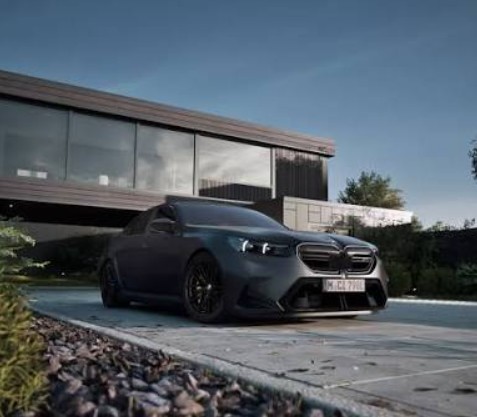
The BMW M5 Touring specs tell us almost everything we need to know about BMW M’s latest exercise in controlled excess. We have a twin-turbocharged V8, an electric motor, all-wheel drive, an eight-speed transmission, room for five people, and enough cargo capacity to make a family crossover nervous. Somehow, BMW has squeezed all of that into one remarkably aggressive wagon.
This is the G99-generation M5 Touring, and it represents a major shift from the M5 formula we knew before. Instead of simply chasing lower weight and more combustion-engine horsepower, BMW has embraced its M HYBRID plug-in-hybrid system. The result is a Touring producing 535 kW (727 PS/metric horsepower) and 1,000 Nm of system torque in global specification. U.S. specifications quote 717 hp and 738 lb-ft because of differences in horsepower measurement conventions.
Those figures are impressive, but they're only part of the story. The M5 Touring is enormous, heavy, fast, electrically assisted, genuinely practical, and capable of carrying luggage at speeds that once belonged exclusively to supercars.
So, what exactly are we getting? Let's dig into the numbers.
Content in this publication
- BMW M5 Touring Specs at a Glance
- What Engine Does the BMW M5 Touring Have?
- BMW M5 Touring Horsepower
- BMW M5 Touring Torque
- How Fast Is the BMW M5 Touring?
- BMW M5 Touring M xDrive Specifications
- Eight-Speed M Steptronic Transmission
- BMW M5 Touring Battery Specs
- BMW M5 Touring Weight
- BMW M5 Touring Dimensions
- BMW M5 Touring Cargo Space
- BMW M5 Touring Towing Capacity
- BMW M5 Touring Fuel Tank Capacity
- BMW M5 Touring Chassis and Suspension Specs
- BMW M5 Touring Brakes
- BMW M5 Touring Wheel and Tire Setup
- BMW M5 Touring Interior Technology
- BMW M5 Touring Sound and Character
- How Does the G99 Compare With Older M5 Touring Models?
- BMW M5 Touring vs M5 Sedan Specs
- Who Is the BMW M5 Touring For?
- Advantages of the BMW M5 Touring
- Potential Drawbacks of the BMW M5 Touring Specs
- Are the BMW M5 Touring Specs Worth the Hype?
- Final Thoughts on BMW M5 Touring Specs
- Frequently Asked Questions
BMW M5 Touring Specs at a Glance
Before we dissect the car piece by piece, here are the headline specifications of the current G99 M5 Touring.
| Specification | BMW M5 Touring |
|---|---|
| Powertrain | Plug-in-hybrid twin-turbo V8 |
| Engine | 4.4-liter V8 |
| Engine displacement | 4,395 cc |
| System output | 535 kW / 727 PS; 717 hp U.S. rating |
| System torque | 1,000 Nm / 738 lb-ft |
| Transmission | 8-speed M Steptronic automatic |
| Drivetrain | M xDrive all-wheel drive |
| 0–100 km/h | 3.6 seconds |
| 0–60 mph | 3.5 seconds |
| 0–200 km/h | 11.1 seconds |
| Standard top speed | 250 km/h / 155 mph |
| Optional top speed | Up to 305 km/h / 190 mph |
| Cargo capacity | 500–1,630 liters |
| U.S. cargo capacity | 17.7–57.6 cu ft |
| Length | 5,096 mm / 200.6 in |
| Width | 1,970 mm / 77.6 in |
| Height | 1,516 mm / 59.7 in |
| Wheelbase | 3,006 mm / 118.3 in |
| Global DIN unladen weight | 2,475 kg |
| U.S. curb weight | 5,523 lb |
| Fuel tank | About 60 liters |
BMW's current official U.S. technical page lists the Touring at 200.6 inches long, 77.6 inches wide, 59.7 inches high, and 5,523 pounds in curb weight.
Those measurements immediately reveal what kind of machine we're dealing with. This isn't a lightweight wagon with a slightly hotter engine. It is more like a grand-tourer, muscle car, EV-assisted performance machine, and estate car rolled into one.
What Engine Does the BMW M5 Touring Have?
At the heart of the M5 Touring sits BMW's familiar 4.4-liter M TwinPower Turbo V8.
The engine displaces precisely 4,395 cc and uses two turbochargers, variable valve timing, direct injection, and the associated collection of BMW M engine technologies designed to deliver both enormous low-end shove and serious upper-rpm performance.
On its own, the internal-combustion engine produces around 577 hp in North American specification, while maximum engine torque reaches 553 lb-ft. BMW then adds an electric motor integrated into the transmission to transform an already powerful V8 wagon into something substantially more serious.
Why BMW Kept the V8
There would have been an easier way to electrify the M5. BMW could have downsized the combustion engine considerably and let electric assistance fill the performance gap.
Instead, we still get eight cylinders.
That decision matters because the M5 has always been about absurdly effortless performance. A smaller engine might have looked tidier on a spreadsheet, but the 4.4-liter V8 gives the Touring the muscular character we expect when an M5 badge appears on the tailgate.
Hit the accelerator and the electric system delivers its punch immediately while the turbocharged V8 builds behind it. Think of the motor as the sprinter launching off the blocks and the V8 as the freight train arriving immediately afterward.
BMW M5 Touring Horsepower
The headline figure is 535 kW, or 727 PS, for globally specified versions of the M5 Touring. BMW USA lists 717 horsepower. Both numbers describe essentially the same M HYBRID powertrain under different regional measurement conventions.
That's supercar territory stuffed into a five-door wagon.
For perspective, we're no longer talking about a practical car that happens to be quick. We're talking about a genuinely serious performance car that happens to have a large luggage compartment.
How the Hybrid System Produces That Power
The total system output doesn't come from simply adding the maximum engine output and electric-motor output together because the two components achieve peak power at different operating points.
The electric motor itself produces up to 194 hp in North American specification and is incorporated into the eight-speed M Steptronic transmission. BMW uses pre-gearing to amplify the motor's effective torque contribution at the transmission input.
That arrangement gives the hybrid system especially strong response before the V8 is fully awake.
The Electric Motor Isn't Just About Efficiency
Calling this an efficiency-oriented hybrid would miss half the point.
Yes, the M5 Touring can drive using electricity alone under suitable conditions. But within the M HYBRID architecture, electrification is also a performance tool.
The motor fills gaps in combustion-engine response, provides instant torque, supports acceleration, recuperates energy and allows the car to move without firing up the V8.
In other words, BMW hasn't merely attached an electric motor to an M5. The two power sources were engineered to work as one system.
BMW M5 Touring Torque
Maximum system torque reaches 1,000 Nm, equivalent to approximately 738 lb-ft.
That's arguably more important in everyday driving than the giant horsepower number.
Horsepower gives us the dramatic top-end statistics. Torque gives us the shove we feel when squeezing the accelerator halfway down while joining a motorway.
With 1,000 Nm available from the combined powertrain, the M5 Touring should feel brutally strong across a broad range of speeds.
There's no need to wind the engine out every time we want serious acceleration. The hybrid system essentially keeps a large reserve of thrust waiting behind our right foot.
How Fast Is the BMW M5 Touring?
BMW quotes 0–100 km/h in 3.6 seconds and 0–200 km/h in 11.1 seconds for the M5 Touring. The U.S. specification lists 0–60 mph in 3.5 seconds.
Those numbers deserve a moment of perspective.
Three-point-six seconds to 100 km/h used to be exotic-car performance. Now we're getting it in something capable of swallowing holiday luggage.
That contrast is the whole appeal of the M5 Touring.
BMW M5 Touring Top Speed
In standard configuration, the M5 Touring is electronically limited to roughly 250 km/h or 155 mph.
Choose the optional M Driver's Package, however, and BMW raises the ceiling to 305 km/h, or approximately 190 mph.
Yes, 190 mph.
In a wagon.
The phrase "family car" starts to feel rather inadequate.
0–200 km/h Performance
Perhaps the more revealing statistic is its 11.1-second 0–200 km/h time.
Getting to 100 km/h rapidly is relatively easy with modern launch-control systems, sticky tires and all-wheel drive. Maintaining that acceleration well past highway speeds demands serious sustained power.
The M5 Touring manages exactly that.
Its acceleration doesn't disappear once the initial electric-assisted launch is over. The V8 continues pulling hard as speeds climb.
BMW M5 Touring M xDrive Specifications
Every current M5 Touring sends power through BMW's M xDrive all-wheel-drive system.
Drivers can choose among different drivetrain configurations, including:
- 4WD for maximum stability and traction
- 4WD Sport for a more rear-biased character
- 2WD, available with stability control switched off, for experienced drivers seeking fully rear-wheel-drive behavior
BMW also pairs the system with an Active M Differential at the rear.
This is one of those technologies we barely notice when it works properly.
With so much torque available, simply feeding everything through the rear tires would create a constant wrestling match. M xDrive allows the Touring to deploy its power far more effectively while retaining a rear-driven character when conditions permit.
Eight-Speed M Steptronic Transmission
Power reaches the wheels through an eight-speed M Steptronic automatic transmission.
Some enthusiasts may miss the older M5's more mechanically dramatic gearboxes, but an eight-speed automatic suits this hybrid powertrain exceptionally well.
The gearbox has several jobs simultaneously. It must handle the V8's substantial torque, accommodate the electric motor, deliver smooth shifts around town and react aggressively during performance driving.
That's a difficult balancing act.
Why There Is No Dual-Clutch Gearbox
BMW's modern high-performance models have increasingly moved toward torque-converter automatics.
A dual-clutch transmission can feel spectacularly sharp, but modern automatics deliver extremely fast shifts while coping better with massive torque and providing smoother low-speed operation.
In the M5 Touring, that versatility fits the mission perfectly.
We want savage shifts when attacking a mountain road and quiet, near-invisible changes while creeping through traffic with groceries in the back. The eight-speed unit has to perform both personalities.
BMW M5 Touring Battery Specs
The M5 Touring's high-voltage battery sits underneath the vehicle as part of the plug-in-hybrid architecture.
Regional electric-range figures vary according to the testing procedure. BMW M's European/global material currently quotes up to 60 km of electric range, while the initial North American launch estimate was roughly 25 miles in the United States and up to 40 km in Canada.
Those differences illustrate why we should always check which certification cycle a range figure comes from.
Can the M5 Touring Drive on Electricity Alone?
Yes.
When sufficient battery charge is available, the plug-in-hybrid system can propel the car without running the V8.
That may sound strange in something wearing an M badge, but it could be one of the Touring's most useful tricks.
Imagine leaving home early without waking the neighborhood with a cold-start V8, crawling through city congestion electrically, and then having more than 700 horsepower available once the road opens.
That's an unusual mixture of personalities.
BMW M5 Touring Weight
Here's the number that generates the most debate.
The M5 Touring is heavy.
BMW's global technical data lists an unladen DIN weight of 2,475 kg, while BMW USA currently lists a 5,523-pound curb weight.
That's substantially heavier than older M5 generations.
Why?
Because we're carrying a large wagon body, a V8 engine, all-wheel-drive hardware, an electric motor, a high-voltage battery, luxury equipment and extensive structural hardware.
Does the Weight Ruin the M5 Touring?
Not necessarily, but physics doesn't disappear because engineers are clever.
More mass affects braking, tire loads, direction changes and overall agility. BMW compensates with sophisticated adaptive suspension, rear-wheel steering, enormous brakes, active differentials and highly developed chassis electronics.
Think of it like an exceptionally athletic heavyweight boxer. Nobody would call it light on its feet in absolute terms, but the speed with which it moves relative to its mass can be startling.
Still, buyers expecting the delicacy of an older, lighter M car should understand that the modern M5 Touring delivers a different type of performance.
BMW M5 Touring Dimensions
This is a substantial vehicle.
The official measurements are:
| Dimension | Measurement |
| Length | 5,096 mm / 200.6 in |
| Width | 1,970 mm / 77.6 in |
| Width including mirrors | 84.9 in |
| Height | 1,516 mm / 59.7 in |
| Wheelbase | 3,006 mm / 118.3 in |
| Front track | 1,684 mm |
| Rear track | 1,660 mm |
| Ground clearance | 118 mm |
| Turning circle | 12.6 m |
BMW's global and U.S. specifications broadly align on the major external dimensions.
At more than five meters long, this isn't something we'll casually squeeze into tiny parking spaces.
Why the M5 Touring Looks So Wide
The physical measurements are only part of the visual story.
BMW M widens the performance model with prominently flared wheel arches, muscular side sections and M-specific front and rear bodywork.
As a result, the Touring looks planted rather than merely large.
Regular executive wagons can sometimes resemble long boxes. The M5 Touring looks more like someone stretched a performance coupe over a wagon skeleton and then pumped up every wheel arch.
BMW M5 Touring Cargo Space
Here's where the Touring earns its badge.
Cargo capacity measures 500 liters with the rear seats upright and expands to 1,630 liters when they're folded. U.S. figures translate that to roughly 17.7 to 57.6 cubic feet.
The second-row backrests split 40:20:40, giving us more flexibility when carrying passengers and longer items simultaneously.
Is the M5 Touring Actually Practical?
Absolutely—at least by high-performance-car standards.
We can realistically carry:
- several suitcases for a road trip;
- golf equipment;
- large shopping loads;
- baby gear and luggage;
- sporting equipment;
- bulky everyday cargo that would be impossible in many supercars.
This is where the M5 Touring starts making emotional sense.
A dedicated sports car may be lighter and sharper, while an SUV may offer more vertical space. The Touring sits between those worlds.
It asks: why not have most of both?
BMW M5 Touring Towing Capacity
Depending on market specification and approved equipment, BMW's global technical documentation lists a maximum braked trailer load of 2,000 kg and 750 kg unbraked. Maximum towbar download is listed at 100 kg.
That's another unusual capability in a vehicle this quick.
Of course, towing approvals and equipment vary by country, so we should verify local certification before assuming a particular M5 Touring can tow to those limits.
Still, the theoretical combination is wonderfully absurd: tow the equipment to the circuit, unload it, and then have a 727-PS performance wagon waiting for us.
BMW M5 Touring Fuel Tank Capacity
The global specification lists an approximately 60-liter fuel tank. The current BMW USA technical page quotes 15.6 gallons.
Because this is a plug-in hybrid, fuel economy depends heavily on how we use it.
Regular charging can dramatically reduce petrol use during shorter journeys. Drive long distances with a depleted battery and the 4.4-liter twin-turbo V8 naturally becomes considerably thirstier.
BMW M currently quotes European weighted combined consumption around 5.5 L/100 km, but also notes about 11.0 L/100 km with the battery depleted.
That second figure is the more useful reference for long-distance combustion-heavy driving.
BMW M5 Touring Chassis and Suspension Specs
Making a vehicle this heavy corner like an M car requires considerably more than firm springs.
BMW equips the M5 Touring with a sophisticated M-specific chassis package built around electronically controlled adaptive suspension and performance-oriented steering and differential systems.
The goal is to make the Touring comfortable enough for long-distance cruising without allowing all that mass to roll around uncontrollably when the road becomes interesting.
Rear-Wheel Steering Matters More Than We Think
Integral Active Steering turns the rear wheels depending on speed and conditions.
At lower speeds, the rear wheels can steer slightly opposite to the fronts, making the car feel shorter and more maneuverable.
At higher speeds, they can steer in the same direction to improve stability.
This sort of system makes tremendous sense on a vehicle measuring more than five meters long.
Without it, navigating a tight car park in an M5 Touring could feel like docking a small yacht.
BMW M5 Touring Brakes
Standard M compound brakes provide the stopping hardware expected in a vehicle capable of approaching 300 km/h.
BMW also offers M Carbon ceramic brakes in relevant configurations for drivers seeking additional thermal resilience and reduced unsprung mass.
For most road driving, the standard braking package should provide more than enough stopping performance. Carbon ceramics become more attractive if repeated track use is part of the plan.
And yes, braking matters enormously here.
Moving 2.5 tonnes quickly is impressive. Stopping 2.5 tonnes repeatedly is arguably the harder engineering problem.
BMW M5 Touring Wheel and Tire Setup
The M5 Touring uses a staggered performance wheel-and-tire arrangement designed to balance front-end response with massive rear-axle traction.
Staggered sizing makes sense because the front and rear axles face different demands. The front tires need to manage braking and steering loads, while the rear pair must cope with huge amounts of torque.
Large wheels also create space for serious braking hardware.
The downside?
Replacement performance tires won't be inexpensive.
Anyone budgeting for an M5 Touring should remember that consumables on a 700-plus-horsepower, 2.5-ton performance wagon are closer to exotic-car territory than ordinary 5 Series running costs.
BMW M5 Touring Interior Technology
Performance specs may dominate the brochure, but this is still an executive BMW.
The M5 Touring uses the BMW Curved Display with M-specific graphics and configurable performance menus. BMW's launch specification also included Operating System 8.5, connectivity functions, M Setup controls and extensive driver-assistance technology.
The cabin therefore feels less like an old-school stripped performance sedan and more like a luxury command center with a ridiculous engine attached.
M Setup Controls
The driver can configure several key systems, including drivetrain behavior, suspension response and other performance parameters.
This adjustability is essential because no single calibration could satisfy every situation.
A suspension setting that feels wonderful on smooth asphalt could become tiring on broken city roads. Similarly, hyper-aggressive powertrain response can be entertaining on a track but irritating during stop-start traffic.
The M5's solution is effectively to give us several cars inside one car.
BMW M5 Touring Sound and Character
A hybrid system inevitably changes the personality of an M5.
Electric driving can be almost silent. Then the 4.4-liter V8 wakes up and transforms the experience completely.
That contrast might be the defining trait of the G99.
Previous generations generally announced their intentions from the moment we started them. This one can glide quietly through town before turning into something dramatically different.
Purists may prefer the simplicity of earlier models. Others will appreciate having both characters available.
Neither perspective is unreasonable.
How Does the G99 Compare With Older M5 Touring Models?
The current G99 isn't the first M5 wagon.
BMW M has produced Touring versions before, most famously the E34 M5 Touring and later the spectacular E61 M5 Touring with its naturally aspirated V10.
The G99 is effectively the third-generation M5 Touring. BMW itself describes it that way.
E61 M5 Touring vs G99 M5 Touring
The old E61 was wonderfully theatrical.
Its 5.0-liter naturally aspirated V10 loved revs and delivered the sort of noise modern cars struggle to replicate.
The G99 goes in almost the opposite direction.
Where the E61 relied on revs, sound and mechanical drama, the G99 relies on turbocharging, electrification, all-wheel-drive traction and colossal system torque.
Two Different Eras of Performance
The E61 asks us to work with it.
The G99 seems determined to bend physics around us.
One represents old-school combustion-engine theatre. The other represents the modern philosophy of using every available technology to achieve devastating speed without sacrificing comfort or practicality.
Which is better?
That's less a specification question than a personality test.
BMW M5 Touring vs M5 Sedan Specs
Mechanically, the Touring and sedan share the same essential M HYBRID concept.
The Touring, however, carries a small acceleration penalty because of its body configuration and weight. BMW quotes 3.6 seconds from 0–100 km/h for the Touring, compared with 3.5 seconds for the sedan. The corresponding 0–200 km/h figures are 11.1 and 10.9 seconds.
Are we really going to notice a tenth of a second on the road?
Probably not.
We will notice the extra cargo flexibility every time we need to move something bulky.
That's why the Touring may arguably be the more compelling version.
Who Is the BMW M5 Touring For?
The buyer who makes the most sense for this car probably wants one vehicle to perform several wildly different roles.
Maybe we love serious performance but don't want a dedicated sports car sitting unused during family trips. Maybe we're tired of tall performance SUVs. Perhaps we simply believe the fastest version of a practical wagon is inherently cooler than the sensible alternative.
The M5 Touring works particularly well for someone who wants:
- supercar-like straight-line acceleration;
- genuine five-seat practicality;
- substantial luggage capacity;
- long-distance luxury;
- all-wheel-drive traction;
- plug-in electric capability for shorter journeys;
- V8 character when desired;
- one vehicle instead of separate practical and performance cars.
It's a niche formula—but it's a wonderfully convincing niche.
Advantages of the BMW M5 Touring
The biggest advantage is obvious: breadth of ability.
Very few cars combine this much performance with this much everyday usefulness.
We can drive quietly on electricity, cover enormous distances in luxury, haul family luggage, use all-wheel drive in poor weather and then accelerate to 100 km/h in roughly three and a half seconds.
That's ridiculous versatility.
The M5 Touring also avoids the high seating position and bulkier visual proportions of an SUV while still offering serious cargo space.
For enthusiasts who never fully embraced the performance-SUV boom, that may be reason enough to love it.
Potential Drawbacks of the BMW M5 Touring Specs
No car gets everything for free.
The M5 Touring's extraordinary capability comes with several compromises.
Weight is the obvious one. At around 2.5 tonnes depending on measurement standard, the current car is far removed from the leaner M cars of the past.
Complexity is another consideration. We have a twin-turbo V8, plug-in-hybrid battery, electric motor, all-wheel-drive hardware, active differential, electronically controlled suspension and an enormous quantity of software.
Then there are running costs.
Performance tires, brakes, insurance and eventual out-of-warranty maintenance should never be treated like normal wagon expenses.
The M5 Touring may carry luggage like an estate car, but financially it's still a high-end M model.
Are the BMW M5 Touring Specs Worth the Hype?
On paper, absolutely.
The M5 Touring doesn't achieve greatness by dominating one particular metric. Lighter sports cars will feel more delicate. Some EVs can accelerate even harder from a standstill. SUVs offer more cargo height. Luxury sedans may ride more softly.
The magic comes from combining those worlds.
We get a wagon with 727 PS, 1,000 Nm, a 3.6-second 0–100 km/h time, as much as 1,630 liters of luggage capacity and an optional 305 km/h top speed.
Read those numbers again.
They're almost comically incompatible—and yet they're all describing the same car.
That's exactly why the M5 Touring exists.
Final Thoughts on BMW M5 Touring Specs
The BMW M5 Touring specs paint a picture of one of the most technically ambitious performance wagons BMW has ever built.
Its 4.4-liter twin-turbocharged V8 and electric motor combine to produce enormous power. M xDrive converts that output into usable traction. The eight-speed transmission integrates the hybrid motor while maintaining the smoothness expected from a premium long-distance machine. Meanwhile, the wagon body gives us genuine room for passengers and cargo.
Yes, it's heavy.
Yes, it's complex.
And no, it doesn't recreate the lightweight purity of an old BMW M car.
But that's not really what the G99 M5 Touring is trying to do.
Instead, it behaves like a Swiss Army knife fitted with a rocket engine. One minute it's an electrically driven commuter. The next it's a luxurious motorway cruiser. Fold the rear seats down and it becomes a cargo hauler. Bury the accelerator and suddenly we're dealing with performance that would have embarrassed many supercars not long ago.
Few vehicles stretch across so many categories without completely losing the plot.
The M5 Touring might therefore be most impressive not because it's a fast wagon, but because 727 PS somehow feels like only one item on its résumé.
Frequently Asked Questions
1. How much horsepower does the BMW M5 Touring have?
The current G99 BMW M5 Touring produces 535 kW or 727 PS in global specification. BMW USA rates the same basic M HYBRID powertrain at 717 hp, paired with 738 lb-ft of system torque.
2. What is the BMW M5 Touring 0–60 mph time?
BMW USA lists the M5 Touring at approximately 3.5 seconds from 0–60 mph. BMW's global figure for 0–100 km/h is 3.6 seconds.
3. How much cargo space does the BMW M5 Touring have?
It offers around 500 liters with the rear seats in place and up to 1,630 liters with them folded. North American figures are approximately 17.7 to 57.6 cubic feet.
4. Is the BMW M5 Touring a plug-in hybrid?
Yes. The G99 M5 Touring is a plug-in hybrid combining a 4.4-liter twin-turbocharged V8 with an electric motor and high-voltage battery. It can operate using electric power alone when battery charge and operating conditions allow.
5. What is the top speed of the BMW M5 Touring?
The standard electronically limited top speed is approximately 155 mph or 250 km/h. With the optional M Driver's Package, maximum speed increases to 305 km/h, or about 190 mph.
If you want to know other articles similar to BMW M5 Touring Specs: The Super-Wagon Explained you can visit the category Service and Parts.
Vauxhall Mokka Tyre Pressure Reset: Complete Guide
How to Reset the Tire Pressure System on Your Hyundai Tucson
Hyundai Kona Tire Pressure: Complete PSI Guide
Vauxhall Corsa Timing Belt Replacement Cost UK 2026
Mazda CX-5 Tire Size Chart: 2013–2026 Guide
How to Reset a Honda Civic: Complete Step-by-Step Guide
Leave a Reply
More content of your interest