
Hyundai Veloster N Specs: Complete Performance Guide

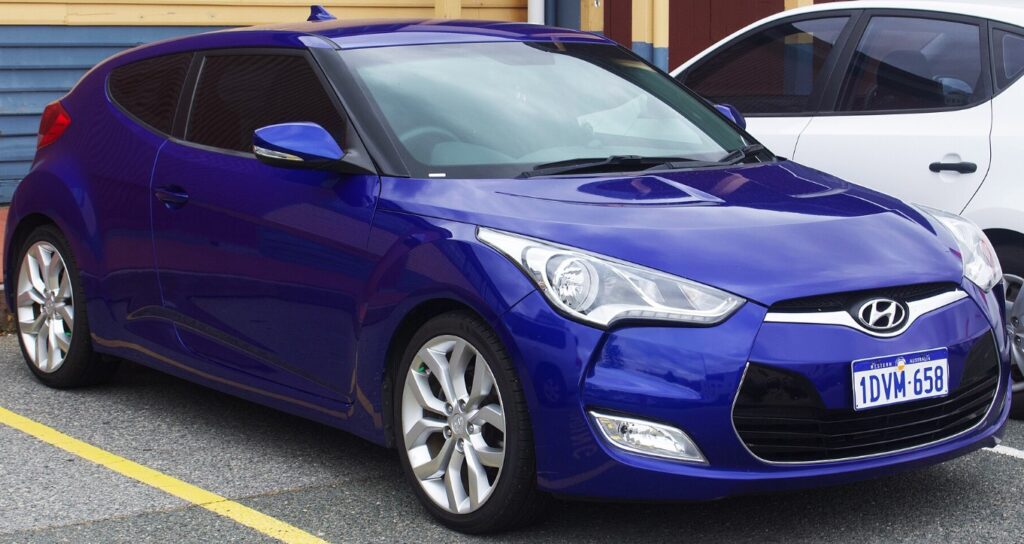
The Hyundai Veloster N specs tell us almost everything we need to know about why this strange-looking three-door hatchback earned such a loyal following. It combines a turbocharged 2.0-liter engine, front-wheel drive, an electronically controlled limited-slip differential, adaptive suspension, oversized brakes, and enough exhaust drama to make an ordinary grocery run feel like a qualifying lap.
Yet numbers alone don't explain the Veloster N.
On paper, 275 horsepower hardly sounds outrageous when modern performance cars casually push beyond 400 horsepower. Drive the Veloster N, though, and those numbers suddenly make sense. Hyundai built the car around usable performance rather than chasing an enormous horsepower figure. The engine, transmission, differential, chassis, steering, brakes, and exhaust work together like members of a well-rehearsed band.
For shoppers researching a used example today, there's another complication. Earlier Veloster N models could have either 250 or 275 horsepower depending on equipment, while later U.S.-market cars standardized the stronger engine configuration. Transmission choices also expanded when Hyundai introduced its eight-speed wet dual-clutch transmission.
So, what exactly are the Hyundai Veloster N specifications? Let's break them down.
Content in this publication
- Hyundai Veloster N Specs at a Glance
- What Engine Does the Hyundai Veloster N Have?
- Hyundai Veloster N Transmission Specs
- How Fast Is the Hyundai Veloster N?
- Hyundai Veloster N Weight
- Front-Wheel Drive Done Properly
- Hyundai Veloster N Suspension Specs
- Hyundai Veloster N Brake Specs
- Hyundai Veloster N Wheel and Tire Specs
- Hyundai Veloster N Dimensions
- The Veloster's Strange Three-Door Layout
- Hyundai Veloster N Interior Specs
- Hyundai Veloster N Fuel Economy
- Hyundai Veloster N Exhaust Specs and Sound
- Hyundai Veloster N Drive Modes
- Earlier 250 HP vs 275 HP Veloster N Specs
- Manual vs DCT Hyundai Veloster N Specs
- What Makes the Veloster N Specs Special?
- How the Veloster N Compares With Modern Hot Hatches
- Is the Hyundai Veloster N Still Worth Buying?
- Final Thoughts on Hyundai Veloster N Specs
- Frequently Asked Questions About Hyundai Veloster N Specs
Hyundai Veloster N Specs at a Glance
For the final 2022 U.S.-market Veloster N, the headline specifications look like this:
| Specification | Hyundai Veloster N |
|---|---|
| Engine | 2.0-liter turbocharged inline-four |
| Displacement | 1,998 cc |
| Horsepower | 275 hp at 6,000 rpm |
| Torque | 260 lb-ft at 1,450 rpm |
| DCT N Grin Shift torque | Up to 278 lb-ft temporarily |
| Drivetrain | Front-wheel drive |
| Manual transmission | 6-speed |
| Automatic transmission | 8-speed wet dual-clutch |
| Seating capacity | 4 |
| Wheelbase | 104.3 in |
| Width | 71.3 in |
| Height | 54.9 in |
| Fuel tank | 13.2 gal |
| Wheels | 19 x 8 in |
| Tires | 235/35R19 |
| Front brakes | 13.6-in ventilated discs |
| Rear brakes | 12.4-in ventilated discs |
| Cargo space, seats up | 19.9 cu ft |
| Cargo space, seats folded | 44.5 cu ft |
The 2022 manual model is listed with 275 horsepower and 260 lb-ft of torque, while its EPA fuel-economy rating is 22 mpg city, 28 highway, and 25 combined.
Already, we can see what Hyundai was trying to create. This isn't simply a Veloster with a larger turbocharger bolted under the hood. Nearly every important mechanical component was tuned around performance.
What Engine Does the Hyundai Veloster N Have?
The heart of the Veloster N is its 2.0-liter turbocharged and intercooled four-cylinder gasoline engine.
It uses direct fuel injection and produces 275 horsepower at 6,000 rpm in the later U.S.-market specification. Peak torque arrives remarkably early at 1,450 rpm, giving the little Hyundai strong midrange punch.
That early torque matters.
You don't need to wring the engine to redline every time you want meaningful acceleration. Press the accelerator in the middle of the rev range and the turbocharged four-cylinder responds quickly, making the car feel more muscular than its displacement suggests.
Hyundai Veloster N Horsepower
The specification most people search first is simple:
275 horsepower at 6,000 rpm.
However, early cars require some explanation.
The original Veloster N could be configured with a 250-hp version of the 2.0-liter turbo engine. Hyundai offered a Performance Package that increased output to 275 horsepower while also adding significant hardware, including larger brakes, 19-inch wheels, the N Corner Carving Differential, and a variable exhaust system. Hyundai's original brochure confirms the 250-hp standard setup and optional 275-hp Performance Package.
Later U.S. cars essentially absorbed the desirable Performance Package equipment into the standard specification.
That makes late-model examples especially appealing on the used market.
Hyundai Veloster N Torque
Peak torque for the conventional Veloster N specification is:
260 lb-ft at 1,450 rpm.
That's an interesting number because torque arrives almost immediately once the turbocharger comes alive.
Imagine horsepower as how hard a runner can ultimately sprint and torque as how aggressively they leap from the starting blocks. The Veloster N launches into its useful powerband early.
N Grin Shift Changes the Equation
Choose the eight-speed dual-clutch model and there's another trick hiding behind the steering wheel.
Press the N Grin Shift, or NGS, button and the car temporarily increases turbocharger boost while sharpening transmission response.
Hyundai says N Grin Shift raises torque from roughly 260 lb-ft to about 278 lb-ft for 20 seconds.
Is it necessary?
Absolutely not.
Is pressing a button labeled "NGS" before an overtake entertaining?
Definitely.
Hyundai Veloster N Transmission Specs
One of the best things about the Veloster N is that Hyundai gave buyers two genuinely interesting transmissions rather than treating the manual gearbox as an afterthought.
Six-Speed Manual Transmission
Traditionalists get a six-speed manual transmission with rev matching.
The gearbox is part of the Veloster N's personality. Instead of simply chasing the fastest acceleration time possible, the manual asks us to participate.
Heel-and-toe downshifts aren't mandatory either because Hyundai's automatic rev-matching system can blip the throttle during downshifts.
Drivers who prefer doing everything themselves can disable it.
For the 2022 manual, the final-drive ratio is 4.33:1.
The result is relatively short gearing that complements the punchy turbocharged engine.
Eight-Speed Wet Dual-Clutch Transmission
Hyundai later added an eight-speed wet dual-clutch transmission, commonly abbreviated N DCT.
Calling it simply an "automatic" undersells what Hyundai engineered.
A wet DCT uses oil to cool its clutch assemblies, making the transmission better suited to repeated high-load driving than many conventional dry-clutch designs.
It also includes several performance functions:
- N Grin Shift: temporarily maximizes engine and transmission performance.
- N Power Shift: helps maintain acceleration during aggressive upshifts.
- N Track Sense Shift: recognizes enthusiastic driving and selects gears accordingly.
Hyundai designed N Track Sense Shift to detect conditions associated with dynamic driving and automatically choose more aggressive shift strategies.
The system sounds gimmicky until you experience a transmission holding the right gear through a corner instead of immediately hunting for a higher one.
How Fast Is the Hyundai Veloster N?
Here's where the spec sheet turns into something more interesting.
A 275-hp front-wheel-drive hatchback weighing around 3,100 pounds is already promising. Add a quick dual-clutch gearbox and a limited-slip differential, and acceleration becomes legitimately impressive.
Hyundai Veloster N 0-60 MPH Time
Independent testing demonstrates how much transmission choice affects acceleration.
Car and Driver recorded a 5.2-second 0-60 mph run with a 2022 six-speed manual Veloster N. The same publication previously recorded 4.8 seconds with an eight-speed DCT example.
That's properly quick.
Even more importantly, the car doesn't need supercar levels of speed to feel exciting. You can explore a meaningful portion of its performance without immediately traveling at absurd velocities.
Quarter-Mile Performance
Car and Driver's 2022 manual test produced:
13.8 seconds at 104 mph.
Its DCT test was quicker at:
13.4 seconds at 105 mph.
Those numbers put the Veloster N firmly into serious sport-compact territory.
Hyundai Veloster N Top Speed
Hyundai's claimed top speed is approximately:
155 mph.
Realistically, very few owners will ever approach that outside a controlled environment or appropriate closed course.
The more relevant takeaway is that Hyundai didn't design the Veloster N merely to feel fast around town. Its cooling, brakes, chassis, tires, differential, and drivetrain were engineered with sustained performance in mind.
Hyundai Veloster N Weight
Weight is one of the Veloster N's secret weapons.
The 2022 manual specification is roughly 3,100 pounds, with published figures varying slightly depending on methodology and equipment. Car and Driver measured its 2022 manual test car at 3,096 pounds, while its DCT test example weighed 3,186 pounds.
That's relatively light by modern performance-car standards.
Why does that matter?
Because weight affects practically everything.
A lighter vehicle generally needs less power to accelerate, places less stress on its brakes, changes direction more willingly, and asks less from its tires.
Horsepower grabs headlines. Weight determines how much work that horsepower has to do.
Manual vs DCT Weight
The manual has another advantage besides driver involvement: simplicity keeps mass down.
The dual-clutch gearbox adds weight but compensates with faster shifts and launch performance.
So we get two distinct personalities.
The manual feels more mechanical.
The DCT feels more relentless.
Neither approach is automatically better.
Front-Wheel Drive Done Properly
Some enthusiasts see "front-wheel drive" and immediately imagine wheelspin, torque steer, and understeer.
The Veloster N demonstrates why drivetrain layout alone doesn't determine handling quality.
Instead of simply dumping 275 horsepower through an open front differential and hoping the tires survive, Hyundai equips the N with its electronically controlled N Corner Carving Differential, effectively an electronic limited-slip differential.
Why the Limited-Slip Differential Matters
During hard cornering, an ordinary open differential can send too much power toward the inside tire just as that tire becomes unloaded.
Spin follows.
Acceleration disappears.
The Veloster N's electronically controlled differential helps distribute power where it can actually be used.
That means we can apply throttle earlier while exiting a corner without immediately turning the front tires into expensive smoke generators.
It fundamentally changes how the car behaves.
Hyundai Veloster N Suspension Specs
Hyundai didn't simply lower the standard Veloster and install stiffer springs.
The N gets an electronically controlled suspension with multiple damping settings.
Up front, it uses a MacPherson-strut configuration, while the rear employs a multi-link suspension.
That multi-link rear design helps Hyundai balance daily usability with the precise wheel control required during aggressive cornering.
Electronically Controlled Dampers
Adaptive dampers allow the car to change personality depending on the selected drive mode.
You can soften things for ordinary roads and stiffen the dampers when conditions call for sharper body control.
That doesn't make the Veloster N luxurious.
It's still a performance hatchback with short tire sidewalls.
But the adjustability gives owners something fixed-rate dampers cannot: choice.
N Custom Mode Makes the Difference
The Veloster N's N Custom mode may be one of its smartest features.
Instead of forcing every component into the same predetermined setting, it lets the driver configure individual systems.
Depending on model and transmission, adjustable parameters include things such as:
- Engine response
- Steering weight
- Suspension stiffness
- Rev matching
- Electronic differential behavior
- Stability control
- Exhaust sound
- Transmission behavior
Why is that useful?
Because maximum stiffness isn't always maximum performance.
On a rough road, softer dampers may actually keep the tires in better contact with the pavement.
The ability to mix aggressive engine settings with more compliant suspension tuning makes the Veloster N surprisingly adaptable.
Hyundai Veloster N Brake Specs
Performance doesn't mean much if the car can't repeatedly slow itself down.
Later U.S.-market Veloster N models use substantial ventilated disc brakes:
Front: 13.6 inches
Rear: 12.4 inches
Those figures match the upgraded braking hardware that originally formed part of the Performance Package.
For a compact hatchback weighing only a little over 3,000 pounds, those are serious brakes.
Car and Driver recorded a 70-0 mph stopping distance of 161 feet for its 2022 manual test car.
Why Bigger Brakes Matter Beyond Stopping Distance
The first hard stop is only half the story.
Repeated braking generates heat.
Heat changes pedal feel and can eventually reduce braking effectiveness.
Larger rotors provide greater thermal capacity, which is why brake size becomes increasingly important during mountain driving, autocross, or track use.
Hyundai Veloster N Wheel and Tire Specs
Later Veloster N models wear:
19 x 8-inch wheels
with:
235/35R19 performance tires.
The factory setup used specially developed Pirelli P Zero PZ4 summer tires carrying Hyundai's N-specific designation.
These aren't ordinary economy-car tires.
The 235-mm section width gives the front axle the footprint needed to transfer both steering and acceleration forces to the pavement.
The Downside of 19-Inch Wheels
There is a compromise.
A 35-series tire has a thin sidewall.
Thin sidewalls improve steering response but provide less cushioning against potholes, broken pavement, and sharp road impacts.
Anyone buying a used Veloster N should inspect all four wheels carefully for bends, cracks, or evidence of repeated pothole encounters.
Performance tires also wear faster than ordinary touring tires and generally perform poorly in cold winter conditions.
Hyundai Veloster N Dimensions
The Veloster N remains genuinely compact.
Key U.S. dimensions include:
- Wheelbase: 104.3 inches
- Overall width: 71.3 inches
- Overall height: 54.9 inches
- Length: roughly 167 inches depending on source/model configuration
Hyundai's early brochure lists 167.9 inches overall, while some later specification databases list 166.9 inches, so shoppers may see both measurements depending on model-year documentation.
The short wheelbase and compact footprint help explain why the Veloster N feels so eager to rotate through corners.
It's small enough for crowded cities but wide enough to provide a planted stance.
The Veloster's Strange Three-Door Layout
Then there's the feature everyone notices.
The Veloster isn't a conventional two-door coupe.
It isn't a conventional four-door hatchback either.
Instead, Hyundai gave it one conventional front door on the driver's side and two doors on the passenger side, plus the rear hatch.
It's wonderfully odd.
Does the Layout Actually Work?
Surprisingly, yes.
The extra passenger-side rear door makes accessing the back seat considerably easier than in a traditional coupe.
Meanwhile, the driver's side maintains a cleaner coupe-like appearance.
Is this objectively better than four normal doors?
Probably not.
But normal wasn't exactly the mission.
The Veloster N has personality because Hyundai repeatedly chose interesting solutions instead of predictable ones.
Hyundai Veloster N Interior Specs
Despite the aggressive exterior, the Veloster N remains a practical four-passenger hatchback.
Important interior dimensions include:
Front headroom: 38.1 inches
Rear headroom: 35.9 inches
Front legroom: 42.6 inches
Rear legroom: 34.1 inches
Front shoulder room: 56.0 inches
Rear shoulder room: 54.3 inches
Hyundai's specifications also list 19.9 cubic feet of cargo room behind the rear seats and 44.5 cubic feet with the rear seat folded.
That's enough versatility to separate the Veloster N from many similarly priced sports cars.
Performance Seats
Later cars received lightweight N sport seats with pronounced bolsters.
They're designed to hold occupants in place during cornering rather than letting them slide across the cabin like loose luggage.
Some versions also feature illuminated N logos integrated into the seatbacks.
It's theatrical.
But this is an N car. A little theater belongs here.
Hyundai Veloster N Fuel Economy
Nobody buys a Veloster N because they want to set hypermiling records.
Still, fuel economy is respectable considering the performance.
The 2022 six-speed manual is EPA-rated at approximately:
22 mpg city
28 mpg highway
25 mpg combined
The eight-speed DCT carries lower official numbers of approximately:
20 mpg city
27 mpg highway
22 mpg combined.
Interestingly, real highway results can be better. Car and Driver recorded 30 mpg during its 75-mph highway test of a DCT Veloster N.
Fuel Tank Capacity
Fuel capacity is approximately:
13.2 gallons.
That's perfectly adequate for the car's size, though enthusiastic driving can naturally make the fuel gauge move considerably faster.
Turbochargers aren't magic.
More boost plus more fuel equals more power.
Hyundai Veloster N Exhaust Specs and Sound
Few affordable performance cars make their personality as obvious as the Veloster N.
The active exhaust system uses a variable valve to alter the exhaust note depending on drive mode.
In calmer settings, it behaves reasonably.
Select an aggressive N setting and things change.
Crackles appear.
Pops arrive during shifts and deceleration.
The car suddenly sounds as though it's celebrating every gear change.
Is the Exhaust Just a Gimmick?
Partly.
And that's perfectly fine.
Performance cars have always been emotional products.
We don't need louder exhausts, dramatic shift lights, red trim, or oversized wings to travel from one location to another.
But eliminating every unnecessary feature would turn the automotive world into a parking lot filled with refrigerators.
The Veloster N embraces unnecessary fun.
Hyundai Veloster N Drive Modes
The car includes multiple drive modes that alter its behavior.
Typical selections include:
Eco for calmer response and everyday cruising.
Normal for balanced daily driving.
Sport for sharper responses.
N for maximum aggression.
N Custom for mixing individual settings.
N Custom is the star because it acknowledges something enthusiasts already know: the stiffest suspension setting isn't necessarily what we want every time we request aggressive throttle mapping.
Earlier 250 HP vs 275 HP Veloster N Specs
Used-car shoppers need to pay special attention here.
Early Veloster N models could produce 250 horsepower without the Performance Package.
Adding the Performance Package raised output to 275 horsepower while also bringing the active exhaust, electronic limited-slip differential, larger brakes, 19-inch wheels, and 235/35R19 tires.
That equipment transforms more than straight-line speed.
Which Version Should We Buy?
If prices are close, we'd generally prefer the 275-hp Performance Package car or one of the later models where that specification effectively became standard.
The extra 25 horsepower is nice.
The differential, brakes, exhaust, wheels, and supporting hardware matter even more.
This is why simply asking how much horsepower a used Veloster N has doesn't tell the whole story.
Manual vs DCT Hyundai Veloster N Specs
Choosing between the two transmissions changes the character of the car more than the basic specifications suggest.
| Feature | 6-Speed Manual | 8-Speed DCT |
| Horsepower | 275 hp | 275 hp |
| Standard torque | 260 lb-ft | 260 lb-ft |
| Temporary overboost | No | Up to about 278 lb-ft |
| Driver involvement | Highest | Moderate |
| Shift speed | Driver dependent | Extremely quick |
| 0-60 potential | Around 5.2 sec | Around 4.8 sec |
| Weight | Lower | Higher |
| Best for | Engagement | Maximum acceleration |
Independent testing produced approximately 5.2 seconds to 60 mph for the manual and 4.8 seconds for the DCT.
Which One Is Better?
Want the fastest Veloster N?
Get the DCT.
Want the version that makes an ordinary 40-mph road interesting because you're choosing gears yourself?
Get the manual.
Neither decision is wrong.
That's exactly why enthusiasts still debate it.
What Makes the Veloster N Specs Special?
We can easily find cars with more horsepower.
We can find vehicles with faster 0-60 times.
We can find luxury interiors, AWD systems, bigger touchscreens, and larger engines.
Yet the Veloster N specifications reveal something increasingly uncommon: a performance car whose components were designed around a coherent idea.
The engine provides enough power without completely overwhelming the chassis.
The differential helps deploy that power.
The suspension lets us adjust how aggressively the chassis responds.
The brakes are large enough to support serious driving.
The tires provide meaningful grip.
The exhaust supplies personality.
The manual gearbox gives us interaction, while the DCT gives us speed.
Nothing dominates the experience.
Everything contributes.
How the Veloster N Compares With Modern Hot Hatches
Against something like a Volkswagen Golf GTI, the Veloster N feels less mature but more mischievous.
Against a Civic Type R, it's generally less powerful and less serious, but its dimensions and personality make it approachable.
Compared with rear-wheel-drive cars such as the Toyota GR86 or Subaru BRZ, the Veloster N offers more torque, more cargo flexibility, and a completely different front-drive driving style.
That's where spec-sheet comparisons become dangerous.
Cars aren't CPUs.
The one with the highest number doesn't automatically win.
The Specification That Matters Most
If we had to choose one Hyundai Veloster N specification that best explains the car, it wouldn't be horsepower.
It would be curb weight.
Around 3,100 pounds plus 275 turbocharged horsepower gives the N enough performance to feel genuinely fast without becoming numb.
Modern vehicles continue getting larger and heavier.
The Veloster N comes from a slightly different philosophy: give a relatively small machine enough power, excellent chassis hardware, and room to play.
Is the Hyundai Veloster N Still Worth Buying?
Hyundai discontinued the Veloster N after the 2022 model year in the United States, leaving the used market as the primary way to buy one today. Car and Driver reported the model's discontinuation while Hyundai continued expanding the N brand through vehicles such as the Elantra N.
That discontinuation arguably makes the Veloster N more interesting.
It belongs to a shrinking category of small, relatively lightweight, gasoline-powered performance hatchbacks available with a manual gearbox.
What to Check Before Buying One
Because the Veloster N invites enthusiastic driving, maintenance history matters considerably.
Look closely at:
- Tire condition and matching tire brands
- Wheel damage
- Brake rotor and pad wear
- Clutch operation on manual cars
- DCT behavior when warm
- Suspension noises
- Evidence of aftermarket tuning
- Exhaust modifications
- Accident repairs
- Service records
A completely stock car isn't automatically better, and a modified car isn't automatically bad.
The question is whether modifications were intelligently installed and whether the vehicle received proper maintenance afterward.
Final Thoughts on Hyundai Veloster N Specs
The Hyundai Veloster N specs explain why this unusual hatchback became one of Hyundai's most important enthusiast cars.
Its 2.0-liter turbocharged engine produces 275 horsepower and 260 lb-ft of torque. Buyers can pair it with an engaging six-speed manual or an extremely quick eight-speed wet dual-clutch transmission. An electronic limited-slip differential helps the front tires put that power down, adaptive dampers reshape the chassis depending on conditions, and large ventilated brakes provide genuine stopping hardware.
Then Hyundai wrapped everything inside one of the strangest hatchback bodies of the modern era.
That's precisely the charm.
The Veloster N doesn't behave like a car created entirely by spreadsheets. It feels like engineers were allowed to ask, "What would make this more entertaining?"
Then they kept answering that question.
More exhaust noise.
Better differential.
Bigger brakes.
Adjustable suspension.
Rev matching.
N Grin Shift.
Three doors instead of four because—well, why not?
Today, 275 horsepower may not sound enormous. But performance isn't simply about creating the largest number possible.
The Veloster N reminds us that the right amount of power in the right chassis can be far more entertaining than excessive power in the wrong one.
And that's why its specifications still deserve attention.
Frequently Asked Questions About Hyundai Veloster N Specs
1. How much horsepower does the Hyundai Veloster N have?
Later U.S.-market Hyundai Veloster N models produce 275 horsepower at 6,000 rpm from their 2.0-liter turbocharged four-cylinder engine. Earlier models could have 250 horsepower unless equipped with the Performance Package, which raised output to 275 horsepower.
2. How much torque does the Hyundai Veloster N make?
The standard specification is 260 lb-ft of torque, with peak torque arriving from very low engine speeds. DCT-equipped models can temporarily increase torque to approximately 278 lb-ft when N Grin Shift activates turbocharger overboost.
3. What is the Hyundai Veloster N 0-60 time?
Acceleration varies by transmission and testing conditions. Car and Driver recorded approximately 5.2 seconds with a 2022 six-speed manual and 4.8 seconds with a DCT-equipped example.
4. Is the Hyundai Veloster N AWD?
No. The Hyundai Veloster N uses front-wheel drive. However, its electronically controlled N Corner Carving Differential helps distribute torque between the front wheels, improving traction when accelerating through corners.
5. What transmission does the Hyundai Veloster N have?
Depending on model year and specification, the Veloster N can use either a six-speed manual transmission with rev matching or an eight-speed wet dual-clutch transmission. The DCT also features N-specific functions including N Grin Shift, N Power Shift, and N Track Sense Shift.
If you want to know other articles similar to Hyundai Veloster N Specs: Complete Performance Guide you can visit the category Service and Parts.
Vauxhall Mokka Tyre Pressure Reset: Complete Guide
How to Reset the Tire Pressure System on Your Hyundai Tucson
Hyundai Kona Tire Pressure: Complete PSI Guide
Vauxhall Corsa Timing Belt Replacement Cost UK 2026

Mazda CX-5 Tire Size Chart: 2013–2026 Guide

How to Reset a Honda Civic: Complete Step-by-Step Guide
Leave a Reply
More content of your interest