
Subaru Impreza Km Per Litre: Real-World Fuel Economy Guide

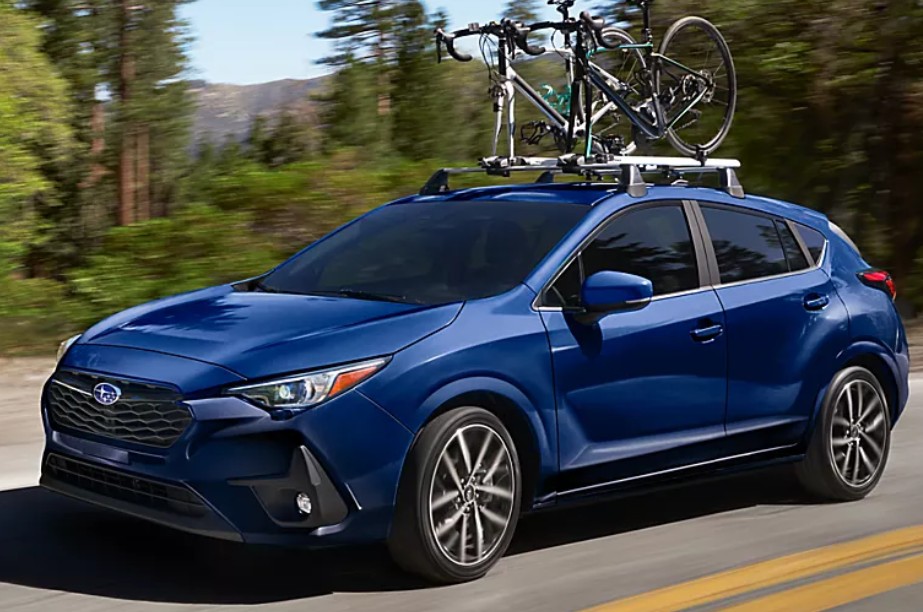
When we look at Subaru Impreza km per litre figures, there is no single number that applies to every Impreza ever sold. Engine size, transmission, model year, driving environment, tyre pressure, temperature, traffic, and even how aggressively we use the accelerator can change the result.
Still, there is a useful benchmark.
A modern petrol Subaru Impreza will generally sit somewhere around 12 to 14 km/L in mixed driving under official test conditions, while highway efficiency can climb beyond 15 km/L in favorable circumstances. Heavy urban driving can push consumption closer to 9–11 km/L.
For example, Subaru Australia lists the MY26 Impreza 2.0L at 7.5 L/100 km combined, which converts to roughly 13.3 km/L. Its extra-urban figure of 6.2 L/100 km works out to approximately 16.1 km/L, while the 9.7 L/100 km urban figure corresponds to roughly 10.3 km/L. Subaru itself notes that real-world results vary with traffic, driving style, modifications, fuel quality, and climate.
So, what can we realistically expect from an Impreza? Let's dig into the numbers rather than treating one laboratory figure like it was carved into stone.
Content in this publication
- How Many Km Per Litre Does a Subaru Impreza Get?
- Subaru Impreza Fuel Economy in Km/L at a Glance
- How to Convert Subaru Impreza L/100 Km to Km Per Litre
- Current Subaru Impreza Km Per Litre
- Subaru Impreza 2.0 Km Per Litre
- Subaru Impreza 2.5 Km Per Litre
- Subaru Impreza Manual vs CVT Fuel Economy
- Older Subaru Impreza Km Per Litre
- Real-World Subaru Impreza Fuel Consumption
- Subaru Impreza City Km Per Litre
- Subaru Impreza Highway Km Per Litre
- Does Subaru AWD Reduce Km Per Litre?
- How Far Can a Subaru Impreza Travel on One Tank?
- How to Measure Your Impreza's Real Km Per Litre
- How to Improve Subaru Impreza Km Per Litre
- Is Subaru Impreza Fuel Economy Good?
- What Is a Good Km/L Figure for a Used Impreza?
- Why Has My Subaru Impreza Km/L Suddenly Dropped?
- Subaru Impreza Km Per Litre vs Driving Style
- Is the Subaru Impreza Economical Enough for Daily Driving?
- Final Thoughts on Subaru Impreza Km Per Litre
- Frequently Asked Questions
How Many Km Per Litre Does a Subaru Impreza Get?
For a relatively recent 2.0-litre Subaru Impreza with a CVT, a sensible overall expectation is approximately:
- Urban driving: around 9–11 km/L
- Mixed driving: around 12–14 km/L
- Open-road driving: around 14–16+ km/L
- Very economical highway driving: potentially slightly higher
- Older, manual, turbocharged, or poorly maintained versions: potentially below these ranges
These aren't promises. They're practical reference points.
Official figures are measured in controlled test cycles, while real driving is messier. Traffic lights don't care about laboratory procedures. Neither do steep hills, freezing mornings, roof racks, passengers, luggage, or a driver's heavy right foot.
That's why two people can own virtually identical Imprezas and report noticeably different fuel economy.
Subaru Impreza Fuel Economy in Km/L at a Glance
A useful way to understand Impreza efficiency is to convert common consumption figures from litres per 100 kilometres into kilometres per litre.
| Fuel Consumption | Approx. Km/L |
|---|---|
| 5.5 L/100 km | 18.2 km/L |
| 6.0 L/100 km | 16.7 km/L |
| 6.2 L/100 km | 16.1 km/L |
| 6.5 L/100 km | 15.4 km/L |
| 7.0 L/100 km | 14.3 km/L |
| 7.5 L/100 km | 13.3 km/L |
| 8.0 L/100 km | 12.5 km/L |
| 9.0 L/100 km | 11.1 km/L |
| 10.0 L/100 km | 10.0 km/L |
| 11.0 L/100 km | 9.1 km/L |
The relationship is simple: the lower the L/100 km figure, the higher the km/L figure.
That sometimes confuses drivers moving between countries because the two measurements work in opposite directions.
How to Convert Subaru Impreza L/100 Km to Km Per Litre
The formula is refreshingly simple:
Km/L = 100 ÷ L/100 km
Suppose our Impreza's dashboard displays:
7.5 L/100 km
We calculate:
100 ÷ 7.5 = 13.33 km/L
If consumption improves to 6.5 L/100 km:
100 ÷ 6.5 = 15.38 km/L
And if heavy city traffic pushes it to 10 L/100 km:
100 ÷ 10 = 10 km/L
Think of km/L as asking, "How far can we travel using one litre?"
L/100 km asks the opposite question: "How many litres do we need to travel 100 kilometres?"
Converting MPG to Subaru Impreza Km/L
North American specifications normally use miles per gallon.
For US MPG:
1 MPG ≈ 0.425 km/L
A 30 MPG Subaru Impreza therefore works out at roughly:
30 × 0.425 = 12.75 km/L
A 34 MPG figure corresponds to approximately 14.5 km/L.
This matters when comparing specifications from American and metric-market websites.
Current Subaru Impreza Km Per Litre
One of the clearest current metric references comes from Subaru Australia.
The MY26 Impreza uses a 2.0-litre naturally aspirated Boxer petrol engine and Lineartronic CVT. Subaru quotes:
Combined: 7.5 L/100 km ≈ 13.3 km/L
Urban: 9.7 L/100 km ≈ 10.3 km/L
Extra urban: 6.2 L/100 km ≈ 16.1 km/L
Those numbers nicely illustrate how dramatically driving environment changes efficiency.
A flowing country road is the Impreza's economical jog. Congested urban traffic is more like running stairs while carrying groceries.
What About the US-Spec Impreza?
The picture is similar in the United States.
For the 2025 model, Subaru lists the regular Impreza and Impreza Sport at 27 MPG city, 34 MPG highway, and 30 MPG combined. The more powerful 2.5-litre RS is rated at 26/33/29 MPG.
Converted approximately into kilometres per litre, those combined figures equal:
30 MPG ≈ 12.8 km/L
29 MPG ≈ 12.3 km/L
The difference is understandable. The RS trades a little economy for its larger 2.5-litre engine and stronger performance.
Subaru Impreza 2.0 Km Per Litre
The 2.0-litre Impreza is arguably the model most drivers have in mind when searching for Impreza fuel consumption.
For newer CVT-equipped versions, roughly 12–14 km/L combined is a fair reference range, although road conditions can push the number substantially higher or lower.
Highway driving usually provides the strongest result because the engine isn't repeatedly accelerating the car from a standstill.
Once we reach a steady cruising speed, maintaining momentum requires considerably less energy than rebuilding it after every red light.
Is 13 Km/L Good for a Subaru Impreza?
Yes.
Around 13 km/L from a petrol Impreza represents respectable mixed-driving fuel efficiency, particularly because the Impreza traditionally carries standard all-wheel drive in many markets.
All-wheel-drive systems have benefits in traction and stability, but they also introduce extra components, rotating mass, and mechanical losses compared with many basic front-wheel-drive economy cars.
That context matters.
We shouldn't expect a full-time AWD compact to sip fuel exactly like the lightest front-wheel-drive hatchback.
Subaru Impreza 2.5 Km Per Litre
Larger-engine Imprezas generally consume slightly more fuel.
The current US Impreza RS provides a good example. Its 2.5-litre Boxer engine produces more power than the standard 2.0-litre version but carries a slightly lower official economy rating.
Subaru lists the 2024 RS at 26 MPG city, 33 highway, and 29 combined, versus 27/34/30 MPG for the regular 2.0-litre Impreza.
That converts to roughly 12.3 km/L combined for the RS.
The penalty isn't enormous, but there's no free lunch. More displacement and performance generally ask for a little more fuel.
Subaru Impreza Manual vs CVT Fuel Economy
Here's where the story becomes interesting.
People sometimes assume a manual transmission must be more economical because the driver controls the gears. That used to be broadly true. Modern CVTs, however, can keep an engine close to its most efficient operating range with remarkable consistency.
The 2023 US Impreza demonstrates the difference nicely.
Subaru rated the regular CVT sedan at 32 MPG combined, while manual versions were rated at 26 MPG combined. Depending on body style and trim, the numbers varied slightly, but the CVT maintained a substantial official advantage.
Converted to metric:
32 MPG ≈ 13.6 km/L
You may be interested in reading Hyundai Palisade Diesel Fuel Economy: What Can We Really Expect?
26 MPG ≈ 11.1 km/L
That's a meaningful difference.
Why Can the CVT Be More Efficient?
A CVT isn't locked into a handful of fixed gear ratios.
Instead, it can continuously adjust the ratio according to throttle demand, vehicle speed, and engine load.
Imagine riding a bicycle where the gearing could change infinitely rather than clicking through six separate gears. That's essentially the principle.
Subaru also describes its current Lineartronic CVT as selecting an appropriate ratio according to driving style and conditions.
Does That Mean the Manual Is Bad?
Not at all.
A manual Impreza can still deliver acceptable economy, especially with a careful driver.
But if maximum fuel efficiency is our priority, many newer CVT-equipped Imprezas hold the advantage.
Older Subaru Impreza Km Per Litre
Older Imprezas can vary enormously.
Engine technology, transmission design, vehicle weight, emission standards, gearing, turbocharging, and AWD hardware all changed during the Impreza's long production history.
As one historical reference point, Subaru Australia listed the 2012 Impreza 2.0i Lineartronic at 6.8 L/100 km combined, equivalent to approximately 14.7 km/L under that test procedure. The six-speed manual was listed at 7.1 L/100 km, or roughly 14.1 km/L.
Those are official laboratory numbers rather than guarantees of today's real-world performance from a used vehicle.
A 14-year-old Impreza with worn tyres, old spark plugs, tired sensors, thick fluids, or neglected maintenance won't necessarily reproduce the figure it achieved when new.
Real-World Subaru Impreza Fuel Consumption
Official ratings are best treated as comparison tools.
They allow us to compare two vehicles under standardized conditions. They aren't precise predictions of what we'll see every Monday morning while crawling through traffic.
Even Subaru's current specifications explicitly warn that real-world results can change according to traffic, driving style, fuel quality, climate, and modifications.
Why Real Fuel Economy Can Be Lower
Several everyday situations hurt km/L:
- Short journeys with a cold engine
- Constant stop-start traffic
- Fast acceleration
- High motorway speeds
- Low tyre pressure
- Heavy cargo
- Roof racks or roof boxes
- Strong headwinds
- Mountain driving
- Long periods of idling
- Air-conditioning use
- Mechanical problems
- Winter conditions
No single factor always causes catastrophic consumption. The problem is accumulation.
One slightly underinflated tyre may barely register. Add four low tyres, roof bars, heavy traffic, aggressive acceleration, and short trips, and the efficiency loss begins stacking like coins.
Subaru Impreza City Km Per Litre
City driving is typically the Impreza's toughest environment for fuel economy.
The current Australian figures show why: 9.7 L/100 km urban, equivalent to about 10.3 km/L, versus roughly 16.1 km/L on the extra-urban cycle.
That's a huge difference from the same car.
Why City Driving Uses More Petrol
Every time we accelerate from zero, the engine has to overcome the vehicle's inertia.
Then we brake and throw much of that energy away as heat.
Thirty seconds later, we do it again.
Highway cruising is different. Once the car is moving steadily, it mostly needs enough power to fight aerodynamic drag, tyre resistance, and mechanical losses.
That's why a commute full of traffic lights can make an otherwise efficient Impreza look unexpectedly thirsty.
Subaru Impreza Highway Km Per Litre
Highway economy is where the Impreza can shine.
Official extra-urban consumption of 6.2 L/100 km for the current Australian model translates into around 16.1 km/L.
However, cruising speed matters.
There's often a sweet spot at moderate speeds where the engine is relaxed and aerodynamic drag hasn't become overwhelming.
Drive dramatically faster and fuel economy can deteriorate even if the road remains completely clear.
Why Speed Matters More Than We Think
Air resistance doesn't increase in a simple one-to-one relationship with speed.
As speed rises, aerodynamic drag increases rapidly. The engine has to work progressively harder simply to push the car through the atmosphere.
In other words, the accelerator can quietly become a fuel tap.
A calm 90–100 km/h cruise may produce noticeably better km/L than sustained high-speed motorway travel.
Does Subaru AWD Reduce Km Per Litre?
To some degree, yes.
A conventional front-wheel-drive economy car only needs to transmit engine power through one driven axle.
Subaru's Symmetrical AWD system drives all four wheels, giving the Impreza a traction advantage but adding drivetrain components and associated losses.
Current Imprezas continue to use standard Symmetrical All-Wheel Drive in markets such as the United States and Australia.
That makes the Impreza's economy more impressive than the raw number might initially suggest.
We're not comparing identical mechanical packages when we put it beside a lighter two-wheel-drive economy hatch.
How Far Can a Subaru Impreza Travel on One Tank?
This depends on both tank size and actual km/L.
For example, the current Australian Impreza specification lists a 50-litre fuel tank.
At a theoretical 13.3 km/L:
50 × 13.3 = 665 km
At 10 km/L:
50 × 10 = 500 km
At 16 km/L:
50 × 16 = 800 km
Those are mathematical estimates, not guaranteed usable driving ranges. We normally don't consume every last drop in the tank, and conditions change throughout a journey.
Still, the calculation is useful for trip planning.
A More Realistic Range Calculation
Suppose we average 12.5 km/L.
With 45 litres effectively used between fill-ups:
45 × 12.5 = 562.5 km
That's a much more conservative way to estimate practical range.
How to Measure Your Impreza's Real Km Per Litre
Don't rely exclusively on the dashboard display.
The simplest way to measure actual fuel consumption is the full-tank method.
- Fill the tank completely.
- Reset the trip meter.
- Drive normally.
- Fill the tank again at the same level.
- Record kilometres travelled.
- Record litres added.
- Divide kilometres by litres.
If we travel 540 km and refill with 42 litres:
540 ÷ 42 = 12.86 km/L
That's our measured economy for that tank.
Why One Tank Isn't Enough
A single tank can mislead us.
Maybe we had an unusual highway trip. Maybe the weather was terrible. Maybe the pump stopped earlier than usual.
You may be interested in readingHyundai Palisade Diesel Fuel Economy: What Can We Really Expect?You may be interested in reading
 What to Expect When Driving a Fiat 500: Owner's Perspective
Tracking three to five consecutive tanks gives us a far more reliable picture.
How to Improve Subaru Impreza Km Per Litre
We don't need exotic modifications to improve efficiency. Most gains come from boring habits performed consistently—and boring is beautiful when fuel is expensive.
Accelerate Smoothly
Hard acceleration demands a large amount of fuel over a short period.
We don't have to crawl away from every traffic light, but progressive throttle inputs generally keep consumption under better control.
Maintain Momentum
Looking ahead is surprisingly valuable.
If a light 200 metres away is already red, continuing at full throttle before braking heavily wastes energy.
Easing off earlier lets us preserve fuel without materially changing arrival time.
Check Tyre Pressure
Underinflated tyres increase rolling resistance.
That means the engine must work harder simply to keep the vehicle moving.
Follow the pressure specification on the vehicle's tyre placard rather than blindly using the maximum pressure molded into the tyre sidewall.
Remove Unnecessary Weight
A few small objects won't ruin fuel economy, but carrying unnecessary heavy equipment every day doesn't help.
If the boot looks like a storage locker, a cleanup is free efficiency.
Remove Roof Accessories When They're Not Needed
Roof boxes and racks interact directly with airflow.
At motorway speeds, aerodynamic drag becomes increasingly important, so leaving bulky equipment attached year-round can cost more fuel than many owners expect.
Keep the Engine Properly Maintained
Fuel economy can deteriorate when maintenance is neglected.
Depending on the vehicle, worn ignition components, incorrect oil, dirty filters, faulty sensors, dragging brakes, alignment issues, or mechanical faults can all contribute.
A sudden unexplained deterioration deserves investigation rather than being dismissed as "just an old Subaru."
Is Subaru Impreza Fuel Economy Good?
Within the context of a petrol compact car with AWD, yes.
An Impreza isn't generally the absolute efficiency champion of the small-car world. Some front-wheel-drive hybrids and lightweight economy cars will easily beat it.
But that's not quite an apples-to-apples comparison.
The Impreza combines compact-car practicality with a permanent focus on all-wheel-drive traction. Achieving roughly 12–14 km/L combined from many modern versions is a respectable balance.
Think of it like hiking boots compared with running shoes. The lighter shoe may use less energy, but the boot brings capabilities the shoe wasn't designed to provide.
What Is a Good Km/L Figure for a Used Impreza?
Instead of demanding one magic number, we should compare the car with its own expected operating environment.
As a rough guide:
10 km/L or less: believable in heavy urban driving, but worth investigating if it occurs constantly in easy conditions.
11–13 km/L: reasonable for many mixed-driving scenarios.
13–15 km/L: strong everyday efficiency for many non-turbo Imprezas.
15+ km/L: very good and more likely during favorable highway driving.
A turbocharged WRX-style Impreza, older automatic model, or modified car shouldn't necessarily be judged against the same benchmark as a modern naturally aspirated CVT hatchback.
Why Has My Subaru Impreza Km/L Suddenly Dropped?
A sudden change is more useful diagnostically than an absolute number.
If our car normally returns 13 km/L and suddenly averages 9 km/L while our route hasn't changed, something deserves attention.
Possible causes include incorrect tyre pressure, colder weather, new traffic patterns, dragging brakes, wheel alignment issues, poor-quality fuel, excessive idling, a sensor fault, or another developing mechanical problem.
Start with simple things before assuming the worst.
Check tyres. Consider recent driving conditions. Look for warning lights. Compare several tanks.
If the deterioration remains, a mechanical inspection makes sense.
Subaru Impreza Km Per Litre vs Driving Style
Two drivers can turn the same Impreza into two completely different fuel-economy stories.
Imagine Driver A.
They accelerate aggressively, brake late, idle for long periods, carry unnecessary cargo, and cruise at high speed.
Now imagine Driver B.
They accelerate progressively, anticipate traffic, maintain the car correctly, keep the tyres inflated, and cruise moderately.
The mechanical specification hasn't changed.
The driver's habits have.
Over one journey the difference may appear minor. Across 20,000 km, it can become substantial.
Should We Drive Painfully Slowly to Save Fuel?
No.
Efficient driving shouldn't mean becoming a rolling roadblock.
The goal is smoothness, anticipation, and avoiding needless energy loss—not crawling everywhere.
Is the Subaru Impreza Economical Enough for Daily Driving?
For many owners, yes.
If we achieve 13 km/L and drive 15,000 km per year, our approximate annual fuel requirement is:
15,000 ÷ 13 = 1,154 litres
At 10 km/L:
15,000 ÷ 10 = 1,500 litres
That illustrates why even small improvements matter.
Moving from 10 to 13 km/L in this example saves roughly 346 litres across 15,000 km.
Fuel efficiency isn't only a brochure contest. Over years of ownership, it becomes part of the vehicle's real operating cost.
Final Thoughts on Subaru Impreza Km Per Litre
So, how many kilometres per litre does a Subaru Impreza get?
For many modern naturally aspirated versions, around 12–14 km/L in mixed conditions is a useful expectation, with city driving often closer to 9–11 km/L and favorable highway driving potentially reaching roughly 15–16 km/L or more.
Current Australian specifications provide an excellent example: 7.5 L/100 km combined converts to around 13.3 km/L, while the 6.2 L/100 km extra-urban rating converts to approximately 16.1 km/L.
But model year matters. Engine matters. Transmission matters. And our own driving habits matter enormously.
Rather than obsessing over achieving one perfect number, we should establish our Impreza's normal baseline and watch for meaningful changes.
A consistently maintained car driven smoothly usually gives us the clearest picture of what the Impreza can really achieve.
Frequently Asked Questions
1. How many km per litre does a Subaru Impreza 2.0 get?
A modern Subaru Impreza 2.0 will commonly fall around 12–14 km/L in mixed driving, depending on the model year and conditions. Subaru Australia's current official combined figure of 7.5 L/100 km converts to approximately 13.3 km/L.
2. Is 12 km/L good for a Subaru Impreza?
Yes. 12 km/L is a reasonable real-world figure for an AWD petrol Impreza, particularly if the journey includes city traffic. Drivers covering mainly open roads may achieve noticeably better efficiency.
3. How many km can a Subaru Impreza travel on a full tank?
It depends on tank capacity and fuel economy. A 50-litre Impreza averaging 13 km/L would mathematically cover around 650 km, although practical range will be lower because drivers normally refuel before completely emptying the tank.
4. Why does my Subaru Impreza use so much fuel?
Heavy traffic, short trips, aggressive acceleration, low tyre pressure, cold weather, roof accessories, excessive weight, high cruising speeds, poor maintenance, and mechanical faults can all increase consumption. Compare several full tanks before concluding there is a problem.
You may be interested in readingHyundai Palisade Diesel Fuel Economy: What Can We Really Expect?You may be interested in reading
What to Expect When Driving a Fiat 500: Owner's PerspectiveYou may be interested in reading
 Comparing the Fiat 500e to the Traditional Fiat 500: Pros and Cons
5. Does the Subaru Impreza CVT save fuel compared with the manual?
On several recent generations, yes. For example, Subaru's 2023 US figures rated the regular CVT Impreza at as much as 32 MPG combined, while manual versions were rated at 26 MPG combined. That corresponds to roughly 13.6 versus 11.1 km/L.
If you want to know other articles similar to Subaru Impreza Km Per Litre: Real-World Fuel Economy Guide you can visit the category Driving.
Hyundai Palisade Diesel Fuel Economy: What Can We Really Expect?
Subaru Impreza Fuel Economy: MPG, Real-World Efficiency, and Driving Tips
BMW M5 Touring MPG: Fuel Economy, Electric Range, and Real-World Efficiency

Ford Edge Fuel Economy: MPG, Engines, Costs, and Real-World Efficiency
Audi A4 MPG: Fuel Economy, Real-World Mileage, and Efficiency Guide
Hyundai Palisade Fuel Consumption: MPG, Real-World Economy, Hybrid Figures, and Running Costs
Leave a Reply
More content of your interest