

Subaru Impreza Fuel Economy: MPG, Real-World Efficiency, and Driving Tips

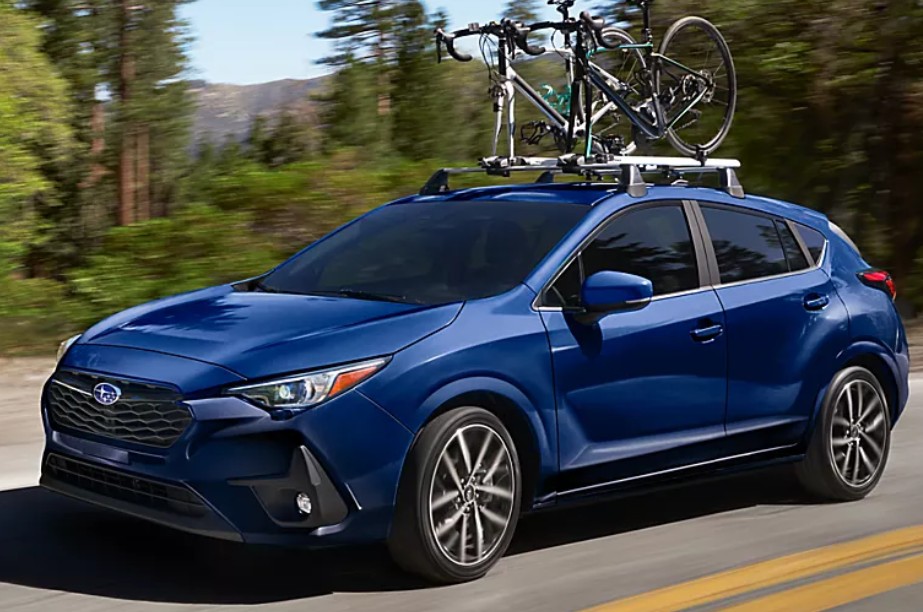
Fuel economy can make or break the ownership experience of a compact car. A vehicle might look affordable on the dealer lot, but if it drinks fuel like a thirsty pickup truck, those savings disappear surprisingly fast. Fortunately, Subaru Impreza fuel economy has traditionally been one of the model's practical strengths, especially considering that the Impreza comes with Subaru's Symmetrical All-Wheel Drive system as standard equipment.
That distinction matters. Most compact cars achieve their best MPG figures using front-wheel drive, while the Impreza sends power to all four wheels. Despite the extra mechanical hardware, recent Impreza models remain impressively efficient.
For example, Subaru rates the 2025 Impreza Base and Sport at 27 MPG city, 34 MPG highway, and 30 MPG combined, while the more powerful Impreza RS achieves 26 MPG city, 33 MPG highway, and 29 MPG combined. For 2026, the lineup consists of Sport and RS trims, with official figures reaching 27/33 MPG for the Sport and 26/33 MPG for the RS.
But EPA estimates only tell part of the story. What happens in traffic? How much fuel does an Impreza actually use on the highway? Does the larger RS engine make a meaningful difference? And what can we do to squeeze a few more miles from every gallon?
Let's dig into the numbers.
Content in this publication
- What Is the Subaru Impreza Fuel Economy?
- Subaru Impreza MPG by Engine
- Subaru Impreza City MPG
- Subaru Impreza Highway MPG
- Is the Subaru Impreza Good on Gas?
- How Subaru Symmetrical AWD Affects Fuel Economy
- Subaru Impreza Real-World Fuel Economy
- What Affects Subaru Impreza Fuel Consumption?
- How Tire Pressure Affects Subaru Impreza MPG
- Does the Subaru Impreza CVT Help Fuel Economy?
- How to Improve Subaru Impreza Fuel Economy
- Does a Roof Rack Reduce Impreza MPG?
- Does Added Weight Affect Fuel Economy?
- Subaru Impreza Fuel Economy in Winter
- Subaru Impreza Fuel Tank and Driving Range
- How to Calculate Your Actual Subaru Impreza MPG
- Why Your Impreza May Suddenly Get Worse Gas Mileage
- Can Maintenance Improve Subaru Impreza MPG?
- Does Premium Gas Improve Subaru Impreza MPG?
- Subaru Impreza Fuel Economy vs Performance
- Is an Impreza Economical for Long Commutes?
- Who Will Get the Best Subaru Impreza Fuel Economy?
- Subaru Impreza Fuel Economy: The Bottom Line
- Frequently Asked Questions
What Is the Subaru Impreza Fuel Economy?
For current-generation models, we can generally expect a Subaru Impreza to deliver somewhere around the upper-20s to low-30s MPG in mixed driving.
The exact figure depends on the model year, engine, trim, traffic, weather, tire pressure, driving speed, and even how aggressively we use the accelerator.
The 2025 lineup provides a useful benchmark:
| 2025 Subaru Impreza | City MPG | Highway MPG | Combined MPG |
|---|---|---|---|
| Base 2.0L | 27 | 34 | 30 |
| Sport 2.0L | 27 | 34 | 30 |
| RS 2.5L | 26 | 33 | 29 |
Those are Subaru's published EPA estimates.
The difference between trims is therefore smaller than many buyers expect. Moving from the 2.0-liter model to the more powerful RS doesn't suddenly turn the Impreza into a gas guzzler.
2026 Subaru Impreza MPG
Subaru simplified the Impreza lineup for 2026. The official specifications list two trims:
- Impreza Sport: up to 27 MPG city and 33 MPG highway.
- Impreza RS: up to 26 MPG city and 33 MPG highway.
Subaru consequently advertises the 2026 Impreza as capable of up to 33 MPG highway while retaining standard Symmetrical AWD.
That's respectable territory for an all-wheel-drive hatchback.
Subaru Impreza MPG by Engine
The engine beneath the hood plays an obvious role in fuel consumption, although perhaps not as dramatic a role as we might imagine.
Recent Imprezas primarily use naturally aspirated SUBARU BOXER four-cylinder engines.
2.0-Liter BOXER Engine Fuel Economy
The 2.0-liter engine has traditionally been the economy-focused choice.
In the 2025 Impreza Base and Sport, the 2.0-liter four-cylinder produces 152 horsepower and 145 lb-ft of torque, according to Subaru's specifications.
Its 27/34/30 MPG city/highway/combined rating is appealing because we're getting respectable efficiency while retaining AWD.
That's the real trick.
A conventional front-wheel-drive economy car doesn't have to power four wheels. The Subaru does. We therefore shouldn't judge its fuel economy without considering what we're getting in return.
2.5-Liter Subaru Impreza RS Fuel Economy
The Impreza RS uses a larger 2.5-liter BOXER engine.
In the 2025 model, it produces 182 horsepower and 178 lb-ft of torque. The 2026 RS is listed with a 180-horsepower 2.5-liter BOXER engine.
Unsurprisingly, fuel economy falls slightly.
Yet we're only talking about roughly one MPG in combined driving when comparing 2025 specifications:
30 MPG combined for the 2.0-liter Impreza versus 29 MPG for the RS.
For drivers who value stronger acceleration, that could be a worthwhile compromise.
Is the RS Worth the Fuel Economy Penalty?
For many of us, probably.
Imagine driving 12,000 miles per year.
At 30 MPG, we'd use roughly 400 gallons.
At 29 MPG, we'd use roughly 414 gallons.
That's only around 14 additional gallons across an entire year under simplified assumptions.
Fuel prices obviously change the financial impact, but the basic point remains: choosing the RS isn't equivalent to jumping from an economy hatchback into a large SUV.
Subaru Impreza City MPG
City driving is where fuel economy gets punished.
Every red light forces the engine to convert fuel into acceleration again. Stop. Go. Brake. Accelerate. Repeat.
It's like trying to ride a bicycle while someone asks us to stop every hundred meters.
Recent Imprezas sit around 26-27 MPG city, depending on configuration.
Real-world results can nevertheless drop below those numbers when we're dealing with:
- Heavy stop-and-go traffic
- Short journeys
- Cold starts
- Aggressive acceleration
- Long periods of idling
- Hills
- Low tire pressure
- Heavy cargo
- Extremely hot or cold weather
A driver commuting through congested downtown streets shouldn't expect the same efficiency as someone cruising through suburban roads at a steady speed.
Subaru Impreza Highway MPG
Highway driving is where the Impreza stretches its legs.
The 2025 Base and Sport reach an EPA-estimated 34 MPG highway, while the RS achieves 33 MPG.
For 2026, Subaru lists up to 33 MPG highway.
Once the car reaches cruising speed, the engine no longer needs to repeatedly accelerate the vehicle's mass from a standstill. That's why highway MPG can noticeably outperform city mileage.
Can an Impreza Get Better Than Its EPA Highway Rating?
Yes, under the right circumstances.
EPA figures are standardized estimates rather than an absolute ceiling.
A long, flat drive at moderate speed with warm weather, correctly inflated tires, little cargo, and gentle throttle input may produce mileage above the official estimate.
Independent testing also illustrates how dramatically driving conditions can influence results. A Consumer Reports document hosted by Subaru for the 2026 Impreza records 29 MPG overall in its testing, with 19 MPG in its city test and 42 MPG in its highway test.
Those numbers shouldn't replace EPA estimates, since the testing procedures differ. Instead, they show something important: the same car can produce wildly different fuel economy depending on the driving environment.
Is the Subaru Impreza Good on Gas?
Yes, particularly when we account for its standard AWD system.
Subaru itself promotes the Impreza as a fuel-efficient hatchback and emphasizes that the 2026 model can reach up to 33 MPG while retaining standard Symmetrical AWD.
Still, "good on gas" depends on our comparison point.
Against a hybrid compact? Not especially.
Against a powerful SUV? Absolutely.
Against another non-hybrid AWD compact hatchback? The Impreza makes a compelling argument.
Fuel Economy Versus Capability
This is where buyers should look beyond a single MPG number.
All-wheel drive brings extra components and weight. Those parts create additional mechanical resistance.
Normally, that hurts fuel efficiency.
Yet Subaru manages to package permanent AWD with fuel consumption that's still reasonable for everyday commuting.
Think of it like hiking with a backpack. We'll use slightly more energy than someone carrying nothing, but the backpack gives us equipment we may actually need.
For drivers facing rain, snow, gravel roads, steep terrain, or slippery conditions, that tradeoff may make sense.
How Subaru Symmetrical AWD Affects Fuel Economy
Unlike many competitors that reserve all-wheel drive for certain trims, the modern Impreza includes Symmetrical AWD as standard equipment.
Subaru explains that the system continuously monitors factors such as acceleration, braking, and cornering while distributing power to maintain traction.
That contributes to the Impreza's character.
But powering an AWD drivetrain requires energy.
Why AWD Usually Consumes More Fuel
An AWD car typically carries additional components, including driveshafts, differentials, and associated hardware.
Extra components mean:
- More weight to accelerate.
- Greater drivetrain friction.
- More rotating mass.
- Slightly greater energy losses.
That's why an AWD vehicle often returns lower MPG than an otherwise comparable front-wheel-drive version.
With the Impreza, however, there isn't a modern FWD version to choose instead. AWD is fundamentally part of the package.
Subaru Impreza Real-World Fuel Economy
Here's where things get interesting.
Our dashboard may display 24 MPG one week and 34 MPG the next without anything being mechanically wrong.
Fuel economy isn't a fixed personality trait.
It's the product of hundreds of tiny variables.
Why Real MPG Can Differ From EPA Estimates
Consider two Impreza drivers.
Driver A lives in a mild climate, drives 30 highway miles to work, maintains tire pressure carefully, and rarely exceeds 65 mph.
Driver B drives three miles through heavy traffic, accelerates hard, idles while waiting for passengers, carries extra equipment, and regularly encounters freezing weather.
Same car.
Completely different fuel economy.
This is precisely why EPA numbers should be viewed as a standardized comparison tool rather than a promise.
What Affects Subaru Impreza Fuel Consumption?
Several factors can move our average MPG noticeably.
Driving Speed
Aerodynamic resistance rises sharply as speed increases.
At 50 or 60 mph, pushing air out of the way isn't terribly demanding.
At 75 or 80 mph, the invisible wall of air becomes much stronger.
That's why slowing down slightly during long highway trips can sometimes make a meaningful difference.
Acceleration Habits
The accelerator pedal isn't an on/off switch.
Smooth acceleration generally uses less fuel than repeatedly flooring the throttle and braking hard.
We don't need to drive like we're transporting an uncovered bowl of soup, but progressive throttle input helps.
Traffic Conditions
Stop-and-go congestion is an MPG killer.
The vehicle repeatedly spends energy accelerating and then turns that motion into heat through the brakes.
Whenever we can maintain momentum safely, efficiency tends to improve.
Cold Weather
Engines operate less efficiently during warm-up.
Cold temperatures can also increase tire rolling resistance and influence fuel characteristics.
Short winter journeys often produce especially disappointing MPG because the engine barely reaches normal operating temperature before we arrive.
Air Conditioning
Air conditioning requires energy from the engine.
The effect usually isn't catastrophic, but in heavy city driving, constantly running maximum A/C can reduce efficiency.
We shouldn't sacrifice comfort or safety just to chase one MPG, of course.
How Tire Pressure Affects Subaru Impreza MPG
Underinflated tires create additional rolling resistance.
Imagine riding a bicycle with soft tires. Every pedal stroke feels heavier.
The same principle applies to our car.
When tire pressure falls below the manufacturer's recommended cold pressure, the engine has to work slightly harder to maintain speed.
Check Pressure, Not the Tire Sidewall Maximum
One common mistake is inflating tires according to the maximum PSI printed on the tire.
Don't do that.
The proper pressure for the vehicle is normally listed on the driver's door-jamb placard and in the owner's manual.
We should check tires when they're cold and follow Subaru's specification for the specific model and tire combination.
Does the Subaru Impreza CVT Help Fuel Economy?
Modern Imprezas use Subaru's continuously variable transmission, commonly called a CVT.
Traditional automatic transmissions move through fixed gears.
A CVT works differently. It can continuously adjust its effective ratio to keep the engine operating closer to an efficient range.
Think of it as climbing a hill on a bicycle with an almost infinite selection of gears rather than six or seven predetermined choices.
Why Engine RPM Sometimes Feels Different
Drivers unfamiliar with CVTs sometimes notice that engine RPM doesn't rise and fall exactly like a conventional automatic.
During acceleration, RPM may stay relatively steady while vehicle speed increases.
That's not necessarily a sign of a problem. It's part of how a CVT can manage engine load efficiently.
How to Improve Subaru Impreza Fuel Economy
We don't need elaborate modifications.
The biggest improvements usually come from boring little habits—and boring is beautiful when we're paying at the pump.
Practical Ways to Get Better MPG
- Keep tires inflated to the vehicle's recommended pressure.
- Accelerate progressively rather than aggressively.
- Avoid unnecessary idling.
- Remove heavy cargo when it isn't needed.
- Use roof racks and cargo boxes only when necessary.
- Maintain a steady highway speed.
- Anticipate traffic instead of accelerating toward red lights.
- Keep up with scheduled maintenance.
- Use the correct engine oil specification.
- Address warning lights or mechanical problems promptly.
- Combine multiple short trips when practical.
- Avoid carrying unnecessary external accessories that increase aerodynamic drag.
Small improvements compound.
We may not notice the difference after one journey, but thousands of miles magnify every inefficiency.
Does a Roof Rack Reduce Impreza MPG?
It can.
A roof rack, cargo basket, bicycle carrier, or roof box disrupts the smooth flow of air over the car.
At low speeds, the effect may be small.
At highway speeds, aerodynamic drag becomes increasingly important.
Remove Accessories When They're Not Needed
If we use a roof box twice a year but leave it attached for twelve months, we're essentially paying a tiny aerodynamic tax every time we drive.
Removing unnecessary external equipment is one of the simplest ways to protect highway efficiency.
Does Added Weight Affect Fuel Economy?
Yes.
Every additional pound has to be accelerated.
The effect of carrying a small backpack is negligible, but permanently hauling hundreds of pounds of unnecessary cargo can influence fuel consumption.
The difference is particularly noticeable in urban driving because we're constantly accelerating the extra mass.
Clean Out the Trunk—Within Reason
There's no need to remove the emergency kit to save fuel.
Safety equipment should stay.
But if we've been carrying boxes, tools, sports equipment, or bags around for three months because we forgot they're there, taking them out won't hurt.
Subaru Impreza Fuel Economy in Winter
Winter can make MPG readings look ugly.
And sometimes owners immediately assume something is wrong.
Not necessarily.
Cold weather creates several efficiency penalties simultaneously:
Longer Warm-Up Periods
A cold engine uses more fuel until it reaches operating temperature.
Lower Tire Pressure
Air pressure naturally decreases as temperatures fall, which can increase rolling resistance if we don't compensate.
Winter Fuel Formulations
Seasonal fuel blends can produce slightly different energy content.
Snow and Slush
Driving through snow creates resistance.
Heater and Defroster Use
Electrical loads and climate-control demands can add to overall energy consumption.
Together, these factors explain why the same Impreza might show noticeably lower MPG in January than in June.
Subaru Impreza Fuel Tank and Driving Range
Drivers often focus on MPG while forgetting the other half of the equation: tank capacity.
Driving range depends on both.
A simplified formula is:
Estimated range = fuel tank capacity × average MPG
But we shouldn't expect to use every drop of gasoline before refueling.
The low-fuel warning is intentionally designed to give us some reserve.
Why Dashboard Range Changes Constantly
The estimated miles-to-empty display isn't psychic.
It uses recent fuel consumption to predict how far the remaining fuel might take us.
Drive aggressively and estimated range falls.
Spend the next hour cruising gently on the highway and it may stabilize or even appear more optimistic.
That's normal.
How to Calculate Your Actual Subaru Impreza MPG
Want a more reliable measurement than the dashboard?
Use the full-tank method.
Step-by-Step MPG Calculation
- Fill the fuel tank completely.
- Reset the trip odometer.
- Drive normally.
- Refill the tank at the next fuel stop.
- Record gallons added.
- Divide miles traveled by gallons used.
For example:
If we drive 360 miles and refill with 12 gallons:
360 ÷ 12 = 30 MPG
That's our calculated average for that tank.
Why One Tank Isn't Enough
Fuel pumps shut off at slightly different points.
Road slope, temperature, and filling technique can affect how much fuel enters the tank.
Instead of obsessing over one refill, track five or ten tanks.
The average will tell a far more useful story.
Why Your Impreza May Suddenly Get Worse Gas Mileage
A sudden MPG drop deserves attention, particularly if our driving habits and weather haven't changed.
Possible causes include:
- Low tire pressure
- Different driving conditions
- Excessive idling
- Heavy cargo
- Roof-mounted equipment
- Poor wheel alignment
- Brake drag
- Dirty or malfunctioning sensors
- Engine-management issues
- Incorrect oil
- Mechanical problems
If the drop is large, persistent, or accompanied by a check-engine light, unusual smell, rough running, overheating, or other symptoms, proper diagnosis matters more than experimenting with fuel-saving tricks.
Can Maintenance Improve Subaru Impreza MPG?
Absolutely—when something isn't operating correctly.
A healthy engine is fundamentally an air pump controlled by an intricate electronic system.
When sensors, ignition components, tires, fluids, brakes, or emissions equipment aren't working as designed, efficiency can suffer.
Follow the Correct Maintenance Schedule
Routine maintenance isn't a magical MPG booster.
Replacing perfectly functional components early won't suddenly give us 10 extra MPG.
But maintaining the vehicle correctly helps prevent gradual efficiency losses.
The best reference remains the maintenance schedule for our exact model year.
For a standard naturally aspirated Impreza, using a higher octane rating than Subaru requires isn't automatically a fuel-economy upgrade.
Octane measures resistance to engine knock. It isn't a simple measure of "better" gasoline.
If the owner's manual specifies regular fuel, premium fuel shouldn't be viewed as a secret MPG hack.
Follow Subaru's Fuel Requirement
The smartest approach is wonderfully simple:
Use the fuel grade specified for the exact vehicle.
Spending extra money per gallon makes little sense if the engine isn't designed to benefit from it.
Subaru Impreza Fuel Economy vs Performance
Efficiency isn't everything.
The reason the Impreza RS exists is that some buyers want a little more punch.
The 2025 2.0-liter Impreza is rated at 152 horsepower, whereas the 2.5-liter RS reaches 182 horsepower in Subaru's specifications.
Yet their combined EPA estimates differ by only one MPG: 30 versus 29.
That's a relatively modest penalty.
Which Version Makes More Sense?
If fuel economy is our highest priority, the smaller engine wins.
If we want stronger performance without dramatically increasing fuel use, the RS becomes appealing.
There's no universally correct choice.
The better question is: What are we actually going to notice every day?
An extra MPG at every fuel stop?
Or stronger acceleration every time we merge onto the highway?
Is an Impreza Economical for Long Commutes?
It can be a very sensible commuter car.
We get hatchback practicality, AWD, respectable highway MPG, and manageable overall dimensions.
For someone driving long distances in regions with variable weather, that combination can be particularly useful.
A 34-MPG front-wheel-drive sedan might technically consume slightly less fuel, but if we value AWD traction, comparing efficiency alone misses part of the ownership equation.
Who Will Get the Best Subaru Impreza Fuel Economy?
The ideal efficiency scenario looks something like this:
Moderate weather.
Long journeys.
Steady speeds.
Light traffic.
Proper tire pressure.
Minimal cargo.
No giant roof box.
Smooth acceleration.
That's basically the automotive equivalent of a relaxing Sunday morning.
City commuters facing hills and gridlock are naturally going to see lower figures.
And that's okay.
Fuel economy should be evaluated relative to the conditions in which we actually drive.
Subaru Impreza Fuel Economy: The Bottom Line
The Subaru Impreza occupies an interesting middle ground.
It isn't a hybrid designed to chase spectacular 50-MPG numbers. It isn't trying to be.
Instead, it combines standard all-wheel drive, hatchback practicality, and fuel economy that remains competitive enough for everyday commuting.
For 2025, the Base and Sport models carry EPA estimates of 27 MPG city, 34 highway, and 30 combined, while the RS delivers 26 city, 33 highway, and 29 combined. The 2026 Impreza is rated at up to 27/33 MPG in Sport form and 26/33 MPG in RS form.
Those figures make the Impreza relatively frugal considering the AWD hardware underneath it.
More importantly, we have plenty of control over our actual results.
Keep the tires properly inflated. Maintain the car. Drive smoothly. Avoid unnecessary weight and aerodynamic drag. Track MPG across several tanks rather than panicking over one bad week.
Fuel economy is less like a fixed number carved into stone and more like a moving average shaped by the road beneath us.
Treat the Impreza gently, and it can reward us with surprisingly reasonable fuel bills.
Frequently Asked Questions
1. What is the Subaru Impreza fuel economy?
Current Subaru Impreza models generally deliver fuel economy in the upper-20s to low-30s MPG range. The 2025 Base and Sport models are EPA-rated at 27 MPG city, 34 highway, and 30 combined, while the RS is rated at 26/33/29 MPG.
2. How many MPG does a Subaru Impreza get on the highway?
A 2025 Impreza Base or Sport can reach an EPA-estimated 34 MPG highway, while the 2025 RS is rated at 33 MPG. The 2026 lineup is advertised at up to 33 MPG highway. Actual mileage varies with driving speed, weather, traffic, load, and vehicle condition.
3. Is the Subaru Impreza RS bad on gas?
No. Despite using the larger engine, the difference is relatively modest. For 2025, the RS is rated at 29 MPG combined versus 30 MPG for the 2.0-liter Base and Sport models.
4. Why is my Subaru Impreza getting low MPG?
Low MPG can result from short trips, heavy traffic, cold weather, low tire pressure, aggressive driving, excessive idling, roof racks, extra cargo, or mechanical problems. Compare several tanks of fuel before assuming there's a fault, unless the mileage drop is severe or accompanied by other symptoms.
5. How can we improve Subaru Impreza gas mileage?
Maintain correct tire pressure, accelerate smoothly, keep highway speeds reasonable, reduce unnecessary idling, remove unused roof accessories and excess cargo, and follow Subaru's maintenance requirements. Tracking fuel economy manually across several fill-ups can also reveal whether changes actually work.
If you want to know other articles similar to Subaru Impreza Fuel Economy: MPG, Real-World Efficiency, and Driving Tips you can visit the category Driving.
Can Nissan Rogue Pull a Boat? Complete Towing Guide
Can Nissan Rogue Be Flat Towed? Complete Towing Guide
Are Nissan Rogue Good on Gas? MPG, Fuel Economy, and Real-World Costs
Can Nissan Rogue Drive in Snow? Complete Winter Driving Guide

Kia Sorento Diesel Fuel Consumption: MPG, Efficiency and Real-World Range
Haval Jolion Hybrid Fuel Consumption: How Efficient Is It Really?
Leave a Reply
More content of your interest