

Audi A4 MPG: Fuel Economy, Real-World Mileage, and Efficiency Guide

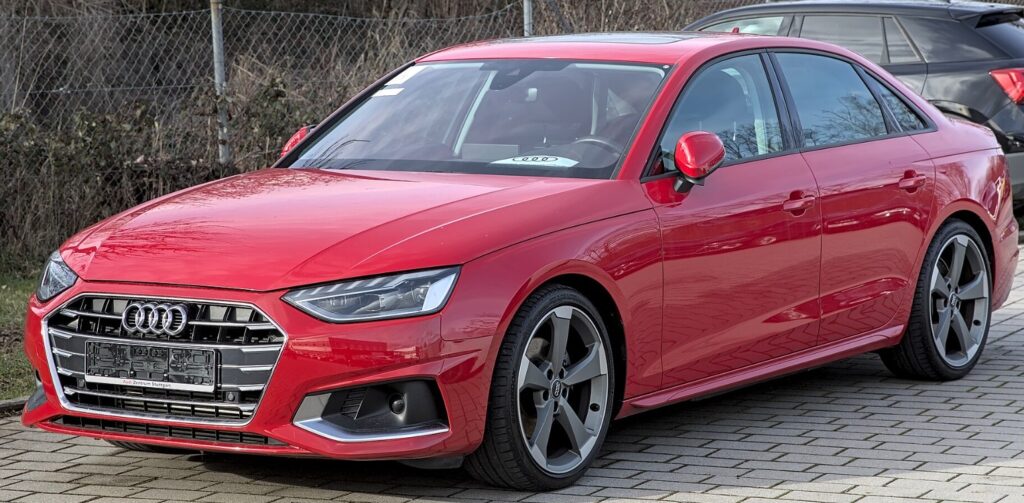
The Audi A4 has spent decades proving that a premium sports sedan does not have to drink fuel like a thirsty performance car. It blends turbocharged power, refined road manners, available or standard quattro all-wheel drive, and surprisingly sensible fuel economy into one polished package. That balance explains why Audi A4 MPG remains such an important search for owners and shoppers alike.
But there is no single MPG number that describes every Audi A4. Fuel economy changes according to the model year, engine output, drivetrain, body style, wheels, road conditions, and even how enthusiastically we use the accelerator.
Some A4 versions can push well beyond 30 MPG on a relaxed highway journey. Others trade a few miles per gallon for stronger acceleration, quattro traction, or the extra practicality of the A4 allroad.
So what should we realistically expect?
In this guide, we'll break down Audi A4 gas mileage, explain the differences between city and highway economy, compare generations, look at real-world efficiency, and explore practical ways to squeeze more distance from every gallon.
Content in this publication
- What Is the Audi A4 MPG?
- 2025 Audi A4 MPG
- Audi A4 MPG by Year
- Audi A4 City MPG
- Audi A4 Highway MPG
- Audi A4 Quattro MPG
- Audi A4 40 TFSI vs 45 TFSI MPG
- Audi A4 Allroad MPG
- Real-World Audi A4 MPG
- Does the Audi A4 Require Premium Gas?
- How Far Can an Audi A4 Go on a Tank?
- Why Is My Audi A4 Getting Bad MPG?
- How Wheel Size Affects Audi A4 Fuel Economy
- How to Improve Audi A4 MPG
- Audi A4 MPG vs Performance
- Audi A4 MPG vs Older Audi A4 Models
- Should MPG Be a Major Factor When Buying an Audi A4?
- Audi A4 MPG: The Bottom Line
- Frequently Asked Questions About Audi A4 MPG
What Is the Audi A4 MPG?
For modern gasoline-powered Audi A4 sedans sold in the United States, fuel economy generally sits somewhere in the mid-to-high 20s for combined driving, while highway figures can stretch into the low or mid-30s depending on the version.
A good example is the recent A4 range.
The 2025 U.S.-market A4 lineup continued with a turbocharged 2.0-liter four-cylinder engine and quattro all-wheel drive. Audi lists the A4 S line 45 TFSI with 261 horsepower and a seven-speed S tronic transmission.
Published EPA-based figures for 2025 variants differ according to configuration. The A4 S line is listed around 23 MPG city, 32 MPG highway, and 26 MPG combined in current specification databases.
That's fairly impressive when we remember what the A4 is carrying beneath its understated suit: turbocharged power, automatic transmission, luxury equipment, and all-wheel drive.
Audi A4 MPG at a Glance
As a broad reference rather than a one-size-fits-all specification, recent Audi A4 models commonly fall around these ranges:
| Driving Condition | Typical Audi A4 MPG |
|---|---|
| City driving | 23–27 MPG |
| Highway driving | 30–36 MPG |
| Combined driving | 26–30 MPG |
| Gentle highway cruising | 30+ MPG is realistic |
| Heavy urban traffic | Low-to-mid 20s MPG may be normal |
Exact numbers depend heavily on the specific year and powertrain, so the certification label for the exact vehicle should always take priority.
2025 Audi A4 MPG
The 2025 Audi A4 represents one of the final chapters of the familiar A4 sedan formula in the U.S. market.
Audi offered the 2025 A4 S line 45 TFSI with a 261-horsepower 2.0-liter turbocharged four-cylinder, quattro all-wheel drive, and seven-speed S tronic transmission.
EPA-based listings put that model at roughly:
- 23 MPG city
- 32 MPG highway
- 26 MPG combined
Edmunds also lists a 15.3-gallon fuel tank and an estimated highway range approaching 490 miles under EPA-style conditions.
Those figures give the A4 a rather appealing personality. Around town, it behaves like a powerful AWD luxury sedan. On the interstate, however, the engine settles down and starts sipping fuel more like a mainstream family car.
Can a 2025 Audi A4 Beat Its Official MPG?
Absolutely.
Official ratings are standardized estimates, not fuel-economy speed limits.
Car and Driver reports that an A4 45 returned 33 MPG on its 75-mph highway fuel-economy test, slightly exceeding its listed highway rating.
That illustrates something we've seen repeatedly with turbocharged German sedans: once they're in top gear, warmed up, and cruising steadily, fuel consumption can be remarkably modest.
Of course, repeatedly enjoying the turbocharger changes the equation rather quickly.
Audi A4 MPG by Year
Looking across several years reveals something interesting: progress has not followed a perfectly straight line.
Changes in emissions requirements, gearing, power output, all-wheel-drive systems, wheels, testing procedures, and vehicle equipment can move MPG upward or downward from one year to the next.
EPA-derived historical data shows examples such as:
| Model Year and Version | City MPG | Highway MPG | Combined MPG |
| 2025 A4 quattro 2.0L | 26 | 36 | 29 |
| 2025 A4 S line quattro | 23 | 32 | 26 |
| 2024 A4 quattro | 26 | 35 | 30 |
| 2024 A4 S line quattro | 24 | 32 | 27 |
| 2023 A4 quattro | 24 | 33 | 28 |
| 2022 A4 quattro | 26 | 34 | 29 |
| 2020 A4 2.0L | 27 | 35 | 30 |
| 2019 A4 2.0L | 27 | 34 | 30 |
| 2018 A4 Ultra | 27 | 37 | 31 |
| 2017 A4 Ultra | 27 | 37 | 31 |
These historical figures illustrate how much specification matters: the efficient Ultra versions, for example, performed differently from more powerful quattro configurations.
Why You Should Check the Exact Version
Two cars parked next to each other with an A4 badge can have noticeably different fuel economy.
One might have front-wheel drive and conservative gearing. Another might have quattro, larger wheels, additional horsepower, and a sportier calibration.
That's why searching merely for "2018 Audi A4 MPG" may not tell the whole story. Engine, drivetrain, transmission, and trim matter.
Audi A4 City MPG
City driving is where physics collects its taxes.
Every stop requires us to accelerate the car's weight again. Every red light burns time without adding miles. Cold starts, air-conditioning use, short journeys, and congestion all chip away at economy.
A modern A4 may officially sit in the low-to-mid 20s in urban driving, depending on specification.
In dense traffic, real-world numbers can be lower.
Why Audi A4 MPG Drops in Traffic
Imagine carrying a bucket of water up a staircase and pouring it out every time you reach the top. That's essentially what stop-and-go driving does with kinetic energy.
We accelerate.
We brake.
We accelerate again.
Fuel disappears without much distance accumulating.
Short trips make matters worse because the engine may barely reach its most efficient operating temperature before we've already arrived.
Audi A4 Highway MPG
The highway is where the A4 tends to shine.
Once speed stabilizes, the transmission can select a tall gear, engine RPM drops, acceleration becomes minimal, and the turbocharged four-cylinder settles into an efficient rhythm.
Recent versions can achieve highway ratings around the low-to-mid 30-MPG range.
And under favorable conditions, real-world testing has demonstrated that an A4 can exceed its official highway estimate.
What Speed Gives the Best Audi A4 MPG?
There isn't one magic speed, but fuel economy generally worsens as aerodynamic drag rises.
An A4 cruising calmly at moderate highway speed typically consumes less fuel than the same car maintaining a considerably higher speed.
That's because pushing air becomes increasingly expensive.
Think of sticking your hand out of a moving window. At 30 mph, there's resistance. At highway speed, your hand suddenly feels like a small parachute.
The same principle affects the whole car.
Does Cruise Control Improve MPG?
On relatively flat highways, cruise control can help because it prevents the small, unconscious accelerator movements we make while driving.
On steep or rolling terrain, however, a human driver who anticipates hills may sometimes achieve better economy by allowing minor speed variations rather than demanding that cruise control maintain an exact speed at all costs.
Audi A4 Quattro MPG
Quattro is one of the defining pieces of the Audi identity.
It also raises an obvious question: does quattro hurt MPG?
Usually, yes—at least compared with an otherwise equivalent two-wheel-drive configuration.
All-wheel-drive hardware can add weight and mechanical losses. Historically, this often meant a measurable efficiency penalty.
Yet Audi has gradually narrowed that gap through improved driveline management, transmission calibration, engine technology, and other efficiency measures.
Today's quattro-equipped A4 can therefore provide respectable fuel economy while retaining excellent traction.
Is the Quattro MPG Penalty Worth It?
That depends on our priorities.
If maximum fuel economy is everything, a lighter two-wheel-drive sedan or hybrid may make more sense.
But if we regularly encounter rain, snow, mountain roads, or simply enjoy the composed feeling of Audi's AWD setup, giving away a little fuel economy may feel like a reasonable trade.
Efficiency isn't always about chasing the largest number on a dashboard.
Sometimes the better vehicle is the one that suits how we actually drive.
Audi A4 40 TFSI vs 45 TFSI MPG
For several recent model years, Audi divided the A4 range into different 2.0-liter TFSI output levels.
The 40 TFSI emphasized efficiency while still delivering useful performance.
The 45 TFSI turned the dial toward speed.
That naturally affected fuel use.
Earlier Audi technical specifications, for example, listed an A4 40 TFSI at 27/35/30 MPG city/highway/combined, compared with 24/32/27 MPG for the more powerful A4 45 TFSI in the same specification set.
Which Engine Makes More Sense?
If we're commuting long distances and treating MPG like a high score, the lower-output engine has obvious appeal.
If we enjoy brisk acceleration and stronger passing performance, the 45 may justify its extra appetite.
It's the familiar cake dilemma: efficiency or performance?
Audi's trick is that neither choice is particularly extreme.
Audi A4 Allroad MPG
The A4 allroad takes the standard A4 recipe and adds wagon practicality, additional ground clearance, rugged styling, and standard quattro capability.
That extra versatility carries a modest fuel-economy cost.
Historical EPA-based data often puts recent A4 allroad versions around 26 MPG combined, with highway ratings around 30 MPG depending on model year.
That's still competitive for a luxurious AWD wagon.
Why Does the A4 Allroad Use More Fuel?
There are several contributors:
- additional weight;
- altered aerodynamics;
- greater ride height;
- AWD hardware;
- wheel and tire choices;
- powertrain calibration.
None individually destroys efficiency, but together they move the needle.
The allroad is essentially wearing hiking boots while the regular A4 sedan is wearing running shoes.
Both can cover ground efficiently. One simply carries more adventure equipment.
Real-World Audi A4 MPG
Real-world economy is where things become much more personal.
One driver might average 22 MPG.
Another owner with the same car could see 31 MPG.
Neither necessarily has a problem.
What Changes Real-World Fuel Economy?
The biggest influences include driving style, journey length, average speed, traffic, ambient temperature, tire pressure, vehicle load, elevation, wheel size, maintenance condition, and fuel quality.
Aggressive acceleration is particularly influential with turbocharged engines.
Drive gently and the A4's 2.0-liter engine behaves like a small four-cylinder.
Push deeper into boost repeatedly and suddenly we're feeding an engine capable of producing well over 200 horsepower.
That's the beauty—and temptation—of turbocharging.
Audi A4 MPG in Winter
Expect fuel economy to fall during colder months.
Cold engines run less efficiently during warm-up, winter gasoline blends can contain less energy, tire pressures fall with temperature, heaters and defrosters add electrical demand, and snow or wet roads increase rolling resistance.
Short winter trips can be particularly brutal.
If our summer average is 29 MPG and winter suddenly drops several MPG, that doesn't automatically indicate a mechanical problem.
Fuel grade is another important part of the ownership equation.
Recent A4 specifications commonly call for premium unleaded fuel. For example, Edmunds lists premium unleaded as required for the 2025 A4 configuration in its specification database.
That means MPG alone doesn't tell us the full cost-per-mile story.
A car averaging 30 MPG on premium may still cost more to fuel than a vehicle averaging similar mileage on regular gasoline.
Will Regular Gas Improve or Hurt MPG?
Where premium is specified, using the recommended octane helps the engine operate as intended.
Modern engine management can often protect an engine against unsuitable conditions by changing ignition timing and boost behavior, but that doesn't mean deliberately ignoring the manufacturer's fuel recommendation is a good cost-saving strategy.
Check the fuel-filler door and owner's manual for the exact model.
How Far Can an Audi A4 Go on a Tank?
Tank range depends on both tank capacity and actual MPG.
A recent A4 with approximately 15.3 gallons of fuel capacity theoretically offers substantial cruising range. Edmunds estimates about 351.9 miles of city range and 489.6 miles of highway range for its listed 2025 A4 configuration.
Realistically, we shouldn't plan trips around using every final drop of fuel.
Still, 400-plus miles between highway fill-ups can be entirely plausible under efficient driving conditions.
How to Calculate Your Own Audi A4 MPG
Dashboard computers are convenient, but calculating mileage manually gives us a useful reality check.
Use this formula:
Miles driven ÷ gallons added = MPG
Suppose we drive 360 miles and refill the tank with 12 gallons.
360 ÷ 12 = 30 MPG
For the most reliable result, measure several consecutive tanks rather than relying on a single refill. Pump shutoff points, idling, weather, and different driving patterns can distort individual calculations.
Why Is My Audi A4 Getting Bad MPG?
A sudden decline deserves attention.
Sometimes the explanation is simple: colder weather, heavy traffic, short trips, or aggressive driving.
Other times the car itself may be asking for help.
Potential causes include:
- low tire pressure;
- worn or unsuitable tires;
- incorrect wheel alignment;
- dragging brakes;
- dirty air-filter components where applicable;
- ignition problems;
- faulty sensors;
- thermostat or temperature-management issues;
- excessive engine idling;
- roof racks or external accessories;
- neglected maintenance.
If consumption changes dramatically without a corresponding change in driving conditions, diagnostics may be worthwhile.
Can Tire Pressure Affect Audi A4 MPG?
Yes.
Underinflated tires increase rolling resistance, meaning the engine must work harder simply to keep the car moving.
It's rather like cycling with soft tires. The bicycle still moves, but every pedal stroke feels heavier.
Check pressures cold and follow the vehicle's recommended values rather than simply inflating everything to the maximum number printed on the tire sidewall.
How Wheel Size Affects Audi A4 Fuel Economy
Large wheels look fantastic on the A4.
Efficiency doesn't always agree.
Larger wheel-and-tire packages can increase rotating mass, rolling resistance, and aerodynamic disturbance. Wider performance tires may also grip harder but require more energy to roll.
The effect isn't necessarily enormous, yet someone chasing maximum MPG may prefer a smaller factory-approved wheel setup over oversized performance wheels.
Performance Tires vs Efficiency
High-performance rubber is designed primarily for grip, braking, and steering response.
Low-rolling-resistance tires prioritize efficiency.
It's difficult for one tire to dominate every category.
So when choosing replacements, we need to decide what matters more: razor-sharp grip, ride comfort, tread life, wet-weather confidence, or fuel economy.
How to Improve Audi A4 MPG
Getting better mileage doesn't require crawling along like we're participating in an economy contest.
A few habits make a meaningful difference while keeping normal driving enjoyable.
- Accelerate progressively. We don't need to avoid boost entirely, but full-throttle launches at every traffic light consume fuel quickly.
- Look farther ahead. Anticipating traffic reduces unnecessary braking and re-acceleration.
- Keep tires correctly inflated. Check them regularly, particularly when temperatures change.
- Limit excessive idling. Zero miles traveled means zero MPG.
- Remove unnecessary cargo. We don't need to carry half the garage everywhere.
- Take off unused roof equipment. Roof boxes and racks can increase aerodynamic drag.
- Maintain the vehicle properly. Mechanical efficiency and fuel efficiency often travel together.
- Moderate highway speed. A small reduction in cruising speed can noticeably reduce aerodynamic demand.
- Combine short errands. A fully warmed engine generally operates more efficiently than one repeatedly starting cold.
- Track several tanks. Knowing our normal average makes unusual changes easier to spot.
Audi A4 MPG vs Performance
One reason the A4's efficiency deserves credit is that this isn't an economy car disguised with premium badges.
Recent A4 45 models produce roughly 261 horsepower and 273 lb-ft of torque, according to Audi's 2025 model information.
That's plenty of performance for everyday driving.
Yet highway mileage can still reach the low 30s.
Twenty years ago, achieving similar performance often meant accepting considerably thirstier fuel consumption.
Modern turbocharging, direct injection, transmission design, thermal management, aerodynamics, and mild-hybrid technologies have changed the game.
Is the Audi A4 Fuel Efficient for a Luxury Sedan?
Yes, particularly when we judge it against similarly powerful AWD luxury sedans rather than hybrids or small economy cars.
Its combination of performance and fuel consumption is arguably more impressive than the raw MPG number.
A hybrid compact might beat it easily at the pump.
But that's not really the A4's battlefield.
The A4 tries to deliver comfort, grip, speed, refinement, and respectable efficiency at the same time.
And that's a tougher balancing act.
Audi A4 MPG vs Older Audi A4 Models
Older A4 generations aren't automatically inefficient.
Some previous front-wheel-drive versions were exceptionally economical.
The 2017 and 2018 A4 Ultra, for example, are listed at roughly 27 MPG city, 37 MPG highway, and 31 MPG combined in historical EPA-derived records.
Meanwhile, an older quattro model with a less efficient drivetrain or transmission may consume noticeably more.
So when shopping used, don't assume newer always means dramatically better MPG.
Specification matters just as much as age.
Should MPG Be a Major Factor When Buying an Audi A4?
Yes—but it shouldn't be the only one.
If two used A4s differ by 2 MPG but the more economical vehicle has questionable maintenance history, worn tires, or looming repairs, chasing that small MPG advantage could prove expensive.
Maintenance history, engine condition, transmission behavior, mileage, accident history, tires, brakes, ownership costs, and insurance deserve equal attention.
Fuel economy is one chapter of the ownership story, not the entire book.
Who Will Get the Best Audi A4 MPG?
The ideal MPG scenario is easy to imagine:
A well-maintained A4, properly inflated tires, warm weather, light traffic, steady highway speeds, minimal cargo, and a patient right foot.
Under those circumstances, seeing numbers above the official combined rating is entirely plausible.
Who Will See the Lowest MPG?
Now flip the script.
Cold morning. Three-mile commute. Heavy traffic. Large wheels. Lots of idling. Strong acceleration whenever a gap appears.
Even a perfectly healthy A4 could produce surprisingly unimpressive numbers.
Context matters enormously.
Audi A4 MPG: The Bottom Line
The Audi A4 proves we don't necessarily have to choose between enjoyable performance and reasonable fuel economy.
Depending on year and configuration, modern A4 models typically return combined mileage somewhere in the upper-20-MPG neighborhood, with highway efficiency commonly reaching 30 MPG or more. Certain versions have historically pushed into the mid-to-upper 30s on official highway ratings.
The 2025 A4 S line demonstrates the modern formula particularly well: a 261-horsepower turbocharged engine, quattro all-wheel drive, and EPA-based fuel economy around the mid-20s combined and low 30s on the highway.
More importantly, real-world highway testing shows that a carefully driven A4 can occasionally outperform its published estimate.
So is the Audi A4 economical?
For a pure fuel saver, there are better choices.
For a quick, refined, premium sedan with all-weather capability, though, the A4's MPG is remarkably respectable. It doesn't sip fuel through a cocktail straw, but neither does it approach the pump like an open drain.
Treat the accelerator gently, keep the car properly maintained, and the A4 can reward us with a surprisingly long distance between fuel stops.
Frequently Asked Questions About Audi A4 MPG
1. What MPG does an Audi A4 get?
Most recent gasoline Audi A4 models achieve roughly mid-to-high 20s MPG combined, while highway figures can exceed 30 MPG. Exact fuel economy depends on model year, engine output, drivetrain, and body style.
2. Is the Audi A4 good on gas?
Yes, considering its performance and luxury positioning. A modern turbocharged A4 can deliver highway fuel economy in the low 30s while still providing strong acceleration and quattro AWD capability.
3. What is the 2025 Audi A4 MPG?
Current specification sources list the 2025 Audi A4 S line 45 at approximately 23 MPG city, 32 MPG highway, and 26 MPG combined, though ratings should always be checked against the exact vehicle configuration.
4. Can an Audi A4 get more than 30 MPG?
Yes. Many A4 versions are officially rated above 30 MPG on the highway. Car and Driver also recorded 33 MPG from an A4 45 during its 75-mph highway fuel-economy test.
5. Why is my Audi A4 MPG suddenly getting worse?
Common causes include colder weather, short journeys, congestion, underinflated tires, aggressive acceleration, extra cargo, roof accessories, wheel alignment issues, dragging brakes, or mechanical problems. If the decline is sudden and substantial, checking tire pressure and performing a diagnostic inspection is sensible.
If you want to know other articles similar to Audi A4 MPG: Fuel Economy, Real-World Mileage, and Efficiency Guide you can visit the category Driving.
Kia Sorento Fuel Economy: MPG, Hybrid, and Plug-In Hybrid Explained

BYD Shark 6 Fuel Consumption: Real-World Economy, Range and What to Expect

Vauxhall Agila MPG: Real-World Fuel Economy and Engine Guide

Honda Passport MPG: Real-World Fuel Economy, Ratings, and What to Expect

Nissan Rogue Fuel Economy: MPG, Range, Costs, and Real-World Efficiency
BYD Shark 6 Long Range Fuel Tank: Is the 120L Upgrade Worth It?
Leave a Reply
More content of your interest