
Subaru Impreza Models by Year: Complete Generation Guide

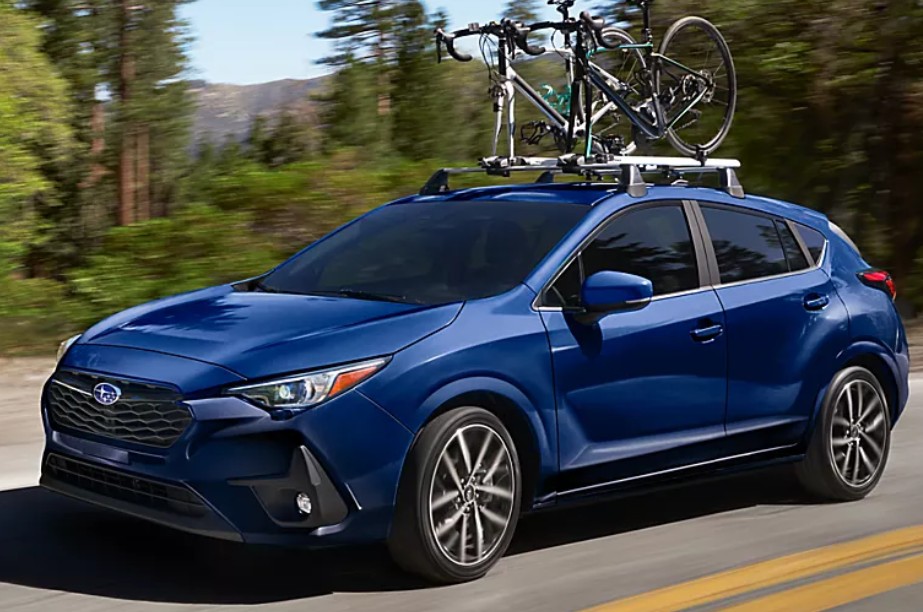
Few compact cars have evolved quite like the Subaru Impreza. Since arriving in the early 1990s, it has gone from a rather straightforward compact sedan and wagon into a modern all-wheel-drive hatchback packed with safety technology. Along the way, it also gave birth to some of the most famous rally-inspired performance cars ever sold.
When we look at Subaru Impreza models by year, though, things can get confusing quickly. Body styles changed. Engines changed. WRX and STI versions eventually became separate models. Manual transmissions disappeared from the regular Impreza lineup, and the sedan itself eventually followed.
So, instead of throwing a mountain of specifications at you, we're going to walk through the Impreza's history generation by generation. Think of this guide as a road map from the early 1993 cars all the way to the modern sixth-generation Impreza.
The Impreza has been sold in six principal generations in the U.S. market: 1993–2001, 2002–2007, 2008–2011, 2012–2016, 2017–2023, and 2024 onward.
Content in this publication
- Subaru Impreza Generations at a Glance
- First-Generation Subaru Impreza: 1993–2001
- Second-Generation Subaru Impreza: 2002–2007
- Third-Generation Subaru Impreza: 2008–2011
- Fourth-Generation Subaru Impreza: 2012–2016
- Fifth-Generation Subaru Impreza: 2017–2023
- Sixth-Generation Subaru Impreza: 2024–Present
- Which Subaru Impreza Years Have a Sedan?
- Which Subaru Impreza Years Have a Manual Transmission?
- When Did the Subaru Impreza RS Return?
- When Did the WRX Stop Being an Impreza?
- How the Impreza Changed Through Six Generations
- What Is the Best Subaru Impreza Generation?
- What to Check Before Buying a Used Subaru Impreza
- Is the Subaru Impreza Still Worth Buying?
- Subaru Impreza Models by Year: Final Thoughts
- Frequently Asked Questions
Subaru Impreza Generations at a Glance
Before digging into individual years, it helps to see the family tree.
- 1993–2001: First generation — sedan, wagon, and eventually coupe
- 2002–2007: Second generation — famous "bug-eye" era and U.S. WRX arrival
- 2008–2011: Third generation — hatchback becomes central to the lineup
- 2012–2016: Fourth generation — improved efficiency and everyday practicality
- 2017–2023: Fifth generation — new platform, modern safety, sedan and hatchback
- 2024–present: Sixth generation — hatchback only, CVT only, RS returns
Cars.com groups the U.S. Impreza into those same six year ranges, while Subaru's current lineup confirms that today's car represents the continuing sixth generation.
First-Generation Subaru Impreza: 1993–2001
The first Impreza reached the U.S. for the 1993 model year. Subaru needed something smaller and more modern than the Leone it replaced, and the Impreza became that car.
It wasn't flashy in standard form. In fact, an early Impreza could look almost anonymous parked beside today's aggressively styled compact cars. Yet underneath that modest body was the formula that would eventually define Subaru: horizontally opposed engines, available or standard all-wheel-drive configurations depending on market and year, and a chassis that felt at home on rough roads.
1993–1994 Subaru Impreza Models
The early cars established the fundamentals. Buyers could find four-door sedans and five-door wagons, making the Impreza unusually versatile for a compact car.
These first model years appeal today mostly to collectors, Subaru enthusiasts, and people who enjoy simple 1990s cars. Compared with later models, electronics are minimal, cabins are basic, and safety equipment is naturally dated.
Yet simplicity has charm. Driving one feels a little like using an old mechanical watch: it won't offer the features of a smartwatch, but everything feels direct.
1995–1997 Subaru Impreza Models
The range became more interesting during the middle of the decade. Subaru added a two-door coupe, giving the Impreza a sportier silhouette.
At the same time, the Impreza name was becoming increasingly linked with rally competition. That motorsport reputation would eventually transform how enthusiasts perceived Subaru.
The Growing WRX Influence
Outside the United States, turbocharged WRX versions had already begun turning the modest Impreza into something much more serious.
American buyers wouldn't officially receive the WRX until the next generation, but the legend was already growing.
1998–2001 Subaru Impreza Models
The later first-generation cars brought updated styling and more mature packaging.
For used-car shoppers today, condition matters far more than model year within this period. Rust, modifications, maintenance records, and previous accident damage can make two apparently identical Imprezas completely different purchases.
Performance versions from this period have also become increasingly collectible, particularly internationally.
Second-Generation Subaru Impreza: 2002–2007
The second-generation Impreza arrived in the U.S. for 2002, and this is where the nameplate's personality became much louder.
The most important development? The WRX finally came to America.
Car and Driver's history notes that the 2002 U.S.-market WRX used a turbocharged 2.0-liter engine producing 227 horsepower.
Suddenly, the practical little Subaru had a rebellious sibling.
2002–2003 Subaru Impreza: The Bug-Eye Years
Those round headlights are impossible to miss.
Enthusiasts affectionately call these cars "bug-eye" Imprezas because of their circular front lamps. The styling was controversial when new but has aged into something instantly recognizable.
Regular Imprezas remained sensible compact transportation, while the WRX turned the platform into an affordable performance icon.
Want practicality Monday through Friday and back-road entertainment on Saturday? That was exactly the appeal.
2004 Subaru Impreza: A Major Styling Update
Subaru quickly revised the second generation's appearance.
The round-headlight look disappeared, replaced by a sharper design commonly associated with the "blob-eye" nickname among enthusiasts.
Changes weren't merely cosmetic across the broader second-generation lifecycle. Subaru continued refining suspension tuning, equipment, performance variants, and cabin features.
2005 Subaru Impreza
The 2005 model continued the middle portion of the second-generation run without completely reinventing the formula.
By this stage, the Impreza's identity was well established: compact dimensions, excellent poor-weather traction, and a choice between sensible transportation and serious performance.
2006–2007 Subaru Impreza: Hawk-Eye Era
Another redesign of the front end produced what enthusiasts commonly call the "hawk-eye" appearance.
These final second-generation cars remain particularly popular among Subaru fans.
From today's perspective, 2006 and 2007 models occupy an interesting middle ground. They are modern enough to feel reasonably usable every day yet old enough to preserve the lighter, mechanical character that later cars gradually softened.
Third-Generation Subaru Impreza: 2008–2011
The 2008 redesign represented a major shift.
The Impreza became larger, more refined, and more conventional inside. Most importantly, Subaru embraced the five-door hatchback body style that would eventually become the only Impreza configuration sold in America.
The Impreza had previously been offered as a conventional wagon, but from the third generation Subaru moved toward a shorter hatchback format.
2008 Subaru Impreza
The new design divided enthusiasts.
Some loved the added refinement. Others missed the quirky styling of the previous generation.
That's often what happens when a cult favorite grows up. It's like watching your favorite underground band suddenly get a polished studio album—technically better in many ways, but perhaps less raw.
For ordinary drivers, however, the improvements made considerable sense. The cabin was more practical, the ride more comfortable, and the hatchback body particularly useful.
2009–2010 Subaru Impreza
These years refined the third-generation package rather than dramatically transforming it.
Sedan and hatchback configurations allowed buyers to choose between a traditional compact-car shape and increased cargo flexibility.
Performance versions remained available under the Impreza WRX and STI umbrella during this period, although those models were increasingly developing identities of their own.
2011 Subaru Impreza
The 2011 model year essentially closed this chapter for the mainstream U.S. Impreza before the redesigned fourth generation arrived.
When shopping used, these cars can sometimes offer attractive prices compared with newer models. The compromise is age: suspension components, wheel bearings, seals, cooling-system parts, and other wear items deserve inspection.
Fourth-Generation Subaru Impreza: 2012–2016
The 2012 Impreza introduced another important evolution.
Subaru focused heavily on efficiency, interior space, and everyday usability. The wheelbase grew even though the overall footprint remained manageable, allowing Subaru to create more passenger room.
This generation also moved the regular Impreza toward the 2.0-liter engine formula that would define later models.
2012 Subaru Impreza
The redesigned 2012 Impreza felt less like a rally-derived compact and more like a mature all-weather commuter.
That isn't necessarily criticism.
For most buyers, improved fuel economy, better packaging, and easier daily driving mattered more than aggressive styling.
The fourth-generation Impreza was available as both a sedan and five-door hatchback.
2013 Subaru Impreza
Changes were relatively modest.
You may be interested in reading Subaru Impreza Insurance Cost: What Should You Expect to Pay?
This makes the 2013 model less interesting from a historical perspective, but potentially attractive in the used market. Often the best used car isn't the year with the biggest redesign. It's the well-maintained example with records sitting quietly in someone's garage.
2014 Subaru Impreza
The regular Impreza continued with familiar engineering, but 2014 represents an important historical dividing line for enthusiasts.
The Impreza and WRX identities were moving apart.
Why WRX History Gets Confusing After 2014
For years, people casually referred to performance models as the "Impreza WRX."
That relationship changed.
Beginning with the 2015 model year in North America, the WRX became a separate model line rather than merely a performance trim within the regular Impreza lineup.
Therefore, when we're discussing Subaru Impreza models by year, it's usually best to treat 2015-and-newer WRX models separately.
2015 Subaru Impreza
The 2015 regular Impreza received styling and equipment updates while continuing the fourth-generation platform.
Improved infotainment and convenience features made the cabin feel less dated.
For buyers who simply wanted Subaru AWD without paying crossover prices, this version represented the brand's traditional compact-car philosophy quite well.
2016 Subaru Impreza
The 2016 model marked the final year of the fourth generation.
Because it came at the end of a mature platform cycle, it may appeal to shoppers who prefer a design that had already been in production for several years rather than buying the first year of a redesign.
Still, maintenance history should always outweigh assumptions based purely on generation timing.
Fifth-Generation Subaru Impreza: 2017–2023
For 2017, Subaru rebuilt the Impreza around its new Subaru Global Platform.
This was a much more substantial engineering change than the conservative exterior styling might suggest.
The fifth generation ran from 2017 through 2023 in the U.S. market and remained available as both a sedan and a hatchback.
2017 Subaru Impreza
The 2017 redesign improved structural rigidity, ride quality, cabin refinement, and safety technology.
A 2.0-liter flat-four engine producing roughly 152 horsepower became the mainstream powerplant.
No, it wasn't fast.
But speed was never the central argument for the regular Impreza. The appeal remained predictable AWD traction, reasonable fuel economy, and compact dimensions.
2018 Subaru Impreza
The second year of the fifth generation changed little fundamentally.
For a used-car shopper, that can actually be attractive. A 2018 provides much of the 2017 redesign's technology without carrying the symbolic status of being the first model year.
2019 Subaru Impreza
Again, Subaru concentrated largely on gradual refinements.
By this point, EyeSight driver-assistance technology had become increasingly important to Subaru's identity.
Depending on trim and transmission, buyers could find features such as adaptive cruise control, pre-collision braking, and lane-related assistance.
2020 Subaru Impreza
The 2020 Impreza received a refresh that sharpened styling and updated equipment.
Visually, Subaru didn't radically alter the car. Instead, it polished the details.
That's a recurring Impreza theme: evolution instead of fireworks.
2021 Subaru Impreza
For 2021, the Impreza continued largely unchanged.
The lineup remained available in sedan and five-door hatchback configurations, giving buyers a choice that would soon disappear.
2022 Subaru Impreza
The 2022 model sat near the end of the fifth-generation cycle.
At this point, the broader automotive market was shifting heavily toward crossovers, yet the Impreza remained one of the few compact vehicles combining a conventional car-like driving position with standard AWD.
2023 Subaru Impreza: End of an Era
The 2023 Impreza was especially significant because it became the final year for several long-running choices.
The fifth generation ended after 2023.
With the upcoming redesign, Subaru would eliminate both the Impreza sedan and the manual transmission from the U.S. lineup.
So if you're specifically hunting for a relatively modern manual-transmission Impreza or a late-model Impreza sedan, 2023 is an important cutoff year.
Sixth-Generation Subaru Impreza: 2024–Present
The 2024 redesign simplified the Impreza lineup dramatically.
No sedan.
No manual transmission.
Every U.S.-market version became a five-door hatchback paired with a continuously variable transmission.
At the same time, Subaru revived a familiar badge: RS.
2024 Subaru Impreza
The sixth-generation 2024 Impreza launched with Base, Sport, and RS trim levels.
The standard 2.0-liter Boxer engine produced 152 horsepower, while the RS stepped up to a 2.5-liter Boxer engine producing 182 horsepower.
The RS wasn't designed to replace a WRX. Think of it instead as a warmer, more energetic Impreza.
It provided stronger acceleration while keeping the everyday comfort and hatchback practicality that define the modern model.
The redesign also expanded driver-assistance and infotainment technology.
2025 Subaru Impreza
The 2025 lineup continued with three primary trims: Impreza, Sport, and RS. Subaru's official brochure lists the regular Impreza and Sport with the 152-hp 2.0-liter Boxer four-cylinder, while the RS receives the 182-hp 2.5-liter engine.
All versions use Subaru Symmetrical All-Wheel Drive.
The 2025 Sport and RS also offer the larger 11.6-inch multimedia touchscreen setup, while the RS adds equipment such as sportier suspension tuning, upgraded brakes, 18-inch wheels, and unique interior trim.
For many buyers, this generation represents the Impreza distilled to its essentials: hatchback practicality, AWD security, and relatively straightforward trim choices.
2026 Subaru Impreza
The 2026 model year brings an interesting lineup change.
Subaru currently lists only Sport and RS trims for the U.S. 2026 Impreza. The Sport starts with the 2.0-liter Boxer engine, while the RS retains the 2.5-liter unit. Both continue with standard Symmetrical AWD.
Subaru also lists the 11.6-inch touchscreen with wireless Apple CarPlay and Android Auto as standard equipment for the 2026 model, while additional rear-seat side airbags have been added as standard safety equipment.
In other words, the sixth-generation lineup is becoming more concentrated around better-equipped versions.
You may be interested in readingSubaru Impreza Insurance Cost: What Should You Expect to Pay?You may be interested in reading
 Is the BMW M5 a Good Car? A Complete Ownership Guide
Which Subaru Impreza Years Have a Sedan?
If you want an Impreza sedan, your choices stop with the fifth generation.
Sedans were part of the Impreza family from its earliest years through 2023. The redesigned 2024 car became hatchback-only in the United States.
That makes 2017–2023 sedans particularly interesting for shoppers wanting a relatively modern Subaru compact without the hatchback body.
Which Subaru Impreza Years Have a Manual Transmission?
Manual transmissions survived surprisingly long in the Impreza.
Earlier generations offered several manual configurations, and even the fifth-generation car retained a manual option on selected trims.
The sixth-generation redesign ended that tradition.
Starting with the 2024 U.S. Impreza, the lineup became CVT-only.
If shifting your own gears matters, you'll therefore need to look at 2023 or earlier.
When Did the Subaru Impreza RS Return?
The RS name has historical roots within the Impreza family, but its modern comeback arrived with the 2024 sixth-generation model.
Unlike an old-school turbocharged performance Subaru, today's RS stays naturally aspirated.
Its 2.5-liter Boxer engine produces 182 horsepower, compared with 152 horsepower from the smaller 2.0-liter engine used in lower trims during the 2024–2025 period.
Think of the RS as the Impreza after an extra cup of coffee rather than a full WRX transformation.
When Did the WRX Stop Being an Impreza?
This question causes endless confusion in used-car listings.
Historically, WRX and STI models belonged directly to the Impreza family.
Eventually Subaru separated them.
For practical U.S.-market shopping purposes, 2014 is the final model year commonly treated as the Impreza WRX, while the redesigned 2015 WRX became its own distinct model.
That distinction matters when researching parts, resale values, reliability, insurance, and specifications.
A 2013 Impreza WRX and a 2017 regular Impreza may technically share historical roots, but they are very different cars.
How the Impreza Changed Through Six Generations
Step back from the individual model years and a clear pattern emerges.
The first Impreza was a versatile, lightweight compact. The second generation transformed the name into an enthusiast icon. The third broadened its appeal. The fourth focused on efficiency. The fifth emphasized platform sophistication and safety. The sixth stripped the lineup down to the five-door hatchback.
What stayed?
All-weather usability.
That's the thread stitching three decades together.
Other compact cars have chased sporty styling, luxury features, or rock-bottom pricing. The Impreza has stubbornly occupied its own little corner: a normal-sized passenger car with unusually strong poor-weather credentials.
What Is the Best Subaru Impreza Generation?
There isn't one universal winner because each generation appeals to a different buyer.
If we love old-school Subaru character, the first and second generations have enormous personality. If we want an inexpensive modern commuter, fourth-generation cars can make sense. If safety, refinement, and newer technology matter most, the fifth generation is much easier to recommend.
And if we're buying new?
The sixth generation gives us the most modern Impreza experience, particularly in RS form.
The important point is that "best year" and "best car to buy" aren't always the same thing.
A beautifully maintained 2018 can be a better purchase than a neglected 2022. Service history is the quiet hero of every used-car story.
What to Check Before Buying a Used Subaru Impreza
Age changes what we should inspect.
On older Imprezas, corrosion, oil leaks, cooling-system condition, suspension wear, previous performance modifications, and accident history become particularly important.
On newer cars, maintenance records, CVT servicing history, warning lights, driver-assistance system operation, tire condition, and evidence of collision repairs deserve attention.
AWD also makes matching tires important. Significant differences in tire diameter can place unnecessary strain on an all-wheel-drive system.
And remember: modified doesn't automatically mean bad, but modifications increase the number of questions we need to ask.
Who installed the parts? Why? Was the engine tuned? Were factory components retained?
A cheap performance Subaru can turn expensive faster than snow melts on a warm hood.
Is the Subaru Impreza Still Worth Buying?
For the right driver, absolutely.
The modern Impreza doesn't dominate horsepower charts, offer SUV-like ground clearance, or provide the cheapest entry price in the compact segment.
Instead, its selling point is balance.
We get standard AWD, hatchback usefulness, predictable road manners, and a relatively spacious cabin without moving into a taller crossover.
The 2025 Impreza, for example, combines standard Symmetrical AWD with up to 34 mpg highway according to Subaru, illustrating how far the car has moved from the thirsty, performance-focused image many people still associate with the Impreza name.
The Crosstrek may attract buyers wanting extra ground clearance, and the WRX will always appeal more strongly to performance enthusiasts. But the Impreza sits neatly between them.
Subaru Impreza Models by Year: Final Thoughts
Following the Subaru Impreza from 1993 to today is almost like watching the compact-car market itself evolve.
The original car was small, simple, and practical. Rally success gave the badge an unexpected dose of adrenaline. WRX and STI versions turned Subaru into an enthusiast brand. Later Imprezas grew safer, quieter, and more refined until the sixth generation arrived as a hatchback-only AWD compact.
Yet the basic idea has survived.
The Impreza still isn't trying to be everything to everyone.
Instead, it gives us everyday usability with a slightly unconventional Subaru flavor—and that consistency explains why the name has survived for more than three decades.
When comparing Subaru Impreza models by year, the biggest milestones are easy to remember: 1993 introduced the car, 2002 brought the WRX to America, 2008 ushered in the hatchback-heavy third generation, 2012 improved efficiency and packaging, 2017 introduced the fifth-generation platform, and 2024 transformed the Impreza into a hatchback-only lineup while reviving the RS.
The best year for us ultimately depends on what we're chasing: nostalgia, affordability, a manual gearbox, modern safety technology, or simply a dependable AWD hatchback for the daily commute.
Frequently Asked Questions
What years are the Subaru Impreza generations?
In the U.S. market, the principal generations are 1993–2001, 2002–2007, 2008–2011, 2012–2016, 2017–2023, and 2024 onward.
What year did the Subaru Impreza become hatchback only?
The Impreza became hatchback-only in the United States with the sixth generation for the 2024 model year. Subaru discontinued the regular Impreza sedan when the fifth generation ended after 2023.
What year did Subaru stop making a manual Impreza?
The 2023 model year was the final U.S. Impreza generation offering a manual transmission. Starting with the redesigned 2024 Impreza, Subaru switched the lineup to CVT-only.
Is the Subaru Impreza RS the same as a WRX?
No. The modern Impreza RS uses a naturally aspirated 2.5-liter Boxer engine producing 182 horsepower and focuses on giving the regular Impreza stronger performance. The WRX is a separate turbocharged performance model.
You may be interested in readingSubaru Impreza Insurance Cost: What Should You Expect to Pay?You may be interested in reading
Is the BMW M5 a Good Car? A Complete Ownership GuideYou may be interested in reading
Subaru Impreza Pros and Cons: Is It Worth Buying?What are the current Subaru Impreza models?
For the 2026 U.S. model year, Subaru lists the Impreza Sport and Impreza RS. The Sport uses a 2.0-liter Boxer engine, while the RS receives a 2.5-liter Boxer engine. Both come with standard Symmetrical All-Wheel Drive.
If you want to know other articles similar to Subaru Impreza Models by Year: Complete Generation Guide you can visit the category Blog.
Volvo S90 Reliability: Problems, Costs & Best Years
Is Haval Jolion a Good Car? Honest Review, Reliability, Pros and Cons
How to Start Haval Jolion With Spare Key: Complete Guide
How to Calculate Per Diem on an Auto Loan
How to Calculate the Residual Value of a Car

Is the Honda Passport Selling Well? Sales Numbers Tell the Story
Leave a Reply
More content of your interest