
Hyundai Palisade Engine Size: Complete Guide by Model Year

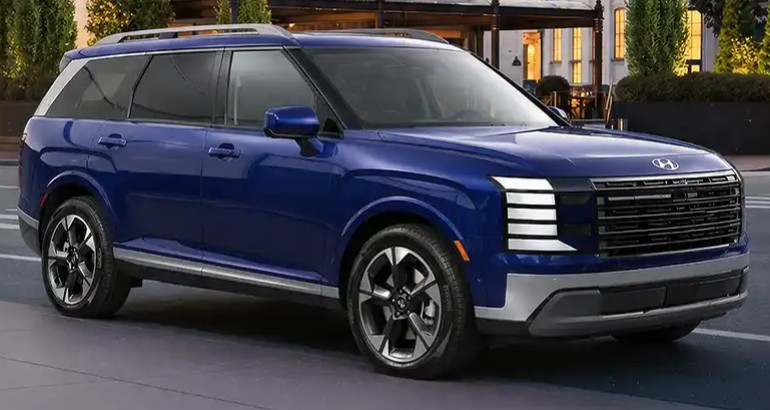
When we look at a big three-row SUV like the Hyundai Palisade, engine size matters—but displacement alone never tells the whole story. Horsepower, torque, transmission tuning, vehicle weight, turbocharging, hybrid assistance, and drivetrain configuration all determine whether an SUV feels lively, relaxed, thirsty, or strained.
For several years, answering the question “What is the Hyundai Palisade engine size?” was wonderfully simple. In the U.S., the first-generation Palisade relied on a 3.8-liter naturally aspirated V6. Then Hyundai redesigned the SUV and changed the formula dramatically. The newer generation introduced a 3.5-liter V6, while a 2.5-liter turbocharged four-cylinder hybrid became another major powertrain choice.
So, yes, the engine actually became smaller—but that certainly does not mean the Palisade suddenly became weaker.
In this guide, we'll break down Hyundai Palisade engine sizes by year, explain what the numbers mean in everyday driving, compare the V6 and hybrid configurations, and look at which engine makes the most sense for different types of owners.
Content in this publication
- What Is the Hyundai Palisade Engine Size?
- Hyundai Palisade Engine Size by Year
- 2026 Hyundai Palisade Engine Size
- Hyundai Palisade Hybrid Engine Size
- 3.8L vs 3.5L Hyundai Palisade Engine
- 3.5L V6 vs 2.5L Hybrid Palisade
- Does Hyundai Palisade Engine Size Affect Performance?
- Is the Hyundai Palisade a V6?
- Is the Hyundai Palisade Turbocharged?
- How Many Cylinders Does a Hyundai Palisade Have?
- Does Engine Size Affect Palisade Fuel Economy?
- Hyundai Palisade Engine Size and Towing
- Hyundai Palisade Engine Size for Family Driving
- Which Hyundai Palisade Engine Size Should You Choose?
- Is a Bigger Palisade Engine Always Better?
- What to Check When Buying a Used Palisade
- International Hyundai Palisade Engine Sizes
- Hyundai Palisade Engine Size: The Bottom Line
- Frequently Asked Questions
What Is the Hyundai Palisade Engine Size?
For the U.S. market, the answer depends mainly on which generation we're discussing.
The 2020 through 2025 Hyundai Palisade uses a 3.8-liter V6 gasoline engine. The redesigned 2026 Palisade switched its standard gasoline engine to a 3.5-liter naturally aspirated V6 and introduced an available 2.5-liter turbocharged four-cylinder hybrid powertrain. Hyundai's current specifications continue to list the 3.5-liter V6 for the newer gasoline Palisade.
Here's the quick version:
| Palisade version | Engine size | Configuration | Output |
|---|---|---|---|
| 2020–2025 U.S. Palisade | 3.8L | Naturally aspirated V6 | 291 hp |
| New-generation gasoline Palisade | 3.5L | Naturally aspirated V6 | 287 hp |
| New-generation Palisade Hybrid | 2.5L | Turbocharged 4-cylinder + electric motors | 329 hp combined |
That table immediately reveals something interesting. The smallest combustion engine of the bunch produces the most combined system horsepower when paired with electric assistance.
Engine displacement isn't everything.
Hyundai Palisade Engine Size by Year
The Palisade has not gone through endless engine revisions. Hyundai kept the original powertrain remarkably consistent before making a major change with the second generation.
2020 Hyundai Palisade Engine Size
The 2020 Palisade marked the SUV's arrival in the United States, powered by a 3.8-liter V6.
That engine was a logical choice for a large family vehicle. Instead of chasing huge turbocharged output figures, Hyundai opted for smooth, predictable naturally aspirated power.
It generated approximately:
- 291 horsepower at 6,000 rpm
- 262 lb-ft of torque at 5,200 rpm
- Power through an eight-speed automatic transmission
Hyundai describes this powerplant as an Atkinson-cycle, direct-injected V6 with dual continuously variable valve timing.
For the everyday driver, those technical details translate into something simpler: smooth acceleration without waiting for a turbocharger to wake up.
2021 Hyundai Palisade Engine Size
The 2021 Palisade continued with the 3.8-liter V6.
There wasn't a drastic powertrain shakeup. Hyundai had already created an engine and transmission combination well suited to the Palisade's mission, so the company concentrated more heavily on trims, equipment, comfort, and technology.
If you're shopping for a used 2020 or 2021 model, therefore, engine displacement won't be the deciding factor between them.
2022 Hyundai Palisade Engine Size
The 2022 model again carried the 3.8L V6.
That consistency can actually be helpful for used-SUV buyers. Rather than having to study an alphabet soup of engine choices, you can concentrate on mileage, maintenance records, trim level, drivetrain, condition, and price.
Under the hood, the basic recipe remained familiar.
2023 Hyundai Palisade Engine Size
For 2023, Hyundai refreshed the Palisade, but the familiar 3.8-liter V6 remained.
Hyundai listed the engine at 291 horsepower and 262 lb-ft of torque, paired with the eight-speed automatic.
Think of this update like renovating a kitchen without tearing down the house. The surrounding product became fresher, but Hyundai didn't see a pressing need to replace the underlying powertrain.
Did the 2023 Palisade Get a Turbo Engine?
No. Despite the growing industry trend toward downsized turbocharged engines, the U.S.-market 2023 Palisade retained its naturally aspirated 3.8-liter V6.
For drivers who prefer traditional naturally aspirated engine behavior, that's part of its appeal.
2024 Hyundai Palisade Engine Size
The 2024 Palisade continued the first-generation formula with the 3.8-liter V6.
Again, buyers did not have to choose between a small base engine and a large premium engine. The V6 remained central to the lineup.
This made trim selection less complicated because purchasing a more expensive Palisade was primarily about equipment and luxury rather than unlocking a stronger combustion engine.
2025 Hyundai Palisade Engine Size
The 2025 Palisade was essentially a carry-over model rather than an all-new vehicle. Hyundai's model-year documentation specifically identifies the 2025 Palisade as a carry-over from the previous model year.
Consequently, the familiar 3.8-liter V6 continued through the final model year of that generation.
For shoppers who specifically want the older 3.8-liter engine but prefer the newest example possible, the 2025 model is particularly noteworthy.
2026 Hyundai Palisade Engine Size
Now we reach the big turning point.
The all-new 2026 Hyundai Palisade introduced two substantially different powertrain strategies:
3.5-liter naturally aspirated V6
and
2.5-liter turbocharged four-cylinder hybrid
Hyundai officially describes the 2026 model as an all-new generation rather than another refresh.
That distinction matters because the changes beneath the skin are far more meaningful than swapping bumpers and headlights.
3.5-Liter V6 Palisade
The standard gasoline powertrain uses a 3.5-liter gasoline direct-injected V6 producing:
287 horsepower at 6,400 rpm and 260 lb-ft of torque at 5,000 rpm.
Hyundai pairs it with an eight-speed automatic transmission. Front-wheel drive is available on much of the range, while HTRAC all-wheel drive is available or standard depending on trim.
At first glance, those figures may look like a downgrade from the old 3.8-liter V6's 291 horsepower and 262 lb-ft.
Technically, peak output is slightly lower.
Practically, that tiny difference should not be treated as though somebody removed half the engine. We're discussing four horsepower and two pound-feet of torque—not the difference between a family crossover and a sports car.
Why Did Hyundai Reduce the V6 From 3.8L to 3.5L?
Modern engine development isn't a contest to see who can fit the largest displacement figure on a brochure.
Manufacturers balance numerous variables, including efficiency, emissions, packaging, weight, drivability, manufacturing strategy, and regulatory requirements.
A well-designed 3.5-liter engine can comfortably do the work once assigned to a larger engine.
It's rather like replacing an oversized furnace with a newer, smarter system. Smaller capacity on paper doesn't automatically mean poorer performance.
Hyundai Palisade Hybrid Engine Size
Perhaps the biggest mechanical development in the Palisade's history is the introduction of the hybrid.
The Palisade Hybrid uses a 2.5-liter turbocharged inline-four gasoline engine combined with electric motors.
Hyundai says the combustion engine can produce up to approximately 258 horsepower, while electric assistance brings combined system output to approximately 329 horsepower and 339 lb-ft of torque.
Suddenly, that relatively small 2.5-liter engine doesn't seem very small at all.
How Can a 2.5L Engine Make More Power Than the V6?
Because we're no longer comparing engines in isolation.
You may be interested in reading Hyundai Palisade Oil Type: Complete Guide by Year and Engine
The hybrid has three important ingredients working together:
Turbocharging pushes additional air into the combustion engine.
Electric motors provide extra propulsion.
Hybrid control software blends the available power sources according to driving conditions.
A 2.5-liter hybrid therefore isn't simply a four-cylinder engine trying desperately to impersonate a V6.
It's a power system.
That's an important distinction whenever we're comparing modern engine sizes.
Palisade Hybrid Horsepower
Combined output reaches approximately 329 horsepower, making the hybrid significantly more powerful on paper than the 287-horsepower 3.5-liter gasoline V6.
Torque is another major difference.
The hybrid system reaches approximately 339 lb-ft, compared with 260 lb-ft for the conventional V6.
Electric motors are especially effective at delivering torque quickly. That can help a large SUV feel responsive from low speeds, where drivers spend much of their time.
3.8L vs 3.5L Hyundai Palisade Engine
Place the old and new gasoline V6 engines side by side and the similarities are almost more striking than the differences.
| Specification | 3.8L V6 | 3.5L V6 |
| Displacement | 3.8 liters | 3.5 liters |
| Cylinders | 6 | 6 |
| Aspiration | Naturally aspirated | Naturally aspirated |
| Horsepower | 291 hp | 287 hp |
| Torque | 262 lb-ft | 260 lb-ft |
| Transmission | 8-speed automatic | 8-speed automatic |
The displacement falls by roughly 0.3 liter, but maximum output barely changes.
Is the 3.8L Palisade More Powerful?
Strictly by peak factory horsepower, yes.
The 3.8-liter engine produces 291 horsepower, versus 287 horsepower from the newer 3.5-liter V6.
But we'd avoid buying one Palisade over another solely because of those four horsepower.
Passenger load, road gradient, tires, drivetrain configuration, transmission calibration, vehicle weight, and even environmental conditions can have a bigger effect on how performance feels.
Four horsepower in an SUV this large is a whisper, not a thunderclap.
3.5L V6 vs 2.5L Hybrid Palisade
This is the comparison that modern Palisade buyers should pay much more attention to.
The V6 appeals through simplicity and familiar behavior. The hybrid uses a smaller turbo engine plus electrification to deliver stronger combined output and improved efficiency.
Reasons We Might Prefer the 3.5L V6
The naturally aspirated V6 offers a conventional driving experience with no turbocharger and no hybrid propulsion system.
It's especially appealing to buyers who value:
- Smooth, linear acceleration
- Traditional V6 character
- A conventional gasoline powertrain
- Maximum factory-rated towing capability
- Familiar long-distance driving behavior
Hyundai currently lists the standard 3.5-liter Palisade at up to 5,000 pounds of maximum towing capacity when properly equipped.
Reasons We Might Prefer the 2.5L Hybrid
The hybrid takes the efficiency-first road without becoming slow.
Potential advantages include:
- Higher combined horsepower
- Considerably stronger combined torque
- Better fuel economy
- Electric assistance at low speeds
- Lower fuel consumption in stop-and-go use
- A potentially more effortless feel during everyday acceleration
Hyundai launched the system targeting more than 30 mpg on the highway, though actual ratings and results vary by configuration and driving conditions.
The hybrid is therefore not merely the “economy Palisade.” It's arguably the more technologically ambitious powertrain.
Does Hyundai Palisade Engine Size Affect Performance?
Of course—but not in the simplistic “bigger equals faster” way we once assumed.
Engine displacement measures the total volume swept by an engine's pistons. Historically, more displacement usually meant greater potential for producing torque and horsepower.
Then turbocharging and electrification walked into the room and rearranged the furniture.
A modern 2.5-liter turbo hybrid can outperform a larger naturally aspirated V6 because engine size represents just one variable.
What Matters Besides Displacement?
When evaluating Palisade performance, we'd consider:
Forced induction: A turbocharger lets a smaller engine consume more air and fuel under load.
Electric assistance: Hybrid motors can contribute substantial torque almost immediately.
Transmission gearing: The gearbox determines how effectively the engine's output reaches the wheels.
Vehicle weight: More mass requires more energy to accelerate.
Torque curve: Where an engine makes its torque matters almost as much as its peak output.
Drivetrain: AWD introduces different mechanical characteristics than FWD.
That's why simply comparing “3.5L versus 2.5L” misses most of the story.
Is the Hyundai Palisade a V6?
Many Palisades are—but not all.
The first-generation U.S. Palisade was strongly associated with its 3.8-liter V6, while the redesigned gasoline model uses a 3.5-liter V6.
However, the introduction of the 2.5-liter turbo hybrid four-cylinder means we can no longer say every Palisade has a V6.
So when buying used or new, check the powertrain rather than assuming the engine based on the badge alone.
Is the Hyundai Palisade Turbocharged?
Again, the answer depends on the version.
Traditional Palisade V6 engines are naturally aspirated, meaning they don't use a turbocharger.
The newer hybrid is different. Its 2.5-liter four-cylinder gasoline engine is turbocharged.
This allows Hyundai to extract substantial performance from a smaller displacement while using electric assistance to enhance power and efficiency.
How Many Cylinders Does a Hyundai Palisade Have?
Older and conventional gasoline Palisades use six-cylinder engines arranged in a V configuration.
The hybrid uses an inline four-cylinder combustion engine together with electric motors.
Consequently:
3.8L Palisade = V6
3.5L Palisade = V6
2.5L Palisade Hybrid = inline-four turbo + electric motors
That simple distinction can make researching used listings much easier.
You may be interested in readingHyundai Palisade Oil Type: Complete Guide by Year and EngineYou may be interested in reading
Hyundai Palisade Warning Lights: Complete Dashboard GuideDoes Engine Size Affect Palisade Fuel Economy?
Yes, although once again displacement isn't acting alone.
Larger naturally aspirated engines tend to use more fuel because moving a heavy SUV requires substantial energy, particularly around town.
A hybrid system can recover some energy during deceleration and use electric propulsion assistance in situations where a conventional gasoline engine may operate less efficiently.
That's why the newer hybrid can combine a relatively small 2.5-liter engine with performance that exceeds the conventional V6 on paper.
V6 Fuel Economy
For the newer 3.5-liter gasoline Palisade, Hyundai currently lists EPA estimates of approximately 19 mpg city, 26 highway and 22 combined for FWD, while AWD versions are generally listed at approximately 18 city, 24 highway and 20 combined, depending on trim.
Specific figures can differ with model year and configuration, so we'd always check the window sticker or EPA listing for the exact Palisade we're considering.
Hyundai Palisade Engine Size and Towing
Here's where conventional displacement still has practical relevance.
The new 3.5-liter naturally aspirated V6 Palisade is rated to tow as much as 5,000 pounds when properly equipped, while Hyundai announced approximately 4,000 pounds of maximum towing capability for the hybrid powertrain.
If we regularly pull a heavier camper or boat, therefore, the gasoline V6 deserves serious consideration.
If towing happens only occasionally—or not at all—the hybrid's efficiency and additional combined torque may be more appealing.
Which Palisade Engine Is Better for Towing?
For maximum published towing capacity, the 3.5-liter V6 wins among the new-generation choices.
That's a good example of why peak horsepower alone doesn't determine suitability.
The hybrid makes more total power, yet Hyundai gives the conventional V6 the higher maximum tow rating. Cooling capacity, transmission design, drivetrain durability, chassis calibration, and other engineering considerations all influence towing limits.
Hyundai Palisade Engine Size for Family Driving
Most Palisades won't spend their lives towing boats up mountain passes. They'll carry children, groceries, luggage, sports equipment, pets, and all the other delightful clutter that follows a family SUV around.
In those circumstances, all of the main Palisade engines provide sensible performance.
The older 3.8-liter V6 is smooth and proven within the platform. The newer 3.5-liter V6 keeps that familiar naturally aspirated personality. The 2.5-liter hybrid adds a modern layer of low-speed electric assistance and significantly greater efficiency potential.
The “best” engine therefore depends on the way we actually use the vehicle.
Which Hyundai Palisade Engine Size Should You Choose?
There isn't one universal winner.
Choose the 3.8L V6 If…
You're shopping for a 2020–2025 used Palisade, want the original powertrain, and prefer traditional naturally aspirated V6 performance.
Because this engine appeared across several model years, used shoppers have a broad pool of vehicles to consider.
Choose the 3.5L V6 If…
You want a newer-generation Palisade while maintaining a conventional six-cylinder gasoline engine.
It's also the obvious choice for buyers prioritizing the Palisade's maximum new-generation towing capacity.
Choose the 2.5L Hybrid If…
Fuel economy matters heavily, but you don't want to give up strong acceleration.
The hybrid's approximately 329 horsepower and 339 lb-ft of combined torque make it particularly interesting because efficiency isn't achieved by simply starving the SUV of power.
Is a Bigger Palisade Engine Always Better?
No—and the Palisade's evolution illustrates that beautifully.
The original engine displaced 3.8 liters.
The replacement V6 dropped to 3.5 liters.
The hybrid combustion engine is only 2.5 liters.
Yet the hybrid system produces the greatest combined horsepower and torque.
That's modern automotive engineering in a nutshell. Displacement once served as a convenient shortcut for understanding performance. Today, it's simply one piece of a considerably larger puzzle.
Buying an engine only because it has the largest number stamped beside the “L” is a little like choosing a smartphone based exclusively on battery capacity. Useful? Certainly. Enough information to make the whole decision? Not remotely.
What to Check When Buying a Used Palisade
Engine size should form part of our research, not replace it.
A carefully maintained Palisade with sensible mileage can be a better purchase than another vehicle with the “ideal” engine but neglected maintenance.
Before buying, we'd pay close attention to service history, oil-change records, warning lights, unusual noises, transmission behavior, fluid leaks, accident history, recall completion, tire condition, and evidence of towing abuse.
A pre-purchase inspection from a qualified independent mechanic can also be worth the money.
The number on the engine cover tells us what the vehicle has.
Maintenance history tells us how it's been treated.
International Hyundai Palisade Engine Sizes
One final caveat matters if you're reading from outside the United States.
Hyundai powertrain offerings can differ by country.
Certain international markets have historically offered Palisade engines that weren't available in the U.S., including diesel configurations. Engine availability can also change between generations and regional specifications.
Therefore, if you're researching a Palisade in Australia, New Zealand, South Korea, the Middle East, or another market, use the VIN, local Hyundai documentation, registration information, or the engine-code label to verify the exact engine.
Don't assume a U.S. specification automatically applies worldwide.
Hyundai Palisade Engine Size: The Bottom Line
The Hyundai Palisade's engine story is refreshingly straightforward once we divide it by generation.
The 2020–2025 U.S. Palisade uses a 3.8-liter naturally aspirated V6 producing about 291 horsepower and 262 lb-ft of torque.
With the all-new generation, Hyundai moved the conventional gasoline Palisade to a 3.5-liter V6 producing 287 horsepower and 260 lb-ft, while introducing a 2.5-liter turbocharged four-cylinder hybrid with approximately 329 horsepower and 339 lb-ft of combined output.
So which is best?
For a straightforward used family SUV, the 3.8L remains an appealing option. For traditional V6 performance in the redesigned model, we'd look toward the 3.5L. For stronger combined output and improved fuel efficiency, the 2.5L hybrid makes an extremely convincing argument.
Perhaps the most important takeaway is this: don't judge a Palisade by displacement alone.
The smallest engine in the modern lineup illustrates exactly how much automotive technology has changed. Turbocharging, electric motors, sophisticated transmissions, and smarter powertrain management have made engine size less of a verdict and more of a starting point.
Frequently Asked Questions
1. What size engine does a Hyundai Palisade have?
The engine depends on model year and powertrain. U.S.-market 2020–2025 Palisades use a 3.8-liter V6. The redesigned model introduced a 3.5-liter V6 and an available 2.5-liter turbocharged four-cylinder hybrid.
2. Is the Hyundai Palisade a 4-cylinder or 6-cylinder?
It can now be either. Conventional gasoline Palisades use V6 engines, while the newer Palisade Hybrid uses a turbocharged four-cylinder gasoline engine assisted by electric motors.
3. How much horsepower does the Hyundai Palisade have?
The older 3.8L V6 produces approximately 291 horsepower. The newer 3.5L V6 produces 287 horsepower, while the 2.5L turbo hybrid reaches approximately 329 horsepower in combined system output.
4. Is the 3.5L Palisade engine smaller than the old engine?
Yes. The previous U.S.-market Palisade used a 3.8-liter V6, whereas the redesigned gasoline model uses a 3.5-liter V6. Despite the lower displacement, peak horsepower and torque remain very close.
5. Which Hyundai Palisade engine is best?
It depends on priorities. We'd consider the 3.8L V6 for a used first-generation Palisade, the 3.5L V6 for traditional naturally aspirated performance and maximum new-generation towing capability, and the 2.5L hybrid for stronger combined output and better fuel-efficiency potential.
You may be interested in readingHyundai Palisade Oil Type: Complete Guide by Year and EngineYou may be interested in reading
Hyundai Palisade Warning Lights: Complete Dashboard GuideYou may be interested in reading
 Audi A4 Oil Capacity: Complete Guide by Engine and Model
If you want to know other articles similar to Hyundai Palisade Engine Size: Complete Guide by Model Year you can visit the category Service and Parts.
Audi A4 Gearbox Oil: Complete Guide to Types, Changes, Levels, and Common Problems
Audi A4 Gearbox Replacement Cost: What Should We Expect to Pay?
Audi A4 Gearbox Service: What It Includes, When to Do It, and Why It Matters
Audi A4 Windscreen Replacement Cost: What Should You Expect to Pay?
Audi A4 Oil Capacity: Complete Guide by Engine and Model
Hyundai Palisade Warning Lights: Complete Dashboard Guide
Leave a Reply
More content of your interest