
BMW M5 vs Mercedes E63 AMG: Which Super Sedan Wins?

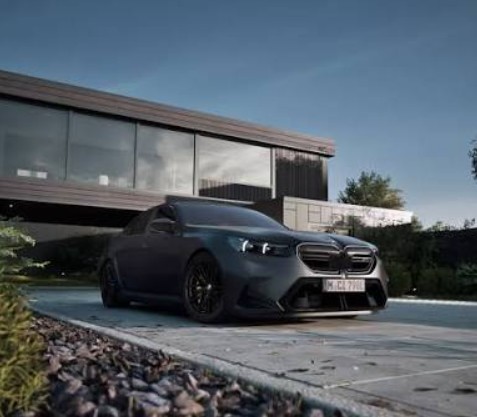
Few automotive rivalries feel as wonderfully excessive as BMW M5 vs Mercedes E63 AMG. These are cars designed for people who apparently looked at a comfortable executive sedan and thought, “Nice—but what if it could embarrass a sports car?”
That attitude has shaped both models for decades.
The BMW M5 has traditionally been the precision instrument of the pair: composed, athletic, deceptively fast, and often more interested in lap times than theatrics. The Mercedes-AMG E63, meanwhile, has tended to arrive with its collar slightly undone. It offers similar everyday usability but mixes it with explosive torque, muscular styling, and the sort of V8 soundtrack that can make an unnecessary tunnel detour seem perfectly reasonable.
There is one important point before we dive deeper. When enthusiasts search for an M5 vs E63 AMG comparison, they are usually thinking about the F90-generation BMW M5 and W213-generation Mercedes-AMG E63 S—the two V8-powered super sedans that competed directly during the late 2010s and early 2020s.
That's the rivalry we'll primarily examine here.
The situation has since changed. BMW's current-generation M5 is a plug-in-hybrid V8 producing 717 horsepower in U.S. specification, while the contemporary AMG E-Class performance flagship is currently the six-cylinder plug-in-hybrid E53 rather than a direct E63 successor.
So, if you're trying to decide which of these legendary German missiles deserves your money—especially on the used market—grab a coffee. This fight gets interesting.
Content in this publication
- BMW M5 vs Mercedes E63 AMG at a Glance
- BMW M5 vs Mercedes E63 AMG Specs
- Engine Comparison: Two Twin-Turbo V8 Masterpieces
- Acceleration: BMW M5 vs E63 AMG 0–60 MPH
- M xDrive vs AMG Performance 4MATIC+
- Transmission: 8 Speeds vs 9 Speeds
- Handling: Which Super Sedan Is Better in Corners?
- Steering Feel
- Ride Comfort: Can You Actually Daily Drive Them?
- BMW M5 vs Mercedes E63 AMG Interior
- Exterior Styling: Stealth vs Swagger
- Exhaust Sound: Mercedes Takes the Crown
- Practicality: They're Still Executive Sedans
- Technology and Infotainment
- BMW M5 vs Mercedes E63 AMG Reliability
- Maintenance Costs
- Fuel Economy
- BMW M5 vs Mercedes E63 AMG for Daily Driving
- Which Is Better for Enthusiasts?
- BMW M5 Competition vs Mercedes E63 S
- What About the BMW M5 CS?
- Current BMW M5 vs Today's AMG E-Class
- Which One Holds Its Value Better?
- Which One Should You Buy Used?
- BMW M5 vs Mercedes E63 AMG: Our Verdict
- Final Thoughts
- Frequently Asked Questions
BMW M5 vs Mercedes E63 AMG at a Glance
Let's establish the basic personalities first.
The F90 BMW M5 uses a 4.4-liter twin-turbocharged V8, while the W213 Mercedes-AMG E63 S uses a 4.0-liter twin-turbocharged V8. In representative 2021 specifications, the standard M5 produced 600 hp, the M5 Competition 617 hp, and the E63 S produced 603 hp along with a substantial 627 lb-ft of torque.
Both cars employ sophisticated all-wheel-drive systems, yet both can also redirect their personalities toward rear-wheel-drive mischief. BMW calls its system M xDrive, while Mercedes uses AMG Performance 4MATIC+.
The philosophical split is simple:
- BMW M5: sharper, more understated, more clinical and traditionally driver-focused.
- Mercedes-AMG E63 S: louder, more theatrical, torque-rich and luxurious.
- Both: absurdly fast, genuinely practical and capable of turning ordinary highway merges into memorable events.
There isn't a bad choice here.
There is, however, probably a better choice for you.
BMW M5 vs Mercedes E63 AMG Specs
Specifications vary according to model year and version, particularly because BMW introduced Competition and CS variants. For the clearest direct comparison, the F90 M5 Competition and W213 E63 S provide an excellent snapshot of this rivalry.
| Specification | BMW M5 Competition | Mercedes-AMG E63 S |
|---|---|---|
| Engine | 4.4L twin-turbo V8 | 4.0L twin-turbo V8 |
| Power | Around 617 hp | Around 603 hp |
| Torque | 553 lb-ft | 627 lb-ft |
| Transmission | 8-speed automatic | 9-speed automatic |
| Drivetrain | M xDrive AWD | AMG Performance 4MATIC+ AWD |
| RWD mode | Yes | Yes |
| Body style | Sedan | Sedan / wagon in some markets |
| Character | Precise and devastating | Dramatic and muscular |
Mercedes clearly wins the torque contest, while the M5 Competition counters with slightly greater peak horsepower.
On paper, they're remarkably close.
On the road, they feel surprisingly different.
Engine Comparison: Two Twin-Turbo V8 Masterpieces
BMW M5 4.4-Liter Twin-Turbo V8
BMW's S63 V8 is the heart of the F90 M5 experience.
It's a 4.4-liter twin-turbocharged engine that doesn't merely produce impressive numbers; it delivers power with frightening efficiency. There's relatively little drama required to access its performance. Press the accelerator, the transmission finds the right gear, and suddenly the scenery appears to have been fast-forwarded.
The standard F90 M5 delivered 600 hp, while the Competition increased output to 617 hp.
The engine rewards revs more than you might expect from such a torque-rich turbocharged V8. There's a relentless quality to the acceleration. It doesn't punch once and fade. It keeps pulling.
Think of it as a heavyweight boxer with the hand speed of a middleweight.
Mercedes-AMG E63 S 4.0-Liter Biturbo V8
The E63 S takes another approach.
Its 4.0-liter twin-turbo V8 develops roughly 603 hp in U.S.-spec versions of the era, but the more interesting figure is 627 lb-ft of torque.
And you notice it.
The AMG feels tremendously muscular at ordinary road speeds. You don't always need to chase the redline because so much thrust arrives through the middle of the rev range.
That massive torque reserve gives the Mercedes its distinctive attitude. Put your foot down at 40 or 50 mph and the E63 responds as though someone fired the sedan from a catapult.
Which Engine Feels Faster?
At this performance level, arguing over tiny acceleration differences becomes almost academic.
Both are ferociously quick.
Yet their personalities differ.
The BMW engine feels slightly smoother and more disciplined, particularly when you're building speed progressively.
The Mercedes feels more aggressive, delivering its torque with an almost industrial force.
If we had to describe them with one word each?
BMW: relentless.
Mercedes: violent.
Acceleration: BMW M5 vs E63 AMG 0–60 MPH
This is the part everyone secretly wants to know.
Which one wins the traffic-light battle?
Independent results naturally vary depending on tires, road surface, weather and launch conditions, but both cars occupy genuine supercar territory.
Earlier manufacturer figures placed both the M5 and E63 S at around 3.4 seconds from 0–100 km/h (0–62 mph) in their original configurations. Later Competition versions of the BMW improved further.
The important thing isn't whether one car wins by one or two tenths.
It's how repeatable the acceleration feels.
Their sophisticated AWD systems allow both sedans to deploy enormous power without instantly converting expensive rear tires into smoke.
Launch either correctly and the experience is almost surreal.
Your brain expects a luxury sedan.
Your inner ear receives something much closer to a supercar.
M xDrive vs AMG Performance 4MATIC+
Once upon a time, purists might have complained about putting all-wheel drive in an M5 or E63.
Then they experienced what 600-plus horsepower does to two driven wheels on a damp morning.
Problem solved.
Both performance AWD systems are strongly rear-biased rather than behaving like conventional safety-first AWD setups. Both can also effectively disengage the front axle and allow rear-wheel-drive operation.
BMW M xDrive
BMW's system feels astonishingly natural.
Most of the time, the M5 behaves like a powerful rear-wheel-drive sedan that simply happens to possess incredible traction.
The system can distribute torque intelligently between the axles while the Active M Differential manages power across the rear wheels.
What makes it special is transparency.
You rarely feel as though computers are interrupting your fun. Instead, they seem to be quietly cleaning up the mess before you've noticed you've made one.
Mercedes AMG 4MATIC+
AMG's fully variable system achieves a similar goal but tends to preserve more of the E63's extroverted personality.
There's immense traction when accelerating from a stop, yet the chassis still feels alive under power.
And yes, there is Drift Mode.
Because apparently 600 horsepower in a luxury sedan wasn't irresponsible enough.
Transmission: 8 Speeds vs 9 Speeds
The M5 uses an eight-speed automatic transmission, while the E63 S employs a nine-speed AMG gearbox.
Neither uses the sort of conventional dual-clutch transmission once associated with maximum performance. Their modern automatics offer rapid shifts while improving smoothness around town.
The BMW's transmission feels exceptionally well integrated with its engine. Leave it in automatic mode and it seems to anticipate what you're doing remarkably well.
The Mercedes transmission can feel more dramatic during aggressive changes, which suits the AMG character.
Neither is likely to disappoint.
The difference is more about flavor than capability.
Handling: Which Super Sedan Is Better in Corners?
Here's where the rivalry gets deeper.
Straight-line speed is easy to quantify.
Handling isn't.
BMW M5 Driving Dynamics
BMW has decades of experience making large sedans behave as if several hundred kilograms vanished when the road starts twisting.
The F90 M5 continues that tradition.
Turn-in is sharp for something this substantial, body movements are tightly managed, and the chassis inspires confidence.
Push harder and the M5 continues shrinking around you.
That's probably its greatest trick.
After fifteen minutes on a good road, you stop thinking, “I'm driving a big luxury sedan.”
You simply start driving.
Its limits are extraordinarily high, and its chassis encourages precision rather than intimidation.
Mercedes E63 AMG Driving Dynamics
The E63 S is hardly clumsy.
Far from it.
Its chassis can generate enormous grip and impressive balance, and period comparisons praised both cars for restoring genuine driver involvement to AWD performance sedans.
The Mercedes simply communicates its performance differently.
There's more sensation of mass and muscle. It feels like you're commanding something extremely powerful rather than fooling yourself into believing you're piloting a smaller sports sedan.
Which approach is better?
We'd choose the M5 for technical roads and repeated hard driving.
We'd choose the E63 for making an ordinary road feel like an event.
Steering Feel
Modern electric steering rarely dominates conversations about either car, but steering calibration still influences their personalities.
The BMW tends to feel immediate and precise.
The Mercedes feels slightly heavier and more deliberate.
Neither provides old-school hydraulic steering purity, but both tell you enough to position the car accurately at serious speeds.
For enthusiastic driving, we give BMW a slight edge.
Ride Comfort: Can You Actually Daily Drive Them?
Absolutely.
That's the entire magic trick.
Anyone can build a noisy, uncomfortable performance car that feels exciting for thirty minutes.
You may be interested in reading BMW M5 vs Audi RS6: Which High-Performance Icon Wins?
Creating one that can commute Monday morning, carry four adults Tuesday evening and attack a mountain road Saturday morning is much harder.
The M5 arguably executes that balancing act slightly better.
Period comparison testing sometimes found the BMW more comfortable and refined while maintaining essentially the same performance ceiling. Auto Express, for example, ranked the M5 first partly because of its broader blend of speed, ride quality and comfort.
The Mercedes remains comfortable by high-performance-car standards, but its personality feels a little more intense.
For daily commuting, we'd lean toward BMW.
For drama, the AMG wins.
BMW M5 vs Mercedes E63 AMG Interior
This category is fascinating because both cabins aim for luxury from completely different directions.
BMW M5 Cabin
The BMW interior is structured around the driver.
Controls are logically positioned. The dashboard looks relatively restrained. M-specific buttons and displays remind you this isn't an ordinary 5 Series, but BMW doesn't shout the message.
Some buyers love that.
Others might wonder why their expensive super sedan looks too similar to the regular executive car upon which it is based.
We see that subtlety as part of the M5's charm.
You can drive quietly through town without attracting attention.
Then you press an M button and transform the car's personality.
Mercedes-AMG E63 Cabin
Mercedes gives you more theater.
Ambient lighting, dramatic displays, turbine-style vents and AMG detailing make the interior feel more like a special occasion.
The E63 tends to win the first-impression battle.
Sit inside at night and it can feel like the cockpit of a luxury private jet.
Where BMW prioritizes ergonomics, Mercedes prioritizes atmosphere.
Which Interior Is Better?
For simplicity and driver focus: M5.
For luxury theater and visual impact: E63 AMG.
Neither answer is wrong.
Exterior Styling: Stealth vs Swagger
Park the two cars together and their personalities become obvious before either engine starts.
The M5 is understated.
There are aggressive bumpers, enlarged air intakes, quad exhaust outlets and muscular proportions, but the overall design remains businesslike.
It's a wolf wearing a very expensive wool suit.
The E63 is more expressive.
AMG styling gives it broader shoulders and a greater sense of visual menace. Later W213 versions became especially assertive around the front end.
If you want to drive unnoticed, choose the BMW.
If you want people who know cars to turn around when you arrive, the Mercedes makes the stronger statement.
Exhaust Sound: Mercedes Takes the Crown
We can debate horsepower until sunrise.
Sound is easier.
The E63 S has one of the defining V8 soundtracks of its era.
Period comparisons repeatedly praised its deeper, more charismatic exhaust note. Autocar's comparison specifically highlighted the AMG's richer baritone character compared with the BMW.
The M5 sounds good.
The Mercedes sounds memorable.
Cold starts are thunderous. Upshifts bark. Downshifts bring satisfying blips and rumbling overrun.
It's mechanical theater.
BMW wins plenty of categories in this comparison.
Sound isn't one of them.
Practicality: They're Still Executive Sedans
Perhaps the funniest thing about these cars is that beneath all the performance hardware, they're still proper E-segment luxury sedans.
Four adults fit comfortably.
The trunk can handle luggage.
Long journeys aren't punishment.
Child seats don't require an engineering degree.
The cars don't scrape their noses on every driveway.
That's why vehicles such as the M5 and E63 have such loyal followings. They deliver sports-car performance without demanding sports-car compromises every day.
Mercedes even offered the E63 as a wagon in some markets, creating one of the ultimate enthusiast family cars.
Imagine transporting a dog, luggage and groceries while possessing enough horsepower to bother serious sports cars.
Completely unnecessary.
Completely brilliant.
Technology and Infotainment
Both generations evolved considerably during their production runs.
BMW's iDrive system became one of the easiest luxury infotainment interfaces to operate, offering a useful combination of touchscreen functionality, physical controls and rotary-controller navigation.
Mercedes' updated W213 E63 adopted the MBUX infotainment system as part of its refresh.
Mercedes generally delivers more visual spectacle.
BMW generally requires fewer moments of staring at the screen wondering where someone hid a setting.
For us, usability matters more than animation, so BMW earns the narrow victory.
BMW M5 vs Mercedes E63 AMG Reliability
Now we arrive at the less glamorous part.
Neither one is a Toyota Corolla.
These are extraordinarily complex performance cars with twin-turbo V8 engines, adaptive suspension, sophisticated AWD systems, complex cooling circuits, massive brakes and enough electronics to keep diagnostic equipment very busy.
That doesn't automatically make either unreliable.
It does mean neglected examples can become painfully expensive.
Buying a Used BMW M5
Before buying an F90 M5, investigate:
- Complete maintenance records
- Oil-change history
- Cooling-system condition
- Suspension condition
- Brake and rotor wear
- Tire condition
- Warning lights or stored diagnostic faults
- Evidence of engine tuning
- Launch-control abuse
- Accident history
The temptation with an M5 is buying the cheapest one available.
Don't.
A well-maintained higher-priced example can easily cost less over several years than a bargain car that needs brakes, tires, suspension work and drivetrain repairs immediately.
Buying a Used Mercedes E63 S
Use essentially the same philosophy with the AMG.
Look closely at:
- Service documentation
- Transmission behavior
- Engine mounts
- Suspension operation
- Cooling components
- Oil leaks
- Brake wear
- Tires
- Electrical features
- Aftermarket ECU modifications
Many E63s have lived enthusiastic lives.
That's not necessarily a problem.
Abuse without maintenance is.
Which Is More Reliable?
We wouldn't choose either solely because someone on the internet declared one “reliable.”
Condition matters tremendously more.
A carefully serviced E63 can be a much smarter purchase than a neglected M5—and vice versa.
Get a specialist pre-purchase inspection.
On cars this complicated, spending a few hundred dollars before purchase can prevent a five-figure lesson afterward.
Maintenance Costs
Expect premium-car bills multiplied by high-performance components.
Nothing about these cars is economy-sized.
Oil capacity is substantial.
Performance tires are wide.
Brake discs are huge.
Labor can be expensive.
Carbon-ceramic brake replacements, where fitted, belong in a completely different financial universe.
Routine ownership becomes significantly easier if you budget proactively instead of treating maintenance as an unpleasant surprise.
We'd suggest keeping a meaningful annual repair reserve if the car is outside warranty.
These machines may depreciate.
Their replacement parts haven't received that memo.
Fuel Economy
Does fuel economy really matter when you're shopping for a 600-horsepower twin-turbo V8 sedan?
Maybe not.
But gas stations still accept money.
Under gentle highway driving, both cars can return surprisingly respectable numbers considering their performance. Drive them enthusiastically, however, and consumption rises rapidly.
You may be interested in readingBMW M5 vs Audi RS6: Which High-Performance Icon Wins?You may be interested in reading
BMW M5 vs M6: Which High-Performance BMW Is Better?Physics always sends an invoice.
The F90 M5 has historically held a modest efficiency advantage in some comparison testing, but the difference shouldn't determine your decision.
If fuel cost seriously concerns you, there are far more appropriate executive sedans.
BMW M5 vs Mercedes E63 AMG for Daily Driving
Let's imagine a typical week.
Monday: traffic.
Tuesday: school run.
Wednesday: client meeting.
Thursday: airport.
Friday evening: open highway.
Sunday morning: empty back road.
Which car would we prefer for every scenario?
Probably the M5.
Its combination of refinement, intuitive controls, traction and precision makes it astonishingly easy to live with.
The E63 isn't difficult.
It's simply more extroverted.
The AMG constantly reminds you what it is.
The M5 waits until you ask.
Which Is Better for Enthusiasts?
This depends on the type of enthusiast.
If you enjoy chasing perfect braking points, clean corner exits and precise steering inputs, the M5 feels almost surgically capable.
If the best part of driving for you is noise, torque and personality, the E63 may put a larger grin on your face.
The BMW satisfies the analytical side of our brains.
The AMG appeals directly to the emotional side.
And sometimes emotion wins.
BMW M5 Competition vs Mercedes E63 S
If we're narrowing the comparison specifically to the M5 Competition vs E63 S, things become extremely close.
The Competition sharpens the BMW formula with additional horsepower and chassis tuning. In 2021 form it produced 617 hp versus the E63 S's 603 hp, although Mercedes countered with substantially more torque—627 lb-ft against BMW's 553 lb-ft.
We'd summarize them this way:
Choose the M5 Competition if you prioritize:
- Handling precision
- High-speed composure
- More understated styling
- Intuitive infotainment
- Ride refinement
- Technical capability
Choose the E63 S if you prioritize:
- Exhaust sound
- Midrange torque
- Interior theater
- Aggressive personality
- AMG character
- Emotional involvement
Neither one destroys the other.
That's exactly what makes the rivalry so good.
What About the BMW M5 CS?
Then BMW decided the regular M5 wasn't absurd enough.
Enter the M5 CS.
The limited-production CS stripped weight, increased power and sharpened the chassis significantly. It turned the already brilliant F90 formula into something much closer to a four-door supercar.
If money isn't the primary concern and you're considering collectability, the M5 CS sits in another category.
An ordinary E63 S offers more traditional AMG drama and perhaps greater everyday luxury.
But dynamically?
The M5 CS is one of the most accomplished sedans BMW has ever produced.
Current BMW M5 vs Today's AMG E-Class
The rivalry looks very different now.
BMW's current M5 has embraced plug-in-hybrid technology while retaining a V8. The U.S.-market 2025 M5 combines its M Hybrid drivetrain with a high-performance twin-turbo V8 for 717 horsepower.
Mercedes has moved its current AMG E-Class in another direction. As of 2026, Mercedes-Benz USA lists the AMG E53 HYBRID Sedan rather than a new E63 sedan.
Mercedes-AMG says the E53's 3.0-liter turbocharged inline-six plug-in-hybrid system develops 430 kW normally and up to 450 kW with the optional Dynamic Package Plus, with a claimed 0–100 km/h time as low as 3.8 seconds.
That means today's direct comparison isn't quite M5 vs E63 anymore.
For enthusiasts specifically seeking the old-school German V8 showdown, the F90-versus-W213 era remains the sweet spot.
Which One Holds Its Value Better?
Depreciation depends heavily on specification, mileage, condition and region.
Standard versions of both cars can lose substantial value because expensive luxury sedans historically depreciate quickly.
That depreciation is painful for original owners.
For used buyers?
It's wonderful.
Cars that once cost serious six-figure money can eventually enter the territory of ordinary new luxury vehicles.
Rare specifications may behave differently.
Limited-production cars such as the M5 CS deserve separate consideration because enthusiast demand can strongly influence residual value.
Regardless of model, unusual factory colors, desirable options, clean histories and low mileage usually help.
Which One Should You Buy Used?
Here's our shortcut.
Buy the BMW M5 if…
You want one car capable of doing virtually everything.
You value handling accuracy.
You prefer understated styling.
You want ferocious acceleration without constant theatrics.
You enjoy configuring driving modes and exploiting a sophisticated chassis.
You'd rather arrive quietly and leave very quickly.
Buy the Mercedes-AMG E63 S if…
You want an experience.
You love V8 sound.
You want massive torque at ordinary speeds.
You prefer a more dramatic luxury interior.
You enjoy aggressive styling.
You believe a 600-horsepower sedan should occasionally behave like it knows how ridiculous it is.
BMW M5 vs Mercedes E63 AMG: Our Verdict
If we judge these cars purely on breadth of ability, the BMW M5 wins by a fraction.
It's incredibly fast, remarkably comfortable, composed at serious speed and sharp enough to entertain drivers who would normally prefer smaller performance cars. Contemporary comparisons reached similar conclusions, sometimes giving BMW the victory because it combined comparable performance with slightly better comfort and refinement.
But here's the twist.
We completely understand choosing the Mercedes.
The E63 S possesses something specifications struggle to measure: personality.
Its thunderous V8, huge midrange torque and aggressive attitude turn mundane trips into little events. You don't merely operate it. You participate in the spectacle.
So our verdict depends on one question:
Do you want the better tool or the bigger character?
For us, the M5 is the slightly better all-round performance sedan.
The E63 S may be the one we'd miss more after selling it.
And that explains why this rivalry has mattered for so long.
Final Thoughts
The BMW M5 and Mercedes-AMG E63 S represent a category that feels increasingly special as electrification transforms the performance-car landscape.
Both took an ordinary executive-car formula and stretched it almost beyond reason.
Both could carry a family comfortably.
Both could cruise quietly for hours.
And both could unleash enough acceleration to make their luxury-sedan origins seem completely absurd.
The M5 approaches the challenge like an engineer with racing gloves.
The E63 approaches it like a muscle car that somehow earned an MBA.
If we're picking a winner on objective balance, we're choosing the BMW M5.
If we're choosing purely with our hearts, the Mercedes-AMG E63 S makes the decision considerably harder.
Either way, we're living with one of the greatest four-door performance cars ever built.
That's a pretty good problem to have.
Frequently Asked Questions
1. Is the BMW M5 faster than the Mercedes E63 AMG?
The answer depends on the exact model year and version. The F90 M5 Competition and W213 E63 S are extremely close, although later high-performance M5 variants can have an acceleration advantage. Both are capable of supercar-level straight-line performance, so real-world differences are generally small.
2. Which is better, BMW M5 or Mercedes E63 AMG?
The BMW M5 is arguably the better all-rounder because of its combination of handling precision, ride comfort, understated styling and enormous performance. The E63 AMG counters with stronger visual character, more torque and one of the best-sounding modern V8 powertrains. We'd choose the M5 for precision and the E63 for drama.
3. Which sounds better, BMW M5 or Mercedes E63 S?
We give the victory to the Mercedes-AMG E63 S. Its 4.0-liter twin-turbo V8 produces a deeper, more theatrical exhaust note, something period road tests also highlighted when comparing the two cars.
4. Is an M5 or E63 expensive to maintain?
Yes. Both are highly complicated luxury performance cars with expensive tires, brakes, suspension systems, electronics and drivetrain components. Maintenance history matters enormously when buying used. We strongly recommend a pre-purchase inspection by a specialist familiar with BMW M or Mercedes-AMG vehicles.
You may be interested in readingBMW M5 vs Audi RS6: Which High-Performance Icon Wins?You may be interested in reading
BMW M5 vs M6: Which High-Performance BMW Is Better?You may be interested in reading
BMW M5 vs Porsche Panamera: Which Performance Luxury Sedan Wins?5. Does Mercedes still make an E63 AMG?
Not in the same form as the W213 V8-powered E63 S. As of the 2026 model year, Mercedes-Benz USA's performance E-Class offering is the AMG E53 HYBRID, which combines a turbocharged inline-six with plug-in-hybrid assistance. The current BMW M5, meanwhile, retains a V8 as part of its 717-hp plug-in-hybrid powertrain.
If you want to know other articles similar to BMW M5 vs Mercedes E63 AMG: Which Super Sedan Wins? you can visit the category Models.
Haval Jolion vs Omoda C5: Which SUV Is Better?
Haval Jolion vs Chery Tiggo 4 Pro: Full Comparison
Haval Jolion vs H6: Which SUV Is Better in 2026?
Haval Jolion vs Toyota Corolla Cross: Which SUV Is Better?
Haval Jolion vs Jaecoo J5: Which SUV Is Better?
Volkswagen T-Cross vs Volkswagen T-Roc: Which Is Better?
Leave a Reply
More content of your interest