
BMW M5 vs M550i: Which BMW V8 Sedan Is the Better Choice?

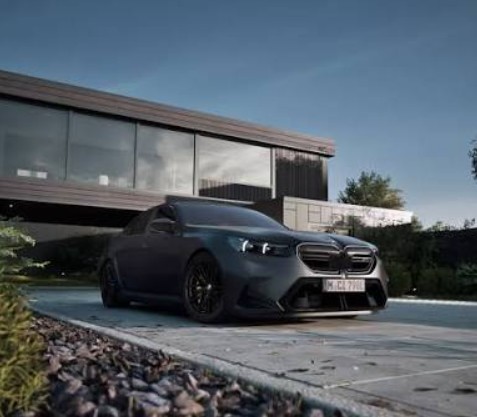
Put the BMW M5 vs M550i side by side and, at first glance, the difference can seem surprisingly small. Both are luxurious 5 Series sedans. Both can carry four adults comfortably. Both offer all-wheel drive, automatic transmissions, and thunderous twin-turbocharged V8 engines. And both can embarrass plenty of dedicated sports cars when the traffic light turns green.
Yet drive them hard—or simply live with them for a few months—and their personalities begin to separate.
The BMW M550i xDrive is essentially the ultimate fast executive sedan. It delivers huge speed without constantly reminding us that we bought something extreme. The BMW M5, particularly the F90 generation, takes the same basic formula and turns almost every performance dial another few clicks clockwise.
So, which one actually makes more sense?
For most drivers, the answer isn't automatically the M5.
The M550i may actually be the smarter road car, while the M5 remains the machine we'd choose when performance matters more than subtlety. Let's break down exactly why.
Content in this publication
- BMW M5 vs M550i at a Glance
- The Fundamental Difference: M Performance vs Full M
- BMW M5 vs M550i Engine Comparison
- Acceleration: M550i vs M5
- M xDrive vs xDrive
- Handling: Where the M5 Pulls Away
- Suspension and Ride Comfort
- Steering Feel and Driver Engagement
- BMW M5 vs M550i Brakes
- Interior and Luxury
- Practicality and Passenger Space
- Exhaust Sound
- Fuel Economy: Neither Is an Economy Car
- Reliability: Is the M550i More Reliable Than the M5?
- Maintenance Costs
- Insurance Costs
- M550i vs M5 for Daily Driving
- M5 vs M550i for Enthusiast Driving
- Which One Looks Better?
- BMW M5 vs M550i Used Prices
- Which BMW Holds Its Value Better?
- What About the New BMW M5?
- BMW M550i Pros and Cons
- BMW M5 Pros and Cons
- BMW M5 vs M550i: Which Is Faster?
- BMW M5 vs M550i: Which Should You Buy?
- The Sweet Spot: Why the M550i Deserves More Respect
- Final Verdict: M5 or M550i?
- Frequently Asked Questions
BMW M5 vs M550i at a Glance
For a fair comparison, we're primarily discussing the G30-generation M550i xDrive and F90-generation M5, since these models were sold alongside one another and are the versions most shoppers compare on the used market today.
One important note: specifications vary somewhat depending on country and model year. Later U.S.-market M550i models produced around 523 hp and 553 lb-ft of torque, while the F90 M5 produced 600 hp in standard form and 617 hp in M5 Competition specification. BMW officially rated the 2021 M5 at 600 hp and the Competition at 617 hp.
| Feature | BMW M550i xDrive | BMW M5 |
|---|---|---|
| Engine | 4.4L twin-turbo V8 | 4.4L twin-turbo M V8 |
| Typical later-model power | About 523 hp | 600–617 hp |
| Torque | About 553 lb-ft | 553 lb-ft |
| Transmission | 8-speed automatic | 8-speed M Steptronic |
| Drivetrain | xDrive AWD | M xDrive AWD |
| 0–60 mph | Roughly mid-3-second range | Roughly low-3-second range |
| Character | Fast luxury sedan | Full M performance sedan |
| Ride | More relaxed | Firmer and more aggressive |
| Best for | Daily driving | Enthusiast driving |
| Running costs | High | Higher |
Interestingly, the numbers don't fully explain the difference.
On ordinary roads, the M550i already feels absurdly fast. The M5 simply takes that speed and adds sharper reflexes, stronger chassis hardware and a much deeper performance envelope.
The Fundamental Difference: M Performance vs Full M
This is where we need to clear up one of the biggest misconceptions surrounding the two cars.
The M550i is not simply an M5 with slightly less horsepower.
BMW positioned the M550i as an M Performance model, bridging the gap between ordinary 5 Series variants and the full-fat M5. BMW's original announcement described the M550i as combining performance with everyday usability, using a specially tuned chassis and rear-biased xDrive system.
The M5, meanwhile, comes from BMW M GmbH.
That distinction affects much more than the badge.
What the M550i Is Trying to Do
The M550i asks:
"How fast can we make a luxury 5 Series without ruining its ability to behave like a luxury 5 Series?"
Its mission is balance.
It should be quiet on the highway, comfortable during commuting, easy to drive through traffic and viciously quick whenever we press the accelerator.
What the M5 Is Trying to Do
The M5 asks a rather different question:
"How capable can we make a four-door sedan while keeping enough comfort for everyday driving?"
That's a subtle difference in philosophy, but it changes practically everything.
The M5 prioritizes performance first and then tries to preserve luxury. The M550i starts with luxury and adds an enormous amount of performance.
BMW M5 vs M550i Engine Comparison
Both cars use 4.4-liter twin-turbocharged V8 engines, which can make them look closely related on paper.
They're not identical, however.
M550i V8 Engine
Later G30 M550i variants use BMW's N63-family 4.4-liter twin-turbo V8.
Depending on the market and year, output differs. For example, BMW's 2023 Mexican-market technical sheet rated the M550i xDrive at 530 hp under the metric-horsepower convention and 750 Nm of torque.
The engine is wonderfully suited to the car.
Torque arrives early, acceleration feels almost effortless, and the transmission usually knows exactly which gear it wants.
There's no need to wring the engine's neck.
Press the throttle at highway speeds and the M550i simply surges forward like somebody quietly attached a rocket to the trunk.
M5 S63 Engine
The F90 M5 uses BMW M's S63 V8.
BMW rated the facelift-era standard M5 at 600 hp and 553 lb-ft, while the M5 Competition increased output to 617 hp.
The torque figure may look surprisingly similar to the M550i's, but the M5 engine feels more urgent.
It breathes harder at higher rpm, reacts more aggressively and continues pulling when the M550i begins feeling slightly less ferocious.
Does the M5 Feel Much Faster?
Yes—but perhaps not as dramatically as the horsepower figures suggest during normal driving.
That's because the M550i is already ridiculously fast.
At 30 mph around town, neither car feels remotely underpowered. At 70 mph on the highway, either one can produce acceleration that demands restraint.
The M5's advantage becomes much clearer when we're driving harder, repeatedly accelerating or stretching the engine toward the upper end of the rev range.
Acceleration: M550i vs M5
This is where things get interesting.
The M550i became famous partly because its real-world acceleration approached genuine M-car territory.
BMW's earliest M550i was already capable of reaching 60 mph in under four seconds, and later versions became considerably more powerful.
Meanwhile, BMW officially quoted the 2021 M5 at 3.2 seconds from 0–60 mph, with the M5 Competition reducing that figure to 3.1 seconds.
Those numbers are supercar territory from a spacious four-door sedan.
From a Stop
Both cars hook up remarkably well thanks to all-wheel drive.
The M550i launches hard but smoothly.
The M5 feels more violent.
It isn't simply acceleration; there's more theater behind it. The drivetrain feels ready for abuse in a way the M550i doesn't quite encourage.
At Highway Speeds
The performance gap becomes more obvious as speeds rise.
The M550i delivers a huge wave of torque and then settles back into luxury-car behavior.
The M5 seems almost irritated that we stopped accelerating.
It keeps charging forward.
That's where the extra horsepower, cooling capability and M-specific engineering begin earning their keep.
M xDrive vs xDrive
Both vehicles have four-wheel traction, but they're not using exactly the same philosophy.
The M550i's xDrive system is tuned with a sporty, rear-biased character while maintaining the security and predictability expected from a luxury sedan. BMW specifically emphasized the rear-wheel bias when introducing the model.
The M5's M xDrive system is much more enthusiast-focused.
M550i xDrive
We get outstanding grip without needing to think about it.
Rain? Fine.
Cold pavement? Fine.
Hard launch? Fine.
The car quietly distributes power wherever it needs to go.
M5 M xDrive
M xDrive adds another layer of adjustability.
The F90 M5 was engineered to combine all-wheel-drive traction with traditional rear-driven M behavior. Depending on configuration and mode, it gives skilled drivers substantially more freedom than the regular xDrive system.
That's part of what makes the M5 special.
The technology doesn't merely stop the car from misbehaving. It can actually help us explore its limits.
Handling: Where the M5 Pulls Away
Straight-line speed alone doesn't justify buying an M5.
Cornering does.
Put the cars onto a twisting road and the difference becomes clearer almost immediately.
The M550i Feels Like a Very Fast 5 Series
That's hardly an insult.
Steering is accurate. Body control is strong. Grip is enormous.
But there's always a slight sense that the car would rather cover 300 highway miles than attack 30 miles of hairpins.
Its limits are extremely high, yet the experience is intentionally polished.
The M5 Feels Shrink-Wrapped Around the Driver
The M5 reacts faster.
Turn-in feels sharper. Body movement is better controlled. The drivetrain feels more alive. The brakes tolerate aggressive driving more confidently.
Think of the M550i as a heavyweight boxer wearing an expensive tailored suit.
The M5 is the same boxer stepping into the ring.
Suspension and Ride Comfort
Here's where the M550i begins fighting back.
Performance cars aren't driven exclusively on perfect mountain roads.
Most of our lives involve potholes, rough asphalt, speed bumps, highway expansion joints and city traffic.
And in those environments, comfort matters.
M550i Comfort
The M550i generally delivers the more relaxed experience.
There's less tension in the chassis. It doesn't constantly communicate every piece of road texture through the cabin.
That makes it wonderfully easy to live with.
After three hours on the highway, we'd likely arrive fresher in the M550i.
M5 Comfort
The M5 isn't uncomfortable by sports-sedan standards.
In fact, one reason the M5 formula has survived for decades is its ability to combine serious performance with everyday usability.
But compared directly with the M550i, the M5 feels more purposeful.
Competition versions push that philosophy further through firmer suspension tuning and engine mounts. BMW's Competition package specifically included a model-specific sport suspension and firmer engine mounts.
Which Is Better for Bad Roads?
The M550i.
If our daily commute includes battered city pavement, the softer personality quickly becomes an advantage rather than a compromise.
Steering Feel and Driver Engagement
Modern BMW steering is sometimes debated endlessly by enthusiasts, but regardless of personal preference, there's a noticeable difference between these cars.
The M550i steering is quick and precise without demanding much effort.
The M5 feels more serious.
Inputs seem to matter more.
You may be interested in reading BMW M5 vs Hellcat: Which High-Horsepower Monster Wins?
That's exactly what enthusiasts want, but not necessarily what everybody wants.
Drive into a supermarket parking garage after a long workday and the M550i's less dramatic personality suddenly makes perfect sense.
BMW M5 vs M550i Brakes
Huge speed requires huge stopping power.
The M550i receives upgraded M Sport braking hardware appropriate for its performance level, while the M5 gets braking equipment designed around significantly more demanding use.
During normal road driving, both stop impressively.
The difference appears after repeated hard braking.
M550i Brakes Are More Than Enough for the Street
For ordinary roads—even enthusiastic ones—we're unlikely to complain.
Pedal response is strong and stopping power is excellent.
M5 Brakes Are Designed for Greater Abuse
Drive aggressively for longer periods and the M5's hardware makes more sense.
Carbon-ceramic brakes were also available on certain M5 configurations, further pushing the car toward serious performance territory.
Unless we're frequently driving very hard, though, this advantage may remain largely theoretical.
Interior and Luxury
Open the doors and these cars suddenly look like siblings again.
Both originate from the same G30-generation 5 Series family, meaning the cabin layout, proportions and basic architecture are closely related.
And that's good news.
M550i Interior
The M550i tends to feel more discreet.
It can be configured as an executive express rather than an obvious performance machine.
That understated nature is part of its charm.
We can pull up to a business meeting without looking like we arrived directly from a track day.
M5 Interior
The M5 adds stronger visual reminders that we're driving something special.
Depending on year and specification, expect M-specific controls, displays, seats, trim and steering-wheel details.
The famous red M buttons give the driver programmable shortcuts for aggressive vehicle configurations.
The difference isn't night and day.
It's more like the M550i wearing a tailored navy suit while the M5 wears the same suit with racing gloves tucked into the pocket.
Practicality and Passenger Space
Here's one reason both cars are so appealing: neither asks us to abandon adult responsibilities.
The F90 M5 retains genuine sedan practicality.
BMW listed the 2021 M5 with 36.5 inches of rear legroom and 14 cubic feet of trunk capacity, illustrating just how usable it remains despite its performance credentials.
The M550i provides essentially the same fundamental five-passenger executive-sedan format.
We can carry children.
We can make airport runs.
We can load groceries.
Then we can merge onto the highway with enough acceleration to make those groceries reconsider their life choices.
Exhaust Sound
A V8 performance sedan should sound special.
Thankfully, both do.
M550i Sound
The M550i has a deep, expensive-sounding V8 growl.
It's dramatic when we ask for it but generally restrained enough to avoid exhausting us during daily use.
M5 Sound
The M5 has more attitude.
The exhaust note fits its harder-edged character, particularly in sportier settings.
BMW equipped the M5 Competition with an M Sport exhaust as part of its more aggressive performance package.
Neither gives us the old-school naturally aspirated M-car soundtrack of previous generations, but both make modern turbocharged V8 performance feel appropriately theatrical.
Fuel Economy: Neither Is an Economy Car
Let's not pretend we're buying either vehicle because we're concerned about saving pennies at the fuel pump.
They're twin-turbo V8 luxury sedans.
Fuel disappears.
The M550i should generally prove the more sensible of the two under everyday driving because its tuning and mission aren't as performance-focused, but driving style makes an enormous difference.
Use the accelerator frequently and both cars become very effective devices for converting premium gasoline into noise and speed.
Real-World Consumption Matters More Than Official Numbers
Two drivers could easily achieve dramatically different fuel economy in exactly the same M550i.
One cruises gently on highways.
The other discovers launch control.
Guess who visits the gas station more often?
Reliability: Is the M550i More Reliable Than the M5?
This question deserves nuance.
Neither should be treated like a low-cost economy sedan.
Both are technically complex German luxury cars equipped with turbocharged V8 engines, elaborate cooling systems, advanced electronics and expensive driveline components.
M550i Reliability Considerations
The later N63 has benefited from years of development compared with early versions of BMW's twin-turbo V8.
Still, maintenance history matters enormously.
A neglected M550i can quickly erase whatever money we saved by choosing it instead of an M5.
M5 Reliability Considerations
The M5's S63 is engineered for extreme performance but brings correspondingly expensive hardware.
Cooling systems, brakes, tires, suspension components and drivetrain equipment can all become costly as the car ages.
The key isn't simply asking:
"Which one breaks less?"
We should ask:
"Which one can I comfortably afford to maintain when something does break?"
That question produces much wiser purchasing decisions.
Maintenance Costs
The M550i wins this category—but only relatively.
Neither car is cheap.
Oil changes, high-performance tires, brake jobs and major services can cost considerably more than they would on a standard 530i.
The M5 raises the ceiling even further.
Why the M5 Can Cost More
Performance hardware costs money.
That includes:
- Larger and more specialized brakes
- Performance-focused tires
- M-specific suspension components
- Greater cooling requirements
- M drivetrain components
- Potentially expensive optional carbon-ceramic brakes
We might save thousands buying a depreciated M5, then spend part of that savings surprisingly quickly bringing maintenance back up to date.
A pre-purchase inspection is therefore essential when shopping used.
Insurance Costs
The M550i will generally be the easier car to insure, although rates depend heavily on driver age, location, claims history, annual mileage and insurer.
Why might the M5 cost more?
Simple.
Higher replacement values, greater performance capability and expensive M-specific components can raise an insurer's potential exposure.
Before buying either car, we would request actual insurance quotes using the specific VIN rather than relying on generic estimates.
M550i vs M5 for Daily Driving
Here's perhaps the most important section of this comparison.
If we could own only one car and had to drive it every day, we'd seriously consider the M550i.
Why?
Because everyday life rarely resembles a racetrack.
Traffic exists.
Potholes exist.
Long highway journeys exist.
Passengers who don't care about lateral grip exist.
The M550i deals with all of them beautifully.
Why the M550i Makes Such a Great Daily Driver
It combines:
- Tremendous V8 power
- Excellent highway refinement
- AWD traction
- Luxury-car comfort
- Five-passenger practicality
- Relatively understated styling
- Performance far beyond what we can legally exploit on public roads
That's one spectacular recipe.
M5 vs M550i for Enthusiast Driving
Now change the question.
Suppose driving itself is the reason we're buying the car.
Suddenly the M5 becomes much easier to justify.
The M5's sharper chassis, M xDrive drivetrain, more powerful engine and greater configurability make it feel like something genuinely different rather than merely quicker.
We don't buy the M5 because the M550i is slow.
We buy the M5 because performance is about more than speed.
It's about how the car responds.
Which One Looks Better?
Design is subjective, but these two cars approach aggression differently.
M550i: The Sleeper
The M550i's restrained styling is arguably one of its greatest strengths.
You may be interested in readingBMW M5 vs Hellcat: Which High-Horsepower Monster Wins?You may be interested in reading
BMW M5 vs Audi RS5: Which Performance Car Is Better?People who know BMWs will recognize it.
Most other road users won't.
There's something immensely satisfying about having 500-plus horsepower hidden beneath what appears to be an ordinary executive sedan.
M5: The Statement
The M5 is broader, tougher and more visibly purposeful.
Its M-specific bodywork makes it easier to distinguish from a normal 5 Series.
It's still relatively discreet compared with many exotic cars, but enthusiasts know immediately what they're looking at.
BMW M5 vs M550i Used Prices
Depreciation makes this comparison particularly interesting.
When new, the M5 sat meaningfully above the M550i in BMW's hierarchy.
On the used market, however, depreciation can narrow that gap substantially.
That can tempt buyers into thinking:
"Why buy an M550i when an M5 costs only a little more?"
Sometimes that's exactly the right conclusion.
Sometimes it's a trap.
Purchase Price Isn't Ownership Cost
Suppose an M550i costs $45,000 and an older M5 costs $50,000.
The M5 isn't necessarily only "$5,000 more."
Its next set of tires, brakes, service requirements and insurance premiums might amplify that difference.
The cheapest M5 to purchase can occasionally become the most expensive one to own.
Maintenance history matters more than bragging rights.
Which BMW Holds Its Value Better?
The M5 generally has stronger enthusiast appeal because it's a genuine BMW M product.
That gives desirable specifications—and especially special versions—more long-term collector interest.
The M550i occupies a trickier position.
It's enormously capable but doesn't carry the full M pedigree.
However, the disappearance of the traditional M550i formula may make clean V8 examples increasingly appealing to enthusiasts who prefer a quieter, less extreme 5 Series.
The current-generation 5 Series lineup no longer offers the old G30 M550i configuration; BMW's present lineup instead includes models such as the 550e plug-in hybrid, i5 variants and the new M5.
That makes the old M550i something of a historical sweet spot.
What About the New BMW M5?
This is important because searching BMW M5 vs M550i today can mix multiple generations.
The latest M5 is fundamentally different from the F90.
BMW's current M5 combines a V8 with plug-in hybrid assistance and produces a quoted 717 hp and 738 lb-ft of torque in U.S. specification. BMW lists its curb weight at 5,390 pounds and 0–60 mph acceleration at 3.4 seconds.
That makes comparing the newest M5 directly against the discontinued G30 M550i less useful.
They're products from different eras.
For used-car shoppers, F90 M5 vs G30 M550i remains the apples-to-apples comparison.
BMW M550i Pros and Cons
M550i Advantages
The M550i makes an exceptionally strong case for itself because it offers most of the performance that ordinary drivers can exploit while maintaining excellent refinement.
Its biggest strengths are comfort, subtlety and accessible speed.
Best Reasons to Choose It
We'd pick the M550i if we prioritize:
- Daily comfort
- Highway driving
- Understated styling
- Lower purchase cost
- Slightly lower ownership costs
- Huge V8 performance without full M intensity
M550i Disadvantages
The compromises appear once we start pushing harder.
It's less engaging than the M5, less track-focused and doesn't carry the prestige or specialist engineering associated with a true M car.
For some enthusiasts, the little voice saying "I should've bought the M5" may never completely disappear.
BMW M5 Pros and Cons
M5 Advantages
The M5 is the enthusiast's answer.
Its advantages include stronger performance, a sharper chassis, more sophisticated M drivetrain programming and greater emotional appeal.
It's the car we wake up early on Sunday morning just to drive.
M5 Disadvantages
Everything comes with a price.
The ride is firmer.
Running costs can be higher.
Insurance can be higher.
Consumables can be expensive.
And unless we're genuinely interested in performance driving, we may rarely use the capabilities we're paying for.
BMW M5 vs M550i: Which Is Faster?
The M5 is faster overall.
Later M550i models narrowed the gap dramatically, especially in real-world acceleration, but the M5 remains the higher-performance machine.
BMW quoted the facelifted F90 M5 at 600 hp and 3.2 seconds to 60 mph, while the Competition produced 617 hp and reached 60 mph in 3.1 seconds.
The M550i is nevertheless quick enough that the difference can feel academic during ordinary street driving.
That's the remarkable part.
Nobody finishes an aggressive highway merge in an M550i and thinks:
"This really needs another hundred horsepower."
BMW M5 vs M550i: Which Should You Buy?
Here's how we'd simplify the decision.
Buy the BMW M550i If...
You want an incredibly fast luxury sedan rather than a performance car that happens to be luxurious.
You commute regularly.
You make long journeys.
You value comfort.
You want a V8 without attracting too much attention.
You occasionally drive fast but don't spend weekends chasing lap times.
In that situation, the M550i may actually be the better car.
Buy the BMW M5 If...
Driving is one of your hobbies.
You care about chassis feel as much as horsepower.
You'll notice sharper turn-in.
You'll appreciate drivetrain configurability.
You want the complete M experience.
You already know that you'll wonder about the M5 every time an M550i passes one on the opposite side of the road.
Then buy the M5.
Otherwise, you'll probably end up trading for one later anyway.
The Sweet Spot: Why the M550i Deserves More Respect
The M550i sometimes gets dismissed as an "M5 Lite."
That description isn't entirely wrong, but it undersells the car.
A better description might be the ultimate traditional BMW luxury sedan.
It's spectacularly fast without becoming exhausting.
Its performance is accessible.
Its styling is subtle.
Its cabin remains comfortable.
And that V8 gives it a sense of occasion that today's increasingly electrified luxury segment makes harder to find.
The M550i doesn't beat the M5 at its own game.
Instead, it plays a slightly different game extremely well.
Final Verdict: M5 or M550i?
Choosing between the BMW M5 vs M550i comes down less to horsepower than personality.
The M550i is the car our rational side chooses.
It is quieter, more relaxed and easier to justify while still being hilariously fast. For somebody who spends 95 percent of their time commuting, traveling or carrying passengers, the M550i may offer the better balance.
The M5 is the car our enthusiast side chooses.
It's sharper, more capable and considerably more special when the road begins twisting. The additional engineering isn't merely there to improve a specification sheet. We can feel it through the engine, drivetrain, suspension and overall sense of purpose.
So which would we take?
For a pure daily driver, M550i.
For one car that needs to satisfy a serious enthusiast, M5.
And if budget isn't the deciding factor?
There's a reason the M5 badge has become legendary.
Sometimes buying the sensible version only works until we hear an M5 start beside us.
Frequently Asked Questions
1. Is the BMW M550i basically an M5?
No. Although both use 4.4-liter twin-turbo V8 engines and share the 5 Series platform, the M550i is an M Performance model while the M5 is developed as a full BMW M vehicle. The M5 receives more extensive engine, cooling, drivetrain, suspension, braking and chassis upgrades.
2. Is the BMW M550i faster than an M5?
Generally, no. Later M550i models are extremely quick and can feel surprisingly close during everyday driving, but the F90 M5 offers more horsepower and stronger overall performance. BMW rated the standard facelift M5 at 600 hp and the Competition at 617 hp.
3. Is the M550i more comfortable than the M5?
Usually, yes. The M550i is tuned more heavily around executive-sedan comfort, whereas the M5 uses firmer, more performance-oriented suspension settings. An M5 remains perfectly usable daily, but the M550i is generally the more relaxing long-distance car.
4. Is the BMW M550i cheaper to maintain than an M5?
Typically, yes, although neither is inexpensive. The M5 uses more specialized high-performance components, and items such as brakes, tires and suspension hardware can be particularly expensive. Condition and maintenance history matter enormously when comparing used examples.
You may be interested in readingBMW M5 vs Hellcat: Which High-Horsepower Monster Wins?You may be interested in reading
BMW M5 vs Audi RS5: Which Performance Car Is Better?You may be interested in reading
BMW M5 vs Porsche 911: Which Performance Icon Wins?5. Which is the better used buy: BMW M5 or M550i?
For most drivers seeking a fast luxury sedan, a well-maintained M550i can offer exceptional value. Enthusiasts who value maximum handling capability, M-specific engineering and long-term desirability should consider spending more for the M5. In either case, we'd prioritize a complete service history and professional pre-purchase inspection over mileage or purchase price alone.
If you want to know other articles similar to BMW M5 vs M550i: Which BMW V8 Sedan Is the Better Choice? you can visit the category Models.
Haval Jolion vs Omoda C5: Which SUV Is Better?
Haval Jolion vs Chery Tiggo 4 Pro: Full Comparison
Haval Jolion vs H6: Which SUV Is Better in 2026?
Haval Jolion vs Toyota Corolla Cross: Which SUV Is Better?
Haval Jolion vs Jaecoo J5: Which SUV Is Better?
Volkswagen T-Cross vs Volkswagen T-Roc: Which Is Better?
Leave a Reply
More content of your interest