
BMW M5 vs Porsche 911: Which Performance Icon Wins?

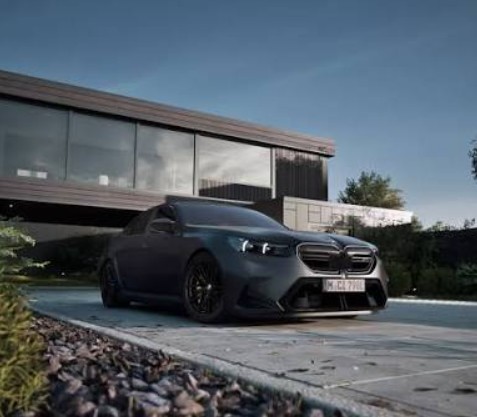
Comparing the BMW M5 vs Porsche 911 feels a little like comparing a private jet with a fighter plane. Both are outrageously fast. Both come from brands with decades of performance heritage. Both can make an ordinary highway entrance feel much more dramatic than it has any right to be.
Yet they approach speed from completely different directions.
The BMW M5 is the ultimate high-performance executive sedan: four doors, genuine rear-seat space, a usable trunk, all-wheel-drive confidence, and staggering power. The Porsche 911 is a purpose-built sports car whose basic formula—rear-mounted flat-six engine, compact dimensions, and unmistakable silhouette—has survived for generations.
The current M5 takes that contrast even further. BMW's latest M5 uses a plug-in-hybrid V8 powertrain producing 717 horsepower and 738 lb-ft of torque, while BMW quotes 0–60 mph in 3.4 seconds. The current entry-level Porsche 911 Carrera takes the opposite approach, producing 388 horsepower from its twin-turbo 3.0-liter flat-six while remaining dramatically lighter and smaller. Porsche quotes 0–60 mph in 3.9 seconds, or quicker in higher Carrera variants.
So which philosophy works better?
Let's find out.
Content in this publication
- BMW M5 vs Porsche 911 at a Glance
- Two Completely Different Interpretations of a Fast Car
- Engine and Power: M5 Wins the Numbers Game
- Weight: The Porsche's Secret Weapon
- Handling: Porsche 911 Takes the Crown
- Acceleration: Closer Than Horsepower Suggests
- BMW M5 vs Porsche 911 Transmission
- Daily Driving: BMW M5 Fights Back Hard
- Interior and Technology
- Comfort: The M5 Is the Better Long-Distance Companion
- Practicality: BMW Wins Easily
- City Driving and Parking
- Sound and Drama
- BMW M5 vs Porsche 911 on the Highway
- Track Driving: Porsche Has the Natural Advantage
- BMW M5 vs Porsche 911 in Bad Weather
- Fuel Economy and Electrification
- Maintenance and Ownership Costs
- Depreciation and Resale Value
- Presence and Styling
- Which Car Is More Fun at Legal Speeds?
- BMW M5 vs Porsche 911 for a Daily Driver
- Which Car Feels More Special?
- BMW M5 Advantages
- Porsche 911 Advantages
- BMW M5 vs Porsche 911: Which Should You Buy?
- Final Verdict: Two Different Ways to Be Brilliant
- Frequently Asked Questions
BMW M5 vs Porsche 911 at a Glance
Before digging into personality, handling, comfort, and practicality, here's the basic difference.
| Category | BMW M5 | Porsche 911 Carrera |
|---|---|---|
| Vehicle type | Performance luxury sedan | Sports coupe |
| Engine layout | Front-engine plug-in-hybrid V8 | Rear-engine twin-turbo flat-six |
| System power | 717 hp | 388 hp |
| Torque | 738 lb-ft | 331 lb-ft |
| Transmission | 8-speed automatic | 8-speed PDK |
| Drivetrain | All-wheel drive | Rear-wheel drive |
| 0–60 mph | 3.4 sec | 3.9 sec |
| Seating | 5 | 2+2 |
| Primary strength | Performance + practicality | Driver engagement |
BMW's figures come directly from its current M5 specifications. Porsche currently lists the 911 Carrera at 388 hp, 331 lb-ft, and 3.9 seconds to 60 mph.
But there's an important warning before we declare a winner: "Porsche 911" describes an entire family, not one fixed performance level.
The Carrera S, for example, currently produces 473 hp and reaches 60 mph in a Porsche-claimed 3.3 seconds. Move farther up the 911 range and the comparison changes dramatically again.
For that reason, we'll mainly use the Carrera as our baseline while discussing where hotter 911 variants shift the balance.
Two Completely Different Interpretations of a Fast Car
The biggest mistake we can make when comparing the BMW M5 and Porsche 911 is looking only at horsepower.
These cars aren't trying to accomplish the same mission.
The M5 asks:
How fast can we make a genuinely luxurious sedan without destroying its usefulness?
The 911 asks:
How usable can we make a serious sports car without weakening its character?
Those questions lead to very different answers.
The BMW surrounds immense performance with comfort, space, technology, and everyday usability. You could commute in it Monday morning, collect coworkers for lunch, haul luggage to the airport, and still embarrass sports cars on the way home.
The Porsche strips away much of that utility in exchange for something harder to measure: intimacy.
It feels smaller around us. The driver's position feels more deliberate. Inputs feel more significant. Even normal speeds can feel like an event.
The BMW M5 Is a Super Sedan
The M5 has spent decades perfecting a wonderfully ridiculous concept: take an executive sedan and give it enough performance to frighten dedicated sports cars.
The current generation pushes that formula into new territory with electrification.
Its 4.4-liter V8 works with an electric motor in BMW's plug-in-hybrid system to produce 717 hp and 738 lb-ft.
That's supercar-level output hiding beneath the body of a four-door business sedan.
It is the automotive equivalent of seeing someone walk into a board meeting wearing a perfectly tailored suit, only to discover they're also a professional heavyweight boxer.
The Porsche 911 Is a Sports Car First
The 911 has never needed that disguise.
Its intentions are obvious.
Low roof. Wide rear haunches. Compact body. Engine behind the passenger compartment. Driver sitting relatively close to the ground.
Porsche's current Carrera uses a rear-mounted 3.0-liter twin-turbo flat-six producing 388 hp and 331 lb-ft.
On paper, that looks almost modest beside the M5's 717 hp.
On the road?
Not remotely.
Because horsepower is only part of the equation.
Engine and Power: M5 Wins the Numbers Game
If we're measuring brute force, the BMW destroys the entry Carrera.
There's no delicate way to phrase it.
More than 700 horsepower fundamentally changes how a car accelerates. Press the throttle deeply and the M5 doesn't simply gather speed—it compresses distance.
The combination of electric torque and turbocharged V8 muscle provides tremendous response across the rev range.
There's also something wonderfully excessive about a V8-powered M5. BMW could have pursued efficiency alone with electrification, but instead it effectively used hybrid technology to create an even more powerful performance sedan.
The 911 Relies Less on Horsepower
The Porsche demonstrates why power-to-weight ratio, traction, gearing, and chassis design matter so much.
Its 388-hp output sounds almost ordinary in a world where electric SUVs can produce 500 or 600 horsepower.
Then we remember that a 911 isn't carrying the mass of a large luxury sedan and plug-in-hybrid battery system.
Porsche lists the current Carrera's 0–60 mph time at 3.9 seconds, while Sport Chrono-equipped examples can do it in a claimed 3.7 seconds.
That's plenty fast.
And the Carrera S illustrates what happens when Porsche adds more power without abandoning the core formula. Its 473 hp translates into a claimed 3.3-second 0–60 mph sprint.
Straight-Line Winner: BMW M5
Against the standard Carrera, the M5 takes the horsepower battle easily.
Against higher-performance 911 variants, things get considerably more interesting.
Weight: The Porsche's Secret Weapon
Here lies perhaps the single biggest philosophical difference between these cars.
BMW lists the M5 at a substantial 5,390 pounds.
Yes, you read that correctly.
The modern M5 is an extremely heavy performance car.
Hybrid hardware, batteries, luxury equipment, all-wheel drive, substantial dimensions, sound insulation, structural systems, and countless features all contribute.
BMW fights that mass with technology and huge power.
Porsche fights physics differently: by giving the 911 less mass to manage in the first place.
That affects nearly everything we feel.
Braking.
Direction changes.
Steering response.
Body movement.
Tire behavior.
The way a car settles halfway through a corner.
Why Lower Weight Matters Beyond Acceleration
A powerful heavy car can accelerate incredibly quickly.
But horsepower can't completely erase inertia.
Imagine sprinting while wearing a heavy backpack. Stronger legs help enormously, but the backpack hasn't disappeared.
That's roughly the difference.
BMW engineers perform astonishing tricks to make the M5 feel smaller and more agile than its specifications suggest. But a 911 doesn't have to perform quite as much magic.
Its physical proportions are already working in its favor.
Handling: Porsche 911 Takes the Crown
Here's where the personalities separate sharply.
The M5 can corner at speeds that seem frankly absurd for a large sedan.
Modern adaptive suspension, electronically controlled differentials, sophisticated all-wheel drive, massive tires, and clever chassis software help contain its weight remarkably well.
Drive it quickly and we may spend half our time wondering, How is something this large doing this?
Yet eventually, the Porsche reminds us why dedicated sports cars exist.
The 911 Feels More Natural
A 911 is fundamentally built around driving.
We're closer to the road.
The car is shorter.
There's less vehicle surrounding us.
Movements seem more immediate.
Rather than filtering our commands through layers of luxury and electronic intelligence, the 911 often feels like it's responding directly through the steering wheel, pedals, seat, and chassis.
It's the difference between operating a precision instrument and commanding an extremely sophisticated machine.
Both are impressive.
Only one feels like it was designed from day one around the driver's heartbeat.
What Happens on a Twisty Road?
Give us a narrow mountain road filled with technical corners and we'd take the 911.
Its smaller footprint makes placement easier.
Its lower center of gravity and sports-car geometry make direction changes feel more natural.
Its rear-engine layout also gives the Porsche distinctive traction characteristics that generations of engineers have continuously refined.
The M5 can absolutely keep up with serious machinery.
But we'd be more aware of its dimensions.
And that's important.
Handling Winner: Porsche 911
The M5 is astonishing for a sedan.
The Porsche doesn't need that qualifier.
Acceleration: Closer Than Horsepower Suggests
Look at 717 hp versus 388 hp and you'd expect the BMW to vanish into another postal code.
Yet the official 0–60 figures aren't separated by several seconds.
BMW quotes 3.4 seconds for the M5.
Porsche quotes 3.9 seconds for the Carrera and 3.3 seconds for the Carrera S.
That illustrates how efficiently the Porsche uses its power.
Still, acceleration isn't just a stopwatch measurement.
The way the cars accelerate matters.
The M5 delivers something closer to an avalanche. There's enormous torque, substantial traction, and an almost surreal sensation of something large suddenly moving very fast.
The 911 feels lighter on its feet. It builds speed with less drama from the chassis and more sensation flowing through the driver.
Which feels faster?
The M5 may shock us more.
The 911 may involve us more.
BMW M5 vs Porsche 911 Transmission
Both manufacturers understand that the gearbox can make or break a performance car.
BMW pairs the M5 with an eight-speed automatic.
The transmission suits the M5's dual personality beautifully. Leave it alone and it behaves like a luxury-car gearbox. Start driving aggressively and shifts become dramatically more urgent.
The current automatic Carrera uses Porsche's eight-speed PDK dual-clutch transmission.
Why Porsche PDK Is So Good
PDK has earned its reputation because it combines qualities that once seemed contradictory.
It can be smooth enough for traffic while snapping through gears rapidly during enthusiastic driving.
When we're attacking corners, it rarely feels like the transmission is interrupting the experience.
And drivers who still crave the physical ritual of changing gears aren't entirely forgotten: selected 911 variants continue to offer manual-transmission configurations.
For pure involvement, Porsche has the edge.
For blending relaxed luxury with violent performance, BMW's setup makes perfect sense.
Daily Driving: BMW M5 Fights Back Hard
So far, the Porsche sounds like the obvious enthusiast's choice.
Then Monday morning arrives.
We need to take three adults somewhere.
You may be interested in reading BMW M5 vs Cadillac CT5-V Blackwing: Which Super Sedan Wins?
There's luggage.
Traffic is terrible.
We need four proper doors.
Suddenly the M5 looks brilliant.
Rear-Seat Space Changes Everything
The Porsche 911 technically offers rear seats in many configurations, but calling them full adult seating is generous.
They're useful for children, bags, or extremely accommodating friends on short trips.
The BMW M5 is fundamentally different.
It is a genuine sedan.
Adults can sit in the back.
Passengers enter through their own doors.
We don't have to fold seats or perform gymnastics.
That sounds boring until it's our only car.
The M5 Makes Fewer Lifestyle Demands
Owning a 911 usually involves accepting sports-car compromises.
Owning an M5 requires far fewer.
That's arguably the BMW's greatest achievement.
It provides outrageous performance without demanding that we restructure our lives around it.
Interior and Technology
Step inside these cars and their priorities remain obvious.
BMW gives us the full executive-car experience: expansive screens, sophisticated infotainment, premium materials, ambient features, driver-assistance technology, and substantial cabin space.
It's a luxury car before we even start exploring its performance menus.
Porsche takes a more driver-centered approach.
The modern 911 certainly isn't primitive. Far from it. Contemporary versions offer excellent technology, digital displays, premium materials, advanced connectivity, and numerous customization possibilities.
But the cabin still feels wrapped around the driver rather than designed around carrying four or five adults.
Which Interior Is Better?
For luxury and space:
BMW M5.
For the sensation of sitting inside a sports car:
Porsche 911.
The answer depends on what we want the cabin to accomplish.
Comfort: The M5 Is the Better Long-Distance Companion
Imagine a 500-mile interstate trip.
Which keys are we reaching for?
Probably the BMW's.
The M5's longer wheelbase, more spacious cabin, traditional sedan layout, generous seating, and luxury-car roots make it an exceptional long-distance machine.
BMW lists the car at 200.6 inches long with a 118.3-inch wheelbase.
The Carrera is dramatically smaller, with Porsche listing a 178.8-inch length and 96.5-inch wheelbase for a current Carrera example.
That's more than a minor difference.
It explains why the cars feel so distinct before we even accelerate.
The Porsche Isn't Uncomfortable, Though
One of the 911's greatest strengths has always been everyday usability relative to more exotic sports cars.
Porsche itself positions the 911 as a sports car capable of everyday use.
We can commute in one.
We can take long trips.
We can drive through normal traffic without feeling like we're piloting a barely legal race car.
But if comfort is the primary criterion, the BMW remains the better tool.
Practicality: BMW Wins Easily
There's little suspense here.
The M5 gives us:
- Four full-size doors
- Real rear seating
- A conventional trunk
- Better passenger flexibility
- Easier entry and exit
- More usefulness for families
- Greater versatility for business travel
- A far easier one-car ownership proposition
The 911 responds with something the BMW can't replicate: sports-car proportions.
That's the trade.
We don't buy a 911 because we need maximum cargo flexibility.
We buy one despite not having it.
City Driving and Parking
Here's an interesting twist.
The BMW is more practical when passengers and luggage are involved, but the Porsche's compact dimensions can actually make it easier to place on narrow roads.
The current M5 measures 200.6 inches long and 77.6 inches wide excluding mirrors.
The Carrera is roughly 178.8 inches long and 72.9 inches wide.
That's a substantial difference.
An M5 can feel enormous in cramped parking garages.
The 911 feels more compact and manageable physically, although its lower seating position and expensive bodywork may make us considerably more nervous about curbs.
Sound and Drama
Performance cars aren't spreadsheets.
Sound matters.
The M5's V8 gives it a muscular personality that the 911 simply can't imitate.
There is something deeply satisfying about a performance sedan with eight cylinders firing under the hood.
But Porsche's flat-six has a completely different signature.
It's mechanical.
Distinctive.
Historically connected to the 911's identity.
The current Carrera's twin-turbocharged 3.0-liter flat-six still sits at the rear of the vehicle, continuing one of the industry's most recognizable engineering traditions.
Which sounds better?
That's personal.
The BMW is thunder.
The Porsche is character.
BMW M5 vs Porsche 911 on the Highway
The M5 becomes terrifyingly effective on fast highways.
Its huge torque reserves mean overtaking requires little planning. Push the throttle and the horizon starts approaching suspiciously quickly.
At the same time, the car remains calm.
That's the magic.
Triple-digit performance can feel strangely undramatic because the chassis isolates us so effectively.
The Porsche communicates more.
There's more sensation of speed and more awareness that we're driving something compact and focused.
Which Is Better for Autobahn-Style Driving?
For effortless, high-speed cruising:
M5.
For making the drive itself memorable:
911.
It's a subtle distinction, but an important one.
Track Driving: Porsche Has the Natural Advantage
Could we take an M5 onto a racetrack?
Absolutely.
Would it be fast?
Extremely.
But physics eventually sends the invoice.
Heavy cars work tires and brakes harder. Long sessions expose mass much more clearly than short bursts on public roads.
The 911 starts with the more appropriate foundation.
Smaller dimensions, lower weight, sports-car ergonomics, and decades of motorsport development make it the natural track choice.
What About Faster 911 Variants?
This is where the comparison can become brutally one-sided.
The 911 lineup stretches far beyond the base Carrera. Porsche currently offers multiple Carrera, GTS, Turbo, and GT derivatives, meaning the name "911" covers everything from relatively approachable daily sports cars to machines engineered around extremely serious performance.
Compare the M5 against a Carrera and BMW's power advantage is enormous.
Compare it against increasingly focused 911 variants and the Porsche's performance ceiling becomes a different story entirely.
BMW M5 vs Porsche 911 in Bad Weather
BMW's all-wheel-drive system gives the M5 tremendous confidence when conditions aren't ideal.
That's particularly useful for drivers who live somewhere with frequent rain, cold winters, or mixed road surfaces.
The standard Carrera is rear-wheel drive, although Porsche offers all-wheel-drive 911 variants as well.
So this isn't necessarily a permanent BMW victory.
Still, if we're comparing a normal M5 with the standard Carrera, we'd rather have the BMW's traction when the weather turns ugly.
Just remember something important: all-wheel drive doesn't repeal the laws of physics.
Tires remain enormously important.
Fuel Economy and Electrification
The latest M5 changes the traditional comparison because it is now a plug-in hybrid.
That means owners capable of charging regularly may complete some shorter trips using electric assistance in a way earlier V8 M5 generations couldn't.
But we shouldn't confuse electrification with simplicity.
The M5's hybrid hardware contributes to its considerable weight and complexity.
The Carrera remains mechanically more traditional in concept: gasoline engine, turbochargers, transmission, rear-wheel drive in standard form.
For buyers who want electrified capability built into their high-performance sedan, BMW offers something the regular Carrera doesn't.
For those who want a more traditional sports-car powertrain experience, Porsche's approach may be more appealing.
Maintenance and Ownership Costs
Neither car belongs in the "cheap to own" section of our financial plan.
These are sophisticated German performance cars.
Large high-performance tires are expensive.
Brakes aren't economy-car items.
Insurance can be substantial.
Dealer servicing isn't inexpensive.
And optional equipment can dramatically inflate the purchase price.
The BMW Has More Mechanical Complexity
The M5 combines:
- Twin-turbo V8 power
- Plug-in-hybrid hardware
- High-voltage battery components
- Electric motor integration
- Sophisticated all-wheel drive
- Adaptive chassis systems
- Extensive luxury electronics
That's an extraordinary amount of engineering packed into one sedan.
Long-term buyers should consider that complexity, particularly once factory warranty coverage expires.
You may be interested in readingBMW M5 vs Cadillac CT5-V Blackwing: Which Super Sedan Wins?You may be interested in reading
BMW M5 vs G Wagon: Performance Sedan or Luxury Icon?The Porsche Isn't Cheap to Maintain Either
The 911's relative focus doesn't translate into bargain maintenance.
Porsche parts, specialist labor, high-performance tires, brakes, and optional equipment can create significant ownership expenses.
However, the 911 enjoys something potentially valuable on the other side of the ledger.
Depreciation and Resale Value
Performance sedans historically face one problem: luxury cars can depreciate aggressively.
As technology advances, yesterday's expensive flagship can quickly appear old compared with the newest model.
Porsche 911s often operate differently in the enthusiast market.
Desirable specifications, rare variants, manual transmissions, special editions, and certain generations can retain substantial enthusiast demand.
That does not mean every 911 is guaranteed to appreciate.
Cars aren't savings accounts.
But buyers concerned about long-term desirability may find the 911's decades-long enthusiast following reassuring.
The M5 has a strong enthusiast community too, particularly around celebrated generations, but regular luxury-sedan depreciation remains a factor worth considering.
Presence and Styling
A BMW M5 possesses wonderful stealth.
People who know cars understand exactly what they're looking at.
Everyone else may simply see a handsome BMW sedan.
That's part of the fun.
The car doesn't need to scream about its performance.
The 911 has the opposite problem—or advantage.
Everyone recognizes the shape.
Its sloping roofline, round headlights, and distinctive rear proportions have evolved gradually rather than being reinvented every few years.
Park a current 911 beside one from decades ago and the family resemblance is unmistakable.
Which One Attracts More Attention?
The Porsche.
Almost certainly.
Whether that's good depends on us.
Some buyers enjoy driving something instantly identifiable as special.
Others prefer the anonymity of a 700-plus-horsepower sedan.
Which Car Is More Fun at Legal Speeds?
This question matters more than people admit.
A car can be too capable for ordinary roads.
If a vehicle only becomes exciting once we're traveling at deeply irresponsible speeds, how often can we actually enjoy it?
That's one of the challenges facing modern high-performance sedans.
The M5 has so much power, traction, and composure that modest speeds may barely scratch its capabilities.
The Porsche's smaller size and more communicative chassis can make a winding road engaging without requiring us to explore absurd velocities.
That's a major point in the 911's favor.
We aren't buying numbers.
We're buying experiences.
BMW M5 vs Porsche 911 for a Daily Driver
If this will be our only vehicle, the BMW M5 is the rational winner.
It's not particularly close.
We get staggering performance while retaining most of the conveniences associated with a premium executive sedan.
Need to carry parents?
Easy.
Need to take children somewhere?
No problem.
Need luggage?
Fine.
Need to drive several hours?
Perfect.
Want to destroy the highway entrance ramp afterward?
Also covered.
But What If We Already Own Another Car?
Then our answer changes.
If there's already an SUV, pickup, sedan, or practical crossover in the garage, we don't necessarily need the M5's versatility.
That frees us to choose the more specialized machine.
And suddenly the 911 becomes enormously tempting.
Why buy another practical car when our practical needs are already covered?
Which Car Feels More Special?
The BMW M5 is spectacular because of everything it can do simultaneously.
The Porsche 911 feels special because of what it refuses to become.
BMW says, essentially:
"Why choose?"
Luxury? Have it.
Four doors? Of course.
Electric driving capability? Included.
V8? Absolutely.
More than 700 horsepower? Why not?
Porsche says:
"We know exactly what this car is."
That's why the 911 has such a strong identity.
Evolution rather than revolution has become part of its charm.
BMW M5 Advantages
If we're leaning toward the BMW, its strongest arguments are powerful:
- Dramatically greater output than the base Carrera
- 717 hp and 738 lb-ft
- Standard all-wheel-drive capability
- Genuine five-seat practicality
- Four doors
- Better rear-seat accommodations
- Stronger long-distance comfort
- Plug-in-hybrid capability
- Excellent everyday usability
- Supercar-like acceleration in a discreet sedan
It's difficult to find another vehicle that combines so many contradictory abilities.
Porsche 911 Advantages
The Porsche counters with qualities that don't fit as neatly into a specification table:
- Lighter, smaller sports-car architecture
- More intimate driving position
- Greater sense of agility
- Better track-oriented foundation
- Iconic styling
- Distinctive rear-engine layout
- Engaging steering and chassis character
- Huge variety of performance variants
- Strong enthusiast appeal
- Ability to make ordinary drives feel special
And that's ultimately what sports cars are supposed to do.
BMW M5 vs Porsche 911: Which Should You Buy?
Here's the simplest way we'd decide.
Choose the BMW M5 if we want one performance car to handle almost every part of our lives.
Choose the Porsche 911 if driving enjoyment itself sits near the top of our priorities.
Buy the BMW M5 If…
We regularly carry passengers.
We need four real doors.
We drive long distances.
We want extreme acceleration.
We prefer all-wheel-drive security.
We want a performance car that can disappear into everyday life.
We only have room for one expensive vehicle.
The M5 makes outrageous performance remarkably easy to live with.
Buy the Porsche 911 If…
We usually drive alone or with one passenger.
We prioritize handling over rear-seat room.
We love technical roads.
We occasionally visit racetracks.
We want a smaller car.
We value steering and chassis feedback.
We already own another practical vehicle.
The 911 sacrifices utility to sharpen the driving experience.
Our Pick for One-Car Ownership: BMW M5
It's simply too versatile to ignore.
We can use it for work, family duties, travel, bad weather, and enthusiastic weekend drives without feeling we're bringing the wrong vehicle.
Our Pick for Pure Driving Pleasure: Porsche 911
This is where the sports-car architecture wins.
There's less separation between driver, machine, and road.
That matters more than another few hundred horsepower once the road starts twisting.
Final Verdict: Two Different Ways to Be Brilliant
The BMW M5 vs Porsche 911 debate doesn't produce one universal winner because these cars solve completely different problems.
The BMW M5 is an engineering flex.
Its current plug-in-hybrid V8 produces 717 horsepower while the car retains four doors, five-seat practicality, all-wheel drive, luxury equipment, and genuine everyday usability.
It's almost absurd.
And that's exactly why we love the idea.
The Porsche 911 takes the more focused path. The standard Carrera needs nowhere near the BMW's horsepower to deliver serious performance. Porsche currently quotes 388 hp and a 3.9-second 0–60 mph time, while variants such as the Carrera S cut that figure to 3.3 seconds with 473 hp.
But the numbers don't explain the Porsche.
Its magic appears when a straight road starts bending.
The compact proportions suddenly matter.
The lower mass matters.
The seating position matters.
The steering matters.
Everything begins working together.
If we could own only one car and needed it to perform every imaginable duty, we'd take the BMW M5.
If another practical vehicle were already sitting in our garage and we wanted something purely because driving makes us happy?
Give us the Porsche 911.
The M5 is the better answer to more questions.
The 911 may be the answer to the question enthusiasts care about most:
What do we actually want to drive?
Frequently Asked Questions
1. Is the BMW M5 faster than the Porsche 911?
It depends on which Porsche 911 we're discussing. Against the standard Carrera, the current BMW M5 has a huge horsepower advantage: BMW lists 717 hp and a 3.4-second 0–60 mph time, while Porsche lists the Carrera at 388 hp and 3.9 seconds. However, faster 911 variants can match or outperform the M5 in acceleration.
2. Which handles better, the BMW M5 or Porsche 911?
For pure handling, we'd choose the Porsche 911. Its smaller dimensions, sports-car architecture, lower mass, low driving position, and rear-engine configuration make it naturally more suited to technical roads and racetrack driving. The M5 handles exceptionally well considering its size and weight, but it remains a large luxury sedan.
3. Is a Porsche 911 practical enough for daily driving?
For many drivers, yes. The 911 is unusually usable for a serious sports car and can comfortably handle commuting, errands, and long trips. However, its small rear seats and limited cargo flexibility can't compete with the M5's genuine sedan practicality. Buyers with children or frequent rear passengers will find the BMW considerably easier to live with.
You may be interested in readingBMW M5 vs Cadillac CT5-V Blackwing: Which Super Sedan Wins?You may be interested in reading
BMW M5 vs G Wagon: Performance Sedan or Luxury Icon?You may be interested in reading
 Audi A4 or A5: Which Audi Should You Choose?
4. Which is better for long-distance driving, M5 or 911?
The BMW M5 is our choice for long highway journeys. Its spacious cabin, full-size rear seating, long wheelbase, luxury-focused interior, and effortless power make it an excellent grand tourer. The Porsche remains surprisingly comfortable for a sports car, but it provides a more intimate and focused environment.
5. Should I buy an M5 or a 911?
Buy the M5 if you want one vehicle capable of acting as luxury sedan, family car, highway cruiser, and serious performance machine. Buy the 911 if you already have practical transportation or simply care more about steering feel, handling, agility, sports-car character, and driver involvement than passenger space. Neither is objectively superior—the right answer depends on whether we prioritize versatility or purity.
If you want to know other articles similar to BMW M5 vs Porsche 911: Which Performance Icon Wins? you can visit the category Models.
Haval Jolion vs Omoda C5: Which SUV Is Better?
Haval Jolion vs Chery Tiggo 4 Pro: Full Comparison
Haval Jolion vs H6: Which SUV Is Better in 2026?
Haval Jolion vs Toyota Corolla Cross: Which SUV Is Better?
Haval Jolion vs Jaecoo J5: Which SUV Is Better?
Volkswagen T-Cross vs Volkswagen T-Roc: Which Is Better?
Leave a Reply
More content of your interest