
BMW M5 vs Cadillac CT5-V Blackwing: Which Super Sedan Wins?

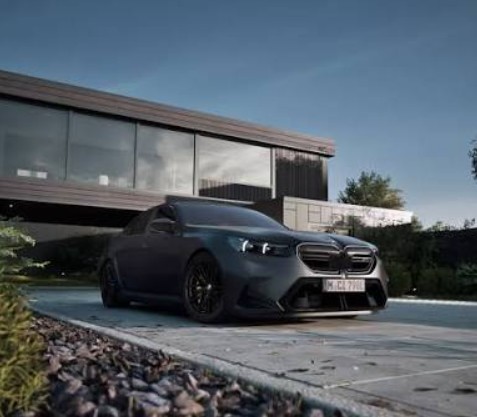
The BMW M5 vs Cadillac CT5-V Blackwing comparison feels almost like an argument about what a high-performance sedan should be in the modern era. On one side, we have BMW pushing aggressively into electrification, all-wheel-drive traction, immense computing power, and plug-in hybrid performance. On the other, Cadillac appears to have walked into the engineering department, placed a supercharged V8 and a manual transmission on the table, and said, "Don't forget why people love cars."
Both approaches produce astonishingly fast luxury sedans. They simply arrive at that destination by taking very different roads.
The current BMW M5 combines a 4.4-liter twin-turbocharged V8 with an electric motor to produce 717 horsepower and 738 lb-ft of torque, sending its power through an eight-speed automatic and M xDrive all-wheel-drive system. BMW quotes 0–60 mph in 3.4 seconds.
The Cadillac CT5-V Blackwing, meanwhile, uses a hand-built 6.2-liter supercharged V8 producing 668 horsepower and 659 lb-ft of torque. Better still for enthusiasts, Cadillac continues to offer a six-speed manual transmission, while a 10-speed automatic is available. Cadillac also quotes a 3.4-second 0–60 mph time.
So which one would we rather have?
That question gets surprisingly complicated.
Content in this publication
- BMW M5 vs Cadillac CT5 Blackwing Specifications
- Two Completely Different Performance Philosophies
- Engine Comparison: Hybrid V8 vs Supercharged V8
- BMW M5 vs CT5-V Blackwing Acceleration
- Handling: Which One Feels Better in Corners?
- The Blackwing Feels More Like a Driver's Car
- Steering and Driver Engagement
- Weight: The M5's Biggest Weakness
- Top Speed: Cadillac Takes the Crown
- Daily Driving: BMW M5 vs Cadillac CT5 Blackwing
- Interior and Technology Comparison
- Practicality and Passenger Space
- Sound and Character
- Manual vs Automatic: The Blackwing's Trump Card
- BMW M5 vs Cadillac CT5 Blackwing Price
- Which Car Is Better on a Racetrack?
- BMW M5 Advantages and Disadvantages
- Cadillac CT5-V Blackwing Advantages and Disadvantages
- Which One Feels More Special?
- Which One Is Faster?
- Which Is Better for Bad Weather?
- Which One Should Enthusiasts Buy?
- BMW M5 vs Cadillac CT5 Blackwing: Final Verdict
- Frequently Asked Questions
BMW M5 vs Cadillac CT5 Blackwing Specifications
We should begin with the numbers because they immediately reveal just how different these cars have become.
| Specification | BMW M5 | Cadillac CT5-V Blackwing |
|---|---|---|
| Engine | 4.4L twin-turbo V8 + electric motor | 6.2L supercharged V8 |
| Power | 717 hp | 668 hp |
| Torque | 738 lb-ft | 659 lb-ft |
| Transmission | 8-speed automatic | 6-speed manual / 10-speed automatic |
| Drivetrain | AWD | RWD |
| 0–60 mph | 3.4 sec | 3.4 sec |
| Top speed | 155 mph standard | Over 200 mph |
| Curb weight | 5,390 lb | Significantly lighter than M5 |
| Character | Hybrid super sedan | Traditional muscle-luxury sedan |
BMW officially lists the M5 at 5,390 pounds, which is extraordinary for a performance sedan. Its hybrid hardware contributes significantly to that figure.
That weight will become important later because horsepower tells only half the story.
Two Completely Different Performance Philosophies
Imagine two chefs trying to prepare the ultimate steak.
BMW brings computerized temperature control, laboratory-grade equipment, sophisticated sauces, and seventeen different ingredients.
Cadillac brings meat, salt, fire, and a very large knife.
Both dinners could be fantastic.
That is roughly what is happening here.
The BMW M5 Is a Technological Powerhouse
BMW has transformed the M5 into something closer to a rolling performance laboratory.
Its plug-in hybrid system combines the familiar M TwinPower Turbo V8 architecture with electric assistance. The result is instantaneous electric torque supporting an already brutally powerful combustion engine.
You get:
- 717 horsepower
- 738 lb-ft of torque
- M xDrive all-wheel drive
- Eight-speed automatic transmission
- Plug-in hybrid capability
- Multiple configurable driving modes
- Advanced chassis electronics
The M5 essentially tries to eliminate compromises.
It wants to commute quietly, travel comfortably, provide electric-only driving capability and then transform into a violently fast performance car when we press the right buttons.
That's impressive.
But complexity has a personality of its own.
The Cadillac CT5-V Blackwing Keeps Things Old School
Cadillac takes almost the opposite approach.
The centerpiece is a 6.2-liter supercharged V8 producing 668 horsepower and 659 lb-ft. Cadillac pairs it with rear-wheel drive and, incredibly, still allows buyers to choose a six-speed manual transmission.
That combination is becoming exceptionally rare.
No front electric motor helping the launch.
No complicated hybrid drivetrain.
No mandatory all-wheel drive.
Just a huge engine sending enormous power toward the rear tires.
It's wonderfully ridiculous.
And Yes, You Can Still Shift It Yourself
The six-speed manual may be the Blackwing's greatest advantage for certain buyers.
Performance cars with three pedals are disappearing rapidly, particularly luxury sedans with enormous V8 engines.
The Blackwing therefore offers something the M5 simply cannot replicate.
Participation.
The BMW can shift faster than we ever could.
The Cadillac asks us whether speed is really the only thing that matters.
Engine Comparison: Hybrid V8 vs Supercharged V8
Both engines deserve respect, but their personalities could hardly be more different.
The BMW's 4,395cc V8 works alongside an electric motor, resulting in its 717-horsepower combined output.
The Cadillac relies on displacement and forced induction the traditional way: a 6.2-liter V8 with a supercharger sitting proudly within the equation.
BMW M5 Engine Advantages
The M5's hybrid system gives it enormous low-end torque.
Electric motors don't need to wait for boost pressure or engine speed. Their response is effectively immediate, helping the M5 surge forward with the subtlety of a launched missile.
That makes the BMW especially impressive during:
- highway overtaking
- stoplight acceleration
- low-speed throttle response
- bad-weather launches
- repeated everyday acceleration
Its 738 lb-ft torque figure isn't merely impressive on paper. It shapes the personality of the car.
Press the accelerator and there is very little negotiation.
The M5 simply goes.
Cadillac Blackwing Engine Advantages
The Cadillac's supercharged V8 feels more mechanical.
There is an emotional progression as the engine climbs through its rev range, accompanied by the sound and character we associate with traditional American V8 performance.
The Blackwing doesn't disguise what is happening.
Fuel is being burned.
A supercharger is forcing air into a massive V8.
The rear wheels are attempting to translate the resulting chaos into forward motion.
And we're sitting in the middle of the experience.
Sometimes less sophistication produces more theatre.
BMW M5 vs CT5-V Blackwing Acceleration
Here comes the amusing part.
Despite their dramatically different powertrains, both manufacturers quote 3.4 seconds from 0 to 60 mph.
How?
Traction.
The BMW's M xDrive system makes launching enormous horsepower considerably easier.
The Cadillac sends everything to the rear wheels.
The BMW Should Be Easier to Launch Consistently
Put both cars on ordinary pavement and the M5's AWD system becomes a serious weapon.
Instead of asking two tires to manage more than 700 horsepower worth of performance, the BMW can distribute power across four wheels.
That means less drama and more repeatability.
For straight-line launches, the M5 feels almost unfair.
Select the appropriate settings, brake, accelerate and hang on.
The computers handle much of the difficult work.
The Cadillac Makes You Earn It
The Blackwing requires more respect.
Especially with the manual.
Launch too aggressively and those rear tires might become expensive smoke machines.
Launch too gently and the BMW disappears.
Get everything right, though, and the reward is enormous.
The Cadillac doesn't simply give us performance.
It involves us in producing it.
Handling: Which One Feels Better in Corners?
Here the comparison becomes particularly interesting.
BMW M cars have historically been benchmarks for sports-sedan handling, but the modern M5 carries significant mass. Cadillac, meanwhile, spent years refining the Alpha-platform chassis underneath the CT5-V Blackwing.
The M5 Uses Technology to Fight Physics
BMW knows the M5 is heavy.
Rather than pretending otherwise, the company attacks the problem with sophisticated suspension, steering, chassis control and all-wheel-drive systems.
The result should be far more agile than a 5,390-pound curb weight suggests.
That doesn't mean mass disappears.
Physics always sends the bill eventually.
Push hard into a corner and tires, brakes and suspension still have to control all that weight.
The impressive part is how effectively modern engineering hides it.
BMW Delivers Incredible Stability
Fast sweeping corners are where the M5's broad stance and all-wheel-drive confidence make sense.
The car feels planted.
Secure.
Controlled.
We can deploy huge power surprisingly early when exiting bends because four driven wheels are helping put that performance onto the pavement.
The Blackwing Feels More Like a Driver's Car
The Cadillac takes a more traditional route.
Rear-wheel drive fundamentally changes how the car communicates.
Throttle position matters more.
Weight transfer feels more obvious.
The rear axle participates in the conversation.
Instead of constantly asking what the computer will allow us to do, we're interacting more directly with the chassis.
For enthusiasts who enjoy adjusting a car through steering and throttle inputs, the Blackwing can feel wonderfully alive.
You may be interested in reading BMW M5 vs G Wagon: Performance Sedan or Luxury Icon?
Magnetic Ride Control Is One of Cadillac's Secret Weapons
Cadillac equips the CT5-V Blackwing with sophisticated adaptive damping technology designed to balance ride comfort and body control.
That's crucial because a great sports sedan shouldn't behave like a track car every minute of the day.
We should be able to attack a mountain road on Sunday morning and still survive broken city pavement Monday afternoon.
The Blackwing understands that mission surprisingly well.
Steering and Driver Engagement
Numbers disappear surprisingly quickly once we're behind the wheel.
A car producing 600 horsepower can sometimes be more entertaining than one producing 700.
Why?
Communication.
BMW Feels Precise but Digital
The M5's steering responds quickly and accurately.
There's very little wondering about what the front tires are doing directionally.
But the overall experience is highly filtered through modern electronics.
The BMW wants to help.
Constantly.
That makes it tremendously capable, yet some drivers may feel slightly removed from the process.
Cadillac Gives the Driver More Responsibility
The CT5-V Blackwing feels refreshingly analog by comparison.
Especially with the manual transmission.
Clutch.
Gear lever.
Rear-wheel drive.
Supercharged V8.
Those ingredients create interaction before we've even reached the speed limit.
And that may matter more than another tenth of a second on a spec sheet.
Weight: The M5's Biggest Weakness
We can't discuss this comparison without addressing the elephant wearing an M badge.
The BMW M5 weighs 5,390 pounds according to BMW's published specifications.
That's substantial.
The previous conception of an M5 was essentially a business sedan with sports-car reflexes.
The newest generation is more like a luxury grand tourer carrying supercar acceleration and hybrid technology.
Does the Weight Ruin the M5?
No.
But it changes what the M5 is.
The car can still accelerate violently and corner at speeds that seem absurd for something its size.
Modern dampers, enormous tires, clever differentials and sophisticated software accomplish remarkable things.
Yet lightness produces qualities that software cannot completely imitate.
You feel mass under braking.
You feel it during rapid direction changes.
And eventually the tires feel it too.
The M5's engineering works hard to disguise its weight.
The Blackwing simply has less weight to disguise.
Top Speed: Cadillac Takes the Crown
Cadillac states that the CT5-V Blackwing is capable of more than 200 mph.
That is a remarkable number for a four-door sedan.
BMW electronically limits the M5 to 155 mph as standard, while BMW lists 190 mph with the available M Driver's Package on the current model.
Obviously, none of this matters during normal road driving.
But these are flagship performance sedans.
Ridiculous specifications are part of the entertainment.
The Cadillac wins the bragging-rights battle here.
Daily Driving: BMW M5 vs Cadillac CT5 Blackwing
Now we reach an area where the BMW's complexity starts making much more sense.
Not everyone purchases an M5 because they spend weekends chasing lap times.
Many owners actually use these cars every day.
Why the M5 Makes Sense as a Daily Driver
BMW's M xDrive system provides extra confidence in rain, cold conditions and imperfect roads.
The hybrid drivetrain also gives the M5 an entirely different dimension.
One moment it can behave like a civilized electrified executive sedan.
The next moment, 717 horsepower is available.
That dual personality is central to the modern M5's appeal.
BMW has essentially built a car that asks:
Why choose between electrification and absurd performance?
Why not have both?
The Blackwing Is More Demanding but More Characterful
The Cadillac can certainly function as a daily driver.
It seats five, has four doors and offers the technology expected from a modern luxury sedan. Cadillac's current model includes a large 33-inch display and numerous comfort and technology features.
But its personality never completely disappears.
There's always that massive V8 waiting beneath the hood.
Choose the manual transmission and even driving through ordinary traffic becomes more involving.
Whether that's charming or annoying depends entirely on us.
Interior and Technology Comparison
BMW probably wins the technology battle.
That won't surprise anyone.
The M5 cockpit embraces the digital philosophy found throughout modern BMW models, incorporating large displays, sophisticated vehicle settings and extensive driver customization.
BMW Interior: Modern and Highly Digital
The M5 cabin feels futuristic.
We're surrounded by screens, menus, configurable performance controls and premium materials.
For buyers who want their $100,000-plus sedan to feel like a technological flagship, that's appealing.
However, there is a potential downside.
Simple operations can sometimes become buried behind layers of interfaces.
The M5 frequently feels like a very powerful computer that happens to contain seats and a V8.
Cadillac Interior: Dramatically Improved
Anyone who remembers older Cadillac performance interiors may arrive with low expectations.
They shouldn't.
The current CT5-V Blackwing features Cadillac's 33-inch Horizon Display, along with modern infotainment and premium interior options.
It isn't merely an engine wrapped in an ordinary sedan anymore.
The Blackwing finally provides the technological theater expected from a modern luxury performance car.
BMW Still Feels More Premium Overall
Material quality and presentation generally favor the M5's luxury-first approach.
The Blackwing interior exists primarily to support the driving experience.
The BMW interior feels like an expensive luxury environment that happens to contain a monstrous drivetrain.
That distinction matters.
Practicality and Passenger Space
Both vehicles genuinely function as sedans rather than pretending to.
Cadillac lists seating for five, 37 inches of rear legroom and 11.9 cubic feet of cargo volume for the CT5-V Blackwing.
The BMW is also a substantial automobile, stretching 200.6 inches long with a 118.3-inch wheelbase.
The M5 therefore has enough room to function as an executive express rather than merely a weekend toy.
Which Is Better for Long Trips?
We'd choose the BMW.
Its overall combination of drivetrain sophistication, AWD security, cabin technology and grand-touring character makes it exceptionally suitable for covering enormous distances quickly.
The Cadillac isn't uncomfortable.
Far from it.
But the M5's transformation toward luxury GT territory gives it an advantage when the road ahead stretches for several hundred miles.
Sound and Character
This category requires approximately three seconds of consideration.
Blackwing.
The Cadillac's supercharged V8 is one of the primary reasons the car exists.
There's something wonderfully inappropriate about hearing a huge American V8 erupt from a sophisticated luxury sedan.
You may be interested in readingBMW M5 vs G Wagon: Performance Sedan or Luxury Icon?You may be interested in reading
 Audi A4 or A5: Which Audi Should You Choose?
The M5 Still Has V8 Character
We shouldn't dismiss the BMW.
A twin-turbo V8 remains under the hood, and that alone makes the M5 considerably more exciting than many electrified performance cars.
But the hybrid system changes the experience.
Power delivery feels polished and relentlessly effective.
The Cadillac feels more theatrical.
One gives us acceleration.
The other gives us a soundtrack to accompany it.
Manual vs Automatic: The Blackwing's Trump Card
For some buyers, the entire BMW M5 vs Cadillac CT5 Blackwing comparison ends right here.
Do you want a manual transmission?
If yes, buy the Cadillac.
Cadillac offers the Blackwing with a six-speed manual as standard, while a 10-speed automatic remains available.
The M5 is exclusively automatic.
Why the Manual Matters
Not because it's faster.
It probably isn't.
Not because it's easier.
Definitely not.
It matters because operating it is satisfying.
Selecting a gear ourselves creates a tiny moment of interaction every few seconds.
That mechanical connection is disappearing from high-performance cars.
The Blackwing preserves it.
And decades from now, that may be one of the characteristics enthusiasts remember most.
BMW M5 vs Cadillac CT5 Blackwing Price
Price can change by model year, options and destination charges, but Cadillac currently lists the 2026 CT5-V Blackwing from $98,900 in the United States.
That makes its performance proposition extraordinary.
We're talking about 668 horsepower, a hand-built supercharged V8 and available manual transmission in a genuine luxury sedan.
BMW sits higher in the market. BMW currently lists the 2027 M5 at a starting MSRP of $123,300, illustrating the significant price separation between the two even before options.
Which Offers Better Performance Value?
Cadillac.
Pretty comfortably.
Performance-per-dollar is one of the Blackwing's strongest arguments.
The M5 counters with more horsepower, AWD, hybrid technology and arguably greater luxury sophistication.
We're paying not merely for speed but for additional engineering complexity.
Whether that's worth it depends on what we actually want from the car.
Which Car Is Better on a Racetrack?
This one depends heavily on the circuit.
The BMW's traction and power make it devastating out of slower corners.
The Cadillac's lower mass and communicative rear-wheel-drive chassis can become increasingly valuable as corners accumulate.
Fast Driver vs Fast Car
Here's perhaps the easiest way to understand them.
The BMW helps us go fast.
The Cadillac encourages us to become better at going fast.
There's a difference.
Drivers searching for maximum accessible performance may prefer the M5.
Drivers searching for engagement may gravitate toward the Blackwing.
BMW M5 Advantages and Disadvantages
Reasons We'd Choose the BMW M5
- 717 horsepower and 738 lb-ft
- Standard M xDrive all-wheel drive
- Enormous acceleration in almost any condition
- Plug-in hybrid versatility
- Highly sophisticated technology
- Premium cabin
- Excellent long-distance performance
- Huge tuning flexibility through selectable modes
Reasons We Might Avoid It
- Extremely heavy
- No manual transmission
- More complex drivetrain
- Less analog character
- Higher purchase price
- Technology can dominate the experience
Cadillac CT5-V Blackwing Advantages and Disadvantages
Reasons We'd Choose the Blackwing
- 668-hp supercharged V8
- Available six-speed manual
- Rear-wheel-drive dynamics
- More traditional performance-car character
- Over 200-mph claimed capability
- Strong performance value
- Engaging chassis
- Rarity and personality
Reasons We Might Avoid It
- Rear-wheel drive requires more care in poor weather
- Less efficient performance philosophy
- Interior luxury doesn't completely outclass BMW
- Manual version demands more involvement in traffic
- Traction is more difficult to manage during hard launches
Which One Feels More Special?
The answer may surprise some BMW fans.
We'd give this category to the Cadillac.
The M5 represents where performance sedans are going.
The Blackwing represents something we may never get back.
Big supercharged V8.
Rear-wheel drive.
Manual transmission.
Four doors.
Luxury interior.
Modern chassis.
That combination already feels like an endangered species.
The BMW is technically extraordinary.
The Cadillac feels historically significant.
Which One Is Faster?
Straight-line performance isn't as simple as comparing horsepower.
The M5 has more power, more torque and all-wheel-drive traction.
The Blackwing carries less mass and offers remarkable high-speed performance.
From a standing start on ordinary pavement, we'd expect the BMW's AWD system to make its performance easier to access consistently.
At higher speeds, the Cadillac's combination of horsepower and lower weight becomes extremely serious.
Manufacturer figures put both at 3.4 seconds to 60 mph, despite their radically different approaches.
So instead of asking which is faster, perhaps we should ask a better question.
Which kind of fast do we prefer?
Which Is Better for Bad Weather?
BMW.
No debate necessary.
The M5's M xDrive system provides a significant traction advantage when conditions deteriorate.
Rain, cold pavement and occasional snow become far less intimidating when all four tires can contribute to acceleration.
The Blackwing's 659 lb-ft passing exclusively through the rear axle requires considerably more restraint.
Modern traction control helps.
Physics still exists.
Which One Should Enthusiasts Buy?
This depends on what we mean by enthusiast.
If we love engineering, technology and outrageous speed, the M5 is fascinating.
If we love mechanical interaction, steering feel, engine noise and shifting gears ourselves, the Blackwing becomes extremely difficult to resist.
Choose the BMW M5 If We Want
A super sedan that can seemingly do everything.
It can cruise quietly, deploy electric assistance, attack highways with tremendous power and use AWD to put that performance onto the pavement.
It's essentially a technological hammer wrapped in executive clothing.
Choose the Cadillac CT5-V Blackwing If We Want
A car that makes normal drives feel like occasions.
We sacrifice some sophistication but gain interaction.
The Blackwing doesn't merely transport us quickly.
It constantly reminds us why we're driving.
BMW M5 vs Cadillac CT5 Blackwing: Final Verdict
Choosing a winner requires deciding what we value.
The BMW M5 is arguably the more complete machine.
It has more power, more torque, all-wheel-drive traction, electrified capability, sophisticated technology and serious long-distance comfort. BMW has created something astonishingly capable considering its size and 5,390-pound curb weight.
But if we were choosing purely with our enthusiast hearts?
The Cadillac CT5-V Blackwing gets our vote.
Its 668-horsepower supercharged V8, rear-wheel-drive chassis and available six-speed manual represent a formula rapidly disappearing from the automotive world.
The BMW feels like the future.
The Cadillac feels like the magnificent final chapter of the past.
And occasionally, the last version of something can be more desirable than the first version of what comes next.
Frequently Asked Questions
Is the BMW M5 faster than the Cadillac CT5-V Blackwing?
Both manufacturers quote a 3.4-second 0–60 mph time for their respective cars. The BMW has an advantage in traction thanks to its M xDrive AWD system, while the Cadillac combines 668 horsepower with rear-wheel drive and substantially more traditional performance-car architecture.
Does the Cadillac CT5-V Blackwing have more horsepower than the BMW M5?
No. The current M5 produces 717 horsepower, while the CT5-V Blackwing produces 668 horsepower. The BMW also has more torque at 738 lb-ft compared with the Cadillac's 659 lb-ft.
Can you get the Cadillac CT5-V Blackwing with a manual transmission?
Yes. Cadillac offers a six-speed manual transmission, while a 10-speed automatic is optional. That makes the Blackwing one of the rare high-horsepower luxury sedans still available with a traditional manual gearbox.
Is the BMW M5 heavier than the CT5-V Blackwing?
Yes. The hybrid M5 is exceptionally heavy, with BMW listing a curb weight of 5,390 pounds. Its battery, electric motor, AWD hardware and luxury equipment contribute to that substantial figure.
Which is better, BMW M5 or Cadillac CT5-V Blackwing?
The M5 is the better choice if we prioritize AWD traction, technology, outright power and everyday versatility. The CT5-V Blackwing is more compelling if we prioritize driver involvement, V8 character, rear-wheel-drive dynamics and the availability of a manual transmission. For pure enthusiast appeal, we'd choose the Blackwing; for all-around capability, we'd choose the M5.
You may be interested in readingBMW M5 vs G Wagon: Performance Sedan or Luxury Icon?You may be interested in reading
Audi A4 or A5: Which Audi Should You Choose?You may be interested in reading
Audi A4 vs A3: Which Audi Is the Better Choice?If you want to know other articles similar to BMW M5 vs Cadillac CT5-V Blackwing: Which Super Sedan Wins? you can visit the category Models.
Haval Jolion vs Omoda C5: Which SUV Is Better?
Haval Jolion vs Chery Tiggo 4 Pro: Full Comparison
Haval Jolion vs H6: Which SUV Is Better in 2026?
Haval Jolion vs Toyota Corolla Cross: Which SUV Is Better?
Haval Jolion vs Jaecoo J5: Which SUV Is Better?
Volkswagen T-Cross vs Volkswagen T-Roc: Which Is Better?
Leave a Reply
More content of your interest