
BMW M5 vs G Wagon: Performance Sedan or Luxury Icon?

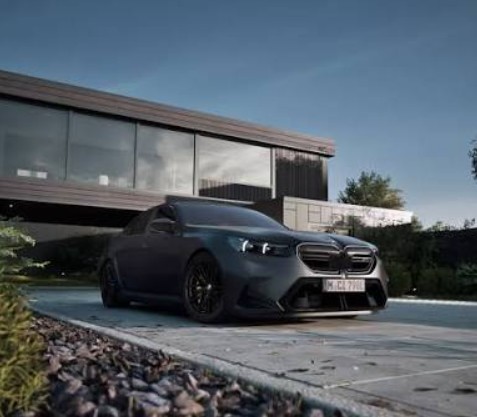
Comparing the BMW M5 vs G Wagon sounds a little strange at first. One is a brutally fast luxury sports sedan designed to devour highways and corners. The other is a tall, box-shaped luxury SUV descended from a serious off-road vehicle. Put them next to each other, though, and the comparison suddenly makes sense.
Both are expensive. Both have enormous road presence. Both can deliver V8 drama. And both sit near the top of the wish list for buyers who want something far more exciting than an ordinary luxury vehicle.
Yet they approach performance from completely different directions.
The modern BMW M5 is essentially a business-class sedan carrying supercar hardware underneath its tailored suit. The Mercedes-AMG G 63—the model most people have in mind when saying "G Wagon" in a performance comparison—is more like a luxury penthouse strapped onto hiking boots.
So which one makes more sense?
If we're choosing between a BMW M5 and a G Wagon, the answer depends less on which vehicle is objectively "better" and more on what kind of experience we actually want every time we open the garage.
Content in this publication
- BMW M5 vs G Wagon at a Glance
- BMW M5 vs G Wagon Performance
- Handling: Where Physics Starts Taking Sides
- Driving Experience: Precision vs Theater
- BMW M5 vs G Wagon Interior
- Practicality and Cargo Space
- Off-Road Capability: No Contest
- Fuel Economy and Efficiency
- BMW M5 vs G Wagon Size
- City Driving
- Highway Driving
- BMW M5 vs G Wagon in Bad Weather
- Sound and Character
- Road Presence and Status
- Technology Comparison
- BMW M5 vs G Wagon Reliability
- Maintenance and Running Costs
- Insurance Costs
- BMW M5 vs G Wagon for Families
- Which One Is More Fun?
- Which One Makes the Better Daily Driver?
- Which One Is Better for Enthusiasts?
- Which One Is the Bigger Flex?
- BMW M5 vs G Wagon: Which Should We Buy?
- Who Should Choose the BMW M5?
- Who Should Choose the G Wagon?
- BMW M5 vs G Wagon: Final Verdict
- Frequently Asked Questions
BMW M5 vs G Wagon at a Glance
Before digging into the details, let's establish just how different these machines really are.
For the current U.S.-market M5, BMW lists a plug-in-hybrid powertrain producing 717 horsepower and 738 lb-ft of torque, with all-wheel drive and a claimed 0-60 mph time of 3.4 seconds.
Mercedes-AMG lists the current G 63 at 577 horsepower and 627 lb-ft of torque, with a 4.0-liter biturbo V8, hybrid assistance, permanent all-wheel drive, and a manufacturer-estimated 4.2-second 0-60 mph time.
Here's the simplified picture:
| Category | BMW M5 | Mercedes-AMG G 63 |
|---|---|---|
| Vehicle type | High-performance luxury sedan | High-performance luxury SUV |
| Power | 717 hp | 577 hp |
| Torque | 738 lb-ft | 627 lb-ft |
| 0-60 mph | 3.4 sec | 4.2 sec |
| Drivetrain | AWD | Permanent AWD |
| Transmission | 8-speed automatic | 9-speed automatic |
| Curb weight | 5,390 lb | 5,842 lb |
| Personality | Fast, technical, understated | Bold, commanding, extravagant |
| Best environment | Highway and winding roads | City, luxury cruising, rough terrain |
The numbers immediately tell us that the M5 has the performance advantage. But numbers explain only half the story.
BMW M5 vs G Wagon Performance
If speed sits at the top of our shopping list, the BMW wins this round quite convincingly.
The M5 has always existed around a beautifully ridiculous idea: build a comfortable executive sedan, then give it enough performance to embarrass sports cars.
The latest version takes that formula even further.
The BMW M5 Is Shockingly Fast
The current M5 combines a twin-turbocharged 4.4-liter V8 with an electric motor, creating a total system output of 717 horsepower. BMW quotes 738 lb-ft of torque and a 0-60 mph time of 3.4 seconds.
That isn't merely "quick for a sedan."
It's genuinely serious performance.
Press the accelerator hard and the M5 doesn't feel like a traditional large luxury car gathering speed. It feels like the horizon has suddenly been connected to a winch.
The combination of electric torque, turbocharged V8 power and all-wheel-drive traction allows the car to launch with astonishing violence.
The G 63 Isn't Slow—Not Even Close
Calling the G Wagon slow would be absurd.
Mercedes gives the AMG G 63 a handcrafted 4.0-liter twin-turbo V8 developing 577 horsepower and 627 lb-ft of torque, supplemented by a 48-volt hybrid system. Mercedes quotes 0-60 mph in 4.2 seconds.
Remember what we're talking about here.
This is a large, upright SUV weighing roughly 5,842 pounds.
Watching something shaped like an expensive apartment building accelerate to highway speed in little more than four seconds remains one of the great automotive contradictions.
Which One Feels Faster?
The M5.
And not by a small margin.
The G 63 delivers huge acceleration accompanied by noise, height and theater. The BMW feels more relentless. It gains speed with the cold efficiency of a bullet train.
If our priority is outright acceleration and high-speed performance, the BMW M5 beats the G Wagon.
Handling: Where Physics Starts Taking Sides
Horsepower can disguise weight in a straight line.
Corners are less forgiving.
Neither vehicle is light. In fact, modern performance cars have become remarkably heavy.
BMW lists the M5 at 5,390 pounds, meaning even this performance sedan weighs more than plenty of SUVs from previous generations.
The AMG G 63 is heavier still at 5,842 pounds.
Yet where that weight sits matters enormously.
The M5 Wants to Attack Corners
The BMW sits low to the ground and is built fundamentally around road performance.
Its steering, suspension geometry, enormous tires, sophisticated electronic systems and all-wheel-drive setup all work toward the same goal: controlling a very powerful sedan at very high speeds.
Drive aggressively through a winding road and the M5 makes far more sense.
It can change direction faster, stay flatter through corners and inspire more confidence when the road begins twisting like a ribbon.
The G Wagon Can't Hide Its Shape
The G 63 has undergone enormous engineering development over the years, but Mercedes cannot negotiate away basic geometry.
The vehicle is tall.
Its body is upright.
Its center of gravity is higher.
It even retains a rear rigid axle while using an independent double-wishbone arrangement at the front.
AMG engineering makes the G 63 far more capable on pavement than its silhouette suggests, but we're still driving a luxury off-roader rather than a sports sedan.
Push hard enough and we feel that distinction.
Driving Experience: Precision vs Theater
This may be the most important section of the entire comparison.
The M5 and G Wagon generate excitement differently.
The M5 gives us excitement through capability.
The G 63 gives us excitement through occasion.
Behind the Wheel of an M5
The BMW encourages us to seek an empty stretch of road.
There's something almost mischievous about having that much performance packaged inside a four-door sedan.
We can arrive at work quietly, carry passengers comfortably and then unleash more than 700 horsepower when conditions permit.
Its personality has layers.
Drive gently and it can behave like an executive sedan.
Start exploring its performance settings and another machine emerges.
Behind the Wheel of a G Wagon
The AMG G 63 announces itself before we even start the engine.
We climb upward rather than downward into the cabin. We look across the squared-off hood. We sit above most traffic. We hear the heavy doors close with the unmistakable solidity that has become part of the G-Class ritual.
The experience is theatrical.
Driving one through a city feels completely different from driving an M5.
People notice.
The shape is instantly recognizable.
Where the M5 sometimes slips through traffic disguised as another BMW sedan, the G Wagon enters like a celebrity walking into a quiet restaurant.
BMW M5 vs G Wagon Interior
Both interiors are luxurious, but again the philosophy differs.
M5 Cabin: Performance Meets Technology
The BMW interior feels oriented around the driver.
Screens, performance menus, steering-wheel controls and selectable drive modes give the cabin a technical atmosphere.
We still receive the comforts expected from an expensive luxury sedan, but the underlying message is obvious: someone expects us to drive this thing enthusiastically.
The seating position reinforces that impression.
We sit relatively low, surrounded by the cockpit rather than perched above it.
G Wagon Cabin: Luxury Inside a Fortress
The Mercedes delivers an entirely different sensation.
The exterior suggests military heritage. The interior suggests a five-star hotel.
Mercedes offers extensive Nappa leather customization, premium technology and luxury materials, allowing the G 63 to feel dramatically more extravagant than its rugged shape would suggest.
The cabin also benefits from the G-Class's upright architecture.
Visibility feels expansive. The windshield stands almost vertically ahead of us. The seating position gives us that commanding SUV perspective many buyers adore.
Which Interior Is Better?
For sportiness: BMW M5.
For commanding luxury and visual drama: G Wagon.
Neither answer is wrong.
They're simply trying to impress us in different ways.
Practicality and Cargo Space
Here's where the G Wagon begins fighting back.
A sedan—even an extremely capable sedan—has limitations.
The G 63 offers considerably more flexibility for bulky cargo. Mercedes lists 37.4 cubic feet behind the rear seats and up to 68.6 cubic feet with additional cargo space opened up.
The boxy design helps too.
Square bodies aren't particularly aerodynamic, but they're wonderful when we're trying to load suitcases, equipment or large boxes.
What About Passengers?
Both vehicles accommodate five people, but the experience differs.
The BMW feels more like a conventional luxury sedan.
The Mercedes feels airier vertically and gives passengers a commanding view of their surroundings.
For families frequently carrying bulky gear, large luggage or pets, the G Wagon generally makes life easier.
For people who primarily transport adults and ordinary luggage, the M5 is already plenty practical.
Off-Road Capability: No Contest
This category is almost unfair.
The M5's all-wheel drive exists mainly to distribute enormous power effectively and improve road performance.
The G-Class drivetrain has much deeper off-road roots.
Mercedes equips the G 63 with permanent all-wheel drive and a two-speed transfer case. It can also tow up to 7,000 pounds according to Mercedes-Benz USA.
You may be interested in reading Audi A4 or A5: Which Audi Should You Choose?
That changes what the vehicle can realistically do.
Mud, rough tracks, snow, steep terrain and broken roads are environments where the G Wagon makes dramatically more sense.
Would We Actually Take a G 63 Off-Road?
That's another question entirely.
Many G Wagons will spend their lives traveling between expensive homes, restaurants and shopping districts.
Still, capability matters.
There's satisfaction in knowing that beneath the leather, screens and AMG soundtrack lives a platform capable of doing far more than climbing a parking-garage ramp.
Fuel Economy and Efficiency
Neither vehicle should be purchased primarily as an exercise in fuel savings.
The G 63 is particularly thirsty.
Mercedes lists EPA figures of 14 mpg city and 16 mpg highway for the current AMG G 63.
That's hardly surprising.
We're moving nearly three tons of luxury SUV through the air with aerodynamics resembling a very sophisticated refrigerator.
The M5 Takes a Different Approach
The new M5 uses a plug-in-hybrid system.
That doesn't transform it into an economy car, but it changes the ownership experience. Short trips may involve some degree of electric driving when the battery is charged, while the hybrid system also contributes heavily to performance.
This is an important philosophical shift.
Older M5 generations depended almost entirely on combustion performance. The current car treats electrification as both an efficiency tool and a performance weapon.
BMW M5 vs G Wagon Size
Here's an interesting surprise.
The BMW is actually longer.
BMW lists the M5 at 200.6 inches long, while Mercedes lists the AMG G 63 at 191.9 inches including the externally mounted spare tire but excluding a brush guard.
But the Mercedes is dramatically taller.
The G 63 measures 77.4 inches high, compared with just 59.4 inches for the M5.
That's why the vehicles feel so different in person.
The M5 spreads itself across the road like a low, muscular athlete.
The G Wagon stands upright like a luxury skyscraper.
City Driving
We might assume the smaller-feeling M5 automatically wins in cities, but the answer isn't quite that simple.
Why the M5 Works Better in Traffic
The BMW's lower center of gravity and more conventional proportions make quick lane changes and faster roads easier.
Its performance also gives us ridiculous amounts of overtaking power whenever needed.
But it's still a large car.
At more than 200 inches long, the current M5 isn't exactly compact.
Why the G Wagon Can Be Surprisingly Convenient
The Mercedes is tall, but its squared dimensions give us clear visual reference points.
We can see the corners reasonably well, and the elevated seating position improves visibility through traffic.
The problem comes with width and parking.
Mercedes lists the G 63 at 86.1 inches wide including its mirrors.
Narrow parking garages can suddenly feel like obstacle courses.
Best City Choice
For ease of driving: M5.
For visibility and presence: G Wagon.
For squeezing into tiny spaces: honestly, neither.
Highway Driving
Put these vehicles on an open interstate and the BMW begins showing why the M5 formula has survived for decades.
High-speed stability is one of its natural talents.
The car sits low, carries immense reserves of power and feels designed to shrink long distances.
A highway entrance ramp can disappear almost comically quickly.
The G Wagon is comfortable on highways too, but its upright body creates a fundamentally different sensation. Wind resistance, height and SUV dynamics never completely disappear.
If our lifestyle includes long-distance, high-speed road travel, we'd take the M5.
BMW M5 vs G Wagon in Bad Weather
Now things become interesting.
Both vehicles feature sophisticated all-wheel-drive systems, giving each substantial traction advantages.
However, traction isn't the same thing as ground clearance.
Deep snow, badly flooded roads, rough rural tracks or damaged surfaces heavily favor the G Wagon.
For rain and light winter conditions on maintained pavement, the M5 should feel completely at home with appropriate tires.
For genuinely difficult terrain, the Mercedes wins easily.
Sound and Character
Performance vehicles shouldn't only be measured through spreadsheets.
Sometimes a car needs to make us turn around after parking it.
Sometimes it needs to make the trip itself feel special.
The AMG G 63 excels at this kind of emotional theater.
The V8 sound, upright driving position, dramatic bodywork and overall sense of occasion combine into something difficult to replicate.
The M5 is more serious.
Its V8 still provides character, but the plug-in-hybrid complexity and heavily engineered performance experience give the BMW a more technological personality.
Which Has More Character?
We'd give this one to the G 63.
The M5 may be the better performance machine, but the G Wagon is the harder vehicle to forget.
Road Presence and Status
This category matters whether enthusiasts like admitting it or not.
Luxury vehicles aren't purchased solely because of acceleration figures.
Design, identity and status play major roles.
Few modern SUVs have achieved the cultural recognition of the G-Class.
Its silhouette has changed remarkably little in spirit over decades, making the G Wagon instantly identifiable even to people who know almost nothing about cars.
The M5 Takes the Stealthier Route
An M5 commands respect among enthusiasts.
To everyone else?
It may simply look like a particularly aggressive BMW sedan.
That can actually be part of the appeal.
The M5 is a wolf wearing an expensive business suit.
The G 63 is the wolf wearing gold chains and walking directly through the front door.
If we prefer understated performance, BMW.
If we enjoy unmistakable presence, Mercedes.
Technology Comparison
The M5 naturally leans heavily toward driving technology.
Its hybrid powertrain, configurable performance systems and electronically managed AWD setup create a vehicle capable of adapting its personality substantially.
The G 63 has become extremely sophisticated too, combining modern infotainment, driver assistance and electronically controlled performance systems with an architecture rooted in traditional off-road engineering.
But the technological priorities differ.
BMW uses technology largely to make a heavy sedan perform like something much smaller.
Mercedes uses technology to make a tall, rugged SUV behave with the polish expected from a modern luxury vehicle.
BMW M5 vs G Wagon Reliability
Reliability is difficult to reduce to a single score because ownership experience depends heavily on model year, maintenance, driving style and individual vehicle condition.
What we can say confidently is that neither machine is simple.
The M5 combines:
- A twin-turbocharged V8
- Plug-in-hybrid hardware
- Sophisticated AWD
- Adaptive chassis technology
- Extensive electronics
The AMG G 63 combines:
- A handcrafted twin-turbo V8
- Mild-hybrid hardware
- Complex AWD systems
- A two-speed transfer case
- Adaptive suspension and extensive luxury electronics
These aren't vehicles we buy expecting economy-car maintenance bills.
Long-Term Ownership Requires Planning
If purchasing either outside warranty coverage, service history becomes extremely important.
Deferred maintenance on a high-performance luxury vehicle has an amusing habit of transforming into very expensive maintenance later.
A bargain-priced used M5 or G 63 isn't necessarily a bargain.
Maintenance and Running Costs
The G Wagon will generally demand more from our wallet simply because of the combination of vehicle price, weight, tire size, fuel consumption and AMG-specific hardware.
The M5 won't exactly be inexpensive either.
Performance tires, brakes, suspension components and specialized servicing can all cost considerably more than they would on a standard 5 Series.
And because the modern M5 incorporates hybrid components, we're dealing with an additional layer of complexity compared with older generations.
Tires Matter More Than We Think
Both machines are heavy and extremely powerful.
That's brutal on performance tires.
Drive aggressively and tire replacement can become a recurring expense rather than an occasional one.
You may be interested in readingAudi A4 or A5: Which Audi Should You Choose?You may be interested in reading
Audi A4 vs A3: Which Audi Is the Better Choice?It's one of those costs buyers often ignore while comparing monthly payments.
Insurance Costs
Insurance prices vary enormously based on location, age, driving record, coverage level and even where the vehicle is stored.
Still, neither model is likely to be inexpensive to insure.
The G 63's extremely high replacement cost works against it.
The M5's enormous performance potential works against it too.
Before buying either vehicle, getting an actual insurance quote is far smarter than relying on generalized online estimates.
A surprisingly high premium can change the ownership calculation quickly.
BMW M5 vs G Wagon for Families
We'd normally expect an SUV to win automatically.
For many families, it does.
The G Wagon offers a large cargo area, upright cabin and SUV versatility.
But the M5 shouldn't be dismissed.
It has four proper doors, a spacious cabin and the practicality of a traditional executive sedan.
Choose the M5 If Your Family Usually Carries People
Passengers, backpacks, groceries and ordinary luggage?
The M5 handles those jobs without difficulty.
Choose the G Wagon If Your Family Carries Gear
Large suitcases, outdoor equipment, pets, bulky purchases or towing needs?
The Mercedes makes more sense.
And Mercedes officially rates the G 63 to tow up to 7,000 pounds.
That's an entire category of usefulness the M5 simply isn't designed to provide.
Which One Is More Fun?
Fun is subjective, but we can divide it into two categories.
The M5 Is More Fun to Drive Hard
Find a twisting road and the BMW wins.
Acceleration is stronger.
Cornering capability is higher.
The lower driving position connects us more directly to the road.
The entire vehicle feels engineered around speed.
The G Wagon Makes Ordinary Driving More Fun
Here's the G 63's secret weapon.
We don't need a canyon road.
We don't need a racetrack.
We can be driving ten minutes to buy groceries and still feel like we're piloting something ridiculous.
Its appeal is constantly present.
That counts for more than performance statistics suggest.
Which One Makes the Better Daily Driver?
For most enthusiasts, we'd choose the BMW M5.
It gives us exceptional performance without forcing us into SUV dimensions and SUV handling.
It can commute quietly, cruise comfortably and then transform when the road opens.
But lifestyle changes the answer.
The G Wagon is better if we regularly encounter poor roads, need cargo flexibility, prefer a high driving position or simply want an SUV.
BMW M5 Daily-Driver Advantages
The M5 offers:
- Better handling
- Faster acceleration
- More natural highway manners
- Lower seating position
- Greater enthusiast appeal
- Sedan-like driving dynamics
- Plug-in-hybrid capability
G Wagon Daily-Driver Advantages
The G 63 counters with:
- Higher seating position
- Greater cargo flexibility
- Serious all-weather potential
- Real off-road capability
- 7,000-pound towing capacity
- Stronger visual presence
- One of the most recognizable designs on the road
Which One Is Better for Enthusiasts?
This one goes to the BMW.
The M5's entire identity revolves around driving.
Yes, it has become larger, heavier and considerably more complicated than early M5 generations.
But the formula remains recognizable.
Take an executive sedan.
Give it outrageous power.
Build a chassis capable of controlling that power.
Then make the whole thing civilized enough to commute in every day.
The G 63 is hugely entertaining, but driving precision isn't its central purpose.
Which One Is the Bigger Flex?
The G Wagon.
No complicated explanation required.
An AMG G 63 has become one of the automotive world's most recognizable luxury status symbols.
Its boxy silhouette communicates exactly what it is from half a block away.
The M5's prestige tends to operate differently.
Car enthusiasts understand immediately.
Everyone else may need to notice the badge.
Quiet Wealth or Loud Luxury?
That's essentially the decision.
M5: those who know, know.
G Wagon: everyone knows.
BMW M5 vs G Wagon: Which Should We Buy?
We should buy the BMW M5 if we care most about driving performance.
It is faster, sharper, lower and more appropriate for enthusiastic road driving.
We should buy the Mercedes-AMG G 63 if we want a luxury SUV that combines enormous character, practicality, off-road capability and unmistakable status.
Think about it this way.
The M5 asks:
"Where can we drive?"
The G Wagon asks:
"Where are we arriving?"
That single distinction captures much of the difference.
Who Should Choose the BMW M5?
Choose the M5 if:
- Acceleration matters enormously
- We love driving winding roads
- We prefer sedans
- We want understated performance
- Highway driving makes up much of our mileage
- We don't need serious off-road capability
- We want supercar-like speed with four-door practicality
It is the more logical choice for someone who actually intends to explore the vehicle's performance.
Who Should Choose the G Wagon?
Choose the G 63 if:
- We prefer SUVs
- We want a commanding seating position
- Cargo flexibility matters
- We need towing capability
- Poor roads are common
- We value design and presence heavily
- We want something instantly recognizable
- The experience matters as much as outright speed
The G Wagon isn't trying to beat the M5 at its own game.
That's precisely why people love it.
BMW M5 vs G Wagon: Final Verdict
The BMW M5 vs G Wagon debate has no universal winner because these vehicles represent almost opposite interpretations of high-performance luxury.
The BMW M5 is the superior driver's car.
With 717 horsepower, 738 lb-ft of torque and a claimed 3.4-second sprint to 60 mph, it offers astonishing straight-line performance while maintaining the lower center of gravity and road-focused character of a sports sedan.
The AMG G 63 answers with something the BMW cannot imitate.
Presence.
Versatility.
Off-road engineering.
A commanding driving position.
And an identity that has become almost separate from the Mercedes brand itself.
With 577 horsepower, 627 lb-ft of torque, permanent AWD and a 7,000-pound towing rating, the G 63 is far more than a fashion accessory despite its status-symbol reputation.
If we had one garage space and our heart belonged to driving, we'd choose the M5.
If we wanted one extravagant vehicle that could handle luxury commuting, snow, cargo, rough roads and dramatic arrivals, we'd choose the G Wagon.
The M5 is a missile wearing a suit.
The G Wagon is a fortress wearing designer clothes.
Choosing between them isn't really about deciding which machine is better.
It's about deciding which personality feels more like ours.
Frequently Asked Questions
Is a BMW M5 faster than a G Wagon?
Yes. Comparing the current M5 with the AMG G 63, BMW quotes a 3.4-second 0-60 mph time for the M5, while Mercedes quotes 4.2 seconds for the G 63. The M5 also produces more total system power.
Does the BMW M5 have more horsepower than the G 63?
Yes. The current BMW M5 produces 717 horsepower from its plug-in-hybrid V8 system, while the AMG G 63 produces 577 horsepower from its 4.0-liter biturbo V8 with hybrid assistance.
Is the G Wagon more practical than the BMW M5?
Generally, yes. The G 63's SUV body provides substantially more cargo flexibility, a higher driving position and towing capability. Mercedes lists cargo capacity of 37.4 to 68.6 cubic feet and towing capability of up to 7,000 pounds.
Which is better for everyday driving, BMW M5 or G Wagon?
For paved-road commuting and highway driving, the M5 will probably suit performance-oriented drivers better. The G Wagon makes more sense for buyers who prefer SUV visibility, cargo space, towing ability and greater capability on rough terrain.
Which is more luxurious, BMW M5 or G Wagon?
Both are genuine luxury vehicles, but they express luxury differently. The M5 combines performance with executive-sedan refinement, while the G Wagon emphasizes commanding presence, premium materials and extensive personalization. Buyers seeking sporty luxury may prefer the BMW, while those seeking a more extravagant experience may prefer the Mercedes.
You may be interested in readingAudi A4 or A5: Which Audi Should You Choose?You may be interested in reading
Audi A4 vs A3: Which Audi Is the Better Choice?You may be interested in reading
Audi A4 vs A6: Which Audi Sedan Is the Better Choice?If you want to know other articles similar to BMW M5 vs G Wagon: Performance Sedan or Luxury Icon? you can visit the category Models.
Haval Jolion vs Omoda C5: Which SUV Is Better?
Haval Jolion vs Chery Tiggo 4 Pro: Full Comparison
Haval Jolion vs H6: Which SUV Is Better in 2026?
Haval Jolion vs Toyota Corolla Cross: Which SUV Is Better?
Haval Jolion vs Jaecoo J5: Which SUV Is Better?
Volkswagen T-Cross vs Volkswagen T-Roc: Which Is Better?
Leave a Reply
More content of your interest