
BMW M4 Years: Complete Guide to Generations, Changes, and the Best Years to Buy

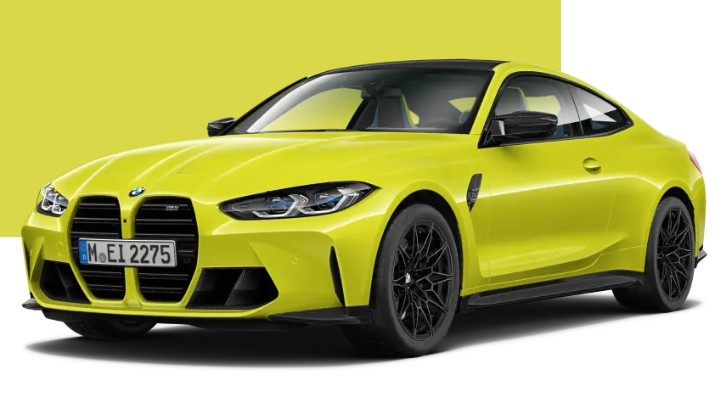
The BMW M4 has not been around for as many decades as names such as the Porsche 911 or Ford Mustang, yet it has already built a complicated and fascinating history. Search for BMW M4 years, and we quickly discover that choosing one is not simply a matter of deciding between “old” and “new.” Different years deliver noticeably different personalities, technology, styling, performance, and ownership experiences.
The M4 officially emerged during the 2010s when BMW reorganized its naming system. Previously, the high-performance two-door version of the 3 Series had worn the legendary M3 badge. When the regular coupe became the 4 Series, BMW M followed the same logic and created the M4.
BMW announced the first M4 in late 2013, with sales beginning in 2014 in many markets and as a 2015 model in the United States. The original F82 M4 replaced the M3 Coupe and introduced a turbocharged inline-six engine to this part of BMW's M range.
Since then, the M4 has evolved from the relatively compact, raw-edged F82 into the considerably more sophisticated G82 generation.
So, which BMW M4 year deserves our money? Which years brought the biggest improvements? And are newer cars automatically better?
Not necessarily. Let's untangle the timeline.
Content in this publication
- BMW M4 Years at a Glance
- Why Did BMW Create the M4?
- First-Generation BMW M4: F82 and F83
- 2017 BMW M4: Competition Package Changes the Conversation
- 2018 BMW M4: A Sweet Spot for the F82 Generation
- 2019 BMW M4: Mature and Still Seriously Fast
- 2020 BMW M4: The End of the F82 Era
- Second-Generation BMW M4: G82 and G83
- 2021 BMW M4: A New Personality
- 2022 BMW M4: M xDrive Broadens the Car's Appeal
- 2023 BMW M4: A Well-Rounded Modern Choice
- 2024 BMW M4: Before the Major Update
- 2025 BMW M4: The G82 Gets Sharper
- 2026 BMW M4: The Current Formula Continues
- BMW M4 Years Ranked by Buyer Type
- Which BMW M4 Years Should We Avoid?
- F82 vs G82 BMW M4: Which Generation Is Better?
- BMW M4 Coupe or Convertible?
- How Many Miles Can a BMW M4 Last?
- What to Check Before Buying Any Used BMW M4
- Should We Buy an Older M4 or a Newer M440i?
- Are Newer BMW M4 Years Always Better?
- BMW M4 Years: Our Practical Buying Shortlist
- Conclusion: Which BMW M4 Year Should You Buy?
- Frequently Asked Questions About BMW M4 Years
BMW M4 Years at a Glance
BMW M4 history can be divided into two main generations:
| Generation | Approximate Model Years | Chassis | Main Character |
|---|---|---|---|
| First generation | 2015–2020 | F82 Coupe/F83 Convertible | Lighter, smaller, rawer |
| Second generation | 2021–present | G82 Coupe/G83 Convertible | Faster, more advanced, more refined |
Exact availability can differ between countries because production dates and official model-year designations do not always align perfectly.
The first-generation M4 introduced the formula. The second-generation car stretched it in almost every direction: greater power, more traction, more technology, more weight, and a much more dramatic appearance.
Those differences explain why the "best BMW M4 year" depends heavily on what we actually want from the car.
Why Did BMW Create the M4?
Before discussing individual BMW M4 model years, we need to understand why an M4 exists at all.
For decades, BMW's M3 could be purchased as a sedan and, depending on the generation, a coupe or convertible. BMW later separated its mainstream lineup so that the 3 Series primarily represented sedans while the 4 Series represented related coupes and convertibles.
The performance variants followed suit.
BMW explained when launching the original M4 that the badge reflected the model series on which the vehicle was based. The four-door performance car remained the M3, while the coupe became the M4.
It was controversial at first. Calling an M3 Coupe something other than an M3 felt almost like renaming an old friend.
Time solved that problem. Today, the M4 has an identity of its own.
First-Generation BMW M4: F82 and F83
The first BMW M4 generation established most of what enthusiasts still associate with the badge.
The coupe carried the F82 chassis designation, while the convertible was known internally as the F83.
Under the hood sat BMW's S55 3.0-liter twin-turbocharged inline-six. Early U.S.-market cars produced 425 horsepower, with buyers choosing between a six-speed manual and seven-speed dual-clutch transmission. BMW quoted 0–60 mph in 4.1 seconds for the manual and 3.9 seconds with the DCT.
Those figures remain serious today, but statistics tell only half the story.
The F82 feels relatively compact and mechanical. Its power delivery can be aggressive, the rear end demands respect, and the steering and suspension communicate the car's intentions with little ambiguity.
It's a car that sometimes grabs us by the collar rather than politely asking what we want to do next.
2015 BMW M4: Where Everything Started
For American buyers, 2015 is effectively the first BMW M4 model year.
And what a beginning it was.
The 2015 M4 replaced the naturally aspirated V8-powered E92 M3 Coupe with turbocharging. That change fundamentally altered the driving experience.
Torque arrived much earlier. Acceleration became more explosive. Fuel efficiency improved. Yet some drivers missed the previous V8's soundtrack and soaring high-rpm character.
BMW also pursued significant weight reduction when developing the first M4. The company cited extensive use of aluminum and carbon-fiber-reinforced plastic as part of its lightweight strategy.
The 2015 model therefore represents something important historically: it is the original M4.
Would we automatically recommend it over every later F82? No.
Early production cars can feel slightly less polished than later examples, and age now matters as much as model year. Still, enthusiasts who want the earliest and arguably purest expression of the formula may find the 2015 fascinating.
2016 BMW M4: The Formula Settles Down
The 2016 M4 continued the original design without reinventing it.
That's not a criticism.
By this point, buyers knew what the M4 was: a seriously quick rear-wheel-drive coupe combining everyday usability with the ability to turn a winding road into its personal playground.
A well-maintained 2016 can offer appealing value on today's used market because it retains virtually all the core ingredients that made the early F82 exciting.
When shopping, however, condition matters enormously.
Ten years of enthusiastic driving can age an M car much more dramatically than ten years of gentle commuting.
Maintenance History Matters More Than the Badge on the Trunk
We would rather own a carefully serviced 2016 M4 with sensible modifications than a neglected newer example with questionable tuning history.
On any older M4, investigate:
- Service documentation
- Accident history
- Tire condition
- Brake wear
- Suspension condition
- Cooling-system maintenance
- Evidence of engine tuning
- Aftermarket suspension or exhaust work
- Previous track use
- Transmission servicing where applicable
The cheapest M4 in the classifieds can rapidly become the most expensive one in the garage.
2017 BMW M4: Competition Package Changes the Conversation
For many enthusiasts, the mid-cycle F82 years are where things become particularly interesting.
The availability of the Competition Package made the M4 sharper and more focused, pairing extra performance with chassis and styling revisions.
This is where we start separating "an M4" from the exact M4 specification we want.
An ordinary M4 is already quick.
A Competition-equipped example gives the experience another turn of the screw.
Is the Competition Package Worth Looking For?
Usually, yes—especially for buyers who care about spirited driving.
However, we should not blindly pay a huge premium simply because a used listing says "Competition."
A standard car can actually make more sense for everyday use, particularly if it has been maintained better or comes in the exact specification we want.
Think of the Competition model as adding seasoning rather than replacing the meal.
2018 BMW M4: A Sweet Spot for the F82 Generation
If we were creating a shortlist of particularly attractive BMW M4 years to buy used, 2018 would deserve serious attention.
By this stage, the original generation was mature. The design still looked fresh, technology was reasonably modern, and BMW had had several years to refine the platform.
The F82 also received styling and equipment updates during its production run.
For many buyers, a 2018 example offers an attractive balance between age, depreciation, modernity, and the visceral character that defines this generation.
Of course, used-car prices depend heavily on mileage and specification.
A low-mileage Competition model with desirable options can command far more than an ordinary high-mileage car from exactly the same year.
Who Should Consider a 2018 M4?
It particularly suits someone who wants:
- Classic F82 proportions
- Rear-wheel-drive behavior
- A manual or DCT experience
- Strong performance without modern M4 dimensions
- Less digital complexity than a G82
- A relatively mature version of the first-generation platform
For enthusiasts seeking an analog-ish modern BMW—not truly analog, but closer—the 2018 car makes a compelling argument.
2019 BMW M4: Mature and Still Seriously Fast
By 2019, the original M4 was entering the later phase of its life.
That's often a good place to shop.
Late-production performance cars can benefit from years of incremental manufacturing and software refinement without yet entering collector pricing territory.
A 2019 M4 remains brutally capable by normal-road standards. If we are coming from an ordinary 3 Series or 4 Series, the step up feels enormous.
The engine has muscular midrange torque. The chassis responds instantly. And the car still maintains enough practicality to function as transportation rather than merely a weekend toy.
2020 BMW M4: The End of the F82 Era
The 2020 M4 represents the closing chapter of the first generation in major markets.
That makes it naturally desirable.
Late-production F82s combine the styling enthusiasts already know with the accumulated development of the generation.
If our goal is simply to buy the newest traditional F82 possible, 2020 is an obvious target.
Yet scarcity and desirability can inflate prices, particularly for exceptional specifications.
Is a 2020 automatically better value than a clean 2018?
Not necessarily.
When used-car shopping, paying thousands more merely for a later number on the registration document may not deliver thousands more enjoyment.
Why Enthusiasts Still Love the F82
The first-generation M4 occupies an appealing middle ground.
It's modern enough to be extremely capable but old enough to feel somewhat unruly.
It doesn't hide every mistake.
Feed in too much power carelessly and the car reminds us which wheels are doing the pushing. That character is precisely what some drivers love—and precisely what others dislike.
You may be interested in reading Hyundai Palisade vs Santa Fe: Which Hyundai SUV Is Better?
Second-Generation BMW M4: G82 and G83
Then everything changed.
The second-generation G82 M4 Coupe arrived for the 2021 model year in markets such as the United States, accompanied by the G83 Convertible.
The design immediately caused debate, particularly its enormous vertical kidney grille.
Some hated it.
Some defended it.
Some said they hated it and bought one anyway.
Regardless of appearance, the engineering underneath represented a substantial step forward.
The G82 adopted BMW's S58 twin-turbocharged 3.0-liter inline-six engine. It became available in increasingly powerful Competition forms, and crucially, BMW introduced M xDrive all-wheel drive to the M4 lineup.
Suddenly, the M4 could deploy enormous power with astonishing efficiency.
2021 BMW M4: A New Personality
The 2021 BMW M4 feels noticeably different from the F82.
It is larger, more sophisticated, more planted, and less nervous near its limits.
That does not mean it lacks excitement. Quite the opposite.
The G82 is ferociously fast.
But where the F82 sometimes feels like a dog pulling hard against its leash, the G82 feels like an athlete wearing better shoes. It can put its performance down with greater confidence.
Manual vs Competition Becomes a Major Decision
One of the fascinating elements of the G82 lineup is BMW's continued commitment to the manual transmission in the standard rear-wheel-drive M4 Coupe.
The Competition variants, meanwhile, use an eight-speed automatic rather than the previous generation's seven-speed dual-clutch unit.
That creates two noticeably different flavors.
The manual car appeals to involvement.
The Competition model emphasizes speed.
Neither is universally better.
Choose the Manual If Engagement Comes First
If we want to participate in every acceleration run, shifting ourselves keeps the experience interactive.
The manual version may be slower on paper, but driving pleasure is not an Excel spreadsheet.
Sometimes the slower stopwatch produces the bigger smile.
Choose Competition If Maximum Performance Matters
The Competition version delivers greater power and quicker acceleration while asking less of the driver.
Add M xDrive, and the G82 transforms into an extraordinarily effective high-performance machine.
For all-weather usability and point-to-point speed, it is difficult to argue against.
2022 BMW M4: M xDrive Broadens the Car's Appeal
The arrival and expansion of M xDrive made the M4 dramatically easier to exploit.
Traditionalists may instinctively prefer rear-wheel drive, but the all-wheel-drive M4 Competition demonstrates why traction can be addictive.
Instead of turning throttle application into a negotiation, the system lets us launch forward with remarkable confidence.
This makes the 2022-era M4 particularly appealing to drivers living in wetter or colder climates.
And for anyone worried that all-wheel drive sterilizes the experience, BMW engineered the M xDrive system around a rear-biased performance philosophy.
The M4 CSL Arrives
The G82 family eventually spawned one of its wildest members: the BMW M4 CSL.
BMW M's own heritage material identifies the M4 CSL as a 2022 G82-based model.
CSL stands for an especially focused approach to performance. Weight reduction, chassis tuning, power and exclusivity pushed the car well beyond an ordinary M4.
For most buyers, however, the CSL is not really an alternative to a normal used M4.
It belongs in another conversation involving collectible cars, limited production and considerably larger budgets.
2023 BMW M4: A Well-Rounded Modern Choice
The 2023 M4 is one of the easiest G82 years to recommend conceptually.
The generation had moved beyond its introductory phase. Buyers could choose among established configurations, and used examples may now provide a meaningful discount compared with brand-new cars.
It is also new enough to feel extremely contemporary.
For someone who wants the G82's performance without necessarily paying for the latest facelift, a well-specified 2023 deserves consideration.
2024 BMW M4: Before the Major Update
Depending on market terminology and production timing, the transition around 2024–2025 requires some care because BMW introduced an updated M4 in early 2024 that was marketed as a 2025 model in the United States.
That's why simply searching "2024 vs 2025 BMW M4" can produce confusing results.
The important point is that a significant refresh entered production in March 2024.
So we should identify the exact build date and specification rather than relying solely on registration year.
2025 BMW M4: The G82 Gets Sharper
The 2025 BMW M4 brought one of the most meaningful updates of the second generation.
BMW revised the exterior lighting, introduced new interior details, updated its digital interface, and increased output on the M4 Competition xDrive variants.
In U.S. specification, BMW listed:
- M4 Coupe: 473 hp
- M4 Competition Coupe: 503 hp
- M4 Competition xDrive Coupe: 523 hp
- M4 Competition xDrive Convertible: 523 hp
BMW also added updated headlights, laser-accented taillights, BMW Operating System/iDrive 8.5 and new cabin trim choices.
This refresh makes the 2025 model particularly appealing if we want a modern M4 without waiting for an entirely new generation.
The 2025 BMW M4 CS Raises the Stakes
BMW also introduced the 2025 M4 CS, positioned above the regular Competition model.
The U.S.-market M4 CS was rated at 543 horsepower, giving it another layer of performance above the 523-hp Competition xDrive Coupe.
Again, though, this is not merely a trim package.
The CS is designed for customers willing to spend substantially more for a more focused machine.
For everyday buyers, the ordinary Competition xDrive is already outrageously capable.
2026 BMW M4: The Current Formula Continues
As of 2026, BMW continues to sell the G82-generation M4.
BMW USA's current lineup still includes the rear-wheel-drive M4 Coupe alongside the M4 Competition Coupe and M4 Competition xDrive Coupe. BMW lists 473 hp for the regular M4, 503 hp for the rear-drive Competition and 523 hp for the xDrive Competition.
That tells us something important about M4 evolution.
BMW has not abandoned the dual-character formula.
We can still choose the more traditional six-speed manual, rear-wheel-drive experience or move toward the relentlessly quick Competition xDrive configuration.
It's almost like BMW placed two personalities in the same showroom.
BMW M4 Years Ranked by Buyer Type
There is no objective winner because different drivers expect different things.
Still, we can narrow the choices.
Best BMW M4 Years for Value: 2018–2019
For buyers chasing the first generation, 2018 and 2019 are particularly attractive.
They are late enough to represent a mature F82 but old enough that depreciation has already done significant work.
Look for excellent service history rather than obsessing about having the absolute lowest mileage.
Best Year for a Late F82: 2020
If budget allows and we specifically want the original generation, 2020 gives us a late-production example.
Think of it as the polished final edition of the basic recipe.
Best G82 Value: 2022–2023
Used 2022 and 2023 M4s can hit an appealing middle ground.
They offer the S58 engine, modern cabin, enormous performance potential, and available M xDrive without necessarily carrying the price of a refreshed car.
Best Modern All-Rounder: 2025 and Newer
If budget matters less than having the updated package, the refreshed 2025-and-newer M4 is difficult to ignore.
The changes are evolutionary rather than revolutionary, but the extra power in xDrive Competition models and updated technology make an already formidable package even stronger.
Which BMW M4 Years Should We Avoid?
There is no single M4 model year that deserves a universal "avoid at all costs" label.
Used performance vehicles simply do not work that way.
You may be interested in readingHyundai Palisade vs Santa Fe: Which Hyundai SUV Is Better?You may be interested in reading
Hyundai Palisade vs Kia Carnival: Which Family Vehicle Is Better?Condition matters too much.
A neglected 2020 can be a worse purchase than an immaculate 2016.
A heavily modified 2023 can be riskier than a stock 2021 with complete documentation.
Instead of automatically blacklisting years, we should approach early cars with greater scrutiny because they are older and may have accumulated more owners, modifications and hard driving.
Modified M4s Require Extra Investigation
M4s attract enthusiasts.
Enthusiasts modify cars.
There's nothing inherently wrong with that, but modifications introduce variables.
ECU tuning can substantially raise output. Lowered suspension changes geometry and ride behavior. Aftermarket wheels may alter fitment. Track-oriented brake pads can behave differently on the street.
When buying, ask what was changed, who performed the work and whether original components remain available.
A mysterious tune with no documentation should not inspire confidence.
F82 vs G82 BMW M4: Which Generation Is Better?
This might be the most important question in the entire BMW M4 years conversation.
The answer depends on our definition of "better."
The F82 Feels More Traditional
Choose the first generation if we prioritize:
- Smaller overall dimensions
- Lower visual mass
- DCT character
- More traditional BMW styling
- A rawer rear-wheel-drive personality
- Lower used prices
The F82 feels more old-school even though it is still thoroughly modern.
The G82 Is Objectively More Capable
Choose the second generation if we want:
- Greater power
- Available M xDrive
- Newer infotainment
- More advanced driver technology
- Improved traction
- More refined everyday usability
- Ferocious straight-line performance
The G82 is the better tool.
Whether it is the better toy is a more interesting debate.
BMW M4 Coupe or Convertible?
BMW has offered the M4 in coupe and convertible configurations throughout its history.
The Coupe generally makes the most sense for driving enthusiasts because it aligns more closely with the M4's performance mission.
But the Convertible provides something the Coupe cannot replicate: roof-down theater.
The sound, speed and sensation become more dramatic with nothing between us and the sky.
The trade-off is extra weight and a somewhat different dynamic personality.
If track driving and maximum precision dominate our priorities, choose the Coupe.
If weekend cruising matters just as much as lap times, the Convertible deserves more respect than purists sometimes give it.
How Many Miles Can a BMW M4 Last?
Model year alone does not determine longevity.
A properly serviced BMW M4 can cover substantial mileage, but maintenance becomes increasingly important as the car ages.
These are high-performance vehicles producing significant power from turbocharged engines. Consumables are also expensive compared with an ordinary commuter car.
Expect ownership costs involving premium tires, large brakes, quality fluids and specialist servicing.
An M4 with 70,000 carefully maintained miles can therefore be preferable to one showing 35,000 miles but lacking records.
Mileage tells us distance.
Maintenance tells us the story.
What to Check Before Buying Any Used BMW M4
Before committing to a particular BMW M4 year, arrange a professional pre-purchase inspection—ideally with a BMW or European-performance specialist.
Pay particular attention to the car's mechanical condition and modification history.
A sensible inspection should consider:
- Diagnostic fault codes
- Oil or coolant leaks
- Suspension wear
- Brake condition
- Tire age and matching brands
- Wheel damage
- Accident repairs
- Underbody damage
- Engine modifications
- Transmission behavior
- Electronics
- Convertible-roof operation where applicable
Also verify whether maintenance records actually match the claimed mileage.
A shiny paint finish can hide a very tired performance car.
Should We Buy an Older M4 or a Newer M440i?
This is another interesting dilemma.
A newer M440i can be comfortable, fast and considerably easier to live with. Yet an actual M4 has a different mission.
The M4 features more serious chassis development, cooling, braking and performance hardware.
If we want relaxed everyday speed, an M440i may be the smarter car.
If we want the full M experience, the M4 is the reason we started searching in the first place.
Sometimes sensible is good.
Sometimes sensible is not why we opened the classifieds at midnight.
Are Newer BMW M4 Years Always Better?
Technically, newer cars generally provide more capability, equipment and refinement.
Emotionally, the answer becomes murkier.
The G82 is faster than the F82 in many configurations.
But some drivers prefer the first generation because speed alone is not their definition of fun.
Consider acoustic guitars versus electric guitars. One is not inherently superior because it has more amplification. They create different experiences.
The same applies here.
The best BMW M4 year is the one whose personality matches ours.
BMW M4 Years: Our Practical Buying Shortlist
If we were narrowing the entire history into a few straightforward choices, our shortlist would look something like this:
2018–2019 F82: Excellent choice for drivers seeking value, classic styling and first-generation character.
2020 F82: Ideal if we want one of the newest examples of the original generation.
2022–2023 G82: Strong used-market candidates offering huge performance and newer technology.
2025–2026 G82: Best for buyers wanting the refreshed design and latest iteration of the current formula.
Notice what is missing: a declaration that every other year is bad.
That's intentional.
Vehicle history, maintenance, specification and purchase price can matter more than a one-year difference.
Conclusion: Which BMW M4 Year Should You Buy?
The BMW M4 timeline is relatively short, yet there is remarkable variety hiding inside it.
The original F82 transformed BMW's performance coupe formula by replacing naturally aspirated V8 power with a turbocharged inline-six and establishing the M4 name. Later F82 models refined that concept without removing its aggressive personality.
Then the G82 arrived and turned everything up.
More power. More technology. More traction. More size. More visual drama.
If we want something rawer and comparatively compact, an F82 from around 2018–2020 may be the sweet spot.
If we want outrageous speed with everyday usability, a 2022-or-newer G82 Competition, particularly with xDrive, becomes extremely difficult to beat.
And if we're buying newer, the 2025 refresh and current 2026 lineup provide the most developed version of the G82 formula, with the Competition xDrive Coupe continuing to produce 523 hp in current U.S. specification.
Ultimately, though, we should never buy an M4 based on model year alone.
Buy the history.
Buy the condition.
Buy the specification that makes us turn around for another look after parking.
Because if there is one thing an M4 should never feel like, it's merely transportation.
Frequently Asked Questions About BMW M4 Years
1. What year did the BMW M4 first come out?
BMW unveiled the first M4 in 2013 and launched it commercially during 2014. In the United States, the first M4 Coupe was sold as a 2015 model. It replaced the M3 Coupe as BMW reorganized its coupe lineup under the 4 Series name.
2. What are the best BMW M4 years to buy used?
For first-generation buyers, 2018–2020 models are attractive because they represent mature versions of the F82 platform. For the newer generation, 2022–2023 cars may offer a useful balance between price and modern performance, while 2025-and-newer cars benefit from the G82 refresh.
3. What is the difference between the F82 and G82 BMW M4?
The F82 is the first-generation M4 and generally feels smaller, lighter and more traditional. The G82 is newer, more powerful and more technologically advanced, with available M xDrive all-wheel drive. The two generations share a turbocharged inline-six philosophy but deliver noticeably different driving experiences.
You may be interested in readingHyundai Palisade vs Santa Fe: Which Hyundai SUV Is Better?You may be interested in reading
Hyundai Palisade vs Kia Carnival: Which Family Vehicle Is Better?You may be interested in reading
Hyundai Palisade vs Kia Sorento: Which SUV Is Better?4. Which BMW M4 years have all-wheel drive?
All-wheel drive became available during the G82 generation through M xDrive-equipped Competition models. First-generation F82 M4s were rear-wheel drive. Current BMW M4 Competition xDrive models continue to use BMW's performance-oriented all-wheel-drive system.
5. Is an older BMW M4 worth buying?
Yes, provided its condition and maintenance history are strong. Older F82 cars can offer tremendous performance for the money, but age, modifications and previous driving habits matter. A professional pre-purchase inspection is especially valuable when shopping for an older or modified M4.
If you want to know other articles similar to BMW M4 Years: Complete Guide to Generations, Changes, and the Best Years to Buy you can visit the category Models.
Haval Jolion vs Omoda C5: Which SUV Is Better?
Haval Jolion vs Chery Tiggo 4 Pro: Full Comparison
Haval Jolion vs H6: Which SUV Is Better in 2026?
Haval Jolion vs Toyota Corolla Cross: Which SUV Is Better?
Haval Jolion vs Jaecoo J5: Which SUV Is Better?
Volkswagen T-Cross vs Volkswagen T-Roc: Which Is Better?
Leave a Reply
More content of your interest