
Hyundai Palisade vs Santa Fe: Which Hyundai SUV Is Better?

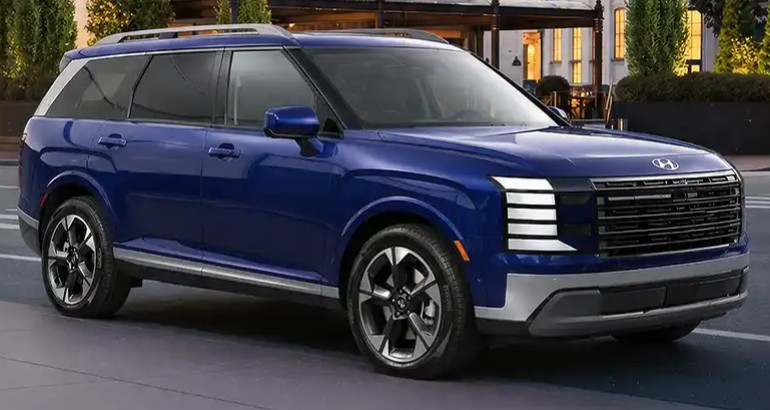
Choosing between the Hyundai Palisade vs Santa Fe can feel surprisingly difficult. At first glance, both are family-friendly Hyundai SUVs with three-row availability, modern cabins, bold styling, plenty of technology, and available all-wheel drive. Park them beside each other, though, and their personalities start to separate.
The Hyundai Santa Fe is the smaller, more maneuverable choice. It gives us three-row versatility without forcing us into a particularly large SUV, and its available hybrid powertrain makes it especially appealing for drivers who care about fuel consumption.
The Hyundai Palisade, meanwhile, is Hyundai's more spacious family hauler. It provides considerably more passenger room, greater cargo capacity behind the third row, stronger maximum towing capability, and seating designed to accommodate adults more comfortably across three rows.
Think of the Santa Fe as the clever multitool and the Palisade as the roomy family living room on wheels. Neither approach is inherently better. The right answer depends on what we actually carry, where we drive, and how frequently we intend to use that third row.
Let's compare them properly.
Content in this publication
- Hyundai Palisade vs Santa Fe at a Glance
- What Is the Main Difference Between the Hyundai Palisade and Santa Fe?
- Hyundai Palisade vs Santa Fe Exterior Size
- Hyundai Palisade vs Santa Fe Interior
- Hyundai Palisade vs Santa Fe Seating Capacity
- Cargo Space: Palisade vs Santa Fe
- Hyundai Palisade vs Santa Fe Engine Performance
- Palisade Hybrid vs Santa Fe Hybrid
- Hyundai Palisade vs Santa Fe Fuel Economy
- Hyundai Palisade vs Santa Fe Towing Capacity
- All-Wheel Drive and Poor-Weather Capability
- Ride Comfort and Highway Driving
- Technology and Infotainment
- Safety: Hyundai Palisade vs Santa Fe
- Hyundai Palisade vs Santa Fe for Families
- Hyundai Palisade vs Santa Fe for Road Trips
- Hyundai Palisade vs Santa Fe Price and Value
- Palisade vs Santa Fe Maintenance and Ownership
- Hyundai Santa Fe Pros and Cons
- Hyundai Palisade Pros and Cons
- Which Should We Buy: Hyundai Palisade or Santa Fe?
- Hyundai Palisade vs Santa Fe: Our Final Verdict
- Frequently Asked Questions
Hyundai Palisade vs Santa Fe at a Glance
For the current U.S.-market models, the differences are clearer when we put several important specifications side by side.
| Feature | Hyundai Palisade | Hyundai Santa Fe |
|---|---|---|
| Seating | 7 or 8 | 6 or 7, depending on configuration |
| Gas engine | 3.5L V6 | 2.5L turbo four-cylinder |
| Gas horsepower | More traditional V6 setup | 277 hp |
| Hybrid available | Yes | Yes |
| AWD | Available | Available |
| Max cargo behind front seats | 86.7 cu. ft. | 79.6 cu. ft. |
| Cargo behind second row | 46.3 cu. ft. | 40.5 cu. ft. |
| Cargo behind third row | 19.1 cu. ft. | 14.6 cu. ft. |
| Maximum towing | Up to 5,000 lbs | Up to 4,500 lbs on XRT; 3,500 lbs on most gas trims |
| Best suited to | Bigger families and frequent passengers | Smaller families and efficiency-focused buyers |
Hyundai lists 86.7 cubic feet of maximum cargo space for the 2026 Palisade compared with 79.6 cubic feet for the 2026 Santa Fe. With every seat raised, the Palisade's advantage remains noticeable: 19.1 cubic feet behind the third row versus 14.6 cubic feet in the Santa Fe.
That difference tells much of the story.
What Is the Main Difference Between the Hyundai Palisade and Santa Fe?
The biggest distinction is size and mission.
The Santa Fe occupies the more compact end of Hyundai's three-row SUV lineup. Its third row adds useful flexibility, but we should think of it as a vehicle for buyers who sometimes need extra seats rather than families who routinely transport a full cabin of adults.
The Palisade is built around three-row use from the beginning.
Its larger passenger compartment gives each row more breathing room, while the bigger cargo area makes it easier to carry luggage even when all the seats are occupied.
That's important because passenger count alone can be misleading.
Seven available seats sound wonderful until seven people climb aboard with seven backpacks, suitcases, groceries, sports bags, or strollers. Space behind the third row often matters almost as much as the third row itself.
Palisade Is the More Traditional Family SUV
If our routine includes children, grandparents, carpools, sports equipment, road trips, and airport runs, the Palisade starts making a persuasive case.
Its larger dimensions aren't merely bragging rights. They create practical space we can actually use.
Santa Fe Is Easier to Live With in the City
The Santa Fe trades some of that room for a smaller footprint.
That can be a real advantage.
A vehicle isn't living its best life when we're wrestling it through narrow parking garages every morning. Drivers spending most of their time commuting, navigating dense neighborhoods, or squeezing into tight parking spaces may appreciate the Santa Fe's more manageable dimensions.
Hyundai Palisade vs Santa Fe Exterior Size
The newer Santa Fe looks remarkably substantial because of its upright, boxy design. Visually, it can fool us into thinking it is nearly Palisade-sized.
It isn't.
The Palisade remains the larger vehicle and provides more overall interior volume. Hyundai lists total interior volume at 181 cubic feet for the 2026 Palisade and 166.6 cubic feet for the Santa Fe.
Those figures translate into the sensation we notice when passengers climb inside. The Palisade feels broader and more generous, whereas the Santa Fe makes clever use of a smaller package.
Which Is Easier to Park?
The advantage generally goes to the Santa Fe.
The Palisade isn't cumbersome by full-size SUV standards, but additional exterior size eventually makes itself known. If we regularly parallel park or use compact parking structures, a smaller vehicle can remove an annoying little piece of friction from everyday life.
That matters more than spec-sheet enthusiasts sometimes admit.
Hyundai Palisade vs Santa Fe Interior
Hyundai has become exceptionally good at making mainstream interiors feel more expensive than their badges suggest.
Both SUVs reflect that approach.
We get expansive screens, conveniently positioned controls, plentiful storage areas, modern connectivity features, and upscale materials on higher trims. Neither cabin feels like Hyundai simply filled empty space with plastic and called it a day.
Still, they create different atmospheres.
The Santa Fe interior feels adventurous and architectural, matching its squared-off exterior.
The Palisade interior feels more luxurious and lounge-like, especially when configured with upscale seating materials and second-row captain's chairs.
Available Palisade equipment includes features such as Nappa leather seating, heated and ventilated seating in the first and second rows, second-row captain's chairs, and dual-pane sunroof availability.
We would give the edge to the Palisade.
That doesn't mean the Santa Fe feels cheap. Quite the opposite. Higher Santa Fe trims are genuinely impressive.
But the Palisade's mission is closer to premium-family transport, and its larger cabin helps reinforce that impression. There is simply more space for designers to create the airy, relaxed environment buyers expect from an upscale three-row SUV.
Hyundai Palisade vs Santa Fe Seating Capacity
The Palisade offers seven- or eight-passenger configurations, depending on the seating arrangement. Hyundai specifically markets the 2026 model with three rows and seating for seven or eight people.
The Santa Fe is smaller and typically accommodates six or seven passengers depending on configuration.
Here's the real question, though:
How many people can comfortably travel, not merely how many seat belts are installed?
That distinction strongly favors the Palisade.
Second-Row Comfort
Both SUVs can deliver excellent second-row accommodation.
The Santa Fe provides generous legroom, and adults should have little difficulty getting comfortable in row two.
The Palisade goes a step further by emphasizing passenger luxury. Available captain's chairs create more personal space while improving access to the third row.
Families with two children may especially like this setup because each child effectively receives an individual seat rather than sharing a bench.
Third-Row Comfort
This is where the Palisade earns its larger footprint.
The Santa Fe's third row is useful. Children should generally be comfortable there, and adults can use it when circumstances require.
But if we intend to carry adults in row three regularly, the Palisade is the stronger choice.
The Santa Fe lists 30 inches of third-row legroom, illustrating that its rearmost seats are better regarded as supplemental seating than limousine accommodations.
Cargo Space: Palisade vs Santa Fe
Cargo space frequently decides this comparison.
The 2026 Palisade provides:
- 86.7 cubic feet behind the first row
- 46.3 cubic feet behind the second row
- 19.1 cubic feet behind the third row
The 2026 Santa Fe provides:
- 79.6 cubic feet behind the first row
- 40.5 cubic feet behind the second row
- 14.6 cubic feet behind the third row
The difference behind the third row deserves special attention.
A small third-row cargo hold can become frustrating when the whole family travels together. Once every seat is occupied, folding seats to create additional luggage room is no longer an option.
Which Is Better for Strollers and Family Gear?
The Palisade wins.
A stroller, diaper bags, groceries, backpacks, or sporting equipment consume space with astonishing enthusiasm. The Palisade gives us more margin before cargo loading starts resembling a game of three-dimensional Tetris.
Which Is Better If You Rarely Use the Third Row?
The Santa Fe suddenly becomes much more compelling.
With its third row folded, 40.5 cubic feet is a substantial cargo area, and folding both rear rows produces 79.6 cubic feet.
You may be interested in reading Hyundai Palisade vs Kia Carnival: Which Family Vehicle Is Better?
For couples or families with one or two children, that's plenty of versatility for most everyday situations.
Hyundai Palisade vs Santa Fe Engine Performance
The gas-powered Santa Fe uses a 2.5-liter turbocharged four-cylinder producing 277 horsepower and 311 lb-ft of torque in the 2026 U.S. model. It is paired with an eight-speed automatic transmission.
The redesigned 2026 Palisade takes a different route with a 3.5-liter V6.
These engines reflect the character of each SUV.
The Santa Fe's turbo engine offers muscular low-end torque and a responsive personality.
The Palisade's V6 feels better matched to buyers who prefer the smoother, more progressive characteristics traditionally associated with a naturally aspirated six-cylinder engine.
Which Feels Faster?
Raw acceleration isn't really the reason we'd buy either SUV.
The Santa Fe's turbocharged torque can make it feel energetic around town, especially when accelerating through normal traffic.
The Palisade has more vehicle to move, but the V6 suits its relaxed mission nicely.
For routine family driving, both provide enough performance. Neither forces us to plan highway merges several business days in advance.
Palisade Hybrid vs Santa Fe Hybrid
This comparison has become far more interesting because both SUVs now have hybrid options.
The 2026 Santa Fe Hybrid combines a 1.6-liter turbocharged engine with electric assistance for 231 combined horsepower. Hyundai rates front-wheel-drive versions at an EPA-estimated 36 mpg combined, with AWD versions rated at 34 mpg combined.
The newer Palisade Hybrid is considerably more powerful, producing 329 combined horsepower. Depending on trim and drivetrain, Hyundai lists EPA estimates reaching 34 mpg combined for the most efficient front-wheel-drive versions.
That's impressive for something this roomy.
Which Hybrid Is Better?
It depends on our priorities.
Choose the Santa Fe Hybrid if maximizing fuel economy while keeping purchase costs and overall dimensions under control is the priority.
Choose the Palisade Hybrid if we want substantially more passenger and cargo space without accepting the fuel consumption traditionally associated with a larger three-row SUV.
The Palisade Hybrid arguably changes this comparison more than anything else because efficiency is no longer such an obvious argument for downsizing.
Hyundai Palisade vs Santa Fe Fuel Economy
Gasoline Santa Fe models can reach an EPA-estimated 20 mpg city, 29 highway, and 24 combined with front-wheel drive. AWD versions are rated at up to 23 mpg combined, while the more rugged XRT has lower estimates.
The available hybrid makes a bigger difference.
At up to 36 mpg combined for a front-wheel-drive 2026 Santa Fe Hybrid, it can dramatically reduce fuel consumption for drivers who rack up substantial mileage.
The Palisade Hybrid can reach 34 mpg combined in its most efficient FWD configurations, while AWD variants are rated at 29 mpg combined.
Best Choice for Commuters
The Santa Fe Hybrid.
If we're driving thousands of urban and suburban miles each year and rarely need Palisade-level space, hauling a larger SUV everywhere simply creates extra vehicle to move.
The Santa Fe Hybrid hits a particularly attractive balance.
Hyundai Palisade vs Santa Fe Towing Capacity
The Palisade has another straightforward advantage here.
Hyundai rates the gas-powered Palisade for up to 5,000 pounds of towing capacity with trailer brakes.
Most gas Santa Fe trims can tow 3,500 pounds with trailer brakes, while the more adventure-oriented XRT reaches as high as 4,500 pounds.
That means the Santa Fe remains perfectly capable of handling smaller trailers, lightweight campers, or recreational equipment.
But anyone routinely approaching the higher end of those figures should consider the Palisade.
Which SUV Is Better for Camping?
This question has two answers.
For light camping and rougher-looking adventure duty, the Santa Fe XRT makes considerable sense. Its smaller body is also easier to maneuver on narrow roads.
For towing a larger camper while carrying several passengers and their equipment, we'd rather have the Palisade.
Capacity isn't glamorous until we need it. Then it becomes everything.
All-Wheel Drive and Poor-Weather Capability
Both models offer Hyundai's HTRAC all-wheel-drive system.
The Santa Fe offers AWD across the range and includes it as standard equipment on XRT. The Palisade also offers HTRAC AWD across its lineup, with the rugged Palisade XRT PRO receiving AWD as standard.
Neither is a hardcore body-on-frame off-roader, and we shouldn't confuse rugged styling with rock-crawling hardware.
Still, AWD can make either SUV reassuring in snow, heavy rain, gravel roads, and mildly challenging terrain.
Palisade XRT PRO vs Santa Fe XRT
This is an interesting matchup for adventurous families.
The Santa Fe XRT feels like the more compact outdoorsy choice, while the Palisade XRT PRO adds rugged equipment to a significantly larger family platform.
If our adventures usually involve four or five people, the Santa Fe is probably enough.
Add grandparents, three growing children, a dog, luggage, and a trailer, and the Palisade starts looking much smarter.
Ride Comfort and Highway Driving
Long highway drives expose qualities that a ten-minute test drive rarely reveals.
The Palisade's size becomes an asset here.
It feels planted, substantial, and naturally suited to long-distance cruising. Extra interior space also reduces the sense that passengers are stacked together like carry-on luggage.
The Santa Fe remains comfortable, but it feels slightly more agile and compact from behind the wheel.
We could describe it this way:
The Santa Fe wants to go places. The Palisade wants to take everyone there comfortably.
Which Is Quieter?
Trim, tires, road surface, and powertrain selection all influence cabin noise, but the Palisade's more premium orientation makes it our preference when quiet highway comfort sits near the top of the shopping list.
Higher trim levels reinforce that luxury-like character.
Technology and Infotainment
Both SUVs offer the kind of technology modern families increasingly expect: large digital displays, smartphone connectivity, driver-assistance systems, USB charging, available surround-view technology, and Hyundai's connected services.
The difference isn't really whether either SUV has enough technology.
It is how the cabin uses it.
The Santa Fe packages its screens into a more modern, adventure-oriented cockpit.
The Palisade surrounds similar technology with a more spacious and upscale environment.
For most buyers, technology won't determine the winner. Trim selection will matter more than model selection.
Safety: Hyundai Palisade vs Santa Fe
Both vehicles belong to Hyundai's modern SUV family and offer extensive driver-assistance technology.
Depending on trim, shoppers can find features designed to help with lane positioning, blind spots, parking, highway driving, forward collision avoidance, and adaptive cruise control.
You may be interested in readingHyundai Palisade vs Kia Carnival: Which Family Vehicle Is Better?You may be interested in reading
Hyundai Palisade vs Kia Sorento: Which SUV Is Better?Rather than choosing one model purely because its brochure contains a longer list of electronic abbreviations, we would compare the exact trims we're considering.
Safety equipment availability changes between trims and model years.
That's especially important when shopping used.
Hyundai Palisade vs Santa Fe for Families
This is where we can simplify everything.
Choose the Palisade for a Larger Family
The Palisade makes more sense if we regularly carry:
- Three or more children
- Adult third-row passengers
- Grandparents
- Carpool passengers
- Large strollers
- Sports equipment
- Vacation luggage
- A trailer or camper
Its advantage isn't one dramatic feature. It's accumulation.
A few more inches here, several additional cubic feet there, better third-row usability, stronger towing capacity—each difference looks small in isolation. Together, they make the Palisade noticeably easier to live with for a busy family.
Choose the Santa Fe for a Smaller Family
The Santa Fe may be the smarter choice if we have one or two children and only occasionally need the extra seats.
Why drag an empty ballroom everywhere when a well-designed apartment provides everything we actually use?
Its smaller dimensions, strong turbocharged gas engine, available AWD, useful cargo space, and highly efficient hybrid option make the Santa Fe an excellent all-rounder.
Hyundai Palisade vs Santa Fe for Road Trips
Frequent road-trippers should lean toward the Palisade, especially with five or more passengers.
Cabin space matters increasingly with every hour spent in a vehicle.
The extra cargo room also allows us to keep bags behind the third row rather than placing luggage between passengers or blocking rearward visibility.
Yet the Santa Fe Hybrid has a trick up its sleeve: fuel efficiency.
For a couple or small family traveling long distances, its lower fuel consumption can be more valuable than unused interior volume.
So our road-trip winner changes with passenger count:
Small family: Santa Fe Hybrid.
Large family: Palisade, with the Palisade Hybrid especially attractive.
Hyundai Palisade vs Santa Fe Price and Value
The Santa Fe generally occupies the less expensive position in Hyundai's lineup, which is exactly what we would expect from the smaller SUV.
For reference, Hyundai lists the 2026 gas Santa Fe with a starting MSRP of $35,050 and the Santa Fe Hybrid from $36,400 before destination and other charges.
But purchase price isn't the only form of value.
Suppose we buy a smaller SUV today and realize two years later that our growing family needs something bigger. Trading vehicles early can eliminate whatever money we originally saved.
Conversely, buying a large Palisade for two people because we might someday need eight seats isn't necessarily financial genius either.
The best value comes from purchasing the amount of vehicle we're likely to use.
Palisade vs Santa Fe Maintenance and Ownership
Both vehicles come from the same manufacturer, so the ownership experience shares many similarities.
However, bigger vehicles commonly mean larger tires, greater curb weight, and potentially higher running costs in areas such as fuel and consumables.
That's another reason the Santa Fe suits buyers who don't need the Palisade's capacity.
Hybrid versions introduce another calculation. Their potentially higher acquisition cost can be partially offset by reduced fuel use, particularly for high-mileage drivers.
Don't choose a hybrid solely because the MPG number looks impressive.
Calculate how much we actually drive.
At 5,000 miles per year, fuel savings may be relatively modest. At 20,000 miles annually, they become much harder to ignore.
Hyundai Santa Fe Pros and Cons
The Santa Fe's strongest qualities are its balance, packaging, and efficiency.
Advantages include:
- Smaller and easier to maneuver
- Three-row flexibility
- Strong turbocharged gas engine
- Excellent available hybrid efficiency
- Stylish, distinctive design
- Generous cargo room with third row folded
- Available AWD
- Typically lower purchase price
- XRT version adds extra adventure appeal
Its compromises are equally straightforward. The third row isn't as adult-friendly as the Palisade's, cargo room with every seat occupied is smaller, and towing capacity is generally lower.
Hyundai Palisade Pros and Cons
The Palisade excels when maximum practicality matters.
Its advantages include greater passenger space, a more usable third row, additional cargo capacity, up to eight-passenger seating, stronger towing capability, and a more premium overall character.
The new hybrid powertrain also reduces what used to be one of the biggest arguments against choosing a larger SUV: fuel consumption.
The trade-offs?
It's bigger, generally costs more, takes up more parking space, and may simply be unnecessary for smaller households.
Which Should We Buy: Hyundai Palisade or Santa Fe?
Here's the easiest way to decide.
Buy the Hyundai Santa Fe if we want a practical family SUV that doesn't feel excessively large. It's particularly attractive for families of four or five, urban drivers, commuters, and anyone interested in the fuel-efficient Santa Fe Hybrid.
Buy the Hyundai Palisade if we expect to use all three rows regularly. It is better suited to larger households, frequent road trips, adult third-row passengers, heavier towing, and situations where people and luggage need to coexist without negotiation.
And if we're caught exactly between them?
Ask one simple question:
Will we use the third row every week?
If the answer is no, start with the Santa Fe.
If the answer is yes, start with the Palisade.
That single question will probably reveal more about the right choice than another hour spent comparing touchscreen sizes.
Hyundai Palisade vs Santa Fe: Our Final Verdict
There is no universal winner in the Hyundai Palisade vs Santa Fe debate because Hyundai has wisely positioned these SUVs for different types of buyers.
The Santa Fe is the better all-rounder. It's spacious without becoming huge, offers an impressively practical interior, has a punchy turbocharged gas engine, and becomes particularly compelling in hybrid form. For smaller families, it may provide everything we need while being easier and cheaper to live with.
The Palisade is the better true three-row family SUV. Its larger passenger compartment, extra cargo room, greater seating capacity, stronger towing credentials, and more luxurious atmosphere make it the one we'd choose when every seat is going to earn its keep.
The Palisade gives us more.
The Santa Fe asks whether we actually need more.
And that, ultimately, is the difference.
Frequently Asked Questions
1. Is the Hyundai Palisade bigger than the Santa Fe?
Yes. The Palisade provides substantially more total interior volume and cargo space. Hyundai lists 181 cubic feet of total interior volume for the 2026 Palisade compared with 166.6 cubic feet for the Santa Fe. It also offers 19.1 cubic feet of cargo room behind the third row versus 14.6 cubic feet in the Santa Fe.
2. Which is better for families, Palisade or Santa Fe?
The Palisade is generally better for larger families because it offers more passenger room, seven- or eight-passenger seating, a more useful third row, and extra cargo capacity. The Santa Fe can be the better choice for smaller families that only need their third row occasionally.
3. Which gets better gas mileage, Hyundai Santa Fe or Palisade?
The Santa Fe Hybrid has the advantage. The 2026 front-wheel-drive Santa Fe Hybrid is rated at up to 36 mpg combined, while the most efficient 2026 Palisade Hybrid configurations reach 34 mpg combined.
4. Can the Hyundai Santa Fe tow as much as the Palisade?
No. The gas Palisade can tow up to 5,000 pounds with a properly equipped braked trailer. Most gas Santa Fe versions are rated for 3,500 pounds, although the Santa Fe XRT reaches up to 4,500 pounds.
You may be interested in readingHyundai Palisade vs Kia Carnival: Which Family Vehicle Is Better?You may be interested in reading
Hyundai Palisade vs Kia Sorento: Which SUV Is Better?You may be interested in reading
Hyundai Palisade vs Ford Everest: Which Large SUV Is Better?5. Is the Palisade worth buying over the Santa Fe?
It is worth the upgrade if we regularly need greater third-row comfort, eight-passenger capability, more cargo room, or stronger towing capacity. If we're usually carrying four or five people and value easier maneuverability and better fuel economy, the Santa Fe may offer better value.
If you want to know other articles similar to Hyundai Palisade vs Santa Fe: Which Hyundai SUV Is Better? you can visit the category Models.
Haval Jolion vs Omoda C5: Which SUV Is Better?
Haval Jolion vs Chery Tiggo 4 Pro: Full Comparison
Haval Jolion vs H6: Which SUV Is Better in 2026?
Haval Jolion vs Toyota Corolla Cross: Which SUV Is Better?
Haval Jolion vs Jaecoo J5: Which SUV Is Better?
Volkswagen T-Cross vs Volkswagen T-Roc: Which Is Better?
Leave a Reply
More content of your interest