
Ford Edge or Similar: What Does It Mean and Which SUVs Compare?

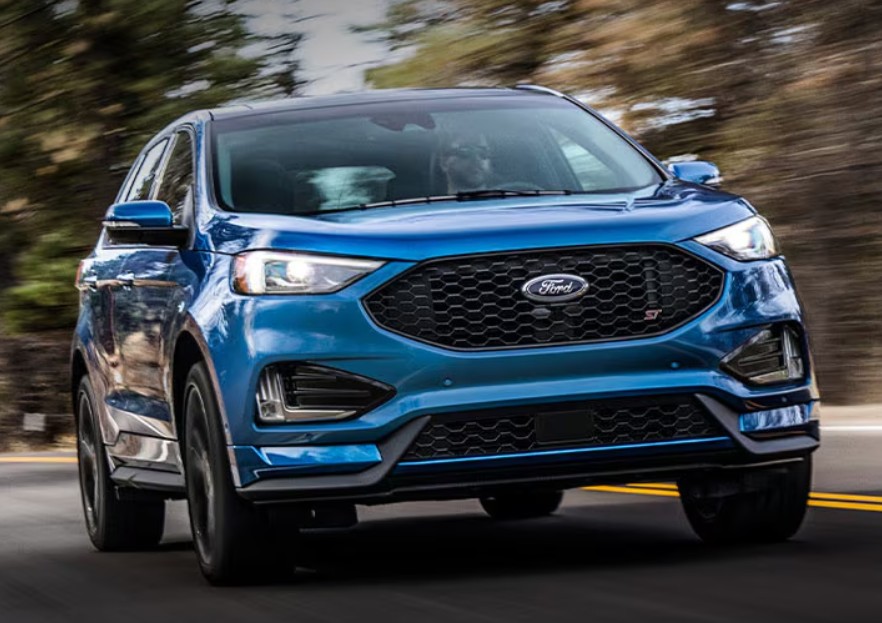
If you have searched for a rental car, browsed used SUVs, or compared family crossovers online, there is a good chance you have seen the phrase “Ford Edge or similar.” At first glance, it sounds straightforward. You book a Ford Edge, right?
Not necessarily.
In the rental-car world, “or similar” is the important part. It means we are generally reserving a vehicle category rather than one guaranteed make and model. Hertz, for example, currently places the Ford Edge in its Standard SUV category, while Budget also markets a Ford Edge or similar as a Standard SUV.
That opens up another question: what vehicles are actually similar to a Ford Edge?
The answer depends on what we mean by similar. Some SUVs match the Edge closely in passenger space. Others offer comparable road manners, cargo practicality, performance, or overall size. Vehicles such as the Chevrolet Blazer, Hyundai Santa Fe, Jeep Grand Cherokee, Nissan Murano, Honda Passport, and Volkswagen Atlas Cross Sport can all enter the conversation, although each approaches the formula differently.
So, whether we are standing at a rental counter wondering what keys we might receive or shopping for an Edge alternative, let’s break down exactly what Ford Edge or similar means.
Content in this publication
- What Does “Ford Edge or Similar” Mean?
- How Big Is a Ford Edge or Similar Vehicle?
- Which Cars Are Similar to a Ford Edge?
- Ford Edge vs Chevrolet Blazer
- Ford Edge vs Jeep Grand Cherokee
- Ford Edge vs Hyundai Santa Fe
- Ford Edge vs Nissan Murano
- Ford Edge vs Honda Passport
- Ford Edge vs Volkswagen Atlas Cross Sport
- Ford Edge vs Subaru Outback
- Ford Edge vs Toyota RAV4 and Honda CR-V
- Ford Edge vs Ford Escape
- Ford Edge vs Ford Explorer
- What Happens If the Rental Company Doesn't Have a Ford Edge?
- What Features Are Guaranteed With “Or Similar”?
- Is Ford Edge or Similar Good for Five Adults?
- Is Ford Edge or Similar Good for Families?
- Is Ford Edge or Similar Good for a Road Trip?
- Is Ford Edge or Similar Good for Snow?
- Is Ford Edge or Similar Good for Mountain Driving?
- Is Ford Edge or Similar a Luxury SUV?
- What Is the Best Ford Edge Alternative to Buy?
- What Should We Check Before Accepting a Ford Edge or Similar Rental?
- Should You Accept a Smaller SUV as “Similar”?
- Could You Receive a Better SUV Than a Ford Edge?
- Why Is “Ford Edge or Similar” Still Used?
- Ford Edge or Similar vs Midsize SUV: What's the Difference?
- Ford Edge or Similar vs Seven-Passenger SUV
- Who Should Choose a Ford Edge or Similar?
- Conclusion: What Does Ford Edge or Similar Really Get You?
- Frequently Asked Questions
What Does “Ford Edge or Similar” Mean?
When a rental company advertises a Ford Edge or similar, it usually means the Ford Edge is being used as a representative example of a particular rental category.
We are not necessarily reserving that exact SUV.
Instead, the company promises something broadly comparable in terms of characteristics such as:
- Vehicle class
- Passenger capacity
- Luggage capacity
- Automatic transmission
- General exterior dimensions
- Number of doors
- Equipment category
- Drivetrain, depending on the reservation
This is why the word “similar” carries so much weight.
The vehicle pictured during booking is more like the cover of a book than the entire story.
Budget explicitly states that the make and model depend on location and availability on some of its Ford Edge-or-similar listings.
Is a Ford Edge Considered a Standard SUV?
In many North American rental fleets, yes.
Hertz currently lists the Ford Edge as an example of a Standard SUV, while Budget does the same. Budget describes its Standard SUV class as seating five passengers while offering more cargo room than smaller midsize or intermediate SUVs.
Enterprise classifications can vary somewhat by country and location. For example, some Enterprise markets list a Ford Edge or similar as a Standard SUV or Standard SUV 4x4.
That tells us something important: rental categories are not universal measurements carved into stone.
One company's “standard SUV” might overlap another company's “midsize SUV” or “full-size crossover.”
Rental Classes Are Not Automotive Segments
This distinction trips people up all the time.
Automotive manufacturers and reviewers commonly classify vehicles according to physical dimensions, platform, seating arrangement, price, and competitors. Rental companies build categories around fleet management and reservation systems.
As a result, don't assume that the words standard, intermediate, midsize, and full-size mean exactly the same thing everywhere.
How Big Is a Ford Edge or Similar Vehicle?
Conceptually, the Edge occupies an interesting middle ground.
It is considerably more substantial than compact crossovers such as the Ford Escape, Toyota RAV4, Honda CR-V, or Nissan Rogue, but it avoids the third-row packaging and extra bulk associated with SUVs such as the Ford Explorer.
Think of it as the comfortable middle seat at the dinner table: roomy enough to spread out without taking over the entire room.
A Ford Edge-type SUV generally gives us two rows and seating for five people.
That layout matters because the Edge does not sacrifice a portion of its cargo compartment for a third row.
Five Seats Are Usually the Key
If we book a Ford Edge or similar specifically because five adults need to travel together, most vehicles within the corresponding rental category should accommodate five passengers.
Enterprise, for example, currently describes one Ford Edge Standard SUV listing as accommodating five people.
However, five seat belts and five genuinely comfortable seats aren't quite the same thing.
Two adults in front and two in the rear? Easy.
Three adults across the back for a six-hour road trip? That's where vehicle-specific width, seat shape, and center-seat comfort begin to matter.
How Much Luggage Can a Ford Edge or Similar Hold?
Luggage allowances vary dramatically between rental websites, locations, and even how bags are categorized.
Budget's U.S. Standard SUV page currently illustrates its class with seating for five and a stated combination of one large and two small bags, while other rental locations publish different baggage assumptions.
Therefore, we shouldn't treat the little suitcase icons on a reservation page like engineering specifications.
If luggage capacity is critical, especially when traveling with five passengers, check the actual vehicle at pickup.
Airport travel is where this matters most. Five people might fit beautifully, yet five large checked suitcases can turn the cargo compartment into a game of Tetris.
Which Cars Are Similar to a Ford Edge?
There isn't one perfect substitute.
The Ford Edge combines five-passenger seating, crossover comfort, useful cargo space, a relatively substantial road presence, and available performance-oriented configurations.
Several models overlap that formula.
Among the strongest alternatives are the Chevrolet Blazer, Honda Passport, Nissan Murano, Hyundai Santa Fe, Jeep Grand Cherokee, Volkswagen Atlas Cross Sport, Toyota Venza, Subaru Outback, and selected midsize two-row crossovers from other brands.
Rental fleets can be even broader.
Budget, for example, has listed Jeep Grand Cherokee and certain Hyundai Santa Fe variants among vehicles that can appear within a Ford Edge-or-similar category in some markets.
Let's look at the major alternatives individually.
Ford Edge vs Chevrolet Blazer
The Chevrolet Blazer is one of the easiest Ford Edge alternatives to understand.
Both vehicles target drivers who want something larger and more substantial than an everyday compact crossover without automatically moving into three-row territory.
They also share a slightly sportier personality than many family-first SUVs.
The Blazer can feel more dramatic visually, whereas the Edge tends to lean toward an understated, broad-shouldered appearance.
For rental purposes, the difference is unlikely to ruin anyone's vacation. Both provide the sort of cabin space and highway presence we expect from this class.
Which One Feels More Like the Ford Edge?
From a general-purpose perspective, the Blazer is very close.
It suits travelers who want:
Comfortable two-row seating, straightforward highway performance, decent luggage capacity, and a crossover that feels noticeably larger than something like a Ford Escape.
In fact, Budget currently includes the Chevrolet Blazer among the SUVs presented within its Standard SUV options.
Ford Edge vs Jeep Grand Cherokee
The Jeep Grand Cherokee may appear alongside the Edge in rental categories, yet the two vehicles have somewhat different personalities.
The Edge is fundamentally road-oriented.
The Grand Cherokee carries a more traditional SUV identity, particularly when equipped with four-wheel drive and configurations designed for more challenging terrain.
For normal holiday driving—airports, interstate highways, cities, hotels, and national parks—the distinction may not matter much.
But if we specifically want tougher capability, the Jeep may actually feel like an upgrade.
Is the Grand Cherokee Bigger Than the Edge?
They occupy broadly overlapping territory, although exact dimensions depend on generation and configuration.
The biggest practical difference isn't simply centimeters or inches. It's the way each SUV uses its size.
The Edge feels like a large crossover.
The Grand Cherokee feels more like an SUV that happens to be highly comfortable on the road.
Budget has explicitly named Grand Cherokee variants among possible similar models on a Ford Edge rental page, demonstrating how rental companies can consider them equivalent within a fleet class.
Ford Edge vs Hyundai Santa Fe
The Hyundai Santa Fe is another logical alternative, although generations matter here.
Over the years, the Santa Fe has changed significantly in size, design, and seating layout. That means a recent Santa Fe and an older rental-fleet example may not line up with the Edge in exactly the same way.
Still, both vehicles focus heavily on family practicality.
A Santa Fe can be an appealing substitute when our priorities are easy access, good cabin packaging, everyday comfort, and road-trip usability.
Some Budget listings have historically grouped certain Santa Fe configurations with the Edge within the same rental category.
Would We Be Disappointed Getting a Santa Fe Instead?
For most ordinary trips, probably not.
If our reservation is about space rather than badge prestige, a suitable Santa Fe can perform the same job remarkably well.
That is the central lesson behind rental classes: function matters more than the logo on the steering wheel.
Ford Edge vs Nissan Murano
The Nissan Murano has long occupied a similar conceptual niche.
It is a spacious five-seat crossover focused primarily on comfort rather than rugged off-road ability or maximum towing.
For shoppers, the Murano often makes sense if we like the Edge because we want:
A roomy rear seat, smooth road manners, a comfortable highway cabin, SUV seating height, and no unnecessary third row.
The two vehicles are cousins in philosophy even though their styling and powertrain approaches differ.
Which Is Better for Comfortable Highway Driving?
Both were designed with everyday comfort high on the agenda.
A Murano can feel particularly relaxed and lounge-like, while the Edge—especially in sportier versions—can have a more energetic personality.
If we're merely receiving one instead of the other at a rental desk, either should satisfy the basic mission exceptionally well.
Ford Edge vs Honda Passport
The Honda Passport is arguably one of the purest modern answers to the question, “What is similar to a Ford Edge?”
It is a two-row midsize SUV with generous passenger room and no need to squeeze a third row into the rear.
That formula sounds familiar because it is.
The Passport may appeal more to people interested in outdoor adventures and practicality, while the Edge has traditionally offered a broader spectrum ranging from mainstream trims to genuinely sporty versions.
Is the Passport a Good Edge Replacement?
Absolutely, particularly for buyers rather than renters.
If we loved the Edge because it gave us plenty of space without forcing us into a three-row family SUV, the Passport follows much the same logic.
It is like changing restaurants but ordering the same kind of meal.
Ford Edge vs Volkswagen Atlas Cross Sport
Another intriguing alternative is the Volkswagen Atlas Cross Sport.
You may be interested in reading Ford Edge vs RAV4: Which SUV Makes More Sense?
The standard Atlas is known as a larger three-row SUV. The Cross Sport takes that basic idea and packages it as a two-row crossover.
As a result, it offers exactly the kind of “big but not three-row” proposition that made the Edge attractive.
The Atlas Cross Sport also works particularly well when rear-seat and cargo practicality matter more than having the smallest possible exterior footprint.
Who Should Pick the Atlas Cross Sport?
We'd consider it when spaciousness sits near the top of the priority list.
If the Edge feels roomy but we still want something with a broad cabin and substantial stance, the Volkswagen makes plenty of sense.
Ford Edge vs Subaru Outback
At first, the Subaru Outback looks like the oddball in this group.
It sits lower than a conventional midsize SUV and carries unmistakable wagon DNA.
Yet functionally, it competes for many of the same customers.
The Outback gives us five seats, generous luggage flexibility, available all-weather confidence, and strong road-trip credentials.
So why shouldn't it enter the conversation?
The Outback Is Similar in Purpose, Not Shape
This distinction is useful when shopping.
We don't always need to replace a vehicle with something that looks identical.
If we use an Edge primarily for commuting, family journeys, camping weekends, groceries, dogs, and bad-weather driving, an Outback can cover much of the same territory.
It simply does so while wearing hiking boots instead of a business-casual jacket.
Ford Edge vs Toyota RAV4 and Honda CR-V
Here's where we need to be careful.
The Toyota RAV4 and Honda CR-V can perform many of the same everyday duties as a Ford Edge, but they generally belong to a smaller class.
That means they aren't necessarily ideal one-for-one replacements if we specifically chose the Edge for interior width or its more substantial feel.
Budget's classification illustrates this distinction nicely. Its material separates the Ford Edge as a Standard SUV from smaller categories represented by models such as the Ford Escape.
When Does a Smaller SUV Make More Sense?
Quite often, actually.
If we rarely carry rear passengers, live in a crowded city, care about maneuverability, or don't need the Edge's footprint, stepping down can be smart.
Bigger isn't automatically better.
Driving a huge vehicle to carry one laptop and two grocery bags is a little like wearing hiking boots to walk across the living room.
Ford Edge vs Ford Escape
Because both vehicles carry Ford badges, shoppers often assume the Escape is the obvious Edge equivalent.
It isn't.
The Escape sits below the Edge in Ford's traditional SUV hierarchy, making it the more compact choice.
Budget's current category examples reinforce that separation: the Edge represents its Standard SUV class while the Escape is used as an example of a smaller midsize/intermediate-style rental offering on some pages.
If we want something easier to park and usually more economical to operate, the Escape makes sense.
If passenger width, cargo flexibility, and a larger-road feel matter more, an Edge-sized vehicle remains the better target.
Ford Edge vs Ford Explorer
The Ford Explorer sits on the opposite side of the equation.
It is generally the larger, three-row option.
Rental companies often treat the distinction clearly. Hertz currently lists the Edge as a Standard SUV example while the Explorer represents its seven-passenger SUV category.
So if we book an Edge or similar and receive an Explorer, we might regard that as a capacity upgrade depending on the rental company's policies.
But we shouldn't book an Edge category while assuming an Explorer-sized SUV will be provided.
Do You Need the Explorer Instead?
Ask one question:
Do we genuinely need a third row?
If the answer is no, the Edge format is often sweeter.
Two-row SUVs tend to make efficient use of rear passenger and cargo space because they aren't trying to transform the luggage compartment into occasional seating.
If six or seven people need seat belts, though, forget the Edge category. Book a vehicle class that explicitly guarantees enough passenger capacity.
What Happens If the Rental Company Doesn't Have a Ford Edge?
This is precisely why “or similar” exists.
Rental fleets move constantly. Vehicles are returned to different locations, undergo maintenance, get cleaned, sustain damage, or simply remain with another customer longer than expected.
The exact Ford Edge pictured while booking might therefore be nowhere near the parking lot when we arrive.
The rental company should instead provide a vehicle fitting the reserved class or deal with the availability issue according to its policies.
Can You Demand an Actual Ford Edge?
Usually, not when the booking says Ford Edge or similar.
A category reservation is fundamentally different from a guaranteed-model program.
We can certainly ask whether an Edge is available. A friendly request at the counter sometimes works beautifully.
But unless the reservation specifically guarantees the exact model, we should walk in expecting a category rather than a particular badge.
That expectation avoids a lot of unnecessary frustration.
What Features Are Guaranteed With “Or Similar”?
This is where we should read the booking details carefully.
Never assume that everything visible on the sample vehicle is included.
A photo might show:
Leather seats.
A panoramic roof.
Large alloy wheels.
All-wheel drive.
Navigation.
Premium audio.
Yet those exact amenities might not be guaranteed by the rental category.
Instead, concentrate on the attributes explicitly stated in the reservation.
AWD and 4WD Deserve Special Attention
If all-wheel drive is essential because we're heading somewhere snowy, mountainous, muddy, or remote, don't assume every Edge-like SUV automatically includes it.
Some companies distinguish between a Standard SUV and a Standard SUV 4x4. Enterprise listings in certain markets, for instance, separately identify Ford Edge or similar offerings with 4x4 classification.
Book the drivetrain requirement, not the photograph.
Is Ford Edge or Similar Good for Five Adults?
Usually, it can be.
This is one reason Edge-sized crossovers remain appealing.
Compared with compact SUVs, the extra width and cabin volume can make a meaningful difference when adults occupy the rear seat.
However, five adults plus substantial luggage can push the category toward its practical limit.
For a short city trip? Fine.
For a two-week road trip with five full-size suitcases, backpacks, shopping bags, and everyone's personal belongings? We might appreciate something larger.
Four Adults Is the Sweet Spot
With four adults, an Edge-style SUV feels particularly comfortable.
Everyone receives reasonable personal space, and the cargo area remains available for luggage.
That is arguably the configuration where this vehicle category shines brightest.
Is Ford Edge or Similar Good for Families?
Yes.
A two-row midsize crossover is one of the simplest family-vehicle formulas around.
Children can sit comfortably in the rear, adults get proper front-seat space, and we retain a large cargo area for strollers, bags, sports equipment, and everything else family travel somehow attracts.
Anyone who has packed for children knows the strange law of physics involved: a 30-pound child appears to require 100 pounds of equipment.
The Edge category gives us useful breathing room.
What About Child Seats?
Always check the specific vehicle and rental company's child-seat arrangement.
The number of seating positions matters, but so does the width of the individual seats and the shape of the rear bench.
Families attempting to install three child restraints across one row should research the exact vehicle provided rather than relying exclusively on the rental category.
Is Ford Edge or Similar Good for a Road Trip?
This is arguably one of its best uses.
Edge-sized crossovers strike a pleasant balance between passenger comfort, cargo space, commanding driving position, and manageable dimensions.
They don't feel tiny after six hours on the interstate, yet they normally aren't as cumbersome as massive three-row SUVs.
For couples, they're luxuriously spacious.
For families of four, they're highly practical.
For five adults, they're workable.
That's a wide operating window.
You may be interested in readingFord Edge vs RAV4: Which SUV Makes More Sense?You may be interested in reading
Ford Edge vs Nissan Rogue: Which SUV Is the Better Choice?Is Ford Edge or Similar Good for Snow?
Potentially, but the badge itself isn't what matters.
Tyres, drivetrain, road conditions, driver skill, and local requirements matter far more.
An AWD version of an Edge-like SUV may provide useful traction in slippery conditions. A front-wheel-drive model on inappropriate tyres may behave quite differently.
Therefore, if we're booking for winter travel, confirm whether the rental class specifically includes AWD or 4WD.
“SUV” does not automatically mean “invincible snow machine.”
Physics hasn't read the marketing brochure.
Is Ford Edge or Similar Good for Mountain Driving?
For paved mountain roads, these vehicles are generally well suited.
They usually provide enough performance for normal gradients, comfortable highway manners, and good visibility.
However, mountain travel can introduce additional considerations:
Road surface, winter tyres, snow chains, altitude, steep descents, fuel availability, and whether the road actually requires four-wheel drive.
A Ford Edge-style crossover is a road-going vehicle first.
If our trip involves truly difficult trails, a purpose-oriented 4x4 category may be more appropriate.
Is Ford Edge or Similar a Luxury SUV?
Normally, no.
The Edge can feel well equipped, especially in higher trims, but mainstream rental fleets typically position it below dedicated premium or luxury SUV categories.
That distinction matters when expectations meet reality.
We shouldn't book a Ford Edge or similar and expect a BMW, Mercedes-Benz, Audi, or Cadillac simply because the example vehicle has leather seats.
Rental categories are built around market positioning as much as dimensions.
What Is the Best Ford Edge Alternative to Buy?
Unlike renting, buying gives us the luxury of being picky.
And today, that matters even more because North American Ford Edge production has ended. The final North American Edge was built in 2024, while the Edge name continues in a different form in China.
That doesn't make existing Edges suddenly irrelevant. Used examples will remain on roads and dealer lots for years.
But buyers who specifically want a new two-row SUV with an Edge-like mission need alternatives.
Choose the Honda Passport for Practicality
The Passport is one of the strongest choices when we want a spacious two-row midsize SUV without a third row.
It emphasizes usefulness over theatrical styling and makes sense for families, road-trippers, and outdoor-oriented buyers.
Choose the Chevrolet Blazer for Style
The Blazer suits buyers attracted to the Edge's more dynamic side.
It has a sportier visual character than many conservative family crossovers.
Choose the Nissan Murano for Comfort
The Murano has historically been an obvious choice for drivers prioritizing calm, comfortable everyday travel.
It feels less like a rugged adventure machine and more like a rolling lounge.
Choose the Jeep Grand Cherokee for Greater SUV Capability
If we want an Edge-like footprint but prefer stronger traditional-SUV character, the Grand Cherokee becomes compelling.
Depending on configuration, it can move farther toward genuine off-road capability than the Edge ever intended to.
Choose the Atlas Cross Sport for Space
Volkswagen's large two-row crossover is particularly attractive when cabin openness and luggage flexibility matter.
It embraces the idea that some of us want a big SUV but simply don't want a third row.
What Should We Check Before Accepting a Ford Edge or Similar Rental?
A quick inspection can prevent disappointments later.
Before leaving the rental lot, we should check:
- Passenger capacity: Confirm the number of usable seats matches the reservation.
- Luggage space: Put the biggest suitcases in before discovering three miles later that they don't fit.
- Drivetrain: Confirm AWD or 4WD if that specification matters.
- Tyres: Look for obvious damage and verify that they suit the journey.
- Existing body damage: Photograph scratches, dents, wheel damage, and windshield chips.
- Fuel or charging policy: Understand exactly what must be returned.
- Controls: Locate lights, wipers, climate controls, parking brake, and drive modes.
- Phone connectivity: Pair the phone before entering traffic.
- Spare-wheel equipment: Understand what roadside equipment is supplied.
- Rental paperwork: Make sure the assigned category matches what was booked.
That five-minute inspection can save us from turning a small inconvenience into a vacation-sized headache.
Should You Accept a Smaller SUV as “Similar”?
Not blindly.
If we reserve a Ford Edge-class Standard SUV and receive something significantly smaller, compare the assigned vehicle with the category description.
A smaller crossover might still carry five people, but that doesn't necessarily make it equivalent.
Passenger comfort and luggage volume may differ considerably.
Rental categories aren't perfectly standardized, so the reservation documentation is our strongest reference point.
If the replacement clearly falls below the booked class, politely ask the rental agent to explain the classification or offer another vehicle.
Could You Receive a Better SUV Than a Ford Edge?
Yes.
Fleet shortages sometimes produce complimentary upgrades.
We might receive a larger SUV or a higher-category vehicle because no suitable Edge-class model is ready.
That's great—assuming bigger suits the trip.
Remember that an “upgrade” isn't universally better.
A giant SUV may use more fuel, be harder to park, and feel unnecessary on narrow urban streets.
Sometimes the best upgrade is simply the vehicle that fits our plans.
Why Is “Ford Edge or Similar” Still Used?
There's an interesting wrinkle here.
North American production of the Ford Edge ended in 2024. Yet the Edge remains a recognizable reference point for rental categories, and current rental-company pages still use Ford Edge or similar terminology. Hertz presently lists it as its Standard SUV example, for instance.
That's not especially strange.
Rental categories often continue using familiar vehicles as class examples while fleet composition evolves.
Millions of drivers already understand roughly what an Edge is: a roomy two-row crossover sitting somewhere between compact SUVs and larger three-row machines.
The name therefore functions almost like shorthand.
Ford Edge or Similar vs Midsize SUV: What's the Difference?
Rental terminology creates more confusion here than automotive engineering ever could.
Some companies place Edge-type vehicles in a Standard SUV group. Others may use terms such as midsize crossover or full-size crossover in particular international markets.
Enterprise, for example, has categorized the Ford Edge differently depending on country; one current international listing identifies it as a Fullsize Crossover.
So rather than becoming obsessed with category names, compare the actual reservation attributes.
Think in terms of:
Five passengers + two rows + substantial cargo room + SUV body + automatic transmission + requested drivetrain.
That functional definition is far more useful.
Ford Edge or Similar vs Seven-Passenger SUV
These are not the same reservation.
This distinction deserves emphasis because it can derail an entire family trip.
A Ford Edge is fundamentally a five-seat, two-row proposition.
A seven-passenger category should provide additional seating capacity.
Hertz, for example, currently separates the Edge-based Standard SUV category from a Ford Explorer-or-similar seven-passenger category.
If six people are traveling, don't gamble on an Edge reservation.
Reserve six- or seven-passenger capacity explicitly.
Who Should Choose a Ford Edge or Similar?
This category works particularly well when we want a vehicle that feels comfortably substantial without entering giant-SUV territory.
It's particularly suitable for couples with lots of luggage, families with one or two children, groups of four adults, road trips, airport transfers with moderate luggage, and drivers who prefer a higher seating position.
It becomes less suitable when seven seats are necessary, enormous cargo capacity is essential, serious off-road ability is required, or maximum fuel economy matters more than space.
And that's really the beauty of the Edge formula.
It's a middle-ground vehicle without feeling mediocre.
Like a good pair of walking shoes, it may not be the most glamorous tool in the cupboard, but it works in an astonishing number of situations.
Conclusion: What Does Ford Edge or Similar Really Get You?
When we see Ford Edge or similar, we should read it as a promise of a general vehicle class—not a guarantee that a Ford Edge will be waiting with our name on the windshield.
In many rental fleets, that means a substantial five-passenger Standard SUV or comparable crossover, potentially represented by alternatives such as a Chevrolet Blazer, Jeep Grand Cherokee, Hyundai Santa Fe, or another vehicle fitting the company's category requirements. Hertz and Budget currently use the Edge as a Standard SUV example, while individual fleet definitions vary by company and location.
For buyers, the phrase has taken on another meaning. Since North American Edge production ended in 2024, anyone wanting a new vehicle with the same broad formula now needs to explore alternatives.
Fortunately, the Edge didn't have a monopoly on the idea.
The Honda Passport offers excellent two-row practicality. The Chevrolet Blazer provides a sportier flavor. The Nissan Murano leans toward comfort. The Jeep Grand Cherokee adds traditional SUV capability. The Volkswagen Atlas Cross Sport emphasizes space.
Ultimately, the best Ford Edge alternative isn't necessarily the vehicle with dimensions closest to the old Ford.
It's the one that solves the same problem for us.
And once we look at it that way, “or similar” becomes much less mysterious.
Frequently Asked Questions
1. What cars can I get when I book a Ford Edge or similar?
The exact vehicle depends on the rental company, location, and available fleet. Potential equivalents can include similarly positioned two-row SUVs and crossovers. Budget has specifically listed vehicles such as certain Jeep Grand Cherokee and Hyundai Santa Fe variants as Ford Edge-class alternatives in some markets.
2. Does Ford Edge or similar mean I am guaranteed a Ford Edge?
No. The phrase generally means we are booking the rental category rather than guaranteeing that exact make and model. The actual vehicle depends on availability, unless the reservation explicitly promises a specific model.
3. Is a Ford Edge or similar big enough for five people?
Generally, yes. Ford Edge rental categories are commonly advertised for five passengers. However, five adults plus several large suitcases can make the vehicle feel considerably tighter, so a larger category may be worthwhile for luggage-heavy trips.
4. Is a Ford Explorer similar to a Ford Edge?
They overlap somewhat, but the Explorer is generally a larger vehicle designed around three-row capability. Rental fleets can separate them accordingly; Hertz currently lists the Edge as a Standard SUV and the Explorer as an example of a seven-passenger SUV.
You may be interested in readingFord Edge vs RAV4: Which SUV Makes More Sense?You may be interested in reading
Ford Edge vs Nissan Rogue: Which SUV Is the Better Choice?You may be interested in reading
Ford Edge or Chevy Equinox: Which SUV Makes More Sense?5. What is the closest replacement for a Ford Edge?
There isn't a single universal replacement. The Honda Passport is a strong option for spacious two-row practicality, while the Chevrolet Blazer, Nissan Murano, Jeep Grand Cherokee, and Volkswagen Atlas Cross Sport overlap different parts of the Edge's mission. Buyers should choose according to priorities such as comfort, cargo room, ruggedness, efficiency, and price.
If you want to know other articles similar to Ford Edge or Similar: What Does It Mean and Which SUVs Compare? you can visit the category Models.
Haval Jolion vs Omoda C5: Which SUV Is Better?
Haval Jolion vs Chery Tiggo 4 Pro: Full Comparison
Haval Jolion vs H6: Which SUV Is Better in 2026?
Haval Jolion vs Toyota Corolla Cross: Which SUV Is Better?
Haval Jolion vs Jaecoo J5: Which SUV Is Better?
Volkswagen T-Cross vs Volkswagen T-Roc: Which Is Better?
Leave a Reply
More content of your interest