
Ford Edge vs Explorer: Which Ford SUV Is Right for You?

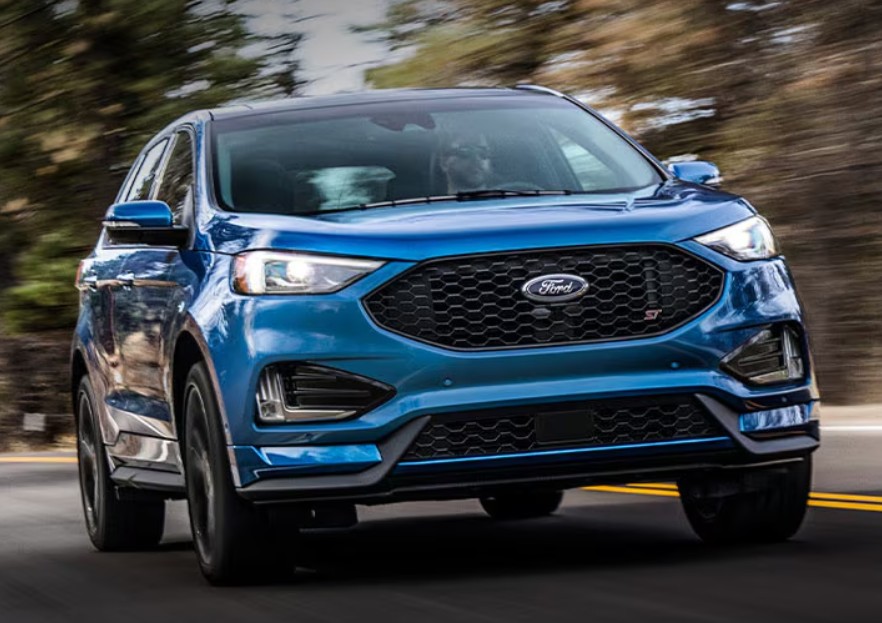
Choosing between the Ford Edge vs Explorer used to be a straightforward showroom decision. Both wore the Blue Oval, both offered turbocharged engines, and both promised the SUV versatility families love. Yet they approached the job from noticeably different directions.
Today, the comparison requires a little more context. The Ford Edge ended its North American production run after the 2024 model year, while the Explorer continues as Ford's larger three-row SUV. That means shoppers are increasingly comparing a used or remaining 2024 Ford Edge with a newer Explorer rather than choosing two brand-new models sitting side by side.
That doesn't make the comparison less useful. In some ways, it makes it more interesting.
The Edge is the simpler, smaller two-row choice. It gives us generous passenger room without forcing us to drive something that feels like a small bus. The Explorer, meanwhile, adds a third row, substantially more maximum cargo capacity, stronger towing capability and a wider range of configurations.
So which one deserves a place in our driveway?
Let's break down the Ford Edge vs Ford Explorer comparison from every angle that matters.
Content in this publication
- Ford Edge vs Explorer at a Glance
- Ford Edge vs Explorer Size: How Much Bigger Is the Explorer?
- Ford Edge vs Explorer Seating Capacity
- Ford Edge vs Explorer Interior Space
- Ford Edge vs Explorer Cargo Space
- Ford Edge vs Explorer Engine Options
- Ford Edge vs Explorer Performance
- Ford Edge vs Explorer Towing Capacity
- Ford Edge vs Explorer AWD and Traction
- Ford Edge vs Explorer Fuel Economy
- Ford Edge vs Explorer Ride Comfort
- Ford Edge vs Explorer Technology
- Ford Edge vs Explorer Safety
- Ford Edge vs Explorer Reliability
- Ford Edge vs Explorer Maintenance Costs
- Ford Edge vs Explorer for Families
- Ford Edge vs Explorer for Road Trips
- Ford Edge vs Explorer for City Driving
- Ford Edge vs Explorer for Snow
- Ford Edge vs Explorer for Performance Enthusiasts
- Ford Edge vs Explorer Used: Which Is the Better Buy?
- Reasons to Choose the Ford Edge
- Reasons to Choose the Ford Explorer
- Ford Edge vs Explorer: Which Is Better Overall?
- Final Verdict: Edge for Simplicity, Explorer for Capability
- Frequently Asked Questions
Ford Edge vs Explorer at a Glance
At first glance, these two SUVs appear closely related. Spend a little time with them, though, and the distinction becomes obvious.
The Edge was designed primarily as a roomy midsize two-row crossover. Its priorities were comfort, easy everyday driving, usable cargo space and enough performance for commuters and families.
The Explorer sits one step higher in Ford's SUV hierarchy. The current model provides three-row seating for six or seven occupants, depending on configuration, and can offer up to approximately 85.8 cubic feet of maximum cargo capacity. Ford also rates the current Explorer for up to 5,000 pounds of towing when properly configured.
Here's the simplest way to understand the difference:
| Category | Ford Edge | Ford Explorer |
|---|---|---|
| SUV layout | Two-row midsize crossover | Three-row midsize SUV |
| Seating | Up to 5 | Up to 6 or 7 |
| Best for | Couples, small families, commuters | Larger families, towing, road trips |
| Available performance | Turbo four-cylinder or Edge ST V6 | Turbo four-cylinder or available twin-turbo V6 |
| Maximum towing | Up to 3,500 lb when properly equipped | Up to 5,000 lb on current models |
| Driving character | Easier and more car-like | Larger, stronger and more versatile |
| Current status | Discontinued after 2024 in North America | Currently sold |
The Edge is essentially the easier everyday companion. The Explorer is the bigger toolbox.
Ford Edge vs Explorer Size: How Much Bigger Is the Explorer?
Size may be the most important difference between these Ford SUVs.
The Edge feels substantial without becoming cumbersome. That's part of its charm. We get the elevated seating position and usefulness of an SUV without constantly being reminded that we're maneuvering a large vehicle.
The Explorer stretches the formula.
The 2026 Explorer measures approximately 198.7 inches long with a 119.1-inch wheelbase. That larger footprint creates room for its third seating row and expanded cargo flexibility.
Which Is Easier to Drive Around Town?
The Edge generally wins here.
Its smaller footprint makes parking garages, supermarket spaces and tight residential streets less intimidating. If most of our driving involves commuting, errands and school runs, there's something refreshing about having exactly as much SUV as we need rather than carrying unnecessary size everywhere.
The Explorer isn't difficult to drive, but physics still matters. More vehicle means more space to judge when parking, turning around or navigating crowded streets.
Think of the Edge as a comfortable pair of hiking shoes. The Explorer is more like a full backpacking setup. Both are useful, but we don't always need all the extra equipment.
Which Feels Bigger From the Driver's Seat?
The Explorer.
Its longer body and three-row configuration create a more commanding impression. Drivers moving from a sedan or compact crossover may need slightly more time to acclimate.
The Edge generally feels more approachable almost immediately.
Ford Edge vs Explorer Seating Capacity
This category produces one of the clearest victories in our comparison.
The Ford Edge seats five.
The current Ford Explorer seats six or seven depending on trim and second-row configuration. Every current Explorer uses three rows, with second-row captain's chairs offered widely and a bench available on applicable configurations.
Ford Edge: Better for Five People
If our household rarely carries more than four or five occupants, the Edge's layout makes plenty of sense.
There is no third row occupying space or adding complexity. Instead, the vehicle concentrates its interior room on two comfortable rows.
For couples with children, dog owners, empty nesters or commuters who occasionally carry passengers, this setup can be ideal.
Ford Explorer: Better for Growing Families
Once passenger number six enters the conversation, the Edge drops out.
That's where the Explorer earns its extra length.
Having a third row means we can carry grandparents, children's friends or additional family members without immediately needing a minivan.
Do Adults Fit in the Explorer's Third Row?
Yes, although expectations should remain realistic.
Ford lists approximately 31.8 inches of third-row legroom in the current Explorer. That's usable, but the first and second rows remain better choices for taller adults on long journeys.
For children and occasional passengers, however, that extra row can transform how useful the vehicle is.
Ford Edge vs Explorer Interior Space
Interestingly, choosing the Explorer doesn't automatically mean every passenger gets dramatically more personal space.
The Edge was always known for having a spacious two-row cabin. Because Ford didn't squeeze a third row behind the second, rear passengers could stretch out comfortably.
The Explorer distributes its interior volume across three rows instead.
Which Is Better for Rear-Seat Comfort?
If we're comparing only the first two rows, the contest is closer than the exterior dimensions suggest.
The Edge provides a wide, comfortable second row and makes excellent use of its footprint. It's one reason the vehicle remained appealing even as newer competitors arrived.
The Explorer gives us more overall passenger flexibility rather than simply lavishing every additional inch on second-row passengers.
That's an important distinction.
If we need five comfortable seats, the Edge makes a compelling argument.
If we need more than five seats, the Explorer becomes the obvious answer.
Ford Edge vs Explorer Cargo Space
Cargo capacity tells a slightly different story.
Because the Edge doesn't have a third row, its luggage area is available immediately. There's no need to fold extra seats simply to create useful everyday storage.
The Explorer gives us less cargo room when all three rows are occupied but becomes considerably more versatile once the rear seats fold.
Current Explorer specifications list approximately 16.3 cubic feet behind the third row, around 46 cubic feet behind the second row and as much as 85.8 cubic feet with the rear seating areas folded depending on configuration.
Which SUV Is Better for Groceries and Everyday Cargo?
Both work well.
The Edge may actually feel more convenient for routine use because its cargo compartment doesn't compete with a third seating row.
Throw in groceries, sports bags, luggage or a stroller and we're ready to go.
Which SUV Is Better for Big Loads?
Explorer.
Fold the seats and its longer body becomes much more useful for bulky cargo.
Camping equipment, home-improvement purchases, multiple large suitcases or gear for a lengthy family vacation fit the Explorer's mission better.
Ford Edge vs Explorer Engine Options
Now things get interesting.
The Edge wasn't simply a smaller, slower Explorer. In ST form, it had legitimate performance credentials.
The 2024 Edge's standard turbocharged four-cylinder produced around 250 horsepower, while the performance-focused Edge ST used a twin-turbocharged 2.7-liter V6 producing about 335 horsepower.
The current Explorer takes a different approach. Its lineup centers around a 2.3-liter EcoBoost four-cylinder, with an available 3.0-liter twin-turbo EcoBoost V6 on performance-oriented versions.
Ford Edge 2.0 EcoBoost
For most Edge owners, the 2.0-liter EcoBoost is perfectly adequate.
It delivers useful low-end torque and enough acceleration for highway merging without transforming every trip to the grocery store into a qualifying lap.
That's exactly what a mainstream crossover engine should do.
Ford Edge ST
The Edge ST changes the personality.
Its twin-turbo V6 makes the Edge surprisingly energetic. Put your foot down and this practical five-seat crossover suddenly behaves like it remembered an old dream of becoming a hot hatch.
It's not a sports car, of course, but it's substantially more entertaining than the typical family SUV.
Ford Explorer Powertrains
The Explorer's 2.3-liter turbo engine balances everyday performance with the larger vehicle's needs.
Drivers wanting considerably stronger acceleration can move toward the available twin-turbo 3.0-liter V6.
The Explorer's performance advantage isn't simply about speed, either. Its longitudinal, rear-wheel-drive-based platform gives the SUV a fundamentally different character compared with the Edge's crossover architecture.
Ford Edge vs Explorer Performance
Which vehicle feels quicker depends heavily on trim.
A standard Edge and base Explorer aren't trying to win drag races. Both prioritize everyday usability.
Move toward the sporty versions, though, and the comparison becomes far more entertaining.
You may be interested in reading Ford Edge or Similar: What Does It Mean and Which SUVs Compare?
Edge ST vs Explorer ST
This is where the family reunion turns competitive.
The Edge ST is smaller and lighter-feeling, giving it an agile personality by midsize-SUV standards.
The Explorer ST counters with a larger-displacement twin-turbo V6 and greater overall performance potential.
For pure acceleration and muscular highway performance, the Explorer ST sits higher on the ladder.
For drivers who value a more compact footprint, the Edge ST remains an appealing used-performance SUV.
Ford Edge vs Explorer Towing Capacity
Planning to tow?
The Explorer has a meaningful advantage.
A properly equipped 2024 Edge could tow up to 3,500 pounds. Ford's towing documentation shows the figure applying to properly equipped 2.0-liter versions with the required trailer tow package as well as the Edge ST. Without the appropriate equipment, capacities could be lower.
Current Explorer models are rated for up to 5,000 pounds of towing, and Ford lists the Class III tow package as standard across the current Explorer lineup.
What Can the Ford Edge Tow?
The Edge can make sense for lighter recreational towing.
Think small utility trailers, appropriately sized personal watercraft or lightweight camping trailers, always provided their loaded weight stays within the specific vehicle's rating.
What Can the Explorer Tow?
The Explorer's 5,000-pound ceiling opens the door to a wider range of trailers.
That doesn't make it a replacement for an F-150, but it substantially expands what we can realistically pull.
Remember Payload Matters Too
Maximum tow ratings never tell the entire story.
Passengers, luggage, trailer tongue weight and installed equipment all influence how much capacity remains available. Anyone towing regularly should check the specific vehicle's door-jamb payload label, owner's manual and towing guide rather than relying only on the headline maximum.
Ford Edge vs Explorer AWD and Traction
The final North American Edge models leaned heavily into all-wheel-drive capability.
The Explorer operates differently. Current four-cylinder models use rear-wheel drive as their standard configuration, with Intelligent 4WD available. Certain V6 configurations offer or include Intelligent 4WD depending on trim.
That difference affects their character.
Edge AWD: Simple Everyday Confidence
The Edge's AWD setup suits drivers facing rain, snow and changing road conditions.
It doesn't pretend to turn the Edge into an extreme trail machine. That's fine. Most owners need predictable traction on pavement rather than rock-crawling ability.
Explorer 4WD: Greater Versatility
The Explorer offers a broader capability envelope.
Its available four-wheel-drive setup and terrain-management features make it more appropriate for drivers regularly encountering rough roads, snow, gravel and more demanding recreational conditions.
Neither vehicle should be confused with a Bronco, but the Explorer gives us more room to wander beyond smooth pavement.
Ford Edge vs Explorer Fuel Economy
Here's where size sends us the bill.
Generally speaking, the Edge's smaller body and lighter-duty mission make it easier to live with when fuel economy is a priority.
The Explorer has more seats, more cargo potential and more towing capacity, but carrying those capabilities requires additional mass.
Driving style can make an enormous difference as well. Turbocharged engines reward restraint but happily drink more fuel when we frequently call for boost.
Which Is Better for Commuting?
For someone driving alone most of the week, the Edge is easier to justify.
Why haul three rows of seating through rush-hour traffic when we rarely use them?
That's the key philosophical difference between these SUVs.
The Explorer gives us more capability.
The Edge asks whether we actually need it.
Ford Edge vs Explorer Ride Comfort
Both vehicles target comfort, but they accomplish it differently.
The Edge's shorter dimensions create an easygoing crossover feel. Around town it tends to feel manageable and relaxed.
The Explorer's longer wheelbase gives it the more substantial road-trip personality. On long highway stretches, its size can become an advantage rather than a burden.
Which Is Better on Long Trips?
For two to five travelers, we'd happily consider either.
For six or seven passengers, the Explorer wins by default.
The Explorer also becomes more useful when vacation gear, multiple suitcases and towing requirements enter the equation.
Still, don't underestimate the Edge. A smaller family may find it more relaxing precisely because there's less vehicle to manage.
Ford Edge vs Explorer Technology
Technology is one category where model year matters enormously.
The Edge ended production in 2024, so its technology suite is now effectively frozen in time.
The Explorer continues evolving.
That means a newer Explorer will naturally have access to newer infotainment interfaces and available driver-assistance features that simply didn't exist in the same form when the Edge was developed.
Does That Make the Edge Feel Outdated?
Not necessarily.
There's a difference between older and obsolete.
For drivers mainly concerned with smartphone connectivity, navigation, audio and common driver-assistance systems, a well-equipped late-model Edge can still feel thoroughly modern.
But buyers who want Ford's newest interfaces and latest assistance technology should lean toward the Explorer.
Ford Edge vs Explorer Safety
Both vehicles were designed as mainstream family SUVs and include the types of driver-assistance features buyers now expect.
When shopping used, however, we should compare the exact trim, model year and option package rather than assuming every Edge or Explorer carries identical equipment.
Technology can differ considerably between a 2019 model and a 2024 model even when the badge on the tailgate looks nearly identical.
This matters especially when comparing used vehicles across several model years.
Ford Edge vs Explorer Reliability
Reliability isn't simply a contest between two nameplates.
Engine choice, drivetrain, model year, maintenance history and previous ownership all matter.
That's especially relevant now because most Edge buyers will be shopping used.
What Should We Check on a Used Ford Edge?
A pre-purchase inspection should be treated as part of the buying process rather than an optional extra.
Service records matter. So does evidence of regular oil changes, correct coolant maintenance, smooth transmission operation and properly functioning electronics.
An Edge with careful maintenance can be a smarter purchase than a newer but neglected Explorer.
What About Used Explorers?
The same rule applies.
Explorer generations have used different engines, transmissions and technologies, meaning reliability discussions need to be model-year specific.
Never buy solely because someone on the internet says, "Explorers are reliable" or "Edges have problems."
Vehicles don't age according to comment sections.
They age according to engineering, maintenance, mileage and use.
Ford Edge vs Explorer Maintenance Costs
The Edge generally has an advantage simply because it is the less complex vehicle in basic form.
Five seats, smaller dimensions and mainstream turbo-four power are relatively conventional.
The Explorer can become more expensive as we add larger wheels, high-performance engines, three-row equipment and additional technology.
Tire Costs Matter More Than We Think
Large SUV wheels look fantastic in dealership photos.
Then replacement day arrives.
Performance trims with bigger wheels and wider tires can cost significantly more to maintain than modestly equipped versions.
This applies to both SUVs, especially the ST variants.
You may be interested in readingFord Edge or Similar: What Does It Mean and Which SUVs Compare?You may be interested in reading
Ford Edge vs RAV4: Which SUV Makes More Sense?If we're trying to minimize long-term ownership expenses, we'd choose the wheel-and-tire package based on replacement cost rather than parking-lot appearance.
Ford Edge vs Explorer for Families
Family size answers much of this comparison for us.
A household of three or four can thrive with an Edge.
A household regularly transporting six people cannot.
Simple.
Choose the Edge for a Smaller Family
The Edge works beautifully when we want generous interior room without climbing into a three-row SUV.
There's plenty of room for child seats, backpacks, sports gear and weekend luggage.
And because the vehicle itself is smaller, everyday errands remain easy.
Choose the Explorer for a Larger Family
The Explorer becomes the stronger choice once flexible seating matters.
That third row may sit folded most of the week, but when cousins visit or the kids bring friends home, suddenly it's worth its weight in gold.
That's the advantage of capacity we don't always use but occasionally need desperately.
Ford Edge vs Explorer for Road Trips
Road trips expose the strengths and weaknesses of every SUV.
The Edge works brilliantly for smaller groups because passengers can enjoy two spacious rows while luggage occupies the rear cargo area.
The Explorer is better when the passenger count grows.
However, remember that using all three Explorer rows reduces the cargo room available behind the third row to about 16.3 cubic feet on the current model.
Traveling with seven people and seven large suitcases may therefore require careful packing, a roof-mounted solution or a different strategy.
Ford Edge vs Explorer for City Driving
Edge.
For city-focused drivers, the argument is straightforward.
Its smaller dimensions make it easier to park, easier to place on narrow streets and easier to maneuver through crowded garages.
The Explorer can certainly handle urban driving, but it asks us to accommodate its greater size every single day.
If we're only using its third row three times a year, we should ask whether that trade-off is worthwhile.
Ford Edge vs Explorer for Snow
Both can work very well in winter conditions when fitted with appropriate tires.
And that's the part worth emphasizing: drivetrain technology cannot overcome poor tires.
A well-maintained AWD Edge wearing high-quality winter tires may inspire considerably more confidence than a 4WD Explorer riding on worn all-season rubber.
The Explorer's available Intelligent 4WD gives it excellent winter-road potential, while the Edge's AWD system makes it an appealing all-weather crossover.
Ford Edge vs Explorer for Performance Enthusiasts
Neither vehicle is the first name that comes to mind when someone says "performance car."
That's precisely why the sporty versions are fun.
The Edge ST takes a sensible family crossover and adds unexpected urgency.
The Explorer ST takes the same idea and turns the volume higher.
If we want the stronger straight-line performer and need the Explorer's extra interior capability anyway, the Explorer ST makes more sense.
If we prefer something smaller, simpler and potentially cheaper on the used market, the Edge ST remains intriguing.
Ford Edge vs Explorer Used: Which Is the Better Buy?
This may now be the most relevant version of the comparison.
Since North American Edge production ended in 2024, prospective Edge buyers increasingly operate in the used or nearly-new market. The Explorer, meanwhile, remains available new.
That changes the equation.
A lightly used Edge may provide a considerable amount of SUV for the money, particularly for buyers who never needed three rows anyway.
The Explorer gives us access to newer technology, factory warranty coverage on new vehicles, greater towing capacity and expanded passenger flexibility.
Neither is universally better.
Their value depends on what we're paying for capabilities we will actually use.
Reasons to Choose the Ford Edge
The Edge deserves serious consideration if our priorities are comfort, manageable dimensions and two-row practicality.
It is particularly appealing for buyers who don't need third-row seating but still want something substantially roomier than a compact crossover.
Its strongest argument is balance.
It isn't tiny. It isn't huge. It doesn't try to be a truck. And in standard form, it doesn't pretend to be a sports car.
It simply occupies that comfortable middle ground that many drivers actually need.
Reasons to Choose the Ford Explorer
The Explorer makes sense when flexibility matters more than compact dimensions.
We gain third-row seating, substantially greater maximum cargo capacity, stronger towing capability and a more extensive performance envelope.
Current Explorer models can seat up to seven, provide up to about 85.8 cubic feet of maximum cargo space and tow up to 5,000 pounds when properly configured.
That's a noticeably broader résumé.
And unlike the Edge, the Explorer remains a current Ford product, which matters if we're committed to buying new.
Ford Edge vs Explorer: Which Is Better Overall?
There isn't one winner for every buyer.
And that's actually good news.
The Ford Edge is better for drivers who want a comfortable five-seat SUV without the size and complexity of a three-row model.
The Ford Explorer is better for buyers who need extra passenger capacity, greater towing capability and maximum versatility.
We can boil the entire comparison down to one question:
Will we actually use the Explorer's extra capability?
If the answer is yes, buy the Explorer.
If the answer is rarely, the Edge may be the more intelligent choice.
Final Verdict: Edge for Simplicity, Explorer for Capability
The Ford Edge and Ford Explorer represent two different interpretations of the family SUV.
The Edge keeps things simple. Five seats. Generous room. Useful cargo capacity. Available AWD. Strong turbocharged engines. And, in ST form, considerably more personality than its sensible appearance suggests.
The Explorer expands almost everything.
More seats. More maximum cargo room. More towing capability. More powertrain possibilities and more room for growing families.
For small families, couples and commuters, we'd lean toward a clean late-model Edge if the price and service history are attractive.
For larger households, frequent towing or drivers who simply need maximum flexibility, we'd choose the Explorer.
The Edge is the SUV that asks, "How much space do we really need?"
The Explorer replies, "Why not bring everyone?"
Neither philosophy is wrong.
We just need to know which one matches our life.
Frequently Asked Questions
Is the Ford Explorer bigger than the Ford Edge?
Yes. The Explorer is longer and uses a three-row interior, while the North American Edge uses two rows and seats five. The current Explorer measures approximately 198.7 inches long and can accommodate six or seven passengers depending on configuration.
Which has more cargo space, Ford Edge or Explorer?
The Explorer offers substantially greater maximum cargo capacity when its rear seats are folded. Current models provide up to approximately 85.8 cubic feet depending on trim. However, the Edge's two-row design can be convenient because its cargo area remains readily available without folding a third row.
Which can tow more, Ford Edge or Explorer?
The Explorer. A properly equipped 2024 Edge could tow up to 3,500 pounds, while the current Explorer carries a maximum tow rating of up to 5,000 pounds when properly equipped.
You may be interested in readingFord Edge or Similar: What Does It Mean and Which SUVs Compare?You may be interested in reading
Ford Edge vs RAV4: Which SUV Makes More Sense?You may be interested in reading
Ford Edge vs Nissan Rogue: Which SUV Is the Better Choice?Is the Ford Edge discontinued?
Yes, in North America. The 2024 model year was the final North American Ford Edge model year, and production at Ford's Oakville facility ended in May 2024. The Edge name continues in other markets, including China, but it is no longer part of Ford's current U.S. new-vehicle lineup.
Should I buy a Ford Edge or Ford Explorer?
Choose the Edge if you need five seats, prefer easier maneuverability and want a spacious two-row crossover. Choose the Explorer if you regularly carry six or seven passengers, tow heavier trailers or need considerably more maximum cargo flexibility.
If you want to know other articles similar to Ford Edge vs Explorer: Which Ford SUV Is Right for You? you can visit the category Models.
Haval Jolion vs Omoda C5: Which SUV Is Better?
Haval Jolion vs Chery Tiggo 4 Pro: Full Comparison
Haval Jolion vs H6: Which SUV Is Better in 2026?
Haval Jolion vs Toyota Corolla Cross: Which SUV Is Better?
Haval Jolion vs Jaecoo J5: Which SUV Is Better?
Volkswagen T-Cross vs Volkswagen T-Roc: Which Is Better?
Leave a Reply
More content of your interest