
Ford Edge vs Escape: Which Ford SUV Makes More Sense?

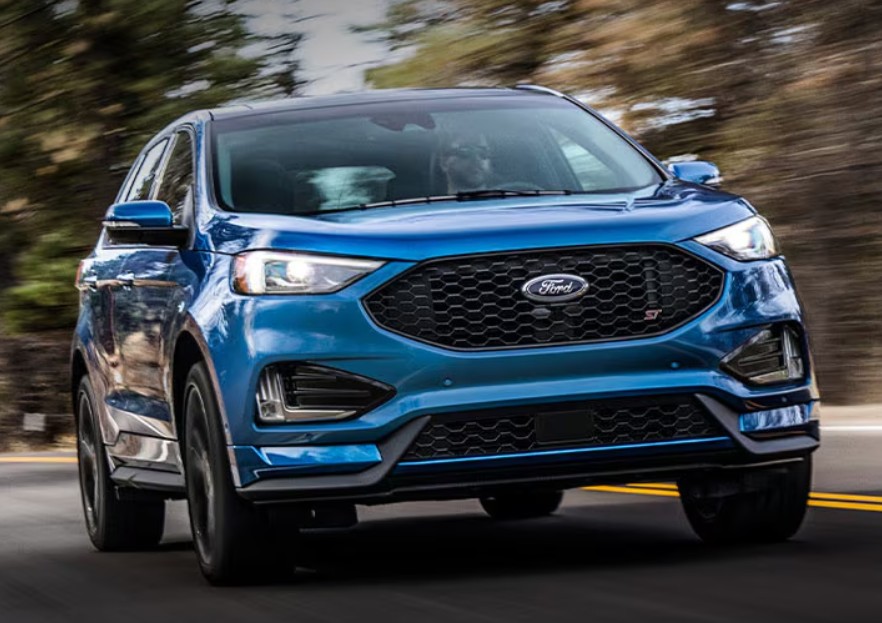
The Ford Edge vs Escape debate looks simple from a distance. Both are two-row Ford SUVs, both seat five people, and both can handle commuting, family duty, road trips, and the occasional weekend escape from civilization. Park them beside each other, though, and they start telling two very different stories.
The Escape is the smaller, lighter, more efficiency-focused SUV. It fits naturally into crowded cities, suburban garages, and a lifestyle where fuel economy matters. The Edge is larger, wider, more substantial, and generally feels like it belongs one rung higher on the SUV ladder. Think of the Escape as a comfortable pair of running shoes and the Edge as hiking boots: both can travel far, but one carries more weight and feels more planted.
There is another major detail shoppers need to know. Ford has retired the Edge in North America, with the 2024 model marking the end of its run, while the Escape continues as an active model. Ford itself now describes the Edge as retired and directs shoppers toward vehicles such as the Escape and Explorer.
So should we buy a newer Escape, or does a used or remaining 2024 Edge still make more sense? Let's break it down.
Content in this publication
- Ford Edge vs Escape at a Glance
- Is the Ford Edge Bigger Than the Escape?
- Ford Edge vs Escape Interior Space
- Ford Edge vs Escape Cargo Space
- Ford Edge vs Escape Engine Performance
- Ford Edge vs Escape Fuel Economy
- Ford Edge vs Escape Towing Capacity
- Ford Edge vs Escape Driving Experience
- Ford Edge vs Escape AWD
- Technology and Cabin Experience
- Ford Edge vs Escape Safety
- Ford Edge vs Escape Reliability
- Ford Edge vs Escape Ownership Costs
- New Escape vs Used Edge
- Who Should Buy the Ford Edge?
- Who Should Buy the Ford Escape?
- Ford Edge vs Escape: Which Is Better for Commuting?
- Ford Edge vs Escape for Road Trips
- Ford Edge vs Escape for Snow and Winter Driving
- Ford Edge vs Escape: Advantages and Disadvantages
- Ford Edge vs Escape: Which One Offers Better Value?
- Ford Edge vs Escape: Our Final Verdict
- Frequently Asked Questions
Ford Edge vs Escape at a Glance
The biggest difference is size. The Ford Edge occupied the midsize crossover category, while the Escape plays in the compact SUV class.
That difference affects practically everything: passenger space, cargo capacity, maneuverability, power, fuel use, road feel, purchase price, and even where the vehicle feels happiest.
The final-generation Edge measures about 188.8 inches long with a 112.2-inch wheelbase. It provides 39.2 cubic feet of cargo volume behind the second row and 73.4 cubic feet when the rear seats are folded.
The current Escape is noticeably smaller but surprisingly practical. Depending on powertrain, Ford quotes as much as 65.4 cubic feet of maximum cargo room. It also provides up to 42.4 inches of front legroom and 40.7 inches in the second row on several configurations.
In simple terms, the Edge is the roomier and heavier-duty choice. The Escape is the easier, more efficient everyday companion.
Is the Ford Edge Bigger Than the Escape?
Yes, considerably.
This is one of the easiest ways to understand the Ford Edge vs Ford Escape comparison. The Edge gives occupants a wider cabin and considerably more shoulder room. The 2024 Edge measures 75.9 inches wide without mirrors, and its broad body produces the kind of interior environment that makes long trips with four adults considerably more comfortable.
The Escape feels more compact from the driver's seat. That is not necessarily a weakness. Narrow streets, parking garages, school drop-off zones, and crowded supermarket lots are less intimidating when we're driving something smaller.
The Edge feels like more SUV. The Escape feels like less vehicle to manage.
Which one sounds better depends entirely on our lifestyle.
Ford Edge Exterior Dimensions
The Edge's 112.2-inch wheelbase and 188.8-inch overall length give it a long, planted stance. Width without mirrors is approximately 75.9 inches, while overall height is around 68.3 inches.
Those numbers translate into a vehicle that occupies noticeably more road and garage space than the Escape.
We feel that size most when turning through tight parking structures or squeezing between vehicles downtown. On an interstate, however, that same footprint contributes to the Edge's substantial character.
Ford Escape Size and Everyday Usability
The Escape is designed around a different philosophy. Instead of maximizing cabin width and road presence, it tries to give us a useful amount of SUV practicality without making the vehicle cumbersome.
That makes the Escape particularly attractive for commuters, couples, small families, and drivers who want SUV seating and cargo versatility without stepping into a large vehicle.
Which Is Easier to Park?
The Escape wins.
Its smaller footprint makes parallel parking easier and reduces the amount of space we need to maneuver. The difference might sound insignificant on paper, but after hundreds of parking attempts during several years of ownership, a smaller vehicle can feel like a quiet daily luxury.
Ford Edge vs Escape Interior Space
Here's where the Edge starts flexing its muscles.
The final Edge provides 113.9 cubic feet of passenger volume, 42.6 inches of front legroom, and 40.6 inches of second-row legroom. Rear shoulder room reaches approximately 60.5 inches.
That width matters.
Three passengers squeezed across a rear bench will usually appreciate the Edge more than the Escape. Child seats can also be easier to manage simply because there is more lateral room to work with.
Interestingly, the Escape remains generous in legroom. Current specifications list up to 42.4 inches in front and 40.7 inches in the second row for several configurations.
So the difference isn't really that Escape passengers are sitting with their knees against the dashboard. Instead, the Edge feels broader, airier, and more substantial around them.
Which Has Better Rear-Seat Space?
For two rear passengers, both SUVs can be genuinely comfortable.
For three adults, the Edge gets our vote.
Its wider body gives shoulders and hips more breathing room. Imagine sitting on a couch rather than a dining-room chair. Both technically provide somewhere to sit, but one feels considerably less restrictive.
Families regularly carrying teenagers or adult passengers should put the Edge higher on their shortlist.
Ford Edge vs Escape Cargo Space
Cargo capacity is another strong Edge advantage.
The 2024 Edge provides approximately 39.2 cubic feet behind its rear seats and 73.4 cubic feet with those seats folded.
That's enough space to make airport runs, large grocery trips, camping weekends, and bulky purchases considerably easier.
The Escape counters with up to 65.4 cubic feet of maximum cargo space with conventional gasoline configurations, although capacity varies with powertrain. The plug-in hybrid, for example, is listed with up to 60.8 cubic feet.
Those are still respectable numbers for a compact SUV.
We shouldn't automatically assume everyone needs the Edge. Carrying around additional vehicle purely for two large trips per year can become expensive once fuel, tires, and purchase costs enter the equation.
Which SUV Is Better for Families?
For a family with one or two young children, either vehicle can work.
Once strollers, sports equipment, travel bags, coolers, school gear, and perhaps the family dog join the party, the Edge becomes increasingly appealing.
Its cargo area feels less like a puzzle.
The Escape asks us to pack strategically. The Edge lets us throw more stuff inside and close the hatch.
Ford Edge vs Escape Engine Performance
Performance is where the personalities separate dramatically.
The typical 2024 Edge uses a turbocharged 2.0-liter four-cylinder producing around 250 horsepower and 280 lb-ft of torque. AWD and an eight-speed automatic transmission were standard for that model year.
Then there is the Edge ST.
Its turbocharged 2.7-liter V6 turns the Edge into a genuinely quick family SUV, producing roughly 335 horsepower in its final configuration. That model represents a side of the Edge that the regular Escape doesn't really attempt to imitate.
The current Escape offers far more variety, though. Ford lists gasoline, hybrid, and plug-in-hybrid options. Depending on configuration, choices include a 180-hp 1.5-liter EcoBoost, a 250-hp 2.0-liter EcoBoost, a 192-total-system-hp hybrid, and a 210-total-system-hp plug-in hybrid.
So while the Edge offers more muscular performance at the upper end, the Escape gives buyers more powertrain flexibility.
Ford Escape 1.5L EcoBoost
The 1.5-liter turbocharged three-cylinder develops 180 horsepower and 199 lb-ft of torque according to Ford's current specifications. Front-wheel drive or AWD may be available depending on configuration.
It isn't intended to pin us against the seat.
Instead, this engine prioritizes everyday usability and fuel efficiency. For commuting, errands, school runs, and ordinary highway travel, it should provide enough performance for most buyers.
Ford Escape 2.0L EcoBoost
The 2.0-liter EcoBoost is the engine for drivers who like the Escape's smaller footprint but don't want sleepy acceleration.
Ford rates it at 250 horsepower and 280 lb-ft of torque. AWD is paired with this engine.
Suddenly the little Escape has some bite.
It won't replicate the deeper shove or character of an Edge ST's V6, but the power-to-size relationship makes it a lively compact crossover.
Ford Edge ST Performance
The Edge ST represents the performance wildcard.
A powerful turbocharged V6 inside a roomy two-row crossover gives us an unusual combination: family practicality Monday through Friday and surprisingly entertaining acceleration whenever the road opens up.
For enthusiasts buying used, the ST can therefore make the Edge far more appealing than a basic Escape.
You may be interested in reading Ford Edge vs Explorer: Which Ford SUV Is Right for You?
Which Is Faster?
Against an ordinary Edge 2.0-liter, the Escape 2.0 EcoBoost is surprisingly competitive because both produce around 250 horsepower.
Against an Edge ST, however, the Escape gives up significant power.
If straight-line performance is high on our priority list, the Edge ST remains the more exciting machine.
Ford Edge vs Escape Fuel Economy
Now the pendulum swings hard toward the Escape.
Ford estimates the current 1.5-liter front-wheel-drive Escape at 27 mpg city, 34 highway, and 30 combined. The AWD version is rated at 26 city, 32 highway, and 28 combined.
The available hybrid takes efficiency significantly further, with Ford listing an estimated 42 mpg city, 36 highway, and 39 combined for certain AWD hybrid configurations. The plug-in hybrid is rated at 101 MPGe combined.
That's the Escape's killer punch.
The Edge was designed before hybridization became such an important part of Ford's mainstream crossover strategy. Consequently, buyers comparing an Edge with an Escape Hybrid could see a substantial difference in fuel consumption.
For someone driving 15,000 or 20,000 miles every year, that difference matters far more than an extra few inches of body width.
Which Ford SUV Costs Less to Fuel?
Almost certainly the Escape, especially when we choose the hybrid.
There is no magic involved. A smaller body, lower weight, smaller engines, and electrified powertrains simply create better conditions for efficiency.
The Edge trades economy for space, road presence, and available performance.
Ford Edge vs Escape Towing Capacity
This category produces an interesting result because the highest-output Escape can tow more than many shoppers expect.
Ford lists the 2.0-liter EcoBoost Escape at up to 3,500 pounds when properly equipped with the required Class II Trailer Tow Package. The 1.5-liter reaches up to 2,000 pounds, while hybrid and plug-in-hybrid models are rated at up to 1,500 pounds.
The 2024 Edge can also reach a maximum towing capacity of approximately 3,500 pounds when properly configured.
Therefore, maximum advertised capacity doesn't automatically give the Edge victory.
Still, the larger Edge may feel more reassuring when pulling a moderate trailer because of its longer wheelbase, broader stance, and heavier structure.
Which Is Better for Light Towing?
If we tow only occasionally, the 2.0-liter Escape may offer the better overall compromise.
If towing is accompanied by passengers and a cargo area full of luggage, the Edge's extra interior room and larger footprint become more valuable.
Always remember that towing capacity isn't the only number that matters. Payload, tongue weight, trailer brakes, equipment packages, and vehicle loading must also be considered.
Ford Edge vs Escape Driving Experience
Drive these SUVs back-to-back and the philosophical gap becomes obvious.
The Escape feels lighter on its feet. Steering requires less effort, the vehicle is easier to position, and urban driving feels natural.
The Edge feels more planted.
There is more vehicle beneath us, more width around us, and generally a greater sense of isolation from the outside world. On a long interstate journey, that relaxed character can make the Edge feel like the more expensive vehicle.
Neither approach is objectively better.
The Escape behaves like a compact crossover should. The Edge behaves like a midsize crossover should.
Highway Comfort
The Edge receives our preference for frequent highway travel.
Its longer wheelbase and more substantial dimensions help create a composed cruising experience. Add the extra passenger width and cargo capacity, and it becomes an appealing road-trip SUV.
The Escape isn't uncomfortable. Far from it. But when we're driving six hours with four adults and luggage, extra space begins to feel like money well spent.
City Driving
The Escape takes this category.
Urban vehicles live a hard life: sharp parking-garage ramps, tiny spaces, narrow streets, delivery trucks blocking lanes, and endless stop-and-go traffic.
A compact footprint and better efficiency are valuable every single day in that environment.
Ford Edge vs Escape AWD
AWD availability is important for buyers living in regions with snow, rain, dirt roads, or steep terrain.
The final 2024 Edge came with AWD across the lineup, giving it a straightforward advantage for buyers who specifically want all-wheel traction without sorting through configurations.
The Escape offers more flexibility. The 1.5-liter is available in front- or all-wheel-drive form, while the 2.0-liter EcoBoost uses AWD. The hybrid can also be configured with AWD, whereas Ford lists the plug-in hybrid with front-wheel drive.
That means the Escape lets us decide whether AWD is worth its added cost and fuel consumption.
Technology and Cabin Experience
Newer doesn't always mean larger, but it often means more opportunity for updated technology.
A current Escape benefits from remaining part of Ford's active lineup, whereas the Edge's North American story ended after 2024. Ford confirms that Edge production has ended and now markets the vehicle primarily through the used and certified pre-owned ecosystem.
Still, late-model Edges hardly feel prehistoric. They offer modern infotainment, smartphone integration, driver assistance technology, available premium equipment, and spacious cabins.
The Edge's advantage is physical comfort.
The Escape's advantage is that shoppers can still configure and purchase a current model rather than searching the used market for the right combination of age, trim, mileage, history, and condition.
Ford Edge vs Escape Safety
Both nameplates have offered Ford's modern driver-assistance systems, but equipment varies substantially by year and trim.
Late-model Edge configurations can include features such as automatic emergency braking, blind-spot monitoring, lane-related assistance, adaptive cruise control, and other Ford Co-Pilot360 technologies.
Current Escape models similarly offer Ford Co-Pilot360 driver-assistance technology.
When buying used, however, we should avoid assuming two vehicles with the same badge have identical safety features.
A 2017 Edge, a 2020 Edge, and a 2024 Edge may have very different equipment. The same rule applies to Escape generations.
Check the actual VIN, trim specification, option packages, recall history, and functioning of every assistance feature before buying.
Ford Edge vs Escape Reliability
Reliability becomes tricky because we're comparing nameplates spanning many model years and several different engines and transmissions.
There is no meaningful way to say every Ford Edge is more reliable than every Escape, or vice versa.
Maintenance history matters enormously.
A carefully serviced Edge with 70,000 miles may be a far safer purchase than a neglected Escape with 35,000 miles. Used vehicles are individuals, almost like houses. Two that appear identical in a classified advertisement may have lived completely different lives.
What Should We Check on a Used Ford Edge or Escape?
Before buying either SUV secondhand, we should pay particular attention to:
- Complete service records, engine oil history, coolant condition, transmission behavior, warning lights, tire wear, accident history, recall completion, turbocharger performance on EcoBoost models, fluid leaks, suspension noises, infotainment operation, AWD behavior where fitted, and a professional pre-purchase inspection.
That inspection may cost a little money today, but it can prevent a much larger bill tomorrow.
Ford Edge vs Escape Ownership Costs
The Escape generally has the structural advantage here.
Smaller vehicles usually consume less fuel, use smaller tires, weigh less, and can cost less to purchase in comparable condition. Hybrid versions dramatically strengthen the Escape's fuel-cost argument.
The Edge, however, is now primarily a used-vehicle proposition. Depreciation can therefore work in our favor.
A well-equipped Edge that originally occupied a higher position in Ford's lineup may now be priced close to a newer compact crossover. That can create an interesting value opportunity for shoppers who prioritize cabin size over having the newest model year.
You may be interested in readingFord Edge vs Explorer: Which Ford SUV Is Right for You?You may be interested in reading
Ford Edge or Similar: What Does It Mean and Which SUVs Compare?Insurance is harder to generalize because premiums depend heavily on location, age, driving record, trim, vehicle value, repair costs, and insurer.
New Escape vs Used Edge
This may actually be the most relevant version of the Ford Edge vs Escape decision today.
Ford officially says Edge production has ended. Meanwhile, the Escape continues into the 2026 model year with gasoline, hybrid, and plug-in-hybrid choices.
That changes the buying equation.
A new Escape gives us access to current warranties, modern powertrain choices, potentially excellent fuel economy, easier financing incentives, and the ability to select a preferred specification.
A used Edge gives us more vehicle for the money in terms of physical size.
It's almost the automotive equivalent of choosing between a newer apartment downtown and an older house in the suburbs. The newer option may be more efficient and easier to maintain. The older one gives us more room to spread out.
Who Should Buy the Ford Edge?
The Edge makes the strongest case for shoppers who consistently use the additional space rather than merely liking the idea of it.
We would lean toward the Edge for households carrying adults in the rear seat frequently, families traveling with lots of luggage, owners transporting bulky equipment, drivers wanting the punch of the Edge ST, and highway travelers who prefer a larger and more substantial crossover.
Its 39.2 cubic feet of cargo room behind the rear seats and 73.4 cubic feet maximum remain genuinely useful figures even compared with newer compact SUVs.
The catch is obvious: buying an Edge now generally means entering the used or certified pre-owned market.
Who Should Buy the Ford Escape?
The Escape makes more sense when efficiency and convenience outrank maximum cabin size.
It's particularly attractive for commuters, urban drivers, couples, smaller families, buyers seeking a hybrid, shoppers wanting a new Ford with current warranty coverage, and anyone who simply doesn't need a midsize SUV every day.
Its powertrain range is especially compelling.
Want straightforward gasoline power? Choose the 1.5-liter.
Want stronger acceleration and up to 3,500 pounds of properly equipped towing capacity? Look toward the 2.0-liter EcoBoost.
Want excellent fuel economy? Consider the hybrid.
Want meaningful electric-driving capability combined with a gasoline engine for longer journeys? The plug-in hybrid enters the conversation.
That range gives the Escape a flexibility the old Edge lineup never really offered.
Ford Edge vs Escape: Which Is Better for Commuting?
Escape.
Most commuters spend far more time traveling alone than carrying five passengers and 70 cubic feet of cargo.
In that scenario, the Edge's extra dimensions become dead weight while the Escape's better fuel economy becomes useful every morning.
A hybrid Escape is especially appealing for heavy city commuting, where hybrid systems can take advantage of regenerative braking and electric assistance.
Ford Edge vs Escape for Road Trips
Edge.
The wider cabin and larger cargo hold make long-distance travel easier, particularly with several passengers.
We can carry luggage without stacking everything like a game of Tetris, rear passengers get generous room, and the vehicle's larger proportions feel appropriate for extended highway cruising.
If only one or two people are traveling, though, the Escape suddenly becomes difficult to criticize. Its superior fuel efficiency can dramatically reduce fuel stops and travel costs.
Ford Edge vs Escape for Snow and Winter Driving
Either can work well when properly equipped.
The Edge's standard AWD on the 2024 model gives shoppers a straightforward winter-ready configuration, while several current Escape powertrains offer AWD.
But tires remain critically important.
A front-wheel-drive Escape fitted with excellent winter tires can sometimes inspire more confidence than an AWD crossover riding on worn all-season tires.
AWD helps us move. Tires help us accelerate, turn, and stop.
Ford Edge vs Escape: Advantages and Disadvantages
The Edge's greatest strengths are straightforward: more cargo capacity, greater cabin width, strong highway comfort, a substantial midsize-SUV feel, and powerful versions such as the Edge ST.
Its weaknesses are equally obvious. It's bigger, generally thirstier, and no longer produced for the North American market.
The Escape flips that formula.
It's easier to park, substantially more efficient in the right configuration, available with hybrid and plug-in-hybrid powertrains, and still sold as a current model. Its compromises are reduced width, less maximum cargo room, and less of the planted, upscale midsize character found in the Edge.
Ford Edge vs Escape: Which One Offers Better Value?
This depends on whether we're comparing MSRP or actual vehicles sitting in front of us.
On the used market, Edge depreciation can make a larger, better-equipped vehicle surprisingly affordable. Someone shopping purely by dollars-per-cubic-foot might discover that the Edge looks brilliant.
But value doesn't stop at the purchase price.
Fuel, tires, maintenance, financing, depreciation, warranty coverage, insurance, and expected annual mileage all affect the real answer.
A cheaper used Edge that consumes considerably more fuel over five years may not actually be cheaper to own.
Likewise, paying more upfront for an efficient Escape Hybrid can make financial sense for a driver covering huge annual mileage.
Ford Edge vs Escape: Our Final Verdict
There isn't one universal winner in the Ford Edge vs Escape comparison because the vehicles solve different problems.
The Ford Edge is the better choice when we want genuine midsize-SUV room without adding a third row. It gives rear passengers more breathing space, carries more cargo, feels substantial on the highway, and can deliver impressive performance—particularly in ST form.
The Ford Escape is the smarter choice for the average modern commuter. It takes up less space, offers stronger fuel economy, provides gasoline and electrified powertrains, can still tow up to 3,500 pounds in the right 2.0-liter configuration, and remains available as a current model.
If we live in the city, commute daily, rarely fill the rear seats, and care about efficiency, we'd choose the Escape.
If we regularly travel with several adults, carry bulky cargo, take long road trips, or simply prefer the solid feel of a bigger crossover, we'd look for a well-maintained Edge.
The most important difference today is availability. The Escape still has a future in Ford showrooms. The North American Edge does not: Ford confirms production has ended.
That doesn't make the Edge irrelevant. In fact, it may make clean late-model examples more interesting. Buyers can potentially get a spacious, powerful two-row crossover for used-car money while everyone else chases newer compact SUVs.
Sometimes newer is smarter.
Sometimes bigger is better.
The right answer is the one that matches how we actually drive.
Frequently Asked Questions
Is a Ford Edge bigger than a Ford Escape?
Yes. The Edge is a midsize two-row crossover, while the Escape is a compact crossover. The 2024 Edge measures approximately 188.8 inches long and provides up to 73.4 cubic feet of cargo capacity with the second row folded. The Escape is more compact and offers up to approximately 65.4 cubic feet depending on configuration.
Which has more cargo space, Ford Edge or Escape?
The Edge. The 2024 Edge offers 39.2 cubic feet behind the second row and 73.4 cubic feet maximum. Current gasoline Escape configurations offer as much as 65.4 cubic feet maximum, while the plug-in hybrid provides less because of its electrified packaging.
Which gets better gas mileage, Ford Edge or Escape?
The Escape is generally more fuel efficient, especially in hybrid form. Ford lists certain 2026 Escape Hybrid configurations at an estimated 42 mpg city, 36 highway, and 39 combined. The 1.5-liter gasoline Escape can reach an EPA-estimated 30 mpg combined with front-wheel drive.
Can a Ford Escape tow as much as a Ford Edge?
In certain configurations, yes. Ford rates the 2.0-liter EcoBoost Escape for up to 3,500 pounds when properly equipped with the required towing package. The 2024 Edge can also reach approximately 3,500 pounds of maximum towing capacity when properly configured.
Did Ford discontinue the Edge?
Yes. Ford states that Edge production has ended in North America and describes the SUV as retired, with the 2024 model marking the end of its North American production run. Ford now directs shoppers toward other SUVs including the Escape, Explorer, Bronco Sport, and Mustang Mach-E.
You may be interested in readingFord Edge vs Explorer: Which Ford SUV Is Right for You?You may be interested in reading
Ford Edge or Similar: What Does It Mean and Which SUVs Compare?You may be interested in reading
Ford Edge vs RAV4: Which SUV Makes More Sense?If you want to know other articles similar to Ford Edge vs Escape: Which Ford SUV Makes More Sense? you can visit the category Models.
Haval Jolion vs Omoda C5: Which SUV Is Better?
Haval Jolion vs Chery Tiggo 4 Pro: Full Comparison
Haval Jolion vs H6: Which SUV Is Better in 2026?
Haval Jolion vs Toyota Corolla Cross: Which SUV Is Better?
Haval Jolion vs Jaecoo J5: Which SUV Is Better?
Volkswagen T-Cross vs Volkswagen T-Roc: Which Is Better?
Leave a Reply
More content of your interest