
Ford Edge Versus Jeep Grand Cherokee: Which SUV Is Better?

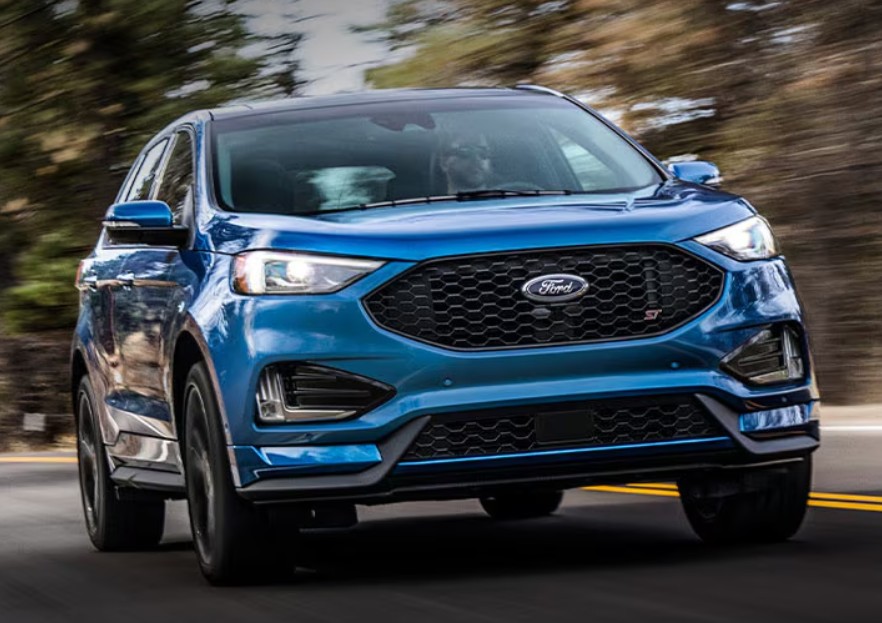
Comparing the Ford Edge versus Jeep Grand Cherokee feels a little like comparing a comfortable road-running sneaker with a rugged hiking boot. Both are midsize SUVs. Both seat five adults. Both can handle family duties, long highway journeys, grocery runs, and bad weather without breaking a sweat. Yet once we look beneath the sheet metal, they pursue those jobs in noticeably different ways.
The Ford Edge was designed primarily as a comfortable, roomy two-row crossover. It favors easy driving, generous passenger space, strong turbocharged engines, and straightforward everyday usability. The Jeep Grand Cherokee brings more traditional SUV character into the equation. It offers considerably greater towing capability, sophisticated available four-wheel-drive systems, genuine off-road hardware, and a more premium atmosphere in its upper trims.
There is another important difference for shoppers today: Ford's U.S.-market Edge reached the end of its production life after the 2024 model year, while the Grand Cherokee remains an active Jeep product. Consequently, a modern Ford Edge versus Jeep Grand Cherokee comparison increasingly means used or leftover Edge versus new or used Grand Cherokee.
So, which one should we choose?
If our life revolves around paved roads, family trips, cargo space, and value, the Edge still makes an extremely compelling argument. If towing, luxury, off-road driving, or greater configuration flexibility matters, the Grand Cherokee has a much deeper toolbox.
Let's break down where each SUV wins.
Content in this publication
- Ford Edge Versus Jeep Grand Cherokee at a Glance
- What Kind of SUVs Are We Actually Comparing?
- Exterior Size and Road Presence
- Interior Space and Passenger Comfort
- Cargo Space: Ford Edge Versus Jeep Grand Cherokee
- Engine Performance: Edge Versus Grand Cherokee
- Ford Edge 2.0 EcoBoost Performance
- Jeep Grand Cherokee V6 Performance
- Acceleration and Everyday Driving
- Ride Comfort and Highway Manners
- Towing Capacity: Jeep Wins Clearly
- AWD Versus Jeep 4WD
- Off-Road Capability: Grand Cherokee by a Mile
- Fuel Economy and Running Costs
- Interior Quality and Luxury
- Infotainment and Technology
- Safety and Driver-Assistance Technology
- Ford Edge Versus Jeep Grand Cherokee Reliability
- Used Ford Edge Versus Used Grand Cherokee
- Which SUV Is Better for Families?
- Which Is Better in Snow?
- Which Is Better for Long Road Trips?
- Reasons to Choose the Ford Edge or Jeep Grand Cherokee
- Ford Edge Versus Jeep Grand Cherokee: Which Is Cheaper to Own?
- Ford Edge Versus Jeep Grand Cherokee: Final Verdict
- Frequently Asked Questions
- 1. Is the Ford Edge bigger than the Jeep Grand Cherokee?
- 2. Which can tow more, the Ford Edge or Jeep Grand Cherokee?
- 3. Is the Ford Edge better on gas than the Jeep Grand Cherokee?
- 4. Is the Jeep Grand Cherokee better off-road than the Ford Edge?
- 5. Should we buy a Ford Edge or Jeep Grand Cherokee used?
- Conclusion
Ford Edge Versus Jeep Grand Cherokee at a Glance
Before digging into the details, here's the personality of each SUV in plain English.
| Category | Ford Edge | Jeep Grand Cherokee |
|---|---|---|
| Basic layout | Two-row midsize crossover | Two-row midsize SUV |
| Seating | 5 | 5 |
| Driving character | Comfortable, road-focused | More substantial, versatile |
| Performance highlight | Edge ST | Grand Cherokee 4xe |
| Maximum towing | Up to 3,500 lb | Up to 6,200 lb on the 2025 V6 |
| Off-road capability | Light-duty | Far stronger |
| Cargo emphasis | Excellent | Good |
| Fuel-saving option | Turbo four-cylinder | Available plug-in hybrid on applicable model years |
| Luxury potential | Moderate | High |
| Best suited to | Everyday family driving | Towing, adventure, premium SUV buyers |
Ford's 2024 towing guide rates properly equipped Edge models for as much as 3,500 pounds, while Jeep lists up to 6,200 pounds for the 2025 Grand Cherokee equipped with its 3.6-liter V6.
That single figure already tells us something important: these vehicles occupy similar physical territory, but they were engineered with somewhat different priorities.
What Kind of SUVs Are We Actually Comparing?
The Ford Edge sits on the crossover side of the SUV spectrum. It behaves much like a large family car wearing an SUV-shaped body. That isn't criticism. For most people, it's exactly what makes the Edge appealing.
It offers comfortable access, plenty of room, reassuring road manners, and none of the unnecessary toughness that some drivers will never use.
The Grand Cherokee has a broader mission.
It must work as a school-run vehicle on Monday, tow recreational equipment on Friday, climb an uneven trail on Saturday, and pull up outside a nice restaurant Saturday night without looking like farm equipment.
That versatility explains much of its design—and often its higher complexity and cost.
The Edge Is More Road-Focused
Think highways, suburbs, wet roads, snow-covered streets, parking lots, and long family trips.
Those are the Edge's natural habitats.
Its available all-wheel-drive system provides useful traction, but nobody seriously designed the Edge around rock crawling or demanding backcountry exploration.
The Grand Cherokee Has a Broader Capability Envelope
Jeep gives the Grand Cherokee substantially more off-road technology. Depending on configuration, shoppers can find multiple 4x4 systems, Selec-Terrain drive settings, and even Quadra-Lift air suspension.
Jeep says available Selec-Terrain modes include Auto, Sport, Rock, Snow, and Mud/Sand, while appropriately equipped versions offer much more sophisticated four-wheel-drive capability than the Edge.
For someone who never leaves pavement, that hardware may be unnecessary.
For someone who frequently heads into snow, mud, trails, farms, mountain roads, or boat ramps, it changes the conversation dramatically.
Exterior Size and Road Presence
Park these SUVs beside each other and neither looks small. However, the Grand Cherokee generally carries the more traditional SUV stance.
The Edge looks wide, planted, and athletic—particularly in ST trim—but its profile unmistakably belongs to the crossover world. The Grand Cherokee stands taller visually and wears its off-road heritage on its sleeve without becoming cartoonishly rugged.
The current two-row Grand Cherokee measures around 193.5 inches long, according to Jeep, making it a substantial midsize vehicle.
The Edge is slightly easier to think of as the urban-friendly choice. Its dimensions still require some awareness in tight parking garages, yet it doesn't feel like we're commanding an expedition vehicle every time we pop out for coffee.
Interior Space and Passenger Comfort
Here the Ford Edge deserves more credit than it sometimes receives.
Because Ford never tried squeezing a third row into the standard Edge, the cabin makes excellent use of its footprint. Five adults can travel without feeling like passengers three through five drew the short straws.
Front occupants enjoy plenty of breathing room, while the rear bench is genuinely adult-friendly.
Ford's published specifications for this Edge generation list 42.6 inches of maximum front legroom and 40.6 inches in the rear, highlighting just how roomy its two-row layout is.
The Grand Cherokee is comfortable as well, of course, and higher trims can feel substantially more luxurious. Yet the Edge's cabin efficiency remains one of its strongest cards.
Which Has the Better Rear Seat?
For pure spaciousness and easy family use, we'd give the Edge serious consideration.
There's plenty of knee room, the seating position is relaxed, and the relatively broad cabin helps passengers avoid constantly bumping elbows.
The Grand Cherokee counters with a more sophisticated cabin ambiance, particularly as we move through Limited, Overland, Summit, and Summit Reserve territory.
So this is less about one vehicle being uncomfortable and more about priorities.
The Edge says, "Stretch out."
The Grand Cherokee says, "Make yourself comfortable—and look at all this leather and trim."
Cargo Space: Ford Edge Versus Jeep Grand Cherokee
Cargo capacity is another area where the Edge's straightforward two-row design pays dividends.
Ford published 73.4 cubic feet of maximum cargo space behind the front seats for this generation of Edge.
In practical terms, that means luggage, shopping bags, folding chairs, boxes, pet equipment, sports gear, and the other debris of real life disappear into the back with surprisingly little negotiation.
The Grand Cherokee remains practical, but its appeal isn't built around winning a rectangular-box contest.
The Edge Makes Excellent Use of Its Footprint
If we frequently fold the rear seats and treat our SUV like a part-time cargo van, the Edge makes a strong case for itself.
Its broad rear area is useful rather than merely impressive on a specification sheet. Large suitcases and awkward household objects are easier to arrange than they can be in vehicles whose sculpted bodies sacrifice usable interior volume for style.
For families, dog owners, cyclists, DIY shoppers, or travelers carrying absurd amounts of luggage—as families somehow always do—the Ford can be wonderfully convenient.
Engine Performance: Edge Versus Grand Cherokee
Here's where things become interesting.
The Edge isn't the rugged SUV of this pair, but that does not make it slow.
Final-generation models used turbocharged EcoBoost power, and the Edge ST could move with surprising urgency for a roomy family crossover.
The Grand Cherokee takes a different approach. Depending on model year and market, it has offered conventional gasoline powertrains as well as electrified 4xe variants.
Let's look more closely.
Ford Edge 2.0 EcoBoost Performance
Most Edge models use a turbocharged 2.0-liter four-cylinder engine.
It delivers the kind of performance that suits this vehicle beautifully: enough torque for merging and passing, without turning every supermarket run into a qualifying lap.
Earlier Ford specifications for this powertrain list 250 horsepower, while the high-performance 2.7-liter EcoBoost V6 used in the Edge ST produces 335 horsepower in comparable specifications.
The four-cylinder is the sensible choice.
It feels sufficiently energetic during normal driving, and turbocharged torque means we don't have to wring out the engine whenever traffic suddenly speeds up.
Ford Edge ST: The Fun One
Then there's the ST.
The Edge ST is the rebellious sibling at the family dinner table. Ford takes an otherwise sensible crossover and gives it a twin-turbocharged V6, firmer sporting attitude, and much more urgency.
Is it a sports car?
Of course not.
But that's almost beside the point. Its charm comes from taking something practical and making it unexpectedly quick.
The result works surprisingly well.
Jeep Grand Cherokee V6 Performance
The familiar 3.6-liter Pentastar V6 remains central to the Grand Cherokee story.
For the 2025 U.S. Grand Cherokee, Jeep advertises up to 293 horsepower and 260 lb-ft of torque, combined with an eight-speed automatic transmission.
The V6 isn't about turbocharged drama. Its personality is more traditional and predictable.
Press the accelerator and the Grand Cherokee gathers speed progressively. It feels well suited to the vehicle's substantial character, especially when our priorities include towing rather than chasing the sharpest possible acceleration.
Grand Cherokee 4xe Changes the Equation
The plug-in-hybrid Grand Cherokee 4xe brings a much more interesting powertrain to the table.
Jeep lists the 4xe system at up to 375 horsepower and 470 lb-ft of torque, along with an estimated 25 miles of all-electric range for the 2025 model.
That immense torque figure changes how the Jeep responds.
Electric assistance delivers immediate thrust, while the gasoline engine extends the vehicle's usefulness beyond short electric journeys.
It's clever, powerful, and technologically far removed from the simple formula that made earlier Grand Cherokees famous.
However, buyers should remember that plug-in-hybrid benefits depend heavily on charging habits. If we never plug the vehicle in, we've effectively paid for hardware we're failing to exploit.
Acceleration and Everyday Driving
Comparing only the feeling from behind the steering wheel, the Edge generally comes across as lighter on its feet.
Its controls are approachable, its turbo engines respond well, and the SUV feels tuned for people who spend most of their lives on pavement.
You may be interested in reading Ford Edge Versus Honda CR-V: Which SUV Is Better?
The Grand Cherokee feels more substantial.
That extra substance can be reassuring. On the highway, it gives the Jeep an expensive, composed demeanor. Around town, however, drivers coming from smaller crossovers may notice its size and weight more readily.
Which Is More Fun to Drive?
If we're talking about an Edge ST versus an ordinary V6 Grand Cherokee, we'd favor the Ford for spirited paved-road driving.
If we're talking about mud, rocks, uneven surfaces, or challenging winter terrain, the Grand Cherokee flips the result completely.
It's horses for courses.
Ride Comfort and Highway Manners
A comfortable midsize SUV should make a 500-mile journey feel like a reasonable proposition rather than a punishment.
Both vehicles succeed, but differently.
The Edge's ride is fundamentally crossover-like. It absorbs everyday road imperfections without isolating us completely from what the tires are doing.
The Grand Cherokee aims for a more substantial and, in expensive trims, genuinely premium feel.
Available air suspension adds another layer of sophistication on selected Jeep configurations. Jeep notes that its available Quadra-Lift system can automatically adjust ride height and includes electronic semi-active damping.
That is technology the Edge simply doesn't attempt to match.
Towing Capacity: Jeep Wins Clearly
If towing sits anywhere near the top of our shopping list, the comparison becomes remarkably simple.
Properly equipped 2024 Ford Edge models are rated for up to 3,500 pounds of loaded trailer weight. Ford specifies that certain 2.0-liter configurations require the appropriate Class II Trailer Tow Package, while the Edge ST includes its corresponding tow equipment.
The 2025 Grand Cherokee V6, meanwhile, can tow up to 6,200 pounds when properly equipped. Jeep's plug-in-hybrid 4xe is rated for as much as 6,000 pounds.
That's not a small victory.
It's nearly a different category of capability.
For occasional lightweight trailers, small utility trailers, or modest recreational equipment, the Edge may be enough.
For larger campers, substantial boats, or serious regular towing, we'd choose the Grand Cherokee without hesitation.
AWD Versus Jeep 4WD
This distinction is crucial.
All-wheel drive and four-wheel drive sometimes get tossed into the same conversational bucket, but the systems can be designed for very different jobs.
The Edge's AWD is principally intended to increase traction and confidence during normal road driving.
That's exactly what many drivers need.
Rain? Fine.
Snow-covered streets? Much better than relying solely on two driven wheels.
Slippery gravel driveway? No drama.
A rocky trail requiring careful wheel placement, extra ground clearance, terrain modes, and substantial suspension articulation?
Now we're asking the wrong SUV.
Off-Road Capability: Grand Cherokee by a Mile
Jeep doesn't merely win this category. It essentially competes alone.
The Grand Cherokee can be configured with genuine off-road hardware rather than cosmetic plastic cladding and an optimistic marketing department.
Depending on version, buyers can access sophisticated Jeep 4x4 systems, terrain management, increased ground clearance, and air suspension. Jeep quotes ground clearance of up to 10.9 inches for the Grand Cherokee Trailhawk 4xe in its 2025 capability information.
The Edge belongs on roads and mild tracks.
The Grand Cherokee can legitimately leave them.
Do We Actually Need That Capability?
This is the question many SUV comparisons forget to ask.
A feature isn't automatically valuable because it sounds impressive.
If our toughest expedition is navigating a snow-covered supermarket parking lot, buying extensive off-road hardware can resemble carrying climbing ropes to use an escalator.
The Edge's simpler road-focused personality may fit everyday life better.
But if we really do camp, explore remote areas, deal with rough property roads, or travel through difficult terrain, Jeep's hardware stops being marketing and starts becoming genuinely useful.
Fuel Economy and Running Costs
Fuel economy depends heavily on configuration, drivetrain, model year, driving conditions, and—in the 4xe's case—how frequently we charge.
Jeep lists manufacturer estimates of 19 mpg city and 26 mpg highway for a 2025 Grand Cherokee V6 with 4x2, while 4x4 versions are estimated at 18/25 mpg.
The Edge's smaller turbocharged engine makes sense for drivers whose SUV rarely needs serious towing capability.
That doesn't automatically mean every Edge will be dramatically cheaper to operate. Fuel costs are only one part of ownership.
Tires, brakes, insurance, depreciation, scheduled maintenance, unscheduled repairs, and purchase price all matter.
What About the Grand Cherokee 4xe?
If we can charge at home and our daily travel frequently falls within its electric operating envelope, the 4xe can reduce gasoline use substantially.
Jeep advertises an estimated 56 MPGe and 25 miles of electric range for the 2025 4xe.
But MPGe isn't directly comparable to conventional MPG in the simple way its name can suggest.
Our real-world savings depend on electricity prices, fuel prices, journey length, temperature, charging frequency, and driving behavior.
Interior Quality and Luxury
Here the Grand Cherokee pulls ahead.
The Edge has a pleasant cabin, especially in Titanium and ST configurations, but its mission remains mainstream.
The Grand Cherokee's upper trims reach noticeably farther toward luxury-SUV territory.
Materials, seating options, displays, trim details, and general presentation can feel much more ambitious.
A Summit Reserve isn't merely a basic Jeep with more buttons. It aims at buyers who might otherwise look toward premium-brand SUVs.
Ford Edge Interior: Practical Over Prestigious
That simplicity has advantages.
The Edge tends to feel approachable. We get in, understand the basic controls, connect our phone, set the temperature, and get moving.
There's less theater.
Some shoppers will see that as boring.
Others will call it refreshing.
Infotainment and Technology
Late-model Edge vehicles lean heavily into Ford's large portrait-oriented center touchscreen. Visually, it dominates the dashboard.
The Grand Cherokee takes a more layered approach, particularly in higher trims where multiple screens and premium technology can make the cabin feel considerably more sophisticated.
Which interface is better comes partly down to taste.
Large touchscreens look futuristic but can force functions that once required a quick button press into menus. More technology isn't automatically better technology.
Before buying either SUV used, we'd spend at least 20 minutes parked with the system.
Connect the phone. Try navigation. Adjust the climate. Change audio sources. Find driver-assistance settings.
If basic commands irritate us while parked, they won't magically become charming at 70 mph.
Safety and Driver-Assistance Technology
Both SUVs evolved during an era when active safety technology became expected rather than exotic.
Late-model examples may include features such as automatic emergency braking, blind-spot monitoring, lane-related assistance, adaptive cruise control, parking sensors, and additional driver-support functions depending on trim and equipment.
The crucial phrase is depending on trim and equipment.
Used-car listings are notoriously sloppy about optional technology.
Rather than trusting a dealership description, verify the actual equipment fitted to the individual vehicle.
A badge on the tailgate doesn't guarantee every available safety feature is present.
Ford Edge Versus Jeep Grand Cherokee Reliability
This is where shoppers often want a one-word answer.
Unfortunately, "Which is more reliable?" is almost never that simple.
You may be interested in readingFord Edge Versus Honda CR-V: Which SUV Is Better?You may be interested in reading
 BMW M4 Trims: Complete Guide to Every Version
Both model names span multiple engines, transmissions, electrical architectures, software versions, drivetrains, and model years.
A beautifully maintained vehicle with documented service history may be a far safer purchase than a supposedly "better" model that spent its previous life being neglected.
Complexity Matters
Generally speaking, complexity gives us more things capable of becoming expensive when they age.
A Grand Cherokee equipped with advanced 4WD hardware, air suspension, extensive electronics, and a plug-in-hybrid powertrain is mechanically more elaborate than a conventional Edge.
That capability has value.
But we shouldn't pretend it arrives free of long-term considerations.
For used buyers planning to keep the SUV well beyond 100,000 miles, service history deserves as much attention as trim level.
Used Ford Edge Versus Used Grand Cherokee
This may now be the most relevant comparison.
Because the Edge is no longer a current U.S. production model, shoppers will increasingly encounter it in the used market, where depreciation can turn it into a compelling value.
And that's where the Ford gets interesting.
Someone who doesn't tow heavily or explore trails may discover that a late-model Edge delivers most of the practical benefits they actually use for considerably less money than a richly equipped Grand Cherokee.
The Jeep, however, offers a wider spectrum.
Want something relatively simple? There's a V6 Grand Cherokee.
Want upscale comfort? Move through the higher trims.
Want serious four-wheel-drive capability? Jeep has an answer.
Want plug-in-hybrid performance? The 4xe exists.
That variety is one of the Grand Cherokee's greatest strengths.
Which SUV Is Better for Families?
For a family of four or five that mainly drives on paved roads, we'd lean toward the Ford Edge when value and interior space dominate the decision.
Its roomy back seat and generous cargo area are exactly the things families notice every day.
Strollers don't care about approach angles.
Teenagers care much more about rear legroom than selectable terrain modes.
Cost matters too. A less expensive vehicle leaves money available for fuel, insurance, vacations, maintenance—and everything else families mysteriously spend money on.
The Grand Cherokee becomes more attractive when family activities involve trailers, boats, remote campsites, rough roads, or when buyers simply want a more upscale SUV experience.
Which Is Better in Snow?
Both can make competent winter vehicles when fitted with the appropriate drivetrain and, critically, good tires.
We shouldn't underestimate that last point.
A sophisticated AWD or 4WD system wearing poor tires can be less reassuring than a simpler drivetrain on proper winter rubber.
For typical snowy streets and highways, an AWD Edge should satisfy many drivers.
For deeper snow, poorly maintained roads, difficult mountain access, or terrain where ground clearance becomes meaningful, the Grand Cherokee's more serious available 4WD equipment gives it the advantage.
Which Is Better for Long Road Trips?
This one is close.
The Edge offers abundant passenger room, lots of cargo capacity, easy road manners, and a relaxed personality. It's a natural interstate cruiser.
The Grand Cherokee counters with more upscale seating and cabin options, greater towing ability, and a luxurious feel in higher trims.
Our choice would depend on the journey.
Four people, luggage, interstate, hotels, and hundreds of highway miles?
Edge.
Travel trailer behind us, mountain destination ahead, questionable road at the end?
Grand Cherokee.
Reasons to Choose the Ford Edge or Jeep Grand Cherokee
If we're reducing the entire comparison to a shopping checklist, these are the distinctions that matter most:
- Choose the Ford Edge if we prioritize spacious two-row seating, cargo room, easy paved-road driving, potentially attractive used pricing, strong turbo performance, and have little need for serious towing or off-roading.
- Choose the Jeep Grand Cherokee if we need higher towing capacity, sophisticated 4WD capability, greater off-road ability, a more premium interior, broader trim choices, or access to a plug-in-hybrid powertrain.
- Consider the Edge ST if we want a surprisingly quick family crossover without needing the Jeep's rugged hardware.
- Consider a Grand Cherokee 4xe if we can charge regularly and value its combination of electric driving, strong torque, and SUV capability.
- Buy based on condition when shopping used. Maintenance records, accident history, tires, drivetrain condition, electronics, and a pre-purchase inspection can matter more than winning a theoretical specification comparison.
Ford Edge Versus Jeep Grand Cherokee: Which Is Cheaper to Own?
We shouldn't make a universal promise here because insurance, fuel, repairs, depreciation, local labor rates, model year, and mileage can change the result dramatically.
Nevertheless, the Edge's simpler mission can work in its favor.
It doesn't need the Grand Cherokee's elaborate off-road systems to perform its primary job, and used examples may carry appealing prices now that the model has left the new-vehicle stage.
The Grand Cherokee can cost more because we're potentially buying more vehicle: greater towing strength, 4WD sophistication, luxury equipment, and more complicated hardware.
Think of it like two watches. One simply tells time beautifully. The other tells time while tracking altitude, direction, and depth.
The second isn't necessarily worse value.
We just need to use what we're paying for.
Ford Edge Versus Jeep Grand Cherokee: Final Verdict
So where do we land?
The Ford Edge is the better straightforward crossover. It gives us abundant room, useful cargo capacity, comfortable road manners, available strong performance, and a formula that suits ordinary family life remarkably well.
It's the SUV for people who admit that 99 percent of their driving happens on pavement—and don't feel embarrassed about it.
The Jeep Grand Cherokee is the more capable all-round SUV.
Its towing advantage alone is substantial: up to 6,200 pounds for the 2025 V6 compared with the final Edge's 3,500-pound maximum when properly equipped. Add sophisticated available 4WD systems, greater off-road competence, luxurious upper trims, and the available 4xe powertrain, and the Jeep simply has a wider range of abilities.
Our recommendation therefore comes down to one question:
Will we actually use those extra abilities?
If the answer is no, a well-kept Edge—especially at an attractive used price—can be the smarter purchase.
If the answer is yes, buy the Grand Cherokee. The additional capability isn't theoretical; it's fundamental to what the Jeep was built to do.
Neither vehicle universally defeats the other.
The Ford Edge is the simpler, spacious road-trip companion.
The Jeep Grand Cherokee is the Swiss Army knife.
Choose the tool that matches the job.
Frequently Asked Questions
1. Is the Ford Edge bigger than the Jeep Grand Cherokee?
They occupy similar midsize-SUV territory, but their packaging differs. The Edge makes particularly strong use of its two-row cabin and provides generous passenger and cargo space, while the Grand Cherokee has a more substantial SUV-oriented design. Jeep lists the 2025 two-row Grand Cherokee at 193.5 inches long.
2. Which can tow more, the Ford Edge or Jeep Grand Cherokee?
The Jeep Grand Cherokee wins decisively. A properly equipped 2025 Grand Cherokee with the 3.6-liter V6 is rated to tow up to 6,200 pounds. The 2024 Edge tops out at 3,500 pounds when correctly configured.
3. Is the Ford Edge better on gas than the Jeep Grand Cherokee?
It depends on the engines and model years being compared. The Edge's turbocharged four-cylinder is aimed at mainstream crossover efficiency, whereas the Grand Cherokee offers different powertrain choices. The Grand Cherokee 4xe can complete some journeys using electricity when charged regularly, making driver behavior particularly important to the fuel-cost comparison.
4. Is the Jeep Grand Cherokee better off-road than the Ford Edge?
Yes. The difference is substantial. The Edge's available AWD is mainly intended to improve road traction, while Grand Cherokee models can offer sophisticated 4WD systems, selectable terrain modes, additional ground clearance, and available air suspension. Jeep lists as much as 10.9 inches of ground clearance for the 2025 Trailhawk 4xe.
5. Should we buy a Ford Edge or Jeep Grand Cherokee used?
Buy the Edge if we want a roomy, comfortable, road-oriented SUV and find a well-maintained example at a strong price. Choose the Grand Cherokee if towing, 4WD performance, off-road ability, or premium equipment matters enough to justify its added capability and potential complexity. In either case, maintenance records and a thorough pre-purchase inspection should influence the decision more than the badge alone.
Conclusion
The Ford Edge versus Jeep Grand Cherokee comparison isn't really about discovering one objectively superior SUV.
It's about understanding two different ideas of what a midsize SUV should be.
The Edge strips the formula down to the things most owners repeatedly use: five comfortable seats, plenty of cargo room, turbocharged performance, AWD availability, and easy highway manners.
The Grand Cherokee asks a bigger question: what if our SUV needs to do almost everything?
That's why it can tow considerably more, venture farther from pavement, provide sophisticated four-wheel-drive technology, and climb toward genuinely luxurious territory.
For pure everyday practicality, we'd happily take a good Ford Edge.
For maximum versatility, capability, and adventure potential, the Jeep Grand Cherokee gets our vote.
The smartest purchase isn't necessarily the SUV with the longest specification sheet.
It's the one whose strengths match the roads—or lack of roads—ahead of us.
You may be interested in readingFord Edge Versus Honda CR-V: Which SUV Is Better?You may be interested in reading
BMW M4 Trims: Complete Guide to Every VersionYou may be interested in reading
BMW M4 Models by Year: Complete 2015–2026 GuideIf you want to know other articles similar to Ford Edge Versus Jeep Grand Cherokee: Which SUV Is Better? you can visit the category Models.
Haval Jolion vs Omoda C5: Which SUV Is Better?
Haval Jolion vs Chery Tiggo 4 Pro: Full Comparison
Haval Jolion vs H6: Which SUV Is Better in 2026?
Haval Jolion vs Toyota Corolla Cross: Which SUV Is Better?
Haval Jolion vs Jaecoo J5: Which SUV Is Better?
Volkswagen T-Cross vs Volkswagen T-Roc: Which Is Better?
Leave a Reply
More content of your interest