
Ford Edge Versus Honda CR-V: Which SUV Is Better?

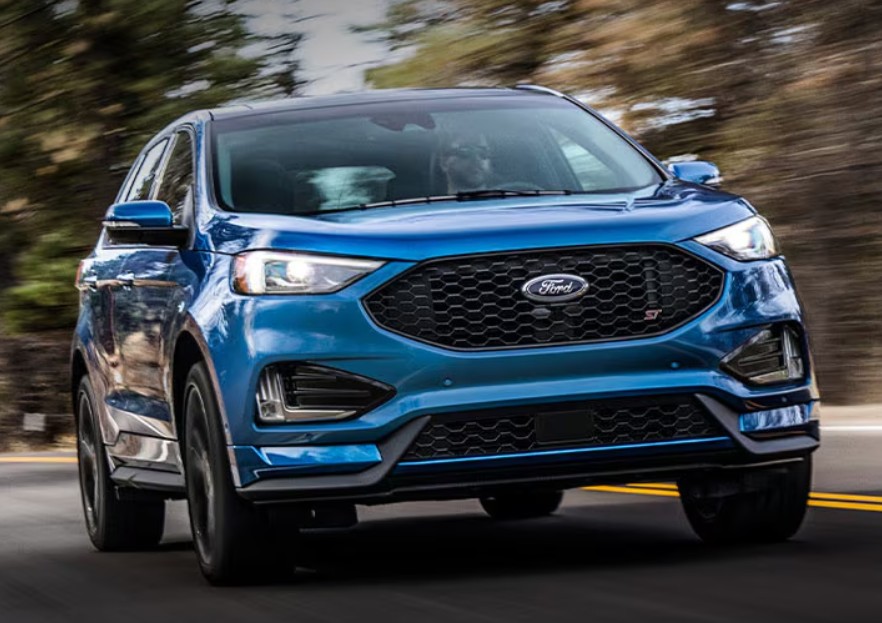
Comparing the Ford Edge versus Honda CR-V might look slightly unusual at first. Both are two-row SUVs, both work well for families, and both are designed primarily for everyday driving. Yet park them beside each other and the differences become obvious.
The Ford Edge is the bigger, broader, more substantial SUV. It feels like the vehicle we choose when comfort, highway stability, passenger space, and stronger performance rank high on our shopping list. The Honda CR-V approaches the same mission from another direction. It is lighter on its feet, easier to maneuver, generally more economical, and remarkably clever about turning a relatively compact footprint into useful interior space.
So, which one should we buy?
There isn't a universal winner. Choosing between them is less like picking the "best" shoe and more like deciding whether we need hiking boots or comfortable running shoes. Both can get us where we're going, but they prioritize different things.
Let's compare the Ford Edge and Honda CR-V in the areas that actually matter.
Content in this publication
- Ford Edge Versus Honda CR-V at a Glance
- Size: The Ford Edge Is Noticeably Bigger
- Interior Space and Passenger Comfort
- Cargo Space: Bigger Doesn't Automatically Mean More Practical
- Engine Performance: Ford Edge Has the Muscle
- Fuel Economy: Honda CR-V Wins Clearly
- Ford Edge Versus Honda CR-V for Highway Driving
- Ride Comfort
- Handling and Maneuverability
- Ford Edge Versus Honda CR-V AWD Systems
- Snow and Wet-Weather Driving
- Technology and Infotainment
- Safety Features
- Reliability: Honda CR-V Has the Reputation Advantage
- Maintenance and Running Costs
- Insurance Costs
- Ford Edge Versus Honda CR-V for Families
- Towing: Ford Edge Is the Better Starting Point
- Parking and Daily Usability
- Driving Position and Visibility
- Styling: Rugged Presence or Clean Practicality?
- Ford Edge Versus Honda CR-V Used Prices
- Depreciation and Resale Value
- Which SUV Feels More Premium?
- Advantages of Each SUV
- Who Should Buy the Ford Edge?
- Who Should Buy the Honda CR-V?
- Ford Edge Versus Honda CR-V: Which Is Better for Commuting?
- Which One Is Better for Road Trips?
- What About the Honda CR-V Hybrid?
- Is the Ford Edge More SUV for the Money?
- Ford Edge Versus Honda CR-V: Our Verdict
- Frequently Asked Questions
- Final Thoughts
Ford Edge Versus Honda CR-V at a Glance
The biggest thing to understand is that these SUVs traditionally occupy different size categories. The Honda CR-V is a compact crossover, while the Ford Edge sits closer to the midsize SUV class.
That distinction shapes almost everything else.
The Edge generally provides a wider cabin, stronger available engines, a more planted highway personality, and the substantial feeling some buyers expect from a midsize SUV. The CR-V counters with better efficiency, easier urban maneuverability, clever packaging, and ownership costs that can be friendlier over time.
Neither philosophy is wrong. We simply have to decide which advantages matter more to us.
| Category | Ford Edge | Honda CR-V |
|---|---|---|
| Vehicle class | Midsize two-row SUV | Compact SUV |
| Passenger capacity | 5 | 5 |
| Cabin feel | Wider and more substantial | Efficient and airy |
| Performance | Generally stronger | Adequate and efficiency-focused |
| Fuel economy | Lower overall | Usually significantly better |
| City maneuverability | Good for its size | Excellent |
| Highway comfort | Major strength | Comfortable and composed |
| Cargo practicality | Very spacious | Exceptionally efficient packaging |
| Available AWD | Yes | Yes |
| Hybrid availability | Not a core Edge offering | Available on newer CR-V generations |
| Best suited to | Space and power seekers | Efficiency and practicality seekers |
Size: The Ford Edge Is Noticeably Bigger
Size creates one of the clearest differences in the Ford Edge vs Honda CR-V comparison.
The Edge has traditionally been longer and considerably wider than the CR-V. That extra sheet metal isn't just there for appearance. It translates into a cabin that feels generous, especially across the front seats and rear bench.
Three adults sitting across the back of an Edge generally have more breathing room than they would in many compact crossovers.
The CR-V, however, performs a neat packaging trick. Honda has become remarkably good at extracting usable interior room from relatively modest exterior dimensions. The CR-V can feel much larger inside than its compact-SUV classification suggests.
Which SUV Is Easier to Drive in Town?
This is where smaller dimensions become an advantage.
We can squeeze the CR-V through narrow parking garages, busy supermarket lots, and crowded urban streets with less effort. Its footprint feels approachable almost immediately.
The Edge isn't cumbersome, but there's more SUV around us. In tight spaces, we notice the additional width.
If most of our driving happens in congested cities, the CR-V makes everyday life a little easier.
If we spend more time on broad highways and suburban roads, the Edge's extra dimensions may actually feel reassuring.
Interior Space and Passenger Comfort
Open the doors and the personalities separate even further.
The Ford Edge often gives us that broad-shouldered American-SUV feeling. The front seats are spaced generously apart, the dashboard stretches across a wide cabin, and passengers aren't constantly rubbing elbows.
It feels relaxed.
The Honda CR-V feels intelligently packaged rather than oversized. Front-seat space is excellent, while newer generations of the CR-V have become particularly impressive in the rear-seat department.
Rear-Seat Comfort
Families should pay special attention here.
The CR-V has traditionally punched above its class when it comes to rear-seat usability. Wide-opening rear doors, good legroom, and a relatively accommodating bench make installing child seats or loading passengers easier.
The Edge adds width.
That difference becomes more valuable when we regularly carry three rear passengers rather than two. Shoulder room is one of those specifications nobody thinks about until three adults are sitting side-by-side for a two-hour drive.
Which Is Better for Five Adults?
We would lean toward the Ford Edge.
Both are five-passenger SUVs, but carrying five people occasionally is different from carrying five people comfortably on a regular basis.
The Edge's extra width gives it the edge—no pun intended—when the rear bench is frequently full.
Cargo Space: Bigger Doesn't Automatically Mean More Practical
We might assume the larger Ford must completely dominate cargo capacity. In practice, things are more interesting.
The Edge provides a large cargo area behind its second row and plenty of room with the rear seats folded. For luggage, sports equipment, shopping trips, and bulky household items, it is impressively useful.
But Honda has mastered the art of packaging.
The CR-V uses its boxy rear profile, low cargo floor, and intelligently arranged cabin to deliver cargo capacity that can rival vehicles occupying more road space.
Honda CR-V Cargo Practicality
Numbers only tell part of the story.
A cargo compartment's shape can matter as much as raw volume. Broad openings, low loading heights, minimal intrusion from suspension components, and easily folding rear seats make a vehicle much more pleasant to live with.
The CR-V excels here.
Loading groceries? Simple.
A stroller? Easy.
Suitcases for a weekend trip? No drama.
A dog crate? Usually straightforward.
The Edge handles those jobs too, of course, but the CR-V demonstrates how efficiently Honda uses every inch.
Ford Edge Cargo Advantages
Where the Edge starts flexing its muscles is when passenger space and luggage space must coexist.
There's simply more vehicle to work with.
Large families who remain committed to a two-row SUV may appreciate the Edge because it gives passengers breathing room without shrinking the luggage area into an afterthought.
Engine Performance: Ford Edge Has the Muscle
If acceleration matters, the comparison swings toward Ford.
The Edge has historically offered turbocharged engines with noticeably stronger power than the typical CR-V powertrain. Some performance-oriented Edge variants raised the stakes further with substantially more powerful engines and all-wheel drive.
Press the accelerator and the Edge generally feels stronger.
There is more reserve power for overtaking, merging onto highways, or climbing steep grades with passengers and luggage aboard.
The CR-V isn't painfully slow. That's important to clarify.
Honda tunes its compact crossover for smooth, predictable everyday performance. Around town, the CR-V responds adequately and rarely feels overwhelmed in ordinary driving.
But speed isn't its primary mission.
Ford Edge Acceleration
Turbocharged torque suits the Edge well.
The SUV's substantial body needs muscle, and Ford's stronger engines provide it. Highway passing feels less calculated because we don't have to build momentum as patiently.
That difference becomes especially noticeable when the vehicle is fully loaded.
Honda CR-V Performance
The CR-V takes the sensible route.
Its engines are engineered around the needs of commuters and families rather than enthusiasts chasing dramatic acceleration.
Newer hybrid CR-V versions add another dimension. Electric assistance can make low-speed response feel pleasantly immediate while simultaneously reducing fuel consumption.
For many people, that's a better trade than outright horsepower.
Fuel Economy: Honda CR-V Wins Clearly
This might be the most predictable category.
A smaller, lighter SUV equipped with efficiency-oriented engines has an inherent advantage over a larger, more powerful crossover.
The CR-V generally consumes considerably less fuel than the Edge.
And when we compare hybrid versions of the Honda against gasoline-powered Edge models, the efficiency gap can become even wider.
Imagine two owners driving roughly the same commuting route every weekday for years. The difference between these SUVs isn't just a number displayed on a dashboard. It turns into hundreds of additional fuel stops over a long ownership period.
Why the CR-V Uses Less Fuel
The explanation isn't mysterious.
The Honda benefits from a combination of lower vehicle mass, smaller engines, aerodynamic development, efficient transmissions, and—on hybrid versions—electrification.
The Edge carries more weight and usually produces more power.
Physics eventually sends us the bill.
Does Better Fuel Economy Matter Enough to Choose the CR-V?
For high-mileage drivers, absolutely.
Someone covering thousands of highway and city miles each year can save meaningful money with the Honda.
For low-mileage drivers who prioritize comfort and acceleration, the Edge's additional fuel consumption may be an acceptable compromise.
Ford Edge Versus Honda CR-V for Highway Driving
Take both vehicles out of crowded streets and onto a long highway, and the Edge begins making a compelling case for itself.
Its wider stance and heavier construction contribute to a planted personality. It feels substantial at cruising speeds.
Long-distance drivers may appreciate that character.
Crosswinds, imperfect pavement, and passing trucks can feel less intrusive in a heavier midsize crossover than in a smaller vehicle.
The CR-V remains an excellent highway companion. Honda has refined ride quality and noise isolation considerably over successive generations.
But the Edge feels more like a long-distance cruiser.
Ride Comfort
The Edge tends to favor comfort, although exact behavior depends heavily on wheel size, tire profile, suspension calibration, and trim level.
On sensible wheels, it can absorb broken pavement with reassuring composure.
Larger sport-oriented wheels may make the ride firmer.
The CR-V balances comfort with slightly lighter responses. It feels easy rather than plush—like a good pair of everyday sneakers instead of a thick luxury mattress.
Neither approach is inherently better.
Which SUV Is More Comfortable on Long Trips?
For pure spaciousness and highway relaxation, we would generally choose the Edge.
Its wide seats, substantial proportions, and quieter cruising personality make it well suited to hours of interstate driving.
The CR-V wins when the trip includes city streets, difficult parking, and lots of fuel stops we'd rather avoid.
Handling and Maneuverability
Here's where the Honda starts feeling younger on its feet.
You may be interested in reading BMW M4 Trims: Complete Guide to Every Version
The CR-V's smaller dimensions make direction changes easy and natural. Steering generally feels light enough for effortless parking while remaining predictable at higher speeds.
The Edge behaves competently, but we never entirely forget its size.
That's not necessarily criticism.
Some drivers actually prefer the sensation of steering a heavier, wider SUV. It feels more substantial and planted.
Others want something that shrinks around them.
Those buyers will probably prefer the Honda.
Ford Edge Versus Honda CR-V AWD Systems
Both models have been offered with all-wheel drive, depending on generation, market, and trim.
AWD can improve traction when accelerating on rain-covered, snowy, gravel, or otherwise slippery surfaces.
However, neither vehicle should automatically be mistaken for a dedicated off-roader.
These are road-oriented crossover SUVs first.
If our weekend adventures involve maintained dirt roads, snowy mountain routes, campgrounds, and occasionally messy conditions, either can work nicely with appropriate tires.
If we're planning serious rock crawling, deep mud, or difficult backcountry trails, we're shopping in the wrong aisle.
Snow and Wet-Weather Driving
The heavier Edge can feel reassuring in poor weather, especially when equipped with AWD and quality seasonal tires.
But tires matter enormously.
An AWD badge cannot compensate for worn or inappropriate rubber.
The CR-V's lighter weight and available AWD also make it a strong all-weather family vehicle. Honda's predictable controls can be particularly reassuring for drivers who simply want the vehicle to behave naturally when conditions deteriorate.
In either SUV, proper tires should remain our first line of defense.
Technology and Infotainment
Technology varies dramatically depending on the model year we're comparing.
Later Ford Edge models moved toward large touchscreen-oriented interfaces on many trims, while Honda's CR-V has evolved through several infotainment generations with increasing screen size and connectivity.
Instead of obsessing over screen measurements, we should ask something simpler: Can we operate the functions we use daily without taking our eyes off the road?
That's where ergonomics matter.
Honda usually favors straightforward controls, although interface design varies by generation.
Ford's systems can feel more visually impressive, particularly in newer Edge examples with their tall central displays.
Apple CarPlay and Android Auto
Recent examples of both vehicles may support smartphone integration, though availability and wired-versus-wireless functionality depend on model year and trim.
When buying used, we should verify the exact vehicle rather than assuming every Edge or CR-V has identical equipment.
Two SUVs built only a few years apart can have dramatically different technology.
Safety Features
Both manufacturers have invested heavily in driver-assistance technology.
Depending on model year and specification, equipment can include adaptive cruise control, lane-keeping assistance, blind-spot monitoring, automatic emergency braking, rear cross-traffic alerts, and other collision-avoidance systems.
Honda's suite of driver-assistance technologies became particularly central to newer CR-V generations.
Ford also equipped later Edge models with an increasingly comprehensive collection of assistance features.
Still, buyers shopping used should verify each vehicle individually.
A model name alone doesn't guarantee a particular safety feature.
Reliability: Honda CR-V Has the Reputation Advantage
Reliability can become a sensitive subject because every owner has a story.
Someone's CR-V may have travelled an enormous distance with routine maintenance. Someone else may have encountered an expensive repair relatively early. The same variation applies to the Edge.
We should therefore separate reputation from certainty.
Historically, the Honda CR-V has developed a particularly strong reputation for durability and relatively sensible long-term ownership. That reputation is one of the major reasons used CR-Vs can remain desirable years after leaving the showroom.
The Ford Edge can also provide years of reliable transportation, but its reliability record varies more noticeably across engines, transmissions, model years, and components.
Used Ford Edge Reliability
A used Edge shouldn't be dismissed simply because Honda has the stronger overall reputation.
Condition matters enormously.
A meticulously serviced Edge with documented maintenance can be a much smarter purchase than a neglected CR-V whose owner treated oil changes as optional suggestions.
When buying used, maintenance history speaks louder than the badge.
Used Honda CR-V Reliability
The same caution applies to the CR-V.
"Honda reliability" isn't magical armor.
Turbocharged engines, hybrid systems, electronic equipment, air-conditioning components, suspension parts, transmissions, and ordinary wear items still need proper maintenance.
Buying the name rather than inspecting the vehicle is an easy way to turn a reliable model into an unreliable purchase.
Maintenance and Running Costs
The CR-V generally has the advantage here.
Smaller tires, better fuel economy, relatively mainstream mechanical components, and Honda's broad market presence can contribute to manageable running expenses.
The Edge may cost more to operate because we're dealing with a larger and heavier vehicle.
Consumables can be more substantial.
Bigger tires cost more. Greater fuel consumption adds up. Some repairs may involve more expensive components.
None of that necessarily makes the Ford costly to own, but the CR-V is normally the easier vehicle for buyers prioritizing operating efficiency.
Insurance Costs
Insurance is difficult to declare conclusively because premiums depend on far more than the vehicle.
Location, driver age, driving history, coverage level, annual mileage, repair costs, theft statistics, insurer, and even trim specification can influence premiums.
The CR-V's smaller size doesn't automatically guarantee cheaper insurance.
Similarly, the Edge's greater power doesn't automatically make it dramatically more expensive.
The only meaningful comparison is obtaining quotations for the exact vehicles we're considering.
Ford Edge Versus Honda CR-V for Families
Both SUVs make strong family vehicles, but they serve slightly different families.
The Edge works especially well when we regularly carry teenagers or adults, take long highway journeys, or simply value extra elbow room.
The CR-V excels for families balancing school runs, commuting, grocery shopping, road trips, and urban parking.
Its compact exterior doesn't punish us every time we enter a parking lot, yet its interior rarely feels cramped.
That combination explains much of the CR-V's enduring popularity.
Which Is Better With Young Children?
The CR-V makes a particularly convincing argument.
Easy access, practical rear doors, good rear-seat room, efficient cargo packaging, and relatively manageable dimensions help during the chaotic years of car seats, strollers, bags, toys, and forgotten water bottles.
The Edge becomes increasingly attractive as children grow.
Teenagers occupy adult-sized space surprisingly quickly.
Towing: Ford Edge Is the Better Starting Point
If towing forms part of our buying decision, the Edge is generally the more appropriate vehicle to investigate.
Certain Edge configurations have been designed to handle meaningful light-trailer duties when correctly equipped.
The CR-V is more focused on efficiency and everyday versatility. Towing capability varies substantially by market, powertrain, and generation, and some configurations may have limited ratings compared with larger SUVs.
Never assume capacity based on an internet comparison alone.
Check the owner's manual and official rating for the exact engine, drivetrain, model year, and factory equipment before attaching a trailer.
Parking and Daily Usability
The CR-V wins this category without needing fireworks.
Smaller SUVs are simply easier to place.
We notice the difference every time we're negotiating a narrow garage or attempting to squeeze between two vehicles whose drivers apparently interpreted the parking lines as abstract art.
The Edge generally provides cameras and parking assistance depending on specification, which certainly helps.
Still, technology cannot completely erase physical dimensions.
For dense urban living, the Honda's footprint is a genuine quality-of-life advantage.
Driving Position and Visibility
Both SUVs deliver the elevated seating position crossover buyers enjoy.
The Edge feels broad from behind the steering wheel. Some drivers love that commanding sensation immediately.
The CR-V tends to provide a more manageable view of its surroundings. Its relatively upright body and family-friendly design help make traffic easy to read.
Visibility can vary between generations, especially as pillars, mirrors, cameras, and body styling change.
A test drive remains important.
Sometimes one seating position simply fits our body better, regardless of what specifications suggest.
Styling: Rugged Presence or Clean Practicality?
Beauty remains gloriously subjective.
The Ford Edge has traditionally pursued a wider, more muscular appearance. Its stance makes it look substantial even though it doesn't have a third row.
Sportier variants can push that personality further.
You may be interested in readingBMW M4 Trims: Complete Guide to Every VersionYou may be interested in reading
BMW M4 Models by Year: Complete 2015–2026 GuideThe CR-V has evolved from utilitarian compact crossover to increasingly sophisticated family SUV.
Recent designs carry more visual confidence than earlier generations, yet Honda generally avoids making the vehicle look unnecessarily aggressive.
If we want presence, the Edge may be more appealing.
If we prefer tidy proportions and understated practicality, the CR-V fits comfortably.
Ford Edge Versus Honda CR-V Used Prices
Used pricing changes constantly according to age, mileage, condition, trim, region, accident history, and demand.
However, an interesting dynamic often appears between these vehicles.
The Edge may experience heavier depreciation, allowing buyers to obtain a relatively large and well-equipped midsize SUV for surprisingly reasonable money.
The CR-V frequently benefits from strong resale demand.
That can make Honda examples look expensive on the used market even after several years.
It's a double-edged sword.
We may pay more to buy the CR-V, but stronger residual value can help when it's time to sell.
Depreciation and Resale Value
Honda's reputation for reliability and the enormous popularity of the CR-V tend to support resale values.
Buyers know the name. Dealers know the name. Used-car shoppers actively search for it.
That demand matters.
The Ford Edge can depreciate more aggressively, but depreciation isn't automatically bad news.
For secondhand buyers, somebody else's depreciation becomes our discount.
A three- or five-year-old Edge may offer a lot of SUV for the money.
Depending on trim, the Edge can create the more upscale first impression simply because of its broader cabin and larger-vehicle proportions.
Higher specifications may add upgraded upholstery, larger wheels, premium audio equipment, driver-assistance systems, and other desirable features.
The CR-V focuses more heavily on intelligent functionality.
Higher trims can certainly feel sophisticated, but Honda rarely tries to disguise the CR-V's practical mission.
It wants to make our daily routine easier rather than pretend to be a luxury SUV.
Advantages of Each SUV
Instead of pretending one vehicle dominates every category, we can summarize the decision around their strongest qualities:
- Choose the Ford Edge if we prioritize a wider cabin, stronger acceleration, comfortable highway cruising, substantial road presence, generous passenger space, or greater light-towing potential.
- Choose the Honda CR-V if we prioritize fuel economy, urban maneuverability, clever cargo packaging, strong resale value, lower running costs, hybrid availability, or a long-standing reputation for reliability.
- Consider the Edge used if depreciation has created an attractive price gap and we want maximum vehicle for our budget.
- Consider the CR-V for high annual mileage because fuel savings can become increasingly important the farther we drive.
- Test both with the entire family aboard because passenger comfort often reveals differences that specifications cannot.
Who Should Buy the Ford Edge?
The Edge makes sense for buyers who want something bigger than the mainstream compact crossovers but don't need three rows of seats.
That's its sweet spot.
Maybe we've outgrown compact SUVs but dislike the bulk of a full three-row model. Maybe our teenagers want more shoulder room. Maybe long-distance comfort matters more than maximizing every gallon of fuel.
The Edge occupies that middle ground nicely.
It also appeals to drivers who simply enjoy stronger performance.
A vehicle doesn't have to be a sports car for extra horsepower to make everyday driving more pleasant.
Who Should Buy the Honda CR-V?
The CR-V suits buyers who want one vehicle to perform almost every routine task without becoming expensive or awkward.
Commute Monday through Friday.
Carry groceries Saturday.
Load bicycles or luggage Sunday.
Navigate city streets.
Take a vacation.
Repeat.
That's the CR-V formula.
It doesn't win by being extravagant. It wins by rarely giving us a reason to complain.
Ford Edge Versus Honda CR-V: Which Is Better for Commuting?
For most commuters, the CR-V gets our vote.
Better fuel efficiency and easier maneuverability are advantages we benefit from every single day.
Driving 20 or 30 miles doesn't require huge horsepower or a particularly wide cabin when we're alone.
The Edge becomes more compelling if the commute is mostly highway driving.
Its stable cruising behavior and spacious interior can make long journeys feel less tiring.
In other words, urban commuter: CR-V.
Long-distance highway commuter: much closer contest.
Which One Is Better for Road Trips?
This comparison is almost perfectly balanced.
The Edge gives us the highway comfort, power, passenger room, and big-SUV feeling we want when the road stretches toward the horizon.
The CR-V reduces fuel stops, remains easy to park when we arrive, and provides surprisingly competitive luggage practicality.
For four adults and lots of highway miles, we'd be tempted by the Edge.
For a couple or small family covering huge distances, the CR-V's efficiency could easily outweigh the Ford's extra space.
What About the Honda CR-V Hybrid?
The hybrid changes the conversation.
Its appeal goes beyond fuel savings.
Hybrid assistance can make stop-and-go driving feel smoother and more responsive while reducing gasoline consumption in conditions where conventional engines often perform inefficiently.
For buyers considering newer vehicles and driving heavily in urban or mixed conditions, the CR-V Hybrid deserves serious consideration.
The Edge's response is simpler: size and power.
That makes the decision even clearer.
Do we want stronger traditional midsize-SUV characteristics, or do we value efficiency-oriented engineering?
Is the Ford Edge More SUV for the Money?
Sometimes, particularly on the used market.
Because depreciation can work harder against the Edge, buyers may encounter examples with generous equipment, powerful engines, and lots of interior space at prices overlapping smaller crossovers.
That can make the Ford look like a bargain.
But purchase price isn't ownership cost.
We should calculate fuel, tires, maintenance, insurance, expected repairs, and eventual resale value before declaring either SUV cheaper.
The least expensive vehicle at the dealership isn't necessarily the least expensive vehicle five years later.
Ford Edge Versus Honda CR-V: Our Verdict
The Ford Edge versus Honda CR-V comparison isn't really about determining which SUV is objectively superior. It's about identifying which compromises we prefer.
The Ford Edge gives us more vehicle.
It is wider, roomier, typically more powerful, and particularly pleasant for highway travel. If passenger comfort and effortless acceleration sit near the top of our priorities, the Edge deserves serious attention.
The Honda CR-V gives us more efficiency from less vehicle.
Its exterior dimensions are easier to manage, its interior packaging is exceptional, fuel consumption is generally lower, and its reputation for long-term dependability remains one of its strongest selling points.
If we were choosing an SUV primarily for commuting, city driving, fuel economy, and economical ownership, we'd pick the Honda CR-V.
If we were choosing primarily for passenger room, highway comfort, stronger acceleration, and that substantial midsize-SUV feeling, we'd pick the Ford Edge.
That's really the dividing line.
The CR-V is the cleverer tool.
The Edge is the bigger hammer.
Neither is universally better—but one will almost certainly suit our lifestyle better than the other.
Frequently Asked Questions
1. Is the Ford Edge bigger than the Honda CR-V?
Yes. The Ford Edge is generally classified as a midsize two-row SUV, while the Honda CR-V competes in the compact SUV segment. The Edge's larger exterior dimensions usually provide a wider cabin and a more substantial overall feel.
2. Is the Honda CR-V more fuel-efficient than the Ford Edge?
Generally, yes. The CR-V's smaller size, lighter construction, efficiency-focused powertrains, and availability of hybrid technology give it a significant fuel-economy advantage over most Ford Edge configurations.
3. Which is more reliable, Ford Edge or Honda CR-V?
The Honda CR-V has historically enjoyed the stronger overall reputation for long-term reliability and resale value. However, reliability depends heavily on model year, engine, maintenance history, mileage, and previous ownership. A properly maintained Edge can still be an excellent used SUV.
4. Which is better for families, the Ford Edge or Honda CR-V?
Both work well for families. The Ford Edge is preferable when we regularly transport larger passengers or want a wider cabin, while the CR-V is excellent for families seeking easier parking, good rear-seat space, practical cargo capacity, and lower fuel consumption.
5. Should I buy a Ford Edge or Honda CR-V?
Choose the Ford Edge if space, stronger performance, highway comfort, and a substantial driving experience matter most. Choose the Honda CR-V if fuel economy, maneuverability, practicality, resale value, and lower everyday operating costs are higher priorities.
Final Thoughts
The battle between the Ford Edge and Honda CR-V proves that two five-seat crossovers can solve the same problem in completely different ways.
Ford gives us room to stretch out. Honda gives us efficiency without making the cabin feel tiny.
Ford emphasizes muscle. Honda emphasizes cleverness.
Ford works beautifully when we want the comfort of a larger SUV without stepping into a three-row vehicle. Honda shines when we need something spacious enough for family life yet compact enough to disappear into our everyday routine.
So before choosing, we shouldn't ask, "Which SUV is better?"
We should ask, "Which advantages will we actually notice every day?"
You may be interested in readingBMW M4 Trims: Complete Guide to Every VersionYou may be interested in reading
BMW M4 Models by Year: Complete 2015–2026 GuideYou may be interested in reading
 Subaru Impreza vs XV: Which Subaru Is Better for You?
Answer that question, and choosing between the Ford Edge and Honda CR-V becomes surprisingly easy.
If you want to know other articles similar to Ford Edge Versus Honda CR-V: Which SUV Is Better? you can visit the category Models.
Haval Jolion vs Omoda C5: Which SUV Is Better?
Haval Jolion vs Chery Tiggo 4 Pro: Full Comparison
Haval Jolion vs H6: Which SUV Is Better in 2026?
Haval Jolion vs Toyota Corolla Cross: Which SUV Is Better?
Haval Jolion vs Jaecoo J5: Which SUV Is Better?
Volkswagen T-Cross vs Volkswagen T-Roc: Which Is Better?
Leave a Reply
More content of your interest