
Subaru Impreza vs XV: Which Subaru Is Better for You?

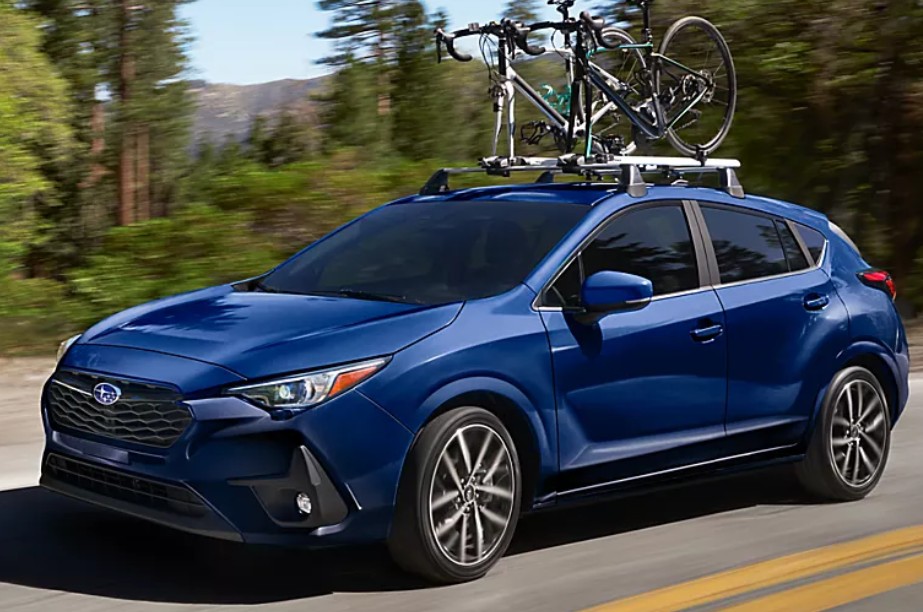
Choosing between the Subaru Impreza vs XV can feel strangely difficult. At first glance, they appear to be two different answers to two different questions: the Impreza is a compact passenger car, while the XV looks like a small crossover ready to disappear down a gravel road.
Look a little closer, though, and the family resemblance becomes impossible to ignore.
Historically, the Subaru XV has been closely related to the Impreza platform, borrowing much of the compact car's basic architecture while adding extra ground clearance, rugged exterior protection, a taller stance, and crossover-oriented features. Subaru itself described the XV as combining a compact body with enhanced ability on poor road surfaces, and later unified the XV and Crosstrek naming globally under the Crosstrek badge.
That makes this comparison particularly interesting. We're essentially choosing between two interpretations of Subaru's compact-car recipe.
Do we want the lower, lighter-feeling Impreza for everyday roads, or the taller XV for rougher adventures?
Let's find out.
Content in this publication
- Subaru Impreza vs Subaru XV at a Glance
- Are the Subaru Impreza and XV Basically the Same Car?
- Subaru XV vs Impreza Dimensions
- Subaru Impreza vs XV Engine Options
- Subaru Impreza vs XV Fuel Economy
- Subaru Impreza vs XV AWD Capability
- Subaru Impreza vs XV Handling
- Subaru XV vs Impreza Interior
- Driving Position and Visibility
- Subaru Impreza vs XV Cargo Space
- Subaru XV vs Impreza Comfort
- Subaru Impreza vs XV Safety
- Subaru Impreza vs XV Reliability
- Subaru XV vs Impreza Maintenance Costs
- Subaru Impreza vs XV for City Driving
- Subaru Impreza vs XV in Snow and Bad Weather
- Subaru Impreza vs XV for Families
- Which Looks Better?
- Subaru XV vs Impreza Resale Value
- Subaru Impreza vs XV: Advantages and Disadvantages
- Who Should Buy the Subaru Impreza?
- Who Should Buy the Subaru XV?
- What Happened to the Subaru XV?
- Subaru Impreza vs XV: Which One Should We Buy?
- Frequently Asked Questions
- Final Thoughts
Subaru Impreza vs Subaru XV at a Glance
The quickest way to understand these two Subarus is to think about their personalities.
The Impreza wears sneakers.
The XV wears hiking boots.
Both can handle everyday life comfortably, but one is designed primarily for pavement while the other expects the pavement to disappear occasionally.
Exact specifications depend heavily on model year, engine, trim, and country, but the general differences look like this:
| Category | Subaru Impreza | Subaru XV |
|---|---|---|
| Vehicle type | Compact car/hatchback | Compact crossover |
| Driving position | Lower | Higher |
| AWD | Common/standard in many markets | Core feature |
| Ground clearance | Lower | Significantly higher |
| Road handling | More car-like | Softer, crossover-oriented |
| Rough-road ability | Moderate | Better |
| Fuel economy | Often slightly better | Often slightly lower |
| Entry/exit | Lower seating position | Easier, higher seating position |
| Exterior styling | Clean and sporty | Rugged and adventurous |
| Best environment | City/highway | Mixed roads/outdoors |
| Cargo practicality | Good | Good with easier crossover access |
| Best for | Commuters | Active lifestyles |
These differences become much clearer once we get behind the wheel—or at least imagine living with each vehicle every day.
Are the Subaru Impreza and XV Basically the Same Car?
Not exactly, although there is plenty of shared DNA.
Earlier generations of the XV were closely connected to the Impreza. Subaru effectively took the compact-car formula and transformed it into something more crossover-like through suspension changes, greater ground clearance, rugged styling, protective body cladding, and AWD-focused capability.
The result was clever because Subaru didn't need to turn the XV into a bulky SUV.
It remained compact enough for city life.
That's arguably the XV's secret sauce: it feels like a hatchback that discovered camping.
Over time, however, Subaru developed the crossover's identity more strongly. Subaru announced in 2022 that the vehicle previously sold under either XV or Crosstrek depending on the market would use the Crosstrek name globally beginning with the third-generation model.
So if you're shopping used vehicles, you'll encounter plenty of XVs. When researching newer equivalents, you'll increasingly see Crosstrek instead.
Subaru XV vs Impreza Dimensions
Dimensionally, these vehicles have traditionally remained relatively close because of their shared origins.
The big difference isn't necessarily length.
It's height.
The XV stands taller and rides higher above the road. That changes far more than appearances. You sit higher, step into the cabin differently, see traffic from a slightly elevated position, and have much more space underneath the car before the road meets expensive mechanical components.
To illustrate how different the philosophies remain today, Subaru Australia's 2026 Impreza lists a height of 1,480 mm and minimum ground clearance of just 130 mm.
By contrast, Subaru's modern Crosstrek—the successor to the XV nameplate—is built around crossover-level clearance. Current versions in Colombia, for example, list approximately 220 mm of minimum ground clearance.
That difference is enormous when the asphalt gets ugly.
Why Ground Clearance Matters
Ground clearance sounds like a boring specification until the first time we hear something scrape underneath our car.
A lower Impreza is perfectly comfortable dealing with normal urban roads, highways, parking structures, and moderately imperfect pavement.
But deep potholes, unpaved tracks, snowbanks, steep driveways, and rocky surfaces change the equation.
That's where the XV earns its crossover badge.
Extra clearance gives us greater confidence when crossing uneven terrain because there's more room between the road and the vehicle's underside.
For suburban driving, that difference may barely matter.
For weekends in the countryside? It might decide the comparison completely.
Subaru Impreza vs XV Engine Options
Engine comparisons require a little caution because Subaru has offered different powertrains depending on country and generation.
Many Impreza and XV models have used Subaru's naturally aspirated horizontally opposed BOXER engines. Depending on the market, buyers may encounter engines including 1.6-liter, 2.0-liter, or 2.5-liter configurations, while some XV/Crosstrek markets have also received hybrid systems.
Current examples demonstrate how much regional variation exists. Subaru Australia's 2026 Impreza uses a 1,995 cc four-cylinder BOXER petrol engine, while the U.S.-generation Impreza has been offered with both 2.0-liter and 2.5-liter BOXER engines depending on trim. Subaru's U.S. outline specifications rated those engines at 152 hp and 182 hp respectively.
Meanwhile, modern descendants of the XV include both conventional petrol and electrified powertrains. Subaru Colombia, for example, currently lists Crosstrek models with a 1,995 cc BOXER engine and hybrid versions combining a BOXER engine with e-BOXER technology.
The lesson?
Never compare an Impreza and XV purely by their model names.
Compare the specific year, engine, transmission, and trim you're considering.
Which One Feels Faster?
Assuming similar engines, the Impreza often feels slightly more eager.
Why?
Its lower stance and road-oriented setup can make it feel sharper and more immediate. Even when outright acceleration isn't dramatically different, perception matters.
The Impreza sits closer to the pavement.
Corners feel flatter.
Direction changes feel more natural.
The XV adds suspension height and crossover character, so its movements may feel a little more relaxed.
Think sports shoes versus hiking boots again. The hiking boots don't necessarily stop us from running, but we'd rather sprint in the sneakers.
Is the Subaru XV Slow?
Some lower-powered XV versions aren't exactly rockets.
But that's missing the point.
The XV wasn't created to chase sports sedans between traffic lights. Its priorities are predictable AWD traction, practicality, safety, comfort, and versatility.
For ordinary commuting, the engine performance of most versions is perfectly usable.
Drivers frequently climbing steep mountain roads or carrying several passengers, however, may prefer the more powerful engine option where available.
Subaru Impreza vs XV Fuel Economy
Here the Impreza generally enjoys a natural advantage.
A lower vehicle typically presents less aerodynamic resistance, while the crossover's increased ride height, larger wheels on some trims, and potentially greater mass can affect consumption.
The difference may not always be huge.
Still, if we spend 95% of our life commuting along paved roads, even a modest fuel-economy advantage accumulates over several years.
The XV's additional capability effectively comes with a small tax.
We're carrying extra ground clearance and crossover equipment everywhere—even while driving to the supermarket.
That trade-off makes perfect sense when we regularly use the capability.
When we don't, the Impreza can be the more rational machine.
Which Is Better for Long Highway Trips?
This one is closer than people might expect.
The Impreza benefits from its lower stance and car-like road manners. At motorway speeds, it can feel planted and natural.
The XV counters with a higher seating position, good outward visibility, and crossover practicality.
If our road trip consists almost entirely of smooth highways, we'd lean toward the Impreza.
If the road trip ends at a remote trail, beach, mountain road, campground, or cabin, we'd happily sacrifice a little road-focused character for the XV's versatility.
Subaru Impreza vs XV AWD Capability
Subaru has built much of its reputation around symmetrical all-wheel drive, and AWD is central to the appeal of these vehicles.
The modern Impreza continues that tradition in key markets. Subaru's U.S. specifications, for example, identify Symmetrical All-Wheel Drive across the current-generation Impreza lineup.
But AWD alone doesn't make two vehicles equally capable off pavement.
Imagine two people wearing identical hiking backpacks.
One has running shoes.
The other has boots.
Same backpack, different ability when the trail gets messy.
That's roughly the Impreza-versus-XV relationship.
The XV combines AWD with considerably greater ground clearance and, depending on generation and trim, additional terrain-management features.
XV Is the Better Adventure Vehicle
If our weekends involve gravel, dirt, mud, snow, steep driveways, camping areas, rural roads, or mountain routes, the XV becomes the obvious choice.
Modern Crosstrek models continue this philosophy. Subaru describes the vehicle as a crossover combining compact dimensions, rugged styling, and SUV performance based around Symmetrical AWD.
Some markets also offer X-Mode functionality designed to help manage challenging low-traction surfaces.
The Impreza can certainly surprise us in poor weather thanks to its AWD system.
But ground clearance remains the limitation.
Traction tells the wheels how to move.
Clearance determines whether the car physically gets over the obstacle.
Subaru Impreza vs XV Handling
This is where the Impreza fights back.
Lower vehicles generally enjoy a lower center of gravity, and Subaru's horizontally opposed BOXER engine architecture already helps keep mass relatively low in the chassis.
You may be interested in reading Subaru Impreza or Similar: Best Alternatives Compared
Put the two ideas together and the Impreza can feel pleasantly stable.
It's not necessarily a sports car, but it behaves naturally.
Turn into a corner and there's less sensation of the body leaning outward.
The steering feels connected to what the chassis is doing.
The XV remains composed, yet the higher suspension introduces more body movement.
That's not a flaw.
It's physics.
Subaru tuned the crossover for a broader operating envelope rather than purely optimizing it for smooth tarmac.
Which Is More Fun to Drive?
We'd choose the Impreza.
The driver sits lower, the vehicle feels more planted, and its hatchback proportions create that nimble compact-car character many of us still love.
The XV is fun in another way.
Instead of encouraging us to attack a sweeping corner, it whispers, "What happens if we take that road?"
Sometimes adventure beats cornering speed.
Subaru XV vs Impreza Interior
Step inside comparable generations and the relationship between these models can become obvious.
Dashboard layouts, switches, controls, infotainment systems, seating architecture, and materials may be similar.
That's good news.
It means choosing the XV doesn't necessarily feel like upgrading from an economy hatchback to a completely different class of car.
Both generally prioritize straightforward functionality.
Subaru cabins rarely feel as theatrical as some competitors. Instead, controls tend to emphasize usability and clear visibility.
It's more hiking watch than luxury smartwatch.
That approach ages surprisingly well.
Driving Position and Visibility
Here's another significant difference.
The Impreza provides a traditional passenger-car seating position. We sit closer to the ground and feel more connected to the chassis.
The XV raises us.
Not dramatically enough to feel like a full-size SUV, but sufficiently to improve the commanding sensation many crossover buyers enjoy.
That can make navigating traffic feel easier because we're looking through rather than directly into some surrounding vehicles.
Ingress and egress can also be easier for people who dislike dropping down into low cars.
For some buyers, that alone may justify choosing the XV.
Subaru Impreza vs XV Cargo Space
Cargo capacity isn't always dramatically different because these cars can share similar basic proportions.
However, the XV's crossover design makes its cargo area feel naturally suited to outdoor equipment.
Throwing muddy boots, backpacks, camping gear, bicycles, or sporting equipment into a rugged-looking crossover somehow feels more appropriate than doing the same thing with a conventional hatchback.
Modern Imprezas remain genuinely useful hatchbacks. For reference, Subaru Australia currently lists the 2026 Impreza at 291 litres behind the rear seats, with substantially greater capacity once the rear seats are folded.
The key question is therefore not simply, "Which boot is bigger?"
Ask instead:
"What are we putting inside it, and where are we driving afterward?"
Subaru XV vs Impreza Comfort
Comfort depends on wheel size, tyre choice, trim, and model year, but the XV's taller suspension can give it an advantage over broken surfaces.
Speed bumps, cracked asphalt, gravel, and road imperfections are exactly where crossover suspension earns its keep.
The Impreza can feel slightly tighter and more controlled on smooth pavement.
Neither approach is universally better.
One prioritizes road discipline.
The other prioritizes tolerance.
If the roads around us look like someone repeatedly attacked them with a hammer, we'd probably appreciate the XV.
Subaru Impreza vs XV Safety
Safety has long been a major Subaru selling point, and both nameplates have benefited from Subaru's broader safety engineering.
Equipment varies significantly by year and trim, particularly with driver-assistance technologies such as EyeSight.
Newer vehicles can include functions involving adaptive cruise control, lane assistance, pre-collision braking, cameras, and related technology.
The latest Crosstrek generation illustrates how the technology has progressed. When Subaru unveiled it, the company specifically highlighted the newest generation of EyeSight and an additional wide-angle mono camera for the Japanese-market vehicle.
For used-car buyers, though, the badge tells us very little about equipment.
Two XVs parked beside each other could have dramatically different safety specifications simply because they're different trims or years.
Always inspect the individual vehicle.
Subaru Impreza vs XV Reliability
Mechanically, similar engines and drivetrains mean many reliability considerations overlap.
That's both convenient and important.
Common maintenance points on used examples can include CVT servicing, suspension wear, wheel bearings, cooling-system condition, oil leaks or consumption on certain engines and generations, battery condition, and evidence of neglected maintenance.
But there's another factor with XVs.
Lifestyle.
A used Impreza may have spent most of its life commuting between an office and a supermarket.
A used XV might have spent weekends climbing muddy access roads while carrying mountain bikes.
Or perhaps the opposite happened.
We simply don't know.
That's why service history and a pre-purchase inspection matter more than stereotypes.
What Should We Check Before Buying Used?
For either vehicle, focus on the individual example rather than assuming every Subaru of a particular year behaves identically.
A sensible inspection should cover:
- Complete service history and evidence of correct fluids; smooth CVT operation without unusual hesitation or noises; suspension bushes, wheel bearings, tyres, and alignment; evidence of oil or coolant leaks; underside damage, particularly on an XV used off-road; consistent tyre brand, size, and tread depth because AWD systems appreciate matching tyres; warning lights and EyeSight operation where fitted; accident repairs, rust, and corrosion; and a cold-start road test before purchasing.
A lovingly maintained Impreza with 120,000 km can easily be a wiser purchase than an abused XV with half that mileage.
Condition beats mythology.
Subaru XV vs Impreza Maintenance Costs
Because the vehicles can share engines, transmissions, drivetrain components, and many consumables, maintenance costs aren't worlds apart.
The XV may become slightly more expensive in some circumstances because larger wheels and tyres can cost more, while suspension components can differ.
Its lifestyle can affect expenses too.
A crossover regularly traveling over rough roads will naturally wear suspension pieces and tyres differently from an Impreza cruising along highways.
AWD also means tyre maintenance deserves special attention.
We're not just buying four tyres.
We're maintaining a system where keeping all four tyres reasonably consistent matters.
Subaru Impreza vs XV for City Driving
If our world consists mostly of city streets, parking garages, motorways, and suburban roads, the Impreza makes enormous sense.
It's compact, easy to place, car-like to drive, and doesn't carry unnecessary crossover height.
The lower body can also make roof access easier.
There is something refreshingly straightforward about the Impreza.
No pretending to be an expedition vehicle.
No visual hiking equipment.
Just a practical AWD compact car.
Yet city life isn't an automatic victory for the Impreza.
The XV's raised driving position improves visibility, while its extra ground clearance reduces anxiety around steep ramps, awkward curbs, speed humps, and badly maintained streets.
So even without camping ambitions, some urban drivers will prefer the XV.
Subaru Impreza vs XV in Snow and Bad Weather
Snow is where both cars remind us they're Subarus.
AWD provides obvious advantages when conditions become slippery.
Yet again, however, clearance separates them.
A light layer of snow?
You may be interested in readingSubaru Impreza or Similar: Best Alternatives ComparedYou may be interested in reading
Subaru Impreza vs Forester: Which Subaru Fits You Best?The Impreza can be excellent with appropriate tyres.
Deep accumulated snow?
The XV has the stronger argument because its underbody sits farther from the surface.
Tyres remain crucial. AWD helps us accelerate, but proper winter tyres determine much of our braking and cornering grip.
No drivetrain can negotiate with physics forever.
Subaru Impreza vs XV for Families
For small families, either can work.
Both provide five seats and practical hatchback-style cargo access in common configurations.
The XV's higher body can make loading children easier because adults don't need to bend as far downward.
Installing a child seat can feel less awkward for the same reason.
Families that regularly travel with strollers, sporting equipment, camping gear, or outdoor equipment may naturally gravitate toward the XV.
Families mostly commuting through the city might prefer the Impreza's simpler road manners and potentially lower operating costs.
Which Looks Better?
Now we've entered dangerous territory.
Styling is subjective.
The Impreza has the cleaner appearance.
Its lower roofline and smaller wheel-arch gaps make it look more cohesive, almost as if the body is stretched tightly around the mechanical package.
The XV deliberately exaggerates toughness.
Raised suspension, contrasting body cladding, chunkier wheel arches, roof rails on many versions, and crossover detailing create a more adventurous personality.
Personally, we'd describe them this way:
The Impreza looks ready for Monday morning.
The XV looks ready for Friday afternoon.
Neither is wrong.
Subaru XV vs Impreza Resale Value
Crossovers have become extremely popular across many markets, which can help vehicles such as the XV maintain strong used-market demand.
Practical crossover styling appeals to a broad audience: young buyers, small families, outdoor enthusiasts, older motorists wanting easier entry, and people who simply like sitting higher.
The Impreza's audience can be narrower.
But there's a flip side.
Used Imprezas can represent excellent value precisely because compact hatchbacks don't command the same fashionable premium as crossovers.
That means the Impreza may be the bargain hiding in plain sight.
If we don't need additional clearance, why pay extra for it?
Subaru Impreza vs XV: Advantages and Disadvantages
When everything is stripped back, the comparison becomes surprisingly simple.
The Impreza's major advantages are its lower center of gravity, more car-like handling, straightforward hatchback character, and potentially better efficiency or purchase value.
Its biggest weakness is also obvious: limited ground clearance compared with the XV.
The XV's advantages include greater ride height, easier entry and exit, stronger rough-road suitability, rugged design, and a crossover driving position.
Its compromises are the reverse of the Impreza's strengths. The higher body may feel less sharp in corners, and some versions may consume slightly more fuel or cost more to purchase.
Neither is fundamentally superior.
They simply optimize the same Subaru DNA for different environments.
Who Should Buy the Subaru Impreza?
Choose the Impreza if most of your driving happens on pavement and you value the way a conventional compact car behaves.
It's especially appealing when our priorities are responsive handling, commuting, compact dimensions, AWD security, and value.
We'd take the Impreza if our imaginary weekly driving looked something like this:
Home → work → supermarket → highway trip → home.
There's simply no reason to carry substantial extra ride height if we never use it.
Who Should Buy the Subaru XV?
Choose the XV if the road occasionally stops behaving like a road.
Camping?
Mountain roads?
Gravel?
Snow?
Rural property?
Surfing?
Cycling?
Weekend exploration?
That's its territory.
The XV provides a useful middle ground between ordinary hatchbacks and larger SUVs.
You don't have to drive a giant vehicle Monday through Friday just because you want adventure capability on Saturday.
That was always one of the smartest things about the XV formula.
What Happened to the Subaru XV?
If you're shopping for a new Subaru and wondering where the XV disappeared to, don't panic.
It essentially became the Crosstrek globally.
Historically, Subaru used the XV and Crosstrek names in different markets. When introducing the newer generation in September 2022, Subaru announced that it would unify those market-specific names under Crosstrek.
Subaru Europe subsequently described the new Crosstrek explicitly as the model replacing the XV in its European lineup.
So when comparing a used Subaru Impreza with a Subaru XV, you're effectively comparing the Impreza with the earlier versions of the crossover now known globally as the Crosstrek.
Subaru Impreza vs XV: Which One Should We Buy?
After comparing Subaru Impreza vs XV, there's no universal winner.
But there is a clear winner for different drivers.
For mostly paved-road driving, we'd pick the Subaru Impreza.
It's lower, simpler, and more car-like. We enjoy the sharper handling and don't pay for capability we're unlikely to use.
For mixed surfaces and outdoor lifestyles, we'd choose the Subaru XV.
Its additional ground clearance completely changes what the vehicle can comfortably tackle. The XV retains much of the manageable footprint of a compact hatchback while adding genuine crossover usefulness.
That's the beauty of this comparison.
We're not really choosing between good and bad.
We're choosing between road-focused versatility and adventure-focused versatility.
The Impreza asks, "Where do you need to go?"
The XV asks, "What if there's no proper road?"
And sometimes that second question sounds considerably more interesting.
Frequently Asked Questions
Is the Subaru XV just a lifted Impreza?
The description isn't entirely wrong, particularly when discussing earlier generations, because the vehicles have substantial historical and engineering connections. However, calling the XV merely a lifted Impreza oversimplifies things. The XV incorporates greater ground clearance, crossover-oriented styling, suspension differences, and features designed to increase versatility on rough surfaces.
Which is better, Subaru XV or Impreza?
The Impreza is generally the better choice for drivers who spend almost all their time on paved roads and prefer sharper car-like handling. The XV is better suited to drivers who regularly encounter gravel, snow, poor roads, outdoor destinations, or situations where extra ground clearance helps.
Does the Subaru XV have more ground clearance than the Impreza?
Yes. Increased ground clearance is one of the fundamental differences between the two concepts. As an illustration using current descendants of the two vehicles, Subaru Australia's 2026 Impreza specifies 130 mm of minimum ground clearance, while current Colombian-market Crosstrek specifications list 220 mm. Exact figures differ by generation and market.
Which is more fuel efficient, Subaru Impreza or XV?
Comparable Impreza versions can have an efficiency advantage because the car sits lower and may be lighter or more aerodynamic. However, actual fuel consumption depends heavily on engine, transmission, model year, driving conditions, tyres, and regional specifications, so buyers should compare official figures for the exact vehicles they're considering.
Is the Subaru XV now called the Crosstrek?
Yes. Subaru previously used XV and Crosstrek names depending on the market. Beginning with the newer generation introduced in 2022, Subaru moved toward using the Crosstrek name globally. Subaru Europe also confirmed that the Crosstrek replaced the XV in its lineup.
Final Thoughts
The Subaru Impreza vs XV debate ultimately comes down to one question: how adventurous does our everyday car actually need to be?
The Impreza is the purer road car. It's compact, planted, practical, and refreshingly straightforward. For commuters who want AWD without jumping into SUV territory, it remains an appealing concept.
The XV takes much of that formula and stretches its boundaries.
More clearance.
More crossover attitude.
More confidence when pavement gives way to dirt.
If our lifestyle never demands those advantages, the Impreza may be the smarter purchase. If our weekends regularly involve unpredictable roads, weather, or outdoor destinations, the XV's extra capability quickly stops feeling unnecessary.
Sometimes two cars can share much of the same DNA yet lead completely different lives.
That's exactly what makes the Subaru Impreza and XV such an interesting pair.
You may be interested in readingSubaru Impreza or Similar: Best Alternatives ComparedYou may be interested in reading
Subaru Impreza vs Forester: Which Subaru Fits You Best?You may be interested in reading
Subaru Impreza Years to Avoid: The Used-Car Years We’d Be Careful WithIf you want to know other articles similar to Subaru Impreza vs XV: Which Subaru Is Better for You? you can visit the category Models.
How to Identify Your Ford Fiesta Model
Toyota RAV4 Engine Oil Capacity: Complete Guide

Vauxhall Corsa Models: Complete Guide to Generations, Trims and Versions (1993–2026)
Kia Sportage Trim Levels: Complete 2027 Comparison
Toyota Corolla Cross vs RAV4: Which SUV Is Better?
Haval Jolion vs Omoda C5: Which SUV Is Better?
Leave a Reply
More content of your interest